Loading summary
Transcript51 lines
- [00:00]
A
What if a marginal gain unlocked greater performance? What if an insight in data could change everything? At Aramco, our focus on detail helps us deliver reliable energy to millions across the world. Because margins aren't marginal. They're where we can truly push the limits of what's possible. Aramco, an integrated energy and chemicals company. Learn more@aramco.com we are told that the founding Fathers were the architects of modern liberty. But as the US News cycle spins us around and round around with Donald Trump, we have to ask, what does America and the United States actually mean?
- [00:45]
B
Today we're looking past the sugar coated myths. From the earliest English settlements at Jamestown where people could barely survive, to the brutal reality of a colonial economy. The built on the transatlantic slave trade.
- [00:58]
A
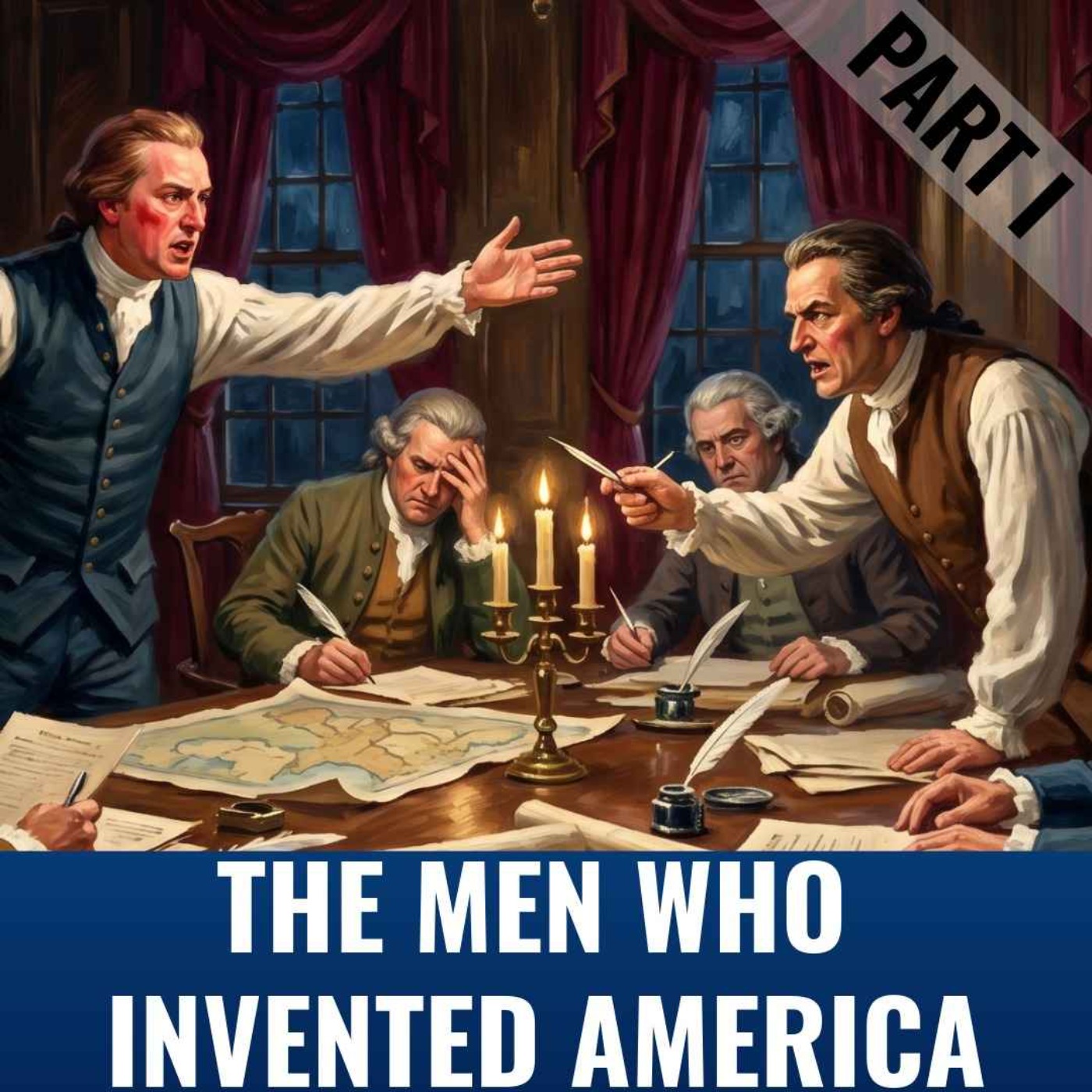
If there's one thing I know about America Afro, it's that Americans love their heroes. And there are no greater heroes than the founding fathers. So we're going to spend a few episodes looking at the men behind some of the legends. We're going to start today with Benjamin Franklin, the world's first media superstar. He definitely would have had a podcast. And James Madison, the 5 foot 4 intellectual giant who believed that human nature was too dangerous to be left unchecked.
- [01:24]
B
It's a story of radical ideas, staggering hypocrisy, and how a small group of men managed to generate perhaps the most important geopolitical event of the last 500 years. Or was it just a small group of men? We'll be discussing that too.
- [01:43]
A
Hello and welcome to a new episode of Legacy. I'm Peter Frankipen.
- [01:47]
B
I'm Afla Hashtag.
- [01:48]
A
And this is Legacy, the show that explores the lives, events and ideas that have shaped our world and asks whether they have the reputations that they truly deserve.
- [01:57]
B
This is the Founding Fathers and the invention of the United States.
- [02:07]
A
Thanks for joining us on Legacy today. To support the show, sign up to Legacy.
- [02:12]
B
You can enjoy early access, fewer ads, Q&As and bonus content like the legacy of the remote control, the legacy of fish finger fingers, or where we went deeper into the world of facelifts and spoke with real cosmetic surgeons, Dr. Mingyang Gray and Dr. Isosa Omorogbe.
- [02:31]
A
So sign up at Legacy Supportingcast FM. Right, so let's go a few steps back AFWA and do the sort of early settlement and how the English managed to be in the United States in the first place. Give me a bit of an overview of the establishment of the first colonies.
- [02:47]
B
Well, England's first serious attempt to establish a permanent colony in North America was Actually, very early in terms of colonial history. It started with the roanoke Colony in 1585, under the sponsorship of someone most British people will have heard of, Sir Walter Raleigh.
- [03:03]
A
Love that guy. That story of Roanoke deserved its own episode, I think, on Legacy Afro, because it's such an amazing and interesting story of how the settlement disappeared and why and what happened to them. Within five years, it was gone. The legend of the Lost colony. But the failure of Roanoke gives this idea that settlement is not as simple as it all might sound. That the first kind of proper English settlement that properly establishes itself is in 1607 at Jamestown, created by the Virginia Company. And the conditions there also are catastrophic at first. To start with, you have the starving time of the early years, where probably only about 60 of the 500 people survive. And Captain John Smith later says bluntly, those that shall not work, shall not eat, gives you an idea of the way in which the laughter and the enjoyment around the campfire wasn't celebrated by everybody.
- [03:53]
B
One of the things I really appreciate in the way we've progressed in talking about this history is that I think for generations, it was kind of the hard grind of these heroic settlers surviving against all the odds, which in many ways is true. I mean, really tough, catastrophic, often fatal conditions. Or it was this kind of footnote. Oh, and by the way, there were indigenous people there, and, you know, it impacted them as a kind of sidebar. And I think now we are able to talk about the fact that both of these things are true, that these English settlers came and had this really, really hard time, but they also inflicted what was really going to be the beginning of genocidal grief for the indigenous people who were already there. Peter.
- [04:35]
A
Well, because there are people, like you say, already living there who are perhaps not quite so keen to have new connections. And it also depends what. What the character and the nature of those colonies are, you know, apart from the fact they're outsiders, it's what their intentions and ambitions are. And the problem is, when the English arrive, they have a categorization of what they think their treatment of nature is, and also their treatment of. Of race and of others is. So immediate conflict at Jamestown with the Powhatan Confederacy, whose lands are. And food are the supplies of which the English need, and they think they have the right to take for themselves. So the growth of those colonies, as you mentioned afores, is all to do with being able to inflict catastrophic damage and to use the technological advantages. I guess it also matters if you have immunity from infectious diseases, that you have an advantage over the people you arrive with. Because the spread of disease and epidemics is also one of the key ways in which Europeans establish themselves.
- [05:31]
B
Yeah. Diseases carried by Europeans and especially smallpox, spread through coastal regions, particularly before there was even large scale English settlement. And these epidemics were frequently interpreted by the English as these divine providential signs that this land was opened for them. And I think that's really important because while Native Americans had their own societies, worldview, organization, they didn't have a predetermined agenda or way of seeing these new colonists. But the English colonists certainly had a framework through which they were seeing indigenous people. They regarded them as primitive, they regarded them as less equal, and they regarded their land as kind of free for the taking. And so the arrival of these diseases that killed so many indigenous people because they didn't have any immune protection against them, only fed into that perception.
- [06:28]
A
That's right. So you get people like King James I talking about disease and epidemics as being sent from God. Or in the Massachusetts bay colony, the 1630s, John Winthrop, for example, famously describing the colony as a city, Potter Hill. But that these diseases are sent as a plague to clean out the way for Europeans to settle too. So there isn't a kind of way in which the colonists think that they're going to expand. They do believe that they have a new Garden of Eden, that they could take whatever they want for themselves. But different colonies are taking on different kinds of structures. But the key is to push other people out the way. So to trade if you need to, but to inflict violence as well. And like you said, I think that that is a way of. It's a much cleaner way of understanding that this is a complicated, difficult, and often bloody way of, of settling.
- [07:16]
B
You can imagine that the people, the English settlers who survive these conditions are a certain type of person. And it takes a certain type of mindset to go to this place far away, to subjugate the land and the local people, and to build really a new society. And from the start, there are specific trends in the way these English colonists organize themselves. So first of all, they have a Puritan background, and that is really important in the way that they go about organizing their new society. Peter?
- [07:44]
A
Yeah, I mean, it's. It's funny because again, we tend to see these as the kind of frontiers people who are deeply committed. In fact, it's kind of described in England as the kind of the dregs. It's the people the Brits want to, or the English want to kick out, actually the people who are put on loaded onto ships because they cause crime back in England. They are socially chaotic, they are dangerous. And so it's not the kind of, you know, as Trump would say, it's the best people we get sent from the start. The United States was built by people who were the worst of the worst. And then there's a kind of this weird category of Puritans, people who leave England in particular, but also leave other parts of Europe because they think that Europe is all going to hell in a handcart, that people's morals are too loose and that they need to find new lands where they can have a really seriously devout and harsh way of living their faith. So you get a kind of amalgam of odds and ends, of people who are relieved to be, or the English are relieved to be, encouraging them out and to work on things like plantation economy. So that soon becomes a place to attract and buy and enslave people and make other people do the work. But to start with, it's a hard life of people trying to find ways of making their fortunes. And so the United States, the early colonies, what becomes the United States, those early English colonies are a real hodgepodge of misaligned ambitions, of people not wanting to work. People feel forced to work, of indenture, people being sent, having to basically earn their freedom before coming back home. And with those infectious diseases, they wipe out European settlers too, you know, so it's not a free pass where this is a nirvana where as long as you can get rid of the indigenous peoples, things are going to be easy. This is tough, difficult life of people who don't particularly want to be there. And then the ones who do want to be there have this kind of evangelical belief that they've been chosen by God, too. So it's a kind of real hodgepodge. And funnily enough, I mean, we're going to get to that. But that is the kind of makings of a lot of the contradictions you see in US Society today of who gets to immigrate there, who gets to live there, what are the values, how do you have this high, low, this idea of racial categorization and the kind of the dregs and the people from shithole countries, as President Trump has called it, with the people who think they should work hard. So these things are really tough. But the plantation economies and trade are a real part of the energy of the early colonies, too.
- [10:04]
B
I'm enjoying you using Trump language for the lens of these early 16th century Southern documents. I don't Think that Trump would have survived a day in the life of these early colonists. It was a hard grind and they are colonies of the English Crown, but they're very decentralized initially. Peter so most of them have elected assemblies by the late 17th century and they have governors appointed by the Crown but they're accustomed to self rule and crucially taxation through elected representatives from London, but representatives who interfere little with the day to day runnings of their colonies. And the distance from Britain is really important in understanding both the practicality but also the mindset of this arrangement. It would take six to 10 weeks to cross the Atlantic from England to the colonies. And the vast majority of people in the British Parliament have never stepped foot in America or even really have any kind of understanding of what it's like there.
- [11:04]
A
Well, it's miles away, right? And unlike the kind of jackpot places that have silver like in Bolivia, the Potosi mine or Central America, you know, this is not the kind of the square on the chessboard globally that you want to control India, right? It's not that you could turn up and trade. I mean the indigenous peoples haven't got a huge amount that Europeans are after and so why would you turn up from London? Of course you don't want to send your, your finest administrators out there nor if you're looking for profits would you bother either. So the British crowd, they appoint a governor but they kind of go, look, you're on your own, you tax the best way you can. Create something that looks like it sort of works and you know, as long as there aren't any problems, get on with it, don't call us, we'll call you. And they practise what historians call sometimes salutary neglect. You know, we just are not that interested. The problem is over time some of these centres do start to grow into something more important. Places like Boston, New York and Philadelphia start to become quite well organized. In fact, people do run themselves quite well if they are able to be autonomous. It's a bit like Iceland in the, in the 10th century where you've got people who are looking after their own interests because they're not being overviewed from London too heavily, that they tend to work out things that work because that pragmatism works quite well. So you have these networks that start to then grow and then Boston and the east coast of the US so starts to connect into the Caribbean which is a kind of absolute super jackpot location of generating sugar, molasses, slave produced commodities and so on that fuels colonial wealth. And that eastern seaboard starts to sit on the side of a growing network. That triangle of West Africa, the Caribbean and Europe. And the guys in the colonies start to work out that they could do quite well out of it too.
- [12:56]
B
Is absolutely part of this British imperial network. And as you said Peter, New York, Philadelphia, Charleston becomes one of the richest cities in British North America largely because of enslaved labor on rice and indigo plantations. And these other cities are trading and importing manufactured goods from Africa and the Caribbean. Rum, fish, timber. And then they're returning with sugar, molasses and slave produced commodities. So they are part of this network of colonial very dependent on slavery trade. And merchants in Boston and Newport are not just receiving goods from enslaved people, but they're financing them. So they're using the profits to now invest in the slave trade. They're ensuring slave trips. They're processing products from Caribbean plantations. Distilleries in New England are converting Caribbean molasses into rum. One of the major commodities for the trade economy based on enslavement. And New York City actually is, is really fueled by this growth.
- [14:01]
A
Seeking, pushing, optimizing, creating, learning, discovering. At Aramco we believe in harnessing the power of data to push the limits of what's possible. That's how we deliver reliable energy to millions across the world. Aramco, an integrated energy and chemicals company. Learn more about us@aramco.com
- [14:31]
B
not every sale
- [14:32]
A
happens at the register.
- [14:33]
B
Before AT&T business Wireless checking out customers on our mobile POS systems took too long.
- [14:39]
A
Basically a steering contest where everyone loses.
- [14:42]
B
It's crazy what people will say during an awkward silence. Now transactions are done before the silence takes hold. That means I can focus on the task at hand and make an extra sailor too. Sometimes I do miss the bonding time sometimes.
- [14:55]
A
AT&T business Wireless connecting changes everything. What's interesting is that that kind of where New York and Boston, Newport and so on, Philadelphia, they get involved in what today we financial services. So insuring ships. It's about the maths, right? It's about understanding sailing times. It's about understanding risk, it's understanding about what, what profits might be. The profits are flowing not just into hard goods, it's into the kind of infrastructure that sits around it. The financing of expeditions too. And you know, lots of people in the United States today think of the south as being the kind of slave owning economies because of the soil and the way that partition economies develop their. But New York City has one of the largest enslaved populations in the colonies and in the world. In fact, at the time. So enslaved Africans are working not just as domestic servants, but also as dock workers, as builders, as craftsmen, as laborers that are essential to helping the city grow, but also to some of those things that are connecting to different parts of the world, too, like shipbuilding, for example. So by the early 1700s, about 1 in 5 New Yorkers are enslaved. And so the. The slavery plays the such important part of the. The ways in which the Americas as a whole get integrated into the old world. And, you know, some of the things that then flow from that, from the profits, start to do things that build the things that some Americans are most proud of today, like Harvard University, universities, Princeton and so on. And there's been a lot of work in recent years, you know, as you know, afwa, about making sure that the legacies of great universities like Georgetown, Princeton, Yale, Harvard, and the debt that are owed not just to enslaved peoples, but to slave economies, that. That gets properly written about and flagged. I mean, that. That must be something that you've also been looking at with your own work.
- [16:47]
B
Well, I was just thinking, Peter, have you ever been to the African burial ground in New York?
- [16:52]
A
I have, yeah.
- [16:53]
B
And it's incredible. It's basically Wall street is the site of a burial ground for. For around. I think it's around 15,000 enslaved Africans were buried there. And it's one. You know, if it weren't for the work of my incredible friend Peggy King George and these other historians who have insisted on marking this as a place of remembrance, you would never know. I mean, if you go to Manhattan, you don't think about this being a site of enslavement. You think about, as you said, the South. And this graveyard has been restored and marked, commemorates the fact that there were so many enslaved people in New York. And they're kind of hidden in plain sight. So it feels as if. And this is something we'll talk more about in this series, Americans are still coming to terms with the true history of the last 250 and beyond. I mean, we'll talk maybe about the 1619 project, which posits the idea that actually this story begins in 1619. The story of America first truly begins when the first enslaved people arrived on the continent of North America, because that is when the economic and social engine that built the country really began with their presence. And you can see in this, in the way that the cities and the English colonies grew without enslaved Africans, it's a completely different story. And they really are underlying their labor and the extraction and exploitation their bodies is underpinning so much of this growth,
- [18:10]
A
and it's politically hugely divisive today. I mean, it's, you know, as a historian, seeing the, you know, how one squares up what the reality is and how things actually came to be doesn't seem to be that contentious, and yet it generates huge amounts of debate and discussion across different political perspectives, across different racial groups. And the idea of trying to explain how things really got settled and built doesn't seem to be difficult. And yet it gets politicized that the use of history. And it's very interesting to me the way in which the US finds it very difficult to negotiate its own history and to sort of. To. To talk things through openly and honestly. It sort of becomes something that if you talk about enslaved peoples, it's sort of, you know, you must have a political agenda rather than look, this is what the history is. It's not that difficult. I wonder whether you think the US is sort of unique like that or whether those legacies are ones. You could see, for example, in India today, where names of not just of English people have been taken off the street names, but also of mogul rulers, the kind of ways in which India's trying to sanitize its past, too. Maybe this is just a phase that we in Europe, because we have much more open societies, maybe we find it easier to talk through. Do you think the US has a sort of particularly complicated legacy with its own past?
- [19:20]
B
Yes and no. I mean, I think Britain has a similar problem in the fact that, you know, there's a quote that Britain had, you know, a deep south, it just was overseas. In the Caribbean, it was further away and easier to ignore. And I think every country has its way of creating a kind of cognitive dissonance with the parts of its history that are uncomfortable. In the case of America, what I think is unique is that from the beginning, Americans became very emotionally attached to the language of liberty. And, you know, it's got a valid foundation in the sense that they fled Europe for various reasons, often related to persecution or lack of opportunity. They came to America, they strived and worked hard and created these new opportunities. And they developed this discourse around that they valued freedom and that this was liberty and opportunity. And it was always hypocritical because this was always built on the exploitation and the lack of freedom of others, but because it became part of the American identity, I think it's now become very difficult for Americans to deeply accept that those ideas never actually meant what they sound like. And I think that's something we'll be talking about a lot in this series. And so in America, from the very beginning, you have this yearning for more freedom, for freedom from Britain, for overthrowing the oppression of this representation by Parliament, which is so far away and understands nothing about America. And you can see how freedom is a very useful language for that struggle. At the same time, there are so many Americans who are not free, and so much of the project of America is based on other people being unfree. And I think that is the unique contradiction in the American worldview.
- [20:59]
A
And some understand that contradiction. I mean, so you've got, in the 1760s, for example, the Massachusetts lawyer James Otis, who criticizes British taxation policies as being sort of, you know, unfree, et cetera, et cetera, while also acknowledging that colonial society is deeply hypocritical, like you said, Afwa. And he writes that colonists are, by the law of nature, freeborn, as indeed are all men, white or black. But, you know, most colonial elites don't think in that way. They think that there's a racial typography that allows them to be able to benefit from the work of other people for free and through enslavement. But what is interesting, I think the big difference about why the colonies start to become so economically successful is unlike in Europe, there is huge amounts of land that can be abundant as long as you can push indigenous peoples out and cultivate it. So wages become higher than in Britain, the food becomes more accessible, there's more of it around. The populations of Europeans are still quite small at this point. And so by the 1750s, Benjamin Franklin, who we're going to be talking about, observes that the colonies are populous and thriving. And he notes that ordinary laborers often eat better than other Europeans, too. So that land availability at a cost also means that in the colonies, the quality of life is pretty good. And it also means that you can acquire land cheaply, rather than in Europe, where aristocracies and elites hold the best land and are very reluctant to let go of it. You tend to have marriages that hook people together. So the society in North America is unusual because it has this idea of freedom, this idea of settlement, this idea that you can create your own fortune and that you get better rewards. So there are sort of some fundamentals here that create this idea of an ideal society that is based on freedom and an ability to shape your own future.
- [22:43]
B
And in spite of all of the contradictions and hypocrisy underlying this narrative of American freedom, I think some of this is still true, Peter, that there is a belief in social Mobility in America. You can come to America as a humble dock worker and acquire land, become more educated, build a business. At the time, you know, in the 1700s in Europe, the class system, and especially in. In Britain, made that all but impossible. You know, there are a few outliers who have these stories, but it's. It's not only practically very difficult to do in. In England, for example, it's also frowned upon. Whereas in America, this is something that people are actually doing and celebrating. And I think that is something that we still see in America today, that there's still. You know, as a British person, when I go to America, I notice the way, you know, for example, a taxi driver will tell you how he's put his three kids through college and two of them into Ivy League. And, you know, him and his wife are retiring and going on cruises. And this is from a lifetime of driving a taxi in Britain. That story just doesn't play out in the same way. Even if people do kind of do that, I feel like there's a way they kind of keep it a bit quiet. It's almost frowned upon. So these are the origins of that idea of the American dream, upward social mobility. And it's built on, as we said, a lot of contradiction, and there are a lot of suffering underpinning it. But it's also, for many people, especially white men, playing out in a way that is true. They are getting higher wages, they're buying land. And visitors from Europe frequently remark on the relative prosperity of ordinary colonists and how difficult it is from a European perspective to maintain class hierarchies, which is something that Europeans may still have been attached to, but Americans are quickly dispensing with in many ways.
- [24:27]
A
And it's a healthier population than Europe, too. If you can eat meat and fish and your diet is better, then you're going to live longer, live better. And in fact, some of those things, I think, are really important to think about that land of abundance. And so the framing is we're going to. Now, when we come back after the break, we're going to talk about the people who push for a different direction for the US or for the colonies, rather. But those North American, English colonies are all built on the idea that abundance, hard work, difficulties, virtues are all things that make them sort of the cream of Europeans, rather than perhaps the way they looked at from London, which is they're a long way away. And, you know, there's not really a society that we have a huge amount to pay attention to, apart from the fact that these guys have a great affection for England. And ironically, some of that you can again read into Trump. We've just had recently the visit of King Charles III to United States and that kind of reverence that Americans have, maybe not for the British or for Europeans when it comes to things like defense spending, maybe not when it comes to our social models, but there is a kind of an idea that there's an unrequited love that people here in Britain tend to look down on Trump and think he's a sort of wild card and America is therefore going to hell in a handcart, rather than the way that Americans have typically looked at. Maybe we reached a tipping point, but the way that Americans have tended to look back at Britain as the kind of the mothership from which they once sprung. I do think we're at an inflection point. But anyway, when we come back, we're going to look at the people who push for this different type of us. Towards the 4th of July, 1776, the 250th anniversary of US independence, we'll talk about who was behind the push towards the Declaration of Independence.
- [26:13]
B
Today we'll attempt a feat once thought impossible. Overcoming high interest credit card debt. It requires merely one thing, a SOFI personal loan. With it you could save big on interest charges by consolidating into one low fixed rate monthly payment. Defy high interest debt with a SOFI personal loan. Visit sofi.com stunt to learn more. Loans originated by SoFi Bank NA member FDIC terms and conditions apply NMLS 696891. One of the things that I find fascinating that I think gets erased in the longer term telling of this story is that at this time. Peter so in the, say, early 1700s, how English the colonial upper classes were in terms of their own identity, how they saw themselves, even how they sounded. This is before Americanness has really developed as an identity and the upper classes in these British colonies read English newspapers and literature. They follow political developments in London. They consume English and British fashions, they import British goods in enormous quantities. They send their sons to Britain for education or legal training. Thomas Jefferson would later say that before the revolution, colonists regarded Britain as home and considered themselves part of the wider British world. It's a little bit like white Rhodesians during the Empire, Peter. You know, they, they lived in what's now Zimbabwe, but their mannerisms and their rituals and where they sent their kids to school and how they self identified, it was very much England and not just England. It was almost like a Specifically provincial version of England that was kind of frozen in aspect in this colonial world. And you see the same thing in the Caribbean and India, that these kind of white English colonials are even more English than English people at home because they are kind of performing their Englishness far away.
- [28:11]
A
I was going to say it sounds like boarding school. You know, it's a kind of microcosm where you get sent away and you get trained by, you know what the ideal. Well, looked high look. I think there's something very unusual about the English and the British. You know, I mean, when you've got the. The way which the British have tended to do things here, where they've got their country clubs and their cucumber sandwiches, it's a kind of model that is. That really understands what soft power means. I mean, you can't have soft power without, without the hard stuff. I mean, so you, you do have a little bit of, you know, Americans living in the uk, you know, meeting in Hyde park and throwing American football to each other. But they don't tend to set up their sort of home away from home in the same way that the English and the British did. I guess it's because the British in, in Zimbabwe, Rhodesia, in the Raj, in India, you know, they had such an experience of what it was like to be a settler elsewhere. But it's interesting, the idea that the people living in the colonies, in the English colonies or the British colonies, see themselves as archetypal Brits. Like you said, they're reading newspapers. They, they think like the, the poshos in, in England too, the key is to send your kids to the right universities. So education becomes a key marker of elite identity. So institutions like Harvard or Yale and Princeton and so on, they're the ones who are training the clergy and the lawyers and political leaders, just like Oxford and Cambridge are back in England, and some wealthy families still prefer English institutions or the Inns of Court in London. You know, that's the way that you send your children, show they've made it that they go back to the motherland too. So there is this balance of a highly educated, literate elite on the other side of the world, across the Atlantic in North America, deeply influenced by Enlightenment thought, by classical history, by British constitutional theory. And they spend their time trying to live as though they are Brits away from home. But of course, that's not necessarily how they're seen from London or from elsewhere, where they're the kind of the cousins living in the back and Beyond.
- [30:07]
B
By the 1760s, the wealthiest families In Virginia and south Carolina are living at levels of luxury comparable to the English gentry. They're importing fine furniture, silverware, wine, and textiles directly from London. And even though, as we said, there is this greater social mobility, There are opportunities for people who are doing much more menial work to rise up through the social spectrum. There is still definitely a hierarchy. Wealth and political influence are concentrated in relatively few hands, But. And many of those hands are elite families, and they are dominating colonial assemblies. They are treated with deference by other people in the colonies, and this holds particularly true in the south. And another thing that's fascinating, Peter, is the way that they are replicating the same gender roles that exist in Britain at the time.
- [30:58]
A
So they're not saying, tell us about
- [30:59]
B
that, not since there's a blank slate to create a freer society for women. They are simply replicating what they are used to back home. And these are, in the 18th century, very strict, rigid gender roles. Actually, in some ways, you could say harsher in some respects, because this is a harsh climate where women have more demanding roles, Especially in frontier conditions. You know, they're managing households, they're overseeing servants, they are overseeing enslaved people. They are having to dominate this new land. It's hard manual work. And even managing, you know, for elite women, the staff or the enslaved people who do it also requires a lot of their attention and labor. And they are also expected to maintain social networks, to maintain the respectability of the family, to produce heirs. And they're doing all this while they are excluded from any formal political office or representation, and basically higher education, even less than higher education in some cases. So they are doing substantial work economically in households, Performing managerial roles, especially in plantation households. And actually, we know from the accounts of enslaved people that female mistresses could, in many occasions, on many occasions, be more brutal, more tyrannical, and more punitive than even male masters. And some enslaved people feared the women of the household. So they were by no means the ally of other oppressed people, but they had very few legal rights when they were married. Their husband owned their property, and they were subject to the common law restrictions as women in England. So it's quite strange because they are in a different place where they are required to perform different roles, but they still have the same limits on their rights, which is another one of the kind of founding contradictions of American society.
- [32:52]
A
And look the spoiler alert when we get to independence, the declarations of rights are not ones that are given to everybody who's living in the colonies. It's about Elite male privilege and making sure that those sit right. And that's one of the key things I think we're going to talk about in the whole of this series is the fact that the narrative of the expansion of freedoms, it depends who gets those. And those are all equally shared before we come to the end of this episode. Afwa, how about the Founding Fathers? Because let's set that up because we're going to do a bunch of episodes about the individuals behind it. But who are the Founding Fathers? What are the Founding Fathers?
- [33:33]
B
Well, that's a good question. And actually no one really agrees, Peter, because it's not a scientific term. It's quite a loose term. And it's used very differently by different historians. So sometimes it's used to Refer to the 56 signatories of the Declaration of Independence. Sometimes it's used to describe all the delegates to the constitutional convention of 1787. Sometimes it's used to describe to the major leaders of the pre revolutionary era and the War of Independence. But the most commonly cited group is a smaller number, and that is seven people. So most of the time when we talk about the Founding Fathers, we're talking about Benjamin Franklin, James Madison, John Jay, Thomas Jefferson, John Adams, Alexander Hamilton and George Washington. And I suspect people listening have probably heard of all or most of those.
- [34:24]
A
That's right. I can't help noting there are no Founding Mothers, though. Does that tell us something?
- [34:29]
B
Well, there will be when we get to my episode on the erased Founding Mothers. Peter. Yes, this is exactly what we were saying. This is an elite club of white men who come from certain backgrounds. There is some diversity in their stories, as we'll see, but there is nothing in terms of what we would in modern society recognize as representative about this group. They are very comfortable taking up space, founding a nation as a group of privileged white men.
- [34:58]
A
And I should just say both Afro and I are huge fans of the United States. So let's hope our friends listening on the other side of the Atlantic also get the idea that what we're trying to do is to talk through some of those tensions and contradictions. What I'm particularly interested in is that those legacies are still there today. You know, today the United States is the land of the free. And yet it's also one of the most senatorized societies on Earth, where if you're born in the bottom 20%, you've got a better chance of staying there than if you're born in countries like Sierra Leone or Kazakhstan. And that energy and the dynamism of the US Today, which is hugely important and extremely exciting to be part of, you know, and yet at the same time, the story that the Americans think that the United States was born from just needs a little nudge on the rudder. So we're going to spend a few episodes of this series talking about some of those Founding Fathers, and next time we're going to start to introduce them in groups or in pairs to explain who the people were that were behind this most momentous Declaration of independence in July 1776. I think it's probably the most significant geopolitical event of the last 500 years. I think after Columbus crosses the Atlantic, you'd be hard pushed to find a single moment that is as important. I mean, there are world wars you could talk about, there's chaos, but in terms of the creation of what becomes the global superpower of today, going back to 1776, since it's worth our while spending a bit of time thinking about who was behind that. But that's for next time on Legacy. Thanks for listening to Legacy.
- [36:30]
B
To dive deeper and support the show, sign in to Legacy. Plus, you'll get to enjoy bonus episodes, early access, fewer ads, Q&As and more. Go to legacy.supportingcastfm.
- [36:42]
A
don't forget, you can watch all of our episodes on Spotify and YouTube too. And for everything else, including our substack and updates on TikTok and Instagram, just check out the show notes or search Legacy Podcast. I'm Peter Frankipan.
- [36:54]
B
I'm AFWA Hirsch and we'll see you on the next episode of Legacy.
- [37:15]
A
Before we had AT&T business wireless coverage, our delivery GPS wasn't the most reliable. Once our driver had to do a 14 point turn to get back on route. A 14 point turn. An influencer even livestreamed the whole thing. Not good for business. Now with AT&T business wireless routes are updating on the fly and deliveries are on time. And the influencer did get us 53 new followers though. AT&T business Wireless connecting changes everything.