Loading summary
Transcript89 lines
- [00:00]
Bill.com Advertiser
Over 90 of the top 100 US accounting firms trust Bill to simplify and secure bill pay. That's proven financial infrastructure built on over a trillion dollars of secure payments. Visit bill.comproven for a special offer.
- [00:19]
Peter Frankenpern
Afwa we talked for a while about how to do maybe some groups and clusters of episodes. So I thought, because I'm feeling a little bit blue at the moment and a bit depressed about the state of the world, that maybe thinking disasters, catastrophes and environmental shocks might be a way to cheer everybody up.
- [00:37]
Afwa Hirsch
Amazing, Peter. That's exactly what I usually turn to when I feel like I need a boost. Some good old catastrophes from history.
- [00:46]
Peter Frankenpern
Do you know what? I'm not even joking if you know about catastrophes. Actually, things in the modern world don't feel quite so bad, so things could be a lot worse. So I know it's a slightly odd thing to then do to cheer yourself up, look at some of the strange moments in time. But I just think we're going through an age today of lots of different kinds of sh. Shocks and environmental shocks is something that we've both talked about a lot and we're both acutely aware of things like global warming, stronger hurricanes and storms, water shortages. And so I just thought it'd be quite an interesting thing to think about the legacies of some of those events from the past.
- [01:19]
Afwa Hirsch
I love that. And some of them people will be aware of, but some of them, I have to say, were quite new to me when we started working on this series. So I'm excited to see what we can learn from disasters in the past. And of course, disasters kind of flattens the thing into something like a horror movie. But actually it's always more complicated than that, isn't it, Peter?
- [01:42]
Peter Frankenpern
Oh, but I love a good environmental disaster movie. Big volcanoes, the earthquakes are all those things. They're things that we all know about, you know, kind of biblical floods and, you know, catastrophic moments. But they're also kind of sliding door moments in time, the bit where nature catches up or geology catches up with humans and suddenly things start to look slightly different. So just to warn you all, we've got quite a long list of these topics. We did think that maybe we'd come back to them later in the year rather than pepper you week after week after week. But I think there's so many things we could be thinking about that opens up these gateways to not just think about the events themselves, but to the legacies they have. Because that's after what we're trying to try to talk about maybe we shouldn't
- [02:25]
Afwa Hirsch
tell people we have a long list. It's going to scare them. Pizza, that's not going to sell it. Let's just, like, hit them with amazing stuff. They won't notice that it's a long list while they're listening.
- [02:36]
Peter Frankenpern
Okay, so the first person we're going to start with, we talked about already on Legacy quite soon after we started started our podcast. And it's the most famous person in Egyptian history. And if you want to find out more about her, that's a bit of a clue. You have to go to our backlist and listen to her. We touched on it very briefly when we covered this person. But today, Aphra who we're going to
- [02:57]
Afwa Hirsch
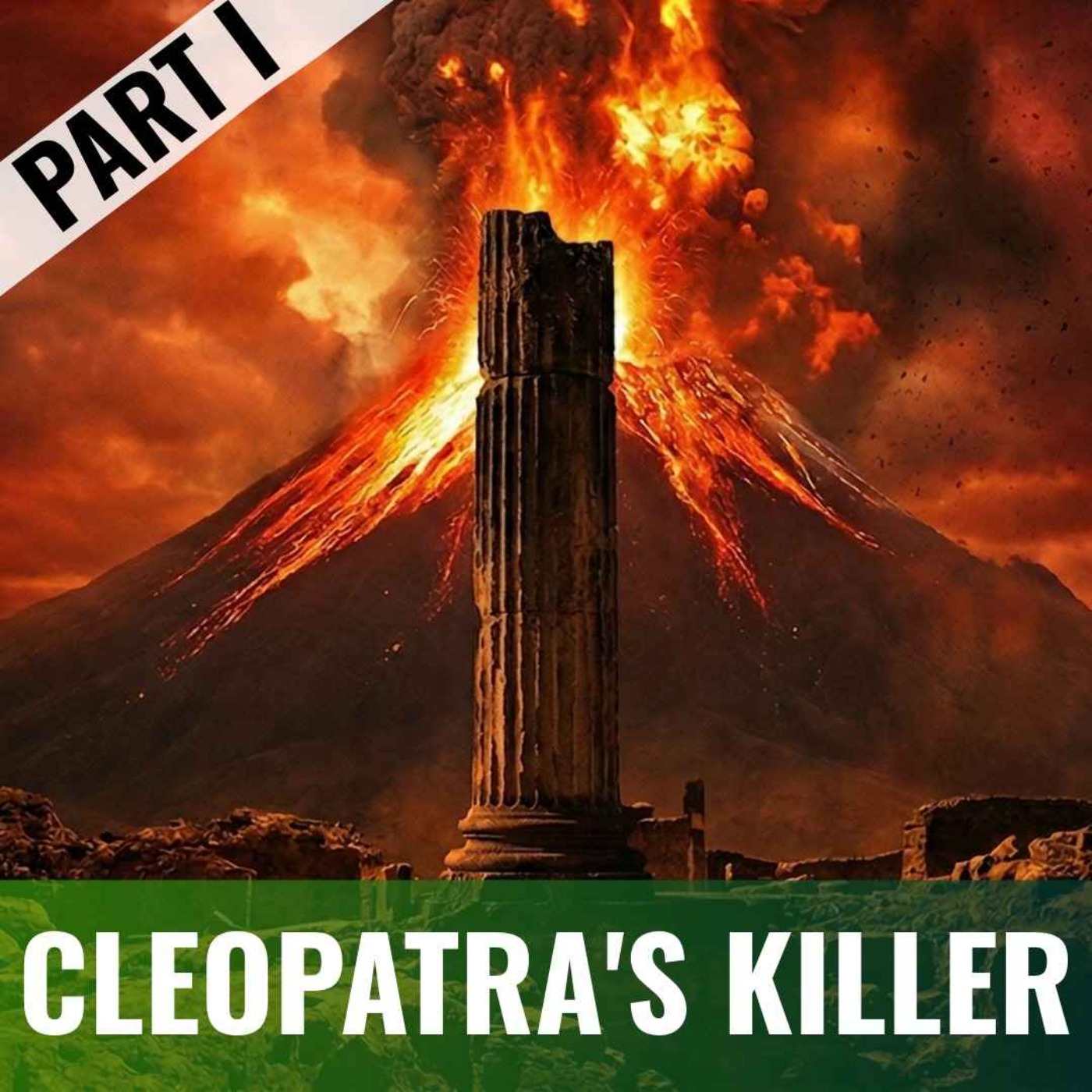
talk about one of my favourite queens of all time, Cleopatra. And today we're going to look at how the fate of Cleopatra of Egypt and the whole ancient world was shaped by an event that took place 10,000 kilometres away from her kingdom. Are we talking like that classic butterfly effect here, Peter?
- [03:20]
Peter Frankenpern
Yes, but it's not a butterfly with little tiny wings. It's an absolutely massive volcano. And we're going to look at how that changed the ancient world and how it changed the course of history. Hello, and welcome to a new episode of Legacy. I'm Peter Frankenpern.
- [03:45]
Afwa Hirsch
I'm AFWA Hirsch.
- [03:46]
Peter Frankenpern
And this is Legacy, the show that explores the lives, events and ideas that have shaped our world and asks whether they have the reputations that they truly deserve.
- [04:03]
Afwa Hirsch
This is episode one in our series on the great environmental shocks in history, the remaking of the ancient world.
- [04:13]
Peter Frankenpern
Sounds great, doesn't it? That's me, I'm afraid. Thinking of a good lecture title to make sure everyone's wide awake and paying attention, but okay, we're gonna start with what many people think of as the greatest city of the ancient world. And that's Rome. Paint me a picture, afwa, about what's happening in the time of Julius Caesar. Just for those of you who can't quite remember your Roman history, we're in about 44 B.C.
- [04:37]
Afwa Hirsch
well, there's a lot of talk at the moment about strongmen, leaders, autocrats, dictators. Julius Caesar is the dictator of dictators. His title was dictator perpetuo, dictator in perpetuity. And that was granted in February, 44 B.C. by the Senate, making him a monarch in all but name. I feel like this is a situation that some of our listeners might find a little familiar.
- [05:04]
Peter Frankenpern
Peter, does it remind you of anybody in particular for you? Thinking about people in Europe, maybe? Is anyone? Well, the list isn't a short one. I mean, I know we're gonna think about Donald Trump, but there are plenty of people who fit in that category. I mean, in Julius Caesar's case, there were statues of him being placed among the gods. His image starts to appear on coins. You know that Trump credit card that the president advertised on Air force one in 2025. And Julius was the first living Roman to have that done to him. And lots of people were very concerned, not about him becoming king, that's how we were taught it at school, but about the fact that so much power was concentrated in one person's hands and that individual wasn't particularly good at sharing his ideas. Modestly.
- [05:50]
Afwa Hirsch
It's also interesting to think about his taste, Peter, because Caesar had a bit of an affinity for bling, a golden chair, the sella curulis aurea, and the right to wear very gaudy triumphal dress at all public games. What is it about these dictators and the need for everything to be covered in gold and totally over the top? It's not good taste, in my opinion.
- [06:19]
Peter Frankenpern
Afwer, come on. When our podcast, we're growing our numbers, at some point, when we move up to number one globally, you're telling me we're not going to have a big studio with everything? I'd like to see Afwa Hirsch on a golden throne. It's up to our subscribers to make that happen.
- [06:35]
Afwa Hirsch
At least we can say in Caesar's defense, it probably wasn't purchased at Walmart and spray painted with fake gold. It was the real deal. And actually, I come from a culture in a can in Ghana, where to say that kings and queens are draped in gold is a complete understatement. In fact, sometimes they can barely walk under the weight of the gold they're wearing. But it feels different when it's an organic part of the culture and it's connected to divinity and belief and ritual. This was Caesar flexing, Peter.
- [07:04]
Peter Frankenpern
That's exactly what it was. And you flex by doing things in a more vulgar way than other people have done them before. And you do it by rubbing people's noses in it. The problem about that is that and not just your enemies, but your friends are not happy about it. And in Caesar's case, when there were statues put up around the city with symbols of kingship placed on it, they get torn down. People are worried that things are going to change. There's lots of rumors swirling around Rome that Caesar's thinking about moving the capital, perhaps to Alexandria in Egypt or to Troy. The old site of Troy, because it's something that maybe this world is all changing dramatically, maybe there are new places that they get annexed. You know, Plutarch said, it was said that he intended to transfer the seat of empire and perhaps his golden seat to somewhere else. And that makes people feel very unnerved, the idea that this wealthy, powerful world was getting too big for its own boots. And Julius Caesar kind of epitomized that sense of bling and uncertainty.
- [08:06]
Afwa Hirsch
So there were also rumors around this time that Caesar was planning on moving the capital of Rome from Rome to Alexandria or Ilion in Troy. And this was something that was really freaking Romans out. Why was that such a big deal to them?
- [08:22]
Peter Frankenpern
Peter well, I think it's that they. It was, I guess, a couple of things. First, that Julius Caesar people thought that he must be seeing himself as the heir of Alexander the Great. That's why Alexandria was important. In the first instance, he was a global conqueror. Second, that if you are a general, as Caesar was, you cement your power by constantly campaigning because it allows you to centralize tax money, and you've got an explanation for why you're making the state work for you. But the worry was that if you can find a different set of alliances, that maybe you're going to move the apparatus of government. And that means power literally moves and you've got to follow it. I guess a bit like people trekking to Mar a Lago to see President Trump, you have to be where the power is. Or with Louis XVI heading to Versailles to be surrounded by the King and his trappings, that could be very destabilizing. Julius Caesar had got very involved in the civil wars in Egypt. He'd taken Cleopatra's side against her brother, Ptolemy xiii, in what's called the Alexandrian War. It saw lots of fighting in the region, the destruction of parts of the great library, naval battles in the harbour and so on. But there was a suspicion that Julius Caesar was so overwhelmed by his own sense of greatness that he was going to create a new state that aligned Rome with Egypt. Egypt was a super powerful part of the world because of its denial, its trade routes to the Red Sea and beyond to the Indian Ocean, but also because of the enormous generation of grain and wheat that it produced every year. So it was a kind of economic superpower, too. So Cleopatra is playing the system too, trying to work out what's going to be right for her personally and for her state. But it's about a kind of set of bigger geopolitical shifts. It does feel a bit like the world of today, where everyone feels that the world's center of gravity is kind of moving and all the things we took for granted feel very uncertain. And that's very destabilizing.
- [10:17]
Afwa Hirsch
You mentioned the Alexandrian war, Peter. That war saw fierce urban fighting in Alexandria, the destruction of parts of the famous great library, something that I think many scholars still mourn today, and naval battles in the harbour. It's a really serious state of warfare. Caesar eventually triumphs in this war. And if you listen to our Cleopatra series, you'll remember restores Cleopatra to the throne alongside her younger brother, Ptolemy xiv. And of course, because this is the story of Cleopatra, she also became his lover. So for those watching this alliance with concern in Rome, they can see this is shifting geopolitics, but. But also new relationships and allegiances being formed that are as much for Cleopatra about her self preservation as it is about any romantic feeling for Caesar.
- [11:07]
Peter Frankenpern
And empires are always quite racist. They don't like people from other parts of the world. And so when Cleopatra starts to spend time in Rome, even though she's a ruling queen, even though it's an important kingdom, everybody knows about Egypt in Roman history. The fact that there are statues put up about her, they offend the sentiments of polite Roman society. People are scandalized by what they call a harlot queen who's shacked up with Julius Caesar despite the fact that he is married to his wife Calpurnia. You know, Cicero says I detest the queen. Her arrogance when I see her seeking favor is just insufferable. So all of that helps put Julius Caesar in the crosshairs because he's too big for his boots, he's too busy getting all the glory for what Rome is doing. That in fact is being battles being won by Roman soldiers, not just by him and the way that he's conducting himself. So those kind of knives are out for Julius Caesar, in fact, literally. So Afra.
- [12:02]
Afwa Hirsch
Yes, the knives, the long knives. Because everybody knows that the 15th of March in the Roman calendar is the ides of March. And in 44 BC, an event that has never been forgotten took place where 60 senators, including Brutus, Cassius, Cascas, Decimus, Albinus and many others, gathered at the theater of Pompey, where the Senate was meeting that day. And in an irony for the ages, Caesar is assassinated beneath the statue of Pompey, his former rival, who he'd defeated four years earlier, where the attack begins.
- [12:39]
Peter Frankenpern
Casca goes first. He hits Caesar in the neck. CAESAR CRIES OUT in LATIN iste quidam vis Est I should be able to do that much more dramatically. Why this is why this violence. And surrounded, he tries to fight back with his stylus. In any academic would know, well, that's like you've got to have a sharp pen on you all the time. And when he sees Brutus, who he trusted, he is said to have uttered to him, well, the famous expression is supposed to be et tu brute, but that's from Shakespeare. In fact, he speaks to me Greek, because if you're a posh Roman, of course you're going to be speaking Greek. And he says, kaisu technon, you know, you too, my child. It doesn't really have an impact on Bruges, who keeps knifing him. Eventually, Caesar has 23 stab wounds. Only one to the chest is fatal, according to his physician, who does the post mortem. And his body lies slumped at the base of Pompey's statue, splattered in blood.
- [13:34]
Afwa Hirsch
Oh, it's one of the bloodiest and most gruesome political assassinations in history. And it unleashes chaos in Rome, Peter.
- [13:43]
Peter Frankenpern
Yeah, Cleopatra and her entourage, they all go to hiding in their villa. They're terrified they're going to be victims of mob violence and that the conspiracy is going to come for them, many of them who specifically have despised her. And Rome itself descends into chaos. People not clear what's going on and why. The conspiracies themselves get turned on. So they barricade themselves on the Capitoline hill. And Caesar's funeral is one of those funny ones where people are not quite sure whether they should be celebrating or whether they should be mourning. It turns into a. Into a riot. Mark Antony holds up Caesar's bloodstained toga and the crowd, all enraged, burn the beer in the Forum and attack the conspirators houses. So Cleopatra apparently watches this from across the Tiber and figures that the best thing she should do is to get out of town as quickly as possible.
- [14:34]
Afwa Hirsch
So you can just imagine, as somebody who's staying in Rome courtesy of its leader, and he's then violently assassinated, that puts Cleopatra in an incredibly precarious position. Her political patronage has evaporated overnight. Rome goes from being theoretically friendly, at least, to overtly hostile. And as soon as the funeral's over, she sails back to Alexandria with her son Caesarion, whose father was Caesar, and her court. And she does what any sensible queen would do and makes her son divine. She declares him the son of the divine Julius, linking Egypt's legitimacy to the now deified Caesar.
- [15:19]
Peter Frankenpern
So when we talked About Cleopatra at length, Afro, you know, go through how shrewd she was, how clever, how smart. I mean, do you think she can see there's also opportunities here? You know, she figures that if the crowd are obeying for the blood of the people who killed Julius Caesar and realizes that there's capital to be had, however unpopular he was in his lifetime, suddenly this gives her opportunity. Do you think she's playing the system? To work out how she might come out of this better? Or do you think this is an actor, Someone who's worried about what the future might look like?
- [15:50]
Afwa Hirsch
I mean, to us it looks like such a precarious place to be. But Cleopatra didn't get to where she was in a world that made her ascent so unlikely without being an incredible strategist. And there's no reason to believe that her relationship with Caesar was ever primarily driven by feelings of love and romance in the first place. And now that he's dead, she is hedging her bets. She's watching the power struggle play out after Caesar's death. She's watching Mark Antony, Caesar's adopted heir, who wants to avenge his murder. And the assassins, on the other hand, Brutus and Cassius, to see who's going to emerge triumphant. Because the fate of Egypt, which she had tied to Caesar, depends upon it.
- [16:32]
Peter Frankenpern
And she has, she knows how to put on a show, right? I mean, when she arrives on a barge in Tarsus, I'm thinking, you know, Taylor Swift, I'm thinking someone who really. I'm thinking Beyonce. I'm thinking someone who really understands how to do the visuals, right? I mean, I guess like one of the worlds that are great entertainers, you know, whether Beyonce or Taylor Swift, she understands how to stage things that puts her front and central. Like when she gets to Tarsus.
- [16:56]
Afwa Hirsch
Well, I've lost count of the number of times modern day queens of culture like Beyonce or Taylor Swift have drawn directly on Cleopatra for their own showmanship. Because she was the OG when she went to Tarsus. She arrived on a magnificent barge dressed as Aphrodite, with gold sails, silver oars, perfumed oarsmen. Imagine perfuming your oarsmen so that as they're sweating and rowing. Why would, why would scent wafts through the air? I mean, it's goals. Absolutely. And of course it works. Peter.
- [17:31]
Peter Frankenpern
Well, she seduced. Well, it's always blamed as that. She seduces Mark Anthony. I'm gonna guess if you're presented with that scene, it's also. He's gotta be in for it as well, but you know, there was a reason why Julius Caesar and Cleopatra had hooked up because the political alliance of two kind of superpowers, but that mantle gets pushed across to Mark Antony. So it's true that the assassination of Julius Caesar is put in a precarious position. Hooking up with Mark Anthony allows her to protect Egypt and potentially, as we talked about in the four episodes on Cleopatra, some opportunities to expand Egypt's power in the region. There are problems because Octavian, one of the other big movers and shakers in Rome, is thinking about what this might mean for him, and the propaganda later casts Cleopatra negatively, etc. All of that we all know quite well. And in fact, the story of what happens next isn't a great surprise. But the reason I wanted to talk about Cleopatra and to do this one in the series of environmental shocks is that there's one bit of this puzzle that has only started to become clear thanks to the environmental sciences and the way in which we can understand the past. And it's not to do with personalities. It's not to do with Mark Anthony, with Cleopatra, with Aphrodite or Beyonce or Taylor Swift.
- [18:47]
Afwa Hirsch
Even in the Shakespeare play, Peter it's
- [18:50]
Peter Frankenpern
not even in the Shakespeare play. But something dark is rumbling quite far away. And after the break, we're going to find out a bit more about that.
- [19:09]
Paige Desorbo
Hey, this is Paige Desorbo from Giggly Squad, and today I want to talk to you about Boost Mobile. Quite quick question why are we letting our phone bills bully us? Here's a money Stop paying a carrier tax when you bring your own phone and Switch to boost mobile's $25 Unlimited Forever plan. You can unlock up to $600 in savings. That's real life money, not money trapped in a pricey phone bill. $600 is a trip, a shopping spree, or paying something off. Your money belongs in your life. You get unlimited data, talk and text for $25 a month with no contracts and no minimum line requirement. Your phone, your rules. Head to boost mobile.com to switch today and unlock the savings you After 30 gigabytes, customers may experience lower speed Customers pay $25 per month while active on Boost Mobile Unlimited Plan savings claim based on a January 2026 Boost Mobile survey comparing average annual payments of major carrier customers to 12 months on the Boost Mobile Unlimited plan. Visit boostmobile.com for details.
- [20:03]
Bill.com Advertiser
When it comes to managing money, forget the hype and look at the results. Bill has a trillion dollars of secure payments powering our bill pay tools. Instead of just moving Money Bill. Bill is powering the financial operations of nearly half a million customers. So stop the guesswork and start scaling with the proven choice. Ready to talk with an expert? Visit bill.comproven to get started and grab a $250 gift card as a thank you. Terms and conditions apply. See offer page for detail.
- [20:45]
Afwa Hirsch
Peter, we've done a lot about ritual and magic and witches. I'm super curious if you believe in omens.
- [20:54]
Peter Frankenpern
Wow. Okay. Well, look, I've done lots on the environment. Omens are often to do with climatic or changes the natural world. There are indicators of weird things that are happening.
- [21:05]
Afwa Hirsch
So that's exactly the answer I expected you to give.
- [21:09]
Peter Frankenpern
Well, so I'm gonna say it's not about believing in omens. It's that omens are sort of. They're normally responses of things that are actually happening. I mean, I think when people hear about omens, they mean, is there something weird, supernatural going on? In fact, what I understand about omens is there natural things that are going on, just we can't see them. Is that what it means to you? What do you believe in omens?
- [21:30]
Afwa Hirsch
Well, I think the supernatural are natural phenomena we just don't understand yet. So you can imagine to ancient observers who didn't have the understanding of. Of science and space that we do now, things that we can now explain through science were supernatural to them. And I think you could probably say a similar thing about things now that don't quite make sense. In a thousand or three thousand years, there will just be another natural explanation. So, yes, at the time of Caesar's death, strange atmospheric phenomena were being perceived as signs of divine portance because they were clearly happening and people didn't know how to interpret them. And the obvious interpretation was, this is the gods. This is something beyond our realm that signals change that may not be welcome and that we certainly can't control.
- [22:22]
Peter Frankenpern
So Virgil, for example, writes in the Georgics that the sun was darkened after Caesar's assassination. And that's not hard to, I guess, interpret. It's that Caesar was the sun. And the fact the sun's rays have been dimmed must be to do with him. You've got other commentators who are saying that after Caesar had been killed, on the day before, the sun's light starts to fail from the sixth hour till nightfall. Plutarch, one of the great biographers of Caesar, saying that the sun was veiled and pale, giving forth so little heat that fruits shrivel rather than ripen. And you've got lots of this stuff, lots of people Noticing odd celestial changes, descriptions of there being three suns in the sky or a halo around the sun. These are all signs of divine favor or displeasure. Doesn't matter how you interpret it, but there's a lot that suddenly catches people's imagination. It might be because when strange things happen, people look for explanations. So when there's a political assassination, people suddenly stop in their tracks and pay more attention to these things. Do you think that's part of it too? That you're so sort of shocked by events, whether it's 9, 11 or the death of Princess Diana, that suddenly time moves in slow motion? You become much more aware of things going on? Do you think that's also part of it? Afra?
- [23:33]
Afwa Hirsch
I do. I think sudden change is destabilizing. And when people believe in the order surrounding their politics and their leadership, then, you know, the rapid removal of a leader signals something having gone wrong. I mean, that's a fact. If there's a coup or if democracy fails or if someone's assassinated, it's something that wasn't supposed to happen. And then that makes people question what else that they thought they could trust as stable and predictable is going to be quickly disrupted. And I think if you look at the ways people in constitutional democracies often believe in their constitutions, it is almost a kind of religious belief. It's like this is the order that we trust in that will keep us safe. And it might not always work brilliantly, but it protects us from certain things. And anyone who's lived through a coup or the sudden collapse of a that had previously been quite reliable, suddenly finds themselves feeling very destabilized in many ways. You know, I've covered conflicts on the African continent where, you know, a country like Mali, which had not brilliantly functional, but pretty stable democracy with peaceful transfers of power over generations, suddenly collapsed overnight. And it's quite difficult to separate social and economic anxiety from religious belief and a sense of one's own mortality. And all of these bigger questions about what's going to happen. And of course, we live not just on a planet, but in a solar system. Could it be the planets? Is it something to do with planetary placements or the cycles of the moon? And I think those are quite rational questions to ask if you think about the ways things actually are all connected.
- [25:13]
Peter Frankenpern
I think it's also times of shock and of stress. Your senses are often in heightened, heightened awareness. And so looking for explanations, trying to find ways in which there are clues and there are signs. That's obviously extremely important in the ancient world. So you mentioned omens, you know, ideas about soothsaying or looking at horoscopes or looking at entrails of animals that have been sacrificed to see what you could tell about the future or to try to make sense of what's going on. I don't think it's, you know, today we sort of think it's all quackery, that people didn't understand science. But, you know, Babylonians, Mesopotamians have better ideas of measuring the circumference of the earth than I'd be able to do without my enhanced protractor and calculator. So I think that it's about people looking for explanations. And in this particular case, what those people whose quotes I read out, Virgil, et cetera, Plutarch, what they didn't realize is probably those were atmospheric reactions to an eruption of Mount Etna in 44 BC, where, where there's a sort of classic dust veil. So there was an explanation for what they were seeing. So when they're reporting these things, they're not wrong. They are. When they're reporting the sun being weak, they're not making things up and how they're connecting it to explain contemporary events. The assassination of Caesar and so on may be wrong, but they're reacting to stuff that they can actually see with their own eyes. And what makes that particularly interesting is that Etna is a small eruption. But what we're going to look at about what really makes an impact on Cleopatra and the world that she lives in is, is a much, much bigger monster eruption that's happening somewhere else.
- [26:48]
Afwa Hirsch
Peter, do you think most people have ever heard of okmok? Because I'm going to be very honest, I hadn't. I definitely heard of Etna, heard of Vesuvius. I have heard of what's the Icelandic volcano that no one could ever pronounce?
- [27:00]
Peter Frankenpern
Heliospheres.
- [27:02]
Afwa Hirsch
I should have known you would be able to do that. But I hadn't heard of the easier to pronounce, but yet less well known okmok.
- [27:13]
Peter Frankenpern
I hadn't heard of Okmok until about five or six years ago, partly because people haven't heard of most of the world's volcanoes. Most. I mean, I've done a lot of work on with volcanologists in the last few years. And most of the world's volcanoes are not surveyed, they're not paid attention to. So big ones like Mount St. Helens that blew up in 1980, people know about Stromboli and Etna, Vesuvius and so on. But. But actually the names off the southern coast of Italy. It does lovely kind of fireworks at nighttime that you can see sort of lit up from a long way away. It's so spectacular, but not ultraviolent. But OKMOK is one that's been picked out from the signature of massive eruptive capacities that it had in exactly this window in 43 BC. And we can work backwards to work out where the volcano probably was, which region it erupted in, and therefore you can start to narrow things down. So it's a bit of process of elimination, but, yeah, okmok, I think, is not well known to anybody, apart from a few volcanologists and a few ancient historians.
- [28:15]
Afwa Hirsch
Is it still active now?
- [28:17]
Peter Frankenpern
Volcanoes often don't die. They flip their lid and once they've blown once and they've had their sort of big moment of excitement, they tend not to go again. So we're not going to see Omok do the same damage as it did before.
- [28:29]
Afwa Hirsch
But ice core data from Greenland and the Russian Arctic shows just how big a deal it was when it had its moment. Peter it was one of the largest eruptions in the last 2,500 years.
- [28:43]
Peter Frankenpern
We can tell that from looking at the particles and the scale of the explosivity. Everything depends on how big a volcano is in its size, how big the eruption is, what time of year it erupts. But what this one does is it produces very sharp global cooling. So much aerosols put into the atmosphere. The sulfur dioxide reacts with the water and the water vapor and reflects the radiation of the sun back out into space. So you have sudden sharp cooling. So you can find from proxies, we call them, but sort of tree rings. And seeing how trees are growing. And from cave records, we can see average temperature drops in parts of Europe and asia from about 2 degrees to about 7 degrees. That's a lot. I mean, that's the difference between shirt sleeves and a jumper.
- [29:28]
Afwa Hirsch
It's incredible that a volcano could trigger that severe a temperature change.
- [29:34]
Peter Frankenpern
Well, I hope if people like these episodes, we'll come back and do a couple more of these later in the year, because it's not unusual to find these big changes. In fact, I've just been to watch some Shakespeare at the theatre in London, and Shakespeare writes a lot about climate volatility and that the two decades where Shakespeare's Most active, between 1590 and and 1610, we see some of the sharpest fluctuations in global temperatures. So things like Macbeth, with all of its kind of pyrotechnics and the storms with things like the Tempest, Winter's Tale. There's a lot in Shakespeare around these things, too. So I think that we tend to factor out the fact that volcanic activities has had such an important part on human histories. But in this particular case, the environmental impacts that it had on growing seasons was really measurable and very severe.
- [30:25]
Afwa Hirsch
I feel like, obviously we're talking about OTMOK in the context of its impact on geopolitics, but it'd be really cool to do a whole other conversation about its impact on creativity, because I am fascinated by the idea of Shakespeare at his peak during a period of real climate volatility. And of course, as a writer, there's a cliche about kind of huddling away in a log cabin in some freezing wilderness or with driving wind and rain outside the window. I wonder how much of the greatest literature in human history was produced during periods of unusual weather. That's a. That's a thought I would love to explore. But as far as Cleopatra is concerned, Okmok's eruption had very direct and concrete consequences for her world. And Cicero, for example, writing in February 43 BCE refers to the continuing winter and cold unusual for Italy. Josephus talks about the severely cold climate of Macedonia. Plutarch recounts that Brutus's army in late 44 BC marched through snowstorms and suffered bulimia. Not the eating disorder that we think of today, but literal bulimia, ox hunger, which is a description of extreme hunger, a wasting disease caused by the cold and damp. So the army that is fighting in the war in this era, facing real hardships as a direct result. Peter, you're saying from climatic change, which was itself a direct result of Okmok's eruption.
- [32:00]
Peter Frankenpern
Well, the aerosols disrupt the African monsoon. And the Blue Nile headwaters, which is the source of about 85% of Egypt's floodwaters that. That change the Nile every year. The simulations that we could do with the computer modeling show that the upper Nile became far drier and the lower Nile saw abnormal winter rains, but very poor inundations, which is really bad for Egyptian agriculture. So Seneca, again, another famous writer at the time, says for two successive years, the 10th and 11th of Cleopatra's reign, the Nile did not flood. That that flood brings up water. The alluvial floods, rich with minerals that allows the crops to grow, means that suddenly lots of things happen that you're not going to be surprised about. When you have failed harvests, the price of food goes up and that starts to create economic compression. So famine becomes a real issue. So we learn from Roman sources that Rome can't get grain from Egypt because the country is exhausted by famine. And that's bad for Cleopatra because locally people think that she's choosing sides or is withholding food rather than trying to help.
- [33:11]
Afwa Hirsch
Just before we move on, I just need you to explain aerosols because I think many of our listeners might associate those with like spray deodorants or de icers you use on your car. What are volcanic aerosols, Peter?
- [33:25]
Peter Frankenpern
Well, aerosols are just tiny solid or liquid particles like dust or smoke or, you know, you find it in pollution that are suspended in a, a gas and those get ejected through the force of a volcanic eruption that vaporizes rock. So it puts lots of stuff out into the atmosphere. And depending on how large an explosion is, it can push those extremely high and that then aerosols will react with vapor in the atmosphere too. So that has a large effect. And because these veils go high up into the air, they then get carried around the world like the conveyor belts that circulate our atmospheric conditions and they affect everything. In the worst cases, they can change rainfall patterns, they can stop rain from happening, they can make the sun's rays much weaker. And so that affects photosynthesis, if you remember your biology lessons from school. And so the combination of water, sunlight, and what that does to the growth of organic materials is dramatic. And of course, the bit how that meshes together is that the impact of what happens to the natural world gets compounded by human behavior at times of crisis. And, you know, you'll know that from conflict zones, afwa, people behave both rationally and irrationally when they're faced with, with shortages and fear. So typically people will start to hoard goods because they're worried about being able to, to survive. I mean, we saw that in the pandemic. I mean, ironically, whoever's in charge of the Andrex marketing account did a played a blinder because people suddenly started hearing that they're going to run out of toilet paper. And so everybody, rather than worrying about food and water, went to stock up on bog roll rather than anything else. So people react in a way that think, right, I need to make sure that I've got more that I need because there's going to be a shortage and that, that depletes supplies, that makes things much worse and it pushes up prices and that creates crisis of confidence in leadership. So these things, they all escalate. But as a result, in this wider upheaval of the Mediterranean world, there are consequences for Cleopatra and for the fall of Egypt.
- [35:31]
Afwa Hirsch
So let's think about those consequences for Cleopatra. So Egypt's dependence on its incredibly usually productive agriculture from the Nile makes it especially vulnerable to the floods caused by Okmok's aftermath. There's famine and epidemic weakening the countryside that's debasing the currency. It's forcing Cleopatra to go from being a grain exporter to a grain importer. And that meeting with Anthony at Tarsus that we described is just at the beginning of Egypt's recovery. And that puts her in a much weaker position than she otherwise would be. She needs protection from Rome and her leverage has been badly damaged by the events following Okmok's aftermath.
- [36:13]
Peter Frankenpern
That set of cascading consequences, you could compress it so you have consecutive Nile failures has an impact on food production. You then get famine that follows and depopulation. People try to escape to find refuge because they can't find enough food. You find economic shock and inflation. The state manages to gather less cash because there's less things being grown, which is where the primary source of income comes from. And rent start. People start to not be able to pay their rent. So the economy starts to be put under pressure to try to boost that up. Cleopatra devalues the coinage, so she cuts the amount of silver going into coins to make sure there's more money to go around. That then helps trigger a crisis of confidence in the economy, social unrest, rural resistance, riots in cities like Alexandria, where suddenly you've got people who are partly struggling for power, but mainly they're worrying about what they're going to eat. And then of course, on top of all of that, you then have confidence in your religious protection starting to dissipate too. Because if people are worried they've been abandoned by the gods, there must be reasons for that. And of course, attention then starts to fall back on Cleopatra too. So you've got this terrible sequence of events that happens. It's not just because of the volcano. All of those are to do with issues that are already there. But sudden compression of seeing sudden state failure is something that can happen very, very quickly. And again, we've had lots of examples of that in the modern era, where things that look like that they are robust and strong suddenly collapse. You can do that from corporates and businesses through to state, sudden exercises of pressure, bringing a whole bunch of other factors together. That's one of the reasons why this is so difficult.
- [37:54]
Afwa Hirsch
And on top of that, Cleopatra's already close alliance with Rome makes her a lightning rod for anti Roman feeling in Egypt. You really Kind of have to feel for Cleopatra here because her presence in Rome makes for a lightning rod for anti Egyptian feeling in Rome. And her. Her allegiance to Roman Egypt makes her a lightning rod for anti Roman feeling at home. She's kind of damned everywhere at this point. And famine and inflation are being interpreted not as consequences of a climatic event, but as divine punishment for her debasing Egypt by being subservient to this foreign state.
- [38:31]
Peter Frankenpern
Do you think it is that she's a woman Afro? Do you think if she was a man she'd be able to coast this stuff out and she'd have been judged differently? Or do you think that the cascade is so big that actually it wouldn't. That's not really a factor here.
- [38:42]
Afwa Hirsch
It's impossible to deny the sexual undertones of the resentment at her relationship with Rome. You know, it's often couched in the fact of it being intimate relationships with individual men who were Roman rulers. And that's then assimilated into this narrative of her being a harlot, having loose morals, being closer to a prostitute than a queen. So I think that it would be dishonest to offer a narrative about the way Cleopatra's being judged that ignores her gender and the different standards that are applied to her personal integrity as a result. I can't think of any examples of women rulers in history where women haven't been judged by a harsher standard and have had different values attached to them. However, I think it's fair to say it would have been a difficult moment for any Egyptian ruler who was close to Rome and suffering with these objectively difficult circumstances of famine, of currency depreciation, of a previously strong state becoming weaker. And that's never popular with citizens of a state to see their country in decline. And it's always easier to find a scapegoat for that. Right, Peter?
- [39:50]
Peter Frankenpern
That's right. When we come back, let's talk about what the consequences are. Because people know what happens to Cleopatra,
- [39:55]
Afwa Hirsch
I think, and if they don't, they should listen to our Cleopatra series. It's still available in the Legacy catalogue for free.
- [40:02]
Peter Frankenpern
I don't understand how that works, but anyway, it is. But we will talk about not just what happens to Egypt, but how that also is the making of Rome. Because I think that's the. The thing that often gets pushed out to one side is not just about Cleopatra being a female ruler or being overwhelmed by the pressures of an empire, but what it does to reshape how we think about the ancient world. That's when we come Back. Close your eyes.
- [40:35]
Bill.com Advertiser
Listen to Monday.com feel the sensation of an AI work platform, so flexible and
- [40:42]
Peter Frankenpern
intuitive it feels like it was built just for you.
- [40:45]
Bill.com Advertiser
Now open your eyes, go to Monday.com, start for free and finally breathe.
- [41:01]
Afwa Hirsch
Before the break, Peter we in my case discovered you revisited the eruption of Okmuk, a volcano in Alaska that caused havoc in global climate food supply and in Cleopatra's case set a chain of events that created catastrophic weakening of her rule. And the aftermath of that was really serious for Cleopatra. It led to the battle of Actium in 31 BCE, followed by her suicide in August 30 BCE. And as a result of that, Egypt was formally annexed to Rome by Octavian, Caesar's son, who detested Cleopatra. And Egypt goes from being a proud partner to Rome to being imperial property, a colony essentially. One source says Octavian made Egypt his own possession, not reckoning it among the provinces of the Roman people, and forbade senators to go there without his leave. As a result, Egypt's enormous wealth, agricultural, industrial, commercial, is now flowing directly to the emperor, not to the Roman Senate or to local Egyptian elites. And Egypt is now the most fruitful of all lands under the dominion of the Romans, which means that Egypt is now a valuable colony in Roman hands.
- [42:27]
Peter Frankenpern
Just to put that into kind of context, within a few decades, Egypt is responsible for a third of all the grain coming into Rome. The Nile, which has been a huge part of the agriculture, the economy of the Mediterranean, gets all diverted into Rome, which now shifts from being a republic into essentially an empire to start with, not just in name, but then even in name to. Writers like Strabo say that Egypt is a country that's blessed beyond all others. Its fertility not only supplies the natives abundantly, but also furnishes an unceasing revenue to Rome. So the yearly grain shipment is enough to feed the population of Rome, one of the biggest cities in the world at the time, for four months at a time. As a result, all the things you'd expect happen. Food prices fall, bank loans start to come down in price, people start to be considerably richer. You know, Egypt is responsible for feeding 2 to 300,000 Roman citizens for months at a time. And again, if you work on empire and we've talked about empire, semi ties are for commodities that are brought back to the center come at the expense of people who are producing them and having access to them locally. But it's one of the hallmarks of what empires do. It's to try to bring things back from their frontiers and starts to change how Rome gets to function.
- [43:43]
Afwa Hirsch
And like all empires, it's not just material goods that Rome is extracting from Egypt. It's systems, it's knowledge. The Ptolemaic state had the most sophisticated taxation system in the whole ancient Mediterranean. It was census based, monetized, highly bureaucratic. Rome largely adopts it and now it strengthens the Roman system. Egypt is the crown jewel of the fiscus caesaris, the imperial treasury. And the revenue from Egypt is so huge that the emperor is able to pay the entire army.
- [44:15]
Peter Frankenpern
That allows Rome to have a building boom. So it's not like you said, it's not just food, it's not just money. You start to get some of that monumental stuff that people are familiar with from the forum of Augustus. The Ara Parchis Octavian is so blessed by this that the Senate give him a new title, which is Augustus, which means literally the blessed one. Or you lucky. So and so we get Egypt's stone and its art and its craftsmen coming to transform the landscapes of Rome, literally in some cases because objects, statues, obelisks are shipped to decorate the Campus Martius and Circus Maximus. So Egypt lends its whole visual culture to Rome too. So I mean, it's a kind of extraordinary turning point where it's about multiple things. It's about food, it's about money, it's about confidence, about ideas, it's about Rome suddenly becoming a proper continental empire. It's hard to underestimate how significant the capture of Egypt really is.
- [45:10]
Afwa Hirsch
I think that there is a really consequential element to this for us today, Peter, because when you think about the way we think about Egypt and the way the Egyptian contribution to humanity is conceived, it is conceived now through this quite Romanized lens. And I think the kind of Romanization of the Egyptian legacy through it becoming part of imperial Rome has had a direct effect on us and our erasure really of the level of expertise and cultural contribution from ancient Egypt. It's now kind of considered all bundled into this idea of Western civilization of which Rome was the kind of conduit. And I think it's flattened the reality of Egypt as a part of the African continent that was very much connected to Eastern cultures, connected to the rest of Africa. Having millennia of this ingenuity, I wonder how much Rome directly rewrote the story or how much it's our lens having inherited it through our ideas about Roman culture. But it feels as if this collapse of Egypt independence has had really far reaching consequences for the way that we think about the whole ancient world.
- [46:24]
Peter Frankenpern
I think all of those are right Afwed, on top of that you have the expansion of the Arab world and of the Muslim world too in the seventh centuries. So there are lots of different layers that you could go through in all of this. But yeah, I think it's absolutely right that when we think of Rome, we think absolutely of a European empire rather than the brains and the muscles coming from Africa and those gateways through the Red Sea into the Gulf, into the Indian Ocean, those maritime connections, those maritime silk roads, there's connections into the near east, the trade with Parthia and Persia, the trade with Central Asia, with India and beyond are absolutely central to the ways in which the economy of a proto early globalized world all function. I think we've separated all of that. So we think of the Roman and Greek cultures as being primarily European, rather than, I suppose, for want of a better word, Near Eastern, I suppose, which allows you to be, I guess, North Africa as well as the Middle East. But I think those things are really important. So when you start to see pepper and spices and silk and glass being transported to the Mediterranean from Madagascar, from Kilwa, from the Swahili coast, when you see connections into Socotra to Yemen, to the Gulf and beyond, I think you're seeing much higher levels of hyper connectivity. And these networks, you know, most scholars like to call them silk roads, are just a way of capturing the way in which these exchanges are both short and regional and long distance too. And you know, sometimes the challenge is when we think about these global connections, the temptation is to go what are the two furthest points on the map rather than the most trade most experience for everybody in the ancient world, as in today's world, are local. You know, most people's experiences that are most intense so with the local corner shop where they buy their milk and their bread, every now and again when you go on holiday, you bring back something with you and that has pride a place because it's unusual. But these new connections are key. And I think Rome's gateway and the gateway of European cultures to connect into Africa, into the near east and to worlds beyond. It's done through the conquest of Egypt. It's not non existent before then, but the scale and quantity of change is completely dramatic.
- [48:32]
Afwa Hirsch
I know a scholar who wrote about silk roads, I'm just trying to remember his name.
- [48:36]
Peter Frankenpern
Peter There are quite a few of them, it's reasonably popular. I mean, I think silk road, it's a label that not everybody gets overexcited about, but I think I prefer it to maritime routes or, you know, it Allows you to think about commodities being moved. And empires and trade are always driven by those. You know, it could be ceramics, it could be spices, take your pick. But a way of thinking about multiplicity. I mean, that's the key thing about how you find lots of different connections. So Egypt doesn't just connect to the Red Sea and to the Indian Ocean. Egypt connects to different places within Egypt too. And of course in Sahara Oases as well. But I wonder what you think, Afro, about those opening of intellectual and cultural cross currents too.
- [49:19]
Afwa Hirsch
Well, Peter, we were talking about the Earth and the planets, planetary placements, knowledge of the natural world and, and space. The opening of the Indian Ocean route after Rome's acquisition of Egypt led to a revolution, I don't think it's an exaggeration to say, of scientific and philosophical ideas. And if you look at astronomy and geography, the concept of the monsoon, the understanding of the Earth as a spherical planet, reached Roman scholars through Alexandrian intermediaries because Egypt had been pioneering this knowledge for centuries, if not millennia. If you look at ideas of medicine and botany, Indian and Arabian pharmacopoeia had enriched Greek medical texts. The use of Indian pepper, spicinard and costas as medicines is all part of the change in knowledge exchange that happened. And then of course, mathematics and geometry. Because Alexandrian scholars, and this is something that I think many people will have heard of, had an incredibly advanced understanding of, of optical knowledge, of geometry, of trigonometry, and this was now being brought into the European understanding of knowledge as well.
- [50:35]
Peter Frankenpern
And on top of that you've got the arrival of new ideas about different religious cults. You also find quite a few statues of Buddhas, probably brought by merchant from South Asia. But these monsoon systems are complicated and difficult. You know, again, we can overemphasize long distance connections too. But there's definitely, as you say, afwa. It's a whole series of different revolutions of culture, of language, of connections, of trade, and of just opening up of horizons about who shares this planet with us. And that starts to get written about by authors all over the place, trying to make sense of different geographies and why do people behave in different ways? So, you know, I was a bit cautious about saying afwa, that this was all caused because of the volcano. And it's difficult with history sometimes to, to pin agency on a single event or person. But I wonder what you think would have happened if there hadn't been an eruption, if Cleopatra hadn't had to deal with economic crisis, with food problems, with depopulation, with disease, with political credibility issues. Do you think that there would have been a different type of world where the Roman and the Mediterranean world have looked slightly different?
- [51:42]
Afwa Hirsch
I'm going to give a cynical answer. I think if you look at the long term evolution of Europe and its tendency to pioneer advanced warfare and weaponry and to kind of culturally pilfer knowledge from all over the world and assimilate it into its own ideas of its cultural superiority, I think that was going to happen anyway. And it would have always had its sights on Egyptian knowledge and Egyptian expertise. And if you look at the kind of racialized theories that would develop later in Europe, that we're determined to cast people from Africa and Asia as subhuman, as inferior, it's hard to imagine a world where Europe would have been content to leave Egypt and its grandeur and its history intact without trying to assault and pilfer from it. So I feel like that would have happened anyway. But maybe it would have taken longer and maybe it would have been harder to erase the contribution that Egypt and then all the African, Asian, Middle Eastern knowledge systems it had done, based its understanding on. It would have been maybe harder to hide the legacy of those. Because it's really only, I feel in the last hundred or 150 years that scholars have started to really be intentional about reasserting those facts into the narrative. And even when I was growing up, it was this idea that Egypt was sophisticated because it was part of the Roman world rather than the other way around, which is a much truer version of events.
- [53:08]
Peter Frankenpern
I mean, you're right, the Romans were expert pilferers. You know, that's how they managed to cross the Channel, get to England's British Isles and get up to Hadrian's Wall. And obviously the conquest of large parts of Europe was part of that too. But I think that Egypt also opened up opportunities to think more aggressively about militarization, about long distance trade and about colonialism. So it's not that it didn't exist in Rome, and maybe you're right that it would have got there anyway. But I also think that Egypt was the key that opened up a lot of those things that then become the signatures of European empires. I mean, one of the problems we also have is because we're dislocated how we think about history, we tend not to know too much about empaths from other parts of the world to think about the pathologies being very similar too, about how they try to do things. But I could also see a world where if Rome hadn't been allowed to had access to Egyptian grain, perhaps there would have been greater emphasis on other parts of North Africa and Sicily. Maybe we wouldn't have found the sort of the greatness of Rome at such a great extent being emulated by later empires. Maybe we wouldn't find busts of British aristocrats in the Ashmolean Museum wearing togas. And maybe there would have been different models that Europeans would have used rather than falling so heavily on Rome. Maybe we wouldn't be talking about President Trump as a Roman emperor. It would have been a different tradition because the conquest of Egypt is after all, what turned Rome into a one man state, Octavian or Augustus. Power was vast. So I think there are different ways in which we can look at it. But anyway, there you have it. By insertion of a volcano environmental shocks into the shaping of the ancient world. I know that's a topic that you'd be very tolerant afraid to let me run with my own specialist interests on this one. But I think it's really interesting to think about how we can reconfigure all these old stories from the past. We don't think about too much in the face of new evidence.
- [55:03]
Afwa Hirsch
I think it's so fascinating, the work you've done on bringing climate into the chat and really using that insight as a way of re evaluating the legacy of historical events that we understood one way, but showing that actually this is such a relevant missing piece of the puzzle. So I'm always here for that, Peter. And any excuse to talk about Cleopatra is good with me. And now, you know, now we've got Okmok to blame for her demise. I feel that she's further vindicated.
- [55:31]
Peter Frankenpern
Anyway, thank you all for listening. Next time we're going to look at another environmental shock and how that transformed the world. Volcanoes, they do play a walk on role again. But the big story next time is about how disturbances to ecosystems don't just affect humans, they affect the spread of pathogens and they cause disease, ones that kill millions. Thank you for listening to Legacy.
- [55:56]
Afwa Hirsch
Don't forget to hit subscribe on your favorite podcast player. You can also watch all our episodes on YouTube so make sure you're subscribed there too.
- [56:04]
Peter Frankenpern
And of course we're on all the socials, so all the links are in the show notes for this episode or just search Legacy Podcast. I'm Peter Frankopen.
- [56:12]
Afwa Hirsch
I'm Afwa Hersh and we'll see you on the next episode of Legacy.
- [56:34]
Bill.com Advertiser
Over 90 of the top 100 US accounting firms trust bill to simplify and secure bill pay. That's proven financial infrastructure built on over a trillion dollars of secure cure payments. Visit bill.com proven for a special offer.