Loading summary
Transcript41 lines
- [00:00]
A
Hi, I'm Jack Revecci Kramer, host of the best one yet AT T. Boy, we're always talking about small decisions that can have an outsized impact. One of the simplest is staying hydrated. Whether I'm traveling, getting a workout in, or heading into a busy day, I keep Liquid IV on hand. It's clinically demonstrated to hydrate faster than water alone and contains three times the electrolytes of the leading sports drink, plus eight vitamins and nutrients. It's an easy addition to your daily routine and helps support hydration when you need it most. Shop now@liquidiv.com Liquid IV hydration that goes wherever life takes you.
- [00:37]
B
Hello, and welcome to a new episode of Legacy. I'm Peter Frankopan.
- [00:41]
C
I'm AFWA Hirsch.
- [00:42]
B
This week, we're diving into the Legacy inbox to talk about a couple of things that we've been working on ourselves. And I, Afwa, have been busy for years working on an exhibition that I thought would be quite fun to talk to you about and to share with our listeners. But partly because things that take years, it's quite nice to have a little shop window to explain what I've been doing.
- [01:01]
C
Yeah, Peter, you do so much sometimes that I don't feel like I get the time to really dig in on the individual things. But this is a big one. Likewise, this is a big one. So I am very keen to hear what this exhibition is about. So just explain the overall concept.
- [01:18]
B
So, a few years ago, I got contacted by a group of museums called Museer Brugger, which is a collection of museums in the beautiful city of Bruges in Belgium, to ask if I would be the lead curator for an opening exhibition of this amazing new space called Brusque Bruges. If you've been to. If you've been there. It's a world UNESCO World Heritage Site. It's one of the most famous cities in northern Europe. Fantastic film with Colin Farrell and Brendan Gleason. It's absolutely brilliant film, that one. And they've been building for the last few years this new exhibition space, which is architecturally beautiful. It's challenging. It's a difficult place to build in because of the archaeology and the historic history. And they got in touch and asked if I'd be interested. And I replied to say, look, I'm interested in the history of Bruges, but I'm not a Bruges specialist and I don't really work on Flanders and Northwestern Europe. Apart from that it connects to other parts of the world. So I wasn't quite sure why they were getting in touch with me. We had a call with a scientific committee and they said, look, we've told the story of Bruges many times, usually in the context of the Burgundian court, Philip the Good, for example, the sort of apogee of the power of Bruges and of Flanders in the 14 and 1500s. But we want to do something that's more ambitious and that connects Bruges to the rest of the world and to other histories, and wondered if I'd be interested. So I said, okay, let me come and meet you. Let me come and give you a few ideas. So I went out to Bruges, I think, first time four years ago now, 2022, maybe, it may be beginning of 2023, to meet the team and, you know, constantly saying, I'm not really an art historian, I'm interested in histories of big ideas. But surely there are people in the Bruges community and the Flemish community who might be able to have some better ideas. But they were great. And they said, look, people like Wim de Kler, Guillain de Moulin, Johan van Steenberg and the historians who are working in Bruges and in Ghent and in Belgium, they're absolutely world class. And I've been a massive fan of their work for a long time. But I then told them what I would do, what I think about doing. And then there was silence in the kind of classic Belgian way. And I didn't know whether that was a good sign or a bad sign. And then the silence ended by everyone getting up to go and have a cup of coffee. And I thought, okay, well, I'll get my coat and I'll leave. And so the exhibition, as you could tell, I, I, I got the job. And our exhibition opened in May. It's called Bigger Picture, the Connected Worlds of Bruges, where we tell the story of Bruges in a different way to how it's been told before. Much more expansive, much more global, much more perhaps even exciting and interesting to think about Bruges as a global city rather than just a northern European one. And it's been phenomenally successful. So tens of thousands of visitors. It's open until the middle of September, 8th of September, actually. And then we produced books and catalogues around the exhibition, which has been just an absolute joy. But it was a lot of work, but great, because the people I worked with were a joy. So please, if you get a chance to go to Bruges, I'd strongly recommend it because it's brought together some of the most exciting objects I've ever seen in my life.
- [04:34]
C
I want to hear more about those objects. But just the first thing that really excites me about this is I think there's a way in which Northern Europe gets packaged in terms of the cultural identity and its very insular. It's like the canals, the chocolate. In the case of Belgium, it's always the chocolate and this kind of picture postcard, medieval town. So kind of like almost Disneyland of like the Old World. I think that's how tourists sometimes consume it. But these are all places that have such a connection. You know, I was in Bergen, which has also got a similar kind of way it's perceived. But looking at the Hanseatic League, which was the way it was so connected, well, connected to Ghana, connected to Asia and the Americas. And of course, it makes total sense to me that if the Bruges exhibition is thinking expansively, of course they would want you, because that's what you do, you think about connection. But don't you think it's actually for Europe more broadly, so important that we're telling these stories? And to me, this is the truth about the European story, that these connections are what's made Europe what it is. But I feel like that's often been erased from the picture. Historically.
- [05:40]
B
I think that. I mean, that's exactly right. There are lots of questions in there. One is, if it's been erased, is it through neglect or is it deliberate? And you can argue on that one, is it because understanding those connections is harder than it looks? And, you know, it involves multiple languages, it involves having that expansive vision. Is it because lots of academic research is. Is quite siloed. It's very specific to a narrow window of period, region, so on. But there are lots of answers for explaining why. But it's. It's not as easy as it looks to tell these expansive stories. And it's really hard to do that with objects. I mean, we have, for each of the objects we've got in our exhibition, we have a maximum of 60 words, which is basically a sentence and a half. And that's really tough. And you know, you know, you know, because you do lots on tv, Afwa, you know, from however you might think about the TV world, it's quite a blunt object. I mean, the scripts are really short in an hour. It's Nothing like the 6,7000 words you can rattle through giving a lecture. And you're having to simplify. And it's even more so if you're having objects that are in discussion with each other. So it was not easy to do.
- [06:44]
C
But you're having to rely on the objects and the visuals to do the heavy lifting that usually, you know, for people like us, who are writers, the words would do in our telling. And it's like you're having to switch your brain around to rely so heavily on the visual and really pull back on the verbal and written explanations. It can be quite painful, like using body parts.
- [07:09]
B
So that's why working with other scholars. So we had Anna Kuptra, Anna van Osterwijk, who are legendary art historians who specialize in Flemish art. So having other people and also how you curate, how you show them materials and how they're in conversation with each other is also really important. So working with a team that is thinking about that, about how you display. So it's not just the object individually or as a group, but how the whole thing works, how the flow goes through. But it was really. It was hugely challenging because, you know, like anything, if you're going to do a project, you've got to do it properly. So I can tell you a lot more about. About Bruges than I could before. I've read almost everything I could find about sanitation, about plague hostels, about regulations, about the waiting systems. And, you know, the honest answer, like everything is, is that 99% of that stuff doesn't find a place in the show because it's too esoteric or it's too complicated. But, you know, all these exhibitions, in whichever museum, wherever they're shown, involve huge amounts of academic collaboration and thought that goes into trying to get things right. And Bruges as a jewel like Bergen, that if you start looking for connections to. As we. As we show in Bruges, not just to the northern parts of Europe, but to West Africa, to the Middle east, to the Silk Roads and beyond, you start to build a picture that is far more exciting and riveting because you're seeing these global connections spread out over in Bruges case more than a thousand years, in fact, even before the first mention of the word Bruges that we find you can see these trade connections over massively long distances. So it's been thrilling, and it's been thrilling to see it then come to life. Because it's one thing to think about what objects, then you see them being in stalls and then there's a bit like. A bit like having. Watching other people engage with their own children. It's powerless. So I've walked around the show now Quite a few times. And seeing what it is that people look at, what they're talking about, how they're engaging with things, has been fascinating. So it's been a. Been a huge, huge pleasure to do, but. And a lot of work, but seeing it come to life. And also it's been a massive honor. You know, it's the opening show at Brusque with a very substantial budget, so we have 250 objects from 90 lending institutions. So bringing that all together has been. Has been fantastic, but it's honestly been a real privilege.
- [09:34]
C
So when we come back after the break, I want to hear about the objects. What are the things that you have worked with and seen and been able to put in this exhibition that have made you excited that you can tell us about?
- [09:47]
A
Hi, I'm Jack Revecci Kramer, host of the best one yet AT T. Boy, we're always talking about small decisions that can have an outsized impact. One of the simplest is staying hydrated. Whether I'm traveling, getting a workout in, or heading into a busy day, I keep Liquid IV on hand. It's clinically demonstrated to hydrate faster than water alone and contains three times the electrolytes of the leading sports drink, plus eight vitamins and nutrients. It's an easy addition to your daily routine and helps support hydration when you need it most. Shop now@liquidiv.com, liquid IV, hydration that goes wherever life takes you.
- [10:20]
D
This episode is supported by FX's the Shards, a seductive drama from executive producer Ryan Murphy. Set in 1980s Los Angeles, the series follows a group of glamorous, deeply entangled high school seniors drawn into a life
- [10:34]
B
of wealth, beauty, parties, and excess. At its center is Brett, whose reality
- [10:39]
D
begins to unravel when the arrival of a new student coincides with a series of mysterious murders. FX's the Shards premieres August 5th on FX and Hulu.
- [10:55]
C
Okay, so, Peter, if you had to choose one object, you've already talked about how hard it is to reduce the captions with the objects down to, like, 60 words. I'm going to make your life even harder. Give us one object that, for you, encapsulates this whole story and why it's so important.
- [11:12]
B
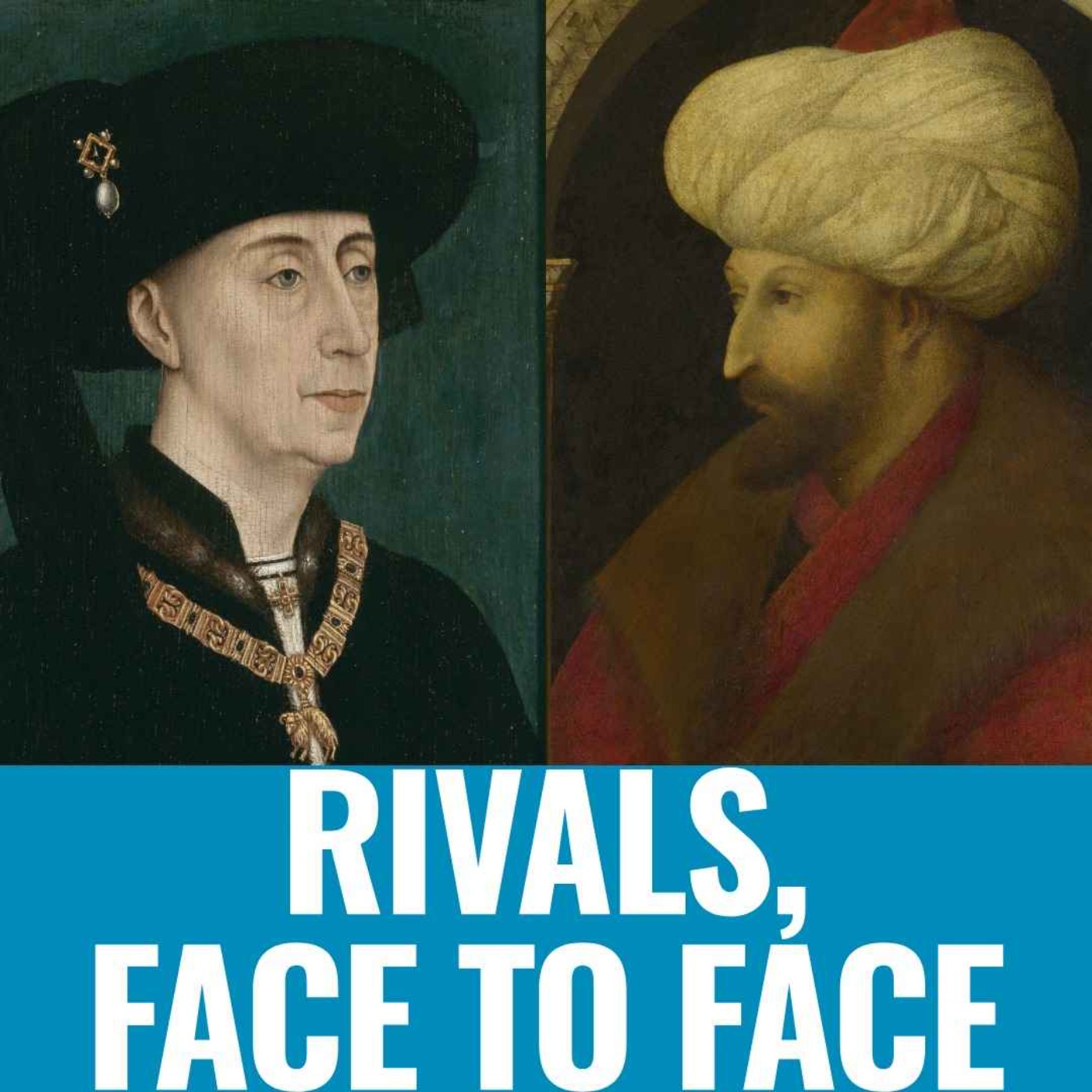
Yeah, I'm gonna. I'm gonna. I'm gonna give you three, because it's four years of my life. So. And to reduce the. To pick one. The exhibition is divided into a separate bunch of worlds. So Bruges starts to grow from about the 850s. That's about the time we find the first reference to the word bruga or which means bridge. And it's, it's a place where of Bruges history is connected to the water and its connection to the sea. The first world is the North Sea world, where Bruges and its contacts with England, with Scandinavia and the northern coasts of Europe is what kind of starts to get Bruges moving. And Bruges at that time is a, is a place of exile. It's where the sister and the wife of King Harold flee after the Battle of Hastings. It's the start, it's the jump off point for the evangelization of Scandinavia. But there's a hairpin that is, that predates Bruges. I mean, we got a rudder from a Roman era boat that was moving up and down the canal systems from. That's 2,000 years or nearly 2,000 years old. But there's a hairpin that is not enormous about to look at, but it's made of silver. And there's a very small piece of garnet as a jewel in the hairpin. And this hairpin was obviously a treasured object for somebody, possibly a woman, but not necessarily. But that garnet comes from either Sri Lanka or from South Asia, modern India, and is dated to about 4 or 500 BC. So it's one and a half thousand years old. How it was lost, who owned it, why it was worn and how. But it's a kind of. It's an object that speaks to the antiquity of global trade routes going back more than one and a half thousand years. So that's one the second. We have a picture of heavenly Jerusalem by Hans Memling. Membling is one of Bruges most famous sons as an artist. He, like Van Eyck, are the kind of signature artists of the golden age of Bruges and Memblings. That this picture is held in Turin and is not allowed out often. And the fact that it's come to Bruges, where It was created 500 years ago, and it's a wonderful picture. It shows the donors, the patrons who'd commissioned the work. A Florentine merchant and his wife kneeling in the bottom corner, offering supplication. And the scene shows Jesus entry and crucifixion in Jerusalem. But it's showing Jerusalem in a form that would have been recognisable to the citizens of Bruges, because the city looks similar to how Bruges looks and so connecting in the second world that we show of the world of Constantinople and Jerusalem, of showing how fundamental both those two cities were to Bruges Absolute privilege to have it on display. Released from Torino to come to Bruges. This Goosebumps moment. Then I get a pick. There's a pair of Philip the Good. It's the most famous portrait of Philip. It's sort of like he. As a selfie of how he wanted to be seen and show himself as sort of quite austere. He's wearing black, he's got a jewel around his neck. He's thoughtful. He was a. He was a book collector. He was obsessed about what was happening in other parts of Europe. The Burgundian Empire, of which he was the ruler, or the Burgundian State, I should say was the biggest, pretty much the biggest state in Europe at the time, apart from its Lithuanian Polish parallel to the East. And we have him looking at Mehmet the Conqueror, the man who captures Constantinople in 1453. They're contemporaries, they knew about each other. The portrait of Mehmet, dubbed by Giacomo Bellini from the National Gallery. It's one of the most famous portraits of any Ottoman sultan. And we brought these two men who were peers, rivals, competitors, viewed each other as cultural equals, but also as competitors. They've never had these two. We've never had these portraits shown alongside each other at any point in history. As it happens, they are both looking at each other, which is very nice, or looks like they're looking at each other. So having them on display, it's a kind of absolute jackpot moment to show the two most important figures in Europe of rising empires and states that are reshaping, reconfiguring art, literature, the military. It's absolutely fascinating. And then I do have a single object that if I were to pick one. But I'm now feeling bashful. I've picked already three.
- [15:33]
C
Go on. It's too late to be shy at this point. Well, that's your extra object.
- [15:39]
B
Well, the third world of Bruges and the Silk Roads in the Middle east we'll come back to, and then the world of rituals and competing courts. But there's a proper shout out that I would have, that I did a lot of my PhD work on the 11th and 12th centuries and sort of the three key parts of the world that I've been focused on ever since, which are West Asia, Iran, Persia, the Middle east after the Islamic conquests. Part of it was on Russia, Ukraine and the Slavic world, and then on the pre Mongol connections across Central Asia and China. But the key figure that I was interested in is a. A Roman emperor called Alexius the First, he's the. He's a man who inherits the Roman state. We call it the Byzantine Empire, but it's the East Roman Empire, the continuation of the Roman Empire, inherits an empire that's on its knees and through the force of his character and the force of the decisions he makes, is able to save the empire from its deathbed. There are two known images of the Emperor Alexios, and one of them from the Vatican Library, I don't think has ever been lent from the Vatican Library before. And it's come to Bruges. It's a spectacular image of Alexius on a gold. On a piece of gold leaf. And on the opposite page, he's in conversation with the Church Fathers. So it's setting up Alexius as a man of profound intellectual curiosity, of orthodox integrity, and as a defender of Christianity. The reason why he's got him in Bruges is that the Counts of Flanders, the rulers of Bruges and the surrounding area, had been very interested in pilgrimages to Jerusalem. And in the late 1080s, Robert of Flanders goes to visit Jerusalem. On his way back, he meets Alexius and strikes up a good personal relationship with him. And the Emperor says to him, please, can you send me knights? I particularly need heavy cavalry, men on horses who are very good against Turkish invasions to come and support. And Robert, when he gets back, sends 500 Flemish knights to come and help him, and we can track them when they reach the Byzantine Empire, how they're used against Pecheneg nomads, pre Mongol nomads, and then against the Turks who are pushing against the Christians in Asia Minor. Robert's son, Robert ii, then takes part in the Second Crusade, where we know he meets Alexios again. So it's a very important connection that Alexios is there, symbolizing the importance of Jerusalem and Constantinople. But through a series of fate and fluke, 100 years later, Baldwin, the Count of Flanders at the time, takes part in the Fourth Crusade. And those of you who know your history know that the Fourth Crusade head to Jerusalem but don't make it. And they end up at Constantinople. And through a series of misunderstandings, opportunism and betrayal of their Christian vows, they end up sacking the city. And the Crusaders decide that one of them should become the new Latin Emperor of Constantinople. So. So Baldwin gets elected to be the Emperor of Constantinople, and his brother Henry then becomes the Emperor of Constantinople after him. So Flanders and the Counts of Flanders and Bruges has a deep connection that goes through Alexius, but to the city of Constantinople. Most Belgians have. And people in Flanders have absolutely no idea that their ruling house were emperors of Rome, emperors of Constantinople. I mean, it's literally something they've never even heard about. So we've got lots of objects that speak to Henry's daughters, for example, sign themselves off as princesses of Constantinople and as the power invested with the imperial house and rulership of the Roman Empire. So these objects, they tell these fascinating stories. That image of Alexis means a huge amount to me personally, but it speaks to this extraordinary connections that Bruges and Flanders have to the Mediterranean, to Constantinople, to the Black Sea, and to the worlds that's connected to in the Indian Ocean, Central Asia and beyond as well. So that's a long answer.
- [19:28]
C
Afwa, that's fascinating, Peter, but I also, you know, I'm not an expert to any extent. You are in the Crusades, but I think it's often flattened into a story about how the European Crusades ended up being so destructive for the Byzantines. And so to know about those personal relationships and connections of support before the Fourth Crusade is a really humanizing detail about the kind of, the bigger picture. I can just imagine, like the young Peter PhD candidate, how thrilled he would have been to see, I'm not going to say older Peter, that was years ago, seeing that painting and Alexius and
- [20:05]
B
as a shout out to gender. Alexius's life is known about almost exclusively through a single source called the Alexiad of his. Written by his daughter Anna Komina. It's the first narrative history written in the European language by a woman. And because it's written by his daughter, the nonsense that's been written about it, that it's an unreliable text. Gibbon famously said it betrays the vanity of a female author on every page. It's not being taken seriously by scholars for the last thousand years. So I have a huge amount of debts to pay back for the. For the platform that it gave me to. For the. For the research that I've been able to do in my life. So seeing the great man with my own eyes and being responsible for bringing him to Bruges, and because he's in the papal archive, you know, all the more. So it's just that single object speaking to these connections, these lost histories, how gender fits in, how, you know, how the ways in which history can get spun on its head. To have him in Bruges in this exhibition has been a joy.
- [20:59]
C
That's so interesting, Peter. I have learned a lot from listening to that, and I can also feel your enthusiasm and how meaningful it's been to you. So that's really cool. Thank you for sharing. And when we come back, I actually have my own questions about Bridge Bruges and about Flemish identities and about how this fits into how local people feel about these stories and how it fits with how they see themselves.
- [21:24]
D
Hi, I'm Nick, co host of the Best One yet. You optimize your workouts, your portfolios, and that rando startup idea that hit you in the middle of the shower. But if you're not hydrated, you're already playing catch up. So we keep a stash of Liquid IV in our studio. One stick mixed into 16 ounces of water is clinically demonstrated to hydrate faster than water alone. With three times the electrolytes of the leading sports drink, plus eight vitamins and nutrients. Whether you're traveling, exercising or podcasting, the best business news ever, Liquid IV makes it easy to stay hydrated wherever life takes you. So shop now@liquidiv.com Liquid IV hydration that goes wherever life takes you.
- [22:04]
C
So one of the things I am so curious about, Peter, when I published my first book, British, the first place I sold it in translation, which was not where I expected, was in Flemish speaking Belgium. And there was so much interest and sense of connection to my book, which you can imagine, you know, as a mixed race person of British Ghanaian heritage and you know, some German Jewish heritage as well. I wasn't necessarily expecting Flemish speaking Belgians to feel that this was a story for them, but as they explained to me when I went and toured the book there, they have such a story about their identity. They are in their own way, I guess, minoritized and have always felt keenly aware of the ways identities are formed in Europe because of their experience. And so knowing that, I'm really curious what this exhibition means to people in Bruges, to Flemish speaking Belgians and to the wider community in that part of the world. How it fits with the conversations they're having about their place in the world today.
- [23:04]
B
Well, Bruges, it's unusual because it has a strong strain of independence of Catholicism and the way in which Belgium has been configured and what Flanders means. It has been a sensitive issue not just for recent decades, but for hundreds of years too. I mean, you're right, the Dutch speaking worlds are ravenous in their willingness to read. I mean it's amazing in the Netherlands too if you where you publish afwa. The the amount of interest there is in reading non fiction of engaging with ideas, it's incredible. You know how many People want. Want to read, and books are protected, they can't be discounted. So people are paying. Paying a lot of money for. For books, too, and they're willing to do so. So there's a real sense of curiosity. So for our publication, which is a. Which is a book with, as well as a catalog, we produce simultaneously in Dutch and French and English, because that's the milieu that Bruges feels itself in, that it's not just Dutch, it's not just French speaking, not just English speaking. It sort of strides across all of these. But it's a good question about Flanders. I mean, I was taught quite a salutary lesson where I went to the Antwerp book fair about 15, maybe 20 years ago. Antwerp, if you're from Bruges, is the place that stole Bruges thunder, as environmental change meant that the canals linking Bruges to the sea started to silt up, which is not in itself a problem, but it costs money and takes time to desilt them. And Antwerp got to benefit from the fact that Bruges was undermined by Habsburg rule. There was a bit of environmental change. And so I went to Antwerp, so slightly grumbling as a result, as a bourgeois boy. And I went to a book fair there, and I thought, great, I'm in the big leagues now, if Antwerp getting me to come and talk about my work. And they have a aircraft hangar where they recondition jumbo jets, which is where they hold the Antwerp Book Fair. And I think it's something like half a million books published.
- [24:57]
C
Wow.
- [24:58]
B
And I thought. And there was a massive wall of Bruce Springsteen memoirs that everyone was queuing up to buy. And I thought, no one is ever going to find my book, let alone choose it. And sometimes it's quite a good thing to sort of be put sat in your place to think, okay, you know, your own place, that finding a readership in an audience is harder than you think. But in the case of Flemish Identity, I think what's been interesting in Flanders as a whole is the willingness to think about the global stories. I mean, it would be much easier to do a story about Bruges that is just the kind of greatest hits. Who are the great heroes? What are the great objects we've got in our collections? But there was not only at no point, any friction, the fact they got me involved in the first place of trying to retell the story of how does this part of the world connect? How does it connect to Scotland and the wool industry? How does it connect to herring fishing? In Scandinavia and off the coast of Norway, which it does. How does it connect to evangelization of the Baltic states and to wood being brought in from and furs being brought in from what becomes Russia? How does Bruges and Flanders connect to the Mediterranean, to North Africa and to West Africa? And I think that the willingness to try and push on those kinds of things is unusual because most of the time, people want the stuff they already know, rather than stuff that's challenging. So it's a very ambitious show, not just because of the number of objects, institutions and the budget and so on, but also because it's telling something that's new to people. So when I be walking around and listening to what people talk about, they'll often stop by the bills of lading collected by Venetian merchants in Alexandria that record the price of pepper that's going to be shipped to Bruges, because your profit margins depend on supply and demand. So knowing what the pepper, not just harvest looks like, but the pepper shipments coming in from elsewhere will tell you where you should be sending your goods and produce. And the fact that people are asking about that or thinking about that, or stopping, for example, by images of the Queen of Sheba, who we have in the exhibition, to show the connections to East Africa and the role that ideal rulers show. Because these stories appear in the Bible, they appear in vernacular literature and secular literature about what does it mean to be a good leader? Who should you learn from? From the past and the Queen of Sheba, like Alexander the Great, are kind of paragons who you should be emulating thousands of years after these people died. It's fascinating to see what it is that people want to think about because they're informing themselves about their own identities. I mean, interestingly, I've been in touch with the exhibition this morning about visitor numbers, which are great, but what percentage of people are from abroad and which. What percentage of Belgians? And so far we have about 85% of the people coming to visit are Belgian. We don't distinguish between Flemish speaking, Dutch speaking, English speaking, because it's very aggressive to ask people to define themselves. Belgium is very, very worried about that, some of that. But it's really interesting how much interest there is people locally to learn more about their own histories and the openness, willingness to do that. It's been terrific to watch.
- [27:52]
C
Did you mean say French speaking?
- [27:54]
B
Yeah. What did I say?
- [27:55]
C
English speaking?
- [27:56]
B
No, but English speaking, too. I mean that, you know, Belgium is also home to a big expat community where English is the primary Language from lots of different parts of the world. And also, you know, the, the ideas of language being a marker of any identity, it's, it's in the eyes of the beholder, too. But I think that, that there is something unusual in this particular corner of Europe, in Belgium and in the Netherlands, of people's appetite and thirst to learn more and, and to. To do it in quite an uncontested way. I mean, you know that for much better than I do. Ideas about race become toxic in Britain very quickly, and they can become toxic in Netherlands and Belgium too. The far right has made lots of gains, but as a whole, the center is more kind of engaged, I think, in trying to ask and to listen to answers about how history helps explain who everybody is.
- [28:46]
C
Do you think that the work that you do, and in a different way I do, that's creating these connections in the narrative, in historical understanding, but also, I think, the neural connections in our brains to understand that our identities exist deeply interconnected to other identities, to huge events that have shaped the world. Do you think that can be a meaningful counter to some of these more populist and neo nationalist ideas? That if the more people visit an exhibition like the Bigger Picture, the more they engage with these stories, the harder it is to kind of have this sense of your existence being in isolation or the rest of the world threatens your identity?
- [29:28]
B
Yeah, I'd hope so. I mean, you know, politics is a different story, and your aim is to capture hearts and minds and to promise solutions and to promise you're the right person that's going to deliver them. I think, you know, you start with baseline knowledge and if you, if you can explain complex ideas in ways that are, have integrity and are honest, they don't have to be threatening even to do with race and colonialism and empire. Some of the things we talk about, you know, just explaining what happened is it doesn't have to be controversial. You don't have to challenge people by making them feel that their identity is being undermined. So, you know, I think it is important. I mean, as it happens, if you do get a chance to go and visit, please do. If you're anywhere near Bruges, and you'll see as you walk in that it's me in hologram form introducing the exhibition and explaining that perspective is what matters.
- [30:17]
C
Wait, wait, wait. So when we walk in, we get a hologram of Peter introducing us and welcoming us there. So you're basically the superstar, the hologram superstar of the exhibition. I love that, Peter.
- [30:29]
B
It is me and it's my voice and it's me popping up. And I hadn't quite realized that it would be quite so prominent. I mean, the team had said it would be great to have a kind of narrator at the beginning, and maybe it would be you. But I'm standing on a map that's created by Alidrisi in sicily in the 12th century, that our way in which we think about the world looks like it's upside down, because perspective matters. So where you stand, how you think about the world, what you know about it, shapes all of your experiences. You get me again, as a hologram at the end, by the way. But trying to explain that globalization is not as new as we think, that exchange is not as unusual as we think, that the minorities coming to live and work in. In. In. In Bruges is not as unusual as we think. We have a portrait of a. Of an African merchant in magnificent silk and velvet clothes to show the connections, not just that there's a connection with Africa, but to show that this is about wealth and it's about profits and it's about success. So, you know, there are all sorts of ways in which you can show those connections in ways that encourage people to have a conversation about them. And, you know, because we're all worthy academics, you know, we try to make sure that we include things like gender, that it's not just about elite trade that we've got. You know, one of my favorite objects is a bunch of stones, literally, that were just in the hull of a ship, because if you don't get the ballast right, the ship topples over whatever stuff you've got in it. But, you know, to show the nitty gritty of how trade actually works. But, yeah, I do think it's important to be showing global connections in a way that allows us to be sympathetic to each other. And I hope that that encourages conversations, you know, and all I can say is, having been at the opening, which, of course, we have the mayor of the city and local politicians turn up, it's important for them to see the sort of genetic tree from which they have come and the cultural tree from which modern Flanders have been born, and the pride at which. Explain that Bruges has been a global city since it was founded. You know, it's really important, and it's. I don't think it's a threatening thing.
- [32:22]
C
Okay, Peter, sign me up. How can we go and see the bigger picture in Bruges? Where do we get a ticket? How long is it on for? How much does it cost? Give us the deets.
- [32:30]
B
Yeah. So it's open until the 8th of September. It's in Bruges, right in the center at brusque. It's €20 for a ticket. There are discounts, of course, if you're a young person or you are under 13, in which case you're free. Please tell them that you are a fan of the podcast and that your fans of Afro and mine and you'll get extra VIP treatment. And do take a photo of me as a hologram. And that's a great, great source of amusement to my children. But it's been such a joy to do and I'm so proud of it, and to bring all these objects together. Like I said, they've never been in a room together. From all over the world, from Constantinople, Istanbul, from. From Rome, from Scandinavia. You name it. And then you can also buy a copy of the book. It's €59, but it's a beautiful catalog. It is pricey, but like I said, they're flying like hotcakes because people in Belgium, in the Netherlands are really interested and they also are willing to pay to read, which is a real. Philip. In a time where we all think that the world's going to hell in a handcuff, it's a real thrill to get a chance to talk about the bigger picture, connected Worlds of Bruges 900 to 1550. And if you get a chance, please go and let us know what you think. So, a quick one. If you want fewer ads and more of this, Legacy plus is at Legacy supportingcast fm.
- [33:44]
C
For everything else, including our substack updates on TikTok and Instagram, just check out the show notes or search Legacy Podcast.
- [33:52]
B
I'm Peter Frankapen.
- [33:54]
C
I'm Afwa Hirsch and we'll see you on the next episode of Legacy.
- [34:14]
D
Hi, I'm Nick, co host of the best one yet. You optimize your workouts, your portfolios, and that rando startup idea that hit you in the middle of the shower. But if you're not hydrated, you're already playing catch up. So we keep a stash of Liquid IV in our studio. One stick mixed into 16 ounces of water is clinically demonstrated to hydrate faster than water alone. With three times the electrolytes of the leading sports drink, plus eight vitamins and nutrients. Whether you're traveling, exercising or podcasting the best business news ever, Liquid IV makes it easy to stay hydrated wherever life takes you. So shop now@liquidiv.com Liquid IV hydration that goes wherever life takes you.