Loading summary
Transcript26 lines
- [00:00]
Nick
Hi, I'm Nick, co host of the Best One Yet. You optimize your workouts, your portfolios, and that rando startup idea that hit you in the middle of the shower. But if you're not hydrated, you're already playing catch up. So we keep a stash of Liquid IV in our studio. One stick mixed into 16 ounces of water is clinically demonstrated to hydrate faster than water alone. With three times the electrolytes of the leading sports drink, plus eight vitamins and nutrients. Whether you're traveling, exercising or podcasting, the best business news ever, Liquid IV makes it easy to stay hydrated wherever life takes you. So shop now@liquidiv.com Liquid IV hydration that goes wherever life takes you.
- [00:37]
Peter
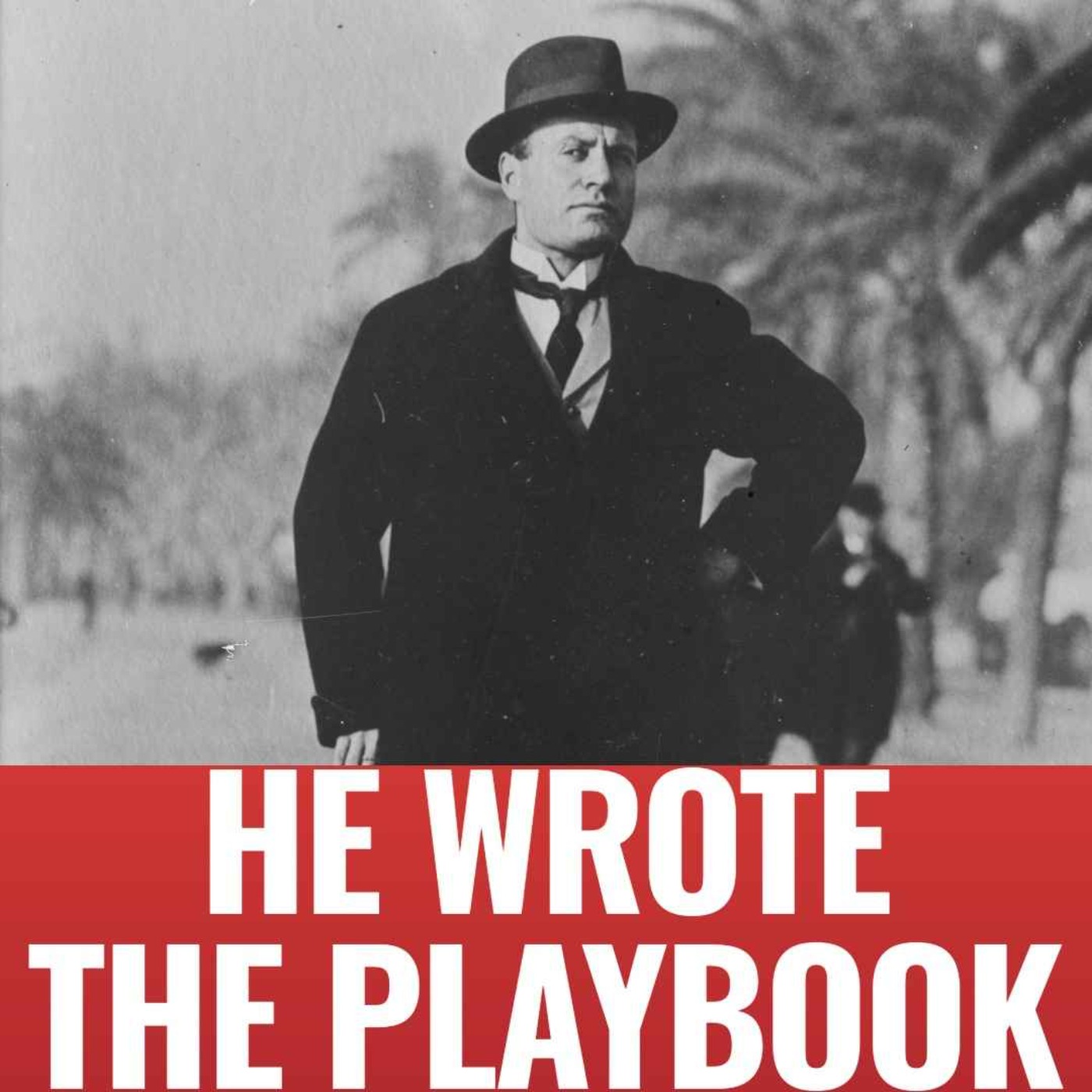
Football is often described not only as the beautiful game, but as the world's game, capable of bringing together people across borders, across cultures and politics. Yet, as you've been hearing on Legacy, the history of the World cup tells a more complicated story, too. For nearly a century, authoritarian leaders have recognized that the tournament is about much more than football. It's about a chance to project power, to shape international opinion, and to strengthen their own legitimacy. My guest today is Karim Zidane, an investigative journalist and the creator of the podcast series the Authoritarian History of the World cup, which I strongly recommend. And you can find a link to that in the show Notes from Mussolini's Italy in 1934 through to Russia, Qatar and beyond. The series explores how dictators have used football's biggest stage and why the rest of the world has so often played along. I was joined today by Karim to talk about what history tells us about the relationship between sport and power, why it matters as much today as ever, and also, why is it that dictators love hosting the World Cup? I hope you're going to enjoy this one. It's a fantastic conversation. But enjoy this episode about the World cup and authoritarianism and dictators. So, Karim, it's been fantastic listening to your podcasts that you've done for Human Rights foundation on authoritarianism and the history of the World Cup. It's something that AFWA and I have been talking about a lot recently, so it would be great to get you to come and share some some thoughts with us. But first, how did you get involved with the Human Rights Foundation? Was the World cup something that you've been thinking about doing in advance? Was it too good an opportunity to miss? Was it because it was happening in the United States and Canada, where you're based on, and Mexico? How did you decide to cover this in the first place.
- [02:25]
Karim Zidane
Honestly, Peter, I've been covering the intersection of sports and politics for well over a decade now. So the Human Rights foundation had come across me a couple of years ago and wanted me to help establish a sports and dictators program for them. And one of the big ambitions I had was to devise some sort of audio, documentary and narrative series. Because, I mean, as a longtime writer and as a journalist and somebody who believes in long form magazine style journalism and investigative reporting, I can tell you it's very hard to get people to read that. But I still believe that there are different ways that we can present this information that might be more, let's say, digestible to people in the modern age. Now, since people love podcasts so much, I thought, well, let's give this a go and see if we can get people to listen to my investigation rather than sit down and read 5, 6, 7, 8,000 words. So that's what we attempted to do here. And it just simply made sense. You know, no matter where I was based for this World cup, there had been so much discussion about how joyless this event was going to be given sort of the vast scale of geopolitical concerns, the issues in the United States under Donald Trump. There were so many reasons for us to think that this might finally be the World cup, where people can't unite, can't be together, can't enjoy themselves. So I really wanted to do a podcast on why this happened, why we arrived at this point, because it wasn't such a simple answer as, oh, it's just Donald Trump's fault. Don't get me wrong, much of it is. But this is a story far older than that. And for us to understand how football and the World cup arrived at this point, how it became an entity that's just so suitable for. For authoritarian regimes. We have to go back to the beginning of FIFA to understand how it evolved into this shape. And that's what this series is really about.
- [04:19]
Peter
So before we go into the World cup itself, was there a moment, I mean, about your own personal journey? I mean, you argue very powerfully and persuasively that sport is never just sport. Right. But was there a moment in your career that you, you figured that football, Formula one, and the Olympics are really windows into international politics and geopolitics? And then I'd like a second question to ask you about why dictators love this stuff. Maybe, maybe do the first one about how you got to that idea that this is telling more complex stories than 22 guys on a Field kicking a ball.
- [04:50]
Karim Zidane
Well, honestly this, this, this lifting of the veil for me happened long before my career actually started. So I moved back to Egypt, which is where I'm from, around 2006 and 7, coming back from the Middle east where my parents were working at the time. And I didn't really have many friends at the time, I had my cousins and my family obviously. And my cousin took me out and said, hey, come watch a football game with us. And the team that we supported was one of the biggest in Africa, which is Al Ahli from Egypt. And they were actually playing a friendly match on their centenary. They started in 1907. So it's 2007 against Barcelona. So mind you, that's actually happening again this summer, so be the first time in 21 years since this match that I'm talking about. But this was one of the first football games I ever attended. Now I loved Al Ahli and I loved my cousin. I wanted to be around these people. And he had a crew of friends who had just joined the Ultras groups from Al Ahli. Now the Ultras, as you might have heard and your listeners might have heard across various countries, they're these passionate hooligans of sorts that are known for sort of unveiling massive tifo banners in stadiums, big chants and in many cases can get quite aggressive and violent and can some countries can even be fascist entities as well. That was not the case for the Ultras in Egypt. They were a group of young men who wanted to find their voice in Egypt. At the time there was really no hope for us in the future. Unemployment was at an all time high, you know, the economic conditions were terrible, there was massive corruption, police brutality. There was no hope for us in Egypt. So really getting together in stadiums and chanting was a way to empower ourselves. And the focus was always the government. So that was the only enemy that the Ultras in Egypt, the Ultras Ahlawi, had discovered. So I'm attending matches with the Ultras Ahlawi and really absorbing this monumental feeling of being part of something that far bigger than myself. And I'm about 14, 15 years old, I'm the kid of the group at this point. And they're all sort of, they're all teenagers but a bit older than I am. And I remember at one point during the match, it might have been half time or in the second half when police officers start to swarm the section of the stadium where the Ultras are sitting, they start pulling people out that look exactly like me, that are as old As I am, if not just a slight bit older, and beating them badly with batons now. All I could think of at the time was, why is this happening? What are you afraid of us for? We're children now. Peter it was only years later, in 2011, that it became clear to me that the government might have actually had a right to be afraid of us because. Because the Ultras were actually instrumental to the Egyptian revolution. Had it not been for the Ultras. They were the only entity that actually had experience in combat with the police, that understood how to not be kettled and herded like cows on the streets, understood how to protest, how to avoid tear gas, how to handle tear gas when you're swarmed by it. This was unbelievable expertise and invaluable for the people who attended the protest at the time. So you have a situation here where football fans became revolutionaries and were instrumental in bringing down a 30 year old regime of Hosni Mubarak. That to me is a great example of how sports are political and how football even can occasionally be a source of good. This was my introduction into this world and I wasn't even a journalist yet. So that's the beginning for me.
- [08:23]
Peter
So flip it around the other way. Afua and I have been talking on legacy, about colonialism and the fact that Egypt played in 1934, was the only African team to play until the 1980s. The fact that this World cup has been much more representative as a whole other story. But I'm interested in the opposite of our relationship. You talked about not about the protesters and the fans learning how to be kettled and how to resist tear gas, but about dictators and how the weaponization of sport gets used. I mean, in these, in these episodes that you've done for your podcast, which I'll probably put a link in the show notes for everyone to listen to to. I mean, do dictators, do you think they fundamentally enjoy sport? I mean, you start your series with Mussolini. Do these guys enjoy it? Do they see that it's propaganda value? Does it because there are lots of people in the stadium and they think, right, there are hearts and minds right there. If we can win them over. What's the relationship from the dictator and authoritarian states through sport and football?
- [09:13]
Karim Zidane
I think honestly, context matters here. It depends on the dictator. Let's use the ones in the series. For example. I legitimately think Benito Mussolini is a fan of sports now, not necessarily football. Football was a unifying force in Italy. He understood that this was a global event and a sport such as football was replacing the social norms of things like church and religion as the major social forces that can unify people. And Italy, at the point, was not a unified country in the same way we understand Italy to be now. So football became this massive means of mobilizing and unifying a fractured country, and that's really why Mussolini wanted to utilize it. He also understood the World cup would be a massive platform to present fascism on the world stage, to contrast it with sort of the collapsing state of Western democracies following World War I because of, of course, the terrible economic conditions at the time, etc. But really, when you think of Benito Mussolini and the sports he actually loved, you think far more of motor racing and of boxing. And there's reasons behind that, of course. He connected motor racing with technology and speed and the advancement of civilization and wanted to connect that with fascism as well. Now, fighting and boxing, on the other hand, is more representative of Mussolini's understanding of what the ideal man was. Was and masculinity. And this is crucial to fascism overall. So, as you can see, different sports play different roles for Mussolini. So is there a built in, passionate love for football? Not necessarily. But did he understand how to structure and create this blueprint that would ever since then be utilized by dictators over decades? Absolutely. I think to this day, he might remain one of the most successful examples of this weaponization of football.
- [11:11]
Peter
Tell me, Karim, because here in Europe, we tend to think about doing a bit of gardening and writing poetry, but when we've just had the 250th anniversary of the United States, and I don't want to project. And using words like fascism is a difficult one. And I know it's also controversial because comparing Trump with Hitler Mussolini is completely inappropriate for all sorts of obvious reasons. And yet when you have the cage fighting in front of the White House, that's all about masculinity, that's all about projection of power, that's all about showing what is expected. And you're expected to also enjoy this stuff. I mean, is that how it looks to you from the position that you have in both in Canada and North America? And as someone with Egyptian heritage and someone's looked at dictatorship, how do you evaluate how Trump played through this World cup and how he plays through sport and soft power and the projection of some of the things you'd be talking about?
- [12:00]
Karim Zidane
What an excellent question. And Trump is surprising to some people, really is quite a complex figure when it comes to sports, because again, here's somebody who utilizes different sports in different ways. So you might. Let's start with the World Cup. You might have noticed that Trump didn't appear at any football games until the final. That's because he has no connection to football. He doesn't understand it. He doesn't care about the sport. He has no relationship to it. He does not understand how he can derive prestige from it. All he understands is that this is the biggest sporting event in the world. So I'm going to attend the final, I'm going to hand over the trophy myself and get to be at center stage. That's the most he was able to truly derive for himself from that. And that's really what he cares about, is his personal brand, which is logical, I guess, right?
- [12:47]
Peter
I mean, if the United States had got through to the final, the problem is he doesn't want to be there when the US Loses. And he's not going to turn up to England against France or Argentina against. Against England, because why. Why would you. So was that. Is that because he recognized also that there wasn't the political capital there, too?
- [13:02]
Karim Zidane
Exactly. Like this is. What I was telling people from the very beginning is that, sure, this is a massive spectacle that Trump gets to host, but it's not the perfect platform for his propaganda. It certainly isn't. I mean, they tried for a while. While the US Men's national team was on a bit of a tear in the beginning of the tournament, you'd notice that's exactly when the White House started using its social media to present these awful fascistic narratives about, oh, we'll use the. They'd have picture of the team and they'll say, we're building that wall. All these awful things about their ideas and connecting it to their America first ideology. But that didn't last very long because the team didn't do very well. So you had nothing. Unlike Mussolini in 1934, where Italy actually went to the final and won the final. So you had this continuous optimization of propaganda throughout the tournament. Trump didn't have that with the World cup, but Trump does have it with other things. Let's say what you mentioned, the very beginning here, which is the UFC White House event. Now, whenever people would ask me, you know, which of these events are the biggest, I'd say the biggest example of propaganda is absolutely this White House event. Why? Because Trump was in complete control here. He structured the event. He gave it the date he wanted, which happened to be his birthday. Of course, not America's 250th birthday, but his specific birthday. And he was in control of even some of the fights that occurred that night. He was picking fighters who he wanted on stage. Right? So this, to me, is far more reflective of Donald Trump's ideology. This is somebody who believes in himself as a strong man, even though he doesn't look like a strong man. This is a person who has spent, particularly this administration, presenting the ideology of might is right. Now, what better way to cement that authority, that perspective of yours, than by connecting yourself to mixed martial arts fighting a supposed meritocracy, or at least structured as such, where the toughest and the most talented win in the cage? Right? This is a meritocracy that doesn't necessarily exist in the rest of the world, but it's exactly what's so appealing to Trump and his administration, because it's what they're trying to present on the world stage. We are tougher than the rest, and we're going to take what we want no matter what. Damn the world's decorum and the global order structure that has existed for decades. We are stronger, therefore we are right. And that's basically the narrative. And that's why the event was so connected to the military. It is no surprise at all that the Department of War, as they call it, debuted its first television ad right before the main event. And it was a horrific ad that really presented them more as supervillains than anything else. But that is exactly what they want you to see right now. And mixed martial arts is the perfect sport for Donald Trump to connect and to express that message to a wider audience.
- [16:05]
Nick
Hi, I'm Jack Revici Kramer, host of the best one yet AT T. Boy, we're always talking about small decisions that can have an outsized impact. One of the simplest is staying hydrated. Whether I'm traveling, getting a workout in, or heading into a busy day, I keep Liquid IV on hand. It's clinically demonstrated to hydrate faster than water alone and contains three times the electrolytes of the leading sports drink, plus eight vitamins and nutrients. It's an easy addition to your daily routine and helps support hydration when you need it most. Shop now@liquidiv.com, liquid IV, hydration that goes wherever life takes you.
- [16:37]
Karim Zidane
This episode is supported by FX's the Shards, a seductive drama from executive producer Ryan Murphy. Set in 1980s Los Angeles, the series follows a group of glamorous, deeply entangled high school seniors drawn into a life of wealth, beauty, parties, and excess. At its center is Brett, whose reality begins to unravel when the arrival of a new student coincides With a series of mysterious murders. FX's the Shards premieres August 5th on FX. And HUL.
- [17:13]
Peter
Tell me about again, there's another way of doing this. One of your episodes about the dirty war and the World cup in Argentina in 1978. That was a time when a military junta had taken over with her human rights. Not just abuses, but atrocities of people being separated from their children, the forced adoptions, people being flown out over the river plate of the Atlantic and just thrown out of airplanes. But the, the, the, the. The regime at the time use the World cup to present a very different soft face of Argentina. How do, how do you square? I mean, you can see the might is right. This is how we're going to do it, on our terms. I get that model. What's the model about? We're going to be peace and flowers, even though the reality is very different.
- [17:51]
Karim Zidane
Well, interestingly, General Jorge Videa and his military junta in Argentina weren't the ones who bid to host that World cup in 1978. They simply inherited it when they overthrew the government. So they had time to think to themselves, hey, we aren't really sure we want to actually host this. They were actually a bit concerned because they understood the obvious, which is, you're going to host the world, the world's going to notice what you're doing. You're inviting them into the horrors you're committing. And they really didn't want to do that because they operated with well known intimidation tactics and well publicized crimes that they were committing. But they operated still in elements of secrecy that helped maintain an aura of fear around the country and around the government. And they wanted to maintain that. And they certainly didn't want interference from the outside world. But they doubled down in the end, and when they did double down, they decided, okay, this cannot be an embarrassment either. So they invested in their team. They applied tons and tons of resources and structured the event in such a way that their team could thrive in the scenario rather than be sort of rolled over. So that's kind of what happened then. You just need a little bit of luck, Peter, because remember what I said earlier was Mussolini's 1934 World cup saw Italy go straight to the final. That actually is exactly what happened in 1978 with Argentina. The Argentine team did incredibly well. And with each passing victory, more and more people amassed on the streets. The government was actually terrified, they would call them the monster in the streets at the time. And they were terrified that this monster would turn against them rather than simply be distracted and enjoying the moment of celebration. But they didn't. The people were so overwhelmed with joy and the experience of collective joy that it actually distracted from the world that they were occupying at that time. They weren't thinking of the people who had been disappeared. They weren't thinking of the mothers who were protesting their missing children. They weren't thinking of any of that. They weren't thinking of the government. They were thinking of the fact that they were so close to achieving the World cup. And this was what happened. At the end of the day, the tournament was a success for the regime because the people made it so. The World cup in and of itself is such a potent entity that it can cause you to completely forget about what's happening around you. And that kind of happened in the 2026 event. We started this by talking about how joy the event was. Well, look around. For the past six weeks, that's not exactly what you hear people saying. You've seen people dancing in the streets in Times Square, in Vancouver, in Toronto, in Dallas, Texas, in Houston. I mean, ice raids are still happening everywhere, yet people were smiling and celebrating. That is the contrast here. That is the sheer power of collective joy. And it can be weaponized very easily by these dictators. And that's what Videla and the Argentine military junta did in 1978.
- [20:57]
Peter
So what responsibility? I mean, as a football fan, you know, it's a very conflicting question where World Cups are held. In Argentina, you know, we, we saw the Russian World cup in 2018. You did an episode on that too, and with, you know, connected pussy. Right. This had come after Crimea had been occupied and Donbass too, before the full scale invasion. But still, nonetheless, you know, a chunk of Ukraine had been taken over by, by little green men, as Putin called them. You know, we've had a World cup in Qatar. There was a lot of attention on human rights and so on there. We've got Saudi Arabia coming up too. You have the U.S. what should fans do? What should players do? What should FIFA do? Should the World cup only be held in wealthy countries that have good gender equality and good human rights and free presses? How do you think this should work? Does that joy that you mention, is that ultimately quite positive? Does that sweep? Is it quite good to sweep some of this stuff away? Are we all being hypocrites by enjoying the football? I mean, I'm so sorry to see Egypt 2 nil up against the winners or runners up, I should say Argentina and then go out. I went in to go and give a talk that evening when Egypt were 2 nil ahead, Kareem and I came out, I was going to say at my talk, well, Egypt just knocked Argentina out, which would have been a great result. And not, I'm not anti Argentine, the way they played in the final wasn't great. But it would be so great to have a team from North Africa, Africa to get to the final and to win. But is the joy, are we all just, you know, just hiding behind the fact that it's great fun to watch and therefore we're giving free passes that we shouldn't normally be doing?
- [22:26]
Karim Zidane
There's a lot to answer there. But I love these questions. So listen, the world is not easy. It's not getting any easier. And I think people are entitled to escapism. Sports make the best of escapism, I think, for the most part, and that in itself is not a problem. But I don't want people to be willfully ignorant in their escapism or in their pursuit of escapism. You can be aware of what's happening around you while still enjoying the escapism at the same time. Like the World cup and collective joy. Right, let's get to Egypt, which you just mentioned. Egypt's run through the World cup was historic. And as, as Egyptians, we were thrilled. Let's forget the Argentina match for a second. But that whole run through the tournament built such excitement in the country that was not excited for the team performing to begin with, but as they started winning games, it just. The people amassed on the streets in ways I had not seen since the revolution. Now really think about that. The fact that people have not been, you know, linked hand in hand and smiling and on the streets chanting in joy for the past 15 years. And the thing that brought them back to it was their achievements at the World cup really says it all about the power of football and the power and potency of this event. Specifically, it mattered to Egyptians and it was an opportunity for us to get this rare moment of happiness. I mean, the things that Egypt has been through over the last 15 years, I understand it's not as bad as some of our Arab neighbors in the Middle east, but it's still been no walk in the park. It's been an awful experience for most people. There's economic desperation, there's political polarization, there's all sorts of things going on. So football was able to change that for just a few weeks. And that's just a wonderful thing in and of itself. But if you ask me, is that enough for us to sort of Allow the World cup and FIFA to continue to pursue these alliances with authoritarian regimes. I'll say that the problem now lies in the fact that as they continue to expand these mega events, we need to find a new word beyond mega event like supernova event or so I don't even know what you're going to call these things moving forward. They're trying to already expand the 4018 World cup, which is already brand new and seemed a bit excessive, 104 games, honestly, to a 60, 64 team competition. That's twice the size of the original World Cups that we've had for almost a decade, for almost a century. That's extraordinary. And it also means that the countries that will be able to host these events will be very limited. No democracy that's accountable to voters is ever going to be able to invest the kind of money required to, to, sorry, burn the kind of money required to host such an event or to build FIFA, you know, capable or allowed stadiums. That's just extraordinary. Right? Think, let's use Morocco as an example. One of the co hosts of the 2030 World Cup, Morocco has emerged as one of Africa's superpowers in football, if not the, the prominent one right now based on its performances in the World cup, but also the fact that it's now one of the co hosts for the 2030 edition. It is in competition to host the final because one of their massive showpiece stadium that's being constructed right now will be able to house 115,000 people. That is just an extraordinary number, will be the biggest football stadium in the world. And they are actually in competition to take that final away from Spain, the current world champions. That goes to show you how influential Morocco has become. But it was only a few months ago that Gen Z protesters took to the streets demanding that the government stop investing so much in football and start responsibly putting that money back into public infrastructure and into health care and to find future employment opportunities for the youth. These are the things that actually matches with them. So Morocco is in a situation where it's trying to balance the tensions that emerge from becoming a footballing superpower and the costs associated with that, the very harsh, true costs that are associated with that. And if that's just Morocco, a country that's co hosting with two other powerful nations, then what hope is there for the future of the World cup ever taking place in a democratic nation without incredible amounts of human rights abuses? I mean, look at what happened in 2026, 2034. War will be a more dramatic version of what we saw in 2022 in Qatar, because that was one of the major issues was the fact that this is a big sort of empty desert where you now have to construct all these World cup stadiums and you do so through the exploitation of migrant workers. Well, Saudi is a far bigger country with far more migrant workers and absolutely no accountability. And unlike Qatar, which hadn't sort of ingrained itself into the football ecosystem as much ahead of its own World Cup, Saudi Arabia not only owns a bunch of teams, but sponsors basically everything. Anybody who watched the 2026 World cup must have seen the Aramco sponsorships everywhere in every stadium. That's because Saudi is so thoroughly ingrained and so influential across the world of football. Good luck holding it accountable for anything. So here's the major cost. You have this incredible event that brings so much joy, but at the same time, FIFA is a monstrous, cancerous, corrupt patronage system that is in charge of the world's greatest spectacle. And that's not a good thing.
- [28:17]
Nick
Hi, I'm Jack Revici Kramer, host of the best one yet AT T. Boy, we're always talking about small decisions that can have an outsized impact. One of the simplest is staying hydrated. Whether I'm traveling, getting a workout in, or heading into a busy day, I keep Liquid IV on hand. It's clinically demonstrated to hydrate faster than water alone and contains three times the electrolytes of the leading sports drink, plus eight vitamins and nutrients. It's an easy addition to your daily routine and helps support hydration when you need it most. Shop now@liquidiv.com Liquid IV hydration that goes wherever life takes you.
- [28:55]
Peter
Do you think, Kareem, that we, we pay too much attention, these conversations to the host? I mean, plenty of authoritarian regimes have teams that they build up with lots of money, lots of support. They send them to these World Cups. I mean, is there a difference about hosting a World cup and let's say winning it? If you're from a corrupt human rights abusing country or one where the, where the rights are much, much lower, is that that's problematic? 2. I mean, as it happens, when European countries win, we tend to be quite high up. We tend to do well on these indices for lots of different reasons, largely to do with our wealth and the fact we've had a long time to understand the sins we've inflicted on other parts of the world that AFWA would be reminding if she was here too. But is this just about the host? Is it about the way in which Sport gets used by dictators to wash reputations. And I wonder whether you think there are some people who've done that more effectively in football or in other sports. Who's done that really well, do you think, managed to polish up their reputations? Who's been really bad at doing it?
- [29:56]
Karim Zidane
So I think when we're talking about these major events in general, I think every country, whether democracy or an authoritarian regime, is trying to use sports and let's say the World cup for some sort of soft power aim, right? At the end of the day, you're trying to, at the very least do some sort of brand management here, where you're trying to make your country look good, you're trying to maybe increase tourism or something. Why else would you be hosting this if not for some sort of increased prides of nation or something? Right? So this is not unique to authoritarian regimes, but it becomes far more concerning when we look at their political ambitions and the fact that there is no accountability whatsoever for human rights abuses. So these are the primary issues that I have with authoritarian regimes. And this is not just enabled by authoritarian regimes, but by FIFA itself, which has a human rights policy that it's simply never applies. It's worth less than toilet paper as far as I'm concerned. That is on FIFA, that is FIFA's responsibility because it could have applied far more human rights issues and brought them to the forefront at this World cup and it chose not to do so whatsoever. And that will forever be a stain on the 2026 edition, much like there are stains for the 2022 and 2018 editions. The thing is, a lot of these countries that have recently utilized the World cup have been very successful. There can be arguments made against Russia and Qatar, but I don't them Russia was remarkably successful. Vladimir Putin was looking to use this event not to distract from human rights abuses, but to reintroduce Russia to the world post the Soviet era as a successful, thriving structure and people bought it. I remember I was covering that World cup and I remember how the British media wrote about it, how the American press wrote about it, and generally the glowing reviews for the tournament and for the people who visited Russia at the time. And as somebody who spent years doing reporting in Russia doesn't surprise me. It's a beautiful country with lovely people and it's very easy to get sucked up into the joys of the World Cup. And that's what happened. And Putin comes out of it thriving, truly thriving. He even managed to increase the age of retirement and pension in Russia, while People were out celebrating Russia's remarkable performance leading to the quarterfinals. So even he was able to take that collective joy and use it for political gain in Qatar. This was a country that nobody could even point to on the map. And now everybody knows what Qatar is. That prestige and nation branding and nation building would never have occurred had they not hosted the World Cup. So you're talking about nations that still consider this successful. Events that would, if you ask them, will never tell you, no, I wish we never hosted the event. It's a very different point.
- [32:41]
Peter
Karim, what gets achieved by doing that? I mean, everyone knows where the country is for the World Cup. If it goes well, they're good matches. And then everybody forgets. Does it really translate into something? Is it, is it a vanity project? Is it something that really brings prestige? Is it something that has underlying commercial purpose? Or is it just, you know, you can afford to do it? It's what you get to do if you're a leading country and you want to do it because you want to do before your neighbors do it.
- [33:08]
Karim Zidane
Well, let's use Qatar, because I just, I just talked about them. There are geopolitical reasons for this as well. Yes, you do want to do it before your neighbors. Yes, this is a nation building exercise. But also Qatar was a country that had security risks. Right. Its biggest neighbor was Saudi Arabia. It was not politically aligned with these other countries. Right. It was supportive of these various extremist militias and Islamic radicals around, around the region as well. At one point, Qatar was facing a blockade from the rest of the Gulf. And this is also an area with massive amounts of natural resources and gas and oil. So they were potentially under threat by their much more powerful and influential Gulf neighbors, being Saudi Arabia, the United Arab Emirates, etc. Yet when they bid and successfully managed to achieve the right to host the World cup, things started to change. Despite this Gulf blockade, the other countries were not able to get Qatar to bend to their will. And in the end, they had to, you know, cancel this blockade, had to lift it entirely, because they wanted to involve themselves with Qatar's World Cup. They wanted a piece of the action. They started reopening, introducing flights to Qatar because they knew their own citizens had to go and attend. And Qatar also had control of broadcasting rights for major sports events in the region as part of its soft power strategy. So when you connect the World cup and the soft power you achieve from that, plus you connect it to the fact that Qatar was already smart in strategizing by controlling broadcasting rights through BE in Sport in the entire region. So if you wanted to watch the World cup, you had to go to Qatar. You had to have those channels. So Saudi couldn't blockade them anymore, Bahrain couldn't blockade them, and the same example with Al Jazeera there. So to me, yes, these are remarkable opportunities to change your political standing. And it's a form of geopolitical jockeying for position, which is what was happening between Qatar and Saudi Arabia at the time. And now, guess what? There is no blockade. And Qatar hasn't really had to change anything about its politics. And in fact, it's even more involved with diplomacy and negotiations around the world. Qatar was actually involved in the freeing of hostages and negotiating with Hamas post October 7th. So, yeah, I'd say the World cup has long standing effects for some countries.
- [35:34]
Peter
You spent years, Karim, I'm conscious of time. You spent years looking at powerful states, dictators, autocrats, billionaires, sporting institutions. Just don't think. Have you become cynical? Do you, Are you, are you harder to shock than you used to be? Have you been around the block so many times that you just sigh with, you know, you've seen it all before? Do you think. And are you optimistic? Do you think by having these kinds of conversations we can get to a better place? How's the, how's the temperature with, with, with you?
- [36:03]
Karim Zidane
It's. It's really hard not to be cynical in general. I try my very best not to be, but I'll. Let's hear, let's look at a positive. When I started doing this type of work about 10, 12 years ago, and I'd say I covered the intersection of sports and politics, people used to give me this sort of blank stare, like, why? But what, what is it? What, what does that even mean? I would have to give them the only example I could give them at the time that would sort of make sense as, oh, you know, Qatar and what's about to happen in that World cup in a few years, that sort of thing. And even then, they didn't get it. Now when I mention what I do for a living, people literally just will interrupt my sentence midway through to give me examples off the top of their heads. This is a much more prominent topic of conversation. It's no longer as much of a niche topic. It's something people are discussing whether they agree or disagree. At least we're having that conversation. So that's an advancement. The level of awareness has increased and that's all I could have ever asked for when I started doing my type of work. I've never asked People to boycott events. I don't necessarily agree people can do individually what they choose to do. That is entirely up to them. But I don't use my work as a means to shame people into boycotting an event. I would much rather people take the knowledge that I've given them, use it to keep themselves on guard, to lift that veil and to be aware of what's going on around them. Because at the end of the day, this weaponization of sports that we see, these sports are things that you love, things that you care about. Well, understand that being critical of them and being aware of what's going and vigilant is what's going to protect your sports long term. Because these people don't have the best of intentions. I think a lot about and I've spoken to many Newcastle United fans following Saudi Arabia's purchase of the club and they've seen massive gains since then, right? I mean they've made their way back into the Champions League. They're up, up in the Premier League again. They've gotten a fantastic team. This is all well and good, but eventually one of two things will happen. Saudi will get bored or it will run out of money. And we're in a situation where the money issue is becoming very serious because of the geopolitical situation with the war with Iran and the straits in Hormuzzi, all that is very real. And once that happens, Saudi will not think twice to throw your club away and never think about it again. To them, they will continue to be rich, your club will go, you know, and collapse once again. And you will have to spend years thinking about all those wonderful things you said about the Saudis and the amount of loyalty and the amount of support and the amount of propaganda that you did as a good little soldier simply because you were so happy they invested in your team. Team. We can be better than that. We really can. But all I ask from people is to be aware, to refute willful ignorance and to want the best for football and for their club. And that means reforming things like FIFA. That means standing against authoritarian regimes when they purchase your club. Not standing there and wearing a thob and celebrating and welcoming them in with open arms. They are not your friends, they are your enemies. And they are the enemies of the sports that you love.
- [39:13]
Peter
Karim, so interesting to talk to you. Your series, the authoritarian History of the World Cup. I recommend everyone to listen to as a corollary and an add on or side by side with our, with our World cup series that we've been doing where We've been thinking about who gets excluded from these tournaments, how the architecture of FIFA has expanded over years, but it's taken a long time to get there. But also how sport gets used for propaganda terms and power money. These things are not completely new. They're not unique to football, they're not used to sport, but they're allowed to think about the world around us in different ways. So, as you've said, Karim, so, so, so fantastically this evening, what happens on the pitch does matter. You can switch off and be either joyful or you can be weeping, as those of us here in England have been and all the other teams that got knocked out. But at the same time, the underpinning, the architecture of what sits behind it, who's benefiting from it. You know, we could have talked about business as well and about special interests that make these things happen. But you know, we heard Donald Trump after the World cup final saying this was four times better than normal World Cups. In fact, in his opinion, five times better. All I'm thinking is someone surely knows how to do maths and how you measure this stuff. I'm still not completely clear, but maybe I misheard. I'm going to go back and listen to that again. But it's been a joy having you come and talk to us and sharing your expertise. Good luck with what you do next. Keep us informed. We'd love to have you to come back and talk about your future work too, but Karin Zidane, thank you very much for joining us today.
- [40:35]
Karim Zidane
Peter, it was such a pleasure. Thank you so much for having me and dien open line of communication. I'm back on whenever you want me to be. Customers shouldn't have to start from scratch every time they need help. That's why we built Fence. Fin answers questions, helps buyers find what they need, and remembers the context from one conversation to the next. Learn more at Fin AI.