Loading summary
Transcript140 lines
- [00:01]
A
This episode is supported by FX's the Shards, a seductive drama from executive producer Ryan Murphy. Set in 1980s Los Angeles, the series follows a group of glamorous, deeply entangled high school seniors drawn into a life of wealth, beauty, parties and excess. At its center is Brett, whose reality begins to unravel when the arrival of a new student coincides with a series of mysterious murders. FX's the Shards, now streaming on Hulu.
- [00:33]
B
Last time we had a look at the grand tour, when phenomenally wealthy young men and women did their original gap year. We talked about how in the 18th century, aristocrats spent years trekking across Europe to absorb classical culture, to buy up ancient art, and quite frankly, to have quite a bit more fun than they should have been having in places like Venice.
- [00:51]
C
They definitely brought stuff back, PETER they brought marble busts, antiquities, massive egos, and a new concept of what it meant to travel. And this was definitely a type of travel that was hemmed into the world of the super rich. If you were a normal person living in Britain or America in the 1700s, you just did not travel for leisure. You traveled because you were migrating, you were fleeing famine, you were going to war, or you were making a religious pilgrimage.
- [01:21]
B
I think the gap year is underrated. So all this stuff about how it's all rich, posh people having fun, I mean, the problem is, is that in, in Europe these days, we're not rich anymore. And so when we do go and have fun, it's because you've got 28 days holiday and then you've got to get back and work. So I think the Grand Tour has spoke to an age of empire, et cetera, et cetera. We talk about a lot about that, a lot about what's funneling and fueling the ability of people to pay for these great adventures. But the boot is now on the other foot. So London is now a place where people come on their gap year from the Gulf, from China, from the US Wherever it is, and have a bit of fun. So I'm a little bit sulking, afw, if I'm really honest about the fact that we're all downgrading our expectations. So those grand tours aren't available for us anymore. And, you know, having had kids who did their year off, they were backpacking, sleeping in hostels. You know, you think, how the mighty have fallen. That had they been doing this 200 years ago, it would have been a different, different kind of world. But today we're going to flip it around. I thought, what are we going to look at today.
- [02:17]
C
Well, this is a world in which, yes, Peter, you can't go on a grand tour if you're part of the 0.1%. But instead, a lot more people started to be able to experience the phenomenon that is the holiday. And in the uk, that phenomenon took place in a very specific way. It went away from the elite and came to the masses via steam trains, questionable medical advice, very strict Victorian morality, and the very invention of the holiday.
- [02:49]
B
So you could put away your classical texts and you can grab a stick of rock instead. Because today we're heading to the beach and the English seaside. Hello and welcome to a new episode of Legacy. I'm Peter Frankipen.
- [03:06]
C
I'm Afuahaj.
- [03:07]
B
And this is Legacy, the show that explores the lives, events and ideas that have shaped our world and. And asks whether they have the reputations that they truly deserve.
- [03:15]
C
This is the legacy of modern travel, the rise of the seaside.
- [03:23]
B
Thanks for joining us on Legacy today. To support the show, please do sign up to Legacy plus, join us in
- [03:29]
C
our exclusive members club where you can enjoy early access, viewer ads, Q&As and bonus content. Like when we explore the legacy of the remote control and the telephone. I know you're going to want to add one to that list, Peter, and I know which one it's going to be.
- [03:44]
B
No, I'm not going to say it because I want to be. I want people to know that we record this section every single time we do a podcast rather than just cut and paste it. So I'm not going to mention the escalator or the fish finger. Or the fish finger.
- [03:56]
C
Boom. I just. You just can't get through that without the fish finger.
- [04:00]
B
So for the price of a meal deal, you get access to everything. Me and Afron, you get to be in our inner circle of trust. And you can sign up at Legacy supportingcast fm. Right Afwe. Are you a British seaside kind of girl?
- [04:14]
C
Yes.
- [04:15]
B
Are you? Which. Which. Give me your top resorts. Where, where do you head to on the seaside?
- [04:20]
C
Okay, look, there are some incredibly beautiful parts of the seaside in this country. I love Cornwall.
- [04:25]
B
Yes.
- [04:26]
C
Growing up, we used to go to Cornwall a lot. Port Isaac, Newquay.
- [04:30]
B
You're north coast, south coast, Feud.
- [04:34]
C
Bit of both.
- [04:34]
B
Bit of both.
- [04:36]
C
My parents have a little place in Boscombe in Dorset, near Bournemouth. The beaches. There are.
- [04:41]
B
How many, how many episodes are we going to do before I get invited there?
- [04:46]
C
I thought I was a friend deal in Kent. Beautiful. So I, you know, when I was younger, in my 20s, I used to pop down to the seaside quite often to do some writing or just get away. It is gorgeous. But. But the thing is, Peter, I suffer from the cold a lot.
- [05:05]
B
I know you do.
- [05:06]
C
I am not very good at coping with cold weather. And this is the fatal flaw to me of our beautiful seaside. It's just I need to be really, really hot before going anywhere near that water is remotely appealing to me. And we're actually recording this in one of our historic heat waves. Kind of 38 degrees centigrade. That's the kind of hot I need to be before I can contemplate the North Sea, the Channel, the Atlantic, because it's freezing.
- [05:36]
D
Okay.
- [05:37]
B
After I fire. So. So let's say it's 38 degrees, right? Well, not. Let's say it is 38 degrees. We're in another heat wave. It's a lot. Well, I was going to say it's a lot quicker to get to Cornwall or to Blackpool than it is to the Caribbean, but actually that's not true. Having been stuck behind caravans.
- [05:51]
C
Yeah.
- [05:52]
B
Behind boats.
- [05:52]
C
You know how long it takes to get to Cornwall? You can easily get to Accra quicker than you can get to South Cornwall, for sure.
- [05:58]
B
So I went to Cornwall when. When I was started seeing Jess, my wife, and she dragged me down to Cornwall. She said, drag me, because I hadn't really been there before. It took ages to get there. And in fact, once you're there, it's completely magical. But it is a long way to go. But what about. What about closer to London, where you're based? Places like Margate or Brighton? Are you. Do you. Do you. Do you ever head to the. These. The gems of the south coast or the east coast?
- [06:20]
C
I've got lots of very trendy friends who've moved to Margate and they're all. And they're all a bit smug in their little, very oceanic community, you know, and they run along the beach and they eat all these cute little bistros and coffee shops and there's all these quirky galleries. It is a vibe. Cold, but a vibe. And Brighton. Yeah, I'm in Brighton all the time, actually. I love Brighton. I love Brighton. I do events in Brighton. I did an event with Aaron Darty Roy in Brighton last year. It was good, glorious. And I actually took my Jamaican friends who were visiting from Jamaica. I was like, you're gonna see our beaches. They were like, yay. When I took them to Brighton, they were like, different but cool.
- [07:05]
B
Number one, where's the sand?
- [07:07]
C
Because those stones, of course, they were like, what, What Is this because you have sensitive feet?
- [07:12]
B
You need to. You. That's a very personal question. But when you step on those stones, are you okay?
- [07:15]
C
I don't know how you can look at me and tell that I haven't spent a life kind of like of hard, barefoot labor. Yes, I have sensitive feet, sensitive hands, get very cold. I'm sounding like such a princess. You know what I do love? And when I met my partner, we used to our best dates where we would just hop in the car, drive to Hastings and sit by the sea eating fish and chips, battling the seagulls, because those seagulls are vicious. They will snatch the food out of your hand. But it was all part of the fun. So it is. It's a vibe. It's a vibe. And I actually think that the regeneration of the seaside is something that has the potential not to just kind of turn it into another place that most people can't afford, but make the most of the amazing natural landscapes we have and the kind of weird traditions, because they're very weird and very British. And I think there's something quite charming about that. But we'll come back to the regeneration of the seaside. So when was the last time you went to the seaside and where.
- [08:11]
B
I was there I was at the seaside twice last week I was in Brighton and then I had to be in Harwich and Howwich. I was at the port to go on board the RMS Sir David Attenborough, the Antarctic and Arctic research ship.
- [08:28]
C
I love the seaside story. It's a different world.
- [08:32]
B
So I didn't do fish and chips or ice creams or arcades. But, you see, I think the whole point of the British seaside is the sea is absolutely freezing cold. And it sort of. It toughens you up because you can't just float on your back and stare at the sky and think, this is a joy. You're kind of in and out. And then you tell everybody it's as good as taking hard drugs because it wakes you up and does something to your nervous system that is supposed to be very good for you.
- [08:53]
C
Right, well, that's interesting, isn't it? Because until about the 18th century, there was no concept of going to the seaside because it was good for you to go in the sea or it was a nice experience, actually. You know, we should really do a Daphne du Maurier episode because I recently went on a crazy Daphne du Maurier dive and reread everything she wrote and then read this biography. And I used to love Jamaica Inn when I was a Teenager, because we used to drive through Bodmin Moor and Dartmoor on our holidays and you know, as a kind of gothy teenager, it was just so alluring. But it was true that the seaside in the 17th century and 18th century still was associated with the other part of the colonial world, which was piracy, smuggling, outlaws. All of this rum and other colonial goods being kind of ferried into the country, which funded this whole criminal enterprise, which meant it was actually quite a dangerous, dangerous place, the seaside.
- [09:49]
B
Well, also on that south coast, you know, those, those tides are dangerous and the currents are dangerous. So the idea that, you know, nowadays most people are taught how to swim and it's an important part of, of one of the life skills you have. But, but, but that wasn't how people were taught before. But I'm interested. So what is it that changes? How do we go from smuggling, piracy, windswept. So windswept coastlines and people staying away from it. Unless you're going to sail across the world, why does the seaside suddenly start to become a place that people go to for fun?
- [10:18]
C
A bit like now you have these viral influences, I think. I wonder if this was the equivalent of the kind of 18th century longevity manosphere, bro. This doctor called Dr. Richard Russell and he published a very influential book in the mid 18th century, arguing that what everyone was missing, you can just see how it would kind of be hashtagged on a TikTok post. What everyone needs to know is sea water. Seawater is your go to miraculous cure for basically everything.
- [10:51]
B
That's true then.
- [10:53]
C
Well, it's good for you. Yeah.
- [10:56]
B
As a hay fever sufferer, I've been putting saline into my nostril. It's the only thing that keeps me from sneezing all the time.
- [11:04]
C
Whether you look at it in terms of kind of first aid, it helps heal cuts, it's good for allergies, but also the kind of new age woo stuff, all the somatic healing, you know that it helps you regulate your nervous system. Yes, I know.
- [11:16]
B
We, we've talked about this, about cornflakes. Right. Lots of things that are supposed to be good for you turn out to have slightly different. But say, like, see what actually is good for you, isn't it?
- [11:25]
C
Well, it depends because you see, what I think this advice is overlooking in me is that the harm to me of being cold and immersed in water outweighs the benefit. But anyway, that's another story.
- [11:35]
B
Okay.
- [11:35]
C
Dr. Richard Russell was very focused on this disease of the lymph nodes called grofula, but also other Things that people suffered from a lot at the time, like gout, melancholy, which we'd probably recognize as something that could benefit from some somatic healing, general aches and pains. And his prescription was to plunge patients into freezing cold water stark naked, often in the dead of winter. And the idea was the shock to the system, if it didn't completely kill you instantly, which is probably what would have happened to me, was that it would reinvigorate your blood. And on top of that, you then needed to drink the seawater for the full cure experience. And not just like, obviously when you swim in the sea, you get a bit of seawater in your mouth, up your nose. Not that, Peter. That's not what we're talking about here.
- [12:24]
B
No, you've got to drink pints and pints and pints of it, sometimes mixed with milk or a bit of port to hide the taste, which I'm not sure that makes it any better. But Dr. Russell insists that drinking seawater is essential for cleaning out the internal organs. But Aphra, I'm going to bet you your Margate friends, all of them are going to into the sea naked, in the middle of winter, in the dark to reinvigorate their organs. I bet they're not drinking the salt water, but they're doing half of what Dr. Russell suggested.
- [12:50]
C
And I definitely know lots of people who do this Christmas day swim thing where you go to the beach at 5am on Christmas Day and get in. So I mean, I think now there's like new science backing up the idea. Although it's controversial. I read about this a lot because I read obviously I'm looking for things.
- [13:06]
B
I'm loving the finger wagging, the new science.
- [13:09]
C
I read that this science around how good it is for you to do cold plunging. Because now fancy gyms like my gym also have cold plunge pools and sometimes they have a minus 6 degrees, a minus 3 degrees and a 0 degrees. And you're meant to go in these plunge pools in order. So you start with the minus six and then, hey, the minus three feels warm. That it's actually bad for women, that this is all based on male physiology.
- [13:32]
B
Is that right?
- [13:33]
A
Okay.
- [13:33]
C
Yes. And you know, I feel like they could have just asked me, I could have told you for free, that apparently the cortisol spike it causes in women to be plunged into cold water, creates so much stress for the nervous system that, that it can, as I said, outdo the benefits.
- [13:47]
B
But anyway, I can tell you that's, that's another episode. My, my. Earlier this year, I Swam in the Antarctic. Which is.
- [13:54]
C
Levels, Peter, Levels.
- [13:56]
B
Yeah, and I live. I. I was worried that my heart would stop. I really, you know, I was worried that. That, you know, you're not designed for that kind of level of shock, I can tell you. But luckily I wasn't. I wasn't eaten by. By a leopard seal, which I was also slightly anxious.
- [14:09]
C
You can't just drop that in. Were you wearing, like, a protective wetsuit?
- [14:13]
B
No, I was wearing my swimming trunks.
- [14:15]
C
How cold was it?
- [14:18]
B
Ice cube? I mean, it was ice in the water. It's the Antarctic, so it was cold.
- [14:23]
C
And how long did you stay in the water?
- [14:25]
B
I think if you were like, in a cartoon, if you'd seen me, I probably jumped in and was out so fast that you'd have to do the still freeze frame to check. I actually made contact with the water. I must have been in the water for less than 10 seconds.
- [14:38]
C
Okay, you know what, Peter? Now I've cracked it. This is how you are so productive.
- [14:44]
B
I'll send you a photo. I'll send you a photo.
- [14:45]
C
200 years old. That's how he's been able to write so many bestselling books and do all these other things and, well, every year he goes and plunges in the Antarctic and it takes hundreds of years.
- [14:55]
B
Enough about me afraid. Tell me about Dr. Russell and how important he is in setting up the seaside resort, because where does he go?
- [15:01]
C
So he is, as he's becoming this viral health sensation. It is actually longevity. I think we could probably call it that if it was. Now he sets up a practice in a small, small, sleepy fishing village called Brighthelmstone, which we now know as Brighton. And this was a place that elites went to for their health, for these benefits. And obviously, it's not that far for anyone who lives in England will know it's not that far from London. Just think about 30 miles. So once he had set up this trendy practice, of course the elites come and then the royals follow. And King George iv, when he was Prince Regent, was so fond of these trips to Brighthelmstone that he built the incredibly opulent Royal Pavilion, which, if you go to Brighton, you can still see today. And as you know, once the royals come somewhere and start building lavish palaces, suddenly a destination becomes glamorous. And that's exactly what happened in this case.
- [16:00]
B
Well, when we come back from the break, we're going to talk a bit about how railways played a role. By the way, afa, while we're on the break, I've just sent you a photo of me jumping into the ice in the Antarctic, which you can admire, but not to share unless we have. Maybe we put it on behind us.
- [16:15]
C
I'm sorry. This is gonna end up on social media, Peter, and you know it. Wait, are you tied on with the rope?
- [16:20]
B
Yes, in case. In case I had a heart attack there to pull me back on. I mean it's cold. You know, this isn't.
- [16:26]
C
So I'm gonna describe this image because you will be able to see it. I will make sure listeners. I've got you.
- [16:30]
B
I think legacy plus only people shouldn't be inflicted with this stuff.
- [16:35]
C
He is. They shouldn't be forced to jumping off a very scary looking vessel. It's not like a cruise. It looks like a scientific research vessel surrounded by genuinely not snow capped, but white mountains covered in snow and thick ice. Into what look. And you're literally wearing swimming trunks. Where's your like thermal high tech body life savings?
- [17:00]
B
I was, I was wondering whether I should say. Well, I can tell you the honest answer is the person who. The first person who jumped in in our group was a incredible, very lovely, brilliant. A woman who was in her 80s and I thought, shit, now if she's done it, I have to go into.
- [17:15]
C
Shamed you.
- [17:16]
B
I was. I was shamed. I wasn't very happy about it. But anyway, there you go. That's what. It's colder than it looks, I promise. Lucky it was a sunny day.
- [17:24]
C
I don't know what that means. It looks colder than any.
- [17:27]
B
Have you ever swum in the sea in Brighton? Fwr. It's about that level of cold bone shoe.
- [17:32]
C
I have swum in the sea in Bournemouth and when I say swarm, I think I made it up to like mid. Mid calf level.
- [17:40]
B
All right, well, we're back. We're talking about railways.
- [17:45]
A
This episode is supported by FX's the Shards, a seductive drama from executive producer Ryan Murphy. Set in 1980s Los Angeles. The series follows a group of glamorous, deeply entangled high school seniors drawn into a life of wealth, beauty, parties and excess. At its whose reality begins to unravel when the arrival of a new student coincides with a series of mysterious murders. FX's the Shards, now streaming on Hulu.
- [18:15]
D
The youth mental health crisis is growing and social media is a major driver. Kids are spending up to nine hours a day on screens, often unsupervised, and studies show a direct link to anxiety, depression and even suicidal thoughts. That's where Gab comes in. Gab offers safer phones and watches for kids with social media tailored to Every age offering the right tech at the right time or tech in steps. From GPS tracking enabled watches for younger kids to phones with parent enabled apps for teens, each device allows kids to more safely grow their independence. Visit gab.com getgab and use code getgab for an exclusive offer. That's G-A-B-B.com getgab Gab tech in steps. Independence for them, Peace of mind for parents.
- [19:12]
B
So for the first hundred years or so, the seaside still mainly for the rich. It takes a long time to get to the coast in a horse drawn carriage. What transforms the seaside from a posh health retreat into a working class playground is the Industrial revolution. And specifically about the steam train effort.
- [19:29]
C
So before the break we heard how the Royals started going to what's now Brighton and making it trendy. But it's when the steam train makes it more accessible that the game totally changes. And in the 1840s, the railway network exploded across Britain. Suddenly, a journey from smog filled industrial towns in the north like Manchester or Leeds to coastal towns like Blackpool took hours instead of days. And crucially, train tickets were relatively affordable.
- [19:55]
B
It's hard to overstate the psychological impact. I mean, I think there is something to be done about railways and what it does for publishing, spread of information, universities, social mobility. I mean trains in the, in the 1830s, 40s onwards in Europe and the US are absolutely central. But it means that people are able for the first time ever to move a long way away from their homes because it's expensive and it takes a long time to move a few more than a few miles. So suddenly opens up horizons and it does, it does it for work, of course, for migration, but also for people to have leisure time. It's incredible how railways change things.
- [20:31]
C
And we should also mention the legislation that made this possible. In 1871, the Bank Holidays act was passed in the UK, officially giving workers guaranteed days off. Factory owners started organizing wakes weeks where entire mills would be shut down and hundreds of workers would be put on special excursion trains to the coast. Do you know, a lot of friends of mine, Peter, who are not British who have moved to the UK often ask me about bank holidays. They're just so confused as to why as they perceive it, we seem to always be on holiday having these, these three day weekends and I hadn't actually really understood the history until we worked on this. So it's interesting that it's actually quite a recent invention and it's a funny
- [21:14]
B
thing and we talked about that before that in, in Britain we don't have a national day. You know, we've just. Just had the 4th of July celebrations in the United States because we were recording this in the summer of 2026 as you. Every year, that's a day where everybody waves their flags and cheers about God blessing America. But here, you're right. The fact it's a bank holiday, it's the fact our financial system gets a day off and gets to sleep tells you something about how Britain negotiates its sense of identity. It's all to do with. With money and the final analysis.
- [21:40]
C
Other countries, you know, they. If they were colonies, they have their Independence Day. Like you said, America has Fourth July. They're all these kind of people parade. There are all these, you know, school children and the military and public sector workers. They all kind of take part and we basically just like, go to the pub and get dropped. That's the. The British version. There's no, like, national thing wrong with
- [22:00]
B
that at all, but tell me up. Okay, so you've got. You can. People can get to the coast, but if this is the Victorian era, what about social etiquette, morality and people's. Well, we think of today as. As prudishness, but having shared my photo, probably we're going to talk about something that I should have heard that would have spared you. Spared everybody's blushes.
- [22:17]
C
Yes, Peter, you would not have passed the Victorian code of etiquette. It's interesting that this expansion of access to the seaside relaxation is happening at a time when social and etiquette codes could not have been more stringent. The Victorians were not ones to just let people mix and go with the flow. And as a result of the threat of the seaside, kind of encouraging nudity and new types of mixing, we get one of the weirdest inventions in the history of travel. I think it's fair to call it that, Peter. The Victorian bathing machine.
- [22:52]
B
Go on, explain that to me, because this is up your street. Go on. It's about how one relates to one's own body.
- [22:58]
C
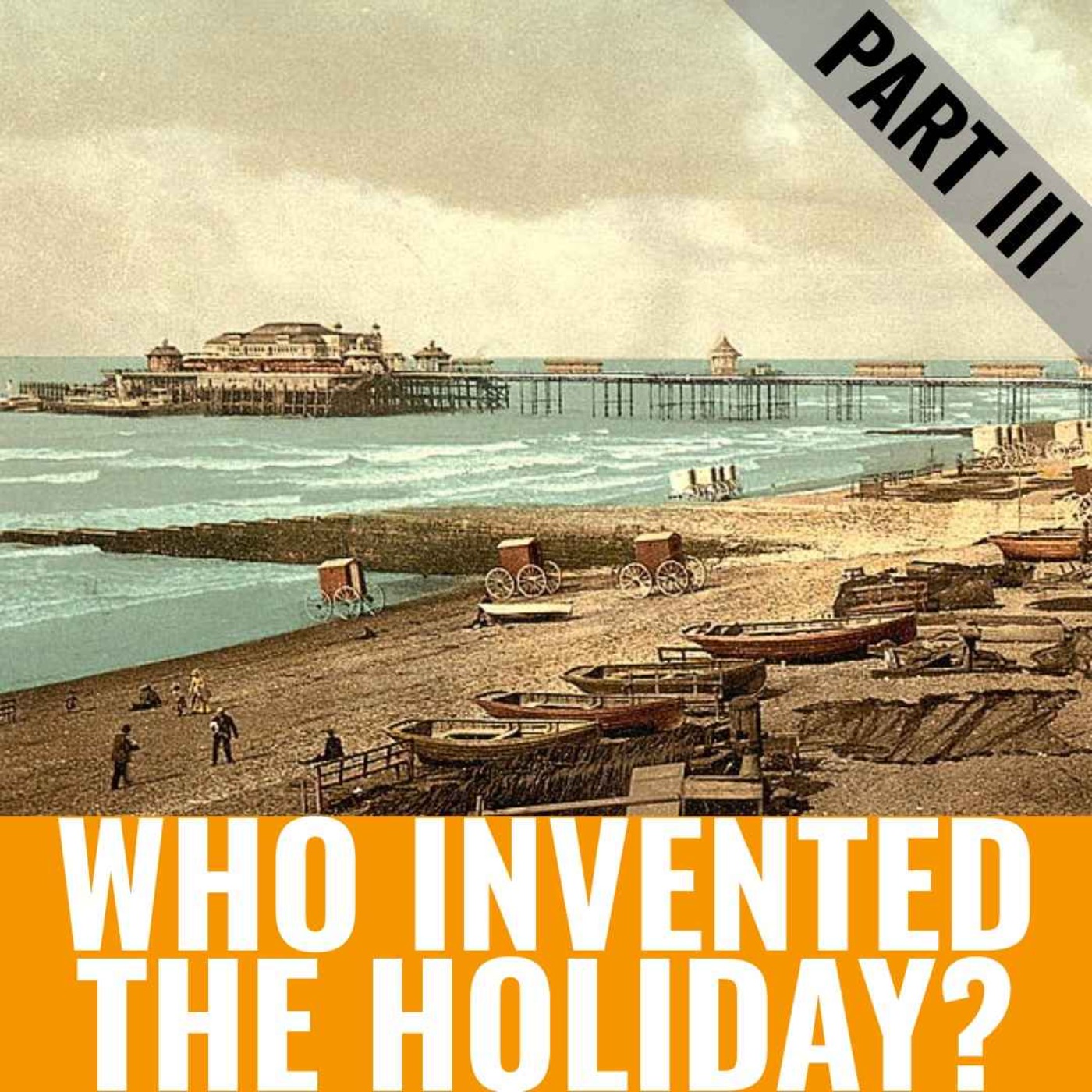
These things are incredible. Yeah. I mean, I wrote this book, Decolonizing My Body, trying to help us see how we still carry the legacy of some of these strange ideas. The Victorians didn't want you sauntering across the sand in a bikini. That's kind of their nightmare. The normal scene you would see at the beach today. So what they invented was this kind of shed on wheels. So it's like this wooden enclosure that you step into while you're dry on the beach. Inside, you change into Your very heavy, impractical woolen bathing costume. Although having said that, the idea of very thick, hot fabric on my skin is probably what I would need to cope with the sea in this country, which.
- [23:38]
B
It'll drag you down. Afraid it's got to be. You've got to have strong calves to stay afloat.
- [23:42]
C
When it's wet, it doesn't dry. Such a bad idea. And then a horse would literally drag the shed into the sea so that you do not step out onto the beach except exposed with this level of nudity. And then once you're in the water and fully immersed, you open the door of your bathing machine and then. And you've got your back to the beach so that you're facing the ocean. And then a dipper, a strong local person will physically take you out of your bathing cabin and dunk you into the freezing water. Then you get back in change and get dragged there back to the shore.
- [24:24]
B
You're saying like it's a bad idea for. Do you not think there's a space for this in, in the Maldives or the Caribbean as well as the British seaside? I'd love to see people in, in with their modesty and dignity protected rather than either ultra skimpies or, or, or perhaps. Well, I don't want to, I don't want to body shame. But you know, you, you on the seaside, whenever's in the swimming costume, there's nothing is hidden and there's a lot of. That's a lot of flesh to take in. So a bit of modesty. I'm not, I'm, I'm not against it. So I quite like, I quite like the reintroduction of the bathing machine. I mean.
- [24:55]
C
Okay, so we're seeing a new side to Peter today. Prudish, Prudish Peter.
- [24:59]
B
I'm giving up too much information.
- [25:00]
C
I think it is one of the things. This is such a divergence. But one of the things I like best about this current time is that I think I grew up in the era of the beach ready body. You know, there was all this really toxic marketing that if you wanted to wear a bikini, you had to look like a supermodel. And that it was primarily like most things, a way of selling you stuff, selling you diet plans or slim fast or now it would be weight loss drugs and it was kind of shaming women that if you didn't conform to
- [25:27]
B
this because it's a male industry too
- [25:29]
C
that dominates idea of what an acceptable body looks like on the beach, then you need to buy something or do something. And now I think we have fully exercised those demons. Like a beach ready body is a person who has a body who wants to go on the beach. And I like it. I like seeing people. I mean, it's also really interesting in different cultures. Obviously some cultures do have a real religious or social code of modesty. So you won't see nudity on the beach. But in, like, I've just been filming in the Caribbean, for example, it's so refreshing because it's actually considered desirable to be really curvy for women in the Caribbean, similarly in a lot of Africa. And so the ways people flaunt their bodies in. Yeah, very skimpy, sometimes swimwear. I think it's cool. I like to see.
- [26:16]
B
So tell me about the parade then. So the seaside, at this point, it's not about the parade of your own body, but it is about being in the right place, about being seen alongside seaside architecture, where places like Brighton, Bognor Regis became kind of hotspots favored by the royals. Being in the right place. And then there's the promenades where people could stroll around. So being seen was part of it. Maybe not in your most naked form, but still, the idea of being in the right place along the pleasure pier is important, but. And the pier, what about that, then? How does that fit into the being seen?
- [26:49]
C
Yeah, I mean, maybe if our beaches and our climate were more like the Maldives, it would have been a different culture. But the reality is you're only going to spend so much time in the sea, even if you didn't have to cope with one of those bathing machines. So the beach is constructed as a place to parade and socialize and show off. And you see that exactly as you said, Peter, in the architecture of the promenade, the pier. And the pier was a stroke of genius. It was described as a way to walk on water without getting wet. And it allowed people to engage with the sea air. I mean, really be out away from the land, exposed to the sea on all sides without actually having to deal with the sand or the water. So very quickly, these piers became very popular places where you would walk and see and be seen. You could buy a treat, ice cream, candle floss. Now, in the 20th century, they became these arcades full of slot machines. I have spent years of my life, I will not get back with young children in arcades on piers, just frittering away the pennies, the pounds for horrible fluffy toys that no one wants a few days later. But it's all part of the very unique atmosphere of the English seaside, isn't it, Peter?
- [28:00]
B
Well, it's not just the English seaside as you were talking about the pier. I've just been in Lake Issyk Ghul in, in central Kyrgyzstan where the pier doesn't have the slot machines but it's got everything else. And in fact, slightly, strangely, I took a photo for you after. There's a. There's the cocoa restaurant Caribbean cuisine in the middle of Kyrgyzstan in Central Asia that I thought I'd be interested for your, your insights into what if you're Central Asia, what you think the Caribbean is, how you relate to that from it. I can see that.
- [28:27]
C
So many questions, so many questions. Are there any people of Caribbean heritage behind this or is it a Kyrgyzstan Imagine of what the Caribbean is.
- [28:38]
B
There were. I didn't, I. I popped my head in. There wasn't obvious any Caribbean influence, but the idea of what they thought the Caribbean means for non Europeans where the ideas about race, identity, etc, I mean it's of all the things you'd pick. So. But interestingly, they hadn't picked English fish and chips restaurant to have in Kyrgyzstan. But it is interesting that the idea of the seaside and the pier and visiting, you know, getting fresh air and the salt air is not just a British thing. It's not. It takes or takes off in other parts of the world too.
- [29:12]
C
Yes, I'm fascinated. I want to hear more about Kyrgyzstan's Caribbean. You probably more listeners familiar with something like Coney island, for example, in New York, which took this seaside resort from the English idea and then did what Americans do, which is max it, pump it full of adrenaline, pump it full of capitalism and accelerate the invention of the modern amusement park. And then at the other end of the spectrum you have the French Riviera, the Cote d' Azur, Peter talks about super glamorous. And that became such a different end of the spectrum for the seaside.
- [29:48]
B
So I was brought up being, you know, that basically there was nowhere more elegant or more fancy than the Cote d'. Azur. That, you know, Coco Chanel and fashion and then Brigitte bardot in the 1960s and you know, the south coast of France is absolutely gorgeous. And it attracted, you know, it's attracted artists and authors, you know, Escort Fitzgerald, you name it. But it's very, very, very new as a concept, the idea of the suntan. I mean again, that's a whole other story Afro about why people are keen to pigment themselves at the same time very complicated with ideas about race. But it's the. It was the most glamorous location in, in Europe for the last hundred years. So now it sort of becomes so incredibly expensive because of billionaires from all over the world setting up shop in. In Monte Carlo or in Cannes or Antibes, Nice and so on. So it's, it's beautiful and the water temperature is a lot more to your my taste after than England, but it's a kind of phenomenon of its own, right?
- [30:46]
C
And it's not only changing tastes for how people experience the seaside, but it's actually changing beauty standards. So before the era of the summer holiday on the French Riviera, if you had a tan, it meant poverty and labor. It meant you worked in the fields, you were exposed to the elements. It was a sign of being working class. But the seaside resort, one where there's actually hot weather and sunshine and the eventual rise of sunbathing, completely flipped that the tan became the ultimate emblem of wealth and leisure time to lie on a beach and the resources to travel to one. Probably sorry, England, not on the south coast of England. And we'll hear more about that after the break.
- [31:35]
A
This episode is supported by FX's the Shards, a seductive drama from executive producer Ryan Murphy. Set in 1980s Los Angeles, the series follows a group of glamorous, deeply entangled high school seniors drawn into a life of wealth, beauty, parties, and excess. At its center is Brett, whose reality begins to unravel when the arrival of a new student coincides with a series of mysterious murders. FX's the Shards, now streaming on Hulu.
- [32:10]
B
What about the dark side Afro? I mean, the kind of the people turn their noses up at the British seaside. The package holiday that's partly to do with people being able to afford going to places like Spain and Greece and Turkey and the British seaside being left behind. How. How's that happened? And how have we come out the other side?
- [32:27]
C
I'm going to tell you a little story, Peter. When I finished university, I moved straight to Senegal. So I. I spent my early adult independent life living and working in West Africa. And when I came back, I was kind of working out how I live in England as an adult for the first time. And I saw this trip to Clacton on sea advertised, and I thought, that sounds great. Like, I've never really explored that part of the coast. It's not that far. I got some friends together and we all went to this, like, resort in Clacton. And when I got there, I realized this was not a place that you go if you have options. It was, it was. I don't even have words for how.
- [33:07]
B
Well, unless you Want to be an MP that worked for Nigel Farage. That's happening. Chosen. Yeah.
- [33:12]
C
It was in an incredible state of decline and I naively just hadn't known that. I kind of still had this nostalgic idea of what the seaside had been like historically. And I was a bit sheltered from reality. And the reality was something that I would later come to report on as a journalist. I became the social affairs correspondent for Sky News and I was doing a lot of work on inequality, deprivation, housing, unemployment. And I kept finding myself back at places like Clack, but not just Clacton, Blackpool, Cornwall, Penzance. And there is this phenomenon, and I think you'll remember there was this time when there were a lot of reports on white working class coastal communities as one of the most left behind parts of England in terms of education, outcomes, employment. And basically the story is that these Victorian seaside resorts were built up, a lot of hotels, B&Bs, housing was created for people who wanted to experience what was at the time, quite a desirable life. And then the changes in transport and tourism in the 20th century, the availability of cheap air travel and foreign resorts sucked the life out of the English seaside. It no longer became desirable. For the same price, you could go to the Costa del Sol or to the French Riviera. And it meant that they went into long term decline, along with the decline of industry and the changes in the economy that happened in the special second half of the 20th century. So as these economies collapsed, they started to suffer from high unemployment, low wages, and then, because of the nature of seaside resorts, very seasonal industries that only were able to support people for part of the year. And then it became this ripple effect where all of this housing, all of these hotels and Airbnbs were left empty and became very, very cheap. And what was happening was that local authorities in cities like London and Manchester, who were trying to save costs, would send vulnerable people that they were paying to house to this very cheap, empty, available housing stock. So to an already deprived area, you're now adding vulnerable people from cities who have no connection to the community. There was one street I reported on in an English coastal town that had people who had been made homeless, people who had been recently let out of prison and so were in these kind of halfway houses, people in rehab programs, people fleeing domestic violence, refugees being housed by local authorities and children being taken out of care, and also in these halfway situations. So you were taking basically all of the most vulnerable people and housing them in an already very deprived area where there was not really any economic activity or opportunity. And it was just such a recipe for disaster. And you get these end of the line syndromes as well, where people who are trying to get away or have problems just kind of get on a train and, and get off at the end of the line. So you get places like Jwick, which is one of the poorest wards in Clacton on Sea, as I mentioned, which is also Nigel Farage's constituency, Blackpool Penzance in Cornwall. And you can see that they have this once fated grandeur that's just gone into very long term decline. So there are a lot of problems now in these seaside places. And that's one of the things I think, that makes it impossible to avoid that past. You can still see it, you can still see the Victorian era and its legacy and it kind of creates a really, really unique melancholy when you see what it's become. But that isn't the end of the story though, Peter.
- [36:42]
B
No, but I was just going to quickly add that, you know, there's a lot of discussion, particularly in the, in the UK at the moment about the north being left behind and you know, industrialization of Manchester and Birmingham and you know, how cities like Leeds need a, need a new shot in the arm or having a shot in the army. But you're exactly right, Afra, the coastal parts of the UK are the ones where we have very high levels of social concern by people who live there because work hasn't been replaced, new jobs, attitudes about migration. And that's not just manifested in things like votes for Brexit or political votes. It's to do with the reality of how do you provide employment and what are the options, what are the prospects if you're a young person in one of these coastal cities. So I do think that coast, as you say, has been neglected and having come from this sort of very high watermark 150 years ago where it was all the rage. These buildings in places like Eastbourne and Blackpool are magnificent. You know, they speak to an age of wealth and of aspiration and of hope rather than perhaps a sort of darker part. But like you said, afraid there has been a massive cultural and creative renaissance to tell us a bit about some of the places where that's happened. And you're the hipsters who are re galvanizing being drawn to these, these hotspots.
- [37:55]
C
Well, some of these seaside towns have enjoyed this rebirth in recent years and it's a familiar picture, right? You have all these beautiful period buildings and this incredible history. It's fallen on hard times which means property is cheap. It has all of this natural beauty being on the coast. And so suddenly this younger generation of bohemians, artists, creatives, people who are able to kind of work more remotely because of the kind of work they do, start drifting towards these towns as places that they could create a new type of community more centered around art and ideas. Margate is the classic example of that because it was one of the most deprived of these seaside towns, one of the most kind of faded. And now it's a really thriving art hub, a world class gallery, a revived vintage amusement park, Dreamland, which is very intentionally leaning into the nostalgia and making it something creatively quite new. You've got incredible chefs opening restaurants. Again, they're playing on the themes of these, the old seaside, but they're kind of doing fusion and making it something renewed. They're really leaning into the abundance of fresh seafood and local ingredients.
- [39:12]
B
So you've got Tresiemen down there. So what you can do is you could because. Because it's cheaper to live there than in big cities. You know, if you can get your communities up and running like they've done in Margate and Ramsgate, Folkestone and Hastings, These south coast towns are transforming, moving away from things like fishing and harbors into creative quarters filled with independent shops, with galleries and in fact people then traveling from London to go to visit for the day or for the weekend. So there's that too. I quite like the. I've always had a soft spot for the reinvigoration and of nostalgia anyway. But that's really happening in a lot of these coastal towns, particularly the south coast.
- [39:50]
C
I don't know if it's the answer to the bigger questions of economic decline. And you know, when you see the rise of the far right, for example, in some of these areas, you can see there's a legitimate grievance in the sense that they really have been left behind. Only I think blaming immigrants, my opinion is not. Wasn't the problem and it's not the solution. But I'm not sure either that these kind of hipsters from cities who have, you know, their income tied to the creative industries, they're definitely creating some jobs and opportunities in a sense of renewal. Whether it can solve the bigger structural issues about the lack of opportunity in these coastal towns is a. Is another story. But it definitely draws visitors in and it's almost a kind of full circle because even though out of the hundreds of piers built by the Victorians there was only around 50, today they have become more iconic, I guess. Through their scarcity. The culinary identity of the specific food culture that the seaside created is enjoying a renaissance as well. Fish and chips as we mentioned several times, but even jellied eels. Are you a fan, Peter?
- [40:50]
B
Stop my top chart. I don't mind a jelly deal. Don't mind a jelly deal. I love, I love a good fish and chip shop though. I'm, you know, what's your, what's your
- [40:58]
C
go to fish and chip shop?
- [41:00]
B
Oh, well, again I go for pollock. I think sustainably caught fish is, you know, shows that the cut, the cut of my jib I think I'm a big fan and I can't resist, I can't resist a gherkin and I quite like a pickled egg, which is not.
- [41:14]
C
We could share a fish and chip dinner. I'm down with that. Would you go for mushy peas? Mushy.
- [41:18]
B
Mushy peas.
- [41:19]
C
I went to Blackpool for the first time and as a like 9 year old and all, as a 9 year old it was the best place. There were loads of lights, everything was open late and I was allowed fish and chips with mushy peas, which I then discovered. And a huge thing of candy floss. I think I even might have got a candy apple and some rock as well.
- [41:38]
B
So your parents must love you. I didn't get any of that.
- [41:42]
C
I don't. I wasn't. The reason I remember it is because of how far from normality, how much of an aberration that trip was. But I say that, say I'm a mushy peas girl. So yeah, that could work.
- [41:53]
B
But I think the other thing that's going to happen Afro is because, you know, we've had spikes in costs of air fuel and because of the pandemic and because of climate change, you know that that British seaside is going to come back. I mean why, why go to south of France with the cost and when we're going to. We're already touching 45 and perhaps even 50 degrees according to some of the stuff that I've seen in the next 15 years where you could go to the south coast here and in fact the temperature of the sea then starts to become something rather refreshing where surface to air temperature is in the mid-30s. So it could be that we're seeing the beginning of the revival of arts culinary traditions. The staycation is much closer to London. I mean if the trains don't have their rails that buckle and get cancelled all the time, like happened when I was in Brighton, everything stops working. But I think that the seaside Resort is on its way back in England and people love rediscovering things and rediscovering that kind of Victorian idea. I'm not sure we're going to. You didn't look like we're going to go for the, for the horse drawn carriage, take you into the water.
- [42:52]
C
You never know. I mean, that sounds like it could have a low carbon footprint as a, as an experience. I would not be surprised. I bet there's some savvy entrepreneur listening to this that's going to go and create and charge a total premium. Like some kind of, maybe they put like champagne and peonies in the, the bathing machine and turn it into a kind of luxury experience. Maybe you could have a massage in your bathing machine while you're being horse drawn out. I don't know. But I do think post pandemic, in this world of eco consciousness and climate crisis, people are more conscious about air miles. There are more travel restrictions, airports are more stressful, there is more uncertainty in flight schedules. Look at how the closure of the Straits of Hormuz, which we talked about about has impacted aviation fuel and made people really worried about booking flights, that the seaside is a more reliable destination. Again, it's a full circle moment and there is this premium on cultural nostalgia, on heritage that people are really curious to tap into. So I do think, and we're going to look in the next episode at how mass air travel really did undo so much of the Victorian seaside. But I think there is a future beyond that and we're beginning to see what it looks like.
- [44:12]
B
So I think the greatest legacy is the democratization of leisure and of travel and the fact of time. The English seaside is key to the idea of people taking a break or a mini break, the idea that working people deserve a holiday, fresh air, maybe some junk food. We managed to get through this whole episode without mentioning the dirty weekend. But you know, that too. That's a key part of the English seaside is the assignments with your. Well, not just necessarily with one's own partner. You know, the kind of naughty weekend of illicit affairs is a big part of it too. But it has left us with this slight melancholic architectural footprint that maybe is in the process of being reborn. As these grand old cities and towns get re galvanized the piers which have rusted, maybe there's a kind of new future that's just bubbling under the surface.
- [45:00]
C
So the seaside set the psychological groundwork for mass tourism. It taught people how to go on holiday. As we're going to see in the next episode what they were waiting for, even if they didn't know it yet was a faster, cheaper way to get to warmer beaches.
- [45:16]
B
Peter so join us next time on Legacy. We're going to leave the train tracks behind and take to the skies. And we're going to explore the cheap air travel revolution and how the jet engine shrinks the world. Thanks for listening to Legacy.
- [45:29]
C
To get deeper into our conversations and support the show, please sign up to Legacy plus and become part of our cherished members community. You'll get to enjoy bonus episodes, early access, fewer ads, Q&As and so much more. Go to Legacy Supportingcast FM and for
- [45:47]
B
everything else, including our substack and updates on TikTok and Instagram, just check out the show notes or search Legacy Podcast I'm Peter Frankopan.
- [45:54]
C
I'm Afra Hersh and we'll see you on the next episode of Legacy.
- [46:14]
A
This episode is supported by FX's the Shards, a seductive drama from executive producer Ryan Murphy. Set in 1980s Los Angeles, the series follows a group of glamorous, deeply entangled high school seniors drawn into a life of wealth, beauty, parties and excess. At its center is Brett, whose reality begins to unravel when the arrival of a new student coincides with a series of mysterious murders. FX's the Shards, now streaming on Hulu.