Loading summary
Transcript48 lines
- [00:00]
A
All right, ladies, when you've done the work, we want your hydration to do the same. Introducing new Gatorade lower sugar, now with no artificial flavors, sweeteners, or colors, and 75% less sugar and all the electrolytes of regular Gatorade now available nationwide.
- [00:17]
B
Afwin, last time we were talking about cargo ships, we looked at ancient Rome, the Baltics, the Hanseatics, and we did everything. Did we? Timber, rice, sugar slaves, you know, you name it. How about thinking about the era of globalization and the ways in which ships play such an important role in today's world. Have you ever been on a. On a big cargo ship? What's the biggest vessel you've been on?
- [00:40]
C
I have never been on a cargo ship. Have I even been on a really big commercial vessel? I don't believe I have, Peter. I did produce a documentary about a young woman who sailed on a shipping container across what would have been the first leg of the triangular trade. She was kind of retracing her heritage as someone descended from enslaved people, and she went on this shipping container voyage to kind of try and tap into what her ancestors had been so affected by. And it's a really powerful poem, documentary, story she created. So I feel like through her I've had this experience. But shipping container ships sound like quite strange places and a little bit ghostly because they're these huge vessels with relatively few people on board, and they tend to be very international. You know, the flag will be from, I don't know, Liberia. The crew will be Filipino. The master will be Spanish. Really, like, weird arrangements.
- [01:42]
B
That's globalization, though, afwa. That's exactly right. You have the ships registered in Monrovia. Uh, that has a whole. I'd love to, actually. That. I gotta write that down. I want to do something on to
- [01:53]
C
the street in Monrovia where something like 70% of the world's ships are registered. And let me tell you, I don't believe there was a single building standing on that street when I visited. So that's a whole other story.
- [02:06]
B
Okay, well, I now need to go and change our notes, because that would have been helpful when we were trying to script this one out, because we could have done lots on what Mondrovia looks like. I've never been. What's Mond Rovia like as a city?
- [02:18]
C
I love Monrovia. I love Liberia. It's one of my favorite places to go. It's badly affected by a long civil war that it has not fully recovered from. I would say it's got some incredible historic buildings And a grand Masonic lodge from the 19th century that weirdly is one of the very few old buildings that was almost completely unscathed by the war, which in itself did tells a story like it seems to have been quite protected. But such a fascinating history, such a fascinating story and a really interesting energy. It's also, did you know that Liberia is I think the second wettest country on earth? So a lot of rain.
- [03:01]
B
So the digressions are where we really add value. So we're here to talk about cargo ships and the ways in which goods move around the world, but you've got Masonic lodges, you've got wettest countries on earth and you've got weird cities named after American presidents, James Monroe, the fifth US President and how that whole story plays out. I definitely we should do something on that. But today we're going to go back to the second episode on shipping and in particular commercial vessels and how those have changed the world. Hello and welcome to a new episode of Legacy. Hi, I'm Peter Frankenpan.
- [03:41]
C
I'm Afua Hirsch.
- [03:42]
B
And this is Legacy, the show that explores the lives, events and ideas that have shaped our world and asks whether they have the reputations that they truly deserve.
- [03:59]
C
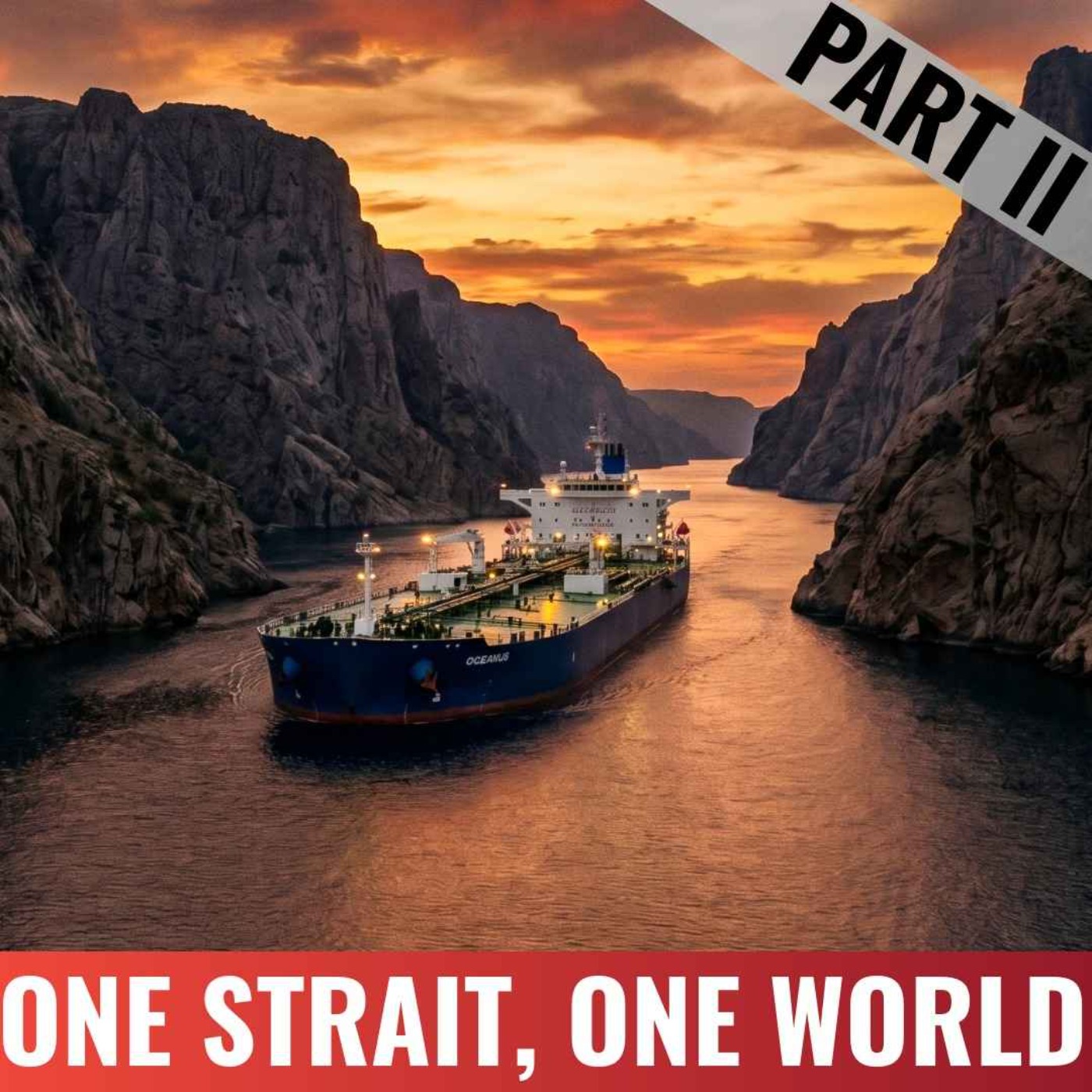
This is episode two in our great inventions that change the world, globalization and the oceans.
- [04:09]
B
Thanks for joining us on Legacy today. To support the show, please do sign up to Legacy.
- [04:13]
C
Plus you can enjoy early access, fewer ads, Q&As and bonus content like the legacy of escalators, the legacy of fish fingers, or a topic I guarantee you have not heard on any podcast before. The legacy of the remote control.
- [04:30]
B
So sign up at Legacy supportingcast fm. So logistics, I'm going to bang on again about the importance. I've done cows, I've done ships in Amphora. I also have a real soft spot for coal. Not for digging it out and not for the effects it has on global climates, but for the critical role that it plays in changing energy consumption and particularly where you find it here in Britain. We forget that one of the reasons why Britain became so powerful at built this empire was of course to do with empire enslavement, shipping of goods, but also the raw power that was required to make steam. And we were very lucky in this country in the UK that we have coal seams that are quite easy to exploit. I mean, insofar as they are quite close to sea passages, you can get them from Newcastle down to London where you need it, places like China, its coal resources are a long, long way from big cities. So the luck and the Fluke of geography. But coal Afro is one of the first commodities to be transported in something resembling today's idea of bulk Cargo.
- [05:35]
C
From the 17th century onwards, fleets of coastal vessels known as colliers carried coal from the mines of places like Newcast, Northeast England and Sunderland, for example, to London and other southern ports. And it meant that in London, which was a hub for the coal trade, the growing population depended heavily on this flow of fuel. In fact, the train became known as the coal trade.
- [05:59]
B
That's why you get the bringing coals to Newcastle. And in fact, when we did Dickens, we did those four terrific episodes. That kind of idea about Victorian London, the grime, the dirt, the soot, is all to do with the generation of energy and the production of heat, of electricity, of power that is central to being competitive in the modern era. And again in today's world, we go through a series of different kinds of shifts. But that that energy competition of can you provide enough raw material and power for data centers, for AI, for industry, is a key part of today's world. And it was no less important than two. But tell me, Alfa, about how coal was loaded into the hold of these big ships.
- [06:43]
C
Unlike wine or sugar or tea, you know, in the last episode, we heard about these beautiful amphorae or other ways that these goods were packaged. Coal was not beautifully decanted into ceramic jars. It was literally poured on in bulk into the hold of ships. And it would just spread out and fill every available space, as messy and dirty and packed as that sounds, and it was loaded loose into the hole with these baskets or chutes or wooden slides. So dock workers would just shovel it on the shore into wicker baskets, and those would then be hoisted aboard by cranes or pulleys and then just tipped, just kind of like a crane emptying into a rubbish dump, just emptied and tipped into the ship. And when the cargo arrived in London, the process was reversed. These baskets would be lowered into the hold, filled with the coal and. And hauled up again. And the writer Daniel Defoe, traveling through Britain in the early 18th century, was taken with the constant movement of ships along the coast. He wrote that the Thames was crowded with vessels bringing coal from the north. And it was a trade that was growing rapidly in scale by the 18th century. Peter.
- [07:56]
B
And you've got hundreds of ships moving coal, particularly towards London, the kind of engine room of British industry, but also along river routes and canals to Birmingham to Manchester, to places with mills that needed power and energy. But the importance of that coal trade leaves its mark on the English language. So we mentioned coal to Newcastle is a phrase that means something is unnecessary or completely redundant because Newcastle really produces everything that it already needs in terms of its energy production. But these ships, they change everything about the sinews of empire. Like you mentioned, Afwan, the loading and unloading, it's all done by hand. And they are then have coal distributed around the city by cart or by barge too. And John, even writing in the 17th century, a famous diarist complains about the smoke being produced by London's coal fires and because it's very bad for people's health. So you have a productivity gain, but you have an obvious way in which people's lives get shortened too. But before the railways exist, the sea is by far the most efficient way to move heavy materials and also to move large volumes too. So coastal shipping is allowing vast quantities of coal to reach capital at pretty low costs too.
- [09:07]
C
And the ships themselves become part of maritime history, sometimes in unexpected ways. For example, one of the vessels used by Captain James Cook on his first voyage of exploration, the Endeavour, which has become seared into popular memory and consciousness, had originally been built as a Whitby coal collier. It had this broad, sturdy hull designed to carry large loads of coal. And that's also what made it ideal, in fact, for long distance sailing. So when we come back after the break, we're going to look at these changes in the actual design of ships and how they impacted the trade and its legacy.
- [09:50]
D
You do it all. So why not get all the electrolytes hydrate better than water with new Gatorade lower sugar now with no artificial flavors, sweeteners or colors, and 75% less sugar than regular Gatorade. New to the fridge, all the Gatorade electrolytes you loved. Gatorade lowers sugar.
- [10:11]
C
Is it in you?
- [10:12]
D
Now available nationwide.
- [10:16]
E
Okay, caller one wins courtside seats to tonight's game. What? I won floor seats. You did? I've been calling for 13 months. Wait, Chris. Yes. I finally did it. What are you gonna wear? Men's Wearhouse. They've got today's looks for any occasion. It's. And I need to look like a celebrity. Don't want to stick out. Exactly. They've got Chill Flex by Kenneth Cole, Joseph Abboud, and a tailor at every store for the perfect fit. Congrats. You can stop calling now. Not a chance. Hit any look for every occasion at Men's Wearhouse. Love the way you look.
- [10:55]
B
So you mentioned afraid that there's a change in ship design and. And innovations in all technologies are about lots of different things. It's about people who are pract practitioners who are good at their jobs and trying to work out how to make things more efficient. It's partly about squeezing higher levels of profit through the system, and it's also about responding to the advent of new technology. So, at the Beginning of the 1800s, cargo ships are still basically built entirely out of wood, which limits their size, but also their strength. But from the 1830s or so, shipbuilders begin to experiment with iron hulls. And by the late 19th century, Hulls become standard to be made in steel, too. And iron and steel are much stronger and can be built much larger, allowing ships to carry much heavier cargoes, bigger cargoes for bigger volumes, particularly things that are heavy, like coal and ore, without the hull flexing dangerously in heavy seas. But one of the things that also is a big innovation is the move away from sail power towards steamships. Tell us AFO about steamships.
- [11:57]
C
So for thousands of years, sailors and shipping has depended on wind patterns, and voyages could be delayed for days or even months waiting for favorable conditions. Now, if you think about current events and how closing, for example, the Straits of Hormuz can send prices of energy and other goods rocketing, you can imagine how much of an impact on price these weather patterns would have had. Having a voyage delayed could mean the complete destruction of a cargo if it rots, or if somebody is dependent on receiving it at a certain time. So steam power enters this world with a transformative effect, because now you have removed so many of the variables that weather had on the shipping trade. It meant that by the 19th century, steamships could move regardless of wind direction and could keep much closer to something resembling a fixed timetable. Of course, ocean trade still has its risks, no matter what the technology is, but you've removed one of the most detrimental elements, which is these incredibly unpredictable weather systems. And merchants are very quick to realize the implications of steam for their business.
- [13:05]
B
PETER well, you know, as you mentioned, afw, because before this time, you're dependent on wind conditions. You have things like the monsoon season in the Indian Ocean, where a round journey will take more than a year. So suddenly you've got not just high levels of ability to move a lot quickly and heavier stuff, but you can be predictable. And businesses are always interested in being able to make sure that volatility levels are low and predictability is high. You can schedule when things are going to arrive. And so industrial economies require or they depend on predictable supplies of raw materials. So you can now know when shipments are due. You can work out when factories need them and not just rely on wind conditions. So things become much more dependable. And of course, that's important too, because as contemporaries realize, it means that you're no longer like Isa Barking and Brunel says, you're no longer dependent on the vagaries and the uncertain power of the winds. So it's the beginning of a world where you get predictability, you get risk taken out of the system, and you get the origins of, I think, what you could call a modern logistics network. And one striking example of that comes with not just cargoes being moved around, but also people too. So you get the Cunard Line, which gets founded in the 1840s, possibly one of the most famous shipping lines still in service, and it offers scheduled sailings between Liverpool and Boston. And it means that cargo owners as well as passengers can plan shipments around calendar dates rather than weather. And that's something that I think is very interesting and important to think about, the importance of how humans work out how to defeat nature or try to get one up on nature by not being stuck in the same way.
- [14:48]
C
It's so interesting how long this technology endured for. I mean, when my grandfather sailed from what was then the Gold coast, now Ghana, to England in 1940, it was on a passenger steamship, wouldn't have looked that different from the ones first created in the 1840s. His was the elder Dempster, another of those famous colonial era shipping lines. And this was how people and goods, right up into the, well, into the Second World War and after, were making voyages from places that were still not accessible by air travel well into the 20th century. So the steam engine in shipping was not just a transient invention. It really lasted more than a century and that transformative effect with it. And ships are now being designed differently because they are making these journeys that are more reliable, PETER and they have these deeper, wider hulls, much larger holds, and instead of the awkward spaces divided by structural beams that they used to have, now these cargo areas can be redesign as large open holes that can be filled efficiently with loose materials like coal or grain. So there are multiple ways in which this maritime trade is becoming less weather dependent, less risky and more efficient, and therefore faster.
- [16:03]
B
And therefore the incentives to be able to move things around in bigger volumes. And of course, that has a downside too. That means that you can strip forests quicker and get the goods cheaper back to where you might want them. So, for example, hardwoods from places like Burma, you can get textiles being shipped very quickly from places like India through to other Parts of the world which mean that there becomes a global market where you can get undercut. That could also mean that businesses go bust because they can't keep up. So globalization of course has a double edged sword. But those innovations in ship manufacture and ship design, as you mentioned, Alfred, they are continuous, they're constant. And by the late 19th century you're finding specialized bulk carriers, so you're finding ships that are being designed for specific trade. So example we mentioned already colliers for coal transport. But you get grain ships with smoother holds and with ventilation systems, you get ore carriers that have reinforced structures to carry very heavy loads. And that's part of the way in which shipping and manufacturing starts to adapt towards opportunity. And that's a really important moment, I think, to mention how important logistics are in how the world gets connected too. But as well as you start to have focus on how do you get goods from A to B, you start to think too about how you can load and unload ships quicker and cheaper as well. Because the, the difficulty has always been, like you mentioned with coal ship software, you get, you're having to put it in by hand and unload it by hand. But that starts to change too.
- [17:32]
C
You get this mechanized loading and unloading that transforms not just how shipping is conducted, but also societies in important port towns. You know, and it's kind of hard to remember now. I mean, growing up in late 20th century Britain, I didn't have a particular awareness that I was living in an economy that has essentially been based on maritime trade because it's quite difficult to see evidence of that in daily life now. But you know, just a couple of generations ago, this was a huge source of employment. You get places like Tiger Bay or Bristol, Liverpool, where a huge part of the, the job economy was people working in the docks. And you know, this began to dwindle when mechanized loading and unloading was introduced because it removed so many of the jobs of the manual loading and offloading of ships that people depended on and that societies had been built around. So it was a kind of early version of tech replacing human labor. And of course it was attractive to shipping owners because it was cheaper, as we know. You know, now with AI replacing jobs, it's cheaper, cheaper to have an algorithm do it than to pay and train a human. So when mechanized loading and unloading started to take over, you start to see it impact the ship design as well, because you now have these really large hatch openings so that heavy machinery can operate. So cranes and chutes are loading coal grade and ore more quickly. And this reduces the reliance on thousands of individual sacks or barrels. It means more cargoes can be poured directly into the hold. So we heard about how coal had always kind of just been dumped in, but now other cargoes can also just be poured in. And you also start to see the need for compartmentalization and stability improvement. Because when you're bulk pouring in cargo and sailing it across potentially rough seas, of course it's going to shift and move and potentially get damaged. So shipbuilders now start improving safety by introducing internal bulkheads and compartment systems. These strengthen the ship's structure and help prevent catastrophic flooding or cargo movement if part of the hull is damaged, because, of course, the steam has removed a lot of the risk of weather. But you're still sailing on rough seas where things can get badly damaged and ships can still be significantly impacted by rough seas.
- [19:49]
B
I mean, it's amazing the ways in which these advances revolutionize not just shipping, but all the logistics networks and global trade as well, too. So, I mean, I. I've been. I don't know, it doesn't sound like Apple. You spent enough time hanging around ports in Rotterdam, or have you been. I know, I.
- [20:08]
C
Cargo ships and ports.
- [20:10]
B
I love my logistics. I have. I'm. I wouldn't say obsessed. That sounds slightly odd and wrong, but. No, I've been very lucky. You know, when you see the cranes operating in Perez or in Santos or Long beach in California, or in Phoenix, though, in the uk, and you see these enormous ships come in, how quickly and efficiently that they are loaded, unloaded, and the enormous amount of goods that are being pushed around the world more or less invisible because we just don't pay much time thinking about them, that these changes are completely transformative. In the 19th century, in particular, you've got people like William Stanley Jevons, who says that steam transport transforms global trade by shrinking distances and by stabilizing supply. And that's something which feels incredibly modern almost 200 years later. But, you know, there are lots of things that flow through it. So as ship designs, as the ships get bigger and there are those bulkheads, then you have smaller crews operating them. You said afwa, these enormous cargo ships, they are slightly spooky because they can be enormous. They can be 2 or 300 meters long, if not more, in fact, and they can be operated by a crew of 20 people. And if you think some of them are going to be. There's going to be a chef on board or two, there's going to be people in the engineers keeping an eye on the engines. You can walk around these ships without seeing anybody at all. So, I mean, they are completely amazing. But steamships are creating this global infrastructure. And that changes lots of things too, not just within the ports themselves. It starts to be that you need to have a different type of global infrastructure to support cargo ships. So, for example, because you're not dependent on wind, you need to make sure you've got coal in places where you can reload. So strategic coaling points, for example, in Gibraltar or in Malta or Aden or Singapore or Hong Kong, mean that the British Empire needs to think about where it needs to put supplies to get ships to be to stay in business. And if you go to places like South Georgia or the Falkland Islands, you can see the remnants of the thought that goes through. How do you provision these big fleets that are traveling all around the world too? So in the 19th century, it's a combination of rapid globalization, ideas about empire, ideas about resources control, about ports, infrastructure, coaling stations too. And it's so important that you have a British naval historian, very famous writer called Alfred Mahund, who says maritime power doesn't just depend on ships, but it depends on bases of supply and communication. So those things that feel very resonant today. A new era of geopolitics, of Chinese investment in ports around the world. Part of the Belt and Road Initiative. The ways in which the 10 most important and largest ports today are all in Asia rather than in Europe or the US Those things have deep, deep roots about thinking back around how goods are being moved around the world. So when we come back up, I want to talk to you about bulk goods and about the ways in which the explosion in bulk shipping and bulk commodities transforms the 20th century too.
- [23:13]
A
All right, ladies, when you've done the work, you want your hydration to do the same. Introducing new Gatorade lower sugar, now with no artificial flavors, sweeteners or colors, and 75% less sugar and all the electrolytes of regular Gatorade now available nationwide.
- [23:39]
B
So as we mentioned, coal was the backbone of the shipping industry of the 19th century. These new steamships, the ability to reduce time, the ability to get to defeat nature, not have to worry about. About wind and storms to be predictable. But there's an interesting thing I think as well, afw, the ways in which those coastal communities become particularly important because they're the places where you export from and you import from. I guess what's interesting is also that you see that places that are cosmopolitan, that are on the coast, tend to be A bit more open minded. How does that fit with the new age of globalization, I wonder?
- [24:12]
C
I think we really see that across the board that, you know, now one of the greatest divides in modern life is not necessarily north, south, west, east. It's actually coastal or interior. And if you look at a society like the U.S. for example, the places that are the most liberal, progressive, international in the US are the east and West Coast. Even though they are thousands of kilometers apart, they have something in common as these kind of outward facing, highly connected hubs. Whereas when you go to the Midwest or the Bible Belt or the south, places that are further away from the coast, you get these more socially conservative Eastern insulated populations. And that, of course, traces back to the way shipping has shaped our global economy. And along with the goods that are flowing in and out of ports, our ideas, our exposures to other countries, our own awareness of globalization and the role of a country in a network and a community of nations and the scale of the flow of goods and ideas is something that has impressed contemporary observers, but for more than a century. For example, John Maynard Keynes, the famous economist writing about the pre1914 world economy, described an era in which global trade had become remarkably integrated, with goods flowing easily across oceans to feed and fuel industrial societies and the ways in which huge cargoes were now routinely moving between continents. So whereas this was a phenomenon for centuries earlier, now it is the standard. Wheat from the Canadian prairies, beef from Argentina, wool from Australia, cotton from the US traveling thousands of miles by ship before reaching European markets. So that by the early 20th century, maritime trade has become the backbone of global industrialization. And of course, with it. Peter, I think it's really important to mention this new era of climate crisis because the ability to industrially strip natural habitats of their woods, to farm on an industrial scale, to mine in a way that feeds huge demand globally, means that the volume of commodities being produced and exported for profit is exponentially increasing. And I think in this initial era of expansion, that was seen as an exciting thing. It was seen as man's triumph over nature, this kind of conquering of natural limitations. Whereas now we're moving into an era where we understand that maybe natural limitations existed for a reason, that these resources are finite and that stripping them in a way that has no limits, because global demand is insatiable, can have really catastrophic consequences for the delicate harmony of our relationship with the natural environment.
- [26:57]
B
You're right, Afra, that people don't put two and two together, because things that happen in other parts of the world are out of sight and out of mind. And again, we've talked about that on quite a lot of our previous episodes of Legacy, about what it is that the sinews of empire actually mean. But when forests are cut down a long way from where you live, or you have the ways in which ecological systems are polluted, you kind of think there's a price worth paying. Or you just assume that governance in other parts of the world is the same as it is at home and that bad things never, ever happen. But I think that this process of industrialization and globalization, as you mentioned, refrigerated beef coming from New Zealand or from Argentina to Europe, the ways in which cocoa plantations start to get built in West Africa, for example, there are always winners and losers. And I suppose those winners and losers are not always just human. There are also environmental impacts and those change ecosystems as well, that we always need to be thinking about. But ships, and there's advances in shipping and technologies, predictabilities are a key factor in all of that because without that, then there's incentives to move things around become much, much lower. And there's another hurdle that changes in the middle of the 19th century, but really takes a few more decades to kick in, which is the way in which ships, engines switching to oil becomes important too. So the first modern oil tanker, the Gluckauff, is launched in the 1880s. But the real expansion starts in the early 1900s, where petroleum demand surges. The technologies to be able to make ships again go further, faster, quicker and better, cleaner than coal too, is key. So by the 1930s, you start to find tankers transporting millions of tons of crude oil each year, because as well as ship technology, industrial factories, economies start to switch to oil too. And that just accelerates on and on through the course of the 20th century. So, I mean, I sometimes talk about that too. Although for most of us, when we think about the great story of the 20th century, for, I guess for a lot of people it's about the confrontation between the free world and the unfree world. Communism, fascism, it's to do with Hitler and genocide. It's to do with imperial powers and confrontation in the First World War. It's to do with human rights and civil rights. But the story of oil is, I think, runs through all of the course of the 20th century and in fact is right here present today as well too.
- [29:21]
C
The first and Second World wars have, as you would expect, an enormous, enormous impact on global shipping. Merchant vessels are becoming strategic assets and of course, targets. The First World War shatters the pre1914 global commercial shipping system because before that point, the world merchant fleet was dominated by a handful of maritime powers, especially Britain. And in 1913 the global merchant fleet, just to give you a sense of its scale, totaled roughly 49 million gross tons. And, and the British fleet alone accounts for almost half of that 20 million tons. The Second World War destroys huge quantities of this capacity. German submarine warfare alone is responsible for naval losses amounting to a quarter of the entire amount of global merchant shipping during the years 1914 to 1918. So 12 to 13 millions of tons which are sunk by the Germans, forcing governments to take unprecedented control over their commercial fleets.
- [30:26]
B
Well again, in today's era of geopolitical anxieties, when you have warfare, the state starts to pay a great deal of attention to thinking about where it gets its supplies from, those critical minerals it needs or natural resources or food. And so private capital, private enterprise starts to have much greater interest paid to it by the state. And that's an important role too. You mentioned afwa, those flags of convenience in places like Liberia. In today's world there's a great deal of anxiety in developed economies around making sure that they have resilient supply chains. The sudden realization that if you leave things just to the market, then you could be left exposed too. So you get things like commercial shipping routes getting radically reorganized during wartime to keep trade moving. And instead of sailing independently along commercial routes, merchant ships start to go in convoys organized by governments, often with naval vessels protecting them too. So by the end of the First World War you have the British Navy, Royal Navy escorting thousands of merchant vessels across the sea lanes too. On top of that, because of those losses to German submarines and also to natural disasters, insurance costs and freight rates spike during wartime because things get much more expensive because there's the chances of cargoes and crews and ships being lost too. That helps galvanize the insurance markets and particularly Lloyds of London, one of the most important names even still today in global shipping too. So warfare plays a really important role in some of this. And so too does the rise of the idea of a neutral nation. Afwa. So you know, you with your Norwegian heritage, again we get to mention that, that suddenly if you're from a state that's a non competent, then there's a sudden importance in the flag that your ship is carrying, whether it's a flag of convenience or whether it's a Norwegian or let's say after the Second World War, the Greek shipping industry too. But Norway becomes Hugely important in this world.
- [32:20]
C
Norway possesses one of the world's largest merchant fleets and plays a vital role in carrying goods during the First World War. So Norwegian ships are transporting coal, grain and other commodities between Europe and the Americas, although also at a heavy cost, because around half of Norway's merchant fleet is lost during the First World War and more than 2,000 Norwegian sailors are killed. So the risks of conducting this trade during warfare are huge. And again, it's something we're seeing at the moment where conflict in Iran, the closure of the Straits of Hormuz. We're hearing stories of these merchant vessels being attacked. And of course, the people operating these vessels are from countries that have absolutely nothing to do directly with this conflict. You know, crews from Southeast Asia, for example. But that doesn't change the risk they face, because it is the strategic cost of these ships being sunk that warring parties will attack. And they. They really are a target. And it's another reason, Peter, that now nations talk, for example, about food security almost with the same importance they apply to their military forces. Because if you are completely dependent on global shipping for any of the items you need for your population to survive, you of course, are at the mercy of, of conflicts that may start with no control or input of your own.
- [33:39]
B
You mentioned AFU in the first episode in this series about your legal trading and how much of it was revolved shipping. And you can see that again with things coming through the Gulf, where you have a cargo that is loaded in uae, potentially with energy, with LNG or with oil, or simply container goods, shipping goods, then who owns the ship? Where's the crew from? Where's the ship flagged? Where's the destination of the cargo? Where's the origin of the cargo? Even if it was loaded in uae, those kinds of questions are hugely significant. And also which ones of those constitutes a target? If, let's say you are from the IRGC or from Iran. So these kinds of ideas around provenance, around logistics, around sea lanes, around ships, around their crews, are hugely complicated ones. But the importance, I think, of this world that we don't pay enough attention to day to day is key. So in the course of the 20th century, one of the reasons why the United States became enormous economic global superpower was because its ability to build ships in massive volumes in the 20th century, both during the First World War and during the Second World War, to be able to dominate and rule the waves. And that has a legacy that carries on to this day, too. So, for example, in 1917, the United States created the Shipping Board Emergency Fleet Corporation, which oversaw the construction of all the 2,000 merchant ships to be able to help Europeans, but also to maximize profits that flow back to the US Treasury. Of course, those rhythms of warfare have also the pendulum that swings back in the other direction. So when the war ends in 1918, for example, you suddenly have thousands of ships going back into commercial service that has a glut of tonnage. Suddenly freight rates collapse, shipping companies go bust because they can't fill their holes anymore. And again, you have a similar kind of thing that happens with the Great Depression, the 1930s. Suddenly global trade shrinks and many of these merchant ships become effectively worthless. They get laid up because there's no cargo for them to carry too. So those rhythms of how we think about economic and military histories are directly connected into how we think about the shipping world too. So in the post war period we have a focus that we'll look at next time around how merchant ships start to revise global trade too.
- [35:57]
C
And also as we get into the mid 20th century, I think just one last point to note is that the people who've been involved in this merchant maritime trade are incredibly diverse and it's helped shape contemporary Britain in really profound ways. So you, you have now merchant sailors coming from Yemen, from Somalia, from the Far east, and they're living in these coastal and port communities in British towns, cities and ports. So some of the oldest immigrant communities in the UK, dating back to the late 19th century, but really surging during this period are these Middle Eastern merchant navy sailors. And of course part of the greater British imperial world who found occupation in this trade. And as the trade kind of peaks and troughs, they're starting to settle and build more land based lives in the uk and it's really the beginning of the modern multicultural era in Britain. And I think because the merchant navy trade is harder to see in the modern era, we forget sometimes how important it's been for shaping the way society right into the 21st century looks.
- [37:03]
B
It would be great to do something effort on Windrush and the Windrush generation to think about how commercial shipping plays a role in relocating people all around the world and what the legacies of that is. I think that's something really important as far as this episode on cargo shipping and the ways in which goods are being moved around that that post war reconstruction after 1945 is dependent on huge quantities of food and fuel and raw materials being moved around the world to help rebuild economies that have been devastated by warfare. Of course, not just in Europe, but in Africa and Asia too. And the reconstruction of Europe generates an enormous demand for bulk shipping, particularly the Marshall Plan that runs from 1948 for the next four or five years. And during that period, the United states ships almost 20 million tons of grain and food, as well as millions of tons more of coal and steel and machinery to Europe, too. And that means that there's a demand for logistics again. There's an incentive to think about how you can make efficiencies, how you can make journeys quicker, faster, cheaper. And European shipping starts to rebuild too. And some of those ports in Rotterdam, the biggest port in northern Europe. It's an incredible place to see today because it speaks to the ways in which we are globally connected. And so when we have our next episode, the one that I really wanted to talk to you about, Alfa, was about how a metal box is going to change so much of how we see the world. And to think about how the TEU, the 20 foot equivalent container unit, is going to have an impact on how we think about these. I know that I've had to persuade you to do this one, so I'm very grateful. To add to my list of random things I'm interested in.
- [38:48]
C
I might have different motives for being interested in shipping containers, but I am interested. So you'll find out what my agenda is in the next episode when we come to shipping containers, Metal box changes world again.
- [39:02]
B
Thanks for listening to Legacy.
- [39:04]
C
To dive deeper and to support the show, sign up to Legacy plus, you'll get to enjoy bonus episodes, early access, fewer ads, Q&As and more. So please do join us by going to Legacy supportingcast fm.
- [39:18]
B
And don't forget, you can watch all of our episodes on Spotify or YouTube. And for everything else, including our substack and updates on TikTok and Instagram, just check out the show notes or search Legacy Podcast I'm Peter Frankerpern.
- [39:30]
C
I'm AFWA Hash and we'll see you on the next episode of Legacy.
- [39:58]
D
You do it all. So why not get all the electrolytes hydrate better than water with new Gatorade lower sugar now with no artificial flavors, sweeteners or colors and 75% less sugar than regular Gatorade. New to the fridge, all the Gatorade electrolytes you love. Gatorade lowers sugar. Is it in you? Now available nationwide.