Loading summary
Transcript58 lines
- [00:00]
A
Before we had AT&T business wireless coverage, our delivery GPS wasn't the most reliable. Once our driver had to do a 14 point turn to get back on route. A 14 point turn. An influencer even livestreamed the whole thing. Not good for business. Now with AT&T business wireless routes are updating on the fly and deliveries are on time. And the influencer did get us 53 new followers though.
- [00:25]
B
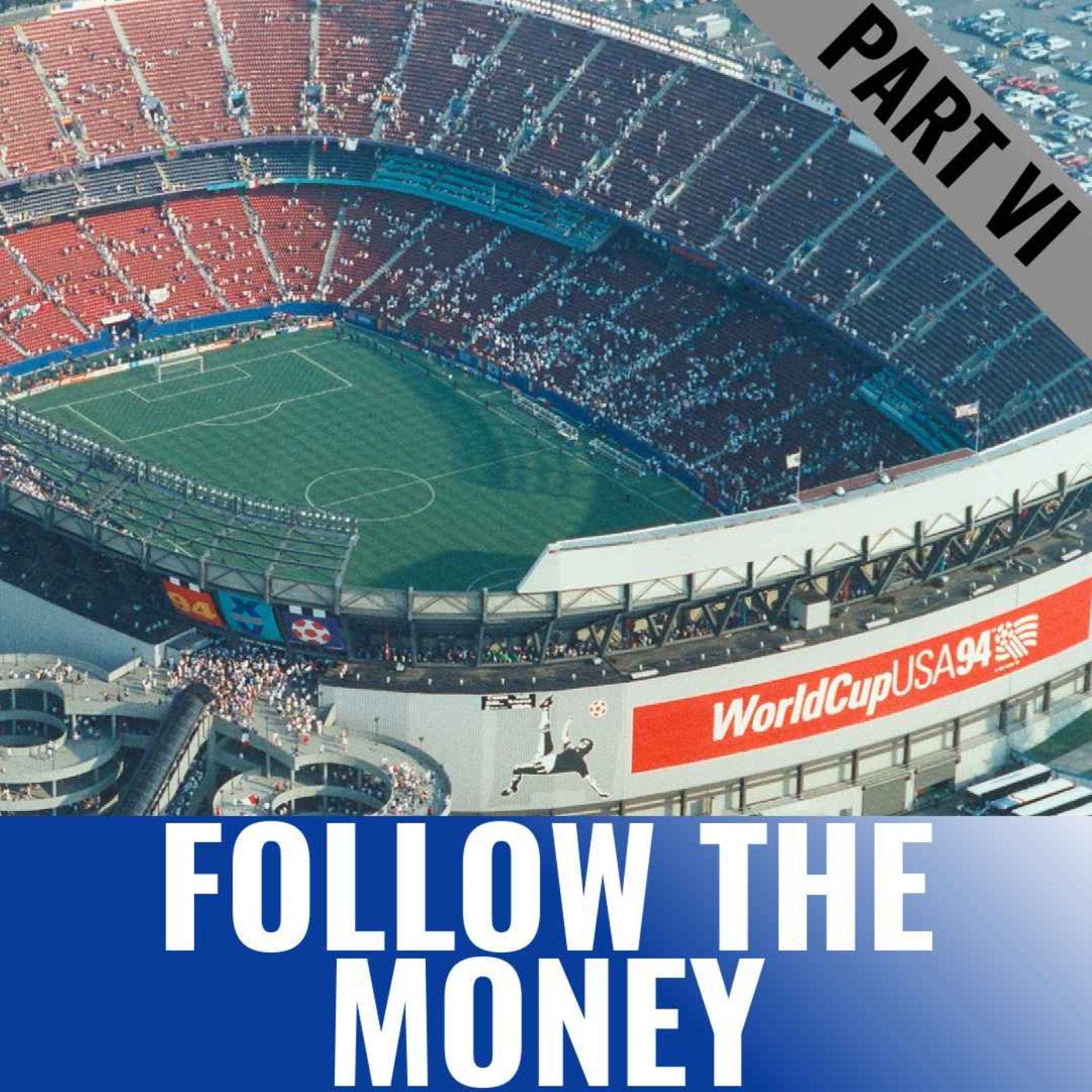
AT&T business wireless connecting changes everything. By the time the World cup arrived in the United States in 1994, the Cold War was over. The Soviet Union was gone. Germany was united, Czechoslovakia split up. Yugoslavia was at war. Apartheid was ending. Nelson Mandela just become president of South Africa after the country's first democratic election. So the world of 1994 felt completely different to how it had felt four years earlier.
- [00:56]
C
And it was not necessarily a more peaceful world. In some places it was becoming more violent. The wars in the former Yugoslavia were raging. The Rwandan genocide unfolded that very year. The post Cold War age did not mean the end of history for those living through its shocks. But it did mean football was entering a new era.
- [01:17]
B
And nothing symbolized that more than the decision to host the World cup in the United States. It was a huge gamble. The US had qualified for the 1990 World cup, but football remained a minority sport. There was no major professional outdoor league of that kind that existed in Europe or in Latin America. And the key American sports of NFL baseball and basketball, they dominated the sporting imagination.
- [01:41]
C
But FIFA under HOA Havalande was thinking commercially and strategically, the United States offered enormous stadia, huge television markets, corporate corporate sponsors, wealthy consumers, and the possibility of turning football into a truly global entertainment product. This is all sounding very familiar, Peter, even though it was 30 years ago.
- [02:03]
B
Aphra, you get bonus marks for using stadia rather than stadiums. I'm not surprised or even impressed, but good for you. Quite right. Hello and welcome to a new episode of Legacy. I'm Peter Frankerpen.
- [02:20]
C
I'm Afra Hashtag and this is Legacy,
- [02:23]
B
the show that explores the lives, events and ideas that have shaped our world and asks whether they have the reputations that they truly deserve.
- [02:30]
C
This is the World cup and big business.
- [02:36]
B
Thanks for joining us on Legacy Today. Please do support the show and sign up to Legacy.
- [02:41]
C
Joining Legacy is the most meaningful thing you could do today because it gives you the opportunity to become part of our community and to support our work. And in return, you'll enjoy early access, fewer ads, Q&As and bonus content. Not just the dregs, but the Best of us. We will give you, and just you, the opportunity to hear us talk about everything from small objects that change modern life, like the remote control. True story. To the big forces shaping the world around us, like the war in Iran and Gary Lineker talking about the significance of this World cup and the role
- [03:23]
B
that fish fingers have played in making us all cleverer.
- [03:25]
C
I think you're gonna need to get fish fingers in there. I knew it. I actually was waiting for you to say.
- [03:30]
B
Do you know what? I was gonna go with? Escalators. I've had bad escalator etiquette for the last couple of days where it just drives me nuts about why people can't stand on the right hand side. I mean, it just drives me nuts. Anyway, you can hear about all of that, about why it drives us nuts and also the legacies of the escalator. Sign up at Legacy Supportingcast FM.
- [03:51]
C
So, Peter, 1994. Now we are getting into territory I really do remember. And to me, this is also the era of the global brand. I think this was the first World cup where globalization was no longer in any way restricted by the great Eastern and Western blocs, where the idea of sporting events as real estate that could be monetized, commoditized, marketed, that could meet emerging markets and growing audiences, it was really coming into its own. And I think that we can trace the way that manifested in the World cup to one person in particular.
- [04:28]
B
Well, Jo, have a lunch. We mentioned him a few times as FIFA president. You know, I did understand that if you've got eyes and ears of people wanting to watch, you've got to try and push it as hard as you can. So his marketing partner, the Swiss agency isl, realized that the real value of football wasn't in the gate receipts, even in massive stadia like you have in the US but an exclusive global commercial rights. So instead of selling advertising country by country, FIFA offered multinational companies the chance to become worldwide partners. And tell me Alfa about. There are 12 official global sponsors at the FIFA 94. They're some of the biggest names in the world.
- [05:02]
C
And I actually feel like I can close my eyes and see some of the marketing. It was that omnipresent Adidas, or as Americans call it, Adidas, Budweiser, Canon, Coca Cola, Fujifilm, General Motors, through Opel. Here we call it Vauxhall, don't we? I mean, it's the main brand. Yeah, yeah, Gillette, jvc. Why are we giving them all a plug, Peter? I think we've done enough. There are a lot of Big global brands that you will recognize making a lot of money, they're not paying us. So this is not an advertisement, but we are reflecting the reality that this was a big opportunity for global brands and they were paying for the association up to $20 million each just to be associated with the tournament. That might not sound that much now, given the sums that are thrown around in global football today, but at the time it was absolutely unprecedented.
- [05:57]
B
PETER well, partly because, I mean, we mentioned that Wimbledon is on at the moment. And you know, even at Wimbledon there's a, there's an official water partner, there's an official car partner, there's an everything partner. And so working out that there's a commercial logic to all of this, it's not just a football audience, it's a global consumer audience. You can get your product in front of other people and attach it to something that is politically neutral. That obviously helps, but also something that is sort of meritocratic because that's ultimately what sport is all about. The best team wins. And Coca Cola, we'd love to be sponsored by Coca Cola, have long recognized football's power and had been a FIFA partner since the late 1970s. But the USA 94 tournament becomes just a monster of driving cash into the system. So you have a food partner that's producing Happy meals and special World cup meals across dozens of countries. You've got shaving partners offering prizes worth millions of dollars. You've got beer companies that's tying its tournament to global beer marketing and all that stuff. It shows the power of, of huge global audiences. So I mean, we've seen that in this World cup with the so called hydration breaks that we understand why those happen when it's 35 degrees, but those are even happening when it's 20 degrees temperature. And you don't need to have a hydration break simply for the chance of getting more chances to sell product to people watching. So I mean it's, it's an amazing financial machine generating billions of dollars. And then I guess the question is, where does that money best go? You know, should it be going to grassroots? Shouldn't we go to the players and so on? But you know, just the scale of the number of people going to watch USA 94 was enormous.
- [07:35]
C
Afwa television offered the opportunity for USA 1994 to reach an even bigger audience. So just thinking about the in person spectators at a World cup, there were three and a half million who watched matches live in the US in 1994. So an average of almost 70,000 matches per match. So these are basically stadia at capacity, every single match being watched by the maximum number of people. But then you think about how much you exponentially increase that reach through television. So 1994 years earlier had already been watched by more than 1 billion viewers. But in 1994 we've now got the growth of satellite television. So that's increasing the size of the television audience as well. Television rights for USA in 1994 were worth about 3,300 million dollars globally and 20 to 25 million of that were just in the US so FIFA still saw Europe, Latin America and Asia as its principal television markets, even while it's using America to expand the sport commercially. So they're covering every base. You've got the in person spectators, you've got the US television audience. But then you are really looking at the rest of the world as a massive, expansive opportunity for, for people to watch the game and for brands willing to pay a premium to advertise to those audiences.
- [08:58]
B
And the scale of that growth has just been incredible. So the TV rights for USA 94 were worth about $300 million. At the Qatar World cup in 2022 it was 10 times more, so about $3 billion. And for the U.S. north America, Canada, Mexico World cup that we're currently ongoing, it's around about $4 billion. So that those increases have been absolutely astronomical. And in fact in 94, just, you know, it's amazing. I feel like you said 70,000 people going to every match in a place where football isn't, hasn't been historically a strong sport behind the other three big US sports. That's a lot of people turning up every time. And in fact the US as part of that US budget, the TV rights sold for only 20 to 25 million dollars. So it's tiny relative to what it's, what it's become. But it was, it was a huge moment of, of trying to push the agenda of how do you monetize sport? And you know, we've had the buildup to this World cup where the prices of the tickets had a lot of attention here in Europe being unaffordable. I think I, I read about one Scottish guy who's going to spend $50,000 to go to watch all three of Scotland's games, which didn't end up particularly happily just because the cost of the tickets and the travel and the transport and the hotels are so expensive. But every single match so far has been abso burst full and the atmosphere at these games has been amazing. So there is money in those in those mountains of the football audiences. But it's been absolutely incredible to see how that's gone. But when we come back, we're going to talk a bit about how the US and the other teams play in the World Cup. Including new countries like Nigeria made this a global stage for themselves.
- [10:36]
D
Not every sale happens at the register. Before AT&T business Wireless checking out customers on our mobile POS systems took too long. Basically a staring contest where everyone loses. It's crazy what people will say during an awkward silence. Now transactions are done before the silence takes hold. That means I can focus on the task at hand and make an extra sale or two. Sometimes I do miss the bonding time. Sometimes.
- [11:01]
B
AT&T business Wireless connecting changes everything.
- [11:07]
E
Summer smells like citrus in the sun.
- [11:09]
C
Turn your home into a daily getaway with Pura's new summer collection. Find your flow and fragrance and explore the scent@pura.com. I just wanted to ask whether, Peter, you as a football fan feel any resentment at the way football is from this era of 94 onwards really being monetized because it's the fans who are paying more to attend matches. They are constantly being sold things by these big global brands. And I can see both sides really. On the one hand, it's putting money into the game and it's helping football reach a bigger audience, which I think all football fans want. But on the other hand, I sometimes wonder why football fans don't protest war against the way they are being tapped for money constantly and those prices keep rising. And as I was saying that, I was thinking, well, I wonder what some kind of protest would look like. Because one of the issues is that in this era of 94, FIFA started to function itself more like a multinational corporation. It's not a democratic body that's really accountable to football fans around the world. And it just makes me think about the legacy of this era and the ways in which football is now a kind of commercial proposition on steroids. If ordinary people wanted to push back against that, how would they and. And are they trying?
- [12:31]
B
It's tricky. I mean, you know, we do pay a lot for our, for watching our sports, but you know, the only answer to that is that if you don't want to, then don't watch it or watch something different. And it's a, it's a funny word. I mean, you know, it's really unf
- [12:43]
C
because all of this money is being pumped into making everyone super invested and addicted and emotionally connected to these games. So then to say, well, they could just not watch it it seems a bit disingenuous. I mean, everything is encouraging us to watch it.
- [12:55]
B
I mean the World cup as it happens here in the UK is available for free on the tv. So there's a distinction, you know, you get Match of the Day on BBC World, which allows you to watch the. The matches of the highlights is a tricky one about. We sort of expect that other people will work for free and it's hard because the university systems we expected to produce open source articles that what we write is supposed to be available to everybody because we're taxpayer funded, that all makes sense. But if you're working for a living and if you're playing football and people want to watch, if you can charge more than you should, I mean, I don't begrudge the players for getting a lot of money, whether it's football or golf or tennis. So I don't think it's simple as just saying, well, this should all be kept deliberately low. I think that you do have access to it. What you miss is getting to the stadiums, but in fact at my club, even if you want to pay, you can't get a ticket because they're all sold out anyway. So I think there's a bit of it about why do we expect some things to be democratized? Whereas, you know, two of our daughters went to the opera the other night, cost them 12 quid, they had to stand for three and a half hours, which is an absolute bargain, although a bit tiring. I think it's a sort of funny world where we want to be democratic, which means we want other people to do the stuff, the hard stuff for us. I think these young players, particularly the young kids in the United Kingdom as well as other parts of the world, who often come from low income families, the fact that they can get paid a fortune, if that's what people are willing to pay, then why would we cap it? What do you think? You're not so sure.
- [14:24]
C
The antics of which FIFA have been accused suggest that all the money is not going to the hard working, talented young players. And I don't begrudge them anything, but I think for me it's more the ways in which other people around the game are enriching themselves. And you know, much as football players often come from more humble backgrounds, so do football fans. And I just struggle to reconcile sometimes how quite modestly earning people are expected to and actually do because of their love for the game and their team, fork out humongous amounts just to be able to watch their sport. And it does feel a little bit exploitative. I mean, if there was a way you could see that all of the money that's being raised is going to making football more accessible to people who can't afford.
- [15:10]
B
You mean live, you mean.
- [15:12]
C
Yeah, I mean live. And then also, I think, I don't know, it's just a weird thing, you know, to watch a sport and then be constantly being advertised. Coca Cola, which, you know, is not really necessarily associated with like good health and physical longevity. Even tobacco brands have been associated with football in the past. It feels like there's just such a disconnect between the actual thing that everybody loves, which is these incredible young athletes working super hard, and the ways in which the commercial strategies around it seek to kind of manipulate us and sell us stuff. And I mean, I know that's partly a critique of capitalism itself, but just in football, I think, think it's very stark how that works.
- [15:51]
B
I get, I agree, but if you want to come and hear you give a talk, or me give a talk, it's going to cost you 20 quid. And people think that that's too much. You know, if you want to buy a book that's taken you three or four years to write, it'll cost you paperback, cost you £10.99. People go, that's, that's too much, you know, So I think that there's a degree to which, how do you put the price on a goods or a product or labor and you know, it's to do with the fact that there's popularity. The reason it only costs you 20 quid to come in here or 15 quid or whatever it is to come in here, you'll be give a talk is that if, if there were more, more supply than demand, we would charge more. So I, I, I don't know how one recalibrates it without putting price caps. And price caps can be quite ineffective because a lot of the money, I mean, in fact, in the World cup, players don't get paid a lot of money to represent their countries. They do get paid a lot of money to represent their clubs. But I think if the market bears it, I'm not sure what it does by, by blocking it. And you know, I suppose one of the, one of the challenges is are you putting the premium on live sport rather than on the tv? People do have choices and I'm a bit uncomfortable about the idea of how you should try to restrict those.
- [16:52]
C
No, I'm not, I'm not saying you should restrict people's choices, but look, people don't have a choice when it comes to what brands they are being sold. When they watch football, they have choice. They're not decisions that are in any way consultative. Nobody's saying to football fans, what would you like to see associated, you know, what are you comfortable with? So we don't actually have choice in the way that these deals are done and the way that things are marketed around them. The only choice you have is like, given that you can watch it or not watch it if you want to watch it, these are the terms. And I guess I'm just questioning that. I'm not saying that people shouldn't be allowed to.
- [17:24]
B
If the two of us had a nice friend well placed at FIFA who said, unfortunately Coca Cola dropped out at the last minute, could we put a legacy podcast banner across the halftime hoardings? And it won't cost you anything. You know, I don't think just, just because there's a, you know, people put Budweiser or McDonald's or whatever by the side of it. I don't think it necessarily drives your, your spending choices.
- [17:45]
C
That is the main takeaway from this conversation. FIFA is massively missing an opportunity to be putting legacy banners.
- [17:52]
B
Get in touch then.
- [17:53]
C
I would be totally fine with the way brands are being marketed around global football. You just solved the problem.
- [17:58]
B
I mean, I've got a slightly different version for which is if you want democratization, it's true that that money, this year's revenues in the World cup are going to be somewhere around $14 billion. And what FIFA does with those, how does it stimulate the game in low income countries, in low income parts of rich countries is obviously, you know, it's a question about whether they do that as efficiently. On the other hand, this World cup there are 48 countries that are playing and lots of commentators beforehand. So that's way too many. There are going to be too many useless matches, so many, too many one sided ones. But I can't think of anything better than seeing Cabo Verdi do well or Uzbekistan before playing, or Jordan or Iraq or Iran taking place. I think it's been very positive for not just maybe not for football, but for global governance. And that's because FIFA has the ability to shape its own ecosystem. And so I'm quite sanguine about it. I mean, a bit like in 1994 when Nigeria played and I don't know whether you know some of these names, Rashidi Akini, Daniel Ibukachi, Emmanuel Lemonique, they were just Fantasia Okocha, they were spectacularly good. And it was to do with the fact that Joao have a lunge and FIFA had pushed to move away from just having European and South American teams. I think that that widening the funding has got to come from somewhere. And, you know, I'm probably a bit more, a bit more liberal and with a little L and maybe even a bit more libertarian of thinking that it's got to be a good thing. Because if you do have the revenues, then you do have different, different choices. So if you're running on a, on a shoestring and you can see that in other sports, like things like cricket, where there's been no particular evolution, we've added Afghanistan and Ireland to the test playing countries. But, you know, the West Indies were a powerhouse of cricket when I was growing up and they've fallen back because not enough money is in the system because people don't want to watch. So I think you, if you've got cash that's coming in, you can, you can reinvest. So I don't know whether big business in the World cup in 94 as a prelude was bad, but it definitely opened the floodgates to thinking it's a financial opportunity rather than the football mashery.
- [19:52]
C
Well, for good or ill, Peter, 1994 was a moment where FIFA ceased to be just a sporting federation and started to be this hub of branding, global selling, marketing, with these huge conglomerates associating themselves so far permanently with the World Cup. And that reflected the spirit of the age. The Cold War had ended, NAFTA had just come into force, the World Trade Organization was about to be created and multinational companies appeared to embody the future. But that wasn't the only major change afoot because this was also the tournament where the post communist world made its presence felt for the first time. And we'll hear more about that after the break.
- [20:40]
E
You're more than just one thing. You're the boss. Hey, Google, what time is my meeting with Tim today? The athlete that class wrecks me. The ringleader. And we're good and always their mom. Everyone in the all new Mazda CX5 more to move every side. If you have learn more@mazdausa.com Google is a trademark of Google LLC. Sequences shortened and simulated.
- [21:15]
B
So there's a lot that goes on in the 94 World Cup. We have Nigeria playing, as I mentioned, for their debut and they followed on where Cameroon left off in 1990 with just exquisite football and, you know, an incredibly deep run. They news to Italy in extra time, but they sort of. Everyone is asking the question of when is there going to be the first African nation that wins the World cup because of the quality of the players. You've got Saudi Arabia that makes it through also for their World cup debut in 1994. They beat Morocco, they beat Belgium, they get through for round of 16. I mean against Belgium side away run scores one of the great solo goals in World cup history. Runs from deep inside his old own half, right the way through the Belgian defense. It's kind of an idea that this is a coming world of new countries that don't have obviously rich football legacies on the international scale. But then like you mentioned, Alfred, it's the kind of. This is the first time that Russia is playing in its own right. The Soviet Union is gone. One of the great sporting machines that invested into its sports. It's soft power as well as it's hard. But Russia's campaign was chaotic and disappointing despite sort of a few interesting games during the process. But the idea of a kind of a former colonizer. I think at the time no one thought about Russia those ways. Today, with what's happened in Ukraine and the Russian ecosystem around, the idea about what Russia, how it relates to its next door neighbours is more complicated and more to the point. But that post communist world AFWA of teams that have become free. I don't know whether you remember the Bulgarians and the Romanians, but they were fantastic at that time.
- [22:48]
C
Well, they were novel for me. It was the first time that I was really seeing these nations in their own right with a flag and a team demon and identity because of the way they had been absorbed in the past into this Soviet structure of the USSR and nations like Yugoslavia. So for somebody who already had so much familiarity with that world, Peter, what really stood out to you about their presence in the tournament?
- [23:11]
B
I was in. I was in Bulgaria in 1984. My PhD supervisor had asked whether I spoke Bulgarian when I went through my long list of languages and I said no, but it wasn't that. He said, well, it's not that difficult. So different to Russia, all the other Slavic languages. So why don't you go to Bulgaria, learn it, It'll take you three weeks. So I went to Sofia and it was the time of the World cup when Christois Deutschkov was their. Was their best player. They had fantastic team where they had Jordan Lechkov with his bald head. They had a couple of players with fantastic wigs and the whole country was just on fire of a kind of the pride of seeing how they played. And then I got up. He said, look, if you're. While you're there, go to Romania, and you'll pick that up quickly, too. So I went up to Bucharest at the time when Georgia Hadji was probably one of these stars, maybe the star of the tournament, too. And so it was that kind of post imperial. I mean, again, like I said on the last episode, it's not quite the same as countries that have been colonized in Africa, but these were countries that had had their windows and doors closed, the outside world, because of the Soviet Union and the post Second World War world, where people's freedoms were restricted. I mean, Ceausescu in. In Romania had been taken out of his office and shot four years earlier, five years earlier. So that idea of these countries living their freedom was incredibly powerful because no one knew anything about them. No one knew about Bulgaria's history or culture. It was hugely exciting and invigorating to be in the right place at the right time. So I've still got my Stoichkov Bulgarian 94t shirt that I still wear when I see Bulgarian friends of mine, so show that I'm one of theirs. Then there's, of course, there's the horror of what happens in Colombia. That brings out how dangerous the world really is, too.
- [24:52]
C
Colombia arrived in the United States as one of the most exciting teams in the world. They'd beaten Argentina 5 nil in Buenos Aires during qualifying, which, as you'll know if you've been listening to the series or if you really know anything about football, is no mean feat. Pele has even tipped Colombia at this point as the likely winners of the whole tournament. But their World cup became a tragedy. They lost their opening match to Romania. Then against the United States, Andres Escobar scored an own goal. Colombia lost 21 and were eliminated after the group stage. And then a few days after returning home, Escobar was murdered in Medellin. It was a shocking death, Peter.
- [25:37]
B
Yeah, I just think it's one of the great tragedies of our time. You know, I think with sports, you know, and particularly, no one's got Zoggle on purpose, but the idea that you would pay the price, because, I don't know, people have been gambling on the results, or the cartels decided that he was, you know. But expose the darker sides of football's global age of organized crime, drug money, the national obsession, and also the enormous pressure placed on players. I mean, even if you're not on the Colombian team, the idea that something might happen if you make a mistake, you know, we've seen that here in the threats that happened when England have got knocked out, you know, of hanging effigies of David Beckham from lamppost in 98 when he got sent off, or with the Euros, where some of the English players missed their penalties. And the ways in which people think that they're entitled to say what they, you know, say what they like to threaten. I think the Escobar example shows that these things are real. You know, it's not just people sounding off on social media. So, you know, football's become more lucrative, more visible, but also emotionally incredibly highly charged. That it brings glamour and opportunity, but it also brings danger. And I think that's not. That's not far from anybody's mind in this World cup or any other ones, too.
- [26:49]
C
There has always been a dark side to the World cup, as you'll know if you've been listening to this series. But sometimes you get to see a nation coming out of darkness into a little more light. And I think that's the story for the winners of this tournament in a way, Peter, because Brazil had been under military rule in previous World Cups, and it's only now that it's really emerging from that story. And much as Brazil in 1994 is very much a nation struggling with inequality, inflation, political uncertainty, football is really offering a language of hope and renewal for Brazilians in this tournament.
- [27:23]
B
And I think it's a good point, Alfred. In fact, you know what? I don't think it just does it for Brazil. I think when Brazil play in the way that Brazil can play, it lightens up the whole world. I think we all look to Brazil as a country that is unified, is joyous, is there to play the game in the best possible way. And, I mean, ironically, the final is not a great match. It's against Italy, and it ends up with penalties when Baggio skies run over the crossbar. And it's one of the kind of dullest games in World cup final history, takes place in Pasadena in July 94. So it doesn't have. It doesn't have the. The final it deserves. But I think that that idea of Brazil winning, it's amazing because Brazil has got kind of the most friends, I think, of any country in the world. You know, no one begrudges Brazil winning, whereas people are getting a bit annoyed about the Germans or Argentina again, or whoever it might be. So I think it's a kind of. It's a people's. A people's win. But you're right, Brazil have been through lots of dark periods in a hyperinflation, default on its debts, military dictatorship. But it was kind of fitting in a way that of all the countries that will win this first sort of proper commercial World cup, that Brazil would be the country that would win it, because it reminds of the kind of harmony and the joy and the joy of the game. I mean, I do think an African team winning would be sort of seminal. What do you think if Ghana goes the whole way this time around? Do you think it would transform Ghanaian standing in the world? Do you think it would change the way people think about football? What would it do for black footballers in England?
- [28:51]
C
I do think it would be monumental because the reality is, and you know, everyone might not like me saying this, for a lot of African players, it's still seen as a bit of a cost to play for your home country rather than to play for Saudi or England or a team where you're going to be paid better, frankly, and have a better chance of winning, just given the statistical track record. So I think for an African team to win the World cup would make it more desirable for other African players to play for their team, which would have a kind of virtuous circle effect of drawing more really talented African players back from other countries to play for their own countries in future, which would therefore increase the likelihood of African players winning. Because let's face it, all of the teams that are doing well either have players of African heritage or African players playing for them. We can see how African talent is all over this World cup way beyond the teams that are actually carrying flags from the African continent. But I think that different African teams would have different meanings if they won. For example, DRC has gone through the group stage for the first time ever for DRC to win. Much as I'm obviously like black stars forever, I would still be so happy for DRC to win because of everything that that country is going through and has been going through.
- [30:10]
B
You do know who they're playing in the next round, right? So before we get, before we get trolled again on, on social media, you know who DRC are playing in the next round?
- [30:18]
C
Who are they playing?
- [30:20]
B
England.
- [30:22]
C
Listen, I know England wants to win real bad and it's been a while and everything, but DRC is, is going through hell right now. And if they won the World cup, imagine what that would mean. It would just be such a profound symbol of resilience. Also, I'm just going to shout out to Haiti because Haiti is not in Africa, but it is a member of the African Union. That's how much Haiti associates with its African identity. Also, a nation that has been through hell is going through hell right now. So I think sometimes there is just such a level of overcoming adversity that it means something different. You know, Ghana's got its challenges, of course, and for Ghana to win, it would still feel like an underdog rising up, taking its rightful place because of its brilliance. But you know, I think that would have a different symbolism there because it would be more about Ghana making the most of the incredible talent and resources it has. And if Ghana beats England to win, then there's also the whole colonizer, colonizer dynamic, which we have talked about at length on this podcast already.
- [31:28]
B
But tell me, Alfred, I'm interested because you know what you said about African players and African heritage. Players play for pretty much all the teams. I mean, that's usually either a function of empire, right? And so there are, there are connections of colonialism or it's because they're high income countries. And so people want to come and play in these countries or come and live in these countries. You get paid a lot. You know, countries like Croatia, which is a small nation, doesn't have a higher per capita income than somewhere like the UK doesn't have a diaspora, doesn't have players coming from African heritage is because people haven't settled there and Croatia didn't enslave anybody. So how does one, how do you see, when you see a team that is fully white playing, for example, is that something that is a historical accident? Is it sort of, you know, how do people who get very worked up about, about race and identity, how do they see things? Because I definitely from the Croatian perspective, very sensitive about the ideas about, about things like race. You know, a lot of countries in eastern side of Europe have got bad reputations for how they treat people from foreign countries. But on the other hand, they didn't enslave them in chains and cut them off across the Atlantic. How do you see the legacies of, of societies on the eastern side of Europe that were colonized by other people who, who feel themselves as colonized and solidarity in one way but, but obviously not in another?
- [32:43]
C
I think that the kind of black white dynamic gets a lot of airtime in the World cup because there are so many prominent players of black heritage. There are so many prominent players of black heritage playing for the countries that colonized their countries like France and England, for example, that we kind of talk a lot about that. But I definitely, it feels like the most natural World cup configuration would be when teams look like the countries they represent. So England is a very multicultural society. It'd be very weird if there weren't any black players. As it happens, it's kind of overrepresented because there's so many brilliant black players. But I think, you know, a nation that isn't multicultural and hasn't colonized an African country is. Is. It would be weird if it did have a lot of black players. And it is actually weird to see countries that don't have a kind of historic link to Africa having a lot of black players because it's essentially bought them or, you know, they sign them up with generous paychecks. Having said that, the African diaspora is vast. I mean, I don't know if you've been following Zion Suzuki, but he's Japan's goalkeeper. He's Ghanaian, Japanese, black Japanese. You know, countries like Japan, I don't think people associate with a large black population. What I've noticed is in football, if there are black people in your country, they'll be playing for your national team because they just tend to be really good at football. Apparently. I think somebody posted on social media that, you know, the Ghanaian team is racist because it doesn't have any white players, to which somebody immediately clapped back. Maybe that's because it never colonized a European country. So, you know, I think we just need to recognize that football teams, like everything else, are a lens on the history of a country. And that's one of the things that makes football interesting. And, you know, Croatia's got its own, as you can tell us, histories of oppression, of struggle. It's identity questions, conversations, and I suspect that's manifesting in a different way. It's not along a kind of black white dynamic or a dynamic that fits into the way race has been constructed as a category, but I'm sure it's manifesting in other ways, which actually would be a really interesting conversation to have.
- [34:45]
B
Great. Well, next time we're going to do the World Cup 98, the World cup of globalization and the age of Zinedine Zidane. But as always, thank you for listening to Legacy and thanks, Afra. This is a great conversation to so much to think about, particularly with the next round of the World cup coming up, the knockout phases. But thanks for listening to Legacy.
- [35:04]
C
If you would like to become a member of our community, support the show and be part of our work, please sign up to Legacy. You'll get bonus episodes, early access, fewer ads, Q&As and more. Go to Legacy Supportingcast FM.
- [35:19]
B
Don't forget. You can watch all of our episodes on Spotify and YouTube too. And for everything else, including our subject stack and updates on Tik Tok and Instagram, just check out the show notes or search Legacy Podcast I'm Peter Frankopen.
- [35:30]
C
I'm Afor Hersh and we'll see you on the next episode of Legacy.
- [35:50]
F
Oregon Parks make an Oregon Summer but what makes an Oregon Park? Well, Oregon Lottery Gameplay helps no matter the game. Megabucks, video lottery or keno funds from lottery games help support parks projects across the state, ensuring they stay safe, accessible, and open for all. In fact, Discover State Park Scratches are in stores now. It's the perfect way to put a little bit of Oregon's parks in your pocket. The Oregon Lottery Together we do good things. Must be 18 or older to play. Lottery games are based on chance and should be played for entertainment only.