Loading summary
Transcript67 lines
- [00:00]
Monday.com Advertiser
Monday, AI agents took over my work and I absolutely love it. Chasing deadlines, writing status reports, updating stakeholders. Agents handle the daily grind. Now they live inside Monday.com, so they see the full my work, my team, the whole company. And I don't have to worry about the data. It's safe, which means I'm free to focus on the big stuff, knowing everything runs smoothly in the background. It's completely shifted the way we work. Create your own AI agent in minutes on Monday.com
- [00:33]
Peter Frankenpoe
when we left our story of the World Cup, Diego Maradona had lifted the world's most famous trophy in Mexico City and had become the face of something much larger than football.
- [00:42]
Afua Haj
He was the genius of the global south, the outsider who beat England, humbled Europe, and carried Argentina into a new democratic age.
- [00:51]
Peter Frankenpoe
But by the time the World cup came back in 1990, the world itself was changing almost faster than football could keep up.
- [00:58]
Afua Haj
The Berlin Wall had fallen. The Soviet Union was beginning to break apart. Yugoslavia was still on the pitch, but already starting to fracture off of it. Germany was heading towards reunification.
- [01:09]
Peter Frankenpoe
And then, in the opening match in Milan, something extraordinary happened. Cameroon, a country that had only emerged from French and British colonial rule three decades earlier, beat the defending world champions, Argentina.
- [01:22]
Afua Haj
It was one of the great shocks of World cup history, but it was also something more than that. It was a sign that Africa had arrived not as a guest, but as a force.
- [01:34]
Peter Frankenpoe
Roger Miller danced at the corner flag and Cameroon reached the quarterfinals. The old hierarchies of football suddenly looked much less secure.
- [01:42]
Afua Haj
Then, four years later, the World cup crossed another threshold. It went to the United States, a country that did not really love football but knew how to sell spectacle.
- [01:54]
Peter Frankenpoe
You can say that again, particularly with seeing the what's happening at the moment. I mean, it's amazing. But the Cold War in 1990 was over. Russia appeared without the Soviet Union. Nigeria announced itself to the world, too. Saudi Arabia produced one of the great solo goals. Bulgaria and Romania showed what post communist football could look like. And Brazil, after 24 years of waiting, returned to the summit.
- [02:18]
Afua Haj
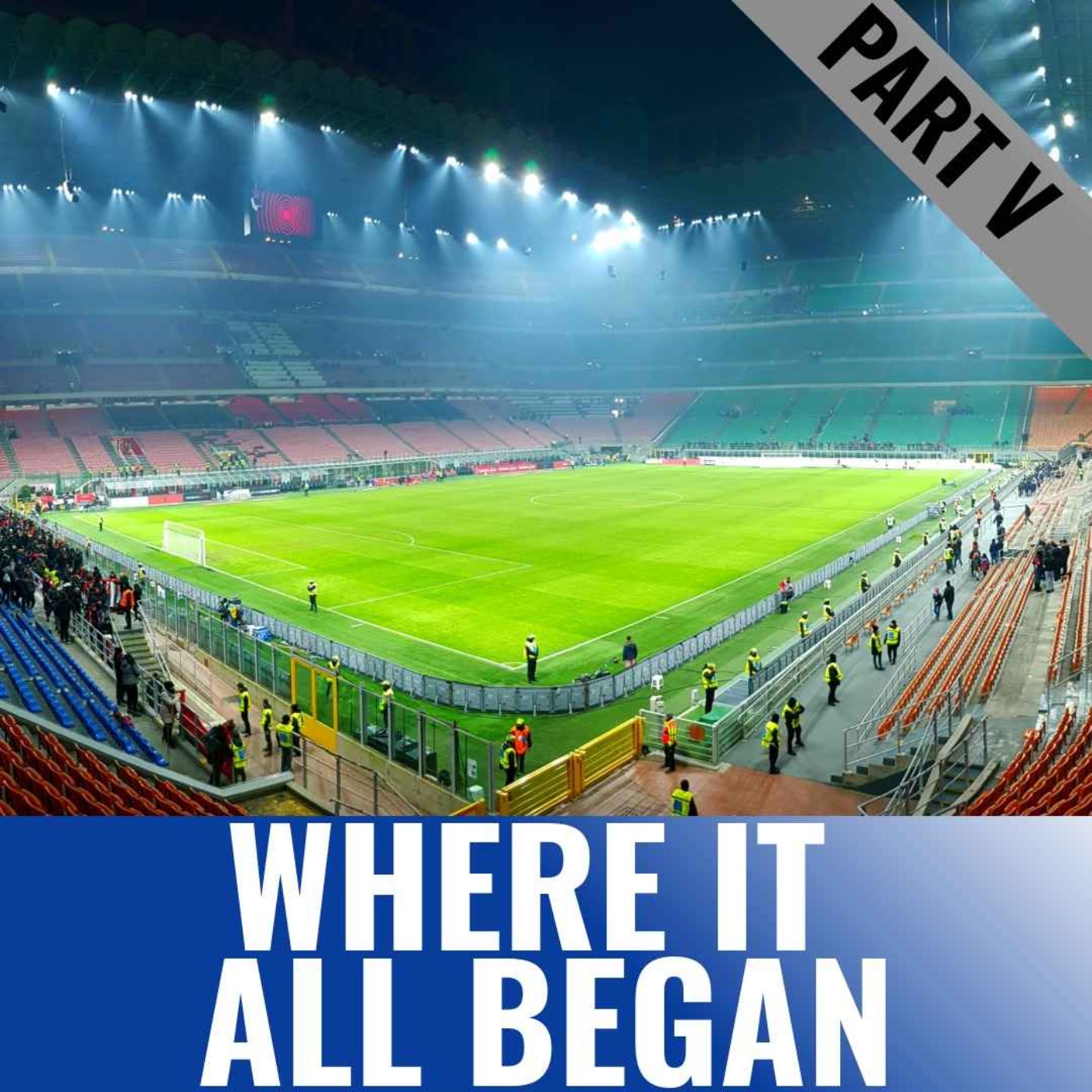
In this episode, we're traveling from Italy in 1990 to the United States in 1994, from the last World cup of the Cold war to the first World cup of a new age.
- [02:30]
Peter Frankenpoe
Because if 1978 showed how dictators used football, 1982 showed how the post colonial world had forced its way in, and 1986 gave us Maradona as the hero
- [02:41]
Afua Haj
of The Outsider, then 1990 and 1994 showed that football had become a map of the New World Order.
- [02:54]
Peter Frankenpoe
Hello and welcome to a new episode of Legacy. I'm Peter Frankenpoe.
- [02:57]
Afua Haj
I'm Afua Haj.
- [02:59]
Peter Frankenpoe
And this is Legacy, the show that explores the lives, events and ideas that have shaped our world and asks whether they have the reputations that they truly deserve.
- [03:07]
Afua Haj
This is the World cup and the end of the Cold War.
- [03:13]
Peter Frankenpoe
Thanks for joining us on Legacy today. To support the show, please do sign up on legacy plus you can enjoy
- [03:19]
Afua Haj
early access, viewer ads, Q&As and bonus content where we talk about everything from the small objects, projects that change modern life, like the remote control. Special bonus episodes with huge figures in global culture like Gary Lineker talking about race, identity and the England team.
- [03:40]
Peter Frankenpoe
So sign up for us at Legacy supportingcast fm. So, Alfred, do you remember the end of the Cold War? Do you remember the World cup of 1990?
- [03:48]
Afua Haj
I do remember it and I remember my parents vesting huge geopolitical importance in the teams and the way they were playing, especially the former Soviet teams, Poland, East Germany, Romania, Bulgaria. But I didn't fully understand the importance because it was really the first World Cup I was fully aware of. So I didn't have anything to compare it to. Peter, what about you?
- [04:14]
Peter Frankenpoe
Oh, gosh, it was one of the greats. I mean, first I just finished my A levels, so it was a kind of moment of freedom. But there was something very special about the World Cup. I think at that time the Italian football league was the best in the world and so there was a real focus on Italian football. The theme tune of Pavarotti singing Nessa Dormer, the kind of the drama of the tournament. But you definitely felt that the world was changing and the World cup was a constant, actually. I mean, the Berlin Wall had fallen several months earlier and as you said, the communist governments all over Eastern Europe were being swept away with a speed and actually pretty peacefully. I mean, it becomes tragic in Yugoslavia, but people hadn't realized or thought that that communist world would sort of suddenly slip away. So I'd grown up watching Michael Gorbachev, by the way, we did four fantastic episodes on him early on in our Legacy career. But what he'd been trying to do was not to introduced freedom. He was trying to reform the Communist Party and the Soviet Union and he ended up destroying it. But it all felt that this was a changing moment in time and that football was a way in which countries could celebrate, they could put their differences to one side. So, yeah, I do remember it very, very fondly. And then of course, for the English team, it all Ended up as usual on penalties, losing to the Germans, but it felt like the last World cup of the Cold War era.
- [05:39]
Afua Haj
And you mentioned Nessen Dormer, but just from a more domestic perspective in England.
- [05:44]
Peter Frankenpoe
Oh, thank God. I thought you could ask me to sing it.
- [05:47]
Afua Haj
Peter, it is time you made your opportunity.
- [05:53]
Peter Frankenpoe
Oh, what a great. What a.
- [05:55]
Afua Haj
You've got potential. Thank you. Let us know, legacy listeners, if you would like to further explore this untapped talent that's sitting before you.
- [06:03]
Peter Frankenpoe
How's your Oprah software? I bet you could do that easy.
- [06:07]
Afua Haj
Yeah. You might need to get me a few drinks first before I. Before I have a go. But I do remember, I do remember it being a moment where there was a kind of class shift in the perception of football because I remember people like my parents and their friends kind of sitting around and watching Pavarotti and engaging in the game in a way that they hadn't before. Where it was kind of appealing to me, middle class families as a wholesome activity to sit down and watch. The reason I remember that so well, it's partly because of the music, but also because we did that as a family. We all sat down and watched football in a way we probably wouldn't have before. And it was so traumatic because of those England penalties. And I remember thinking, this is not a wholesome activity. This is like a cortisol spiking, stressful, emotional roller coaster. And that feeling has never left me. I think I have PTSD for England, playing in penalty shootouts. Actually, probably the whole nation has PTSD from that.
- [07:07]
Peter Frankenpoe
It was definitely memorable, not the first or the last time, but, you know, it was an interesting time in Italy too, because, I mean, from the outside, the TV pictures were gorgeous, the soundtrack was fantastic, the stadia were amazing. And yet, in fact, I mean, there was a fantastic game, England against Cameroon, that our friend of the podcast, Gary Lineker, played in. But most of the games are sort of quite attritional. The football was cautious and defensive and quite tense. And there weren't too many sort of classic games. Lots of, lots of one Nils and one alls. And it felt sort of seminal that, that this was global TV audiences. You know, it's partly that that TV itself had started to expand more and more, so you felt that the whole world was coming together. But I don't know. Do you remember watching the Cameroon match against Argentina? The first match in the whole tournament?
- [07:56]
Afua Haj
Vaguely, Peter. And I remember my mum getting very emotional, as she does when African teams are triumphing against the odds. But even that, I Think I was too young to fully understand its significance. So why was that such an important match?
- [08:10]
Peter Frankenpoe
So Cameron had played the World cup once before in 1982, but there was a feeling that African teams were sort of a nicety to have along for the ride rather than could actually make any sense of getting anywhere in the tournament. Argentina at that time were the reigning champions. They had Maradona, the most famous footballer in the world, in their starting lineup and it was the first match. So you think, well, it's only how much could, how much would Argentina win by? And you know, Cameroon as, you know, after I'd been colonized by the Germans in the late 19th century and then been divided between the British and the French and then become independent in 1960. But when Cameron walked out against Argentina, Milan, you know, they were, they were representing a post colonial society. They were representing a nation that was free. And you know, you thought, well, they'll, that they won't have a hope in hell. And in fact, when Francois Omar Bijek scores the only goal, I mean, it's an absolute clanger of all time. He rises to head, head the ball past the Argentinian goalkeeper, basically spills it between his legs. But Cameroon winning 1 nil was a total shockwave. The idea that here was a team that nobody really knew where Cameroon even was, let alone what its history was, has a couple of players sent off, you know, that played into lots of sort of stereotypes, of course, about how African teams could only play with real physicality. Even though Argentina was a pretty dirty team at the time, time too. But it sort of set the scene for the World cup of the World wasn't quite what you expected and that there were shocks and surprises everywhere. It was complete joy, partly because he didn't score in that match. But Roger Miller, who becomes one of the stars of the game, is in his late 30s. At the time, I mean, he looked like somebody's grandpa running around the pitch scoring goals. And then when he did score, he would run to the corner flag and sort of dance with it. And the joy of how football you want it to be played, you know, it is just a game. I mean, I know that we get wound up with penalty shootouts and everyone's hopes and expectations. There's so much projection. But Cameroon played like this is a game, we're good at it and we want to enjoy ourselves. It was completely breathtaking.
- [10:07]
Afua Haj
Just the Miller story in itself is so interesting. Football is weird, Peter, because, you know, if you ever sit down and talk to professional footballers who are retiring, they're usually in their early 30s and it's an alternative world in which you become a geriatric basically by the age of 35. So Miller was only 38 in this tournament, but like you said, he seemed so old by the relative standards of all these kind of teenage and early 20s footballers. And he had actually retired, he'd retired from international football. Cameroon's president, Paul Beer, had personally intervened to persuade him to return. And you actually still see that, don't you, in a lot of teams and a lot of African teams, that there will be one or two key star players on whom so much of the hope rides that whatever it takes will be done to try and incentivize them or persuade them to come and, and take up the mantle. But Bea's confidence in Miller certainly played off in this game because as a result of his achievements, he became an instant legend. And, you know, as we often see, this is one of the things I love about the World Cup. You've seen it in this World cup with, for example, the Cape Verdean goalkeeper. All of these players who are not particularly well known on a world stage just win people's hearts, regardless of what country or team they're supporting. If you see someone kind of against the odds, overcoming some kind of adversity to become a star of a match, it just wins people's hearts.
- [11:33]
Peter Frankenpoe
I love the Cabo Verdi goalkeeper. VGNA so he had 15,000 followers on Instagram before the first match of the World cup and he ended up with 5 million 24 hours later. So he'll now be advertising everything you could possibly find.
- [11:48]
Afua Haj
And importantly, his mum, who was not able to afford the exorbitant costs of a visa to come to the States to watch him play, has now been kind of fast tracked through by the Department of State. So again, it's such a story for this walker. It shouldn't be that difficult for someone's mum to come and watch them play.
- [12:06]
Peter Frankenpoe
It should never be difficult for anybody's mum.
- [12:08]
Afua Haj
You shouldn't have to become an over, like Instagram legend for your family members to be able to get access. But in that, in that case, that was the reward of his stunning achievements,
- [12:18]
Peter Frankenpoe
let's say, about the World cup, about, about the dreams being made. And so today, you know, you do get some of these players who are much older. You know, Ronaldo is 41, Luka Modric is in his 40s. Messi. But in, in 36 years ago, in, in 1990. No, but like you said, Afro, nobody played beyond their early 30s. So the idea of Roger Miller, you know, basically was, although to be a grandfather and, you know, you'd think that he wouldn't be the first person to be worried about turning up on the team sheet. And yet he scores these goals against Romania and so on. And the way he celebrates is just breathtaking. But, I mean, it's interesting that it's sort of the way that Cameroon had played. I mean, they lost their final group game to the Soviet Union, but they'd done enough to advance. But, you know, it felt very symbolic that Cameroon were making it through the tournament while these enormous superpowers, the Soviet Union didn't, for example. And, you know, there's something, I think, about the stage that the World cup gives to nations. I mean, we've seen that in this World cup too, of the ways in which countries feel their pride and get a chance to kind of show what they. They can do. But the terrible thing about sport is you end up only with one standing. But it's. It's how well you can come.
- [13:25]
Afua Haj
But just on the idea of the symbolism, Peter, while we're there, I think it's worth talking a bit about Italy as a host nation, especially in the context of African nations like Cameroon rising up in people's hearts and advancing past the group stage. Because I think we tend not to think of Italy as one of the classic European players in African colonialism, but it really was a big player in African colonialism, just not necessarily in quite the same way. And I think as a result of that, it's maybe not exercised its colonial demons in the same way that some other European nations have been made to do, partly by people like me who are descended from that story. But this is Italy, the nation that colonized Ethiopia, Eritrea, Somalia has been a huge operator in, in the Horn of Africa. And actually some of its colonial actions, especially Mussolini's invasion of Ethiopia in 1935, has had a huge impact on radicalizing and activating Pan Africanists and independence leaders throughout the 20th century. Because it was such a brazen, almost too late attempt to impose this European superiority on such a proud part of the European continent. Do you think that this dynamic was at play in Cameroon's victory and the euphoria around it?
- [14:43]
Peter Frankenpoe
I think so. I think it was also that, you know, the ways in which missionaries and soldiers and teachers and traders and administrators. I mean, we talked about that with Gary Lineker too, you know, that it's. And, you know, and with our clips we put on Instagram, it's amazing how people get Very threatened by the idea of saying that, you know, I'm not, I'm not asking about a value judgment, but just saying some countries colonize each other. And of course, when you think about colonialism, there's a complexity there which is more painful for those who get colonized, obviously, than the ones who do the colonizing. So, I mean, in fact, I'm going to be interested to talk about in future episodes too, about what European colonialism looks like from the point of view of the Soviet Union. But I think, I think that the kind of the breaking of the shackles, it was a kind of proper, meaningful event for Cameroon and for African nations and for the World cup of seeing sort of the dignity and the pride of which a country was playing and the fact that people didn't know where Cameroon was was hugely important. But like you said, Afro, I mean, the Italian context of Africa is complicated because, you know, Mussolini wasn't just trying to invade Ethiopia and Eritrea just to build a modern empire. He was consciously trying to recover the glory of Rome. So lots of Italians, their relationship with Africa is to do through the lens of a Roman Empire and how that this is their own backyard and they should be allowed to expropriate all those animals that got killed in the Circus Maximus, all coming from Africa. And the gold that comes across the trans Saharan trade from Ghana, the ways in which the Indian Ocean world has opened up through the horde of Africa and how important that was for. For the Roman economy too, you know, mean that Italians engage with, with, with Africa in a very different kind of way, I think, to how we do here in Britain.
- [16:23]
Afua Haj
So in 1990, Cameroon is not just participating in the World Cup. They're almost altering the feel and the meaning of the World Cup. This is a really significant victory for an African nation. Had African nations hardly even competing in the World cup to this stage. Only Egypt in 1934, Tunisia being the first African nation to even win a match at the World cup in 1978. Algeria beating West Germany in 1982, which similarly felt like a kind of reversal of glory. Morocco reaching the second round in 1986. But this is the first time that a West African nation has made it through the group stage. And it feels monumental. And it's the way that they did it. They did it with style, with humor, defiance, with the power of Roger Miller, everyone's grandpa, even though he's only 38, and his dance, it was a televised celebration. It was a declaration of a world about to change. And we'll hear more about that after the break.
- [17:36]
Monday.com AI Agent Narrator
This Monday.com ad was created by a team of people and AI agents. Reese, our content agent, wrote the copy based on our best practices, like mentioning Monday.com three times. That was the second. Johnny, our coordination agent, built the timeline and kept everyone aligned. Olivia, our human creative director, stayed in the loop because agents are great, but they don't always know when a joke lands. She had one note tell listeners it only takes minutes to build an agent. So minutes. Create your own AI agent. Today on Monday.com on the under $3
- [18:07]
Monday.com Advertiser
menu at McDonald's, the sausage burrito is $2.
- [18:10]
Peter Frankenpoe
So dip, drizzle or douse to your heart's desire. Cuz no matter how you sauce your sausage burrito, it's still just $2.
- [18:17]
Monday.com Advertiser
With McValue limited time only, prices and participation may vary. Prices may be higher for delivery.
- [18:27]
Peter Frankenpoe
So it was, it was Gary Lineker's fault, of course, that Cabaret didn't make because it was a fantastic. I think it was the game of the tournament actually. England against Cameroon, where it goes to extra time. And Gary won it in extra time. 3, 2. But it was a fantastic match. But it wasn't the only post colonial story too because I mentioned that the Soviet Union had players from all over its vast territory, including Russians, Ukrainians, Georgians and others. And the Soviet Union had used sport as a showcase of state power, you know, for the Olympics, for chess, for ice hockey, ice skating, gymnastics. You know, that was all part of a cold war contest to show the supremacy.
- [19:04]
Afua Haj
And gymnastics was the big one for me. Peter. I was a gymnast when I was a child, quite a serious gymnast when I was younger. And they were really the ones to beat. I mean the way that the Soviet Union poured resources and incredibly exacting standards and punishing training onto its young gymnasts, that there was a time when it was almost impossible to really compete against them. And of course the huge territory from which they were able to draw all this talent. So I remember this feeling like the idea of the Soviet Union losing that dominance was kind of looming like a ghost in this tournament.
- [19:42]
Peter Frankenpoe
I think that's right. And then you had all these other parts of the world that were about to shift. So Czechoslovakia played in 1990, they got through to the quarterfinals, but they soon after split peacefully into Czech Republic and Slovakia. And then you had Yugoslavia, which was an amalgam of countries that had been colonized in the pre modern period. So places like Croatia, Savinia and then Bosnia had been knocked out by Austria, Hungary and then pushed all together at the end of The First World War, in a very uncomfortable balance of countries that had never been all peoples that had never been stuck together, but it had produced some brilliant footballers. And in fact, in this World cup in 2020, six of the teams that have made it through to the last, last 32, 8%, almost 8% of all the players have a origin or eth ethic origin from the Balkans. So, I mean, it's kind of an amazing sort of bubbling pot of real talent. And at that time, there are players from different parts of the divide of Robert Przynetsky, Dragon Stoikovic, Darko Pachev. I remember all of these guys very well. They reached the quarterfinals where they lost to Argentina on penalties. But within a year, Yugoslavia would begin to fall apart with war in Croatia and Bosnia and then later in Kosovo. And some of the players who'd worn the same shirt in 1990 would soon be playing for their home countries. And that was a moment of liberation from the point of view of Croatia, Slovenia, Bosnia and others. But that world felt that it was on the process of moving, and again, even if it's the last time that West Germany played as a single nation rather than being unified with their East German neighbors, but they. They fought their way through to the final, where it was wasn't a great match, and they beat Argentina one nil with a penalty three or four minutes from time.
- [21:28]
Afua Haj
Peter, I just want to quickly interrupt because I talk a lot about my identity and my support for Ghana in the African teams, but you've got very personal ties to the Balkans and to the former Yugoslavia. So where did your allegiances lie? How did you navigate all of these countries? You know, what's now Croatia, Slovenia, for example, being at that point part of Yugoslavia. Who did you support? How did you see your identity reflected in this contest?
- [21:55]
Peter Frankenpoe
Well, so as a family, we had nothing to do with Yugoslavia, against the principle of being stuck together at the end of the First World War. And so families like mine fell back on the fact that we were from the coast, from Dalmatia, and that therefore, our loyalty was really split between Venice and Italy. Therefore, rather than a country that was communist and very hostile to anybody who's from a privileged background and even the principle of a kind of communist star with a country led by Tito. It wasn't as repressive as many of the countries behind the Berlin, the Warsaw Pact, but it still had a ferocious state apparatus, so there was nothing to cheer for. So there were long connections, long routes to that part of the world, but it wouldn't have Been part of. It wasn't a country that we would. What we were supporting.
- [22:41]
Afua Haj
So would you instead of Yugoslavia because of the politics?
- [22:47]
Peter Frankenpoe
I think so, because, you know, like most people and I've got family connections to hunger from that part of the world, so Hungary to Austria to Italy and you know, the being part of a, of a. Cheering for a Marxist Lenin estate, you know, was, was a little bit harder. But when Croatia became independent in 1991, then no question was started to wave a Croatia flag, which meant something very different. And it's something which, which I, I feel like, like anybody with, with dual heritage that I'm. I'm proud of. And I don't, I don't think it conflicts with being 100% British and wanted to play croquet and cricket and the rest of it. But I mean, it's a funny thing that I, you know, noticed again, just, just in being a good friend of yours, Afwa, that, that for. For all sorts of reasons, if you are European of mixed heritage or of different heritages in Europe, people don't get threatened by that. The same with if you have Afro Caribbean or African ancestry, where somehow it's seen as being a different thing. But, you know, having said that, in the Brexit vote 10 years ago, some of the reason why many people in Britain voted was to get rid of builders from Poland, Lithuania to get rid of European immigration. So I don't think that Europe, people with European ancestries get aggressed and get threatened in quite the same way. But, you know, for sure, there's still a bubbling undercurrent of a suspicion if you have split loyalties or dual loyalties. But, you know, my mother's Swedish, so I'll happy to cheer for this for the Swedes too.
- [24:07]
Afua Haj
So. So in this World cup, so we've had. It's actually ironic that in One group in 2026, we've had England, Ghana and Croatia all in the same group. So I've had to deal with England playing Ghana, which is really my, my two sources of identity. So how have you navigated England playing Croatia?
- [24:28]
Peter Frankenpoe
My list aphra, goes much deeper than that. So I've been cheering for my friends in Uzbekistan, first time that Uzbeks have been in the World Cup. So I was sort of completely cheering them on. You know, I've got lots of connections all over many of the countries that are playing, you know, so. So, you know, I feel a great affinity to all of them. I mean, what I, in the first instance, just want a really good, good Match actually there's nothing worse than a nil nil draw or sort of dauer one nil result. But you know, some of these games have been fantastic but so I definitely can feel conflicted and I, I think if you have multiple ancestries you, it's not that you think that you can't lose, in fact you can't win. So you're up, you're disappointed any which way. So you know, I know when, when Gardner played England actually a draw is probably just about right for everybody. We talked about it beforehand. If I know that you were keen for, for Ghana to win but you know when, when Croatia played gone, I kept sending you messages saying I hope you'll still be my friend. But Croatia needed to get a result to go through. So you know, as long as England had gone and Croatia went through, which they all have done, they were all okay. But by the time this goes out there'll have been some knockout rounds so let's hope they can all get through. But if it's the three of them all in the semi finals, I'd be delighted.
- [25:34]
Afua Haj
It would be a legacy semi final if that happened.
- [25:40]
Monday.com AI Agent Narrator
This Monday.com ad was created by a team of people and AI agents. Reece, our content agent, wrote the copy based on our best practices, like mentioning Monday.com three times. That was the second. Johnny, our coordination agent, built the timeline and kept everyone aligned. Olivia, our human creative director stayed in the loop because agents are great but they don't always know when a joke lands. She had one note. Tell listeners it only takes minutes to build an agent. So minutes. Create your own AI agent today on Monday.com.
- [26:16]
Peter Frankenpoe
And what about, what about Maradona and Gaza? Those are the two big heroes of 1990. I mean, do you remember Gaza and his tears afterwards that, does that displace the idea that everybody in, in Britain is sort of stiff, upper lipped? I mean the fact that he was cried when he got a yellow card and knew he'd missed the final and Gary turns to the bench and does the kind of he's crying, you need to keep an eye on him. That's my Gary impression.
- [26:37]
Afua Haj
That's really become cemented in Gary's legacy, hasn't it? The way that he looked out for Paul Gascoigne in that match. I think it's one of a few things that cemented his reputation as the nice guy of football along with the famous never even getting a yellow card reputation. I mean there were a lot of tears in this tournament. Gazza was probably the footballer that occupied most of my consciousness at that age, just because I was nine. And here was a man crying and being so emotional, and he was already just such a colorful figure, always all over the tabloids, everyone was always talking about him. And I really remember being fascinated by the emotional and social dynamics in the England team, of how they navigated that, even though I didn't at the time understand the significance of the contest against Maradona, for example, and the reputation he had at the time. But it really is an incredible thing to have lived through.
- [27:35]
Peter Frankenpoe
Looking back, I thought it was a great World cup, but the idea that grown men could cry, I don't think that's the worst thing that you could see on the tv. You know, Gas Gazza was obviously quite fragile as a player, but he was brilliant. I mean, he'd gone to the World cup, but people hadn't thought that he would get a start, a place in starting lineup. And Bobby Robson, who was the England manager at the time, had sort of nurtured him by surrounding him with people like Gary to make sure that he was sort of in the right place. But that semi final against the Germans was, was a, was a terrific, a terrific game. But it kind of took us back, as, you know, here in England, where we, we like our, our jingoism to, you know, two world wars in one World cup, even though the Germans have won now four World Cups. You know, I think the, the idea of, of seeing politics and history playing out because, you know, we were still in a generation. I mean, again, it's, it's time has flown. We're now 36 years later, but we were still in a generation where people's parents had all grown up who are, you know, that age had all grown up through the Second World War. And so that, that meant something to them to be taking on Germany too. And then, then there was Maradona. Did Maradona. Do you follow him when you were, when you were growing up? Have you, have you watched the Maradona documentaries about his life and career?
- [28:43]
Afua Haj
And I have. My partner was a, a footballer when he was young and he's my age, so was also a child at the time. But these were the moments that cemented themselves into his consciousness for life. I mean, the Hand of God Game, 1990, Maradona's Trajectory. He worshipped these figures as a, as a boy. So I've kind of relived it through him. And Gazza, by the way, who, whose story is also completely remarkable. I mean, there was a Gaza documentary a couple of years ago. And I had such mixed feelings watching it. The incredible talent of this young guy from Newcastle and the. The way that he was treated, not just by football, but by the tabloids in particular. I mean, it was dark the way his vulnerability was kind of exploited. And it was really an insight for me into the cost, the high cost of being a genius at a sport like football, but the way that, that makes you a target for so many, so many things. And then there's another thing I think about with Maradona in 1990, because he was now kind of past his peak. And we're recording this, Peter, as Wimbledon's about to start for 2026. I live in Wimbledon. It's always something that affects me in one way or another. And Venus and Serena, who both basically retired from tennis, are making a comeback in the singles at Wimbledon this year. And it makes me think a lot. I mean, I'm unambivalent about them playing. I absolutely love them. I love to see them play. They totally changed the tournament in the best way whenever they're here. But it does make me anxious, I guess. I worry about professional athletes not knowing when to quit. And I'm not saying that they should quit, but there's something really hard about watching the greats or your personal greats kind of fade away slowly rather than just quitting while they're ahead. And it's easy for me to say. I mean, if tennis or football is your life, of course you're going to want to keep going until you can't go anymore. But, you know, 1990 is one of those times where you look back and you think, I wish Maradona could have just gone out as this kind of invincible legend rather than be in the game where his body is starting to fail him slightly and he's no longer quite the charismatic, magnetic hero he had been in earlier years.
- [30:52]
Peter Frankenpoe
It's a tricky one. You know, I think when you're. You front load your career as a sports person, normally in life you sort of. You build up your profile. Eventually you have a hit podcast like us, and you keep on going and, you know, the next chapter comes next. But it's really tricky. It's really tricky if you, if your career is basically finished by the time you're 35, and then you're always going to be synonymous. And if you're Pete Sampras or Venus or Serena and that you're, well, famous, and then, you know, what you do for the next 40, 50 years. I mean, maybe we should do a couple of episodes with with sports people to ask, you know, what, what does that adjustment like? You know, how do you do it? And some, like Gary Lineker or Stuart Broad or Alastair Cook, you end up as a commentator, and so you're still visible, but most don't get the opportunity to do that. So how do you talk about your career? How do you think about what comes next? And the kind of. The old way it used to happen in professional football would be you go open a pub because people would come and talk to you about that game you played against stoke City in 1962. They were the audience or the crowd, but that kind of. How do you shift into it? But when you were saying that Afro about what do you go do as a sports person when you're older, the bit that I thought was about this World cup with Gaza and Maradona is that what I felt at the time was that the place where those geniuses would be loved was Italy. So Gaza gets transferred to Lazio a year or so later, but Maradona at Naples. And this is the place where, whether you're a flawed genius or otherwise, you were celebrated for being a maverick. There was space for you to be brilliant, there was an opportunity for you to be an artist and to be loved for it. And Gaza was incredibly popular in Italy as a player. I mean, he didn't, he didn't speak a lot of Italian, but he. He was absolutely adored because of the way he played and the way in which he obviously was a man enjoying it. And the fact that he was troubled really endeared him. Italians loved him like they did with Maradona. They felt he was one of their own. So there is that Mussolini, imperial side of Italy, with a kind of the nobility of the cla, you know, wanting to. Wanted to shake the world. But there's also something that's very, very welcoming. These Mediterranean cultures that you can't all be perfect. You can't. You can't get it all right. And I, I love the fact that these players found a kind of spiritual home there for themselves, that they weren't judged in quite the same way, AKA harshly that we are in Northern Europe, where, you know, if you're, if you're well known, you. You deserve to be taken down a. Not a notch or two. And both Maradona and Gaza, the kind of geniuses of their generation, I think not a. Not. Not a coincidence that the World cup, this was their kind of apotheosis and that they both had these amazing careers there, too. Is that something you Think about Afra, the kind of the flawed genius about where you find a home.
- [33:26]
Afua Haj
Absolutely. I mean, the flawed genius is always the most fascinating figure and I think football is full of them. Because the raw talent that you need to be a great player is not usually correlate to having a lot of privilege or a start in life that necessarily sets you up for the financial skills to manage your wealth or the social skills to manage your relationships. And you see it time and time again with just incredibly gifted footballers making bad choices or being taken advantage of or sometimes just doing wrong in a way that there's personal culpability. But you sometimes think institutions like football clubs or like FIFA have these young people, they are in charge of them from such a young age. There's so much opportunity to equip them to be these really all round brilliant adults, you know, instead of just like geniuses on the pitch who don't know how to manage life off the pitch. And that's still happening. You still see these young footballers not being taught how to manage their money, not being given a blueprint for planning life after retirement, which is obviously going to happen super young for them. And I think that's a bit tragic, really, especially since a lot of them are from backgrounds where there aren't necessarily other people in their lives who are going to equip them with those skills. So when I see these flawed geniuses, sometimes it's inevitable. But a lot of the time it feels like we still don't really take care of our sports geniuses, given that we have them from childhood. I say we, but, you know, as a society, we know who they are and we watch them and we enjoy them and we benefit from their talent. And then it's kind of like you're on your own with all that other stuff.
- [35:06]
Peter Frankenpoe
It's tough, it's. It's definitely windy at the top. And when you throw in the amount of money that's involved in the football game and in professional sports, there are so many people who are wanting to maybe not take advantage, but might be too strong, but who can ride on the coattails. Anyway, look. That's the World cup of 1990. On our next episode, we're going to move forward to a new world order taking shape in 1994. So that's the first World cup played in the United States. But thank you as always, for listening to Legacy.
- [35:33]
Afua Haj
If you would like to get deeper into this conversation and become one of our beloved cherished supporters that makes this wonderful all happen, sign up to Legacy plus you will get bonus episodes, early access, fewer ads, Q&As and more go to Legacy, Supportingcast FM and for everything
- [35:51]
Peter Frankenpoe
else, including our substacks and updates on TikTok and Instagram, just check out the show notes or search Legacy Podcast I'm Peter Frankopen.
- [35:59]
Afua Haj
I'm Afra Hash, and we'll see you on the next episode of Legacy.
- [36:19]
Monday.com Advertiser
Monday AI agents took over my work, and I absolutely love it. Chasing deadlines, writing status reports, updating stakeholders. Agents handle the daily grind. Now they live inside Monday.com so they see the full picture. My work, my team, the whole company. And I don't have to worry about the data. It's safe, which means I'm free to focus on the big stuff. Knowing everything runs smoothly in the background. It's completely shifted the way we work. Create your own AI agent in minutes on Monday dot com.