← Legal Mumbo Jumbo With Attorney Ashley Nicole Green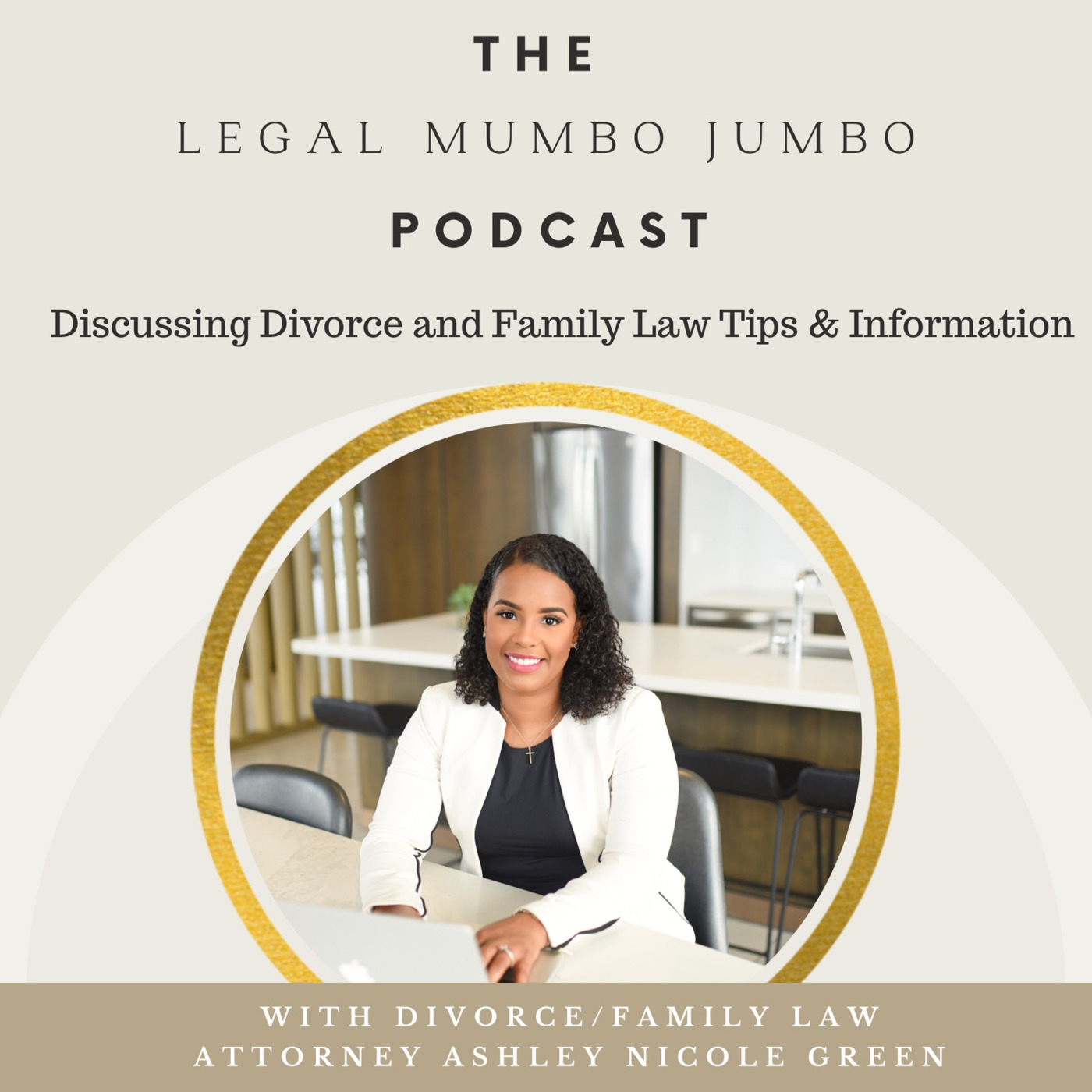
Legal Mumbo Jumbo With Attorney Ashley Nicole Green
Episode 4: From Yoga Teacher to Divorcee then Financial Advisor (S4 Ep. #4)
00:39:30
Today on the podcast, Ashley Nicole Green, speaks with Brenda Bridges, a mom who had to make a pi...
Loading summary
Transcript38 lines
- [00:02]
A
Welcome to Lego Mumbo Jumbo, the insightful podcast for those navigating the complexities of family law and divorce. I'm your host, Ashley Nicole Green, a family law and divorce attorney in the Houston, Texas area. In each episode, we'll dive into the legal nuances, share stories of resilience, and provide you insight to empower you through your challenging chapters. Join me as we embark on a journey of understanding, support, and navigating your path to a better future tomorrow. Hey guys. Welcome back to Legal Mumbo Jumbo. Today I have a very special guest and we're doing things a little bit different. I know we've been having past clients come back and talk about their experiences with our office and navigating family law and divorce cases. But today I'm going to bring on a person that I think is going to be very helpful for those of you who are navigating divorces and child custody cases so that you have the perspective from a professional that has seen it on all ends. And so I am welcoming Brenda Bridges to this podcast. Thank you so much, Brenda for joining us today.
- [01:11]
B
Thank you, thank you for having me. And I'm really excited to talk to your gang.
- [01:16]
A
Yes. Awesome. I'm sure they're going to learn so much info, so let's go ahead and jump right in. Can you tell the listeners a little bit about yourself and how you kind of landed in the seat that you're in now?
- [01:28]
B
I think landed is a really good way to say it because it was never my life's plan and yet it is exactly where I'm supposed to be doing the work I'm supposed to be doing. I landed here because I went through a bad divorce, but backing up a little bit. Before the divorce process started, I was mom of teenagers volunteering, teaching yoga. I had been at home for quite some time before that. My career was marketing. I owned a marketing business, have a teaching degree like a kind of hodgepodge. But I had really settled in to I was the at home parent and then my husband lost his job and I looked around and went, well, yoga is not going to pay for college tuition and yoga teaching has no benefits, at least none I experienced. So. So it's time to do a pivot. So I became a financial advisor because I did enjoy it. I didn't want to go back to marketing. My advisor had been trying for a decade to get me to do this because I'd have all my little spreadsheets ready when she came for our meetings. So it was okay, I'll. I'LL jump in. So I got licensed, whole bunch of test and licensing, and I became a financial adviser. And about a year and a half later, my then husband said he wanted a divorce. So we went down that path and it was truly a case of you don't know what you don't know. And even though I was a financial adviser, there were so many mistakes made in the divorce process. It was really expensive, it was really contentious. When it all wrapped up, I looked back and just went, there's got to be a better way. And there is a better way. So I still am a financial advisor licensing wise, but the majority of work I do is in divorce. I first became a cdfa, which is a certified divorce financial analyst. And that's just learning the specifics of divorce finances because they are entirely different than retirement planning or education planning or estate planning. So did that. And once I started working in that field, I thought that at least from me working with my clients, there was an imbalance in that. I know we're often told in divorce, think logically, not emotionally, but I think that. I don't know if this is a swearing group, so I'm not going to swear. But I just think it's, you know.
- [04:11]
A
Yeah.
- [04:12]
B
Because we're emotional creatures. And as much as we would like to think that we are rational and logical about all things, going through a divorce is really emotional. And thinking that you can shut out that emotional driver and only think about the numbers that I don't, I don't believe make sense, I really don't see it happening. I think people make much better decisions when we can then acknowledge the emotions we're going through and the life changes and the transition and how difficult it can be and then look at what's driving our logical decisions. And then I think we make much better decisions. So that being said, I became a divorce coach to try to balance out, you know, have that skill set to work on both sides of it, the logical and emotional with my clients. And then the next logical step was to become a mediator and a collaborative professional to try to kind of it all together. And I do work with people going through litigation for sure. But I also think that bringing the skill sets of call it a kinder, gentler process. So if we say mediation or collaborative process and bringing in the emotional implications and the weight of the decisions, in addition to the financial decisions, gives people more well rounded support and leads them to a better outcome. So definitely that's my long winded how I got to where I am.
- [05:50]
A
No, I appreciate you taking the time to really set the stage and let people know your history and your background, because I think it's going to be helpful. And one of the things that you mentioned at the beginning of the introduction was that he looked back and said, there has to be an easier way to do this. And you have a book that I've had the pleasure of obtaining a copy of, and I definitely want you to tell listeners about that book here in a second. But one of the chapters in that book, and I was looking at my notes, and I believe it's chapter three, but don't quote me on that. Listeners. She can definitely let you know if I'm mistaken that. But it's about, like, you picking the process and choosing the right method for you, like litigation mediation, collaborative, whatever that looks like. And I really want you to talk about that from the perspective of your book, but also just from your own experience. And how. How do you think you maybe would have done that differently if you had that knowledge that you have now, today?
- [06:50]
B
Yeah, that's a great question. I. I think too often the end result, the desired end result in divorce, whether you're the one who wants it or not, or you both do, is driven by like, this magical get over the finish line, get divorced. And I think people. People are often really surprised and shocked at what it takes to get divorced and all the decisions that need to be made and stylistically, what that looks like. So I'm an advocate of, okay, once you and your partner, you or your partner have decided that divorce is the course of action you're taking, that the very first step you should take is figuring out your purpose, meaning in the end, what do you want your life to look like? Because if your goal is just to not be married, that's not well rounded enough. And that is not a true vision of life post divorce. That's just a. That's a running away from. And where we want is to be running to. And what are you running to? What are you looking to? What are you going to? What does that look like? I think that's step number one. And then the chapter three, picking your process, is once you've done that work in step number one, figuring out and being knowledgeable about what's available to you instead of jumping right into something that might be a mismatch in what you really need and what you envision down the road. So, like, really blatant example would be if you and your partner are talking. I have people come to me and say, we're best friends. We just do not want to be married anymore. We are so in agreement. We need help figuring out what to do and we don't want to make any mistakes. Well, if those same people first hire, or let's just say one of them hires an attorney who is an avid litigator and, you know, no harm in that, there are people who absolutely need that support. Is someone who's really congenial with their spouse and all on the same page. Do they need that type of professional? Probably not. But once they've paid them five grand in a deposit, do they feel locked in? Probably so. And then are they going to go down this path where then they're going to be X starts talking to their friends and says, oh my gosh, they hired that attorney. They're a bulldog. They're vicious. You know, hearing me in court years. Then they feel like they have to hire an equal attorney who also likes to litigate. And suddenly you have this couple who was really pretty amicable and they're in court for a couple of years spending tens of thousands of dollars. So that picking the professional before picking the process drove them to probably an undesired outcome. Whereas if they went, that same couple says, you know what, we, we don't want to have mistakes. We've been married for 20 years, we have assets together, we have children together. But we really want to do this in an educated, informed, but not in the court system way. Well, then mediation might be the best outcome for them or the best process for them. So then when they're looking for their professional support, they hire for people to support what they want.
- [10:27]
A
And that's awesome.
- [10:29]
B
Yeah. I think I am not an advocate of a DIY divorce unless you have no children, no assets, short term marriage. But if you have combined assets and you have children and you know, you've been married for a length of time, you can find the right professional to help you through it without spending, you know, your child's college education. But you still don't want mistakes because life changes. You know, people go in and have new influences, shall we say? So I think professionals are really important. I just think match those professionals to what you envision in your divorce process or what you need. You might counter that with sometimes people, maybe if there's abuse or assets are being hidden or there's, you know, radical, another family that was not disclosed. Like, there can be really complicated factors where you absolutely, I think, want an attorney who has seen that before and knows how to navigate that with you, because that is complex and that's likely to require much more court intervention.
- [11:45]
A
Absolutely. And I think that you've hit on some great points, and I hope listeners have taken the time to really listen to those points, which is understanding and doing the work beforehand. I stress that to our clients so much. I have people that reach out to us, and they are in contact with us for months. And some people are like, months. That's insane. But I say it's important to make the contact. Do the consultations, figure out if they're a good fit. We are big in our office about collaborative divorces, uncontested divorces. We do a lot of uncontested divorces around the same framework that you just mentioned. Because I tell people, you can definitely give me your child's college savings. Okay. Right. But I think it'll be better spent if you can pay for your child's college at the end of this divorce versus paying for my children's college.
- [12:40]
B
Right.
- [12:43]
A
And so I really hope that listeners, you've taken away the fact of sitting down and figuring out what you want and making sure that your interests are aligned with your spouses, because I think that that's also a troubling thing, is to start this divorce process and think you're on one, you know, one path and then your spouse is really on the other. Maybe they go hire the bulldog attorney or they have the litigator, and you're kind of like up a creek because you don't really know where to go from there because you don't have those professionals at the. At your fingertips to say, hey, where do I go from here? So thank you so much for that. And I think it kind of leads us into the next point, which is the idea. You mentioned a little bit about it. And I haven't finish your entire book, but it was a little part that really stuck out to me, which is the economic and the logical approach. Can you talk about that from your perspective for our listeners today?
- [13:40]
B
Are you talking about, like, the example, the. The acne medication kind of thing?
- [13:45]
A
Yes.
- [13:46]
B
Yes. Okay, so true story. This was a collaborative divorce. Right. So you have multiple professionals in there. Benefit of that is it's real time. Things aren't lost in translation. You're having direct conversations and you still have the backing of professionals, but those professionals can cost a significant amount of money. So say this meeting costs $2,500. And what's being discussed is whether the kids need acne medication that is expensive. And by expensive, like, you know, $100 a month or something like that. So the entire meeting was discussing one party saying this was just a total waste of money and the other one saying this really isn't worth arguing about. But $2,500 in professional fees was spent pretty much talking about acne medication. So it's, it's kind of a silly, ish but true example of is it worth it? So another example, and this is a, I'll use the fact pattern, but not the real numbers from a case I had where the. The parties were just not in agreement over the value of the home and they were off by, say, $10,000. One thought it was worth 10,000 more than the other thought it was worth, and they dug in and could not get past that and decided to hire attorneys and go to court. But each attorney has a $5,000 retainer. So if you're fighting over $10,000 and you're going to pay, respectively, $10,000 to continue the fight, it's going to cost you more than just that 5,000, most likely, certainly more time. If it doesn't cost a penny more money, it's definitely going to cost you more time. Because once you're doing things through the court system, it just, it has a life of its own, and it's a very slow process. So I encourage people to look at, like, the reality of what, have your facts, you know, what am I fighting for or positional on why is it very important? And you know what? If it's very important and it's very important to you, I shouldn't judge, nor should anyone else. You are the owner of your life to make your decisions. But once you've decided what it's important and you're clear on why it's important, then you also need to just add in that at what cost? You know, at the cost of two years in court and $50,000, maybe it is to you, but maybe it's not. So it's really just as you continue going through this process, hopefully at the beginning, but just keep level setting because things change, opinions change, your life will change, your relationship with your going to be ex will change. Keep level setting and keep checking in about the decisions you're making. Are they positional? Why are they worth it to you? And again, it might be.
- [17:00]
A
Yeah, for some it is. And, and that's an awesome way to really frame it is that, you know, we have clients sometimes arguing over the house, like you mentioned, or arguing. I had one case where they were arguing over a microwave, and I'm like, this is ridiculous. You know, you're gonna spend so much More money for me to go to court to argue over this than it would be for you just to give it to the other party. And you'll have money to go buy you a new microwave, you know, or whatever you want. And so I think that this is a perfect segue into the emotional aspect of the divorce. And you're, you also talk about that like the emotional side, the logical side. And you mentioned earlier on at the beginning of the PODC that this is also an emotional process. And I think some lawyers and attorneys kind of approach this as a black and white because that's how our brains are frameworked in law school. Right? It's black and white. This is what it is. And the courts are going to look at the code. And that's just it. You know, this is what you'll get, this is what they'll get and kind of move on. But as a practitioner myself, I have really taken on the approach that there are going to be some emotions involved in this, but how do we navigate those emotions in a healthy way so that we're not spiraling on a downward, you know, cycle, and instead we're utilizing those emotions to really gear us up towards finalizing this with the best framework in mind for your mental health, but for your sanity, but also for, at the end of the day, your pocketbook. Because sometimes the emotional aspect could have you spiral into a downward turn where you're fighting over the house and you're losing sight of the fact that you know there's $5,000 you're going to be spending, your spouse is going to be spending, but you don't care because you're so emotionally invested in that idea that you can't see past the economical and the logical approach that is right in front of you. So from your experience as a professional, can you talk about what are some of the things that you would encourage listeners to steer away from when it comes to mixing logic and emotion together?
- [19:14]
B
Oh, my goodness, that was so good and so much to unpack. So I'm gonna try. And I, I wish I could say, hey, I can help you all through this because I did it so well. I did not. So I understand the spiraling, I understand the bad habits. I mean, I get it. It's, at least for me, it was an incredibly emotional, life changing process and I did not handle it as though I was acing divorce 101. That being said, I think one of the very most important things, I mean, it goes to the point of hiring the right professionals and then it kind of Notches it up. So if I think of it as stay in your lane and you refer to, you know, attorneys thinking black and white, well, that's your job. And also your job, as I see it in a lot of ways for clients, is to help them level set. Because if someone's coming in with this pie in the sky version of, you know, I've been married for three years, but I'm going to get alimony for life, an attorney really needs to say, depending on the laws in your jurisdiction, well, no, you probably aren't. You know, that doesn't happen. It happens on soap operas, but it doesn't really happen for the most part in our real world. And here's what you can expect. So I think a lot of people's interactions with attorneys should be leaning on their attorneys to reality check them level set for them, inform them of what their expectations are, because it is still a legal process in the end. And if people's expectations are not based on the legal realities of where they live, then, and really good example, because this is everywhere, I'll have people come in and say, I'm not paying child support. Well, if the laws in your state say you're paying child support and you don't have an extraordinary or exceptional reason that you should not be paying child support, you are probably paying child support. So you can save yourself a whole lot of time and money and your children, more importantly, a lot of trickle down anxiety if you go, okay, this is the reality of the situation I am in. Dissolving this contract we call marriage. So that's part of it, but then layering on, get other support systems. And it can be a divorce financial analyst, it can be a divorce coach, it can be, you know, someone, if you, if you've been out of the workforce, someone to help you navigate what you might go back and do and earn an income. It might be making sure you have friends lined up after a mediation session or a court session that you can decompress with who you have, have programmed beforehand with what would be useful to you. Meaning if, what if you've given it thought and you're nervous about your mediation and maybe you don't feel prepared and you're, it's the first one and you don't know what's going to happen and you don't have a plan for after. Then maybe after you go home and you open up a bottle of wine and you sit there and you know, drown your sorrows in that because you're so frustrated. It just seems like the Right thing to do. Or maybe you look ahead and you say, hey, I have this mediation planned. I, you know, same thing going in. I'm nervous. I don't feel prepared. I don't know what to expect. What support can I use when it's done? And maybe it's, you know, a walk in the woods with your dogs or your best friend or, you know, maybe it's, you know, going out, going to a movie so you're not sitting home alone. I don't know what it is. People need to figure that part out for themselves. But if you're looking at each part of this process and you're building your team and your support and they're the right people for you who are able to give you what you need, don't be afraid to ask for it. I think that's huge. But before you can ask for it, you got to identify it.
- [23:43]
A
Yeah. And that's something that I preach so much in our office and with our clients, is that I tell them, you know, this is going to require you to have a community and a support system. And I tell them, they say, you know, sometimes my clients will come in and say, well, Ashley, I. I envision you to be that. And I'm like, oh, but I can't.
- [24:05]
B
Right.
- [24:05]
A
I need you to have someone that's your confident, your friend. Someone you can call in the middle of the night when you're freaking out. Because I tell clients, realistically, my hourly rate is 400 an hour. I can definitely sit on the phone with you and hear you, you know, talk about how you're upset and all these things. But your friend is probably a lot cheaper than I am, right? Yeah.
- [24:28]
B
And it's also. I had someone say to me recently that they thought their attorney was their best friend during their divorce. And she. And then she goes, and then I got a bill.
- [24:42]
A
Yeah.
- [24:42]
B
And it was she. Was she. She knew. In her here we got logical mind. In her logical mind, she signed that engagement agreement. She knew the hourly rate. She knew there represent her. But her emotional self was almost more battered by that realization. And unless you truly do become a friend with your attorney or divorce professional, when you're done with your divorce, you're done with that relationship. So you need someone to help you move forward and beyond.
- [25:19]
A
Yes, definitely.
- [25:20]
B
Lots of somebody's.
- [25:22]
A
Yeah, definitely. So we always recommend, you know, a financial advisor, counselor, friends, you know, support groups, all of those things. And I tell clients, you'll have a better divorce experience if you have all of these people. And so they'll say, why do I need all those people for different moments, different times throughout your divorce? You know, as a professional divorce attorney, I tell people I went to law school, I did not go to school, to, you know, go in and figure out the tax advantages and disadvantages and what is better to, you know, move this money or that money. That's what a financial advisor is for. You know, should you take it from the 401k or should you take it from the IRA, or should you take it from an investment account? Should you take it from the equity from the house? Those are all different things that are outside really the scope of us as attorneys. We may say, well, this is what the court may do, right? But if you want to be in control and set yourself up for success, that was one of the chapters of your book was like the reality check and setting yourself up for success, that's part of that. Doing the work with those professionals and building those relationships to have that. So thank you so much for sharing that. And as we kind of like wrap up and give our listeners a last point, one of the things that I really liked in your book was it talked about. I believe it was like, you know, do divorce differently like everyone else. Don't do it like everyone else has. And then there was a chapter that talked about nobody went in divorce. And I think that that is something I really want to drive home in the last few minutes of our podcast today for listeners. Is that really talking about the nobody wins viewpoint? Because in divorce and child custody cases, people have this idea that someone has to win. But in reality in court, it's a fair and just equitable division here in Texas. So it's not really a win or lose. It's everything's thrown into a pot. The court figure out what the percentage is and they send you your merry way. So can you talk about that from your perspective?
- [27:29]
B
Well, and I will, I will back that one up a little bit. I also am in an equitable distribution state. When you choose a modality like collaborative process or mediation, you are not turning those decisions over to the court and the court in a lengthy trial. Where I live is a two day thing. I mean, more likely it's a half a day and they're going to hear your fact pattern and it will be through the lens of what they ate for breakfast this morning, whether they're having a fight with their spouse, whether you remind them of their high school girlfriend, whatever it is, you have no control over that. And that is how the decisions will be made on your assets and how it will impact the rest of your life. So if you, if you're able to. And this is where it's like, do it differently. Get educated about your options. Get appropriate guidance in the legal field, the financial field, the emotional field, vocational fields, parenting. Like there are so many pieces of this. Get the people who do that and they do it as professionals because they love it and they're good at it and they're trained in it and they believe in it. And if they have your back, then you're so much less likely to make mistakes that will hurt you and your family down the road. You're less likely to have expenses again beyond the divorce because there wasn't good decision making going on in the divorce. So by, by the whole do divorce differently, I'm talking about don't turn over your purchase, don't turn over your empowerment, don't turn over your decisions if you don't have to to how you think it's supposed to be done. And I meet a lot of people who go, oh my gosh, I didn't know you could do this. Well, yes, we can think that the first thing you do is hire an attorney. And you hire an attorney that did a really great job for your cousin or your neighbor, whomever, and then you just turn over to them your process, your decisions, your life, because you don't know how it works and what you need to do. So if you take that power back, you still need that attorney, but make sure it's the right attorney for you. You might need a whole bunch of other support. And people go, oh my gosh, that's expensive. Well, my hourly rate is much less than yours, I might say so. So if you have me doing your finances and you have Ashley doing your legal support and you have a mental health professional coaching you on how to co parent effectively, everyone's kind of staying in their lane. You have a team that will, I promise, cost you less in the end than if you use your attorney for all of those things. Or perhaps you, you know, there are those who say, oh I, I can do this by myself. We got this. I have seen. I just. Quick mistake story. A couple came to me because she was a friend of one of my clients who just said, you need to have Brenda look at this. They had finalized their agreement but not filed their agreement. And I said, sure, I will take a look. And I took a look and I found a three hundred thousand dollar mistake.
- [31:04]
A
Wow.
- [31:05]
B
Just by asking. And it wasn't a math mistake, it was a. They were Trying to divide a pension that could not be divided. And they did have an attorney draft their documents. But as you said, the attorney, it wasn't in her view to know specifically for this one pension plan, can it be divided? Because honestly, most of them can, but sometimes some of them can't. So if you just know to ask the question, you can avoid the mistake. Because they had me look at their filing before they filed. They could back that up and figure out another way to do it and have it written in. So they had a sound agreement, had they not. And the person who was the payee on the pension account decided six months later, no, I don't want to give you that. Then the alternate payee who was supposed to receive the other half would have been back in court at great expense or depending on what the court decided, maybe have missed their 300,000, which was their share of the pension.
- [32:19]
A
Yeah, that's actually happened to a client of mine. So I, you know, it was similar situation. They decided to do it on their own. He came in and did a consultation with me, but he said, oh, you know, we'll do it on our own. I think their estate was worth like 2.5 million. I was like, this is not a good idea. But, you know, do what you want. Fast forward, he finalizes the divorce. Him and his wife, they finalized it with. They have, they had children too. So it was a property and child related divorce. Fast forward, they did not include the correct verbiage and language for quadro qualified domestic relations order to be issued out by the plain administrator. So then he comes and he says, oh, well, we just need to fix this one thing. I said, oh, no, I have to go in now and do a whole different approach because this has been finalized. We have to do a petition to ask for the court to divide, you know, this property. The court has to determine if they have jurisdiction to do it. Has it already been divided, not been divided. It was a headache. And thankfully they had to pay you
- [33:35]
B
much more, I'm sure, than they would have if they just. Right in the first place.
- [33:39]
A
Exactly. They had to. He ended up having to pay more than what he would if they just did an uncontested divorce. And so the court eventually did go forward and say, okay, we're going to make this right type of thing. And we worked with the plan administrator. We got the quadro submitted, we submitted everything. But at the end he said, man, I should have just hired you from the beginning and this would have been avoided. I said, absolutely, so do it yourself. Divorces aren't always the best decision. And I can attest to exactly what you're saying in that sometimes, you know, thankfully, I knew about that particular situation. I knew how to fix it. But he said that his wife had went or his ex wife had went to another attorney, and they said, oh, well, there's nothing you can do about it. Just kind of screwed. Y' all are screwed. So having someone educated. Yeah, exactly. So having someone educated about that process is. Is very, very important. So this has been great information, and I really want listeners. We've been talking a lot about your book. We've been. I've been saying different chapters. You've been giving people some information about it. I would love for you to tell them about your book, where to get it from, and some information about that. So can you let them know that?
- [34:51]
B
Yes. Can I just revisit real quickly what you were just talking? Sure. I think for people, there's a balance, and you need to find your own. And somewhere in between turning your life decisions over to professionals and trying to do it all your own is this magic sweet spot where you're making informed decisions, you're getting good support and good information, but you are empowered to drive this process the way it works best for you and your future. So that's my little soapbox. And now I will answer your question. My book is called oh, I'm getting divorced, the guide to keeping your dignity in Dollars. It originally was called how to divorce with dignity and grace, which did not resonate with people because that's not their first feeling. Their first thought is, I don't know what I'm doing. This is scary as hell. How. Where do I start? And where do I start? Is the first question I hear from almost every single person who reaches out to me. So the book is about where to start, and it really is for people. It's not a discernment book. So it's not about deciding whether you want a divorce or not at all. It really is for. For couples or individuals who have decided they want to divorce and they don't know where to start. It's a guidebook or a path to know what you don't know. So here are things to figure out and think about. Here is information that may or may not be worthwhile to you. You can pick and choose as you go through it, what pertains or doesn't pertain. But the whole idea is to kind of support people in making their own decisions with information about the decisions that need to be made. I say that's the gist of it. Where you can get it. You can get it on Amazon and you can also call our office. Because what I have found is some people will reach out and say, I really want your book, but I don't. We share an Amazon account, and I don't want it to show up on there. I also had a friend who ordered it, you know, in support of me, who's in a very, you know, long and happy marriage. And her husband came home and said, do we need to talk? Because on their account. So if someone would prefer a. An electronic or a uploadable e reader version, they can just reach out to the office or we have hard copies here. So those are the two ways.
- [37:29]
A
Awesome. And we'll include all that information, you guys, in the show notes so that you can be able to know how to get a hold of this book. It is a valuable book. I have to tell you, from the perspective of an attorney. I haven't finished the book, but I had shared with Brenda before we started recording that I started it and it really caught my attention because it talked about some of the things that I have had the heart to heart with my clients about. And I haven't found a book that really laid it out in that same way because I'm kind of a straight shooter. And if you want a straight shooter approach with no flowers and roses and just getting to the nitty gritty, this is your book to definitely dive into if you unfortunately are going down this path. So before we wrap up, I like to end all of my podcasts this season by asking, what is a quote or what is a word that you would say describes what this year in 2024 is for you?
- [38:35]
B
Okay, so I'm looking at this quote I have on my bulletin board. I'm going to say my word would be balance, and my quote would be, this is Dr. Seuss. Unless someone like you cares a whole awful lot, nothing is going to get better. It's not.
- [38:56]
A
I love it, love it, love it. Oh, Brenda, this has been so great. I am very, very. Yeah, I'm very confident that listeners will have learned so much from this podcast alone. And if they get your book, they are definitely going to be on the path to a better divorce and doing divorce differently than what most people have done. So thank you all so much for tuning in for another podcast. I really appreciate it. And until next time, bye for now.
- [39:27]
B
Bye for now. Thank you.