← Lemonade Stand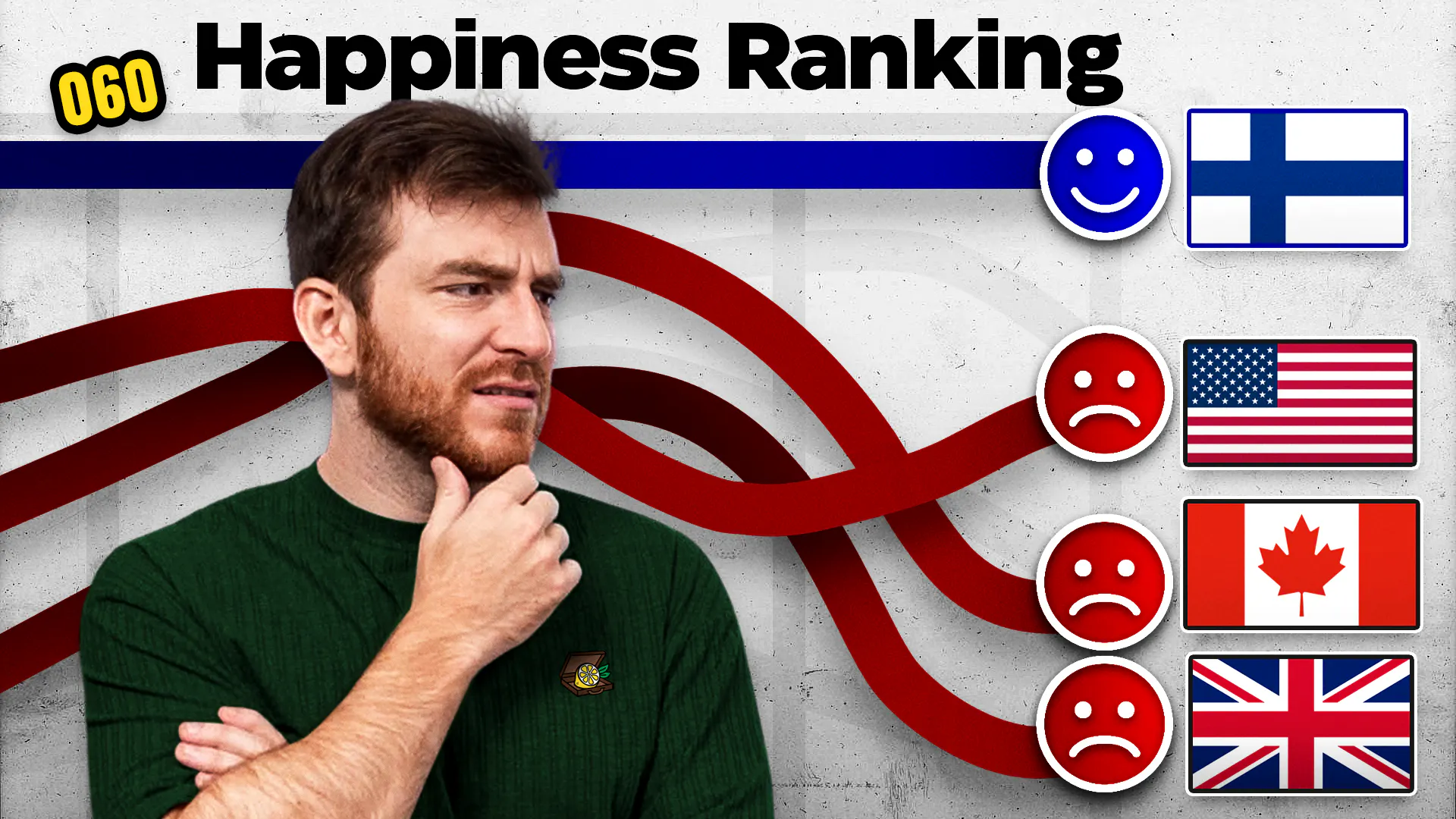
Loading summary
Transcript529 lines
- [00:02]
A
Ready to soundtrack your summer with Red Bull Summer All Day Play. You choose a playlist that fits your summer vibe the best. Are you a festival fanatic, a deep end dj, a road dog, or a trail mixer? Just add a song to your chosen playlist and put your summer on track. Red Bull Summer All Day Play. Red Bull gives you wings. Visit red bull.com brightsummerahead to learn more. See you this summer.
- [00:27]
B
Ladies and gentlemen, we Lemonade stand. Today we talk happiness. Now we saw.
- [00:32]
C
Can I say that was articulate and that was beautiful. That was great.
- [00:36]
B
Now we read an article that I think piqued a lot of interest from Derek Thompson called if America's so Rich, how did it get so sad? And really this dives into some data from the oh my God. World Happiness Report. I checked it three times right before we started to try to remember I'm bad with names. Essentially a report talking about who is happy or unhappy in the world. And while there's a lot of different factors about why people might feel unhappy in the modern day, one of the particularly interesting things in this article is that English speaking countries appear to be specifically more unhappy in general. So if you pull up this a Chuck.
- [01:13]
C
Yeah, this is a. I mean this is not Derek Thompson, this is the Economist, but similar kind of theme. The World Happiness Report has noticed that the Anglosphere here in red is falling off a cliff. Britain, us, Canada, Australia and New Zealand are all experiencing huge declines in happiness compared to other countries, even countries that are right around them, their neighbors that are in similar economic circumstances. So it's kind of interesting. And again, this chart real quick from Derek Thompson really says it all. Post Covid in the 2000s, happiness has fallen off of a cliff. And this is worse in these English speaking countries than elsewhere. So we're trying to figure that out today. Like what?
- [01:46]
B
And it's worth noting here, people obviously were unhappy during COVID Like that's. But the difference is other countries rebounded after Covid, right? The last couple years it got back to where they were. And then broadly on this, if you look at a 12, 13 year horizon, these countries are broadly happier than they were 13 years ago and we are less happier than we were 13 years ago, specifically because we speak Englando I guess for some reason. So we have printed out a whole bunch of different topics, whole bunch of different points we think might be contributing to to this overall epidemic in sadness and particularly the Anglosphere. And we're going to map it onto this scientific chart where the axes are world versus English and kind of sad versus really sad. And give our.
- [02:28]
D
I like how there's no app.
- [02:29]
C
It's called science. Okay. It's called science.
- [02:32]
B
One of them is about negative news. And we're doing a kind of sad to really sad axis here. Any other notes before we get this call?
- [02:40]
D
No.
- [02:40]
C
I think we also have some news at the end. We're talking about some of the news going on in this world. But we wanted to. This is a good opener. I think it's a good set the stage. People have been feeling this type of way, I think. Okay, well, one thing I want to say that might kick off somebody's interest, because this made me interested. All the explanations you might be thinking of, I want you to factor in that within Canada, French speaking Canada does not have the happiness decline the rest of Canada has.
- [03:06]
B
Yes.
- [03:06]
C
That's how weird it. Like it really is something to do with English speaking countries and it makes it unique. So I think it is worth going deep. Once I heard that, I was like, okay, there's something here.
- [03:15]
B
And. And sometimes countries that are like really close to English speaking countries, like Germans, who, let's be honest, Germans, you all speak flawless English. Okay. And that might be really hurting your psyche. The French have the good common sense to not learn English very well. All right, why don't you bring up our. Our first topic, the debate.
- [03:32]
C
Okay. You got a couple. I mean, we can just start with a big one. Let's see where we place it. Because I think this is like the most obvious not answer here.
- [03:39]
B
You talk.
- [03:40]
C
Okay. This is Covid. All right. Covid as a whole. Is that the reason English speaking countries are more unhappy? I think we know that it is a world problem. Unless you think we uniquely handled it worse.
- [03:53]
B
Well, I don't think so, but the whole thing is like we haven't rebounded since COVID Yeah. So clearly this is an English speaking problem because many other countries seem to be quite happy since.
- [04:03]
C
Oh, yeah. Well, we're trying to figure out why that is, but I don't think it's because of the disease. Covid. I think. I think Covid was like a world. It hit everybody in the world the same is what I'm trying to say.
- [04:11]
D
We're running into some challenges with the graph.
- [04:13]
C
No, the graph.
- [04:15]
B
The graph is perfect, Aiden. The graph makes complete sense.
- [04:19]
D
Covid, was it kind of sad or really?
- [04:26]
B
Okay, that's fair. I think we just. We move on from this one. We say Covid affected everybody. This is not some unique.
- [04:31]
C
An obvious, really sad world. Right. That crazy Isn't that. That's like, that's the benchmark. Really sad for the world.
- [04:38]
B
Really sad. You're being melodramatic.
- [04:39]
D
I don't want it. I, I don't want.
- [04:41]
C
Except for streamers.
- [04:42]
D
I hate to be vulnerable about my plebeian mind.
- [04:45]
C
Yeah.
- [04:46]
D
But I don't, like, I don't really know. Are we saying that Covid had an outsized effect on countries in the Anglosphere, or are we saying that if it affected everybody, if it affected the Anglosphere,
- [04:59]
C
it'll be on the bottom, right. It'll be on English.
- [05:01]
D
Okay, I see.
- [05:02]
C
So if it all. If it affected all the world, it'll be on the top.
- [05:05]
B
This made everybody sad. We can agree on this.
- [05:08]
D
It's that sad.
- [05:09]
C
This made everybody sad. Except for streamers who played among us. Except for streamers who actually would be down here and among us ripped. So it's sad. But what about this one?
- [05:20]
B
I want to get to. Let's get to this first.
- [05:22]
C
You want to do this?
- [05:22]
D
Yeah.
- [05:23]
C
Okay.
- [05:23]
B
So news, and this is a big topic that keeps coming up repeatedly. And one of the things I was particularly interested in because, like, it's easy to just say, oh, it's phones and social media. But both in this article and then also, Brookings did an analysis on the news coverage over the past six years, and they basically showed that the tone of news has shifted more negative and with an increase in negative tone compared to how it was in the past. And basically looking at economic circumstances versus the negativity of news coverage, our news specifically has been getting more and more negative. And Derek Thompson also makes that argument in the article of like, if smartphones are the reason we're all getting depressed, well, maybe it's less because of the smartphone and social media and maybe it's because what we're consuming on those things is getting extremely negative relative to what other people are doing. And this has been this like decades long trend.
- [06:16]
D
Yeah.
- [06:16]
C
He said it's probably not just about phones and social media when the subject is American anxiety and happiness. The most obvious subject of smartphones.
- [06:22]
B
Dude, you.
- [06:23]
C
I can. If you can't understand me, it's because you haven't put it on 0.25 speed to get the maximum watch time on this video. Yeah, I think this is an interesting one because it was most obviously explain English outperformance or underperformance on happiness. Right. It would be something like, you've mentioned this when we talked about it on the walk, which is that that is one thing that is unique to these countries is that they all watch the same English speaking sources of news or social media, not even the same, but
- [06:52]
D
like yeah, I think if we were to kind of step out of social media for a second and focus on news media specifically, I think you could look at the US who kind of like leads the charge with just like raw population here. Right. And kind of sets a trend or tone for other English speaking countries in a bunch of different ways. Right. I think in the US there was the repeal of the Fairness doctrine in like 1987 there was all these rules around how news and a politics could be covered on TV and it was this transformation of news media as kind of this source of information into these 24 hour news channels that are like way more polarized and way more pundit focused than the news used to be in American history. And those transformations in that industry I think have an outside effect, outsized effect on other English speaking countries and their news coverage. Because oftentimes Canada especially, but Australia, the UK will follow trends in American business. And the book we've been reading, one of the books, humankind talks about this a ton. News does have a demonstrable negative effect on people's mental health and outlook on the world. I think this is a leading, I think a potentially leading reason of the ones we're discussing.
- [08:25]
B
It would also make sense of people in Quebec, in Canada are probably not consuming English news which just might not be as negative. And that's strange to think of. I'm also curious, what do you guys think? How different is this, this concept of news negativity? How distinct is it actually from social media? Because obviously these are extremely intertwined now. But on the one hand you could say social media is what's making us unhappy. You're seeing how great other people's lives are, whereas news is more like here's what's going on in the greater world around, around side you these are intersecting but how different do you think those are?
- [08:58]
C
Yeah, what I would say is you can pull this chart back up Perry. I, I agree that the 24 hour news cycle and if it bleeds, it leads and all that stuff is dog shit for people's mental. But like that didn't exist starting 2020. And like Americans were broadly, if you look at this, they reported self reported fairly happy for a consistent level of happiness for a long time, certainly during all the 24 hour news cycles, certainly during watching car chases, certainly during. But suddenly post 2020 I feel like if it is that it's more the social media side of it than it is the news side. I.
- [09:31]
B
Interesting.
- [09:32]
D
Yeah.
- [09:32]
B
I think that's like, that's what has ramped up more in the past.
- [09:36]
D
There is a trend that takes place like a downward trend that is taking place here. Prior to Covid and prior to smartphones and social media though, like there's a beginning of the average being below that.
- [09:50]
C
That line that we're looking at 100% starting like 2000. It seems like it's a bit of a dip. There's a hundred percent that could be
- [09:56]
D
part of it and I think it's a slow bleed too. These things like kind of slowly build and compound on one another and then it gets to its worst where this fuses with the power of social media, spreading these messages around now.
- [10:12]
C
Yeah, I mean we definitely. I don't know who said it, but a lot of Trends jump forward 10 years in Covid, like things like work from home, like a lot of things. And it does feel like adoption of social media as your news diet for a lot of people. They're stuck at home, they're consuming way, way more. It's a big part. I mean, if I was to put this on the chart, it's certainly sad.
- [10:37]
B
I think we should and English focus right now put on what do we think? Social media versus news, Both of them. Are they the same? Do we feel like they're distinct? Do we feel like one is more impactful than the other? Because this is one of the leading suggestions for many people. The smartphone theory of everything is smartphones are why we are being miserable. But there's multiple ways we use smartphones.
- [10:55]
C
Right, well, here's the problem. Is that news?
- [10:57]
B
What are these pictures? There's one of Team Fortress 2. I don't know.
- [11:00]
C
That's Team Fortress 2. It's the biggest cause of sadness.
- [11:03]
D
If they brought it back and it was only English me trying to big
- [11:07]
C
Anglo sphere games cuz Germa used to play it and it was fun to watch and now it's gone.
- [11:11]
B
Which one of these is social media?
- [11:12]
C
Perry here use the Ferrari one as social media.
- [11:16]
B
That's actually. No, no, no, we're good because we
- [11:18]
C
haven't used that for anything.
- [11:20]
D
What was the Ferrari one before Ferraris?
- [11:23]
B
It was for Chevrolet.
- [11:25]
C
You know what, I'm sorry, it's a huge part of sadness. But here's the thing. News would be down here, but phones and smartphones would be up here because that is everyone all over the world is using phones for. We were in China. Everyone's on their phone getting news from social media.
- [11:40]
B
Not only news from social media, news about American, like, American cities being bad. We talked to, like, four people who are like, yeah, well, we know it's very bad in America. We see that TikTok of the street in Philadelphia and they're talking about that, you know, the street with like, a lot of, of drug users, and it's like, that's like a thing. So they're consuming our shitty social media, which is.
- [12:00]
C
But if you're someone who's like.
- [12:01]
D
But if you're from a foreign country watching that, it's. You're, you're watching that being like, my place is fucked up.
- [12:06]
C
It makes you feel better.
- [12:07]
D
Yeah.
- [12:09]
B
So is our conclusion that social media is a sort of worldwide problem that is making us kind of sad or maybe even really sad, whereas the news cycle being so negative, appears to be more English focused, and that's one of the things that appears to be like us specifically?
- [12:25]
C
Yes. I would say, I would say these are both equivalent, actually. I would say social media is more sad, I would say, than the news.
- [12:33]
D
Yeah.
- [12:34]
B
You think? Okay, so you think news is English sort of sad.
- [12:37]
D
I don't know how the graph works.
- [12:39]
B
I don't get it.
- [12:41]
C
It's a quadrant. How hard is it to see if it's not hugely impactful on sadness? It's over here.
- [12:46]
B
We're gonna see comments, and they're gonna say, I was really lost until they put it in the English really sad quadrant, and then it started to click.
- [12:53]
D
Okay, okay, wait, wait, wait, wait, wait, wait, wait.
- [12:55]
B
Hold on.
- [12:56]
D
I'm sorry, I'm sorry, I'm sorry. I, I, I. Let me hear me out here.
- [13:03]
B
We Fox News is kind of satisfying.
- [13:07]
C
Give me this post.
- [13:08]
B
All right, go ahead, Go ahead.
- [13:09]
D
You're saying that social media kind of sad.
- [13:13]
C
Okay, social media, you think news is kind of sad.
- [13:16]
B
That's insane.
- [13:17]
D
But, but you. I understand what you're saying that it's used by. But the argument is, who. How impactful is it to the Anglosphere in the context of this conversation? And social media is so siloed. Like, everybody is developing their own. Like, if you're a Japanese Twitter user, you primarily consume Japanese content on Twitter. That's shifting a little bit with auto translate stuff, but not much. You could have a very different vibe on that platform because of the language you're consuming than what we consume in English. And I actually think social media is one of. Because of the silos and like, the echo chambers, if you want to call them on the Internet. I think it's one of the most Impactful things.
- [14:06]
C
Yeah, that's why we have it right there.
- [14:07]
D
Wait, I don't know.
- [14:08]
B
But he's saying it's more closer to world.
- [14:10]
D
This is what I'm saying.
- [14:11]
B
Yes. I'm confused. No, no, no, I see. I agree that this makes complete sense. What he's saying is that because everybody's siloed, our version of social media is actually more sadness inducing than the world's. The rest of the world's.
- [14:27]
D
Yeah, I think there might be a.
- [14:30]
B
So where would you put it? On the quadrant. Aiden.
- [14:32]
D
Fuck. You know what? I don't care.
- [14:34]
C
I don't care.
- [14:35]
D
I don't care.
- [14:38]
C
I don't understand what we're not getting about this. To figure out what is causing status Nagosphere things will be in this quadrant.
- [14:45]
B
That is talking to the microphone. This is a podcast.
- [14:48]
D
Yeah, that's what I thought. That's what I thought. Okay.
- [14:51]
C
The solution will be in this quadrant,
- [14:52]
D
but for the audio listeners, we. We did. The Y axis is world at the top, English at the bottom.
- [14:59]
C
Yeah.
- [15:00]
D
And the X axis is kind of sad on the left, really sad on the right.
- [15:04]
C
You put it on the line.
- [15:05]
D
What I'm saying is like you're. You led this conversation with that. Social media is something that everyone uses. Phones are something that everyone has. Not everyone is consuming. Consuming American news media. Yeah, 100%. What I'm saying is in the same way that like somebody in China isn't watching Fox, like American Fox News, like when you consume stuff on your phone, your social media feed isn't this neutral worldwide.
- [15:32]
C
I think we're using social media different. I'm saying social media as the concept of people spending a lot of time on their phone getting news from their phone, which is broadly sad for. For the world. People are generally more atomized, they're more isolated, their friendships are down. Like that is what I'm saying. Social media. I'm not saying social media as in our pundits on social media are being read all over the world.
- [15:54]
D
Yeah.
- [15:54]
C
So I think it's more of a world. I guess what I'm saying is I don't think social media is uniquely causing sadness here. I think it is. If it's a sad thing, it's mostly around the world. Right.
- [16:06]
B
I think I largely agree with that. It's hard to know because everybody's experience of social media is so different now. It is so fragmented. I would be hesitant to speak for everybody and be like, nah, it's not that sad.
- [16:16]
C
But if I, you know, we're going through China people are doomscrolling.
- [16:18]
B
So here's what, here's what I definitely agree with. The entire world is on social media.
- [16:22]
D
They're all doom scrolling 100%. Okay, I'll table this. I think it ties in with the housing one we'll get to later.
- [16:28]
C
Okay. Yeah.
- [16:29]
B
And in fact, let's, let's move on with this extremely helpful chart which is inflation and housing. Let's tie these together. So obviously, massive, massive increase in the price of basically everything over the past several years. Some of the stats from this article that I thought were particularly shocking. General consumer prices increased between 2007 and 2020. For a 13 year period they increased 25% and then they increased by 25% again just between 2020 and 2025. Housing from 2004 to 2020 increased by 50%. So 50% increase in our houses over 16 years and then there was another 50% increase from 2020 to 2025. So we in the last five years in, you know, particularly in America have experienced a tripling of the rate at which prices go up. And so that seems like a pretty shut and dry case. What do you think?
- [17:27]
C
Well, on inflation I would kind of push back.
- [17:29]
B
I'm intentionally oversimplifying that, but go ahead.
- [17:31]
C
The world had inflation like everyone has had it. And in fact during COVID America was a little bit less impacted.
- [17:39]
D
So this is what I had looked at. The inflation of the Anglosphere. UK leads the charge when we're looking at these five countries that people generally consider a part of it. Even if you're looking at the past 10 years, when you compare it to the rest of the oecd, most of the countries are below average among that group of countries on inflation. And the UK is like touching average or like right around average.
- [18:08]
C
Now it's worth saying the UK is the unhappiest of all the English speaking countries. They are the most upset. So there's something to that. But I wanted to bring up housing because I think that's different. Housing is uniquely bad, I think.
- [18:19]
B
Okay, so let's separate.
- [18:20]
C
We're going to unbury the lead here.
- [18:22]
B
Let's focus on housing prices.
- [18:23]
C
My fucking guess, if you could pull this up. This, this chart kind of says it all. Like the red is housing prices in Anglophone countries. The blue is like comparable European countries.
- [18:32]
D
Mm.
- [18:33]
B
And like for audio listeners, it's way more expensive.
- [18:36]
C
It's skyrocketing in New Zealand, Canada, UK
- [18:40]
B
and we're talking what, like over 100% more on average versus Western Europe, more than 100%. I mean this is a crazy increase for English speaking countries specifically.
- [18:51]
C
So yeah, the Anglosphere as an average is, is way up Western Europe, so. Yeah, exactly. So that seems to track a little bit more than inflation broadly. Than inflation broadly. Like again, this is young mental, adult health is far lower in, in Anglosphere than Western Europe. So yeah, I think economically they're both like. The idea that France and Germany and the UK are all getting vastly different levels of inflation does not seem to hold up. No, but they do have a higher housing price that's they're just building less housing. I was looking into this. Some part of it seems to be. Some part of it is zoning laws and all things we talked about. But there is some part of it which is. There's a preference like revealed preferences of people in Anglo spheres for less interest in apartments to own. They have less interest in owning apartments. I don't know if it's historical preference or like they used to be so wealthy that they could have the space for everything and now they don't anymore. I mean, I do think a lot of unhappiness boils down to expectations and a lot of people in these countries had very good times in recent living memory that are now tantalizingly out of reach. They're all, you can look at the boomers and they can remember it. They had it and you don't have it. And I think that's a bigger part of it.
- [20:10]
B
So any, any complaints with inflation being. It's a little sad. All right. Inflation clearly a worldwide problem.
- [20:18]
C
Yeah, very angry about it.
- [20:20]
B
But if our goal here is to try to identify this quadrant, what, what is specifically affecting the English speaking world so much? Housing is.
- [20:27]
C
I think it's bottom right, bro.
- [20:29]
B
Yeah, probably one of the absolute biggest. And I think. Go ahead.
- [20:32]
D
This was like the number one thing we had looked at before this. I think there's a funny, I mean it's not funny in the consequences of it experiment you could do when you look up most like housing affordability compared to median income and you pull up the list of countries that are on that. Like what are the least affordable places in the world. Hong Kong always leads the charts. That's like the number one city. But then after Hong Kong it's like all. It's London, all American cities, the big Australian cities, the big Canadian cities, they fill the list. Auckland's up there. And what I wanted to tie this into is I think this feeds into social media because even if social media becomes the vehicle for this to spiral even Further the than it would. So if housing affordability in the US or Australia is the worst in these biggest cities. Right. Obviously those larger populations are going to go on social media, talk about these problems or maybe just be more negative online because it's rooted in this underlying idea that you can't afford a home.
- [21:41]
C
Yeah.
- [21:41]
D
And then that cascades into all of the consumers of English speaking content. So even if I happen to live in a place that's maybe smaller and more affordable in one of these countries, I'm getting fed the update or narrative about how shit things are. And I think housing, to me when we've talked about this in the past, is the root, but it's the way social media amplifies that within English, social media makes sense.
- [22:09]
C
It's like kerosene on a fire. I mean, that makes total sense. I, I agree.
- [22:13]
B
So why don't we tie this to another theory which is much more, let's say, soft and hard to quantify. It's not about pricing or news, it's just about human expectations. I posted in our Discord, our lovely Patreon Discord, and asked in all capital letters, are you depressed? Tell us about it. And then got some great answers. So I want to thank everybody for posting in. And I would say it's hard to kind of rank obviously what people were saying, but of the several dozens. Right.
- [22:40]
D
So now we're going to rank our Discord members by their mental health.
- [22:44]
C
We have a different chart, we have their faces, we printed them out and we're going to put them on House
- [22:48]
B
Shad versus Total Loser. And are they in the world versus English? So something from Rosa. Westerners are not uniquely depressed, they're just uniquely ambitious. And increasingly that ambition is at odds with reality. We see the ladder being pulled up before we get a chance to climb it and it's infuriating and discouraging. This isn't as much of an issue in countries that never cared very much for the ladder to begin with. From India Lime. I think one of the most dominant cultural narratives within the US and within the set and within our sense of self as the entire nation, is this idea that if you work hard, you get to a position where life gets better. And essentially feeling that that is not happening anymore. Even one. There was two posts from folks who were basically like, I feel like my life is pretty good. I have a girlfriend and a job and things are going well, but I feel like I have a duty to try to make the world outside of my own life better and I have to Know what's going on outside of my life to do that. And so it's making me depressed.
- [23:39]
C
I want to jump in on this if you can pull this up. This really jabs what you're saying.
- [23:42]
B
So is it just our expectations are too high?
- [23:46]
C
This is a chart on the faith in the idea that hard work is rewarded with success. Young adults in the Anglosphere are losing faith in that idea. They are not seeing that. And I do think that ties in with what you said. And I do think that is something that is deeply demoralizing, especially if you thought that that was the case previously, because we talked about this in a previous episode. But there's this book, Confidence Map. It's about agency. People feeling they have no agency makes you way more may more aimless. Feeling you have no ability to turn the ship and you're just adrift. Is like, is how much of this
- [24:17]
B
do you think comes from the fact that our parents are, you know, the generation right before us across most of the Anglosphere? Right. Had it extraordinarily good?
- [24:28]
C
No, I think that's a huge part of it.
- [24:29]
B
It's like, is that comparison point rather than the kind of broader concept of we as Americans or Englishmen or whatever, like, we believe we should have these incredible things. It's like you just saw what our parents got. You think like, it's really specifically grounded.
- [24:43]
C
I mean, I think very specifically. It's like if you think you're going to have worse opportunities than your parents, you are likely going to get very pissed. You're going to get angry, depressed or nihilistic or angry because I. There's country, like, for example, I mean, we talk about some of this that we saw in China. What's interesting to me is that if you. If you. If you disentangled everything and put the stats on a chart, China right now, GDP per capita, even adjusted for person power, adjusted for person power, is lower. Like, they're like on a pure numbers basis, there's less. There's less had.
- [25:17]
B
Yeah. They have less money, so they should be less happy.
- [25:19]
C
I'm not necessarily what I'm saying, but like, it's the direction of travel. Do you know what I'm saying?
- [25:23]
D
All aspects in China are worse than in the United States.
- [25:26]
C
That's not what I'm saying. That's not what I'm saying. That's not what I'm saying. What I was saying is like, if you were to just plot that and you didn't have the lines before it, you could make the, like, obviously option A But I think what's so obvious is that if you're heading in the right direction, there's a general sense of like, this is working, this is positive. Whereas if you're even, even slightly tilting in the wrong direction, it feels catastrophic. It feels the world is ending.
- [25:52]
B
Is there a world where Trump kind of initiates a great reset so that our expectations can only go up from here?
- [25:59]
C
Maybe.
- [26:00]
B
And we sort of take a five year hit right now and then we're back at that top right quadrant, then we're back with the rest of the world being unhappy.
- [26:08]
D
It's funny you say that. That's unironically some people. So I have heard that argument in life. The idea that Trump, like, and the destruction that comes around him with the status quo and also the falling in quality of life for people in the US it has to hit this bottom to kind of reset and then build out of again, not as a pro to Trump, but like whatever comes in the wake of him. Yeah.
- [26:35]
C
And also I would say even if he's not doing it for America, there's like measurable evidence that he's probably doing it for some parts of Europe who were. We're like speed running down the Trump route until they saw what happened with Trump in America and are now like, well, it's not. I mean, let's not get so nihilistic and angry. This is legitimately happening. There's like some, some wild populist parties in, in Europe that are losing support because of, because Trump threatened to invade Greenland and all that stuff.
- [27:02]
B
Even arguably the Canadian election. Right. His involvement, you know, like him coming to power just like changed.
- [27:08]
C
We have Trump in here somewhere. Right. Do you want to talk about him?
- [27:10]
D
I.
- [27:13]
B
Yeah.
- [27:13]
C
Because what's interesting is like, this sounds silly, but if you don't speak English, you hear less Trump.
- [27:21]
B
Yeah.
- [27:22]
C
And he is like a destabilizing force that does make it, even for other Anglosphere countries, hard to have a coherent worldview or vision of the world. I mean, I know as an American, it does feel for me, my head is more spinny when he says shit like, we're gonna end a civilization tonight. Like, it makes you feel like, bad about the country.
- [27:45]
B
You know, you feel like disconnected from,
- [27:48]
C
disconnected from the ideal that you want to like, push towards.
- [27:50]
B
Right.
- [27:51]
C
I don't think any country hits their ideals, by the way. But I think the idea that you're trying to go towards it is nice making an effort. And it feels like he's not even. There's not even an attempt there's. Not even a lip service to the ideals and it's, it's disorienting.
- [28:04]
B
Well, so counter. I would assume that folks in other countries would be, if you are in Canada or the UK that you would be seeing the sort of other world type of happiness because Trump is not your president. Is it just literally you understand English and you can understand Donald Trump is.
- [28:24]
C
Yeah, I don't think this is the case, but I'm just. It's an interesting, unique aspect of English speaking countries. That's one thing that would be unique.
- [28:31]
D
It's definitely English more in my experience, he usually shores up pride in the other countries. You know, they're, they use it as a reference point of. Well, at least we don't, at least we don't have him right now. Right. That's the more frequent thing I hear.
- [28:47]
B
And I just want it for the record. A truck said to put Trump as only kind of sad.
- [28:51]
C
Well, he's got the swagger. Have you seen him dance the ymca. It can't be that bad. That's happiness out in the world.
- [29:01]
D
I actually want to ask an open question to the audience because I think we have a unique audience for this. People in the uk, Australia, Canada, New Zealand who listen to this show are a genre of person who are more tapped into U.S. politics than the average person from those countries would be. And because the US dominates English media and, and English social media, I think people from those countries are like weirdly in tune with US Politics. Right?
- [29:32]
C
Yeah.
- [29:34]
D
Do you feel like Trump being in power here makes you sad? Genuinely and I want shame.
- [29:44]
C
Right. If you're in Australia, I can't imagine you don't feel some type of like destabilization. It's a signal of the world that was more stable than your parents knew is fraying. The old order is dying. You know, all that stuff. I feel like that is generally part of the fog of the future that makes you unstable. Even if you're not in America directly feeling Trump and the idea that like okay, this country ostensibly was our ally and now they're terrifying, all that stuff is like, probably throws you out in the off kilter in a little bit too. I don't know. I think he's part of it, but I would agree that it's not the uniquely English speaking thing.
- [30:21]
B
Let us know so we stay involved. So we've got basically the idea of our own kind of culture and expectations being a key part. Which let's just quickly, how important do you guys feel that is like the expectations that English Speaking countries have set for themselves the last generations and not just Americans. Right. Do we feel like that's as impactful as the fact that our homes are way more expensive? I would say not as much, but it's in there.
- [30:48]
D
I think they're tied. They're tied together. I do think there's. There's a lot of truth here. That kind of comparison is the thief of joy. We have this aversion to loss. It hurts to lose things and fail much more than it.
- [31:02]
C
Yeah.
- [31:02]
D
Than to be on the trajectory up, you know. And this is tied to housing uniquely in these places where it's like, this is the baseline way to live life and like, find success is being stable enough to move out and buy a home. I feel like that's the commonality between these things and it's too expensive to have. I don't feel like it is unique in that. I think young French people and young Japanese people and are struggling with this right now too. Like that feeling's not. Not unique.
- [31:37]
C
Struggling with the. The housing thing or with the. The sense that things are declining.
- [31:41]
D
The thing. The sense that things are declining. Like that is a shared feeling across a bunch of places. So if that is the case, what makes it unique in this specific situation?
- [31:54]
E
Hey, I'm Matt Bushel, comedian, writer, and floating head you may or may not have seen on your for your page. And I'm starting a brand new podcast. Wait, wait, don't swipe away. It's called that Sounds like a Lot. As in that feeling when you check your phone in the morning, you read through headlines and you immediately think, oh, that sounds like a Lot. I can't deal with all this. But guess what? I can deal with it. And I'm gonna get into it. Every Friday, I'll break down whatever chaos is happening in the world. Then I'll sit down with a comedian. You can be progressive and not be like, fucking annoying. Maybe an actor.
- [32:20]
D
They go, feminism has gone too far. You go, why?
- [32:23]
C
Because the Sadie Hawkins dance happened?
- [32:25]
E
Maybe a filmmaker. Since leaving that show, I'm challenged sparingly.
- [32:30]
B
I just kind of hang out and
- [32:31]
C
try to do something.
- [32:32]
B
You're the one with a charmed life.
- [32:33]
E
Could be a politician. Basically anyone who responds to. To my cold DMs, we're recording the whole thing in a beautiful studio. So yes, you can watch it on YouTube or you can listen wherever you get your podcast. This is not the place to get the news, but it is the place to feel a little better about it. That sounds like a lot part of the Vox Media Podcast Network.
- [32:53]
A
I'm Mitch Purse, two time NWSL Champion, Championship MVP and forward for the US Women's National Team. Before I went pro, I graduated from Harvard with a degree in psychology, which comes in handy more than you think. Any athlete pursuing greatness knows there's a certain mentality you have to have. What people don't know is what that costs. In my podcast, Confessions of an Elite Athlete, I sit down with the best athletes in the world and explore the psychology, mindset, and unseen battles on the path to greatness. So take a seat and learn from the Confessions of an elite athlete on YouTube or wherever you get your podcasts. I'm Maria Sharapova and I'm hosting a new podcast called Pretty Tough. Every week I'm sitting down with trailblazing women at the top of their game to discuss ambition, work ethic, and the ups and downs that come on the path to achieving greatness. We'll dive into their stories and get valuable insights from top executives, actors, entrepreneurs, and other individuals who have inspired me so much in my own journey. Follow Pretty Tough wherever you get your podcasts.
- [34:13]
B
Well, here's a question is One of the theories is that we in the Anglosphere are measuring our happiness differently. So that's common argument. We are more aware of mental health. We, you know, we talk about it more. It's become, you know, anxiety, adhd. These diagnoses have gone way, way, way, way up over the past couple decades. And the argument could be that maybe we aren't actually unhappier compared to the rest of the world, but we have just become much more aware of our poor mental states, whereas another country might hide it. There's an interesting Slate article so Rosa, in the Discord link this so a Slate article talked about how Finland they're one of the happiest countries, right? But then if you ask them, they're like, no, we're not. So there's a quote. Nobody is more skeptical than the Finns about the notion that we are the world's happiest people. To be fair, this is hardly the only global ranking we've topped recently. When a cabinet member of the Finnish government was introduced at an international conference as, quote, the representative of the happiest country in the world, he responded, if that's true, I'd hate to see the other nations so.
- [35:12]
C
But isn't that just a comment on the human condition? I feel like they are. I hear that Finns say that. I've heard the saying that all the unhappy Finns kill themselves so it makes the stats better. I've heard, I've heard this, but I,
- [35:27]
D
I think people take the word happiness too literally.
- [35:29]
B
Yeah.
- [35:29]
C
Like, they're not walking around smiling. They're just generally more content with, like, they're less. What's the word I'm thinking of?
- [35:39]
D
I don't think, because the report isn't about, like, which country of people is the most euphoric and walking around. Yeah, but that's what the title kind of makes it sound like. It's just a measurement of a bunch of factors that provide stability and confidence, general life satisfaction.
- [35:56]
C
And like, people in Finland have, you know, measurably lower levels of corruption. They're generally less likely to go into disastrous debt for health, you know, like all this thing. There's like a lot of things that would derail a life that are less common there. And so I don't. I mean, their weather sucks. I'm not. I feel like it's. I feel like it's reasonable to think that they are top ranked in happiness
- [36:18]
B
or at least we have the 405. It should cancel out.
- [36:20]
C
That's what I've been saying, but nobody believes me. You're joking, dude. They can't even imagine that there.
- [36:25]
B
What do you guys think about the job market? How influential is this compared to the rest of the world? Broadly? And we can, we can kind of tie AI in here. I think AI is often contributing to the feeling that there's going to be less jobs, but they're sort of intertwined.
- [36:40]
C
Yeah, it's interesting. I mean, listen, if you take inflation and housing and jobs and all that together, I, it's, you know, it's my core, My core belief is that that is the key thing. But I do think that, like, the job market's pretty bad all over. In fact, it could be worse in other countries. So I wouldn't necessarily say that's the.
- [36:58]
D
Yeah, I mean, Anglosphere thing. I actually talked to friends in Australia and Sweden about this recently, about their struggles, this 20 to 30 range, especially getting new jobs. What's it like to apply to things right now? Layoffs happening? And without looking at data directly, I haven't seen anything that says unemployment is dramatically higher in these five countries. Right. Or that it's dramatically. I don't think it is more difficult outside of them to get jobs in China.
- [37:32]
C
It could even be worse than other. Yeah. Youth unemployment in China.
- [37:34]
B
Brutal in China. And people told us that in China. Yeah. Kind of lackadaisically. Like in Chongqing, when we were talking with Our tour guide, she's like, oh yeah, it's like 30%. It's insanely hard to get a job right now. This is just casually like, oh my God, for reference hours. That youth is what, 10 right now? Something like that.
- [37:50]
D
So I feel like the only point we've hit so far that actually has a differentiation of these specific countries is housing price.
- [37:59]
C
When do we put everything in? Really sad. I don't know if we'll hear.
- [38:03]
B
Let's. Let's quickly chalk this. 2020 is when this all started. Yeah, 2020 is when Atriox started streaming regularly.
- [38:09]
C
Well, that's not.
- [38:10]
B
But that is available to the entire world. Well, actually how much?
- [38:14]
C
It's really more English speaking. You're saying the reason the Anglosphere is unhappy is because I am streaming?
- [38:24]
D
Yeah.
- [38:25]
B
When did you start streaming? It ties directly into the news. It ties directly into expectations. You keep telling people they should have a home.
- [38:32]
D
Okay, cow interlocked with everything.
- [38:34]
B
You keep telling your audience they should have jobs.
- [38:36]
C
Counterpoint. I have been streaming so much less and yet happiness has only gone down.
- [38:43]
B
That was only this year, though. We don't have data for that yet. The world Happiness report was through 2025.
- [38:47]
C
I keep taking breaks and people get more unhappy. So that can't be possibly.
- [38:51]
D
When the bureau of Atrioc Streaming does their revisions at the end of the
- [38:54]
C
year, a lot of numbers. Revisions.
- [38:57]
B
All right, look, I think we're starting to wrap it up a core. Do you think these people just need Jesus? Maybe it's religion, Aiden.
- [39:04]
C
Religion.
- [39:05]
B
You're a God fearing heathen, right?
- [39:07]
C
No, God fearing.
- [39:08]
B
And you're miserable. Why don't you go to Christ or any of the other ones?
- [39:14]
D
Are you. If I were to give. Statistically, I think Scandinavian countries are some of the least religious out of like the oecd, I think. And they're at the top of the happiness report. So I think. I don't think that's the case at all.
- [39:29]
B
Yeah. So even in the Derek Thompson article, the number of people who are non religious has been increasing substantially for like 50 years. It used to in this man, look at the exact numbers. In the 70s it was like 5% and then it like 28. Yeah, yeah, pull this up. So the number of declined. Right. The number of people who are non religious has been declining fairly precipitously for 50 years.
- [39:54]
C
And no, no, no. People have been getting more atheist until Covid. Now they're getting more religious.
- [40:00]
D
Right, Right. Yeah.
- [40:01]
B
So yeah. So it does not appear to have any impact whatsoever.
- [40:06]
C
Unless religion is Making them sad. You could flip it. That's what it is.
- [40:10]
B
So it's the people who have become religious, everyone else in the past five years.
- [40:15]
C
But the people who've gotten religious the last five years are so unhappy with their new.
- [40:18]
B
Have you read the news in the Bible? It is depressing.
- [40:22]
C
Bible is low key. Depressing.
- [40:24]
B
I think this is kind of. I'm not putting. Jesus is kind of sad.
- [40:28]
C
Well, this is religion. This is the picture for religion. And I. Yeah, I don't think it's the big. I don't think it's a big cause of this.
- [40:35]
B
Okay.
- [40:36]
C
It has been at times in history, but not now. Trust. What about trust? Which we represented by the spy.
- [40:45]
B
The Spy and Teamwork 2. Stabbing the Engineer.
- [40:47]
C
Sometimes it feels like we're all being stabbed in the back by spies. Trust. Social trust. High trust versus low trust society. It does feel like that's. I don't know if it's the cause, but it feels like a, a symptom. But people are increasingly feel low trust in some of these Anglosphere countries.
- [41:08]
D
So it's a number. I hate to echo it, but it's another thing that doesn't really come out in the numbers when you look at how they measure against other countries. So there's a number of ways you can look at this. There isn't a fixed way to measure trust in a society. Two of the things I looked at were the World Value Survey. They do a question of, you know what, do you trust your neighbors in your country or you're sorry, do you trust strangers in your country? The average stranger. And just taking people to general evaluation of that and the countries that are on the high end, you could probably guess it might be a little Denmark, might be a little Finland and, and they rank really high. I think Denmark is like 73, like 73% trust the average stranger in their own country. And the Anglosphere countries are lower on this list. And there has been a decline in the US over the past like few decades. But there's actually been an increase in Britain, which was interesting to me and pretty stable in Canada, Australia, New Zealand, no significant change. And with plenty of other OECD countries like below and above these places. So I couldn't find anything significant there. There's another measurement that you can look at where. What is the likelihood that somebody will find a wallet and like try to return it to its owner or. And this didn't really prove anything either. There was an interesting gap between the U.S. like, trust in the U.S. for strangers was really low but the amount of people in the US that would try to return the wallet is actually really high. And there's kind of an interesting disparity there of, oh, well, how does this functional, like, how does this outlook on stranger strangers functionally interact with an actual task? But again, like, no conclusion, no reason to, like, isolate these five places in terms of how that trust manifests, at least in these two tests.
- [43:13]
C
One thing I want to say is for me, if you were to break trust into trust in your other citizens and then trust in institutions, which is hard to categorize, but I do feel, at least anecdotally, it feels like there's a massive decline in trust in institutions. Yeah, like, specifically, like, you know, I'm someone who would, like, defend our three branches of government and checks and balances, but like, in modern day, it's harder and harder because they're so gridlocked and there's so little progress. So it, like, it declines Your ability to, like, believe in that value and espouse for it and have trust in that it's going to do its job. That if we were to, like, all follow the rules. And you know, I'm saying, like, I just think that is got to be some part of it. I don't know if that's worldwide or
- [44:01]
D
I wonder if those. This is another example of something that social media just really exacerbates. Right. And I think it just makes the problem seem even worse. Or if you're hearing something about the US all the time on social media, then it's echoed through the whole silo of English social media, then that makes you evaluate and feel worse about maybe your own government and its dysfunction.
- [44:26]
C
Yeah, Yeah. I mean, I wonder if, you know, because these countries all have very similar political systems. You know, there's. There's differences, but I mean, they have largely two major parties. I'm wondering if the gridlock from that is causing problems.
- [44:42]
D
I'm sure American, but you'd have to identify the gridlock as unique, right?
- [44:46]
C
Yeah.
- [44:47]
D
I'm not saying that there isn't enough similarities here for a pattern to exist, but who's just, you know, is.
- [44:54]
B
I mean, France's government is notoriously deadlocked. Right.
- [44:56]
D
Yeah, we talked about that on the show. So again, I think it's something that just fails the test of, like, do these places stand out as truly unique among all these factors?
- [45:08]
B
Yeah, seems like we lost a lot of trust. That's also outlined by Derek, by the economics economist Pearlsman, also show that trust is basically just plummeted for Americans in the last six years. But it just doesn't seem English speaking specific. Okay, you know what is English speaking? What's the one thing that like unites particularly America. But honestly most of YouTube.
- [45:33]
C
Most of YouTube.
- [45:36]
B
Madden Grand Theft Auto 6 keeps being delayed.
- [45:40]
D
That was pretty close.
- [45:42]
B
I would argue the world cares less about the delay than we do. And this is.
- [45:47]
C
That is a big theme actually worse
- [45:50]
B
than housing and topped only by Atriox streaming.
- [45:52]
E
More.
- [45:53]
C
Me and Grand Theft Auto are probably the biggest causes of unhappiness. If they just released the damn game.
- [45:58]
D
If we keep failing to meet expectations.
- [46:00]
C
Yeah.
- [46:01]
B
And who's the one English speaking president that has had more impact for the entire Anglosphere than anyone else?
- [46:08]
C
Gerald Ford.
- [46:09]
B
Gerald fucking Ford. Also English speaking. This man. I don't know if you guys saw. Check this hunk of a man out. This is him playing football.
- [46:16]
C
I'm sorry.
- [46:17]
D
Is your podcast watchers.
- [46:18]
B
This isn't for you. For a truck.
- [46:21]
C
He used to be hot and he's not. And that's why we're sad.
- [46:24]
B
Gerald Ford is a piece of ass. And I mean that in the nicest way possible.
- [46:28]
C
It's. That is. How is that relevant dog to whether or not I get it actually when you think about it.
- [46:38]
B
Let's wrap up this conversation. What do you. What are your guys's conclusions? So a lot of reasons to be sad in the world. I don't think there's any argument around that tapes over here. But I really do agree. It feels like there's a couple things that seem to stand out that are specific to us. The housing I would argue being the biggest and then our news being so negative relative also seems extraordinarily problematic.
- [47:04]
D
I think broad unhappiness is usually rooted in some material reality like in some way. So it. What's the only factor we're able to look at on this board in this 40 minutes of podcast time? It seems to be housing prices. That's what stands out the most to me. I can't really find a clear reason for any of the others that would make the Anglosphere particularly unique.
- [47:32]
C
You're pointing to me but. Well, there's one more thing. What is unique about English speaking countries versus the rest of the world?
- [47:39]
B
We speak English.
- [47:40]
C
We speak English. Is it possibly that the English language is so stupid that that is the problem? Don't you accept that they're c Except in the word weird and the word science. The word red and read are spelled the same but pronounced differently and mean different things. Like what if the fucking Language is so annoying to deal with that it's causing all this pain.
- [48:04]
D
You ever heard how they count in French? It's fucked up. It's fucked up. And you think you. And you're worried about that.
- [48:15]
B
I have a theory.
- [48:16]
C
Yeah, what's your theory?
- [48:17]
B
We're so bad at talking. We can't figure out how to get a house built.
- [48:21]
C
Get a house.
- [48:22]
B
Like, we keep being like, oh, set up a pillar there. And someone else is like, pilar, I
- [48:28]
D
do like the idea of the housing crisis. The housing crisis is rooted in our comms just being bad comms.
- [48:37]
B
Why? Hold on. Why the fuck is only English speaking countries not building housing or bad at making housing affordable? Why is this unique to English speakers? I mean, I think the data is there. Like, if it's much worse, that's such a clear indicator of happiness. But why are we uniquely. It's not like it's just America.
- [48:55]
C
We have to go deeper into that. But I do want to say that I just read this piece that was like, there's a proven preference to not owning an apartment. If you want to own. They want to own a house in Anglosphere countries. And it may be rooted in the fact that historically they were able to do that. And so it's like you feel like you're stepping down. Like, people that were doing well or had a nice middle class job could afford a house. Now I have to get an apartment. That's a downgrade. I'm pissed about that. I want a single family home.
- [49:22]
D
Did they explore any other reasons for that being the case? Like, if you look at America, there's really high demand for SUVs that doesn't exist in other places. Yeah, or even something like wedding rings, you know, but the origin of these things are often corporate marketing campaigns that were meant to circumvent some sort of regulation or popularized. It's a status thing, selling the thing. Like, is there something here that is similar, you think?
- [49:55]
C
I. They did not give an explanation. But I do think, yeah, I think it's a status thing. I think human beings are very status obsessed creatures. And I think there's an idea that it's a downgrade in some way that you are less than you should. It's expectations versus reality, which I think is the core of all this.
- [50:12]
D
I guess what I'm asking is could you take a guess as to why those expectations are so ingrained or set, especially outside of the U.S. i feel like I could make a really good guess why those expectations are set in
- [50:24]
C
the U.S. i mean, I would say, even in Anglosphere countries, is because they were able to do it. Until, you know, you go back to 40s, 50s, 60s, 70s, they were able to do it. And now it's harder. And so. But you still want the same marker of success. You want the. What your parents had. I guess that would be my biggest guess. Additionally, I assume it's just harder to build in general. I think there's zoning laws that are unique to these legal systems that have all made. Or whatever. I think the political gridlock those things have combined to make it toxic. But I think there's a. I don't know, there's a. There's a. An idea that, like, hey, I really want them to build a bunch of apartments so that other people can have them. So it brings down the price of homes so I can have a home. I think there's a part of that in English for countries. You want someone else to do it, but you want that. You want the same status symbol that your parents had.
- [51:16]
B
So expectations, affordability, being blasted with negative news. Let's get away from this talk about all the horrible shit that's been happening this week. Aiden, you want to talk about what's going on in Gulf States? Shit's awful.
- [51:31]
C
Whoa.
- [51:33]
B
Well, by the way, if you're living in New Zealand, America, you need to know about this, okay?
- [51:40]
D
You need to. You need to be tapped.
- [51:41]
B
You need to be tapped. Need to monitor the situation. I want you to crack open a
- [51:45]
C
monster that people in New Zealand learning about UAE leaving OPEC is really making them unhappy.
- [51:53]
B
I think they got to get their monitor right here, two inches from their face, and they got a crack of monster. And you need to monitor the situation.
- [52:00]
D
Prepare to get sad.
- [52:01]
C
I think if you could learn about this in a house, a big house, you'd be fine.
- [52:05]
B
Fucking depressed, guys. Let's get into it.
- [52:08]
C
This isn't even a sad story. Or we talk about uae.
- [52:11]
D
I mean, I. Yeah, I don't know if I would call this sad. So I don't know if you guys are familiar.
- [52:15]
C
Like, is this not what he said about it?
- [52:17]
D
Well, we.
- [52:18]
C
Are we depressed for OPEC not having another member?
- [52:21]
D
Am I Guy. Guy who's sitting in front of a graph. That scale is kind of sad to really sad.
- [52:26]
C
It can only be on this chart.
- [52:29]
D
Will you make the chart?
- [52:30]
C
I'm not putting OPEC on here.
- [52:32]
B
Or, like. And do you feel like OPEC is particularly saddening to English speakers?
- [52:36]
C
I would be sad if, like, a friend's D and D group lost a member. Not If OPEC lost the call country like it is, who cares?
- [52:45]
D
So I don't know if you guys are caught up on this, but there's been this whole like us, Israel, Iran war going on.
- [52:51]
B
I try to not listen to the news. It makes me sad.
- [52:54]
D
Yeah, yeah, fair enough. And kind of in the fallout of this war, the UAE announced today that it is leaving opec. And if you are not familiar, OPEC is a bunch of different countries, many of which are in the Middle, Middle east, but you know, several from Africa, I think, some from South America as well, that are a public cartel of oil producing nations that cooperate on pricing and output of oil in order to influence the global price of oil. And the re. They have done this I think since the 60s. OPEC was formed in the 60s, been 60 years. I don't know if it's um. And the UAE is one of the largest producers in OPEC, is the third largest producer behind Saudi Arabia and not super far behind Iraq which is second. And they have talked for many years about potentially leaving opec. The trade off being that once you leave you can produce as much as you want and that has potential financial benefits. It let you know you have a certain ability to navigate geopolitical situations like the one we're in right now that you wouldn't otherwise have. And you don't have to adhere to the ruling of the cartel and let other nations decide how much oil you're going to produce anymore. And the outcome that I think not a lot of people fully understand is the cartel and its ability to influence the global price absorbs price shocks that would happen. So huge swings in supply or demand that would cause the price of oil to spike for short periods or really drop for periods. Opec, because they control so much of the supply as a block, can choose to control their output collectively in a way that heavily influence influences the public price of oil. That lets them all make a stable amount of money at all times. And the UAE has a big chip at that table because they produce so much compared to the other countries. And they're leaving at a time when the US has also dramatically increased its production, which has decreased the power that OPEC has over the market at large. So that's why this is consequential. I'm curious if you wanted to weigh in, had any thoughts?
- [55:30]
C
Yeah, I mean it's just so opec, they all team up and they all say we're going to make less oil so we can all have a higher price and be rich. And everybody in OPEC is incentivized to cheat. They all want everyone else to cut their thing and then they cheat and put a little bit more. And they all have been doing this. Algeria cheated in 2000, 2006, Saudi Arabia cheated in 2002. Qatar cheated for fucking 10 years. Saudi Arabia, they've all. They've all. Iraq, Kazakhstan, Russia, they've all cheated. They've all, at different times, needed the money more than other people. And so they say we're only going to produce this much and they produce more. And UAE is kind of just over it. They're just kind of over it. And they would rather just produce and sell as much oil as they can. Especially because right now, when oil prices are over $100 a barrel, there is so much money to be made. If you just sell as much as you make, you can fund your. You can do everything. And if you're voluntarily holding back, it's kind of frustrating, especially if you think other members of the cartel are cheating. So I think UAE is just like, fuck it, I'm going to get mine. I think it's a symbol, first of all, of kind of what the US has done to all sorts of institutions. But everyone's kind of going into this what Carney called multipolar world. Everyone's kind of looking out for themselves, figuring it out and pulling back from these institutions that have sort of made cooperation. I don't think OPEC is a particularly good thing. I understand they could absorb price shocks, but essentially the end of the day, it's a cartel that makes all of our gas more expensive.
- [56:59]
B
For.
- [57:00]
D
It does feel like it's a part of that, that greater trend. I think the pressure that this puts on now is because they're one of the largest producers. Like other countries have left OPEC prior to this. I think Qatar left in like 2020. A couple countries had left before that. But the difference between the UAE and those places is that the UAE's output per day is way higher. And they actually do have a little more influence from their output than. It's just not as big of a deal when those countries left. And now Saudi Arabia is in this spot as the biggest producer, kind of the de facto head of opec. By the amount they output, they have less control than they ever have because of the UAE leaving. And then it forces Saudi Arabia to be like the remaining enforcer and cut their oil production by larger margins in order to try and still have that influence over the price that they once had. It puts a lot of pressure on Saudi Arabia that didn't exist before. And I guess I'm not really privy to the nuance of this relationship changing over the last few years. But the UAE and Saudi Arabia are like, clashing a little more politically in recent years than they did in the past. Differing takes on how they develop relationships with Israel, for instance. And the UAE is. Yeah. Cutting and running.
- [58:28]
B
Is it fair to say that the weakening of that cartel in the absence of the sort of like global shock where they can sort of help monitor the price is going to be better for the consumer? Like if I go to the local bodega to buy a barrel of crude, is it going to be. Is it going to be cheaper now? Because UAE is not adhering to these prices.
- [58:48]
D
When we take our gas station break between the main episode and the primo and we get our barrel, we sleep. You get your peaches, you get the sweet peaches, you get some almonds. I get the barrel.
- [59:00]
B
I get the barrel.
- [59:01]
C
Creed.
- [59:02]
B
And what's what? I appreciate you.
- [59:03]
D
You. I always share the crude. No matter how expensive it gets. You can never tell me I don't share the crude.
- [59:10]
B
Sometimes it's that dirty Venezuelan oil, you
- [59:13]
D
know, I get that unrefined, sour, heavy, sour crude. I put it on my skittles.
- [59:23]
C
Dipping your skittles in sour Venezuelan crude is a beast. Is fucking sick.
- [59:31]
D
You're.
- [59:31]
C
The question you asked had a very important line which is like all else being equal or whatever. Yeah, of course. Yeah, definitely. If this was just the only thing that happened, oil prices would go down. Everyone's flooding the market with more. I mean, your example of Saudi Arabia, I 100 agree. But like Saudi Arabia is under some financial pressure right now. It's like hard for them to cut their oil out.
- [59:51]
D
I know it's tough. They got it.
- [59:52]
C
They got to finish the line.
- [59:54]
B
They got out.
- [59:57]
C
Get a golf league going and. Yeah. Wait, what is buy esports?
- [60:01]
D
The financial pressure being the restriction of moving of the oil through the strait? I'm guessing no.
- [60:06]
C
I'm thinking in general the cost overruns of all the things they've been spending on to cut actually the line in a way. The line in a way, like they. All that stuff is very expensive and it was while they were pumping a lot of oil. If they have to cut oil, it's going to be harder.
- [60:20]
D
Yeah.
- [60:20]
C
So although they're probably doing the best because they have that pipeline, they're probably doing better than anyone. But yeah. So I don't know. Overall, I think it's a decent thing. I think OPEC was not in A lot of people's benefits as a consumer and I think this is a big pressure to them. They were 40% of the world's oil market before losing UAE. Now they're going to be less. And UAE pumping as much as they can is like everyone else is incentivized to be like, well, I don't want to be left behind.
- [60:45]
B
Yeah.
- [60:46]
D
Did we talk about, do we talk about Iraq's pipeline that they have. On the last episode, we talked about a canal.
- [60:55]
B
I mentioned a canal, if that's what you're thinking.
- [60:57]
C
Oh, also worth mentioning that another member of opec, Iran, is firing missiles at the uae. So, like there's. That also makes the uae, opec, like, hard to.
- [61:06]
D
Probably a small factor, probably not that big of a deal.
- [61:11]
B
Iran is in opec.
- [61:12]
D
Yeah, yeah, yeah. That is funny.
- [61:14]
B
It's so funny. They're attacking everybody.
- [61:15]
C
Yeah.
- [61:16]
D
Iran's number. Iran's number four.
- [61:18]
C
Yeah. Wow.
- [61:19]
D
So now, excuse me, number three. Now. Moving up the spot.
- [61:27]
B
Honestly, if you're a product manager working at Iran and your job, your KPI,
- [61:35]
C
that's the most tech bro that you've ever said.
- [61:38]
B
And your KPI for this Sprint is to get Iran to number one on the list. You start bombing number one, two and three.
- [61:45]
C
Elizabeth Holmes.
- [61:46]
D
When I'm, when I'm a part of the fucking religious theocracy of Iran and I'm doing, and I'm doing agile.
- [61:53]
C
Yeah, yeah, scrum. I mean the morning scrum, I come
- [61:56]
D
to Monday scrum, it's like we build a few more drones
- [62:02]
B
now.
- [62:03]
C
We're going to get you a out.
- [62:04]
B
No, we're going to clear the JIRA ticket. We bombed UAE's pipes.
- [62:08]
D
I thought we talked about this on the show for some reason. But Iraq, I didn't know this has actually a giant high capacity pipeline as well to get oil to their opposite coast.
- [62:21]
C
Isn't it to Russia or Mecca or. Not to Russia, am I wrong? No, they get to like the Baltic Sea or something. Right, I got to.
- [62:29]
D
Hold on. Give me, give me one, give me one fucking second, dude. Yeah, I'm trying to remember where it goes out, but there's like, they have restrictions on. Basically they have a high capacity line to get oil out of the country which they've historically been unable to use very effectively because goes through Israel and they have beef. They have beef with the Kurds.
- [63:00]
C
Yeah.
- [63:02]
D
So the Kurds threaten the pipeline in order to leverage in their relationship with the Iraqi government because of the issues there that I know so much about. But I won't Tell you right now,
- [63:17]
C
it's just funny because this is the area of the map that we were making a joke like, would be impossible
- [63:21]
B
to build a canal.
- [63:22]
D
Yeah, yeah. But there's a pipeline.
- [63:23]
C
There's actually a pipeline.
- [63:25]
D
And they. I forget what the number was, but there actually is an incredible amount of capacity in this pipeline. And they have. In the wake of this crisis, because the strait is closed, they have negotiated something with the Kurds in order to start using this pipeline actively again.
- [63:42]
C
Well, I mean, like, this is the best time. If you have a pipeline, you're the goat. If you're a pipeline exporter in the Middle east who gets around Hormuz, you're just a money printer. You've literally developed a license to print money.
- [63:54]
D
Why didn't we do that?
- [63:55]
C
Why didn't we, as lemonade stand, build a pipeline in the Middle East, America,
- [63:58]
B
which we've also done.
- [64:00]
D
I mean, I'm dead ass man. Lemonade stand.
- [64:02]
B
But to be fair, we do have pipes coming out of the back wall that, as far as I'm aware, that's
- [64:10]
D
our crude right there. That's where we store it.
- [64:13]
B
We release. We finally released lemonade merch.
- [64:15]
D
See that tap? See that tap? Don't push that tap.
- [64:20]
C
Need to fill your vehicle unless your SUV needs topping off.
- [64:25]
D
All right.
- [64:26]
C
Yeah, I mean, that's. That was an interesting piece of news for sure.
- [64:29]
B
Sad, sad stuff. So we are 250 years into this American experiment, and I'd say it's going okay. I give us, like, a C. There
- [64:42]
D
is no perfect past, but there is also no exclusively negative past, because humans are gonna human. That's what we do. I think the story of America is the struggle of people who have not been included in the promise of America to expand those principles to include more people.
- [65:02]
B
What's gonna determine the next 250 years of America? And how do we write a new social contract that can give us the democracy we deserve?
- [65:11]
D
Okay, so I'm just gonna be a jerk here because I'm a historian. So we have to have a prologue explaining, you know, we the people.
- [65:19]
B
Okay.
- [65:19]
D
You know, I do still remember from
- [65:21]
B
Schoolhouse Rock, we the people anointed the former war perfect union established justice. What is it? Ensure domestic tranquility.
- [65:29]
D
So you're talking about a foundational document. So I'm building a document that will protect American democracy.
- [65:36]
B
That's. This week on America Acts Relief.
- [65:39]
A
This week on Net Worth and Chill. I'm joined by Tank Sinatra, the Meme king. With over 15 million followers across tanks. On good news, Influencers in the wild, and his personal account tank is breaking down what the meme economy really is, how much a single sponsored post pays, why major brands are throwing serious money at jokes, and how meme culture think Preparation H starter packs and a perfectly timed screenshot is actually reshaping how we think about money and value. Get ready for a conversation that'll change the way you scroll, make you rethink what going viral is really worth, and prove that sometimes the most serious money moves are wrapped in the silliest of jokes. Listen wherever you get your podcasts or watch on YouTube.com YourRichBFF.
- [66:26]
D
Elon Musk spent most of this week sitting in a courtroom litigating some of the most important moments in the early history of the AI revolution. He didn't do a great job. And the ways in which he didn't do a great job may come back to haunt Elon Musk in a pretty big way. This week on the Vergecast we're talking about what's going on in Musk vs OpenAI and how it might affect the rest of the tech industry. Plus the most exciting laptop we've seen in a while, and maybe the most exciting game controller we've seen in a while. All that on the Vergecast. Wherever you get podcasts,
- [67:01]
B
is that causing the problem to OpenAI and Microsoft? Now there's been a funny little relationship going on with some some spikes in their relations this past week. I say relationship. What I'm going to try to do is frame all of this as though it was a romantic relationship to help it be more understood. Okay? Real, real brief history. OpenAI been around for a while, obviously. And in 2019-2023 basically OpenAI and Microsoft were in a monogamous relationship. Okay, Microsoft is the biggest investor. They had exclusivity on ip, specifically with the API ip, but broadly they are the ones who get to sort of run most of OpenAI products. What?
- [67:38]
C
True love.
- [67:39]
B
Yes. Yeah, yeah, yeah. But there was a funny thing that we talked about a while ago, which is that if OpenAI achieves AGI, then they get to like break the contract, which is a very strange, funny thing because AGI does not have an actual definable thing. So this has been going on for quite a while. And then as we talked about last year, OpenAI finally, after a lot of consternation, was able to transition to a for profit. So they split into two. They have the OpenAI, but now they have a public benefit corporation underneath it where the NonProfit has a 26% share and Microsoft has a 27% share. So they had a child.
- [68:17]
C
Okay.
- [68:17]
B
OpenAI is the nonprofit and micro. Yeah. And they birth the child and they both have equal ownership in the child. But Also the remaining 47% is held. Held by employees who are the family friends.
- [68:28]
C
This all tracks. This is all tracks, like just a relationship.
- [68:31]
B
So we chatted about this. You know, this is again last October where there was a big question of like, what was going to happen. Clearly, OpenAI is angling to IPO, angling to get bigger and bigger and bigger. And in their original contract with Microsoft, they had basically kind of shackled themselves and said, we're only going to use Microsoft's services. We're guaranteed to buy this much. There's even revenue share where OpenAI just has to just straight up send its estimated 20% of their revenue straight to Microsoft on top of paying them for all the compute that they need to use. Oh, wow. Yeah. So this happened in October and this was the story of like, OpenAI has finally become for profit asterisk. They're, you know, the for profit company is like this child that they have. So in the months since then, things have gotten a little funky and OpenAI is starting to sleep around a little bit. But first Microsoft had a little dalliance. I would say this is not cheating. It was emotional cheating. Okay, so what Microsoft did in November is they partner with Anthropic. If you go to the next one, Anthropic happily announced, hey, we're all in a strategic partnership together. Microsoft has agreed to buy. Excuse me, we're agreeing to buy $30 billion in Azure compute, which is Microsoft's cloud services. And in return, we Microsoft, we're going to start running their models. So the relationship with OpenAI, that's still their main squeeze. But Microsoft talking a lot with Anthropic, it's getting a little spicy.
- [69:52]
D
Can I quickly ask, is Azure like Microsoft's competitor to something like aws? Yes.
- [69:58]
B
So when you hear about Google Cloud or Azure or aws, this is all companies that basically are selling servers that can do stuff. So Microsoft is trying to position themselves instead of saying, hey, we offer OpenAI products, they're trying to say, we offer OpenAI products. But also, don't tell my partner, but we can also slip you some Anthropic too. So they're starting to put more and more models on here. So then February 27th happens. This is quite recent now. OpenAI announces a massive new round of fundraising with Amazon. So as a reminder, they signed this whole deal. And when they went for profit that Microsoft still had exclusivity. Right? Microsoft is still the one that gets their IP. They have this great balance back and forth and OpenAI just comes out and was like, we've part partnered with Amazon. We're really happy with this. They're investing $50 billion. But there's some weird things they say. AWS from Amazon is going to be the exclusive provider for this new joint product. We're going to make this new runtime environment called OpenAI Frontier. But they're explicitly not supposed to do that in the contract. When they wrote the marriage contract, yeah, when they wrote that, when they signed the prenup, they specifically said that their not like everything from OpenAI still has to run on Microsoft. If it's an API. Amazon announces very happily we're investing $50 billion in OpenAI but it's actually $15 billion followed by quotes, another 35 billion in the coming months when certain conditions are met. What does that mean? Who knows what is opening I doing with Amazon? Where are their hands actually going on each other? I don't know. So this appeared, this is, you know, two months ago appeared to directly conflict with this big, you know, deal that had taken years for them to sort out with Microsoft. So that same day, if you go to the next one, Perry, Microsoft comes out and has to basically say no. And they say our IP relationship continues unchanged. We have exclusive license and access to the property. Azure is still the exclusive cloud provider. We're supposed to have exclusive cloud providers providing for stateless APIs. And any, anything that comes from a collaboration with a third party, including Amazon, has to be hosted on our stuff. And so Microsoft is kind of going, wait, what the fuck is going on? We had this deal in March. The FT runs report and says Microsoft is considering suing OpenAI. We know our contract. A source told the FT we will sue them if they breach it. If Amazon and OpenAI want to take a bet on the creativity of their contractual lawyer lawyers, I would back us, not them. So they OpenAI sort of appeared to just be flaunting the contract that they had signed with Microsoft, which by the way, as a reminder, they couldn't have even gone for profit unless Microsoft gave the okay. That's how important Microsoft is in OpenAI's business. So now as of one day ago, they, if you go to the next one, Microsoft and OpenAI come out and they say, we've revised our contract again. So now they're saying, look in quotes, OpenAI products will ship first on Azure unless Microsoft cannot and chooses not to support the necessary capabilities. OpenAI can now serve all of its products to customers across any cloud provider that. I don't know what that means. That's all they said. There's no additional context. They're saying it has to ship first on Azure. Unless Microsoft doesn't want to does that. Is that for a certain amount of time? I don't know. But it's now non exclusive. Microsoft has officially given up. They're seeing other people, they're officially in an open relationship, which is kind of wild because again, Microsoft is like the biggest contributor to OpenAI for a long period of time. And a key part of that was that they would have exclusive IP access to OpenAI and they're finally giving that up. The other thing that they're giving up is Microsoft no longer has to pay any rev share to OpenAI, but OpenAI has to pay rev share back. So the way of, to, you know, kind of Summarize all this, OpenAI has convinced Microsoft to be non exclusive. This is after years of them basically trying to finagle around the details of their contract. Microsoft seemingly is like saving money on this. They still have a lot of equity, but they're partnering with other people. OpenAI is partnering with other people. And what was this key central partnership across all of, you know, AI is sort of falling apart probably in, in wake in anticipation of OpenAI ipoing soon. And so if you feel like that's a little convoluted and confusing, if you go to the next one, Perry, there's this lovely graph by Bloomberg that really shows all of it. Scroll down until you'll see it. You'll know it when you see it. Keep going that. So this graph really kind of drives home audio listeners.
- [74:43]
D
This graph doesn't look like anything. It's, it's incredibly confusing.
- [74:47]
B
There's about 20 circles with lines interweaving between all of them, essentially showing how incredibly incestuous all of these companies are with each other and how many deals and relationships there are. And there was this degree of sort of like key exclusivity partnership between two of these giants. And now with that gone, everybody's going to be sleeping around with everybody.
- [75:06]
C
Yeah.
- [75:07]
D
What's wrong with starting the polycule?
- [75:09]
C
It's a polycule. Definitely a, an AI fest going on here. What I will say is.
- [75:16]
D
And Nvidia is hidden.
- [75:18]
C
Open AI is hidden. Yeah, they're the, they're getting around. No, everybody no loads, reviews, 100%.
- [75:32]
D
It's a lot of arrows going.
- [75:35]
C
They are the center, they got money promised to everybody and they, they take money from everybody. I got two headlines here, Perry, if you pull them up, Amazon, in addition to, at the same time, they're Investing in open AI. Put 25 billion in anthropic. And Google, which has their own platform, Gemini, is also putting 40 billion anthropic and money in open AI.
- [75:57]
B
Yeah.
- [75:57]
C
And there just seems to be a sense among every one of these big tech companies that they just don't want to lose.
- [76:02]
B
Yeah.
- [76:03]
C
Like they, they just like, we're going to do our thing as hard as we can, but we better to God, better not be out of the loop if someone's ahead of us. Or like they, they just. AI is such an existential threat for their future.
- [76:16]
D
Yeah.
- [76:16]
C
That they have to have billions of dollars into every one of the competitors to make sure that.
- [76:21]
D
It's just to clarify this, this is basically just these companies hedging. They see this as so critical that they, they have to invest in competitors because they literally have no choice.
- [76:34]
C
That's what it feels like. Part of it is also a lot of it is circular. So, like, if Google puts 40 billion anthropic, they're saying there's a condition that you have to use our cloud or whatever. Right. And so their cloud gets a boost and Anthropic gets a boost. And everyone's had, you know, it's the circular circle jerk thing. But it does feel like part of it is that, like, I don't care if they're my direct competitor, just make sure that we're a part of anything that's winning.
- [77:00]
B
Yeah. Another way to put it is. So Satya Nadella talked about this with Dwarkesh like six months ago. And basically the crux of his strategy is we want to be hyperscaler. We want to have massive data centers that can run anybody's model. So we want to invest in basically everybody so that no matter which model wins, no matter which person manages to spend the, whatever, $30 billion to create the AGI, we have the system right there ready to go, that's ready to use it. So that's why most of these deals include things like OpenAI has to buy. Like the contract says OpenAI has to buy $250 billion of Azure. Azure usage, which is crazy. That's. That's an insane amount of money. So a lot of these investments are like, you just need to make sure you're running it on our servers so that no matter who wins, like the model of, you know, the model has to no matter what AI you build, it has to run on computers. And so if Google or Amazon or Microsoft are all setting themselves up to have to be the cloud provider, they kind of don't care who wins to some degree.
- [78:02]
C
Yeah. And all those promises from no loads refuse OpenAI do not run up well against this headline which just came out, which is from their CFO where they have missed both revenue and user targets. And I think we're recently just passed in business revenue by anthropic. So these are all things that are kind of spooky for the dark center of this web because they, again, they, they, they've just made so many promises on money and they were, they, they had estimated to hit a billion users. They have not hit it. They estimated to hit a certain amount of revenue targets to be on track to pay those things back. They have not hit it. The ads platform has so far not produced the returns they expected. Obviously SORA didn't produce the returns expected. And all the money in AI now is coming from business clients who are spending through the nose and a lot of that is going to quad. So yeah, it's a, it's a weird thing, I will say. This woman, The CFO of OpenAI is apparently getting like left out of meetings by Sam Altman. He's like icing her out because she keeps talking about this stuff and not like going with the flow. He apparently wants to just vibe his
- [79:14]
D
way to, you know, vibe his way to the ipo.
- [79:17]
C
To the ipo, because the IPO is where they all cash out.
- [79:20]
B
I don't mean to talk ill of Sam Altman, who by all accounts is impeccable by all accounts, but it is, it's like even just this Microsoft story is wild. You spend years getting your biggest partner to agree to like let you become a for profit company to change a bunch of the deal that you guys had. And then a couple months later you go basically explicitly violate that with Amazon and get them to, you know, they're basically just continuing to kind of push Microsoft a little bit farther out, which maybe they're fine with. But it, dude, it's, it does not seem like a loyal partner and it's
- [80:00]
D
going to be fine. I just want to like see some other people. And Microsoft's like, okay, well you can't bring him home. And then Sam Altman started bringing them home.
- [80:12]
B
And like, and Sam Altman's like, and by the way, I love you and I want to be with you unless I have like the greatest orgasm of all time. Artificial general Orgasms.
- [80:21]
D
And that would change things. That would change. But I do love you. And you know that.
- [80:27]
C
And you know that. And thank you for the money, by the way. Thank you so much for a little money. I just need a little bit more because I got a date with Amazon tonight and like, I want to look good. Yeah. I don't know.
- [80:39]
D
You know, I like Amazon.
- [80:43]
C
Yeah, it's weird. I agree. Doesn't I seem like a good partner? It seems like he, I mean, you could chart even. Even. I mean, I'm no, no supporter of Elon, but you go every step of the way and he, like, he'll use them for what is useful at the time and then the second he wants something more can be benefited more, he just cuts the partnership. Please. And yeah, it's, it's.
- [81:03]
B
Honestly, it's, it's one black mark on a flawless record.
- [81:06]
C
Flawless record. This guy's at an impeccable life and career.
- [81:09]
D
I know we haven't talked about this and at all, but Open Air seems to have a lot of financial obligations.
- [81:17]
C
So many, bro. So many.
- [81:21]
D
I just, like you said in that article, it's like that was one $250 billion obligation. And that's one of the things.
- [81:29]
C
His deal making spree last year put OpenAI on the hook for 600 billion in future spending commitments.
- [81:36]
B
And for just context, Q3 of last year, it might have been Q4. I apologize, but they lost $11 billion. So they just give you a sense of what they're doing in a given three month period. They are losing $11 billion. But like, that'll turn around.
- [81:51]
C
It's just.
- [81:52]
B
Have you, did you see the pictures? They're really.
- [81:56]
C
I heard it's good. Actually, I was gonna ask you about it. I don't know if you know anything more about the new ChatGPT. I heard it's good. It's just that there's a limit. You can't promise $600 billion and then make no money like something. I mean, America's done it for a long time, so maybe it's not impossible, but for a company that doesn't work, it doesn't. I don't know. It's so wild.
- [82:15]
B
I'll quickly give the counterargument. We've talked about this, I believe on a patreon episode like six months ago, as part of these announcements that OpenAI has been doing, they announced that they have 900 million weekly active users on ChatGPT. That is a bafflingly large amount of people, even if it's not Hitting a billion like they promised, even if it's not going to generate whatever $600 billion in the next year. That is an insanely huge amount of users that currently the vast, vast majority of which are not paying. I believe it's 6% are paying. They actually talked about this in their recent announcement. But the point is they have what, 800 billion people. 800 billion people. They have 800 million people for whom they are using OpenAI's products and not paying. Okay, here it is. So 900, 900 million weekly active users, 50 million are paying subscribers. That is 850 million people using their products, costing them money and not making them anything. Yeah. And then if you compare that to the tech giants where we have often said, hey, Google spending crazy amount of money, but they are profitable. They make a lot of money. Meta spending a crazy amount of money on AI, but they are profitable. The reason both of those are profitable is because of ads. They have a really sophisticated ad network. And in theory, if OpenAI can start monetizing the literal fucking almost billion people they have using their apps, that could be an absolutely momentous revenue stream. So it's not like there's no formula for how to get there. There being like a reasonable company, I don't know if it's there like $650 billion constantly, but it's just, it's worth acknowledging. The amount of users they have on ChatGPT is absolutely insane. And there's almost no monetization, which is kind of wild.
- [84:01]
C
Yeah, they just have to, it's just harder to crack than they thought. Like, like, like social media is harder cracked than they thought was. They just, they keep jumping into these things.
- [84:11]
B
They need like a social, like a vertical scrolling app with videos. Go back into it, sort of three.
- [84:17]
C
They need to sword too. Yeah. I don't know. I, I, I have just been underwhelmed by their ad products and financially it's been nothing so far. So I, I don't know, I don't, I don't see them.
- [84:28]
D
When you see their ad product, what do you mean by that?
- [84:31]
C
They have keyword ads.
- [84:33]
D
Yeah.
- [84:33]
C
In free OpenAI right now.
- [84:35]
D
Okay.
- [84:36]
C
And it just has, I thought for
- [84:38]
D
some reason you, the way you're saying it, I'm like, does the separate ads from the. I thought they're just, they're putting ads.
- [84:44]
C
No, they're just putting ads.
- [84:44]
D
Okay. Yeah.
- [84:45]
C
Thing. But they're not like integrated in a way that's gonna get a bunch of marketing dollars.
- [84:51]
D
Yeah.
- [84:51]
C
So I don't know. I, I I, I, it just feels again. The thing is, it's not one of those things where it's like your deadbeat son who's in the garage like learning guitar. And it's like, he'll figure it out. Give him time. Like, they don't have a lot of time. All these promises are soon.
- [85:09]
D
The deadbeat son is 38.
- [85:10]
C
Yeah. And he's got a lot of credit card debt.
- [85:14]
D
Dead meat.
- [85:15]
C
Yeah. It's like, okay, he needs to figure this crazy polycule.
- [85:19]
B
He's in.
- [85:19]
C
He has a lot of money and he's everybody, he's bringing them all over.
- [85:23]
B
He's no loads refuse.
- [85:24]
D
He brings him home. He's 38. He doesn't make any fucking money.
- [85:27]
C
It's a problem now. It's a. They gotta figure it out.
- [85:31]
D
So, Darren, this can't be your plan.
- [85:36]
C
Well, we could talk about the boring Trump news about another assassination attempt. Third one. Yawn. We're over it. We've seen it. You can talk about how there's a widespread conspiracy theories which I think is a sign of the times more than any truth to them. I think it's just like people are, people are. But I think what's more interesting, more interesting Trump story is that starting now, the US is issuing passports that have Donald Trump's face on them. So I really think this will finally crack what we've been missing. When I go overseas, the problem when I say I'm American is they're like, well, are you an American who supports Donald J. Trump? And in like can show them off
- [86:18]
B
and hold on, is this optional or this is going on my passport.
- [86:21]
C
I believe this is the new passport, I guess it doesn't say we can find out.
- [86:26]
B
It just says will begin, I guess. I don't know how many options you have on this right now. For non Americans. It's a fucking eagle. It's awesome. At least my old one from five years ago.
- [86:38]
C
American passports last 10 years, meaning those bearing Trump's image would expire years after the President's second term ends in 2029. Which is why we need a third term. First of all.
- [86:46]
B
Yeah.
- [86:47]
C
Is what I've been saying.
- [86:48]
D
The number, probably the number one reason
- [86:49]
C
for probably the number one reason. I got to say it's a good looking photo. So there's something to that.
- [86:55]
D
I, I have to renew mine so soon.
- [87:00]
C
I'm just, oh, dude, I can't wait for Aiden. His Trump passport. It's going to be sick. Flip that open.
- [87:09]
B
All right.
- [87:09]
C
It's gonna be hard for you to pretend You're Canadian. When you're overseas, when you. When you have this bad boy, it's
- [87:14]
D
really time to start using the Canadian one. I'm gonna bust it out.
- [87:18]
B
Questions to wrap this up.
- [87:19]
C
Okay.
- [87:20]
B
One for each of you. Spicy. One a track. I saw you stream this morning talking about the White House shooting, saying that people wanting the ballroom is a conspiracy. Seems like we need a ballroom matriarch. How do you answer that? Secondly, Aiden is every Smasher
- [87:39]
C
good. Big question, bro.
- [87:40]
B
Who plays ultimate player?
- [87:42]
D
Me.
- [87:43]
B
Who plays me? Brawlers.
- [87:44]
D
I play the one for the GameCube.
- [87:46]
B
What? Why exactly do you think that the shooter plays Smash ultimate and not your favorite game? Smash Melee.
- [87:55]
C
I play the one for the game. Give it. So funny.
- [87:58]
D
Just saying it here is. Look, Wait, no, hold on, hold on.
- [88:02]
B
I want to. Actually, you joked about this on your stream.
- [88:04]
C
Yeah.
- [88:05]
B
And you said Aiden probably has a friend who's friends with this guy.
- [88:08]
D
Oh, you want. I have never been more confident that I am like one degree of separation
- [88:16]
B
away from a person. Wait, so is.
- [88:18]
D
I'm sorry, what's one? I know somebody who knows them 100%.
- [88:22]
B
100%?
- [88:23]
D
Yeah.
- [88:23]
B
So can you reach out?
- [88:26]
D
This already happened with Luigi Mangione.
- [88:28]
C
What? You know a Luigi Mangione?
- [88:30]
D
No, I've like one degree of.
- [88:33]
C
Was it a Luigi main and two degrees.
- [88:36]
D
Two degrees. It was not a Luigi mane. But I was thinking about this because Luigi Mangioni also played competitive smash.
- [88:43]
C
Wait, really?
- [88:44]
D
Yeah.
- [88:45]
C
Oh my God.
- [88:47]
B
Wait, wait, wait, wait. And I was looking gamecube or wait a minute.
- [88:50]
C
That just shocked me.
- [88:51]
D
And I was like. I was thinking about it.
- [88:52]
C
I was like, are there any training them? There is that the psyop program is competitive. Smasher is.
- [88:59]
B
Bring him into SoCal.
- [89:00]
C
Dude, it's gonna be a next. It's gonna be next, bro.
- [89:04]
D
Oh, well, don't piss me off.
- [89:05]
C
You know, I'm sorry. Tucker Carlson is good.
- [89:11]
B
The next.
- [89:12]
D
The next Patreon clip you post some big A. Oh, God. I might not make it through.
- [89:18]
C
If I see.
- [89:19]
D
I might not stay stable if I
- [89:20]
C
see you play one game of Ultimate. I'm fleeing the country, bro. Thank God you're on Melee.
- [89:25]
D
Oh my God. I'm on R atriok. Which is the worst subreddit at all time. It's the worst.
- [89:30]
C
Save for your Patreon. We're going to discuss it. Which by the way, if you want to wait an extra hour of content every week we have a Patreon bonus episode. Sometimes I put 10 minute clips of it on big A, but it was actually a full hour. And there's 50 more minutes of him to.
- [89:42]
D
Sometimes your friend puts it on big A.
- [89:46]
C
And we're going to get into that right now on the Patreon. Thanks, guys, for watching this week. Hopefully it made you a little bit happier to counterbalance our Anglosphere's decline. Bye, everybody.
- [89:55]
B
Thanks for watching. Bye.