Loading summary
Transcript324 lines
- [00:00]
Doug
Support for Lemonade Stan comes from Adobe.
- [00:03]
Aiden
I know PDFs can be frustrating to work with. Sometimes they feel very static, maybe difficult to edit, not like a normal, like Word document or something. And they're static, much like Brandon's political opinions, which he's never changed. He's rock hard about those. But in PDF spaces, in Acrobat Studio, the files are no longer static. They're living documents that are flexible, editable. And you can learn more about that@adobe.com do that with Acrobat.
- [00:28]
Joy
Finally, stop dealing with static PDFs.
- [00:32]
Sponsor Voice
This episode is brought to you by Indeed.
- [00:34]
Aiden
Stop waiting around for the perfect candidate.
- [00:37]
Sponsor Voice
Instead, use Indeed sponsored Jobs to find.
- [00:39]
Aiden
The right people with the right skills fast. It's a simple way to make sure.
- [00:43]
Sponsor Voice
Your listing is the first candidate. C. According to Indeed data, sponsored jobs have four times more applicants than non sponsored jobs. So go build your dream team today with Indeed. Get a $75 sponsored job credit@ Indeed.com podcast. Terms and conditions apply.
- [00:59]
Doug
Ladies and gentlemen, welcome back to the Lemonade Stand. Lots going on in the news this week. We had a episode prepared about a couple of things. I mean, there's some big news in web dev. We're talking about what's going on in a couple of major cities. And you flew out to Baltimore in an interview with the mayor there, which I think is really cool, and we want to talk about that. However, in the past week, you know, as was going on with America in the past all of January, another major event came up. Alex Preddy was shot and killed by ICE agents in Minneapolis. And I think we need to talk about it. Something like deserves giving some time. So I got a little presentation here. There's some angles we're taking on and there's some we need to say, but just know that we, you know, there's more of the episode and we're. We're kind of focusing on this for now. So. Anything I'm missing?
- [01:40]
Joy
What? No, I think.
- [01:41]
Aiden
I think that's. That's we can get into it. I think we all have a little bit on it. I mean, I. It's one of those things that it feels almost impossible to not say anything about. I've been mulling over my feelings and what I want to say about it. This, you know, the past few days, it's been really on my mind. But if you. If you don't mind. Yeah, like, I think you had. You had kind of the direction you wanted to go in first.
- [02:07]
Doug
And, yeah, you know, it got me super heated. And so I made like a 70 slide PowerPoint. I was going to make a big clip and then, you know, it's supposed to be my month off and my editors did take a real vacation and flew out and I can't just ask them to fly, fly back and do my. So I, I'm not going to do this whole thing. I just want to talk about some aspects of it, you know, so if you could pull up this, this thing. So, Alex Brady, I mean, I, and it's interesting because we're doing this days after a major event that, you know, the way the media works now, everyone has seen the video, everyone's seen it, everyone's just not only talked about it, but seen every different possible take and angle. We're, we're past that. So I think what's more interesting is talking about what the impacts of this might be like, what is the next step? What's going on in America? What is this leading to?
- [02:50]
Joy
I guess just for the one person in the audience who hasn't seen it, yeah, ICE is doing a pretty aggressive operation in Minneapolis. And, and this person, Alex Peretti, was there as part of protests and there's a whole bunch that led up to it, but eventually he was unarmed and shot in the back by ICE officers. It's, it's pretty graphic.
- [03:11]
Doug
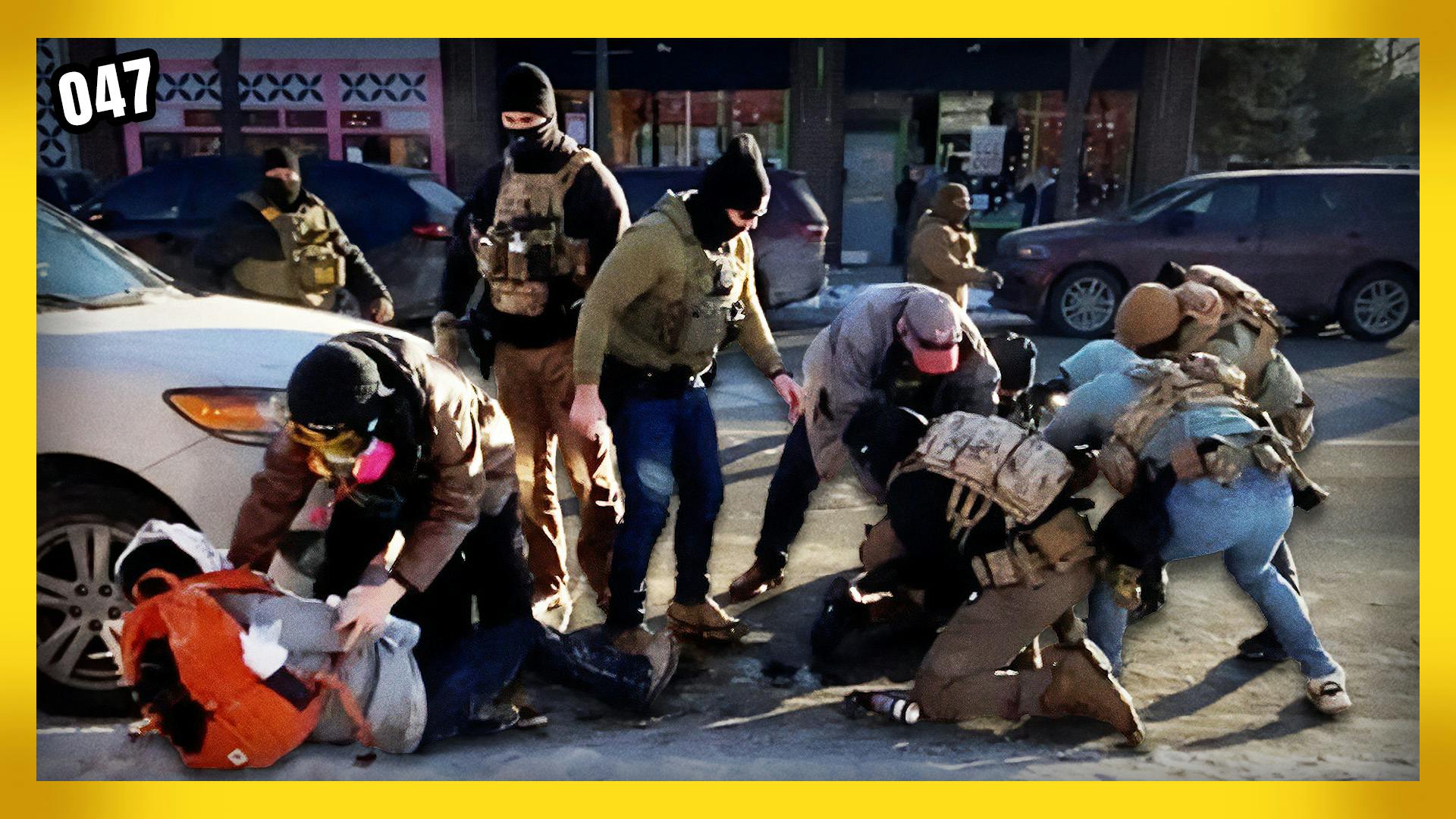
There's a lot of videos. I don't think we're going to show them here against the podcast. But I mean, yeah, the guy is pushed to the ground, pepper sprayed in the face, disarmed, and then shot in the back and then shot like 10 times, like an absurd amount of times. The guy just unloads a clip into him. So on every level it's morally wrong, it's wrong on police procedure. It's, I mean, and it brings up a larger question. So I wanted to do some context of what's going on going into this, which is that in the past, let's say eight to 10 months, ice has been given a absurd amount of extra money and, and mandate to increase its number of agents and number of actions. So they've had this wartime recruitment push, $100 million. They've been doing ads like this. America needs you. Choose your mission. We've been invaded by criminals and predators. We need you to get them out. And they've doubled their workforce in the past like 12 months.
- [04:02]
Joy
Oh my God.
- [04:02]
Doug
So they went from 10,000 to 22,000 officers. The training got cut from six months to six weeks. It's literally like 50 something days. You know, some of which is like, I, I don't have the specifics on me, but some of the training is. Is really scant, and there's a lot of. A lot of good reporting that goes into the details. And they've interviewed people that are on the thing, and they're just. They're noticing that the qualification standards have dropped dramatically. The amount of training they have to do, everything. It's. It's. So what we're ending up with is a decision that is made from a higher level that is leading to a lot of, like, I mean, uneducated, angry, untrained people in masks with guns out on city streets with Americans like that. That is, I guess, the reason I'm bringing this context is because I. I have this picture here that I think I'm very angry about this, but I'm not just angry at this guy. I think this guy's a psychopath. I think this guy should be on trial for. He, at the very least, should not have a gun and not be.
- [05:00]
Joy
This is the person who shot.
- [05:01]
Doug
This is the guy that shot him in the back. Like, clearly, whether he says he was afraid or not is not following procedure of. Of someone who has the lethal right to force and shot a guy in the back and killed him. But it goes up the chain, right? So this is Greg Beino, who's like the. They created a. A role for him that didn't even exist. It's called Commander at Large of ICE in the Area. And he's basically just sent out and he's, like, throwing tear gas and riling people up and saying things. He reports into Kristi Noem, who's the head of Department of Homeland Security, who's taking her kind of, like, marching orders. And the idea that they need to, like, have quotas of, like, 3,000 ICE arrests a day. And the idea that they should stop focusing only on people who have criminal records, but just start going after people like this stuff comes from Stephen Miller, who, again, was appointed by Trump. So, like, there's. There's five levels here of accountability and what. I'm not hopeful about any of this. I'm not. Like, it's not a good moment in American history. But I do think of it as a turning point based on what I'm seeing, and I think it is a lever that can now be used to start getting accountability up the levels of this chain. So, I mean, the immediate reaction is that Greg Bovino here was demoted. He's been demoted and sent out of Minnesota. He no longer has power and is likely to retire, is my understanding. But he's about. He's basically been soft, forced out, like.
- [06:19]
Joy
To a farm up north or essentially.
- [06:21]
Doug
I think they're like, they're like, yeah, sending him. And again, this guy was like a popular guy. They were pushing forward recently. But the backlash for this is so intense and I guess that dude, I.
- [06:29]
Joy
Sorry, just real quick. I'm hung up on the six weeks of training. I still can't do a layup after six weeks of trying basketball. The idea that I could arrest people with a gun is wild.
- [06:39]
Doug
Yeah, you are like.
- [06:41]
Mayor Brandon Scott
Yeah.
- [06:41]
Doug
And you know, I think there's an economic angle to it too, which is, as we've mentioned many times, we're not in a great economy right now for especially people in like the bottom end of the K. And ICE is one of the few well funded government agencies that's hiring right now and they're giving like $50,000 signing bonuses. So a lot of desperate people are going into these jobs and then sent out on, you know, it's just, it's, it's a recipe for disaster that is leading to exactly what it's like. This is not just one lone bad actor, man. It's like this is a set of bad steps that is leading to disaster. So. So anyway, Grego Bino is out. Kristi no might be out. She's clear. She's under deep scrutiny. That is because the backlash of this has been so severe and, and Donald Trump is being forced to change course. I know a lot of people, I guess one of my larger points here is that I see people, when they see something as horrible this happen, go into complete despair mode and they're like, nothing can change. This is horrible. It's over. And I just want to say that the. All the evidence is pointing the opposite that people are so broadly angry about this from so many directions, including again, you'll never get every person on anything. You'll never get 100% of people on anything. But that is like there's many Republicans. There are many people in power. There are Republicans, many center right leaning people. I brought some examples here of people that I've followed. This is a guy named Moses Kagan. He's like a center right. You know, he probably was a Trump voter and he was a guy that talked about real estate investment. He's just a guy I followed for finance reasons. He posted this and like he's never posted political things or if he has, it's been like kind of like cine. Rightly he said, I believe what ICE is doing in Minneapolis is morally wrong. And Deeply unamerican. I hope decent people remember this episode next November. I saw this guy, you know, this guy says, don't let politics take over your brain. Don't post politics. Because a lot of people were posting things like this. I think his post was in response to this. This guy goes, ordinarily I'd agree, but we crossed the line this past year where some of us who usually stay out of political debates and can no longer do so in good conscience. We need to have some sort of majority consensus position to move forward. The current administration is crossing lines we don't find acceptable, which I believe is the emerging consensus of majority of Americans. I also believe this. I legitimately think that this is a actually, you know, it should have been with Renee Goode. I don't actually see that this is so drastically different, but this has clearly touched a nerve. Or maybe it's the fact there was two of them in such close proximity. For a lot of people, I think the backlash is intense and severe and even Trump, who's isolated and surrounded by yes men, is noticing and backing track on a lot of stuff. So Bevino's out, Kristi Noem is likely out or to face intense grilling by the Senate if the midterms happen based on current polling. I mean he's again, before this happened, Donald Trump was at the unpopularity of Biden after the debate. That's where he's sitting right now. Like, I see this as like a Biden debate moment. I know you guys hated the book, but this feels like a common knowledge moment. I truly feel like this Alex Pareti killing is like for many people it's something where they can agree, they can just be like, this is too far. This is something has gone horribly wrong. And immigration was his best polling thing, which is still negative 11%. But prior to this, immigration was Donald Trump's best issue. It has now dropped to a record low after that. Like he, he has no issues he's standing effectively on. So dude, I even found fucking Tim Pool said empty gun, then gun in hand. He was disarmed for being shot. I don't see Trump winning this one like even. And he's still defending it overall. But like I'm a 2A which is the Second Amendment absolutinist, absolutionist, ICE executed innocent man today. They need to hell out of camp. I just do not see this as something that is difficult to find a side on for. For like literally the majority of people with a brain. I just think most people have landed on a something has gone wrong here. When a guy is disarmed and getting shot in the back of the street, like there's no. So I think it's leading to real changes. Next guy I wanted to mention this is John Mitnick. This guy was appointed by Donald Trump. He was the general counsel of Department of Homeland Security in Trump's first term. This guy establishes credentials and then says I am enraged and embarrassed by DHS's lawlessness, fascism and cruelty. Impeach and RIP Trump. Now the There are people flipping.
- [11:00]
Joy
Damn. He called to impeach Trump. Is he still like a Trump supporter or is he not anymore.
- [11:04]
Doug
I mean obviously, clearly, but.
- [11:06]
Joy
But like before this. Is he one of the people who.
- [11:08]
Doug
My understanding, Doug, is that every. Almost everybody who was in Trump's first term now is like every single.
- [11:14]
Aiden
It's crazy. Every single person that worked with him in the first term. Yeah, I think or like had an official position of some kind like walked back their support of him by the time.
- [11:25]
Joy
Super unlucky that Trump keeps having that.
- [11:27]
Doug
Yeah, really unlike. It's crazy. The odds are insane. Even you know, Republican senators are demanding Kristi Noem go before the the Senate to do a testimony polling on abolishing ICE which in September of 24 was opposed plus 47 is now support plus 3. That that level of a swing in. In any major issue in America is like almost unheard of. Like that is insane. So yeah, I, I just. I guess I'm not as nihilistic as to think that doesn't mean anything like that. That is a clearly a sea change in American stances. There's clearly heavy anger. This is something that was filmed in HD from 6 angle. Like people you have to.
- [12:14]
Aiden
You know.
- [12:15]
Doug
And that's why last thing I want to say about this. There's a lot I can go on, but I think I'll just keep it at this. As I go through this, the reason I get so furious is not just because of this guy's actions, but maybe this is wrong of me, but when I watch these people here lie to me when I like when I see Stephen Miller and J. Vance reposting when they call this guy an assassin, it really frustrate. It makes me very angry. He did not try to murder federal agents. Like that is to describe him as. This is a lie. Everybody knows, even people on this guy's side know that he's lying. Like the people that are on this guy's side will take the stance of like, well, he shouldn't have been there. Like you never. Things can always get. But none of them will actually take his words at face value, which is disgusting. The fact that he has a position of power and even the people that are ardent supporters of him know that he's lying. But like, well, he's directionally right. Like it's crazy.
- [13:11]
Mayor Brandon Scott
Like.
- [13:12]
Doug
And then Christy no comes out, calls him again.
- [13:14]
Aiden
He also had no id. This looks like a situation where an individual arrived at the scene to inflict maximum damage on individuals and to kill law enforcement.
- [13:24]
Doug
It's just 100% untrue. This guy did not show up trying to kill law enforcement. And the fact that these are coming out within minutes, within minutes of a killing. Like we used to have this semblance of. They would wait for an investigation, you know what I'm saying? Like they're just, they, their role is to immediately, no matter what, defend the actions of the ICE officer at. There's no agree, no amount would be too far. So yeah, again, Stephen Miller again calling him a domestic terrorist. This guy's a 37 year old ICU nurse. This guy. I mean I'm not going to show the whole video, but I do think it's worth seeing like to call this guy. I think we should watch this. This is Alex Preddy at his job. He worked at Veterans Affairs Hospital, so he's like treating veterans as a nurse. This is him giving the last rights to a dead veteran.
- [14:16]
Joy
Terrence Lee Randolph. March 30, 1947. December 10, 2024.
- [14:22]
Mayor Brandon Scott
Today we remember that freedom is not free.
- [14:24]
Joy
We have to work at it, nurture it, protect it, and even sacrifice for it. May we never forget and always remember our brothers and sisters who have served so that we may enjoy the gift of freedom. So in this moment, we remember and give thanks for their dedication and selfless service to our nation in the cause of our freedom. In this solemn hour, we render our honor and our gratitude.
- [14:49]
Doug
He's just a generally good guy. You know, his entire ICU nurse staff did a memorial for him. Like, this is a guy who left a good contribution on the earth and he's now dead. And like, so the people up this chain have to be held responsible. And, and I guess what I'm saying is unlike the reaction of some parts of the Internet, I do think there's a fast moving, I don't know, missile in that direction. I think that that's happening. People are angry. I don't know if you guys saw Ted Cruz was on a hot mic or they leaked something. Ted Cruz talking to Trump after this, saying, basically talking about what's happening with ice. And he's saying, because of this, you are going to lose the House and the Senate. You're going to spend the next few years getting impeached and getting nothing done. And then Trump said, fuck you, Ted. But like that, that is the. Ted Cruz's nightmare is my dream. You know what I'm saying? What he's describing is what I would like to happen. And I do think. I know it sounds a little alarmist. I do think it's worth noting that at current polling, the. If the midterms were held now, he would lose. I mean, he, he. It is not looking good in any measure, which introduces. I mean, this is what Gary Kasparov, who's like the chess guy from Russia, he was saying it reminds him of Russia. It does introduce some risk of, like, trying to fuck with elections just, just because that's what authoritarian type people do in this type of situations. However, and it does bring up. The last thing I'll say is, like, as this ICE stuff is unfolding after the Alex Preddy murder, Pam Bondi said, we'll pull ICE out of Minnesota if you give over your voter rolls. Which is a fucking crazy thing to say. And they're doing this. I had to follow up more on the story. They're doing this simultaneously. They're suing, like, 40 states to try to get their voter rolls, and most of them are not doing it. The states in red here have given up their voter rolls, but the idea is that they're trying to create an independent national voter roll list that could be used to subvert an election. Like, you could run it all through the federal authority and then ignore the ones that are being done locally. So it's like a. It's a serious risk. And that is why. Last thing I'll say is, um, I've seen a lot of people. And by the way, this sounds crazy to say in this moment where I'm going on this rant, but I think this show, in a different time, I would be so different. At least me personally, I would be so different. I think this is so egregious to me that I feel like I'm making this almost partisan statement where I'm like, I. I'm giving you information on why I think this, this chain of people should not win elections. But I, I don't think that was the goal of our show, and I don't think that's what we're normally doing. I think I, in a different year, would be way more focused on, like, trying to Break down core issues on different sides. But in this specific example, I just want to mention that, like, I think it's very. People online are saying things like you should not or voting doesn't matter. Who gives up? Voting isn't even gonna matter. The election's not gonna matter. And I, I fucking hate that line of logic. I just really think the midterms this year are very important. I would really appreciate that people, if they do care about it, this matters to you, to register and make it a part of. If you want to protest, if you want to do other things. I think that's incredible. But, like, this is an important thing to do because of how important they clearly see it is. They see it as very, very important to try and have some control or influence on this election and to take people out of voter rolls and purge voter rolls. And so making sure you're registered is just important. And that's the last thing I'll say. I don't think I have anything more to say other than that. The excuses they use about voter rolls. This is again, Republican from Utah. She's in charge of it. She's the Lieutenant Governor of Utah. She's a Republican, voted for Trump. She did a full review of Utah when she was sued for this, said there is no evidence of non citizens casting a vote.
- [18:43]
Joy
So that. Hold on. So the pretense of asking for the voter rolls is that there are non citizens voting.
- [18:49]
Doug
The pretense is that, you know, in Minnesota's case, I think Trump literally believes he should have won Minnesota. He didn't. He thinks it's because they are rigging the election with noncitizens and he would like to have the voter rolls to create his own voter roll list nationally for all the states that they can purge as will to make sure there's no non citizen. But obviously there's an incredible incentive there to be. You put your thumb on the scale with what you purge because it's just been shown time and time again that if you purge voter rolls near an election, many people don't notice, they don't get their registration back in time.
- [19:24]
Aiden
And.
- [19:24]
Doug
And you can cut lots of votes from an election. So it's like, it's very important not to let that happen. So anyway, I'm coming to the end of this rant and I'm sorry I went a little bit too long, but yeah, that's the main takeaways.
- [19:39]
Joy
I'm shocked at how small ice is, to be honest. Yeah, 22,000, like from. They have hot. That's almost more. That's like even more concerning because I assumed it was like, well, you know, you got some bad apples amongst the hundreds of thousands of ICE people. It's like if this is your rate of like huge, huge fuck ups with 22,000 people, that's bad.
- [20:01]
Aiden
It's even worse.
- [20:02]
Joy
Yeah, it's like much worse. Like per, I don't know, hundred ICE people, there's these issues like, God, Yeah.
- [20:09]
Doug
I think a lot of it is, is again from Steven Miller demanding quotas. That's been proven now he's demanded a number of things. So it's not based on like they see someone with a crime or crime is reported with it than they do. They're just like trying to hit quotas and then no training. And also as part of this I wanted to see like, okay, what are other countries doing with regards to immigration enforcement? And I looked at like Japan and like some countries in Europe and it's like nobody, nobody is doing masked men in vans. Nobody's doing this. There's no. And they all have managed to make their shit work. So it's like insane that this. I don't know. Yeah.
- [20:52]
Joy
Aiden, what do you think?
- [20:56]
Aiden
I, I think similarly we've talked about this a little bit. It happened. I think it probably the reaction to like the episode when we talked about the Israel, Palestine, like ceasefire agreement. And some people, their reaction was why hadn't you talked about this up until this point? I think I have a hard time with this show where I really, really didn't want to make something where I just show up every week and I share my political opinions to the applause of a bunch of people agreeing with me, where they call me like based in the comments because they said I said something they like and because it just feels like it feels so much more masturbatory than it feels valuable to do that. And I wanted something, you can go get that in so many places online. And I wanted to make a show where I talked with two other people that like breaking down things and understanding things and not just having some reactionary take about it. I have my own political opinions and they show on this show all the time. But I'm interested in understanding the world around me. And I think what is hard about this is I don't, I was having a hard time trying to parse what I wanted to say about this because I don't want to argue about it with people I don't like. I don't want to spend time trying to convince somebody listening to this or online somewhere that shooting this guy who didn't have a gun in his hand in the back on the street, the state, the state just executed him for, like, no, for no real reason. And a, and the idea that I would have to even spend time and energy arguing about that with somebody is so insane to me, man. It's so insane to me. And it's off the back of, like, the immediate reaction of the rhetoric that you hear from the people in power right now where they say all these things about him. They lied about the interaction off the back of line about why this enforcement exists in the first place, like, to so consistently, even in the wake of this shooting, see Christie and Stephen Miller and Trump echo these sentiments of these good men in the streets are getting rid of, like, rapists and murderers and pedophiles when that part isn't even fucking true, dude. It's not even fucking true. And if your first reaction to watching that video is trying to fucking send the snake through the maze of why that guy was justified in doing it, it's so insane to me. How can we even be having that conversation, man? And I don't, I, I don't want, I don't want the fucking bass in chat. I want, I want anybody listening that had their first reaction to seeing that video or somebody, even if your friend had that reaction, like, just look, look inward for a second. It's all I'm asking. Because. Look inward and ask yourself, why is it so important that you justify the state killing a man in the street like this? It should, it should just never happen. Regardless of what else is going on. It should never, this exact type of situation should never happen. And I, I, Yeah, I think that's, I don't know what more to say about it than that, but I think.
- [25:00]
Doug
Most people agree with that. I literally, I guess that's what I don't.
- [25:02]
Aiden
And I agree with you and I like your presentation because I agree with that too. One more, Actually, one more thing I was thinking about because my, I do feel. One, one thing I wanted to say was this call to action of, like, fucking genuinely, I do believe, show up to the protest, show some sort of action, fucking register to vote and vote in the next election. Because this type of stuff, the way people are moving, it shows that it does. I do believe that that still matters. And it's hard for me to say that because I, I say it with the full understanding that I'm the guy on the show who's had the plan of, like, leaving the country for years. And I, It's I. I feel a little weird telling people that because I understand that context exists. And I made that decision for myself a long time, many, many years ago for very different reasons. It's not like, in reaction to this happening in front of me. And I. But I think if you genuinely. I think it's important to not just, like, see this happen and keel over. There's a discussion that we had on our bonus episode, like, a week ago before this happened, and. I was kind of voicing my concern or my opinion of having seen the Renee Goode thing and feeling so fatigued by it and being like, I feel like I have grown up. I have grown up most of my life now in the US Seeing these violent acts happen over and over again in different forms. Not necessarily. Like, it could be ice, it could be the police, it could be terrorism, it could be school shootings. And I've seen so many different versions of this happening and feeling like they keep happening. And this feeling of fucking, this is fucking sick. How could this. Not only that it's sick that it happens and that it continues, but also that I feel this lack of attention or care that it's happening. And I think. I don't know what it is about this one, but it's something. It's weird to say that it's even different from what happened two weeks ago. It's like, don't fucking forget this, like, act and use it to fuel the way you influence the future in this country. And I, I. And even, or even if you're going to be here for a little bit, like, I'll vote every time. I'll vote every time until, Until I move and. Because it's still important to me. It's still important that I show up to my, like, local elections and my county elections and shit like that. Yeah. I don't. Yeah. I don't have more to say.
- [27:56]
Doug
No, I appreciate that. I. Yeah, it's funny because people saying that, you know, elections, like, elections, I mean, directly caused it, like, if you're mad about. This is the result of election, and I think, I think it'll make a difference. I do. But this is not the whole thing of our episode. And I don't know if you have anything you want to say. Um, but I just, I, I think we wanted to cover that. We do have other stuff to talk about. This is an episode.
- [28:30]
Joy
Like, what's next? Because that is something we talk about.
- [28:33]
Doug
Yeah.
- [28:34]
Joy
I mean, you already expressed it, and I told you guys this when we were planning. This episode is like, I just think this shit is sad and that's. I don't have much else to add. Exactly what you said. I think it's almost, it's. I don't know, it's weird to just go on to a podcast, be like, it's bad. This is bad. You know, But I think we've covered, you know, other angles to it and it does seem like there's a huge. The polling numbers were. Were crazy because I also saw that on Nate Silver's thing.
- [28:58]
Doug
Yeah.
- [28:59]
Joy
Which is, you know, again, immigration is the one thing that Trump has been able to hold on to as people approve it. People, even with the stock market as high as it is, people do not approve of Trump on the economy. Like, he's failing on economy and affordability, all these things. That was really the core of what got him elected. That and immigration. Right. And now he's super losing on like the one golden goose he had. So I do think there's going to be some serious response to him. Like, one thing Trump is good at is when he senses the tide turning on a subject, he changes his behavior. So I think probably you'll see him.
- [29:32]
Doug
I think it's why he's backing down. I mean, I think he's going to. For all you say about Trump, he's got like lizard brain instincts on like, what the room is at least among his base. And this is so unpopular for anyone who's even like remotely not die Hard for anyone who's like, on this. The center. Ish side of. Right. Whatever. Like, it's so unpopular. So he has. He's tossed Greg Bevino to the wolves. Probably will toss Christine Ohm. He's clearly like trying to backpedal. He called Tim Walls. They're pulling ICE agents out of like this. There is a. There is a direct reaction to people's anger, which. Which does. Which means the anger has a value. You know what I'm saying?
- [30:10]
Aiden
Like, it was it break. It might have been the book that we. That everybody knows what everybody knows and breakneck. But it did change my POV perspective a little bit.
- [30:21]
Joy
And for context, for people who didn't hear it on Patreon, Aiden and I hated this book.
- [30:27]
Aiden
It's not a fun book to read. No, I think there's.
- [30:31]
Joy
The premise is just what changes when people are collectively aware of something. And once it becomes known that everybody knows it, then everybody's behavior changes, even though they did all know it behind the scenes quietly up until that point.
- [30:43]
Aiden
That's a great summary of the whole book.
- [30:44]
Joy
It's the entire book. It's that sentence repeated 300,000 times.
- [30:49]
Doug
I'm becoming more of a defender.
- [30:51]
Joy
Yeah, no, sometimes he puts it as a question. Sometimes he puts it in an analogy.
- [30:55]
Aiden
It talks about. I think it was the. This book and Breakneck talked about why. Why there is such an extreme effort to get rid of communication around protesting in so many countries and why. What the actual value of protesting is. And I think I. I have changed my opinion about this over the course of maybe the past like six months. The idea. Because I understand the feeling. I know there are people listening who hear, who latch onto the part where we said, like, go vote as a, like a part of the solution to this. And they're like, fucking whatever, man. Or like, you know, they're too lived up or, you know, and. Or protests don't do anything. Like peaceful protest doesn't do anything. And I understand, I understand where you're coming from. I get it. But what changed my mind about protesting is it's not about. It's not about like creating this magical instant change in. And getting the power that you're pushing against to just cave instantly.
- [32:04]
Doug
Yeah.
- [32:04]
Aiden
It's about creating a consistent. A consistent message and present presence and signal to all the other people in your community, all the other people in the country or state or whatever, they know that you feel the same way that they do and that you're all behind one another on something. And I think this is so over the line and it's so far in one direction and it's so blatantly a lie, what Stephen Miller saying, it's so blatantly a lie that finally, it's like we can really. It's like an issue that we can reach near consensus on when, like the. Dare I say, the establishment does so much work to make sure that we can't find consensus about fucking anything.
- [32:51]
Doug
We can't get consensus on anything.
- [32:53]
Aiden
And now this is something we can find consensus on. I truly, I do truly believe that when you show most people this video, they do, they do think it's bad. Yeah, they do. Most people do feel that way. Not literally 100% of people, but most people feel that way. So when so many people are angry and it's so widespread across every aspect of the political spectrum, and then you go out and show and demonstrate that you can still create change in this country. I. And I think this ties in later to the interview I did. One thing I was incredibly impressed about interviewing Mayor Brandon Scott is that he, At a time where everything feels so gridlocked and painful and frustrating politically. He believes that we can get things done together. He has a process by which he approaches those things, and he's creating results around a problem that was so embedded in how people viewed Baltimore that it's a place where people get murdered in a drug war. And he's like, I'm going to start. I'm going to help dismantle that stereotype. I'm going to attack the problem as it actually is. Here's this incredibly nuanced approach to how we're going to do that. And it's not about me. It's a citywide effort that so many people in Baltimore are participating in. And we can create change. We can reduce the homicide rate in Baltimore to the lowest it's been in over 50 years, over a 60% drop in that time. And, like, here's how we did it. And that's among a bunch of other things he's doing. Right. But I think it is. It was remarkably hopeful to speak to him and have that be the takeaway and be like, it's not hopeless. You can make things better.
- [34:48]
Mayor Brandon Scott
Yeah.
- [34:48]
Doug
And we're talking about Mamdani in a bit. And what he's. I think people. I think in general across. Across this guy and a lot of people, it took a while because the forces of the gridlock in our political system and social media, the way I think a lot of things, made it very difficult to make any progress or consensus on anything. I think people are evolving. I think people are evolving to learn tactics and strategies and methods to adapt to the challenges. Like, they hit really hard and they made things way worse. And I think people are crawling back.
- [35:18]
Joy
Support for Lemonade Stand comes from Adobe Acrobat Studio.
- [35:22]
Doug
Guys, I have a. I have an actual thing that I have been using lately that actually helps me if you have a real. Let's say I'm still in school. This is an example for people that are tiny little baby children like Aiden. And you have a book that you need to read or 18 pages or whatever.
- [35:38]
Aiden
You didn't read books at school.
- [35:40]
Joy
Don't lie to us in your league matches.
- [35:43]
Doug
All right, you can put that in a PDF into Adobe Acrylic PDF spaces and it will generate a literal. It'll generate a podcast for you or a presentation for you that you can then use to summarize and understand the takeaways from this longer.
- [35:58]
Joy
It's actually amazing for learning.
- [36:00]
Doug
It literally is just like, you can have it. You could, like, have it generate a quiz for you. It's like it is a helpful thing for summarizing a very large document that's in a PDF. Is it useful?
- [36:08]
Aiden
You need resources for your baby mind. But I consume the material in one go and I keep it all in my head. That's how I keep everything so straight and easily managed. In front of me.
- [36:17]
Joy
You're always saying disaster. Communicating with you. Be like Atriok.
- [36:22]
Aiden
Use Adobe.
- [36:23]
Doug
Learn more@adobe.com do that with Acrobat.
- [36:26]
Joy
And now you can use PDF spaces to learn so much more from your files.
- [36:29]
Aiden
Man. Be forgetful. Be free.
- [36:33]
Doug
He's just channeling. Don't follow the constraints of the office and the workspace that I'm working in.
- [36:40]
Aiden
Make your co workers mad. What are you. What are you wearing?
- [36:45]
Mayor Brandon Scott
Brandon?
- [36:46]
Doug
You're not going to get my data. Aiden.
- [36:47]
Aiden
What do you. What do you guys know? You.
- [36:50]
Doug
And you are not getting my data. I've heard I needed cloaked to protect it, so I cloaked up.
- [36:55]
Aiden
You didn't listen. I died last week. At all.
- [36:58]
Doug
And we're not letting my data out of my site.
- [37:00]
Aiden
It was cloaked id. It's a service. It's not a piece of clothing that you wear. It protects your privacy and data. Prevents your, uh. Prevents your email or your. Your identity from being stolen.
- [37:14]
Joy
Look, wearing a physical cloak doesn't do anything. I just took Brandon's laptop off the stool and I have it open right now.
- [37:20]
Aiden
Dude.
- [37:20]
Joy
You couldn't see professional.
- [37:22]
Aiden
You couldn't see him steal the laptop because you have a real cloak on. This is not. You need to sign up for cloaked ID, the service. You could go to cloaked.com lemonade Take your free privacy scan and if you choose to subscribe to cloaked use code lemonade for. For 30% off your cloaked subscription. Again, a real cloth cloak that you wear does not impact or solve this problem at all. I can't really stress that enough.
- [37:46]
Doug
This is embarrassing.
- [37:48]
Aiden
Support for this show comes from Rocket Money. Honestly, I'm sick of these guys. I'm sick of these guys because I open the app and it tells me the annoying things that I spend my money on that I forget to cancel. I'm spending a bunch of money on dumb stuff.
- [38:02]
Mayor Brandon Scott
And.
- [38:03]
Aiden
And it's like, stay out of my business.
- [38:05]
Doug
It's kind of a reminder of your personal failure.
- [38:07]
Aiden
Exactly. It's a reminder of my flaws. Of the things I shouldn't be spending. Money I'd rather not know. And do I look at the information and cancel and then save the money? Yeah, of course. But it's like why did. What did you have to say about it?
- [38:19]
Doug
Right? It's like when you buy a lottery ticket and someone tells you that stupid mathematically. It's like, just let me hope.
- [38:24]
Aiden
Just, just, just let me hope.
- [38:26]
Doug
I don't want to save the money.
- [38:27]
Aiden
I just want to waste the opposite. It's the opposite because it's guaranteed money from the savings that you'll get. But it's like it's not about that. It's not about me. Rocket money.
- [38:36]
Doug
Just.
- [38:37]
Aiden
It's. It's like if I was Scar on the. Or if I was Mufasa on the cliff, it's like let my. Let me get myself up. You don't need to give me a hand. You don't need to help.
- [38:46]
Doug
That's not how that scene.
- [38:49]
Aiden
I've seen the line.
- [38:50]
Doug
If you don't.
- [38:51]
Aiden
I know how that works.
- [38:51]
Doug
Opinion and want to do rocket money and actually help your finances. You can go to rocketmoney.com lemonade let.
- [38:57]
Joy
Your brother fall from a cliff.
- [39:02]
Doug
So anyway, I wanna get to this because one of the immediate impacts of what's going on here is that there was a Department of Homeland Security funding bill that passed the House before Alex Pareti's murder, but now is very, very unlikely. Almost certainly will not pass the Senate because of the absolute outrage over dhs. There was. I have a slide here. Of the seven Democrats who originally voted for this, many of whom have now of course backed out because of insane pressure. Shout out to the one Republican who also didn't vote for it, Thomas Massie, who. That guy's been spend remarkably principled. He probably is going to get primary though, is what I looked into. His Trump is throwing all his weight behind the new guy. But anyway, so there's going to be a Senate vote. Probably won't pass, which means we have a partial government shutdown. Fourth, one third, one third in like eight months.
- [39:56]
Mayor Brandon Scott
Does this.
- [39:57]
Joy
They are voting on specifically this part of dhs, or is this just the broader.
- [40:01]
Doug
This is a funding bill for DHS which covers ice and a number of other things. 64.4 billion in funding for DHS is not going to be provided, assuming this doesn't pass. So there is a shutdown. 10 billion of it was supposed to go to ICE, although as I've looked into it, I think they're already funded through the big beautiful bill. So in fact it'll shut down TSA and Homeland Security and like port stuff. But ICE is like the only thing that won't shut down because they already have money. So it's not. I mean, it's. It's an unfortunate reality.
- [40:31]
Joy
Just to set the context there, we had that funny government shutdown a few months ago. And as a reminder, what comes out of that is a continuing resolution, which means we didn't actually pass like a budget for the full year. It's basically like we're going to continue off the levels we had while we debate future things. And that didn't include dhs. So DHS needs to have a separate thing, a resolution that says this is the funding, but then separately they have mandatory funding based on big, beautiful bills. There's a weird thing. So it's not necessarily. It's going to have like a massive impact on ICE specifically, but it'll be yet another mini government shutdown that we get to follow and will cause chaos and maybe will cause chaos in the only thing that we want, which is tsa. And then the others are going to function great. So that'll be cool.
- [41:13]
Doug
TSA is like our only weapon of getting the government unshut down because people can't stay.
- [41:18]
Joy
I guess that's true. People do get really, really pissed about it. So in that sense, it is effective.
- [41:22]
Doug
Every government budget should go back to. It should. It should split.
- [41:25]
Aiden
The TS infrastructure of flying needs to be at stake.
- [41:30]
Joy
Yeah, we just. Because Trump always makes national emergencies and we make an emergency that people aren't getting on planes, and then everything becomes about tsa.
- [41:38]
Doug
Yeah.
- [41:38]
Aiden
Every time you have a budget issue, it's like a bunch of air traffic controllers standing up and be like, I'm Spartacus. They have to.
- [41:46]
Doug
They have to do it every week to keep our government going.
- [41:48]
Joy
I think air traffic control controller should have more votes. Oh, like, like each one. Each person.
- [41:52]
Aiden
Everybody gets one vote except for air traffic control.
- [41:55]
Doug
Traffic control.
- [41:56]
Mayor Brandon Scott
Yeah.
- [41:57]
Doug
We're going to end up with the craziest.
- [42:00]
Joy
Every time they control a plane, they get one more vote. So that way they're incentivized to keep working.
- [42:03]
Aiden
So you can stack.
- [42:05]
Doug
Yeah, there's a guy on.
- [42:06]
Joy
But no, but you don't have to spend all your votes every year. So one guy's been saving his votes for like a, like 40 years. He has like 3,000.
- [42:14]
Doug
Brother becomes president.
- [42:16]
Joy
He just sends it all. Well, speaking of voters and how we use votes to elect people, there is a mayor in Baltimore that Aiden went and chatted with. This is Mayor Brandon Scott, who Aiden and I both learned about from a Channel 5 interview that, like, you just set up a second ago. He's had this remarkable change in Baltimore. So you Aiden flew out to Baltimore this past week and spoke for almost an hour with Mayor Brandon Scott. We are going to have the full interview here that you're going to now watch. You will watch it. And afterwards the three of us are all going to chat together. Obviously this is something new that we're trying of one of us going and chatting with somebody and let us know what you think. I think it was a really great interview. There's obviously going to be people who we interview with it. When it's just one of us. We're going to keep doing the standard three. We have some actually really exciting guests coming up soon, very soon. We have some really exciting things. So this is awesome. Though I don't know if you have any other context otherwise. Roll the film.
- [43:09]
Aiden
I think my. A quick preface is the. For those who don't know, Baltimore has seen a historic reduction in their homicides in the city, even like greatly outpacing the national decline there's been in the last five years as well. And the Channel 5 video that came out a couple months ago highlighted this. That was the initial interest. And we mostly start out the conversation about that. But then we dive into, I would say, his broader motivations as mayor, like why he wants to do this job, how he sees his position and what his ethos is when it comes to like creating solutions in a city. Because I think we've talked about this feeling of how much can a mayor actually do. And I preemptively, he answered that question. There's so many times in this interview where I had things I wanted to go to or asked and he just perfectly sped towards those things I wanted answers for. And he speaks so well. You can probably see in the interview there's a couple times where I'm almost at a loss for words of like, where to go next. And I need to work on my interview.
- [44:14]
Doug
You're thinking of yard questions you're trying.
- [44:16]
Aiden
But some of his answers, especially in the back half of this interview, really blew me away. I think it's a little more like approach and in the weeds at the beginning. So if you feel like the first bit is a little slow, I encourage you to stick around because it's. It's very informational. And then I think. Which is good. Like, I think it's very, very interesting to learn about from my perspective. But if you find it a little slow, I encourage you to stick around. Listen to the back half because I think he has a lot of powerful things to say about his position, who he is as a person the city itself. Anyway, I hope you guys enjoy this. Let us know what you think of it. We'll come back at the end.
- [44:55]
Joy
Roll the film.
- [44:56]
Aiden
All right. Well, Joy, this is a new, a bit of a new style thing for lemonade stand, you know, up interview without, without Brandon and Doug. I have the Mayor of Baltimore.
- [45:10]
Mayor Brandon Scott
Brandon and Doug didn't want to come to Baltimore, man. I know phrase you would never leave because that's what happens.
- [45:17]
Aiden
And I have Mayor Brandon Scott with me and we're in my girlfriend's parents home filming this interview. And I figured I'd, I'd get straight to it because the, the reason I wanted to speak with you was this historic reduction in homicides in Baltimore over the last few years. An over 60% reduction since 2021, a huge reduction in non fatal shootings and violence as well. And the. In 2025, the lowest homicide number of homicides and I think over 50 years. And you know, there's a bunch of layers from, from my understanding as to why this is the case. But this has happened during your term as mayor and you're, you're elected in 2020. And I wanted to just get your explanation behind that because just to lay some, a brief context for the, for the rest of the U.S. the homicide rate in the country is also falling through this time, but pretty significantly. But Baltimore way, way ahead of the curve even compared to that decline nationally. So I just wanted to know, how did this happen?
- [46:39]
Mayor Brandon Scott
Yeah, I think that before we do that, we just got to like take one step back, right? When we think about Baltimore and gun violence, everyone thinks about TV shows, homicide, life on the street, the corner of the wire, obviously. But for me, that's real life. Right. I was born here in Baltimore in 1984. So fortunately and unfortunately, my formative years are the years that everyone thinks about when they think about violence in Baltimore. The 80s, 90s, early 2000s. Actually. The reason why I, before I was 10 years old, decided I wanted to be the mayor of Baltimore is because of gun violence. I was out playing basketball in their mouths and someone started shooting and someone got shot, right? The person didn't die, right? To be honest, we didn't like, we don't even know if the person went to the hospital. It was a different time, different time back then, but pestered my parents, my grandparents, aunts, uncles, everybody about like, why no one really cared about what happened and probably to shut me up in the way, in the way black mothers have this way of like making you shut up, but not squashing Your dreams at the same time, right? Like, and she just said, if you want to change, you got to do it yourself. And that's when I decided I wanted to be the mayor of Baltimore.
- [48:01]
Aiden
You decided you wanted to be the mayor of Baltimore before you were 10 years old?
- [48:04]
Mayor Brandon Scott
Yeah, well, before I was, like, seven at the oldest. Seven or eight years.
- [48:09]
Aiden
Did it say that whole time, like, do you ever break when you're, like, 15? You're like, I'm gonna be something else.
- [48:14]
Mayor Brandon Scott
You talk to anybody that's known the. My whole life, including someone that's in the room that no one can see right now. It has never changed. Never, ever, ever changed. But that's the core of it for me. And when you think about that, right, we just. I calculated this recently. I'm 41. I'll be 42 in a few months. But 18 of the 41 years that I've been alive, Baltimore had over 300 homicides, right? So that's most you know of my life, basically. And I came to City hall first as an unpaid intern in 2007 and then got a job getting paid. So I've been there this 19 years in that building. So in addition to that life experience of growing up in Park Heights, so the neighborhood that I grew up in, Park Heights, hosts the Preakness, the horse race. So I lived in a neighborhood that the whole world descends on for the third Saturday in May and every other day of the year. We weren't even treated as human, like that was the reality for us. But I'm in City Hall. I'm a staffer. I work on public safety policy. I work in the mayor's office. I work in the mayor's Office of Criminal Justice. I spend a lot of time understanding what the police department's responsibilities. I'm in City hall and city government when CBI comes to Baltimore. So I'm growing up and maturing at a time where I can see. I lived through zero tolerance, when if you were black and breathing, you were walking, you could just go to jail simply for. For that reason. But the violent state. So throughout my time on the City Council, I was the vice chair and then chair of the Public Safety Committee and then became the chair of the president of the council. I talked about a lot of that. Baltimore had to change the way we thought and operated when it came to gun violence, that we could not put the sole responsibility of making Baltimore a safer place on the back of the women and men at bpd, Right? Just from a sheer math problem, anybody who is thinking with their brain and not with the emotion. Their emotion understands that. At its heyday, Baltimore police department had 3,000 police officers. Right? And we'll just say in a city of 600,000.
- [50:29]
Aiden
Right.
- [50:30]
Mayor Brandon Scott
Of 600,000 people. Well, only about a thousand of them ever work at the same time. 1,000 people can't keep 600,000 people safe. It's literally impossible. But that is the mentality that we've had, not just in Baltimore, but in this country. That is just their responsibility. They play a very important part in that responsibility that government has to protect and keep people safe. But it's not just theirs to bear alone. So luckily for me, when I became the mayor, someone was smart enough to pass a law that says Baltimore has to have a comprehensive violence prevention plan presented to the mayor and city council. That person will be me. It's law in Baltimore that you have to have a comprehensive approach to dealing with gun violence. And we got to work building that first one. And we said that it's a public health issue. So we're going to think about it through a lens of public health. I, in 2021, rolled out the first one, walked out of a row home in East Baltimore, not unlike this one, and said that this is what we're going to do. We are going to commit to lowering homicides in Baltimore by 15 from one year to the next. And people literally laugh. Impossible. There's no way. And it wasn't that they were laughing that we would set a goal like that. Yes, they thought that was ridiculous. But we weren't just saying that we were going to do that by going out and having mass arrests. We were being very intentional. We were going to change the way that we operated totally, including with our police department. We were no longer going to say, like, okay, everybody that lives in Park ISO, everybody that lives in this part of West Baltimore is the most likely to be the victim or perpetrator of gun violence. We were going to actually find out who those people were and focus on them. That's where our group violence reduction strategy, our focus deterrence model comes from. We started in the Western district in Baltimore City, which is about 3.7 miles and roughly 60,000 people. And it was responsible for 16% of the violence in the city in such a small area. And we know that basically 2% of the population are the group of people that we need to focus on. So we started there. This is a partnership at that time between my office, the mayor's office, Neighborhood safety Engagement, the police department, the state attorney's office, the attorney general office of Maryland. And what we do is we. First for individuals who are likely to be the victim because this is group violence on group violence. But people have to understand, and I want folks to understand this in. Across the country, only 11% of homicides countrywide are what we would call gang violence. The overwhelming majority has nothing to do with stuff like that.
- [53:28]
Aiden
Yeah, I thought that was. This is something I'd been thinking about when I watched the. The Channel 5 piece that. That touched on a lot of this was the disconnect between people's average understanding of gun violence or gang violence being the fuel behind these statistics.
- [53:47]
Mayor Brandon Scott
That's what they've been brainwashed to be taught when.
- [53:50]
Aiden
When in reality it's. It's something very. Something much different. And it seems to be like more. More like interpersonal issues between people and things like that.
- [53:58]
Mayor Brandon Scott
Yeah, so it's mostly, you know, interpersonal issues. And I think the difference. What happens here. We'll get to that. What happens, though, is that we, especially during my generation coming up, I'm a little older than you, not that much. We were like the drug war was at its height. And this is what happens in this country. We're seeing it happen right now with immigrants.
- [54:22]
Doug
Right.
- [54:23]
Mayor Brandon Scott
We have a history in this country of deciding what the enemy is, making things simple for the American people. If you give the people something that is bad, they'll know that it is bad and they'll support you in doing any and everything that you can to get rid of it. That's what happened with the war on drugs. It was up is the gangs. It's these folks. Is this in. In some cases is drug users. If drug users weren't using drugs, then there would be no. No drug wars. All of those kind of things. Instead of like what we should have done then is focusing on the core of the problem. Right. And I think what we're doing here is starting to get at that. People are going to have conflict. Right. So we identify those folks. We know who they are. Right. There are some who are involved in illegal activity that we know we're just not going to have that. They're investigated by our police department, who turn it over to our state's attorney, our attorney general, for prosecution. But there are many of them who aren't yet involved in that kind of illegal activity. But because they are affiliated with these groups of people, they are likely to get into some conflict or other activity. And even just being in the group will put them at risk. These folks, actually, we go to them, they Get a letter directly from me that says, I know who you are. I know what you do. I want you to change your life. I want you to stay alive. But you cannot continue to do the activities and be the places and with the people that you are and do that.
- [55:54]
Aiden
Could you give me an idea like. Like day. Day one, day one to this approach. Day two of you taking this approach. What is actually changing in that first neighborhood? Like what, what. What is it? What is this rolling out?
- [56:06]
Mayor Brandon Scott
Actually, look, day one is not. That is. Is.
- [56:09]
Aiden
I mean, it's not about day one, day zero.
- [56:11]
Mayor Brandon Scott
So we have to build this up. And I think it's important to know that right when we set out that we were going to do this GVRS model, we, everyone knew, like, okay, just you got you. Because it's not just about the police. You have to have the community partners there. You have to have the moral voice, people. You have to have that. Have the standing to go to people and talk to people.
- [56:32]
Aiden
Yeah.
- [56:33]
Mayor Brandon Scott
That no one else can. And convince them to agree to take the services and change their life. In Baltimore, most folks at the time had a different police commissioner. He's now the deputy mayor. New Orleans. Mr. Deputy Mayor, how are you? Michael Harrison. Only he and I thought that the age range would be older. Everyone else swore us down that we're going to be. We just need to go work with these. Some of these organizations that already exist that have street credibility to work with 18 to 24 year old black men. We both said, we think it's going to be a little higher than that. So through the data, we were right. It was not 18 to 24 year olds. It wasn't even 25 to 28 year olds. It was 30 to 34 year olds. We actually had to work and build with an organization. Yap. To even get ready to do that work and to build GV R s. And folks who want to see how we did this, they can see it. It's all on a documentary called the Body Politic. You can get that on all your streaming platforms. We actually had a good friend of mine who leads to Baltimore Peace Movement and the Baltimore Community Mediation center, go around the city having and starting in the western conversations with the community about how we were going to build this. To do something of this magnitude, you cannot just go in and drop it into the community. You have to build it with the community, brick by brick. And politically, though, what that meant is that we. But really me, I had to yield a lot of pressure and a lot of talk because While we're building that things are not the way we want it to be out on the streets of Baltimore. But if you're going to really reimagine and retrain, rework the way that you're moving for public safety, you can't just start that on day one. You have to build that infrastructure up to get to the point where we're going to people with letters in, they take it and they go and change their life or they don't and they end up in one of our investigations. So that's one part of what we were able to do, right? Because listen, it happened to me recently. I was out on a street corner and a young man walked up to me and said, Mr. Mayor, I got a letter from you. I don't know what it means. And then I was able to on the spot, ironically, because some of our CVI workers were with, there with me to get him in the right space. And when you think about the fact that over 90% of the people that we have brought into that raise their hands and say that they want services have not been re victimized and over 90% of those people have not recidivated into activity, it shows that it's working. But then the other folks, sorry, you will not continue to carry out violence on the streets. We will remove you.
- [59:21]
Aiden
Okay, so when you're talking about people looking to receive services, like, I, I think my understanding of this is there are people who are like officially employed by the city in communities who are available, kind of available. Available as community touch points for, for people to go to or speak with or I like identify situations that might turn into something that could become violent down the road. Could you kind of like clarify understanding?
- [59:53]
Mayor Brandon Scott
We'll get to that. That's another part of our CVR ecosystem. Okay, when you talk about GVRs, you're talking about community. Most partners we have, Yap and Roka, okay, they're the ones that come in, they management the life, the life coaching, all of the behavior therapy, all of that. And then my, my offices, employment development, everyone else are the ones that connect them with this, with the jobs, opportunities, all of that. What you're speaking about is something else that we invest in heavily in the city of Baltimore, and that's actually community violence intervention at the street level for us. Our flagship CVI program is Safe Streets. We have 10 sites across the city of Baltimore, including two in Park Heights, where, where I grew up, where we actually, in our community partners, our community organization partners employ people. Even though it works through A Mario program. They're actually private employees that used to be out on those corners, used to be involved in the violence, to now intercede and mediate conflicts that can lead into. To violence. Right.
- [60:57]
Aiden
But this is just one layer that's just many.
- [61:00]
Mayor Brandon Scott
There are many layers that, that's the street, the street, the street intervention that they do. And I want to just, I want to touch on that because what they do is critically important. Right. We'll just, we'll use me, for example. Yes. I can go out on the corner of Park Ice and Cold Spring all day long. I don't really need security to do that. Like, I grew up there. Right. I know folks have been there, but I still can't have the conversation that my friend who used to be on that same corner doing the things that people do in that same corner with those people, he has an extra layer of credibility. You need credible messengers to be able to diffuse some of these issues. And if they were all here, they would tell you most of the issues that they're talking about are very simple. Someone, you know, they found out that they both had the same girlfriend and they didn't know. Right. Someone sent somebody else's girl a message on Instagram. Someone made a rap video and the person thought they were dissing them. Right. Or they got into it in a party. All of these kind of simple. This is the stuff that people are dying on over, not just here in Baltimore, but around the country. And I think it's important to go back to your point earlier that we have to. We understand that the way, especially now, news is pushed down to be simple, quick and dirty. There is nothing simple or quick about murder. You cannot explain the reasons that another human being will kill another human in a 30 second or a minute clip. It cannot be boiled down to like, oh, this person used to. They had these legal problems, they sold drugs. Has to be about drugs. It doesn't. And I always say it like this. Just because someone who plays, had played football forever has a heart attack, doesn't mean it happened because of football. Right?
- [62:51]
Aiden
Yeah.
- [62:51]
Mayor Brandon Scott
Someone can be involved in illegal activity and get killed and had nothing to do with their illegal activity. It could be about a woman, it could be about something that happened before they were doing that illegal activity. I think that in this country we really have to get to that, that portion of where we're talking about things as they are, even when they're not simple. Because there's nothing simple about picking up a gun and killing someone. Because we have to also understand most People most are killed by someone that they know. If you thinking about these incidents where they find someone dead in a car, right, where they were sitting in the front seat and they get shot in the back of the head, right? How many times have you heard that over and over again? I don't know about you, but I don't let nobody sit behind me that I don't trust with my life. Right. Like that just does not happen. Or you hear the stories about them like they're in a house, there's no doors kicked in, there's no nothing, right. But the person's dead in the home, that means that person was comfortable with that person being in their home. And when you think about that, for us, it then goes to another level. We also have our violence intervention workers in hospitals, hospital based response, because people that get shot go where the best place to make sure that the next incident doesn't happen is at the hospital providing services at the bedside, right? And when you think about that, we put $50 million of our offer money into community violence intervention. And we've seen it. It's not just about safe streets. We have, we are us, we have the peace team challenge, the change in Uncle T, who you saw in the, in the other, other video and who makes me go viral every six months. Thanks Uncle T. Uh, but we, we, we also have other organizations like 10 Day Family. You have all these groups and organizations. And this is the part where I always say to folks, because folks are looking at me, I always say this historic reduction that we have is Baltimore's victory.
- [64:48]
Aiden
Yeah, right.
- [64:49]
Mayor Brandon Scott
That's what this is, this is about all these different parts because we're also doing it in a different way even on a law enforcement in the legal route, right. When you think about the fact that because I have changed the way that they operate, right, the police department is focused on the folks that are committing those, those illegal acts and on the guns. They seized 2300 illegal guns in the city of Baltimore just last year and 2400 the year before. Over 60% of them come from states, not the state of Maryland. And when you think about that and you think about how we have real gun laws here in Maryland, right, You can see how that impacts. But we don't just stop there. When I first came into to office, every city was having issues with ghost guns. We sued Polymer 80, the nation's largest ghost gun company, ended their business not just in Baltimore, Maryland, and now pretty much just ending, ending their business. We also just a few months ago, at the end of the year one. Well, the largest settlement that any city has ever had on a gun dealer. $72 million against Hanover Armory outside of Baltimore City, where we knew, we proved in court that they were purposely going around Maryland's gun laws and selling weapons to people that they knew would end up in the committance of crime here in Baltimore. We're doing all of that. Those gun cases are being turned over to our state's attorney's office and our U.S. attorney, I mean, U.S. attorney too, but our Attorney General's office here in Baltim, who are prosecuting these, these gun cases. And because they're not being overloaded with a ridiculous zero tolerance policing cases, they actually are probably doing a great job of making sure that we're holding people accountable. But we did all of that. And at the same time, we have historic investments into schools in Baltimore. Right. I think we, I think we're on like 12 or 13 new or renovated schools. Since I've been in the mayor's Baltimore, we've renovated five and built new. Six new rec centers, seven pools. Right. We have five rec centers under construction here we are 8,500 young people with youth work, summer jobs last summer. Those things are also mattering in this fight because this is Baltimore's victory and now we just have to keep it going.
- [67:14]
Aiden
This is, this is super, super interesting because I think a giant theme of our show is talking about how nuanced problems are. Like, when you, when you talk about global. Global issues or. But even when you scale down to the issues of a city or a town, the approach that you have to take to solve problems is so complicated. And figuring that out is really, really challenging because people, look, people want everything to be in like, such black and white, like, simple. This is the solution. Why don't you just do.
- [67:53]
Mayor Brandon Scott
There is no one solution.
- [67:54]
Aiden
There is. And this is such a demonstration of that. I think the question I have is you, you and the rest of the city are taking an approach that is so comprehensive and has so many layers to it. But it took a long time for a lot of these actions to be taken. And I'm wondering how, how replicable do you think this, this broader approach is for, I don't know, like, cities like, like Memphis or St. Louis. Like, do you think it's because it took, it took Baltimore a long time to get here and attack the problem in such a nuanced way? And I'm wondering, like, is it reasonable to. Could. Can other cities look, look to you as like a, a model? Is it. I'M wondering, like, it took a long time for Baltimore to get here. Is it reasonable for other cities to. To figure this out as well?
- [69:06]
Mayor Brandon Scott
Like, I think that they, that we have and I think this is, this is an important thing.
- [69:11]
Aiden
Yes.
- [69:11]
Mayor Brandon Scott
As you said earlier, we're having a more. A steep and stark decline. Right. Than other places. But we're not the only one. And if you look deep, a little secret. Mayors talk to each other every day, all day long. And when you look deep into it, you'll see similar things happening. Right. And let me just say this because I have to, I have to say this for. There's a. In, in the Conference of Mayors, there's a secret group called the Tennis U Caucus. I'm the vice president of the Tennis U Caucus. The, the president and leader of that is Mayor Ross Baraka of New York. Newark, New Jersey, will always be that person. But I say it, to say this myself. Randall Woodfin from Birmingham, Brandon Johnson in Chicago, Justin Bibb in Cleveland. All of us know that what I am doing, what they are doing, right. Is just taking the work that Mayor Baracker did years ago, over a decade ago, to the next level. That's. That was the standard reimagining public safety the way he did it in Newark. What I have done and what my brothers and sister mayors have done has really been taken to have the new updated and evolved version of that. We just, in Baltimore, we're blessed because the way that our government is different. Right. We. I don't also, now that I have my fabulous governor, Governor Moore, I don't have the issue with my state that so many of my counterparts have. Right. I don't have the preemption or, and more importantly, I have someone who understands and believes in the mission and the plan and is a deep supporter of the plan. The governor announced his. His upcoming budget for this General assembly session and included money to help expand CBI and GVRS in Baltimore. Right. That's a big part of it for us. GVRS is funded not just with help from our federal delegation. That's the best federal delegation in the United States Congress, obviously, with city money. Now we're talking about state money and also private and philanthropic partners. But. Yes. But there's different for every city. Right. When you think about that and when you think about some of those folks have come here, right. Mayor Young, Woodfin. A whole bunch of folks were here, I think, last year around this time, actually, because I'm one of the co chairs from Mayors Against Illegal Guns. And we actually worked and talked with them about GVRs and all these other things. We're gonna. New mayor of Albany, Mayor Dorsey. She's gonna be here, my good sister, coming to talk. They talk. We share ideas all the time, but when you look and see the approach. Actually, Mayor Woodfin and I from Birmingham were on a panel in Baltimore together, like a month ago, and we basically gave the exact same answer to every question. Because we're all doing similar things in our cities. You have to adapt it for your. Your locality. But we're all doing similar things because it works. You just have to make it work for your folks. And our job really is to do the best job that we can. I want one of them to take everything that I have, have put in place and figure out ways to make it better so that we can continue to learn from each other. And if the. Really the country. When we hear a lot of folks, especially in Washington, D.C. thinking about how we did. Nations should be moving on violence and all these other things. The truth is, is that they should be coming to the mayors. The mayors are the leaders on the issue. We're the ones that we can't escape folks. Right. We gonna see these people in the grocery store. We're gonna be the ones at the funerals. We're the ones that have to deliver the phone calls to those parents. That is our job every day, which is what makes this job the toughest political job in the country, without a doubt. But we also know how to get things done. We don't live in a world of hyperbole. We don't live in a world where you can just politically grandstand and show up to work and not approve a budget. We don't live in that world.
- [73:07]
Aiden
Yeah.
- [73:08]
Mayor Brandon Scott
If we're looking. Folks are looking for examples of how to do it, they should come to us, let us lead the way and stay out of the way.
- [73:16]
Aiden
This is so. It's crazy because you're preemptively answering a lot of the. A lot of the questions I had.
- [73:23]
Mayor Brandon Scott
Because I'm a clairvoyant. They didn't tell you that.
- [73:25]
Aiden
Yeah. Yeah. You're. You're. You're beating me to the. You're beating me to the punch. Because I think one. One narrative that I feel like the public has. Broadly, there's a lot of political polarization and frustration in the. In the country really, right now.
- [73:43]
Mayor Brandon Scott
Really.
- [73:45]
Aiden
And I think people have this idea that at a. You know, maybe at a city, like a city council level or a mayoral level and then on up, even if you're the president, you're sort of subject to the trends and constraints of your time, and that makes it difficult to accomplish things because you're, you're stuck in this, like, broader political system. But everything you're saying is about navigating and like finding a way to have a large impact even with those constraints.
- [74:23]
Mayor Brandon Scott
Yeah, listen, I think that. And you can pull a clip. My first day in office, December 8, 2020, I uttered something that my staff did not want me to utter and they still drive some of them crazy. But it was the truth, right. I said that we would do they'll always do the right thing, not the popular thing, even if it's politically bad for me, changing the way that we did public safety at that time, right. You're in here. Interviewing In Baltimore because this comprehensive violence prevention plan has had like historical success that no one else has seen and that Baltimore is outpacing the country.
- [75:04]
Aiden
But at the time, but at the.
- [75:05]
Mayor Brandon Scott
Time, right, people were like, we don't, we shouldn't have a five year plan. We needed to do it right now. We need a plan for this month, right. Like, yes, go back to the old way. Sweep everyone up, do all the dumb things that didn't work before. Right. And I think even when they knew, right. So if you think about 2004 in Baltimore had 278 homicides that year. They arrested 91,000 people in a city of, of 600,000. In 2024, we had 201. We arrested about 16, 17,000. Significantly less violence with significantly less arrests because it's never been about how many, it's about who and for what. But I said that to say this, you, we in this country, especially right now, this was true when I said it then. We need elected officials who are unafraid to do the right thing, even if it means they only get one term. If you only get one term, it you got that one term and you did what's right. Because having folks govern right, for one, if you're in Congress one year to get reelected to the next, right? Because every two years or in the most, most in most mayor offices for three years to get reelected in the next or fourth and the fourth, what has that gotten us? Right? It's gotten us into this point where people are just consistently only pushing at the margins because they don't want to ruffle in feathers. We need the chicken plucked in this country right now and we have to change the way things operate. That means that some of us aren't going to get reelected for Me, it worked out right. I'm the first mayor in Baltimore to be reelected in 20 years. The last time a mayor got reelected in Baltimore, I was in college. I'll be out of college for 20, 20 years on May 13th of this year. Right. We have to do that, push the envelope now because ultimately we're not in these positions for a long time. We're in here for a good time and to do good work.
- [77:10]
Aiden
As I think with. With your point of having long term solutions not be popular when you introduce them. Like you're describing right now, now we've come around to this point where we can view the historic results. One thing that is really impressive to me is that you, the reduction in homicides stayed consistent in its quantity. Like even like you, you reduced by a huge percent, but then you reduce by a similar quantity the following year. And the following year, the last three.
- [77:45]
Mayor Brandon Scott
Years, we beat the previous year.
- [77:47]
Aiden
Yeah. It's not slowing down even as you get closer to zero, which is incredible. And the results feel almost indisputable. Like they seem really difficult to argue with. So I was curious.
- [78:01]
Mayor Brandon Scott
Some people are.
- [78:01]
Aiden
Because undoubtedly there are still people arguing. I was curious what the pushback at this point could even to the. To the work that we're talking about.
- [78:12]
Mayor Brandon Scott
Yeah. What the pushback is. Yeah, listen, we live it. We. We live in America. And I think that I didn't say this, but we also have to understand the history of my great city. We know Baltimore, there would be no United States of America without this city. Right. We literally right around the corner from where you are sitting, the Star Spangled Banner was written.
- [78:33]
Doug
Right.
- [78:34]
Mayor Brandon Scott
Or you talk about the. Right, the war, 1812. You think about education in this country. This is why Baltimore feels in particularly personally invested in the fight around education in this country. Because we have the education system in this country that we have because of a little boy from West Baltimore by the name of Thurgood Marshall. When you think about this city's history, people think about that. They think about some alfarever congressman, the. The conscience of the Congress, Elijah Cummins. Right. They think about all of these great people, but then they don't think about that. The first racial redlining bill was signed in my office. Right. They don't think about that. And we have to understand that those kind of people and their thinking doesn't just go away. This is why we have to undo those policies. Right. There are still laws that I am working to change and things on the books now that are connected to that and how that impacted what happened here. When you think about, you have the first racial redlining laws, and then you have suburbs being built and you have flight, and then you have de industrialization and GM and all these other places leave. And then drugs miraculously show up in east and West Baltimore. When black people don't own ships, right. Like, boom. You have a recipe for disaster. And now you have people who, unfortunately, they. They're like our CVI right out. Our Safe Street Workers. They're under constant attack. You saw the Channel 5 interview. There was a reporter who is racist who said that one of my CVI workers was a Crip because he had on a blue hat.
- [80:10]
Aiden
Yeah.
- [80:11]
Mayor Brandon Scott
A blue Los Angeles Dodgers hat the day that the Orioles played the Los Angeles Dodgers. That's the kind of thing that you're still fighting. And that those people. Because some people still think that someone that looks like me. Right. Even there are some folks who are obsessed. All right, think about it like this. The mayor, the politician didn't poll because I don't care who, quote, unquote, gets the credit for the homicide reduction. Yeah. The media poll that they polled and did a story about their own poll about who should get the credit. Because some folks are obsessed with. Really, if we want to pull back the Onion, the reality is that some folks think that a young black man from Park Heights who, you know is probably closer to the streets than he is to the boardroom, can't be part of the solution. Because I'm the problem. Right? And that's the same thing for my Safe Streets workers. It's the same thing for my young people. It's the same thing. We people have not evolved as much as we think they have. Right. Because look, the truth is, if. If it's all going bad, it's the mayor's fault. Right? But if it's going good is everything but the man's fault. But for the mayor, it's everybody, every. This is Baltimore's win, and that's what makes it special, that everybody plays a part in it. But people are trying to tear it down because they've also lost their power and sway in the world.
- [81:43]
Aiden
And.
- [81:43]
Mayor Brandon Scott
And they want to get it back. They're used to controlling everything that comes out of city government in the mayor's office. They don't believe that the city should be invested in the city equitably. That we are building new rec centers in West Baltimore and East Baltimore and that we are. We're doing uptown and downtown, not just one part of the city. There are folks that have not evolved in and we're going to say, we don't care.
- [82:08]
Aiden
Is it I just more personal to you? You impressively, like, you're. You're not looking for that credit. It is the city's victory. There's so many layers to this. It's not just about you, but is there any part of you that you know was that kid who was dreaming of being the mayor all along? You get into this position, you. You know, you work in the city all those years leading up to it, you create this incredible change with the help of all of these other people around you. The results kind of speak for themselves. And you still have that, like, layer of pushback. Is it disheartening or discouraging? Does it make you want to be like, well, you know, fuck this.
- [82:54]
Mayor Brandon Scott
You gotta understand, I'm a young black man from Park Heights in Baltimore. I'm always gonna have that right. And I think because I know my history and where my family comes from and who we are, like, to me, that pushes me to be even better. It's personal me for a different reason. It's different when the gun's been in your fucking face. It's different when you had to duck the bullets. It's different when you've been sat down on the curb in handcuffs just because you were breathing. It's different when a few years ago, a young man that went to my high school was murdered and his mother told me that he was looking for me before that football game. It's different. So, yes, it's personal to me. It's very personal to me. But I don't give a shit about the credit. As my grandmother would say, let the work that I've done speak for me. Right? That's the reality. But I know that this isn't just. This is. Being a part of something that is greater than yourself is the best thing that any human being can do. And for me, this is about my city. This is about the next me who is in one of our schools or playing on the basketball court or football field somewhere that they don't have to. They live with. Less of where I live with is possible. That's what this about for me. But do I do I did. I think they're like, oh, I would reach my goal, and then America would just be like, oh, yep, look, he did it. No, I knew that that is. That's not the history of this country. Especially when it comes to people that look like me, and especially when it comes to people who look like me, who don't code switch who don't. I will never shrink my blackness who don't do those kind of things. I'm not going to just be black. I'm going to be bliggity bliggity black, because that's who I am. I come from a family on one side. My. My. My mom's family escaped rural poverty outside of Richmond, Virginia, in Amelia county to move here when my mom was an infant. Right. My dad's family. My dad followed my uncles here after he graduated from high school, where my grandparents ran a pig farm in North Carolina until the day they died. It's actually why I don't eat pork. Right. I know the history of my family. I know that Even in the 1700s in rural North Carolina, members of my family were free. They never owned me. So when you know your history and you know the history of this country. No, I never expected that. And to truth be told, to have them fight me now about something else, or that's their problem. My job is to make those kind of people uncomfortable because I am working towards undoing systems, policies, practices that have kept people, not just black people, but anybody really, who isn't wealthy and wealthy white male, from succeeding to the level that people. They say people can. In the American dream, whether you're a woman, whether you're Hispanic, whether you're an immigrant, whether you're lgbtq. But including black people. Because I am black. Right. Gonna continue to do that. If. If. I always tell my team, as we. If we go through the weekend, someone didn't call me nigger online. We didn't do our job because that means we're not pushing hard enough.
- [86:21]
Aiden
Honestly, that's an incredible answer, man. I. I'm kind of blown away. Like, I. I think. I think it's a. You have an incredibly admirable outlook. Because I think it's. I. I think it's. I don't think it's necessary to, like, seek credit in life by any means.
- [86:40]
Mayor Brandon Scott
But I think the only time I like to see credit is about my athletic prowess. That's it. That's the only thing that matters to me.
- [86:48]
Aiden
I did. I did want to ask you, and we touched on this at the beginning. I think the perception people have of Baltimore is so heavily shaped by media. I think the Wire is a big part of that. I think news media is a big part of that. I think there's so many. And this is, you know, media shapes the perspective of everything. It's not, you know, it's not just Baltimore, but I think Baltimore sits in this place where the media has informed a very specific view of it. And I was wondering how that perception of the city, especially because it shapes people who aren't from here the most heavily, how does that impact your ability to do the job?
- [87:39]
Mayor Brandon Scott
So it doesn't impact me. I think one thing folks have to understand about Baltimore is we don't really care what other people think outside of Baltimore, especially if you're from Pittsburgh, I had to make sure I put that in there. And New York, if I give you.
- [87:53]
Aiden
A quick, practical answer, like in my head, maybe because some person in the state Senate has a view of Baltimore.
- [88:03]
Mayor Brandon Scott
Because, yeah, I understand what you're saying.
- [88:04]
Aiden
They watched a bunch of tv. Does that mean that you're unable to get the funding for a program you're looking for?
- [88:12]
Mayor Brandon Scott
It can be sometimes a little difficult when you're dealing with that. But I think that we have a blessing for us right now. Right. The Senate president of the Maryland General assembly represents the area that we're in right now. Right. The governor of Maryland is from Baltimore. I just happen to be very good friends with the, the new speaker of the House in, In, in. In the Maryland General Assembly. But we know that that does have an impact. But when you think about Maryland, you have to also think about the big blue areas of Maryland, Montgomery, Prince George's county and Baltimore City. And because we have. It's not just about when we are going for things. Right. It's oftentimes we're working alongside my county executive counterparts. Right. And we have to continue to do that. We do have to fight through some of that stuff that is pushed down through media, not just in the state, but around the country, but we. But now you can see in a lot of relationship too, when you think about the fact that I've been going and talking and testifying and getting. Working on public safety stuff in there literally since 2011. Right. As a. When I was a council person and people understand, they know that I'm going to be balanced and fair. That's what we have to continue to do. But now I think the results of what we're doing, especially nationally, is changing the narrative. When I'm out of town, I'm hearing everyone's like, oh, you guys are doing great. I want to invest in Baltimore like three years ago, that wasn't the case. Right. We have had more positive national news stories about our city in the last two years than we probably had in the last 20. That's a good thing. But the truth is that the best way to keep that going and to change that perception is to keep, keep changing the reality on the ground here.
- [89:57]
Aiden
In Baltimore with the change that you're looking to in the future to kind of round things out. I'm wondering with, you know, all of the progress that has led up to this point now, what are your, what are the biggest things you're looking at in the next few years? You know, if, if you're, if you continue to be mayor or you know, whether long enough in the future you're, you're not the mayor anymore. What are the primary things you think there are to still work on right now?
- [90:27]
Mayor Brandon Scott
Well, one, we haven't finished growing out the ecosystem, I think to continue the work. Because look, everyone, you don't, you haven't heard a celebratory tone from me for a reason. I was being ardent at the National Action Network's MLK breakfast and folks went to clap. You can see the video for this for himself went to clap. When I gave the number and I said, don't clap. We have nothing to celebrate. We acknowledge the historic progress. But 133 lives is 133 too many for me. Because one life is one too many, as we say. And we are us. But for me, we have to grow that GVRS is in five our police districts. We have four more to get to. We have to continue to do that work. We have to make sure that all this ecosystem with cvi, with hospital based response, safe streets is there already with GVRS and all these other things that we're doing are institutionalized and not just in city regulation and all of those things, but also within the mind and the culture of the community. So that when the day comes that I'm no longer in the chair, they can't walk away from it. What has happened in Baltimore and many places before is that people come in and they change it just because it's not their idea. And we have to make sure that we're doing that. That's the work that has to continue now so that we're just seeing less and less. But we, we're not just focused. Yes, everyone thinks it, but we're not just focused on violence. We have to focus on economic development. We are tackling vacant housing in Baltimore. When I was a junior in high school on December 8th of 2000, Baltimore has 16,000 vacant properties. Properties. When I took office on December 8th of 2020, we had 16,000 vacant properties. We now have that down to 12,100 and something. I didn't check it this morning. That's a big drop. But we have a plan to eliminate it over the next 15 years. Between the city, GBC and our business community, building the community, our state government that is helping with us, we, we just put out a first of its kind, Tiffany tech instrument financing tax breaks, or what people normally call it, not for some wealthy development in a wealthy area, but on the vacant housing across the city of Baltimore. Right. And that is now. Work is now starting to really catch fire. And that's the work that has to continue to happen as well, to continue to make Baltimore progress. That's what we're going to be focused on. That and the people element as well.
- [92:59]
Aiden
Thank you.
- [92:59]
Mayor Brandon Scott
And winning a World Series in the super bowl, but that's a conversation.
- [93:06]
Aiden
Well, LA is kind of holding it down right now before the World Series, so maybe until this year they won't.
- [93:13]
Mayor Brandon Scott
Be able to buy it this year. It's coming home, baby. I'm black and orange. Book it.
- [93:18]
Aiden
I'm actually a Blue Jays fan, so I was pretty. I was pretty sad.
- [93:22]
Mayor Brandon Scott
It will be in al east, but not in the. Across the Canadian border. My friend.
- [93:28]
Aiden
I thank you. Thank you so much. I really, really appreciate your time. It's really nice to get just more background on what's going on directly from you because I think a lot of, you know the headlines and the stats are like what are heavily perpetuated through news media. And I think you see like a lot of the same information regurgitated over and over again, especially when you're outside of Baltimore itself. So to get to hear this from you is incredible. Thank you so much for coming out.
- [94:02]
Mayor Brandon Scott
Thank you for coming. Thank you for having me.
- [94:03]
Aiden
Yeah, absolutely. Right now, in the world of AI, two things are happening simultaneously. One, the technology is getting better fast. People are finding new uses for it. It's more popular than ever. And two, every company that makes AI is absolutely hemorrhaging cash. On the Vergecast this week we're talking about what OpenAI and other companies are doing to try to finally figure out how to make some money off of this technology. Spoiler alert. It's mostly ads and we're talking about whether any of it's actually going to work. All that, plus some stories about the Chinese company that appears to be beating Tesla on the Vergecast. Wherever you get podcasts.
- [94:49]
Sponsor Voice
This week on Net Worth and Chill, I'm revealing the exact playbook rich people use to set their kids up for financial success and how you can do it too, even if you're not a trust fund baby. From adding your newborn as an authorized user on your credit card to give them a near perfect credit score by the age of 18 to opening a 529 account that saves you thousands in taxes on everything from books to college tuition. Plus, I'm answering your questions about whether your debt transfer to your kids tax credits worth thousands that new parents are missing out on, and how to give your children money completely tax free. Whether you're expecting, already have kids or just want to understand how generational wealth transfer actually works, this episode will show you how to break the cycle and build a legacy. Get ready to give your kids the financial head start you wish you had. Listen wherever you get your podcasts or watch on YouTube.com/your rich BFF.
- [95:37]
Joy
Welcome back.
- [95:38]
Aiden
Welcome back. I hope you enjoyed the interview. I wanted to do a little wrap up of that and I wanted to see what you guys thought of, especially Doug. My my feeling.
- [95:52]
Joy
No, we're trying to. We have a sub goal to keep my words below 100 on today's episode. I have to be very choosy with.
- [95:59]
Aiden
My words in the latter half of the interview. I I really felt like there's this theme in what he's saying that is deeply echoed through our show from basically the start. And a lot of the books we've read of there are no easy solutions to problems. This era of looking at things as just do this and you will and fix the problem this way. It doesn't exist. It's not how you solve anything. You need to have a deep, like nuanced understanding of the communities where problem exit problems exist and a multi layered approach to be able to tackle issues as complex as your city's, you know, high, high murder rate or housing or health care. These things are not just do this and you will fix it. And it's eye opening to me as somebody to look at him as somebody who is so young. He's 41 now and he got elected in 2020. Wow. And to see someone like him so confident and motivated and humble in, in taking that approach on and then also finding success. Like he has demonstrated that this attitude can translate into policy change and an approach on the ground that actually changes the problem. Like it honestly made me incredibly hopeful and that was my biggest feeling coming out of this interview. I was wondering how you maybe echo some of that or maybe feel differently.
- [97:53]
Joy
No, there was two, like two, I don't know, lines or segments I thought were badass. One is him being like, I know I wanted to be Baltimore mayor since I was like 10.
- [98:01]
Aiden
He was a nine.
- [98:02]
Joy
Nine. Yeah. It was just, Just wild to do that and then make it happen. That's.
- [98:06]
Doug
That's Daddy's wild.
- [98:07]
Joy
That's super badass. He's a cool ass dude, man. He's like, cool. And then the second thing that I was super not expecting was him saying that being a mayor is the hardest political job. Never would have thought a mayor would say that forever. Because even us, I mean, you know, behind the scenes we've had the opportunity to interview other mayors and we've sort of been like.
- [98:29]
Doug
I thought you meant even us. Like, we're the hardest political job.
- [98:32]
Joy
No, no, no, no. I mean, it is very difficult to.
- [98:35]
Doug
Say that a mayor's hard even though we have the hardest job there is, even though.
- [98:38]
Aiden
Because we are warriors.
- [98:39]
Joy
Yeah. And the, you know, one of the things he mentioned that I had never thought about is that as a mayor, you're like, in your community and you see the people, like, it's maybe as influential as you can be in politics while still just like literally being in your community every day, seeing them every day, like mentioning that somebody's gonna come up to you in the grocery store based on something you just did or said. And that was really interesting to me. I mean, talking about us unironically, I think of this job as hard because people say mean things about me on the Internet sometimes. The idea that people are saying that to your face all day, every day, and that's like a thousand times harder. And then the idea that, you know, somebody in the Senate goes and lives in Washington, D.C. most of the year they're traveling or they're doing all these things and they're not actually face to face with it. They're like us, they're Internet warriors and they go on X if they feel like it. But I thought that was like, really fascinating. And it made me think, okay, it made me value the position of mayor, I think more than I had, because probably like many of you, it's just like, well, mayor does less things geographically than a senator or a governor, which does less than the president. But it's like, man, if you're really having that much on the ground effect. And that ties to his other points, which is like the fact that he's actually lived there and knows it means he's one of the only people qualified to come in and actually speak to.
- [99:58]
Doug
The community, they're closest to the problem, so they can understand them better.
- [100:01]
Joy
And even he mentions how, like, that's true of him. But even that goes further if you want somebody who's actually lived on that street to monitor that street, and that's how you're gonna be effective. So I really liked a lot of what he's saying.
- [100:12]
Doug
This is a weird segue, but you've worked in a. You work the right. Like a big corporation. This is such a common thing there where the people that are higher up are often so far removed from the actual reality of what has to get done in the actual work that the guy who's doing middle management, whatever, is actually the one in the weeds or in depth on the real problem, what needs to be done. And the hardest part is getting their solutions enough power and buy in higher up.
- [100:36]
Aiden
This is one of my questions I wanted to ask him, but I didn't get to ask because we did run out of time. And I was. Because over the course of this interview, I'm developing this feel for. Certainly part of the reason, maybe the largest part of the reason why he's so successful at this job is because of how ingrained in the community he is and how much genuine care and love he has for his own city. Right?
- [101:02]
Doug
Yeah.
- [101:02]
Aiden
And in a way I don't like, when I look at my own upbringing, I wonder, especially you, because of the way you grew up in, like, a military family, moving around and stuff. I actually feel like this is a big, like, whole. It's actually hard for me to, like, relate to people at a personal level because I moved around so much when I was younger. I did not have, like, a town or a city that I, like, definitively feel a strong connection to. I think it's also a huge part of the reason why I see, like, moving as a part of my future. Like, because it's not. I don't really. I feel very differently about the connection to where I'm from because of how I grew up, my roots. But he is very much the opposite. Right. And I wanted to ask if he thinks that's essential to being politically success. Like, genuinely politically successful, not getting elected, but, like, by your actions, successful. And because so many people, especially at the top sphere of politics, feel like they're jumping around looking for positions that they can just land. Like, when you see somebody, and I'm sure. I'm sure he's. He could be a good guy. But someone who came to mind was Tom Steyer, who I think I see running for California governor, and I think he was in a position in Colorado a few years ago when he was, like, running Democratic primary. But people like him of. There are many at that Top level of politics where they're playing the game and they try to become, like, I try to become the mayor of this city I'm not actually from, and then a state senator of this state I've only lived in for a little bit and then climb up the political ranks. I feel like I see so much of that.
- [102:48]
Joy
That's why I liked Andrew Cuomo getting back to the mayoral roots of New York City. You know, he's going back to where he's from. Man of the people.
- [102:56]
Aiden
I. Genuine. And maybe. Maybe not even, like, if I were to look at it in the best faith possible. It's. I. I feel like it's very difficult to actually engage with problems if your. Your life is just so far removed from them. If you didn't grow up in that city, you just don't understand what the problems could even be, even if you want to.
- [103:21]
Doug
Especially the detail which I think mattered. The little details of, like, how, like, what is bottlenecking this from actually happening.
- [103:28]
Aiden
Yeah. And genuinely, also in. This comes up in the interview that you all just watched a few times. But he. He notes, it's like, because I'm black, like, I understand what the. The problems are in Baltimore and, And. And what I had to deal with growing up and what black people in Baltimore deal with in a way that I think would be harder for, I mean, anybody outside of Baltimore, but maybe a white person from Baltimore to understand, like, genuinely. And I think that is also a theme in the interview. And I'm not saying it's impossible for an outsider to come into something and do it, do a good job.
- [104:10]
Joy
And also, there's a lot of mayors who live in that city who become mayor who suck balls.
- [104:14]
Mayor Brandon Scott
Yes.
- [104:15]
Doug
It's not like a guarantee of success. It's like a thing of a little help.
- [104:18]
Aiden
No, no. There's a whole history of people shit and bricks. I actually talked to a handful of people in Baltimore, talked to another person that works in politics there to do, like, background for this interview.
- [104:30]
Doug
Yeah.
- [104:31]
Aiden
And it's. They've actually had a horrendous track record of mayors in the past of generational run of corruption. Yeah. Yeah. So he stands out for many different reasons. But it did make me question the idea of, are you. If. Are you able to do the job effectively, even with the best. Even with the best intentions, if you're not. If you didn't grow up in that state or that city, at the very least, like, could I ever be an effective. Say I was running for office and I grew up my whole Life in Washington state. And then I just run for, like, mayor of Albany one day. It's like, I'm probably not gonna do that great of a job.
- [105:10]
Doug
I don't think you could do it if you lived in one place for 100 years. I think you should not be voted at all. But I get your, your, your point.
- [105:21]
Aiden
I wanted to ask him that and see what his opinion on it was, because I, I, I don't know if that's necessarily my solid opinion, but as I was listening to him speak, it was something I started to think about. It's like, do you need his level of community understanding to truly be effective at this job?
- [105:35]
Doug
It also, you know, I think I want to talk about Mom Donnie real quick. He's, he's one month in. I do think it helps with communication at the very least, if you can, if you can understand the problems and speak to them effectively, which I think that's been one of the standout parts of Bom Donnie's campaign and his early term is. Mary, again, not much has actually happened yet. We're only a month in. There's not much radical change, although the child care stuff was pretty well ahead of schedule. Yeah, but, you know, a large part of what he's doing is being the communicator of what's going on, and he's remarkably adept at it. I think he's really good at it. And, you know, I saw there was some people from Cuomo's administration who reviewed his handling of the first major crisis in New York since he got elected, which was this massive cold front. Not a massive crisis, but, like, there's been a massive. And they all gave him an A. They said he's done. They did remarkably well. It was, it was his communication, his leading from the front. You know, he went out there. He's obviously not an experienced shoveler, but he's shoveled. You know, he's done what he needed to do to get New Yorkers to understand what's going on. Everything ran smoothly. So, again, I gotta say, like, I, I, I think it's lending credence more to what you're saying. There's a guy from New York who's speaking in a way that people understand.
- [106:50]
Joy
Well, hold on. He's not from New York.
- [106:52]
Doug
That's where I was from.
- [106:52]
Aiden
Here.
- [106:53]
Joy
Grew up in Ghana, didn't he?
- [106:55]
Aiden
No. Until he was seven.
- [106:56]
Doug
Oh, yeah.
- [106:56]
Aiden
But, like, then they moved and, and they moved. So he's been in New York since he was, was like, seven.
- [107:00]
Joy
Oh, okay. I thought he moved A lot later. Okay, that makes more sense.
- [107:03]
Aiden
Uganda.
- [107:04]
Joy
Uganda, was it? Yeah. Sorry. I think I should go look at the history of this.
- [107:09]
Aiden
But. But I think also to. I mean, this is. Maybe I don't want to ding Mamdani by necessarily on this, but I think a strength of Mayor Scott's background as well is how long he was in Baltimore politics before he took that position, which is crazy. That is crazy considering how young he was. But I think Mamdani's political tenure within New York. I mean, Mamdani's younger, for one, but him being a little. Mayor Scott's political experience in Baltimore and how involved in the city he was, the way he understood the institutions going into becoming mayor and like, the plans that he had ahead of time and his relationships with those people in the mayor, the mayor's office, or like in other departments before he became that person all seem to have such huge effects on his ability to create the change in the past, like, five years. Yeah. I think that's another part of it, too, is like, coming up, coming up in your city's politics. And then there's a weird question here of like. Well, when we're talking about like a state senator or a president or like a national level position, you're getting. You're getting so zoned out that's like, could you ever truly understand the community you're representing? Anyway. Yeah, I.
- [108:32]
Joy
Quick, quick, just correction. You guys are right. It was Uganda. Not so it. Uganda. And then actually at 5, he moved to South Africa. And then so at 7, he moved to New York, which to me is like, clearly he grew up in New York City.
- [108:43]
Doug
Seven till now.
- [108:44]
Joy
You can put me in. Yeah. My first six years, you put me wherever. And I still grew up in Sacramento.
- [108:49]
Aiden
Like, it's like, I didn't move to the US permanently until I was 11, you know, so. And Canadian. Canada. There's a massive cultural gap and a lot of people don't mention that.
- [108:57]
Doug
Yeah.
- [109:01]
Joy
Particularly between Canada and Washington State.
- [109:05]
Doug
It's a world apart.
- [109:06]
Joy
Yeah.
- [109:06]
Doug
Even possibly so for people who don't.
- [109:08]
Joy
Know, if you drive between the two, there's no difference. If there's not a border crossing. You would not.
- [109:12]
Aiden
It's just. It's it's night and day.
- [109:14]
Joy
It's like, absolutely incorrect. Yeah. I'm really excited to, more so than already follow what Mamdani is doing. And as part of this, I looked up a little bit of what has he done so far? And it's a lot of executive orders and saying things that's going to Happen one of the. I forgive me the exact terminology of it, but he's creating an office that is just specifically going to be about communicating a ton with the community. So he is super on board with this theme of. I mean already he's very good at communicating but the like instituting it as part of his office of like we're going to talk to the community all the time is like pretty notable. And then. Yeah. And this childcare thing, I mean we, you know, super briefly go over it but already him and the governor of. Of New York have announced like this start program for free childcare for two year olds, I believe. And then so it's going to be universal childcare for two year olds and then it's going to be expanding over the next couple years. And this was like right out the gate. Like that's, that's pretty crazy to come out with a big sort of universal child care plan.
- [110:15]
Doug
I'm so impressed with how quick it was. That was, you know.
- [110:17]
Aiden
Well, okay, so this is my. Maybe my villain chair here. And what I think is maybe particularly impressive about Mayor Scott is.
- [110:27]
Joy
Yeah, yeah. So let's everybody. Which mayor do we like better?
- [110:29]
Doug
We should rank them.
- [110:30]
Aiden
Which one? Rank them now. I think the thing with him I'm Donnie is every. It seems. Everything seems cool. I'm excited.
- [110:38]
Doug
Yeah.
- [110:38]
Aiden
We're at the beginning. We're a month in. Like let's see how it works out. Everything seems promising. Dope. I think the thing that impressed me about Mayor Scott is like we're doing this on the. He says it's himself. Work isn't done. He's still got plenty to do. He. It was a bit of a job's not done moment.
- [110:57]
Joy
I love that like he's like telling people when they start clapping to not don't clap.
- [111:01]
Aiden
That's awesome. We're not done and. And him. But he's on the like five year end. Not the. Or the five year tale of already doing a bunch having done some shit with real results. And maybe the last thing I wanted to touch on was I was so hung up on. I do not think you should ever be in these positions for like personal credit or something. But I do think there's like of course a personal layer of have I like I've so clearly done. I've so clearly done a good job. Right. Like he could be like that.
- [111:40]
Doug
Yeah.
- [111:41]
Aiden
And be a little pissed. It's crazy to see that like you have something so you have a result that's so straightforward. It's so demonstrable and he still has haters. He still has haters.
- [111:53]
Mayor Brandon Scott
And. Okay, wait.
- [111:54]
Doug
This is a. This is a question I want to ask you both because I. This reminds me of, like, a thought that someone gave that stuck with me basically with the way politics is now.
- [112:04]
Aiden
You can.
- [112:05]
Doug
All the downsides for your psyche and for your reputation and for. Are, like, so uncapped and massive. And the upsides are really not. Like, even if you do a great job like this, people that likes you, likes you. You know what I'm saying? You're not.
- [112:20]
Mayor Brandon Scott
Not.
- [112:20]
Doug
You're not. It's not a big celebration. You're not making money.
- [112:23]
Mayor Brandon Scott
It's not.
- [112:24]
Doug
You know what I'm saying? Your rewards are very. And so the theory of this was that this incentive structure is bringing only. Almost only. Obviously, this is an exception, but the worst people into politics, like the. Because only someone who is a true psychopath would choose to use their talents and time and energy to try and run this ladder versus go start a business or. You know what I'm saying? Like, this is.
- [112:48]
Aiden
Yeah, that's why it's impressive. He's. Yeah, he has this outlook, I think. Because I think you're right. I think it does push people who are like that into these positions. He's on this other end where I think his genuine love for Baltimore and the place he grew up in and how he wanted to improve it as a child that has carried through this his entire life, is what carries him through. It's truly not about him. It's about the city is making a change as a city. It's not me. It's like all of these people across all of these neighborhoods, these different organizations, these different departments in the government, they all do this work, and I'm a part of that. And I think if you're. You can find on the other end, instead of this person who is, like, basically, like, narcissistic enough.
- [113:45]
Doug
Yeah.
- [113:46]
Aiden
Or enough to do the job on the opposite end. It's someone who has such a deep love for where they're from that they're willing to step up and be, like, the vector for change. I think maybe that's my hope. And Mamdani gives me, like, a glimmer of that. He seems like, more pointed in that direction. And maybe, like you're saying, as we climb into this, like, era of frustration, like, we'll build up more figures like this. That's. That's kind of my hope is like, this is the. These are the diamonds that will create.
- [114:18]
Doug
You seen a lot of diamonds that's that's, that's a spooky thought for me because this guy feels like he was designed in a Baltimore lab to be the perfect guy who love the city to grow up there. And it's like we need someone like that for, for Blythe or Free. There's got to be a person that loves every one of these cities to make the change.
- [114:36]
Aiden
Otherwise just like Des Moines have that guy like I don't know.
- [114:41]
Doug
And so yeah, I guess that's the worrying part of I, I, I really impressed by what you're talking about.
- [114:48]
Aiden
But there's no shot Rockford, Illinois has that guy.
- [114:52]
Doug
We're just on random cities. No one could love them anyway, guys, I mean include the interviews. It's probably pretty overtime. Thanks for listening to this week's episode of Lemonade Stand. We're, you know, Lemonade Stand curse is not to be blamed for anything that's happened in January. Well, no, no.
- [115:11]
Joy
Last week we, we talked about the tariffs for Greenland and they immediately got over.
- [115:15]
Doug
That was the blessing. The Lemonade Stand blessing.
- [115:17]
Joy
Right. So I don't know what we would be blessing here. I honestly would not be surprised if this episode comes out and immediately Trump has fired Kristi Nom or Stephen Miller, God willing, unironically greatest.
- [115:27]
Doug
Maybe this year we're getting blessings. Maybe we're going to go after bad events and they're going to get better.
- [115:31]
Aiden
26 the year of Lebanon samples or.
- [115:33]
Joy
It'S like a weird like monkey's paw where Brandon Scott gets put into dhs, like head of dhs and we're like.
- [115:40]
Aiden
Oh, it's this weird homunculi of what was discussed on the episode.
- [115:45]
Joy
Forced into a single government entity.
- [115:47]
Aiden
Yeah, that's just, just sick and twisted.
- [115:50]
Doug
However it goes, we'll cover it next week. But I am hoping for a, a week with no major insane current event because there's a lot of like stuff to catch up on again. You know, we talk about things other than we talk about economics, we talk about tech on this show and there's been some incredible developments both in the world of tech AI and then, you know, I mean the US dollar is like plummeting this year and there's a lot of talk about economically that I think we like to get to. So we'll, we'll plan for that next week unless something else crazy happens. Thank you guys for watching. Looking forward to seeing your reactions and thanks Aiden for going out to Baltimore and doing that. I thought that was really cool.
- [116:23]
Joy
Thanks, Aiden. Later everybody. Bye.
- [116:26]
Aiden
What are you little stinkers doing here? Still at the end of the episode, huh? Support for this episode, it comes from Adobe Acrobat Studio. And I know you guys are still thinking you're worried sick. You got a PDF in that downloads folder. You can't edit. You don't know how to edit and send it and put a signature on it. But if you go to PDF spaces in Adobe Acrobat Studio, you're gonna be.
- [116:46]
Doug
Able to get that right there. Right now, they wanted to say it's like a fossil, and this is like a moving dinosaur.
- [116:51]
Aiden
Yeah, but. And if they want to learn more about fossils, they can learn more@adobe.com do that with Acrobat.