← Let's Get Dressed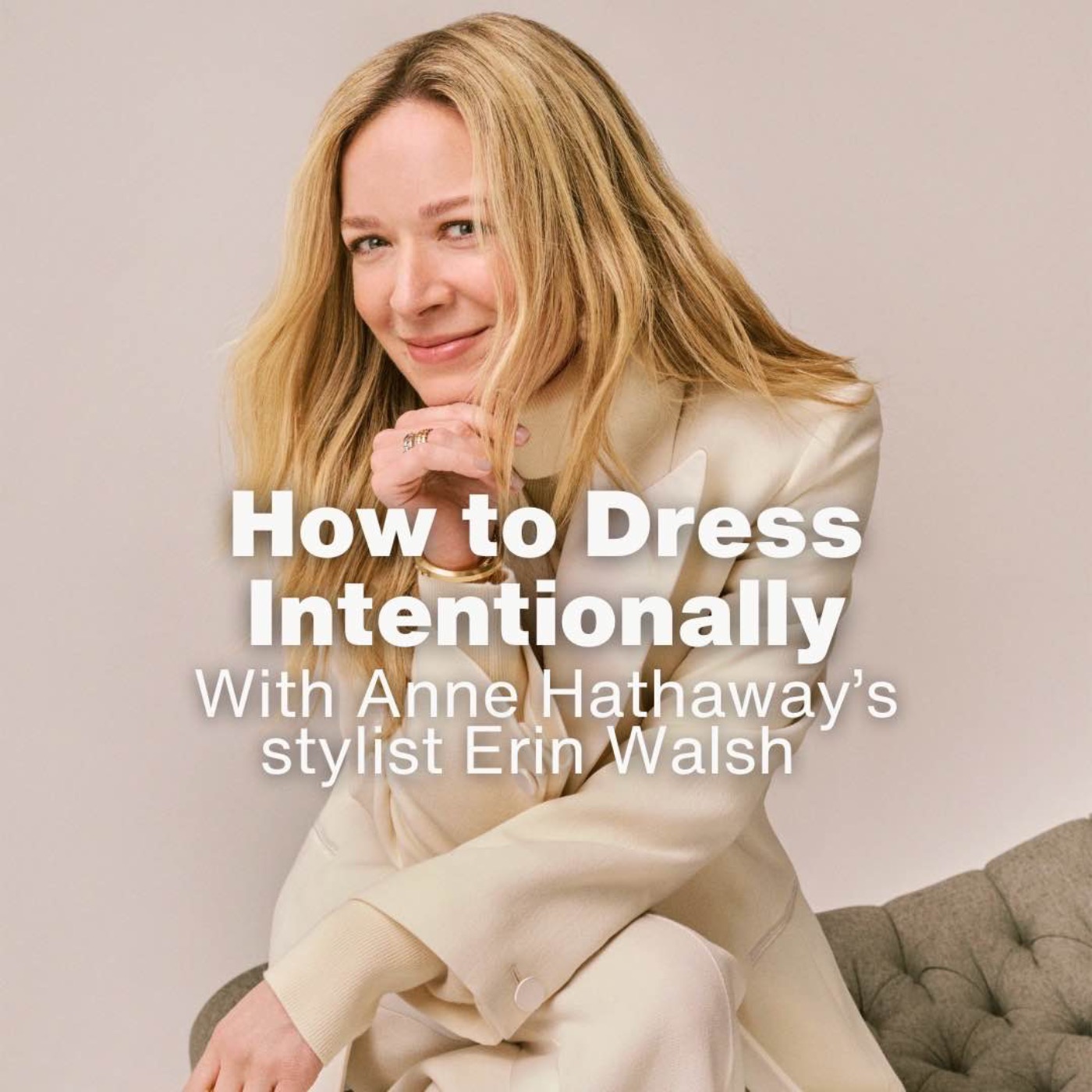
Loading summary
Transcript183 lines
- [00:00]
A
A supernova moment that I feel like you've been really at the forefront of is the Devil Wears Prada tour, which has been happening.
- [00:06]
B
Talk about supernova and eyeballs.
- [00:09]
A
You are someone who I love to follow for so many reasons. Obviously incredible stylist who styles people from Selena Gomez to Anne Hathaway. I really feel like you've approached dressing in such a different way.
- [00:20]
B
Intentional dressing is using what you wear to embody who you want to be. That's like your best self. It's the point where style intersects with how you want to feel and how you can improve your life.
- [00:31]
A
Talk to me a little bit about what it is like to plan a press tour of this scale.
- [00:36]
B
This tour. It's wild. You have to have flexibility. You have to have vision. We've really been tapping into that ever present need for more joy in our lives and how fashion can be a means to embody that it's completely pinch me moment. It is out of this world and you need to rise to the occasion.
- [00:56]
A
You mentioned the Rockstead. Is the Valentino Rockstead back?
- [01:00]
B
I think so.
- [01:01]
A
Go pre order her book the Art of Intention. It is out on May 5th. Welcome back to let's get Dressed. Before we dive into today's episode, make sure that you're following the show both on Apple podcasts and Spotify so that you don't miss a new episode. In case you want to watch today's episode, you can head over to YouTube. The full episode is available there too. And when you're done, leave us a review. I always love to hear what you guys think about the episodes and it really helps the show. Go now, let's go get dressed. Welcome to the podcast.
- [01:33]
B
Thank you so much for having me.
- [01:35]
A
Of course. You are someone who I love to follow for so many reasons. Obviously, incredible stylist who styles people from Selena Gomez to Anne Hathaway, but I am someone who really also believes that getting dressed every day is so emotional. Yeah, not this thing that we just like go into our closets and, you know, put on whatever and go out into the world. And your work has really resonated with me for that based on, you know, how you feel and getting dressed every day to kind of present the best version of yourself. I have truly turned to your Instagram numerous times when I've like, we all have those mornings where we wake up and I'm just like, what do I need to put on today? And I really feel like you've approached dressing in such a different way than a lot of people on Social media.
- [02:19]
B
I have found over the years that so many people feel this way. So it's like, when in creating this method and putting this out there, whether that's on Instagram or with the book or with the app that I'm gonna make, I know that, like, you and all the women I know need this and feel this way. When they wake up, they feel however they're feeling and like, having the tools to connect to that feeling and take proactive steps to get dressed, it's like the missing piece.
- [02:43]
A
So you really live by this idea of intentional dressing. This is like the core of everything you do, and I think what people really know and love you for. This morning I woke up and did the same thing. I was like, what are you feeling today? What do you need out of your clothes today? Like, I really thought of you this morning as. As I was getting dressed.
- [03:00]
B
I'm very flattered. That's cool. And that's the point. That's exciting.
- [03:03]
A
And it works, guys.
- [03:04]
B
It really works.
- [03:05]
A
So I want to get back to the basics here. Talk to everybody a little bit about what intentional dressing really is.
- [03:11]
B
Intentional dressing is using what you wear to embody who you want to be. And when I say who you want to be, that's like your best self. We're all here with a purpose. I think even a lot of people might not know exactly who they want to be. So I want to address that too. I think that's important. But by coming to a. From a place of how I want to feel, how do I want to feel? I think then the vision of that person, that woman that you might want to be, becomes more and more clear over time. Some of us have a total, crystal clear version. I want to do this, be this, embody this. But a lot of people are somewhere, especially when you're younger, confused, maybe, not certain. This was a good piece of advice. I was told years ago, especially when you're mapping out a career or you're mapping out life plans, it's not necessarily so much about the goal or what that person looks like. It's what they feel like. So for me, like, one of the main words that's my baseline is calm and serenity and peace, right? So, like any of my goals have been around, aligning elements of my life, whether what I wear, who I surround myself with, how I cook, how I choose to spend the evening, who you spend your time with. Like, all of those things in terms of alignment, center around that feeling, and that's the intention.
- [04:25]
A
If someone's listening right now, and they're not particularly spiritual. How can they tap into this? Because what you were saying earlier is really interesting to me, which is that some people might not know how they want to feel.
- [04:36]
B
Yeah.
- [04:36]
A
Which I find myself sometimes dealing with.
- [04:40]
B
Number one, you were saying that, like, a lot of people don't know how they want to feel, but a lot of times the reason why we don't know how we want to feel is because, number one, we haven't connected with how we feel. And that's where the vulnerability comes in. When you get clear with how you feel, and maybe that's not so great, and maybe you don't feel so great about your body, and maybe you don't even like what your career is looking like or what your day is looking like. So we choose not to look at it, and we choose not to get clear on how we feel. But the first step of the create method of the book is clarity. I think people make the mistake of, like, choosing how they think they should feel for other people. Like, I got meetings today, so I need to feel boss or whatever. But if you jump to how others want you to feel, then you miss the point of connecting with your very insides and, like, the vulnerable bits that need addressing. The. The point of the close is to address those parts that you don't feel so great about and that need some holding and support. If you take a moment and you just think of three words. It's why I'm not asking people to, like, write down a page in your journal about how you want to feel. Because that's where it gets, like, muddy and confused and we're just, like, putting too much pressure into it. How do you want to feel? I also have this rule, too, that it should be like, let it come to you easily and don't fight it. Cause it's not like you're going to lose. If you choose three words and they don't work out for you, you just try again. That's life. I'm curious. Like, you woke up today feeling. Tell me three words.
- [06:04]
A
Well, I'm in town. I've been traveling, so I'm a little bit tired. If I'm being super honest. I'm in the midst of fertility treatments. I'm pretty bloated and my skin's broken out and I'm not feeling too great. But I'm also excited to be here. And I love getting dressed up in New York. Like, I live in la and so I'm usually in, you know, leggings and things that feel a little Bit more calm, like a little bit more toned down. So when I get to New York, I feel excited to get dressed.
- [06:31]
B
Cool. So you're tired. Little bloated. Little bloated body and excited, but also excited.
- [06:37]
A
Yes.
- [06:38]
B
And then you thought of how you wanted to feel and what did that look like?
- [06:41]
A
Yeah, I wanted to feel supported for sure. Which I actually have learned that that's a great word from you. That's one thing I see on your channels a lot. And I'm like, supported is a great word.
- [06:49]
B
Always calling in support.
- [06:50]
A
I know, but I love it. And it actually, I remember when you first posted that a while ago, it kind of unlocked. Unlocked something in my brain where I was like, oh, like, clothes can really support you. Not just physically, not like a great pair of jeans, but, like, emotionally.
- [07:05]
B
Yeah. Like, yeah.
- [07:06]
A
And I was like, oh, that's why sometimes I lean towards a black blazer or, like a black sweater. But so I leaned for this today because I wanted just something that, like, felt good and classic and fine little structure, too. I. I needed some calm because it's been a little bit of chaos.
- [07:23]
B
The texture of what you're wearing probably offers that a bit.
- [07:26]
A
It does.
- [07:26]
B
It's like a heavyweight vibe, heavyweight knit for people who don't have visualization or
- [07:31]
A
not watching on YouTube. I'm wearing, like, a heavyweight collared sweater. I'm wearing these, like, boucle white pants. And my third word, which I couldn't really identify, but it has to do with that, like, energized sense.
- [07:44]
B
Yeah.
- [07:44]
A
I'm wearing, like, my new Chanel heels
- [07:47]
B
because I wanted, like, to feel accessory power. Yes. I love that with accessories. It's one of my favorite ways to get into that dopamine hit, you know, that instant joy boost. And I think accessories are the easiest hack. Even if you're, like, running to school, drop off with kids or whatever. If you put on a great pair of sunglasses or like, your shoe that makes you feel supernova. It's like instant step up, you know, up, leveling your mood and your vibe. Exactly like those shoes are. Yeah, those will do that.
- [08:17]
A
No one's put words to what you just described. And I feel like I've had that moment so many times in my closet where I'm just like, pull out the good bag. Yes, just pull out the good bag. Wear your black jeans and a T shirt.
- [08:28]
B
Just pull out the good bag. It'll do the trick. Yeah. So it's so complicated. That's why, like, one of the things that I love about what this book Offers in the method is the idea of choosing, like, going through your closet and saying with every single piece how that piece makes you feel. Because then when you're, like, super tired or bloated or whatever, you know that that top offers you a feeling of calm and comfort and support. You know, that those pants make you feel joyful and energized and excited. I think the more and more people do that, the more they learn to trust their instincts and their intuition and they like and you can develop, like, a happier relationship with the tools. Slash your clothes at your disposal so that it's not like the things in your closet either are who you used to be, you know, and don't resonate with you anymore, or like they're strangers. Because if you don't connect with the tools at your disposal, how would they ever serve you? I think it's a good life lesson too. Like, yes, you find that connection and that resonance with your clothes, but you can take that through to any interaction or anything that you put into your life. Like, whether that's in your home, in your office, in what you put in your body, what kind of movement you do.
- [09:35]
A
What I love about this is I feel like in the last couple years, there's been this, like, a tool online that, you know, people will say, you know, describe your aesthetic or use Pinterest or find your words for how to describe your style. And those have been helpful for me. I'm not disregarding them at all. We've talked about them a lot on this podcast. I think they're very helpful. Today's episode is presented by depop. If you know me, you know I am big on a closet reset. I genuinely think that when your closet feels organized, your brain and life does too. So how many things are in your closet right now that you have loved when you bought them? Maybe you wore them once or twice, but now they are just sitting there. Here's something that I have realized. That random vintage blazer address that you bought for that birthday or dinner, someone is searching for that exact vibe right now. And that's why I love depop. It's a resale app where you can buy and sell fashion. But what makes it feel different is how easy it is to actually list something. You literally snap a photo and their AI powered listing fills in the details. It gives you smart pricing suggestions, you can accept offers, boost listings, and it takes what feels overwhelming and makes it feel like a very low lift. Also, no seller fees. So if you're clearing out one bag, five pairs of jeans, or doing a full closet edit, what you earn is actually yours. So download the depop app and list one thing that you're not wearing today. You might be surprised at how fast it finds a new home. But I really like that this comes from an emotional perspective, because I find that even just now, what you said, like, really touch your clothes and think about how they make you feel. That is a really different ethos to getting dressed every day versus just describing, like, oh, my style is very 70s, and it's very structured.
- [11:16]
B
Totally. And those are fun. Those are fun, helpful, like, kind of games, like those. That's the gamification part. Like, that's. It's fun to know, like, esthetically, what you know connects with you, what resonates with you. But if you are just. Those are all just outside, they're not connecting with you and your needs. And so if you spend all your time just choosing things that feel pretty or they look nice, that's not a deeper connection. And thus, it won't serve you in a bigger way. Anybody can buy something expensive or fancy and put it on, and it might look nice. But in order to truly use fashion and what you wear to embody your best self, it needs to connect with your baseline. And that's the therapy part. It's. It's meant to make you feel great. And, yeah, I just have found it to be so helpful and so transformative, like, when you are brave enough, which is when we're most powerful, when we get vulnerable with ourselves to make that connection every single day. And the other thing is, too. It's not like I expect someone to learn this or understand it, and then they're fixed or healed. This is something you do every day, the same as you brush your teeth. So it's like you go through this journey every day, and it just makes the day better, and it makes you more clear, and it keeps you tethered to something bigger than yourself, which is empowering on its own.
- [12:34]
A
Something you talk about a lot that I love is kind of finding your superpower and bringing it into clothes.
- [12:41]
B
Yeah.
- [12:42]
A
And I think these are all really helpful tools to take into your day in the morning. That, again, don't involve you writing in a journal. They're just waking up in the morning, okay, how am I feeling? How do I want to get dressed? What's the superpower? And how I can lean into it. Talk to us a little bit about that. How can we figure out what our superpower is? Cause I don't think I even really know what mine Is you don't. I don't think so. I don't think I've ever really.
- [13:04]
B
When do you feel, like, lit, though? What makes you feel like you're in the flow?
- [13:10]
A
So I'm like a serial overdresser.
- [13:13]
B
I love.
- [13:13]
A
Very cool, big time. I love feeling dressed up. I love wearing my heels. My back does not love it. But I'm someone who likes to be wearing my clothes. So I think maybe I feel in my superpower when I'm. When I feel elegant.
- [13:29]
B
Mm, that's interesting. I like that because a lot of women undermine the power of their femininity when I think, like, when you own it, you're, like, even more powerful. That's another up leveler. I mean, I feel like my superpower is this ability to be calm within crazy circumstances and like to. And I think the other thing that I'm really good at is kind of removing my ego from things and just kind of always trying to come from a place of connection. But everybody has one. So I think it goes back to that connection piece of how you're feeling and how you want to feel it. You find your superpower when you think about your needs. And I see this a lot of, say, women who are postpartum, they lose touch with themselves because they feel disconnected from their bodies and. And their purpose, perhaps because maybe women who used to work and don't work anymore and they don't know what their superpower is. But I think just as our bodies change over time and our faces do and our lives do, we're always evolving. So it's like that connecting with yourself every day that you find what your superpower might be that day. It's that thing with how you spend your days, is how you live your life, and it's how you're remembered and it's your legacy. So it's. That's the whole thing that I love about intentional. Intentionality and getting clear about the rituals and routines that you start and demarcate your day every single day. Yeah, I don't know. I think superpowers, it doesn't have to be like, you can talk to 20,000 people on a stage. It can be as simple as, are you present with the people that you spend your time with? And even if that's only yourself, are you offering yourself compassion? What's the lens that you offer to yourself? Even when all the noise makes it quite easy to. We get in these cycles of self hate and making ourselves feel small or like we're not enough. And to me, that was One of the main reasons to put this book out there was because everybody. All these women I knew, they just wake up feeling so small, and then they don't know how to connect with themselves. So how could clothes ever possibly help them to do that? Superpower can be as simple as choosing to try to heal yourself every single day.
- [15:40]
A
I think people really underestimate that transformative power of clothes.
- [15:44]
B
It's so huge. It's so huge. And all of us, every single woman I know, like, someday feels disconnected from herself and her closet and the person she wants to be.
- [15:56]
A
You have mentioned some moments in life where people could be in a style rut or not feel great. Yeah. I'm curious what your. What's the tactic to getting out of those? We've all had them. It's the worst feeling in the world. I had one last summer, and I felt like I was like. I hated my closet. I hated everything I was putting on.
- [16:12]
B
Oh, I've been there, too, for a style rut. I think the easiest way out of that is, like, with the three words. Try a word that you're not used to. I think it's just choosing a new word to try. It gives you a different lens. And I think that's where, like, people are so afraid of taking fashion risks and, like, trying new things. And I don't want anybody to fall on their face or feel not on their body, which is why you can experiment with this in your closet. And there's so many great tools to do that, like renting clothes and that sort of thing.
- [16:40]
A
What do you recommend to people who leave the house and, like, halfway through the day, realize they hate their outfit?
- [16:45]
B
Oh, I know. That's the worst.
- [16:48]
A
It really is the worst.
- [16:50]
B
It's nothing to everybody.
- [16:51]
A
You look in the mirror and you're like, yep. And then, I don't know, maybe halfway through the day, you look in the mirror and you're like, what am I wearing right now?
- [16:56]
B
It is information. So look, I think the reality is, like, most people might not have, like, a little arsenal in their car or in there or in their purse of things to change into if they feel like this. I do think it's information, and you need to start gathering what works for you and why. You need to keep having this dialogue with your closet and yourself of what works and what doesn't. Because if it doesn't work for you, then it's gotta go, oh, gosh, I've
- [17:22]
A
been icked by so many outfits in my closet, and then I can never touch that piece again. I know it will always take me back to that moment that I wore it and it just didn't work.
- [17:30]
B
And most people like, they leave it in there in like a sad little section that they don't address. And what does that even, like, look at that from a feng shui perspective. Like, what does that do? It just creates, creates blocks in your creativity and your possibility. So like let it go. Make space for. Even if it's for less, I'm not saying like keep getting more. Like, even if you just. Maybe you're a person who resonates with less, that's okay too. You have clarity, but I still think
- [17:53]
A
you have to try it.
- [17:54]
B
You have to try it.
- [17:55]
A
You have to, you have to take those risks. You have to put yourself out there. You have to try things that maybe, you know, you wouldn't. Or else how are you really going to get to the essence of what makes you feel good on a day to day basis and what your personal style really is? I'm so curious what you think of all of these things out in the world that kind of actually I think take us away from emotional dressing like color analysis, even the idea of trends. Like those are fleeting emotions almost in a way, like I'm buying into a trend. I feel like, do you know it's like a dopamine hit.
- [18:31]
B
I totally, I hear you. I like to. Part of my job is being aware of the trends and using them in the sauce of what I do too. I don't think they're bad. Color analysis is interesting and there is truth to a lot of it. I think once people trust the baseline of this would be your instincts, how do you want to feel? But then start having fun with what you can put in your secret sauce. Do you think colors theory is super cool? Then put that into your mix when you're getting dressed with trends. I would say don't grab a trend just because it works for someone, but it's definitely, there's room in that risk space of trying things on for size because there might be an element of a trend that you take with you for the next 10 years and it works for you every day. So I don't think there's anything bad about it. It's just like don't wed yourself to what works for somebody else necessarily.
- [19:21]
A
I would love to hear how your, how this translates into how you work with all of your clients. What is a first fitting with Erin Walsh?
- [19:30]
B
Like, oh my gosh.
- [19:31]
A
Well, I always start, I always start
- [19:32]
B
with what I start the clarity process with which Is like, tell me what makes you uncomfortable. Tell me what you feel great about. Tell me what parts of your body like, because you want someone to feel at ease and like, for. For anybody to be on a red carpet, they need to, like, feel good in their body, and the clothes need to serve that. So that's always number one. Besides, like, you know, basics like sizes, et cetera. And then I think too, like, you literally things on for size, there's gonna be things in a first fitting that, like, absolutely don't work. And you only uncover that in the trying it on. And so, yeah, and I think, like, the more even after, like, trying on a few things, it doesn't have to be thousands of fittings. I think pretty instantly there's always a moment when you know, when something works. And I. For me, it's like, I usually get such a mother to my clients, too. Like, I'm so invested, but I get, like, chills. Like, you can feel it. There's. There's something. And that's. That's the instinct of it. So definitely that you definitely can tell when somebody looks in the mirror and they feel it. It's so clear. There might be things that work that later, depending on how somebody wants to feel on a certain occasion, that we have it all lined up and planned, and then it gets tossed out the window because, you know what? We're women. Our bodies change. You're being so vulnerable about your own journey with fertility, whatever stage of your life. Our bodies are changing all of the time. So. So you can't. Like, this is one of the reasons when you were asking about superpower, like, I think flexibility and compassion is in there because, like, you could choose to, like, have a breakdown because your body's not working with, like, the look that you had in mind, and it doesn't fit you the way you want it to on that day. Or you can have compassion for yourself, or I can for my client. And we just switch. We switch, we pivot, because it should. Anything you put on your body, especially if there's going to be a lot of eyeballs on you, should make you feel amazing. If it doesn't, you can set it aside or come back to it or whatever. I think for me, that's always been. Been helpful and something that I try to offer the people I work with. For sure.
- [21:33]
A
I love that. I feel like we can get really rigid in what we want to work for us and get stuck in that. Like, you know, you're trying so hard to find the thing that works, and sometimes it just doesn't.
- [21:45]
B
I think it's, it's that part of the uncertainty with, with our bodies, like when we get real on like what we look like. It's the reason why I like to take, I think anybody in their closet should take pictures of like, like what they're wearing and so that they can remember how they feel in it. Not to say like, for the reason of like taking a selfie and like, what? Like, that's a different thing.
- [22:04]
A
Elaborate on that a little bit.
- [22:05]
B
But I think you need to, to, to truly know how something makes you feel, you need to like, have the courage to see. A lot of people, they don't even really look in the mirror anymore because they don't necessarily like what the reflection looks like. For you to be able to actually use clothes to serve you, you need to get that clarity on what your body looks like and how you can help it. That's the compassion lens. Because it'd be really easy just to say, like, this shirt makes me feel elegant, inspired and calm. But if you don't actually look at it on your body and check that estimation, then that's not really truthful. So the truth and the superpower of this method comes with that vulnerability. I could say this a thousand times and that's not necessarily easy, but to grow, we have to break a little, to become supernova. We have to be honest with ourselves. Somebody was asking me yesterday about like, oh, you know, pivotal kind of life changing moments in my career. And it brought me clarity that like, one of like along the way, some of the major life changing moments were the ones where whether I, like, something didn't work out that like, that set in motion the things that would eventually, you know, help me rise and evolve. But it's always in those breaking moments, as is it. Who says it's the breaking of your shell encloses your understanding? Kahlil Chabran.
- [23:37]
A
I've never heard. Can you say that again?
- [23:39]
B
Yeah. It's the breaking of the shell of your shell. Like it encloses your understanding. And if in life there's like these series of small deaths. Phil Staats talks about this. I allude to it in my book in his work with Elise Lunan. This idea of life being a series of cycles and resurrections and little deaths. Even in the morning, like, you could take this down in the morning you have like your moment where you're like, I feel small, I feel shattered. And I'm not saying everybody wakes up feeling devastated, but like, if that's the case, that's like, your little death. And you can choose to rise every single day. How cool is that? Like, you're not a victim of your circumstances. I think in life you can choose to, like, be the martyr, or you can choose to choose to rise and, like, have your arsenal, have all your pieces that make you feel great. And if you're not up for feeling great today and what you need to do is simply feel supported, held, and cozy, that's okay, too, because that might be what serves you on that particular day.
- [24:40]
A
Beautiful.
- [24:40]
B
I love that there's a section in the book where I talk about the work of Phil Stutz and Elise Loonan. And a lot of that has to do with, like, body alignment and truth. Because if you break down the book into the method, which is the Create method is an acronym, right?
- [24:54]
A
I was just about to ask.
- [24:55]
B
First word is clarity, which is the C. And we've talked about that a lot. Getting clear on who you are and who you want to be. Ritual is the second step. Because when you wake up in the morning and you decide how you want to feel, what can you do with your body energetically? Like, what rituals can you choose every single day? And I talked about this with travel. I found it to be, like, so, so helpful. What rituals help you to reground, reboot, recalibrate?
- [25:17]
A
What did you do?
- [25:18]
B
For me, it's. It's essential to move my body for stress. And I'm not saying, like, you know, every day has to be like an hour. Like, when I'm traveling like this. No way. When am I going to fit that in? But I commit to some kind of thing. I found, like, with travel, to me, 20 minutes, it could be for the woman listening that she's only got five to seven minutes or 10. But there are so many. Cool. I can give you a whole list of, like, different movements. And I think depending on where someone is hormonally or in their life, like, different movements might resonate even on different days. So movement is essential. Scent is essential. I travel everywhere with a variety of essential oils. So even if I'm feeling stressed, I know which one to inhale. Both at the beginning of the day. I also clear the air constantly. I travel with palo santo and sage. And you can make your life so magical by choosing every day to have little ceremonies to honor yourself. And that's where you find your truth. For the editing part, we've talked a lot about that. That's the E in the Create method. That's making sure every single piece in your Closet resonates with you. And giving three words to each piece, which is fun and it's not as time consuming as it sounds. Alignment is that thing that we've been talking about, that intersection of style and wellness or style and spirituality. And people can use whatever word they want because I know some people don't want to talk about style, spirituality, or that doesn't resonate with them. But everybody, we're all connected in some way to something bigger than us, like, somehow. So, like, what's your bigger connection to yourself and your purpose? And how can you start to understand your body and its systems, nervous system, like your chakras, like. Like the energetics of your body. How can you start to use that, like proportion and silhouette and texture to support that? And that's a whole crazy chapter which people will have to get into the books. I can't unpack it all here because I. There's so many layers to it, and I probably need a sequel for that. One truth is really straightforward. You tell the story of who you are every day by how you present yourself to the world. So it's like embodying the intention of that person you want to be. And the final letter is E, the expansion, which we've talked a little bit about, like, in terms of making a commitment to yourself every day to keep growing and to keep honoring the idea that you matter by getting intentional with your choices, because you will grow if you keep connecting to the intention of the person you want to be and acknowledging that that might change over time.
- [27:40]
A
So you obviously recommend this method to everybody, but you've also used it on some of the biggest red carpets in the world.
- [27:48]
B
So it's interesting in that sense that real time feedback is very loud.
- [27:56]
A
How do you handle that?
- [27:57]
B
I think if I was to operate from a means of only just receiving noise and the noise of everybody, you wouldn't function and neither would, you know, these very, very famous people. I think you can take in what serves you if you want to, but you have to. I love criticism. I love constructive criticism. There's a lot that I use both for me as a worker, like listening to people around me and seeing what works and what serves the process. It would be disingenuous to say that I've never been hurt by. By, you know, things that are said or out there. But if. If I remain tethered to my intention of being in service to the people I work with and trying to make them feel beautiful and held and whole and rising, then it's like that brush that Right off your shoulders. Like, it's. Without that kind of connection, I think it would be extremely easy to become discombobulated or, you know, destroyed. But it's bigger than me. It's always been bigger than me. And staying connected to that helps me go with the flow.
- [29:08]
A
That has always been one of my biggest qualms about fashion is that I've seen so many red carpets where someone's walking in a dress and they are beaming, Beaming. They look like their happiest self. So beautiful, so empowered. And people on the Internet will rip it to shreds.
- [29:26]
B
People can rip anything to shreds, though. And here's the thing, too. With sometimes with, like, red carpet photos, that's a two dimensional image. That's not the whole story. So, like, rooting the story in, like, one shot, I don't really buy that. I think there's so much. It's why, like, I love so much of the videos and, like, and interviews and, like, different kinds of capturing the moments. I think brands have gotten more clever with that too, with setting up their own shoots so that they can help construct the narrative that is being told on an occasion. Because, yeah, like, if there's one, like, random shot that's bad, that's not the whole story.
- [29:59]
A
Especially on a bad carpet with bad lights.
- [30:01]
B
Some of these carpet lights are hideous.
- [30:03]
A
And the colors that they choose, I
- [30:05]
B
mean, I thought the backdrops, I thought
- [30:07]
A
a great example of this that I was hoping would kind of maybe shift the mindset of the industry was Matthieu's debut for Chanel, which was like, I think so many people resonated with that collection because the models were walking with so much joy, joy, joy. There was no way you could love the class.
- [30:23]
B
That's what I'm most excited about in fashion these days is seeing it as a vehicle, as a means, as a modality for joy. And you nailed it on the head. Because when I saw that collection, I felt the same thing. And what he, you know, made for Selena at the Golden Globes this year, that felt like joy personified. It was so, so exciting and so moving and. And gosh, did she look beautiful when she came out?
- [30:48]
A
I was. My job was on the floor. She looked stunning.
- [30:51]
B
Yeah.
- [30:52]
A
And thank you for styling that moment because it was so joyful and beautiful. And I completely agree with you. I think we need to see more of that. And I think it connects back to this idea of, like, you really can't look at things in a one or two dimensional way when it comes to fashion. You need to see the way that the person's wearing it.
- [31:07]
B
Yeah. How are they feeling? It will be pretty obvious. And for that reason, there's been a lot of weird things out there that people do that I love, because you look at that person and they look like they're feeling great. They feel supernova. So that's the point. There's always gonna be people finding something random to hate about something and you can't possibly listen to at all.
- [31:28]
A
You keep using the word supernova, which I love.
- [31:31]
B
I know I use it a lot.
- [31:32]
A
Well, I think it's so spot on because fashion really has the ability to take you to another world, and it could transform you into a different person.
- [31:39]
B
It was Michael Kors who put that word in my head many years ago at a Met Gala fitting. And he said, well, fashion's meant to make you feel like the supernova version of yourself. And that was one of those aha moments that I was like, wow, I see this in a different way. And the more you can tap into that, it can and it does.
- [31:59]
A
A supernova moment that I feel like you've been really at the forefront of is the Devil Wears Prodditor, which has
- [32:04]
B
been happening, I think, about supernova and Eyeballs Beyond.
- [32:08]
A
I mean, you were in Mexico City, Seoul, Tokyo. You're here.
- [32:11]
B
You have it all memorized.
- [32:12]
A
I mean, only because I've been watching like a hawk. Oh, my God.
- [32:15]
B
Of course.
- [32:16]
A
You know, the first movie came out when I was 12. I'm so excited. I'm going to see. You were tomorrow. Yes. Oh, my God.
- [32:21]
B
I was an assistant at Vogue when the first movie came out. What? So this has been, like, the most wild, meta, full circle, layered. Mikayla Erlinger, who styles Meryl on this tour beautifully, she was saying she calls it meta dressing. And I've been feeling that because it's just like. Even the process of writing this book. The girl that I was as an assistant at Vogue, just like Andy, this girl who felt like she wasn't enough for the industry and wasn't enough for fashion. And over this 20 years since then, healing myself by changing my relationship to fashion and offering those means to women so that they can do the same. It just feels so nuanced and layered and so beautiful and even. Like, it's this. This tour, it's. It's wild and. And I. I haven't even seen the film yet. Like, it's been very locked down. But it's fun because my understanding of it and on this tour, we've really been tapping into that Ever present need for more joy in our lives and how fashion can be a means to embody that which, you know, whether that's from what Mathieu is doing at Chanel to even just like the great street style crazy choices you see people make. I think fashion and possibility is much more democratized now. You can get inspired literally everywhere, especially in New York. It's completely pinch me moment kind of tour all of it, because it is out of this world and you need to rise to the occasion.
- [33:49]
A
Gosh, what a full circle moment for you, having worked there when it first came out. What were your impressions of it when it first came out?
- [33:55]
B
Like, documentary.
- [33:58]
A
You're like, is this play about us?
- [34:01]
B
We watched it together as assistants, and the editors watched it as well, and it was. It resonated.
- [34:12]
A
Talk to me a little bit about what it is like to plan a press tour of this scale.
- [34:16]
B
It's all these things that I've been talking about. You have to have flexibility, you have to have vision. Like, dichotomies for me are always the interesting thing. You have to have a vision of what's the story you're telling. Like keywords, like joy. Right. You want to have threads of the film, obviously from the original film, Easter eggs and narrative points and color stories, certainly. I think with something like this, you really have to tap in all the fashion gods because there's. Given the nature of, like, what it's covering, fashion wise, you want to acknowledge different. The legacy of different fashion houses and different fashion silhouettes and shapes and textures and just try to include those in the arc. You want to make the person who's out there in front of the world feel fucking great. So that's number one. And I think, yeah, it's just been this little dance that we've been playing that's been really fun.
- [35:12]
A
Did Ann have words that you guys revolved around as you were planning for this?
- [35:16]
B
I think someone like Annie is so wildly smart and in tune with fashion and with what resonates and why and has lived this journey over the past 20 years, watching the film be received by different generations. I think, like, it's. It's like working with the best of the best. I think that that part, it just helps the work evolve and expand and, you know, explode. It's cool.
- [35:44]
A
Did you look at each city as an individual look, or was there this idea of, like, a narrative you were excited to share?
- [35:50]
B
When you have a cast that you're working around, you want to keep having, like, a connection of, like, that you're making Sense together too, because it's. It's not just, like, one person on stage. It's. It's a few.
- [36:02]
A
Oh, that's so interesting. Is there, like, any collaboration on that end?
- [36:05]
B
Yeah, absolutely.
- [36:06]
A
Very cool. We have to talk about some of the Easter eggs because that has been so fun. I think it has been really fun to see again, just the fashion industry as a whole. Whether it's Vogue. I saw Meryl Streep and the J. Crew cerulean blue sweater. It has been really fun to see people kind of play into these moments that are, like, sacred to the original movie lovers. What were some ones that felt most exciting for you?
- [36:27]
B
Well, it's fun too. At the junkets in New York last week, they constructed an entire Runway office at the Four Seasons downtown. Have you seen the videos?
- [36:37]
A
I haven't. Maybe that's one I've missed.
- [36:38]
B
It looks just like it. With the closet completely kitted out from what comes around goes around. And the original costumes, like the cerulean sweater with the coffee stain on it. I think again, for me, the threads are so emotional that when I talk about threads of intention and the narrative, a lot of what resonated with me from the original movie were these feelings that I felt. So it's like, how do the clothes do that? Which isn't always necessarily for me, ironically, in words, it's like as you're putting together something you understanding. But first and foremost, it's how does it resonate with the person wearing it? So that's where the magic happens, is when it clicks and you get that mirror in the moment that, wow, this feels extraordinary.
- [37:31]
A
What has been kind of a favorite
- [37:32]
B
moment so far, I was really obsessed with the. I loved a Schiaparelli that we did in Mexico City because that location at Frida Kahlo's house was really cool. But. But the Valentino in Japan, just, like, for so many reasons, it just felt like a work of art. And the idea this year of exploring art, fashion as art, like, that's the Met gala. The synchronicity of her and Meryl and the Chanel with the different plays on color and texture. And it just felt. And it felt like it really honored the location too. And, you know, throwing the rock stud pump in there just felt in a white, clear, you know, way. Just felt really, really great. Also, Orlo with bringing the bangs back for Asia was. He was Orlando PETA hairstylist who cut the bangs in the original film. That was. That was super fun.
- [38:19]
A
Wow, that's iconic. I don't Think I knew that.
- [38:20]
B
Yeah. Yeah. He was a little fake.
- [38:23]
A
Little fringe. Yeah, I love a fake.
- [38:24]
B
They're off now, for the record. And I think. Yeah, it's, it's. I loved the red Balenciaga in Korea too. Like, that just felt like such a cool take on like Piero Paolo Balenciaga. It's interesting how he's exploring all these exaggerated silhouettes, which are the very DNA of the house in new ways. And having like a biker lipstick red leather dress, zip up dress jacket, it just felt kind of like. And it made sense in the location in Korea. In China, we got to explore Susan Fong, a local designer who had just showed in Shanghai Fashion Week. And so that was really cool to like directly honor the local art and culture. And that felt like it really clicked. And it was cool too, because the dichotomy of her in that and Meryl and this power cerulean YSL blazer just felt like. And that's where the collaboration comes into as well together for the overall image. Even that in China, the glass slipper kind of shoe. Like this element of the temporariness. It's not forever, these red carpet moments. So that Cinderella kind of effect, there's so many layers. Yeah. There's so many nuances to it.
- [39:38]
A
Oh, that's really beautiful. I love that Cinderella moment. And she embodied that big time.
- [39:44]
B
Yeah. It's funny, your body changes. How you move changes with what you wear. And you can see it and not just in like, yes, if someone feels great, but how you actually walk and talk and move your body and engage with fans and cameras. It changes depending on how you feel in something and how it makes you move.
- [40:02]
A
You mentioned the Rockstead. Is the Valentino Rockstead back?
- [40:05]
B
I think so. So what he's done. The new shape is excellent. It is, first of all, very comfortable and it shows the super. This is gonna sound so round for people who don't really care about this, but hopefully if they're listening, they care about.
- [40:17]
A
We care.
- [40:18]
B
But like, the way it accents the lines of your face and it's super narrow and the ankle strap is placed in a different spot so that it makes your ankle look like really skinny and great. I find when I ask women, what parts of your body do you feel great about? There's some universal body parts that everybody feels great about. Not everybody feels great about their ankles, but a lot of people do. And if you can make your ankle look even better with the right ankle strap placement. Yes. And the way that it's actually pointier with a Square tip. It's just weirdly way more flattering and it's a better height. So it's something you could get more mileage out of than just for like an evening teetering and heels.
- [40:55]
A
Toe cleavage, which is.
- [40:57]
B
Yeah, toe cleavage.
- [40:57]
A
Toe cleavage is a big thing. I get asked.
- [40:59]
B
Toe cleavage is huge this year. What is happening? I mean, I don't know that I'm totally on board with it, but in this case it works.
- [41:06]
A
I think I've gotten asked dozens of times. You know. Liv, can you help me find.
- [41:11]
B
Yeah.
- [41:11]
A
Can you help me find a pair of flats that show off toe cleavage?
- [41:15]
B
I love that you're being asked that. I've never been asked that. It's really.
- [41:18]
A
I had to google it the first time I was asked. It's really fun because I was just like, cleavage. I know. Cleavage in one way. Are you talking about the space in.
- [41:25]
B
Yeah. Are we talking about cleavage? Are we talking about that?
- [41:27]
A
I. I guess some people like it because it elongates the foot. It's personally not for me, but I think it does in. In the sense of flats. I think it really does work with some pairs of heels because it does give you that like elongated foot.
- [41:39]
B
Yeah. Balenciaga one is good too. With the little toe cleavage that.
- [41:42]
A
Exactly. I co. Sign it for a heel.
- [41:45]
B
Yeah, I don't think so. For a flat. But flats don't really work for me in general. Like for the most part at least for work. Because I don't feel like I'm embodying the energy that I need to. So I'm one of those people who wears not flats to work.
- [41:58]
A
So you have a few stops left on the promo tour. What are you most excited about? What can we look forward to?
- [42:04]
B
Some very big carpets. New York is at Lincoln Center. London is at Leicester Square. There'll be a couple other big photo, like giant photo ops. So definitely gotta turn up the volume on the fashion. And it's really exciting the way that Disney has designed all these marketing opportunities too. Like you can. Even all the ones we've done so far. They're very grand. Right. So you need to match that environment that they're creating. They literally made a Runway office in New York and in China that was more red than I've ever seen on a carpet ever. Then each one with a giant shoe, red shoe. So. And a lot of Vogue playing everywhere.
- [42:45]
A
Yeah.
- [42:46]
B
On repeat.
- [42:47]
A
I've never heard that song more than I have last week.
- [42:50]
B
Yes. Yes, totally.
- [42:52]
A
Okay, so we're turning up the volume. I'm assuming things are gonna be big and grand and amazing.
- [42:57]
B
Yes, I would say so. And beautiful.
- [42:59]
A
Most importantly, I would love to get into just a few dressing everyday dressing tips for people who are listening. And you're such a pro. So what are some things that are must, must, must have say you're going to style Ann this week. What's in the toolkit that we've got to have?
- [43:18]
B
Boob tape, Skims, Spanx, Wolford, 20 Darnier tights.
- [43:24]
A
Great.
- [43:24]
B
One important bodysuits. I also always have like a little like corsets, tank tops, La Venita Bing. Love Laline, love the set. And we always travel with great jeans and blazers. Just you know. Yeah.
- [43:37]
A
I've often heard you say that the jean blazer white tee is like one of your tried and true toolkits.
- [43:42]
B
Yeah. Yeah.
- [43:43]
A
Where's your favorite jean? Favorite tee, favorite blazer from?
- [43:45]
B
Favorite jeans are currently Chloe and Kate. I just like a high waisted like trouser kind of style jean. It feels like it's holding me. And also empowering and effortless. I also like in terms of teas, Thaleen's Molly tea is great and I also love sold out New York's little teas. But Frankie shop shoulder pad tea is everything. It's very important to me.
- [44:08]
A
I love this.
- [44:08]
B
I have multiples. I love that.
- [44:11]
A
I feel like people don't give that enough juice.
- [44:12]
B
No, it needs the juice. Frankie Shop in general, like great for power pieces. Power suits always works. Yeah. Loving them.
- [44:19]
A
What's the quickest way, do you think to elevate an outfit on a daily basis? Say we're getting dressed, we've got jeans and a tee. What are we doing?
- [44:25]
B
I think you throw a sweater over your shoulders gives you like a little bit of power proportion and it gives a piece of interest and texture. That's smart. I think like jewelry accents and having like your routine of cause again, the routine of putting on your jewelry in the morning is another part of stepping into yourself. So knowing what pieces are pieces of connection, what makes you feel like in terms of how the jewelry makes you feel, you have to do that as well. Have your go to pieces like your shoes that just you can get things done and you feel empowered. I think for some people that is a sneaker. I have so many friends who like have all the kinds of like fun fashion sneakers. Not for me. But the reason why I don't usually say like you need these three pieces because everybody is gonna find that like they need and again we need more than three pieces in our closet. But like in terms of the pieces that are your go to pieces, they're gonna be different for everybody, depending on how they spend their days. But for me, it's like the elegant power, you know, effortless pieces that really help get me through the day.
- [45:25]
A
Thank you so much for coming on today.
- [45:27]
B
This is so much fun.
- [45:28]
A
The busiest person I know between the tour. Your book's coming out on May 5th.
- [45:32]
B
Yeah.
- [45:32]
A
You've got. You've got so much going on in the next few weeks. So we really appreciate you.
- [45:36]
B
Thank you so much.
- [45:37]
A
Of course. And to everybody listening, go pre order her book, the Art of Intention. It is out on Mayfair.
- [45:42]
B
Thank you so much. Of course.
- [45:43]
A
Thanks for being here. Sa.