← Let's Get Dressed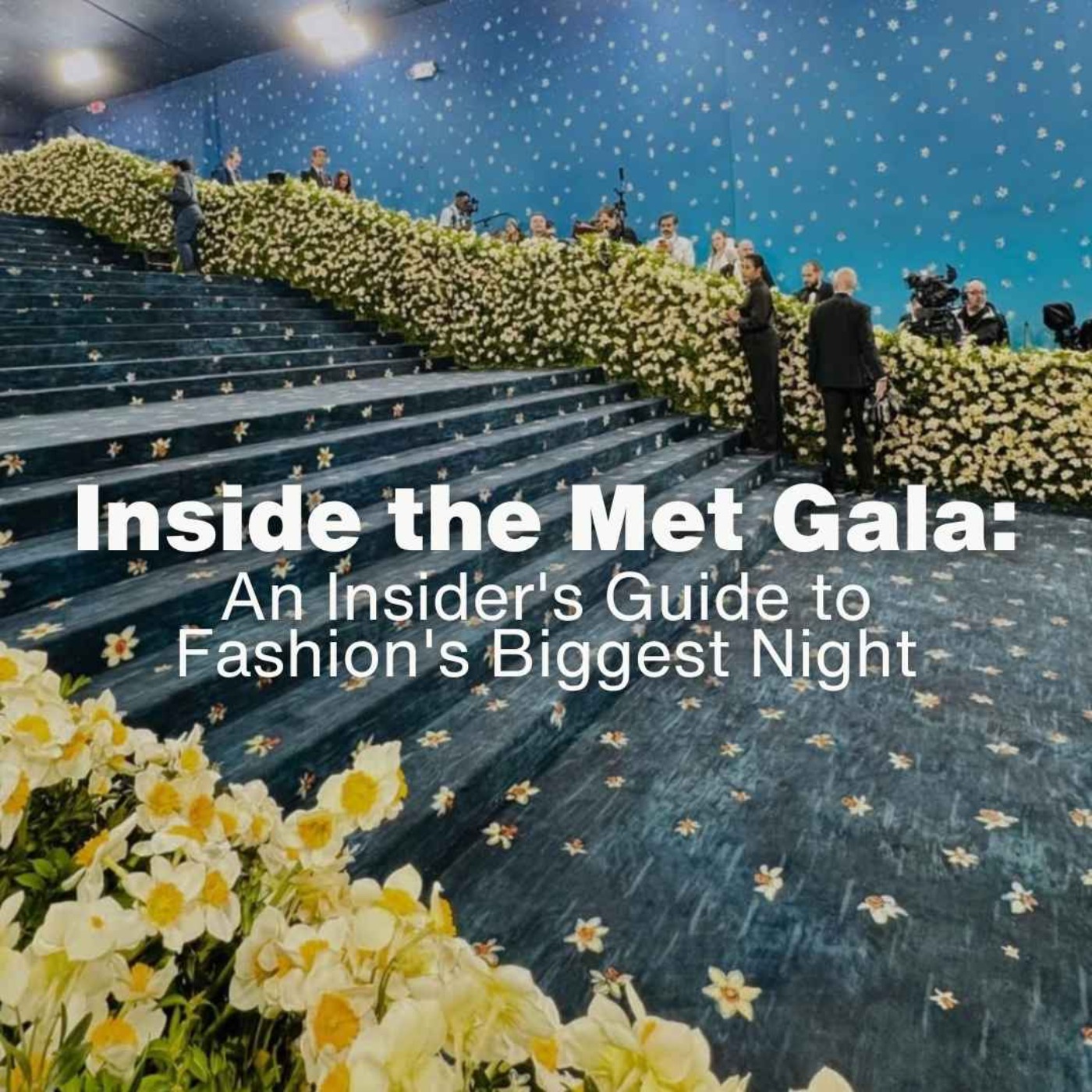
Loading summary
Transcript142 lines
- [00:01]
A
The Met is really, like, one of the most important things I think she's done in her career.
- [00:05]
B
It's the super bowl of red carpets. It gets more visibility, intrigue, and interest than any other red carpet event on the planet. I think one of the biggest misconceptions out there is that Anna is approving every single outfit. That's not really true in terms of who gets to be in the room. The planner would make a really big, long list and then would sit with Anna and they would just cross people off. The Kardashians would call and try to get invites, and it would just be, no, no, no. There was no amount of money that you could spend to end up in that room. It was really all about Anna choosing you.
- [00:39]
A
But that's shifted a bit now, right? You can pay your way in.
- [00:42]
B
You know, it was a very interesting year for the Met. Now, Jeff Bezos and his wife, Lauren Sanchez Bezos are the primary sponsors. They asked Meryl Streep to co chair, and she wouldn't do it because the Bezos have such a prominent role this year.
- [00:57]
A
Are you saying it was reported that OpenAI has a table at the Mat?
- [01:00]
B
It's become so expensive that the tech companies kind of have to pay for it.
- [01:05]
A
I'm sure you've heard crazy things. What is the craziest Met Gala story you've ever heard? Welcome back to let's Get Dressed. Before we dive into today's episode, make sure that you're following the show both on Apple Podcasts and Spotify so that you don't miss a new episode. In case you want to watch today's episode, you can head over to YouTube. The full episode is available there too. And when you're done, leave us a review. I always love to hear what you guys think about the episodes, and it really helps the show. Go now. Let's go get dressed. Welcome to the pod.
- [01:38]
B
Oh, thanks so much for having me. I'm so happy to be here.
- [01:40]
A
I feel like this is your busiest time of year. Like, you are like the Met Gala Vogue whisperer.
- [01:45]
B
Thank you. Yeah, it's been really busy. It's a. You know, it's a very interesting year for the Met Gal Gala, so. Yes, it's. It's. There's been a lot going on in
- [01:54]
A
a fun way, though. And, you know, I think one of the reasons why I wanted to have this conversation with you is because every time the Met Gala rolls around, I feel like there are so many misconceptions about it and, you know so much about what really happens behind the scenes, like, just decoding the entire night. It's actually even why sometimes when I see, like, people reviewing outfits, I'm always like, they have no idea what's actually going on in the background. So I really wanted to do this episode with you today to really talk about what goes on at the Met and, you know, debunk anything about how people underestimate what it really takes to put on something of this scale.
- [02:32]
B
Well, I think one of the biggest misconceptions out there is that Anna is approving every single outfit. That's not really true. I don't think that that manifests the way people would like to imagine.
- [02:45]
A
I feel like that would just take up so much time.
- [02:47]
B
Exactly. I mean, and she have. She makes time to do so many things. She's very efficient and fast. But she probably knows, I was told, you know, like, 80% or. Or sort of quote, unquote, approves 80% of the looks. But not everybody seeks her approval. And it might just be as simple as, like, sending a picture. You know, like, I'm thinking of this, and then she might just say, looks fabulous. Is that really, like, approving something? I don't know.
- [03:13]
A
So I. I want to, like, really start at the base here, because obviously, Anna has such a huge influence in the Met gala. She's ran it since, what is it, 1995 for so long. So I'd love to hear from you why the Met is really, like, one of the most important things I think she's done in her career.
- [03:32]
B
Yeah, I absolutely agree with you. You know, since magazine publishing is obviously not what it was when she entered the business in the, let's say, late 60s, early 70s. But she was also running Vogue at its peak in the 90s. And odds, you know, the mech ally, I think, has really superseded Vogue in terms of cultural relevancy or at least the editorial output of Vogue. And it's the super bowl of red carpets. I think it gets more visibility, intrigue and interest than any other red carpet event on the planet. Wow.
- [04:04]
A
That's major.
- [04:05]
B
Yeah.
- [04:05]
A
I wonder, do you have any stats of what it would stack up to next to, like, a Super Bowl?
- [04:09]
B
I don't. I know that there are, you know, we see various reports like media impact value or impressions, and I feel like it's just kind of impossible to really assign a value to the attention. The company that puts out the media impact value numbers, while I do find them intriguing, you know, they're a client of Conde Nast, so it's not really an unbiased source of information.
- [04:32]
A
Interesting. I didn't know that.
- [04:33]
B
And then impressions, I mean, like, what is an impression? You know, So I think we just know, you know, as people who live in the world who like, cannot escape this event on social media or, you know, wherever you consume media, I think, you know, that's how we kind of know how big it is. And, you know, I think people care more to see the Met Gala fashion than the Oscars. There was a point in time when that wasn't the case at all. Like in 2003 when the Met Gala was kind of becoming very intriguing and taking the shape that it has today. I don't think that most people even probably knew what it was, but we would all tune in to see who was on the Oscars red carpet.
- [05:12]
A
It's interesting. I'm trying to think myself what I watch more of, I think the Met Gala, because I think you've really got people taking like, major risks there. And I also think from like someone who loves fashion, like, you're seeing more designer collaboration. Obviously people will like, collaborate for a beautiful gown for the Oscars. But there are moments that are, like, seared in my brain from the Met Gala, like Claire Danes in the Zac Posen light up dress. All those things kind of stick with you because they supersede fashion. In my mind, it becomes art.
- [05:40]
B
Yeah, it's about being memorable on that red carpet. And I think that actresses, at least in the reporting that I've done as a journalist over many years, you know, what I was told is that a while back, actresses didn't want to make too much of a statement. And I think that's why we saw so many sort of jewel toned mermaid dresses at the Oscars. And of course, there were the best and worst dress lists. And we have, you know, less of that kind of coverage now. Although creators sound off and say whatever they want about people's clothing. But actresses used to not want to typecast themselves. And so they would try to, you know, look a way that they could be kind of imprinted into any role, I guess. And now, you know, culture has evolved so much, and I think there's more of an appetite for making a statement. We see theme dressing all over red carpets for movies like the devil wears Prada 2 for Barbie. So I think that people know stars know, their stylists know it's hard to create a viral moment around fashion, and they're more keen to do that than they were 20 years ago.
- [06:52]
A
So I want to hear a little bit about who actually gets invited into this room. And what actresses and actors kind of get the opportunity to do this? Obviously, Ana is controlling so, so much of it. What does that process actually look like? And what do you think they're looking for when they're looking to curate that room?
- [07:08]
B
I kind of describe the metal as a big networking event because Anna Wintour is someone who famously likes to break up couples at dinner parties so that they meet new people and they're not talking to the same person that they can talk to every single day of their lives. And she kind of does the Met Gala the same way, too. And they take a lot of care. And if you watch the First Monday in May, the documentary about the planning of the gala, you see this. They take a lot of care in how they seat people, and they like to see people so that business deals can happen. So let's say you. You are the president of a cosmetics company. You might be sat next to a model who could, say, become a face of your campaign as to who makes the cut to be invited into the room. I mean, you have to spend money. If you are working at a brand, you have to spend money to buy a table. And then typically, stars will be sat at your table, and Vogue will facilitate those pairings.
- [08:04]
A
Does the brand have any. Who has say in that? Like, does the brand have more say? Does Vogue have more say?
- [08:09]
B
Yeah, they both have say. I. It didn't sound tyrannical to me when I was interviewing people who worked on the planning for my book. You know, it might be like, whoever is the face of Versace or let's look at Chanel. I. Because I. Their faces are top of mind. Let's say they want to bring IO Debery, Pedro Pascal, asap. Rocky, who am I missing?
- [08:27]
A
Nicole Kidman.
- [08:27]
B
Nicole Kidman. Yeah. Vogue is going to not have any problem with that. Right? Like, they seem like there are people who have gone to this event. They slay their red carpet moments, all of that. But there might be. Let's say you are. I'm just going to say, a brand name. Not that this is exactly what happened, but just for sake of example, let's say you're Tommy Hilfiger. You know, Vogue is not going to, you know, want you to bring, let's say, the executive from your sunglasses licensor. They might suggest you bring Jennifer Love Hewitt. You know what I mean? So. And then in terms of who gets to be in the room, what I was told is that the planner would make a really big, long list of, let's say I don't know, hundreds or a thousand names. And then would sit with Anna and they would just cross people off.
- [09:18]
A
Wow.
- [09:19]
B
So what, you know, what factors into her decision? Only she knows. I was also told that, you know, I asked, like, did billionaires call and try to get in? Billionaires were. Were, you know, less of a thing 20 years ago, I suppose. And I was told that people would call, like, the Kardashians would call and try to get invites, and it would just be, no, no, no. Like, there was no amount of money that you could spend to end up in that room. It was really all about Ana choosing you.
- [09:47]
A
But that's shifted a bit now, right? You can pay your way in.
- [09:50]
B
That's what people think now. And that's why I think, you know, I think the public has had a general understanding of that for a while, and I think that's why the event has been so interesting, because it is the ultimate manifestation of one woman's sense of taste and who is in and who is not. And now Jeff Bezos and his wife, Lauren Sanchez Bezos, are the primary sponsors. So it kind of seems like maybe they did buy their way in. And, you know, we don't know what goes through their heads. We don't know what goes through Anna Winter's head, but they're just not people who seem to have had a very long relationship with the fashion industry. I mean, Jeff Bezos and Amazon had business interests and in being aligned with the luxury fashion industry, my understanding as a journalist is that Amazon, you know, really has long wanted to be able to sell luxury fashion because the margins on those products are so high. And Amazon has made various efforts over the years to do that, none of which have been very big successes, I might add. But that's why Amazon would want to be in the room. And I think we see with the other tech companies coming in and buying tables such as, you know, this year it's been reported OpenAI, Snapchat, Meta, which has been a headline sponsor in recent years, they have a vested interest in being part of the fashion industry as well, and also in appealing to women.
- [11:15]
A
Are you saying it was reported that OpenAI has a table at the Mat?
- [11:18]
B
Yeah, that they bought one, as did Snap. What are they called? I don't think they're called Snapchat anymore. They just called Snap.
- [11:24]
A
Yeah. Who do you think OpenAI would have at their table?
- [11:27]
B
That's a great question. I don't know. I guess Vogue would pick because I don't know that they would have a huge roster of celebrity faces to pick from? I don't know, but they just hired Charles Boarch, Right. Who? From Meta. Who? What was his job exactly at Meta?
- [11:44]
A
He was the VP of Global Partnerships.
- [11:46]
B
It's like sort of a meaningless title, but it had something to do with, like, VIPs and brands and stuff like that.
- [11:51]
A
Yes.
- [11:53]
B
Okay. So he's trying to do that for OpenAI. I mean, I think that, like, the AI industry in general wants women adopt this technology, to embrace this technology, to integrate this technology into their lives and the fashion industry. I mean, Meta is a really good example of, like, the money that you can earn when you are in bed with the fashion industry. I mean, every luxury fashion brand is on Instagram, Right. Not the case with Twitter, but they're on Instagram, they're marketing their products. They're spending money on the platform to market their products and their fashion shows and building community there. So it's become a valuable resource for the brands, but also a valuable tent pole of the business for Meta.
- [12:35]
A
I want to go back to that list and kind of curating who's on it. What do you think goes through her head when she's striking someone out? Is it relevancy? Is it fashion alignment? Is it her own personal relationships?
- [12:47]
B
Probably all of the above. Like, I know she didn't want the Hilton sisters and Paris went recently actually wearing Marc Jacobs. I don't know if you remember that. Forget exactly which year. It was some one of the 2000s. But yeah, she didn't want the Hiltons to go, like in the 2000s, you know, when they were kind of at their height. She didn't want the Kardashians to go. I think there are some notions of taste that come into play and people who Anna views as tasteful and not tasteful and people. And I think that is kind of the lens through which we view Vogue is like, you know, is this person Vogue? Is this person not Vogue? People tend to have pretty strong opinions about that. We saw that when Kim Kardashian was on the COVID for the first time in 2014, pegged to her wedding to Kanye West. I don't know if you remember how people were, like, canceling or threatening to cancel their Vogue subscriptions. Exactly. Because they didn't think that, like, Kim Kardashian is a Vogue woman.
- [13:44]
A
And look where we are now.
- [13:45]
B
Exactly. It changes. And I think the same thing is happening with Lauren Sanchez. We'll see if the masses come around her. I mean, Anna has always kind of. She does that from time to time. And she talks about taking calculated risks with the covers. She knew when she put Kim Kardashian on the COVID people were gonna have really strong feelings about it and that it was a bit of a risk. But she, you know, it was calculated, like she knew what she was doing. I think the same was true when she put Madonna on the COVID in 1989 for the first time. Now, that seems, like, very benign and, like, of course you would do that. But at the time, it was controversial. Normally, Vogue had a model on the COVID so it was just different in that regard. But also, she had just released the music video for Like a Prayer, which really played with religious iconography. She lost a Pepsi deal over that. And then she ends up on the COVID of Vogue.
- [14:32]
A
I think Anna likes to, like, go where the wind's blowing. But I also think that, like, that controversy is interesting for Vogue.
- [14:39]
B
Exactly. And she knows that.
- [14:41]
A
Today's episode is presented by Depop. If you know me, you know I am big on a closet reset. I genuinely think that when your closet feels organized, your brain and life does too. So how many things are in your closet right now that you have loved when you bought them? Maybe you wore them once or twice, but now they are just sitting there. Here's something that I have realized. That random vintage blazer, a dress that you bought for that birthday or dinner, Someone is searching for that exact vibe right now. And that's why I love Depop. It's a resale app where you can buy and sell fashion. But what makes it feel different is how easy it is to actually list something. You literally snap a photo, and their AI powered listing fills in the details. It gives you smart pricing suggestions you can accept offers, boost listings, and it takes what feels overwhelming and makes it feel like a very low lift. Also, no seller fees. So if you're clearing out one bag, five pairs of jeans, or doing a full closet edit, what you earn is actually yours. So download the Depop app and list one thing that you're not wearing today. You might be surprised at how fast it finds a new home. One thing, one cover that I think we have to talk about, that I think has really shifted the tides is the May cover with Anna Wintour and Meryl Streep for the Devil Wears Prada. I'm so, like, old school in my fashion ways that when I saw that, I was like, oh, my God, this is crazy. And also knowing it was crazy, it was crazy. I was like, wow, this is, like a totally different approach. And I also think it's Interesting. That thought all coincides with Met Monday. So how do you think that's going to show up on the night of the Met?
- [16:12]
B
Well, I suspect that the stars of the devil wears Predator 2 will be there. I don't know for sure. I would just guess because Vogue has embraced this movie more than maybe any movie ever of all time. It's very weird because when the first movie came out in 2006, there was, like, no acknowledgement of it from Conde Nast.
- [16:33]
A
It was super. Like no one could touch it.
- [16:36]
B
Yeah, people were afraid that Ana was pissed off. I don't think she really cared, according to my reporting. You know, people were afraid to, like, even mention Lauren Weisberger, who wrote the book that the movie is based on. Of course, Anna didn't even remember who she was when the book came out.
- [16:53]
A
And she was a former assistant.
- [16:54]
B
Lauren Weisberger assisted Anna? Yeah. Should I tell the story of that?
- [16:58]
A
Please. I actually don't know it.
- [17:00]
B
Oh, okay. Well, let me share what I learned. So Anna needed an assistant around the holidays because she had hired what one of my sources called a girl of privilege to be her assistant around this time. And this girl didn't really take the work so seriously. She wanted to take like two or three weeks off because her father was a diplomat or something fancy like that, you know, around Christmas. And that doesn't work for most bosses. It doesn't work for Anna Wintour, so they had to replace her. Sort of a weird time of year. But Lauren Weisberger applies and she comes. Comes through the doors, and she went to Cornell and she checks the boxes and they hire her. And she really wanted to be a writer. That's not the typical profile of Anna's most successful assistants.
- [17:49]
A
What is the typical.
- [17:51]
B
Well, often the ones who are very successful, like, they end up working in a fashion closet or, you know, more like the market editor route. But it was not, not as typical to have someone very successful in that job who wanted to be journalist or writer. And she tried to get writing assignments at Vogue, but they did not think she was up to snuff, and she couldn't get them there. She ends up following an editor to Departures magazine, Richard David Story, and she tries to write for him there. And he tells her, well, why don't you get some writing classes? So she goes and gets writing lessons, takes a class in the city, and she writes what would become the Devil Wears Prada. I guess they said, you know, write what you know. What she knew was being Anna's assistant. So she writes this fictionalized portrayal, thinly veiled, I suppose, portrayal. And her instructor shows it to a literary agent, Deborah Schneider, who's kind of a big deal. And Deborah Schneider says, well, if she wants to sell this, I can sell it this afternoon.
- [18:52]
A
Wow.
- [18:53]
B
She sells it. I believe the advance was $250,000, which is. I think that would be like double today. It'd be like half a million today. So very good advance. When Anna finds out that this book is coming out, she says, I cannot remember who that girl is. And we actually see this in the Devil Wears Prada too, where Miranda Priestley doesn't remember Andy Sachs, so she doesn't remember who she is. The book comes out. The book does super well. It's optioned for film by Wendy Feinerman. Oscar winning producer for Forrest Gump becomes this movie. You know, Meryl Streep is playing her. The industry is terrified to get involved because they think that she's offended by it. But she told, she told Isaac Mizrahi. He wrote about this in his memoir. You know, he said, like, I was approached about, like, talking to the filmmakers about this movie. What do you think? And she was like, go ahead. She didn't seem to mind. So then of course, the movie comes out. It's this huge hit. It's a great movie. It's a really good movie. Really well written, really funny, really sharp. And a great time capsule of that particular world at that particular time. And Anna doesn't really acknowledge it except for showing up to a screening in New York wearing a Prada dress. And people still talk about that to this day. And then, you know, she would get asked about the Devil Wears Prada in interviews over the, you know, many years after that. And she would kind of say something like, well, it got. It got a lot of people really excited about fashion, and I think that's great. But it was. There was no, like, embrace of it, like what we're seeing with this Vogue cover with her Meryl Streep.
- [20:21]
A
So what do you think about it now? I mean, just what this cover means about where we're at in fashion.
- [20:26]
B
I think that Vogue needs to do whatever it can to stay relevant, as many, many publications do. And this is really not a bad way to do that. The excitement of this movie is palpable and the hype has been immense. And if Vogue did not embrace it, I think they would have ceded some of that coverage to perhaps a competitor. And Chloe Mahl is, is in there as the new head of editorial content still working for Anna. But she's leading editorial now and Anna is overseeing more. So. So maybe this is her way of kind of putting her stamp on it and kind of playing with the iconography of Vogue and Anna Wintour. And, you know, she's made some comments about how she's not so closed off, she's not so intimidating. That's just not her thing. So maybe this is her way of putting her stamp on the magazine.
- [21:19]
A
I'm excited to see what they do at the Met. I do feel like there'll be a great Devil Wears Prada moment. I wouldn't be surprised if they do something together. When I saw the COVID that was my first thought was like, oh, they're teeing this up for like a great viral Met Gala moment.
- [21:32]
B
Yeah, we'll see. We'll see. Although there was a report in the Daily Mail, I haven't verified it independently, but there was a report last night I was reading that they asked Meryl Streep to co chair and she wouldn't do it because the Bezos have such a prominent role this year. And the rep, the Daily Mail said they reached out to her rep and did not get a response, which means they did not get a denial. So we'll see. But Anna always arrives first. If Anna came out onto the carpet after she arrived, that would in itself. This sounds silly to say, but it is true. That would in itself be kind of historic because I think the only time I was told, the only time she came out after. Cause she's always the first one to arrive, she goes up to the top of the stairs and then she kind of greets people as they arrive and they come into the building. So the only time I think she came out after getting inside the building is when Lady Gaga was doing her whole performance kind of around for the camp gala in 2019. She came out to watch that, but otherwise she doesn't come out. So, you know, if she did come out and do anything with Mar like, that would be definitely notable. I'm not really expecting that, actually.
- [22:37]
A
I'm curious what you think about. We can touch on the Bezos bit a little bit. What you think that means for the future of funding at the Met Gala. Maybe if you could walk us through the point of the Met, what it benefits and then also this changing structure into who quite literally can get a seat at the table.
- [22:55]
B
The Met Gala has been around a long time. It used to be more of a New York society event and it used to not be nearly so expensive. So this year the tickets are $100,000 for individual seats and tables are $350,000. The table price is unchanged from last year. The ticket prices are $25,000 more expensive. So they were $75,000 last year. So it's become very, very expensive. But I was just reading Kathy Horan's write up of the 2003 Met Gala, and the tickets were just thousands, like $3,500 or something like that, which is not nothing.
- [23:29]
A
Wow.
- [23:30]
B
Right.
- [23:31]
A
But it's such a huge discrepancy.
- [23:32]
B
Yeah. She's like, it's the most expensive shindig in town. And I'm sure at the time that that was the case. But anyway, it was. It was more of like a society event instead of an entertainment event. So, you know, the old. Many families of New York would buy tickets and go and feel like they were supporting the museum. Why does the Costume Institute need a gala? Well, because the Met Museum's endowment does not benefit the Costume Institute. It has to raise all its own funds. What is the reason for that? So probably just the museum, the institution, not taking costume seriously. Because for a long time, you know, the headquarters for the Costume Institute were in the basement. And that was, you know, symbolic. That was viewed as symbolic, that it's this department that kind of operates in a feminine domain dealing with clothes and dresses, and it's been relegated to the basement because it's not taken as seriously as Picassos or Grecian sculptures.
- [24:24]
A
One day I feel like fashion, actually, I think now more than ever, fashion is getting its not moment to shine, but I think it's getting more respect in the art world than ever.
- [24:33]
B
Yeah. And I think the Met Gala has a lot to do with that. We're seeing a lot more of these fashion exhibitions at museums, and they do very well. The public likes them. And that's because, you know, Anna Wintour, to her credit, has drawn so much attention to the Costume Institute and its exhibitions through these events. And this year is actually very significant for her and for the Costume Institute. I'm really not seeing this talked about so much, but it is important to note that the Costume Institute is opening brand new galleries, and their headquarters in the museum are coming up from the basement. And these new galleries are going to be kind of around where the gift shop used to be in the Met. So they're getting really good real estate in the building. And that's very significant because Anna raised the money to enable that to happen. And it's just symbolically significant that this institution is finally getting, you know, what many would say is the Space. It. It has long deserved.
- [25:29]
A
Do you think that the public appetite for it is going to change if, like, the Bezos continue supporting it?
- [25:36]
B
Yeah, I think it is changing. I think that it's become so expensive that the tech companies kind of have to pay for it. And, Liv, I don't know how closely you follow the earnings reports from our friends at LVMH and Kering. They've not been great.
- [25:53]
A
They're not. They're not the ones stepping in to buy the tables. Yeah.
- [25:57]
B
And, yeah. And I did wonder if this year that was why Anna decided to seek funds from individuals. You know, those individuals being Jeff Bezos and his wife, Laurence Sanchez Bezos. Because typically it's a brand. Last year, it was Louis Vuitton for super fine tailoring black style. And I just wondered if the brands don't feel like they can allocate that money this year.
- [26:20]
A
I agree with you. Like, I just don't see it must be so hard for a designer who's not in the caring LVMH world to even have a moment there. And that is one of the biggest fashion stages.
- [26:33]
B
You're absolutely right. Yeah. It's very expensive. I think that the younger designers, they kind of get sad. So something else that we should probably note is that, so a brand will pay for the table, and then the stars who get sat there, they're not paying.
- [26:46]
A
The brands are paying for them to be there.
- [26:47]
B
The brands are paying. And that's something that's been sort of. I don't know if controversial is the right word, but people have pointed out, pointed that out to me that, like, oh, you buy this table and then, you know, these are like the Matt Galahaters that maybe worked on the Vanity Fair party and think that their party is superior or something. They're like, you buy these tables and they're so expensive, and then they just sit whoever they want there. And, like, you don't get to decide. So you. It's, It's. It is probably true that, like, you don't have the most control over, you know, what happens after. After you buy a table at the Met, you're kind of leaving it up to Vogue and to Anna and her team. So that might be a disincentive for some brands to spend all that money. It's not a small amount of money. $350,000. And it's been six figures for a while. I don't know at what point the tables became six figures, but it's. It's been a while. But the tech companies have so much money, and these tech founders have so much money that for them, it's really nothing. I was trying to calculate. So the gala cost, I think it was 20. Was it 2025? Maybe 2024. But, like, $6 million is kind of around what it costs to put on the event. So if you compare Jeff Bezos to that median American household with an $80,000 income, it would be $2. So Jeff Bezos spending $6 million on the Mac out, if he paid that much, is. Is the equivalent of $2 for the median American household.
- [28:07]
A
Wow.
- [28:07]
B
With an $80,000 annual income, it's crazy. And Elon Musk's net worth is three times that of Hermes's market cap. It's like, this is. This is where the money is. It makes sense that Anna. It makes sense that she's seeking it because she wants to top her fundraising hall. But it definitely. When you make it so expensive and those are the people that you have to go to, I mean, these are some of the least popular people in the country. So it's gonna. It's gonna color the perception of the event. It's just unavoidable.
- [28:34]
A
Yeah. I wonder how it's gonna be perceived in five years from now. Like, are people really going to care about it as much as we do now?
- [28:40]
B
Yeah. I mean, I think that the controversy and the backlash is a sign of how much people care. It is a. It has been, you know, a great forum for creativity. I mean, capitalism as well, but creativity and philanthropy. But, yeah, I mean, I mean, the Bezos are just simply. They're not popular, and they're not popular. I don't think within the fashion community.
- [29:01]
A
I don't think so. So either. I think they represent the antithesis of art and fashion and all that a lot of people in the community stand for.
- [29:08]
B
Yeah. I don't think they're viewed as sort of naturally stylish people. Yeah. And it's like, all of a sudden, they're kind of around. They're in vogue. And I think it feels inauthentic, I guess, to a lot of people. That said, I have talked to designers who really enjoy Lauren Sanchez Bezos and think that she wants to help.
- [29:24]
A
So I want to hear a little bit about what actually goes on in the room. I know that there's the no phones rule. Are there other things that.
- [29:31]
B
Which is routinely violated?
- [29:33]
A
Always the bathroom. I feel like the bathroom shots are always the most viral ones, but are there any other rules that happen once the carpet's over?
- [29:41]
B
Yeah. So I Was told that a lot of the stars are actually really nervous.
- [29:45]
A
I've heard that too.
- [29:46]
B
Yeah. Because you have to walk up those stairs.
- [29:48]
A
I'd be terrified. I couldn't do it.
- [29:51]
B
That's like, yeah, walking up the stairs for that kind of an audience. And typically they're not wearing things that are easy to walk in. And we saw Kim Kardashian wearing that Galliano corset and she was on her reality show with like those very painful looking imprints on her back. I was told that there was one. I think it was one that she wore the Theory Mugler dress that sort of looked like it was dripping. It was like a nude latex and it was like dripping these jewels. She couldn't sit down. And Anna was like, tell Kim or tell Kim to sit down. Why isn't she sitting down? Oh. And her team was like, well, she can't sit in that.
- [30:22]
A
Do a lot of people change when they go inside?
- [30:24]
B
They can. They actually set up dressing rooms. They do set up dress like green rooms within the museum. So like Anna and her daughter will have one. Not that they change, but I guess to like freshen up. But someone could go in, like get a green room set up. I mean, I don't think that's like for anybody. You get a green room within the museum where you can go and change. But if you have a dress that like can't fit in a chair, they'll get you something special, like a stool with no back. But yeah, she doesn't, she does not like people to be on their phones. I think it drives her nuts. And, you know, she wants people to be talking to each other. It's sort of like that old school dinner party mentality. She wants people to be. To be interacting, not looking at their phones. And I know she thought over the years about taking phones, like having people check their phones at the door. But people were like, you just can't. You just can't ask these people, this group of people to do that. So they've never done that.
- [31:15]
A
Are there any other rules inside?
- [31:16]
B
Well, sometimes stars ask for things and Vogue will not accommodate. There was one star I was told, who asked for to have like a bottle of tequila, specific bottle of tequila under his table. Oh, my God.
- [31:28]
A
Like a writer.
- [31:29]
B
Yeah. And Vogue was like, I think they will accommodate some requests. But Vogue was like, we'll have it for you at the bar. Karl Lagerfeld, they did a Chanel exhibition. I want to say that was 2005. Karl Lagerfeld needed like his Diet Coke. Or his Coke, light, whatever. And they, like, squirreled that away in a fridge for him somewhere. So. Yeah, they accommodate. They accommodate certain people with certain requests.
- [31:54]
A
I'm sure you've heard crazy things. What is the craziest Met Gala story you've ever heard?
- [31:58]
B
I actually think this is something I would love to see brought back. But they used to sell tickets to an after party. Did you know that, like, you and I could buy a ticket? No. Yeah, so you and I could buy a ticket. In 2003, the tickets for the after party were $250, so maybe that's like 500 today. I don't know. I'm just.
- [32:14]
A
Wow.
- [32:14]
B
Inflation. Yeah. So it's not nothing, but it's like, you could, like. You know, it would be like buying a ticket and getting, like, a pretty good seat at a concert. I guess. So. Yeah. The public could buy these tickets and go to the after party and see a performance and, like, dance and have a good time and drink, I guess. And I was told that those could get very, like, kind of wild, and people would, like, be throwing up, and it's like the Met Museum. You don't want that type of thing happening. But I like the spirit of it in that you're, like, inviting the public in. But Anna did away with it, probably in part because they were getting out of hand, but also because she wanted to make the whole thing more elite and exclusive.
- [32:50]
A
It's interesting now because there's, like, a hundred different after parties now that people go to.
- [32:54]
B
Yeah. Isn't Rihanna's like, the big one?
- [32:56]
A
Rihanna has one. Like, she used to do it at, like, 1Oak or something like that.
- [33:01]
B
Yeah, I know Anna went around. I want to say this was 2003. The Pronza Schooler designers Jack McCullough and Lazaro Hernandez told me that they. They got her to go with them to Bungalow 8 after one of the megas, and she went in and she was like, people are smoking. This is gross. And then she went home.
- [33:18]
A
Sounds. Sounds right? At least she. At least she showed up.
- [33:21]
B
Yeah. I mean, I think that's kind of funny, right? But she always goes to work the next day. Like, she doesn't miss a beat. She's not sleeping in.
- [33:27]
A
Well, this is coming out on MET Monday, so I want to give listeners a little glimpse into what to expect tonight. I know every year there's a theme, and Andrew Bolton, who is the curator of the Met Institute, and Anna come up with it together. Is it collaborative? How does that come together?
- [33:42]
B
Yeah, it's collaborative. I Would say, I interviewed Andrew for my book, and he said that he would kind of, like, come up with ideas and run them by Anna. Anna's primary role is to raise the funds, so that includes securing sponsors. And then, of course, you know, selling the tables and the tickets. So he'll come up with an idea and run it by her. And he. He said that she's very good at kind of figuring out how to, I guess, come up with the right angle sometimes or, you know, help fine tune his ideas so that they're commercial, so that the exhibitions will bring in, you know, a good audience. And he was like, you know, as an editor, like, she's really good at that, so she helps me with that. Like, one example he gave me was, you know, when they did the Catholicism exhibition, he said that he had thought he would do all religions. And then they ended up paring it down to just that and all religions. Like, it's very. That would be like such a huge undertaking.
- [34:36]
A
Huge.
- [34:36]
B
And then Anna, he brought Anna with him to the Vatican because they borrowed pieces from the Vatican. And I think it was a cardinal that she wanted that they needed to meet with. And, you know, she had gone over there to the Vatican. She's very efficient. She doesn't like to wait. And they're meeting with, I don't know, a secretary or some administrator there, and they're like, okay, you can make an appointment to meet, you know, this cardinal. And she's like, well, can we meet him now? And it's just. That's, like, not how it works at the Vatican.
- [35:05]
A
I would assume so. I would assume it's appointment only.
- [35:07]
B
Yeah. So that's like, kind of what she does. And, you know, and then they. They put on the party, the gala. They plan all of that in collaboration with the Met, though. I think that Anna pretty much mostly gets her way and about how she wants to do things working within the confines of the museum. Because the museum, it's not like having a party in a venue. It's filled with all this priceless, amazing, very valuable art. So the integrity of the surroundings needs to be maintained. And she, as we've seen from the pictures, like, she wants to do fantastical things. I was also told that, like, smoking is always a problem.
- [35:43]
A
I feel like we see that in the bathrooms.
- [35:44]
B
We see that in the bathrooms. It's always a problem. You're not allowed to smoke in the Met. People do it every year. They don't really know how to get it under control. But, yeah, that's kind of how it how it comes together. And then I guess Anna. Anna probably picks the dress code.
- [35:59]
A
And there's a difference between the dress code and the theme. So this year's theme is costume art, and the dress code is fashion is art. So can you walk us through, like, what that assignment actually looks like for guests?
- [36:09]
B
Well, yeah, I guess that the guests have pressure to dress within the theme, but there's always guests who just seem to kind of wear whatever they want.
- [36:16]
A
What I always, like, what do you think about that? Because I. Whenever I see that, part of me is like, oh, come on, like, you could have done this. But then I also know what's happening in the background. It's like celebrities are being invited by brands. Brands only have so much. The look has to get approved. Like, that's the one thing I always want to say when it comes to the Met. It's like, it's not like celebrities are just picking whatever they want to wear. There are so many politics that go into the background.
- [36:37]
B
Yeah, that's so true. And I think that's true with so many different red carpet events. And there's so many people now who are kind of eligible for this fashion. And there are so many events where you can wear, you know, very high fashion. And I think there's just not that many clothes. There's not enough clothes to go around. I think that's why I. I've been told that's why, like, we see a lot of people wearing vintage or archival pieces because they're available. I mean, and then of course, like, people love, like, finding the old look and like, you know, putting the side by side images online so there's more than one reason to do it. But. Yeah, and actually the reason Anna started approving the outfits or like, you know, wanting to know what people were wearing was so that people don't end up wearing the same thing.
- [37:17]
A
I mean, last year, the Anna SW Zendaya thing, I'm curious what you thought about that. Because they were both wearing very similar, all white suits with a beautiful white hat. And my first thought was knowing that Anna kind of looks over all the looks. How did that happen?
- [37:32]
B
Yeah, that's a really good question. I don't know.
- [37:33]
A
I've never seen something like that happen on the Met carpet. I thought they looked amazing, and I love that they played it off. I mean, that's life. Things happen. But I wondered how two women showed up wearing almost identical looks. Knowing how firm grasp Anna has on
- [37:47]
B
this, maybe one of them didn't run it by her. Maybe she made A last minute. It's. It's always possible that she made a. And I don't know, I'm just speculating, but maybe she made a last minute decision and maybe they didn't. Because I was also told that there's a caliber of star who isn't gonna ask Anna. Like, Rihanna is not gonna. Like, maybe as a courtesy, she'd be like, I'm gonna wear this. But, you know, like, JLO might not necessarily be like, is this, like, what do you think of this?
- [38:14]
A
You know, that makes sense. So what do you think we're gonna see for costume art? I feel like we'll see a lot of. Not bodycon. Maybe bodycon is the wrong word, but, like, I feel like we're gonna see a ton of naked dresses.
- [38:26]
B
That's what I thought too, because the. The exhibition that the gala is opening concerns, like, the body and its depictions and art. I think the dress code can mean anything. Like, anything can be art. Right? Like, you can make a justification for almost any kind of dress, which I think could make it really interesting.
- [38:46]
A
Camp was my favorite year because the way people showed up, and I hope that that same ethos is brought in this year because I feel like for fashion as art, you could do anything.
- [38:55]
B
Camp was, I think, the most theatrical year.
- [38:57]
A
I love the theatrics of it. I think that's what it's for.
- [38:59]
B
And Anna has said fashion is theater. I think that's kind of how she views the red carpet. She's a big theater goer. Yeah. But it will. It'll be interesting to see. And I'll. I'm curious to see, like, if the conversation pivots back to the fashion and the outfits and. Or if it's just gonna sort of remain on the. The funding and, you know, the controversy to close out.
- [39:18]
A
I would love to know, how do you watch the Met when you're home? What are you scrolling? What are you watching? What's the best way to tune into the Met?
- [39:24]
B
Well, I watch the live stream. I watch Vogue's live stream. I know it's, like, hard for even me to know, like, what do I tune into? Because the live stream doesn't always have the outfits first, but this year I'm not really doing so much live coverage. So I will watch the live stream and I'll write my recap and do my podcast the next day.
- [39:42]
A
Amazing. Guys, make sure you listen to her podcast the next day.
- [39:45]
B
Yes, the Back Row podcast.
- [39:46]
A
I usually have the live stream on my tv and then I've got, like, Twitter or X, whatever, moving fast. Because I like to see all those outfits, like, come in real time, and I always find that X has them the quickest.
- [39:57]
B
Yeah.
- [39:57]
A
Well, thank you so much. This was so informative. And I love being able to, like, get a glimpse into one of fashion's biggest nights from someone who, like, really knows the ins and outs. So thank you so much for joining today.
- [40:07]
B
Well, thank you so much for having me. I love what you do.
- [40:09]
A
Oh, thank you. I love what you do. I hope next time I'm in the city, we have to get together and get drinks.
- [40:13]
B
Oh, my God. Yes. That would be great. Satisfaction.