← Let's Get Dressed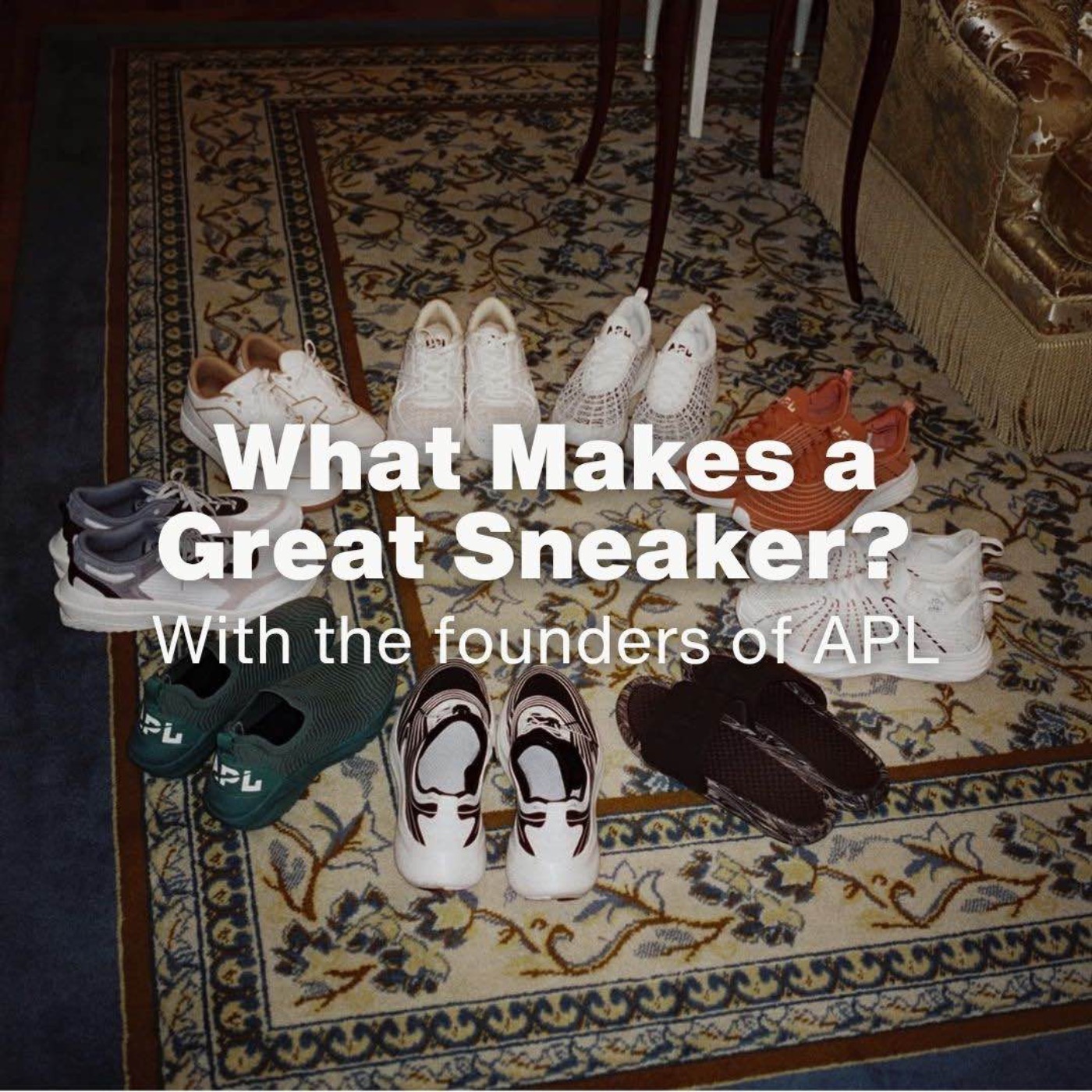
Loading summary
Transcript103 lines
- [00:01]
Ryan
Our first retailer for men was Saks Fifth Avenue, and right away we had the two top selling SKUs there. Our first retailer for women was Net a Porter, and within six days we became the fastest selling new designer of all time.
- [00:12]
Host (Fashion Podcast Host)
It's interesting. One of the most common questions that I get asked is like, what are the coolest sneakers Right now you kind of have to sift through two things, design or practicality. I think you guys have created a business that really solves that tension in a really big way.
- [00:27]
Ryan
We started in performance, which inherently made it so that we were looking at stuff through a different lens. Our mission when we were creating our products was that you could change your clothes throughout the day and keep your footwear the same.
- [00:38]
Adam
I think we were ahead of the curve, which is sometimes positive, but you also get met with a lot of resistance.
- [00:44]
Ryan
When the CFDA inducted us in 2016, it was the first time they were acknowledging not only as a sport, not only is it performance, but it's also luxury and fashion.
- [00:54]
Adam
Our true mission is be the definitive world leader of luxury performance.
- [00:57]
Ryan
We wanted to create something that when people wear them, they get asked about the product, but in a way of intrigue and curiosity and then ultimately, hopefully buying into the brand as well.
- [01:08]
Host (Fashion Podcast Host)
I'd love to hear from both of you because I'm sure you have different answers. What makes a perfect sneaker? Welcome back to let's get Dressed. Before we dive into today's episode, make sure that you're following the show both on Apple podcasts and Spotify. So that's that you don't miss a new episode. In case you want to watch today's episode, you can head over to YouTube. The full episode is available there too. And when you're done, leave us a review. I always love to hear what you guys think about the episodes, and it really helps the show. Go now, let's go get dressed. Welcome to the podcast.
- [01:41]
Adam
Excited to be here.
- [01:42]
Host (Fashion Podcast Host)
I'm really happy to have you both. I've been wanting to have you on for a while and I just feel like I love everything you guys have built. So. So I'm excited to have this conversation.
- [01:50]
Adam
We're excited to be here.
- [01:51]
Host (Fashion Podcast Host)
It's interesting. One of the most common questions that I get asked as, like, someone in fashion by people in the community, friends, family, a lot of moms specifically, is like, what are the coolest sneakers right now? And I think that that question is so interesting. One, I think it's deeply personal, but two, I think it's because each person you kind of Today have to sift through two things, design or practicality, and there's very far options in between. I think you guys have created a business that really solves that tension in a really big way, and I think you guys have really set the stage for. I'm sure you guys have heard this term, but, like, in the last two years, I've heard, like, the fashion sneaker everywhere. It's like, a very specific shape, silhouette, very specific intention. And I think you guys have very much been like the people that have ushered us into that. I think you guys have very much been like the people that have ushered us into that. In July 2016, you guys were the first sneaker brand to ever be inducted into the cfda.
- [02:47]
Adam
So the first two members ever from an athletic company, not just sneaker brand, to be inducted into the cfda. And was a unanimous decision, which was pretty exciting at the time.
- [02:56]
Host (Fashion Podcast Host)
Which means that everybody in the CFDA agreed to induct you in.
- [02:59]
Adam
Yes.
- [02:59]
Ryan
Yeah.
- [03:00]
Adam
Everyone that has a vote. Yeah.
- [03:01]
Host (Fashion Podcast Host)
Yeah. Unbelievable. 2016 was a really interesting era in fashion, and I'm wondering if you both can kind of explain what might have set the stage for that to even happen, because before that, I felt like those two things were very far apart. So talk to me a little bit about that era.
- [03:17]
Ryan
I mean, yeah, it's funny because obviously, we're now a decade removed from it, but we felt like there was a buildup that was occurring, so we felt like we had a unique point of view. We started in performance, which inherently made it so that we were looking at stuff through a different lens. And at the same time, our mission when we were creating our products, once we moved past basketball, was that you could change your clothes throughout the day and keep your footwear the same. So that was something that was definitely unique, even down to the distribution that we approached. So we're in Selfridges, LeBeau, Marche Net, a porter, Mr. Porter, Harvey Nichols. All these really luxurious environments, and we just saw an opportunity that didn't exist. And we believe that if we were creating something that was different, that was catering to a lifestyle, we felt like there was a switch that was occurring where people were becoming more focused on health, wellness, athletic, all of those things. But we've always loved design, and we felt like there was something missing that we wanted, and we wanted to create it. And so when the CFDA inducted us in 2016, it was the first time they were acknowledging not only as a sport, not only is it performance, but it's also luxury and fashion. And we felt like, that was something that was missing that we could own. We could create this category of luxury performance. And a lot of it just started from what we ourselves wanted and creating for ourselves and then bringing into the world.
- [04:50]
Adam
So if you go back to 2016, like Ryan saying a decade ago, department stores, individual boutiques, things like that, I would say we're at the pinnacle. If you're not taken into consideration, like the early days before the Internet. So the fact that we had the physical presence that we did across all these luxury retailers across the world, and we had this thesis that if you brought APLs to these places that were not selling any type of athletic product before, that you would capture an entire new consumer and. And that we could essentially own it. You talked about world building. That was the first major step outside of the performance aspect to owning this world that we were going to create and architect ourselves. And Ryan and I came up with this thesis that the easiest way to scale attention, not necessarily scale revenue, which it did scale to that, but scale attention, was to go to these places that had very specific audiences that, that were large and that the places were trusted. Like, think about how. How trusted Barney's was back in the day. If you saw it there, you believed
- [05:56]
Host (Fashion Podcast Host)
in it, miss it.
- [05:57]
Adam
I mean, same for us. And like, that was the thing that was really important to us is that we believed if we put APL in these specific places, which was incredibly difficult, that's a whole other story. Like, Ryan and I traveled across the world with suitcases, and we meet with buyers anywhere at any time. That's how we essentially did it. But at that moment in time, there were these places all across the world. E commerce was already a large thing, but it wasn't what it is today. And just the financial profile of those businesses were different too. So the opportunity was there, and we really believed in it, and that we could be the only ones to do it. Our true mission is be the definitive world leader of luxury performance. And the easiest way to do that is, is to go with places that already have the attention of luxury and already have the attention of performance and show the difference. Product speaks for itself, the brand. As you discover it more, you fall deeper in love with it. And the cfda, to their credit, they saw the vision ahead of the curve. So I think that was really helpful for us at that moment in time. And we believed this is where culture was going to go. I think we were ahead of the curve, which is sometimes, sometimes positive. But you also get met with a lot of resistance with a lot of things. I mean think about like when you started podcasting, right? I'm sure people are like what is this? And like why are you doing this? And now it's probably the most popular medium and that people really care about. So the resistance that you face in the beginning, it makes it challenging but also makes it more rewarding. And the fact that the CFDA and the people that did induct us had the vision for what was going to happen into the future and they believed in it, that was a really large cosign for us at that moment in time and it's been beneficial into that point.
- [07:43]
Ryan
Like when we started selling to wholesale, we launched our men's and Women's Running Shoes June 17, 2014. Our first retailer for men was Saks Fifth Avenue and right away we had the two top selling SKUs there. Our first retailer for women was then a Porter which we launched with on January 1, 2015. And within six days we became the fastest selling new designer of all time. Hit our season's target sell through. And the reason those were important is we went in these luxury environments that did not sell product like this. So we were essentially creating a category, competing against ourselves and the customer was responding. So was the customer also saying like this is what I'm looking for and this channel hasn't offered it. So we had a unique point of view. And then if you look at it from the performance lens, when we thought about our designs, we don't use big emblazoned logos. So we let the materials, the color, the technology and design tell the story. Which for performance is something that's non traditional. So in both worlds we were something that was unique and different, that resonated with a big customer base that felt like it was speaking to them in a way that they wanted, creating a product that they wanted to wear in the real world. And the results proved it, which allowed us to do even more.
- [08:58]
Host (Fashion Podcast Host)
It was also like when I think of 2016 for sneakers, the market was the polar opposite. 100% like I was. I love sneakers, I love my APLS. But during the time I was a huge sneaker head, I was living in New York, it was all I could wear. Just like as a 20 something year old woman like running around the city, I feel like I coveted anything Virgil made and everything in that space was like I remember the shoes I wore, like I had one pair that was like an ombre pink to purple sneaker with like a hang tag coming off of it. It was a very different time aesthetically for sneakers. So I agree when you, when you're saying like, you were ahead of the game, you were very ahead of the
- [09:39]
Adam
time, and we were met with a lot of resistance. But I think that helped make us stronger in that time too.
- [09:44]
Host (Fashion Podcast Host)
Well, I think. Cause at the end of the day, like, the same way we can, like, talk about trends on this podcast, like, a good white tea is a good white tea.
- [09:50]
Adam
A hundred percent.
- [09:51]
Host (Fashion Podcast Host)
A good black sneaker is a good black sneaker. You're gonna have it for the rest of your life. And people are willing to invest in those things. They want them forever.
- [09:57]
Adam
Absolutely.
- [09:58]
Host (Fashion Podcast Host)
So that brings us to today, speaking of you guys being so ahead of the game, where in the last two years I feel like there's again been this, like, the fashion sneaker. This, like, very low key, like the pendulum has totally shifted from where we were a decade ago to what people are wearing now. And every time I kind of look at the landscape, I'm like, okay, we people were like obsessed with Adidas sambas that trickled down to like 3's Van Noten. Like that one that sold out everywhere. Like, it's this like, very paired back, very like minimalist. My favorite shoe from you guys is like the black on black one that I wear every day. I wear it with my jeans. I wear it with, like, my trousers. And so I think we're in this time now where people want something that like, can go with everything, as you guys have said. So I'm curious your insights on, like, why that consumer shift has happened.
- [10:46]
Adam
So I think there's a couple of things. Some of it has things to do with sneakers, some of it has nothing to do with sneakers. I think part of it is the emergence of people thinking of, like, their personal brand across everything.
- [10:59]
Host (Fashion Podcast Host)
This is a great take, but people
- [11:00]
Adam
that have no other reason than, like, they believe they have a personal brand. They don't necessarily want to be a walking endorsement for something. And so I think through social media and everything else like that what you do is you now reach a completely different audience. Even if you're a normal person, if you put something on TikTok, you put something on reels or whatever, it can go viral. You can reach 20 million people. And now people think of you as a certain type of way. So from my opinion, I think a lot of, like, when you talk about the fashion sneaker things being pared back, it's that people don't necessarily want to be an advert, a walking advertisement. And like, one of the things that we had talked about from the Beginning when we started is we didn't want big emblazone logos. We wanted to let the design material, texture, and color tell the story and technology. And so for us, I think that that's been really beneficial, because if you look at all of our shoes, the texture, like, really tells a true story. So you know it's an APL zipline when you see it, but you have to know what it is to know that it's that. So a random person, if you can't see the logo and you've never seen
- [12:07]
Ryan
the shoe before, you walk up to
- [12:09]
Adam
somebody and you say, like, what are those? Then they'll tell you. And so I think, like, that builds a deep connection. And again, like, for us, we've always believed that your style essentially introduces you before you say anything. And so when you talk about, like, the fashion sneaker or like, the way that people use their style, it's nowhere close to what it was in 2016. And the things that stood out then are not the things that stand out now are. They're not meaningful. But for us, and like our design director at apl, one of the things we've always done is tried to strive for timelessness. Like, when we create something, we want it to be a timeless design. So you can't put your finger on necessarily the year it was created.
- [12:52]
Ryan
There's also an aspect of it which is we're living in such a social age. And so creating a product that from a distance, you don't know exactly what it is. And the closer you get, the more you learn, the more interested you are, is something that connects in real life, but also digitally, because people are then asking about it. And so there's intrigue to the design, the branding, the color, all of those different aspects. And we believe that. And even back when we were introducing our running shoes, we knew the world was evolving more in this social, digital aspect. And so we wanted to create something that when people wear them, they get asked about the product, but in a way of intrigue and curiosity and then ultimately, hopefully buying into the brand as well.
- [13:41]
Host (Fashion Podcast Host)
The endorsement thing was very interesting to me because I just had that experience. I think I got my second pair of zip lines, like, at the end of last year. And I go to the gym three times a week, and I wear, like, an all black outfit. And I was wearing a pair of shoes from, you know, a brand that we all know that, like, is very branded. And I would say to my trainer, like, I just, this isn't for me. I don't know what Like, I just don't want to be wearing these right now. And I'll never forget the day I walked into the gym in my, like, black on black zip lines. And he's like, yeah, you look really cool. There's just something about, I think, wearing something that I like. The idea that, like, I'm wearing something and it's not wearing me 100%. And I think that that in the sneaker world is really at the core of I think how people are feeling these days is like, they want to define what the look is. They don't want the logo to define who they are.
- [14:32]
Adam
I 100% agree. I do think there's both sides of it where there's people that use the logo as a credibility statement.
- [14:41]
Host (Fashion Podcast Host)
Oh, we all do.
- [14:41]
Adam
Yeah, exactly. So I think. And there's a time and place for all of it.
- [14:47]
Host (Fashion Podcast Host)
Hey, guys. Future liv jumping in here. So I thought I'd put together a little shopping guide for you guys of my favorite jeans that are out there on the market right now for summer. So I actually went to Macy's.com and pulled five different styles that I'm loving right now. A couple of forever jeans, a pair of shorts, and then also one styling trick that I think is going to change the way that you style your jeans forever. So let's get into it. Of course, the classic Levi's 501. You can always find them at Macy's. I love these jeans. I live in them. There's a reason why they are as beloved as they are. Okay. And we talked about this in the episode, but remember, there is that viral trend going around right now that if you get 501s and size three sizes up that they fit like the vintage pair, we all want that, like, perfect vintage hailey bieber style 501 jean. So try it out. Let me know if it works. Okay. My next favorite pair of jeans is a great straight ankle jean. I feel like for summer, I love an ankle crop for a lot of reasons. One, it's a bit lighter, it's not as heavy. But also I love being able to show off my shoes in the summer. Like, I want to show my cute sandals, my beach shoes, and good American makes these the perfect straight ankle jean. So if you're looking for something that's very sleek, very like kind of CBK coated, the perfect uniform jean, these are them. They look so good with loafers, especially a loafer sock, because there's like a little bit of that space at the bottom. It's really the perfect jean for A great pair of shoes for summer. I also really love a cargo pant. I feel like they're great for travel. If you are like on a destination vacation where you're walking around a lot, what better than a great utility pair of cargo pants? I love the ones from Sanctuary. They're a little baggy, a little bit of like a low rise. And I feel like what I love about the most is they're slouchy without looking sloppy. So you can wear them with a tee with a button down and still look really put together, but all while being really comfortable. Okay, let's move into shorts. Denim shorts, I feel like are always a hot topic for the summer. Should we still be wearing them? Are they too young? Can we wear them in an elevated way? And I'm here to say yes. I love a pair of like Levi's kind of Bermuda style longer short. They have a pair of cinch waist denim shorts that I think are like the perfect everyday pair of pants. And I think a lot of people might be a little shy towards a Bermuda short. But again, I have a few tips. Always wear a belt, wear a little bit of a heel, even a kitten heel works and it will really help the longer proportion of the shorts thrive. Okay, and then last, one of my favorite pairs, I actually have these myself in black. They're the Polo Ralph Lauren cutoff shorts. These, they're a baggier fit. If you are going to go for a shorter jean short, I always recommend like a baggier cutoff style. I think it's a little bit more looser, a bit more effortless. I also think the white instantly makes it chic and really great. If you're looking for like the perfect vacation short, I know jean shopping can kind of be rough, so I always, when I'm giving you guys suggestions, want to give you a bunch so you can try them all on and find your perfect fit. If you are looking for these, they're all linked in the description of this episode. You can also shop them all@macy's.com. happy shopping. Let's get into the world building a little bit because I think what's interesting about what you guys are saying is I'm thinking in my mind right now of like some of the best world builders. Like today's episode is presented by Depop. If you know me, you know I am big on a closet reset. I genuinely think that when your closet feels organized, your brain and life does too. So how many things are in your closet right now that you have loved when you bought them. Maybe you wore them once or twice, but now they are just sitting there. Here's something that I have realized. That random vintage blazer or dress that you bought for that birthday or dinner, someone is searching for that exact vibe right now. And that's why I love depop. It's a resale app where you can buy and sell fashion. But what makes it feel different is how easy it is to actually list something. You literally snap a photo and their AI powered listing fills in the details. It gives you smart pricing, suggestions you can accept, offers boost listings, and it takes what feels overwhelming and makes it feel like a very low lift. Also, no seller fees. So if you're clearing out one bag, five pairs of jeans, or doing a full closet edit, what you earn is actually yours. So download the Depop app and list one thing that you're not wearing today. You might be surprised at how fast it finds a new home. I think Demna with Balenciaga, what a world that was. But there's a big logo in that. There's a lot of logos in that. And I even think now what he's doing at Gucci, like one of the biggest parts of his last show was the. The Gucci G string dress. Like, that is him trying to build that world again. You guys have been able to build such a visually striking world with not a single logo. I want to hear. I love your stores. Your stores are like going in a museum. And I know your New York store is incredible. I've been to your store here at the Grove. So talk to me a little bit about the world. Building a bpl.
- [19:31]
Ryan
So the question you just asked is probably my favorite aspect of what we do.
- [19:36]
Host (Fashion Podcast Host)
You lit up when I asked that.
- [19:38]
Adam
That's why I looked at my. I know you really answered this.
- [19:40]
Host (Fashion Podcast Host)
Take it, buddy. It's all yours.
- [19:41]
Ryan
So I would say first to clarify, our design mantra is simple yet severe. So.
- [19:47]
Host (Fashion Podcast Host)
Wow. That simple yet severe.
- [19:49]
Adam
Yeah.
- [19:49]
Ryan
That is the approach that we take to product to the world, to the environments that you're stepping into. It frames every decision that we make within the world.
- [20:00]
Host (Fashion Podcast Host)
Can I ask really quickly, how did you land on that?
- [20:03]
Ryan
So one just from a taste perspective, that's what we've gotten drawn to. When people hear simple, they think it's easy, but it's not. The hardest thing to make is something that is simple but yet still striking. So the severe aspect is you have to make a lot of decisions to get down to the structure, the basis, the ethos of what the design actually is. And when you Remove all of the fluff, you get to what is the core aspect of the design. And that is where you really show what your taste is, what your talent is, what your perspective is. And so we always believe that enough is when more adds nothing. And that is the design approach that we take in the environments. And so our first one is here at the Grove, and there's no curves, there's no turns. It's essentially a straight hallway. And so when we were creating the space and the concept, Louisiana Is known as the City of angels, we wanted to create this heavenly space. And in our minds, when we think of heaven, we're walking through the pearly gates. So it's part of the reason why you see the skylights the way they are, they have this opaque, milky lighting. The reason the space is essentially just a hallway is we created the luxury performance category. And when you think about measuring the world's fastest man, the world's fastest woman, it's 100 meter dash, no turns. When you think about runways, again, you just referenced Demna and what he's doing at Gucci. It's a Runway with no turns, and then the fastest part of an F1 track, and we get a lot of inspiration from automotive are the straightaways. So we wanted to create a space that had no turns, that you were stepping into our world and felt heavenly. The travertine that we used, the reason why we chose that, is again, speaking to Adam's approach of what he said with timeless design, if it can stand the length of time in the Roman Coliseum, it can work for our floor. But we cut the slabs so that it looked like those lanes and that veining that you see. So it feels like it's taking you along this journey. The other aspect of it too, is we didn't use any technology in the space, so it's timeless in nature, because there isn't technology that's dating it. It's really just design that's creating this experience for you. And when you know that our design mantra is simple yet severe, you step into the spaces and you see the obsession that we've made with every detail down to even the artisanal plaster that was laid by hand in the walls, the grouting that was matched to match the stone in each of the vanity rooms. We obsess over detail, we obsess over execution, and we feel like it's the highest form that we can show of our brand. And the world that we're building begs
- [22:48]
Host (Fashion Podcast Host)
the question, do you think, as a brand, in order to Actually build a world, you have to engage in something
- [22:54]
Adam
that's physical, I think in where we are today, in where we will be tomorrow. Absolutely.
- [23:01]
Host (Fashion Podcast Host)
It's so funny because I feel like I agree with you, but it's interesting to see the world in such a way. Digital, we think AI, we think all these things. Everyone's like, the future is online. But I think when it comes to brands and world building, like, I completely agree, you have to create a place that people walk into.
- [23:17]
Adam
So I. I do think the future is all the things you just said,
- [23:21]
Ryan
but it's never going to take.
- [23:23]
Adam
Not never, because you can't see forever, but in the distance future, it's not going to take away from. In real life, it is very, very, very challenging to fake something in real life over a long sustained period of time. It's incredibly easy to do it online and it becomes easier every single day. And so I do think there's this validation aspect to doing it physically in real life. And like, one of the things that's been important to not only Ryan and I, but APL as a brand is discoverability. First 10 years of the business were 17 years in. We didn't spend a dollar on customer acquisition. It was 100% organic. I hate to say it, but like online, the algorithm dictates what you discover there is. You don't have control over it. It is built for you. The inputs change the output, but it is built for you. You don't have control over it. In the real world, you have much more control over how you discover things. And so to us, as we think about what you talk about in terms of building a world, a world has many aspects to it. It's not just these singular things. It's the cohesion. Everything feels discoverable when you step into our world. And I mean, Ralph Lauren's a perfect example.
- [24:39]
Host (Fashion Podcast Host)
The dream, I mean, put me in that world. Yeah, leave me in that world.
- [24:45]
Ryan
He and that brand have been an inspiration to us since we were little. And even down to when you think about Ralph and he thinks about his personal world, his cars, and how that dictates the uniform essentially that he's creating for each aspect of it. Like, there's a lot of different aspects to it, but when you step into a Ralph Lauren part of his world, you know, you feel it, it's different and it connects to who he is and who the brand is. And so we've had a lot of admiration for that since we've been little. He was probably the singular person that within the world of fashion. That I was like, that is what we would love to do in a different way, obviously. But the principles and the tenets of
- [25:30]
Adam
what it represents and to full circle from what we said, when we found out that Ralph Lauren himself was an APL fan, that was kind of like, the coolest moment for us.
- [25:42]
Host (Fashion Podcast Host)
How did you find that out?
- [25:44]
Adam
It's a long story, but one David, his son wears the product all the time. And then we had heard stories, and then that's incredible. We got confirmation from him, too. So that was one of the, like, highlights of our career in life. Because, like, since we, like Ryan said since we were kids, specifically Ryan, me as well, but Ryan, to an extreme level, we've always viewed him as. I don't know what the right word is, but we've always viewed him as what the bar was and him as a person and them as a brand have always continued to elevate and lift that up. So to then hear that Ralph Lauren himself, somebody that we had idolized since we were kids, loves our product was. That was pretty cool.
- [26:29]
Host (Fashion Podcast Host)
One thing I think all three of you share is really good taste. And there was an interview that you guys did that really stood out to me, where you mentioned that you thought your superpower was taste. And it really stuck out to me because I think that that is a very underrated thing that a lot of founders, I think, can't identify. It's there. Like, the taste is there, but I've never really heard it framed as a superpower in such a way. And so I'm curious for you guys, how have you been able to cultivate that? Because even hearing you talk about the store and every detail, yes, that is obsession, that is detail, but that's also immaculate taste.
- [27:06]
Ryan
I appreciate that. When we think about it, we have always felt like that is the defining trait. And it's funny, because someone had asked before what we thought our superpower was, to your point. And traditionally speaking, people say all these different things, but for us, we believe taste was the thing, because we can look at something that's the same and kind of peel back the things that don't appeal to us and get to the essence of what it is. I think a lot of times, taste, what defines it is knowing what you don't want 100%. And it's like you can remove all of the things that essentially would be clutter. And so it actually gives you a lot more freedom because you're playing in an area where I'm okay with all these different things, and I can come up with unique combinations to bring it to life. When you don't know what you don't want, your taste is kind of all over the place. Whereas when you know what it is that you want, you're able to focus it a lot more. But the more exploratory you get within your own world, the more refined it can be. And so I think it's something that has translated across multiple disciplines. You see it with the product, you see it with the physical spaces, you see it with different levels of communication. And you can have amazing products or you can have amazing environments, but if the taste is not what you want it to be, it won't be delivered. We were not the first people to ever create a room that's made out of stone. But I guarantee you, you will not find another space like that anywhere else in the world.
- [28:39]
Host (Fashion Podcast Host)
You said get exploratory within your world. Like, what does that look like for both of you? Like, what is helping you? One, cultivate taste. But I think taste also has to do with a lot of being very decisive.
- [28:50]
Adam
We're very decisive people. I think taste's most close cousin is bravery. So taste, that doesn't mean you go do something crazy. I believe it goes taste, bravery, confidence, and those add up to one another. So the bravery aspect is you have to have the bravery to make the decisions that you believe in. So when you talk about being decisive, when you're decisive, what that signals and what it means is that you're willing to deal with the consequences of those decisions. And I think that's really important. Ryan and I have, since we started, really believed in decisions we made. We've made wrong decisions, but we made a lot of right decisions. And the fact that we have been able to stand behind those and do things that we believe in, I think is a signal to others, not only the confidence we have, but the bravery to go and do it. We believed we were the best engineers, and we believed that we could set. We could create the thing that we set out to do. Confidence comes from proving to yourself that you can do the things that you believe in. And I think that that had gone a long way in terms of cultivating our taste and making decisions, because we stand behind it and we want to walk into each room as ourselves. So if we go in there with our point of view, our perspective, and we can deliver at the level at which we hold ourselves to, like, the expectations we have for ourselves, that raises your taste. I think that it's easy to talk about things. It's very challenging to actually do them. And for us, I think the fact that we've done so many things, and we've done it in a way that is consistent in terms of how we make decisions, and we have pillars of how we do things, and that comes from refinement over time. It comes from making a mistake and going, fuck, I shouldn't have done this. How do I make sure I don't feel that same type of pain in the future? But, like, when we built out our taste through the experimentation that we've done in the things that we believe in, and when you prove to yourself and others over a long, sustained period of time that your point of view is not only valuable, but unique, I think that's where that taste becomes like a true superpower.
- [31:06]
Ryan
And to that point, one of the things that we're very comfortable with is if we do something and it doesn't work, as long as we tried it our way, we were confident that decision. We're good with it. And I think that in itself gives you a confidence and a taste as to who you are. You want someone to feel something when they step into your world, when they see your product, when they experience your brand. If they don't feel anything, you missed. And I think that the highest forms of taste cause people to feel things. And you can't always put your finger on what is it that's drawing you to it. But you're like, oh, I feel something. And a lot of that just comes from making decisions that we are very confident in. That maybe to others don't read that way initially, but people come around.
- [32:00]
Host (Fashion Podcast Host)
I'm curious if you guys can pinpoint another moment. Obviously, retail is so important, but is there anything else that you're like, this was really helpful to building this universe.
- [32:09]
Adam
I mean, I think we've had a lot of them. Clearly, the NBA ban was one. I think one of the major ones that was the first time we went into Formula One was 2016. And so we wanted to build out this luxury performance category on a global scale. Formula one is the most global sport for a singular league. Obviously, soccer is the biggest sport in the world, but Formula one, the actual sport, takes place in all of these different countries. There is not a singular league that does that. And it was viewed as this pinnacle of performance, super luxurious, all of these things. And so for us, that alignment back in 2016, because that was essentially when the rocket ship started in 2014, but, like, we were really starting to take off in 2016, and to make that big decision Ahead of the curve, because drive to survive doesn't come until maybe 2018, I think 2018 or 2019. So this was before it became, like, popular, popularized in the US it was still a popular sport, but not to what it is today. And so I think that was a game changer for us in terms of the alignment, because when that happened, I think it signaled to the world like, oh, this company is very serious about luxury performance and they're doing something that others weren't. And so that was a really big defining moment for us. And now we're still in Formula one over a decade later. So it's been a crazy journey there and just also to see how big the sport has become in the US and again, back to the beliefs that we had. We believed that it was going to be a big opportunity in that moment, but that it would be much greater down the road. And we were correct. So that was something that was, I think, like a huge moment for us where it felt like it during that time. Like it. Like there's some, you know, there's decisions you make in your life where you feel like this is going to be a big one and it will change things. You don't necessarily know where it's going to go, but you know that it's going to change things. And that felt like in that moment that it was a defining moment.
- [34:23]
Host (Fashion Podcast Host)
It's interesting because I'm thinking of, obviously you guys started with a sneaker that got banned by the NBA. Performance sneaker moved into, well, you've always been a luxury, high performance sneaker. But this episode is brought to you by Rothy's. As we head into the warmer months, one of the most asked questions I get is, what shoes do we wear when it's hot out that aren't sandals? Especially as everyone's about to start traveling more. This is such a big thing, finding comfortable shoes that you can wear on the go. Because honestly, I don't always want to wear a sneaker, but I also can't get away with a sandal all the time. And I always like to say that a really good flat is one of the hardest things to find. And Rothy's just did this so well. I love all of my different pairs from Rothy's. I've been a tried and true fan for a really long time and I'm really obsessed with their new cruiser collection, especially the Mary Janes. They come in so many good colors and I feel like they're just that perfect, perfect in between. Shoe. They're incredibly Soft and comfortable from the first wear. There is zero break in period, guys. And they just look so elevated with everything that you wear. You can wear them walking around all day but still feel really put together. Which is my favorite kind of shoe. Discover the world of Rothys@rothy.com that's R O T H Y-S.com I think now more than ever we're in this era where it's almost been like the most basic goods for the closet have been like luxurified, right in the best way. Like we've got great, we all have great closets, but like you've got brands like the row selling tees for $600 sometimes. And so I'm wondering for you guys, like, what about today's world? Do you think we have that appetite for, for luxury, basic items? Do you think it's something about the world and the way that we consume fashion? How has that shift really like kind of nailed the brand for you?
- [36:17]
Ryan
I believe that when there's a time of uncertainty, people focus on staples. They focus on things that they feel confident in. If I'm putting my money towards something, not only is it gonna be good now, but I can live with it for years and years and years into the future.
- [36:34]
Host (Fashion Podcast Host)
It's the sure thing.
- [36:35]
Ryan
Yeah, it's the sure thing. And there's a confidence that comes with that because you know that you're investing in something that. And again, I'm going to use social and digital example, but if you look back on it in four years, eight years, 20 years, oh, I still am confident in that decision I made. And I think that there's a beauty in that. There's a timelessness to that. And then there's an investment aspect that occurs with that. And it's not investment in the sense of watching the value rise, it's watching something be able to grow with you. And I think even down to like our closets with our APLs, we still go back to shoes from years and seasons of the past. And it's one of like my favorite things to do and one of my absolute favorite things is when I'm in the real world seeing people that I don't know wearing the product from years ago. And you're like, okay, it's so cool that they're still living with this product in this way. And again, even calling attention to a different brand. But think about the success that Ralph Lauren's had right now. Part of the reason why they've had such success is because to a lot of people, they represent this sure thing in terms of the product quality, what it says about them, and the timeless nature of their approach as a brand. There's something cool about having something niche and different and special that people don't know about. But there's also, for a lot of people, a confidence that comes from having something that signifies this timelessness, this taste, this peace that can be with them for years and decades.
- [38:09]
Adam
I also think education has changed too. Right? So in the past it was purely legacy, very specific, high barriers to knowledge. Not just barriers to entry, but barriers to knowledge. And now think about, I mean, you're included in it, but how many amazing creators there are that educate people. So I think the barriers to education are much lower. So like, while you may not see the value from 15ft away, as you get closer to an item that's built with quality, that is built with detail and all these things, it feels deeply personal to you. But also like, again, building taste like you. The inputs change the outputs.
- [38:49]
Host (Fashion Podcast Host)
That's why these brands, I think, have like that cult following 100%. Because there's more to the story, there's more history there, there's more context, there's more nuance to what they're creating and it warrants a price point. And that's, I think, how you build a true cult following is having a lot of that context there, 100%. I'd love to hear from both of you because I'm sure you have different answers. What makes a perfect sneaker?
- [39:11]
Adam
Oh, I think that there's a lot of things. There's not a simple thing. Even though our definition, like our design mantra, is simple yet severe. It depends on the situation. But what we create, we try to have versatility be like one of the really important things. Because what we don't want to do is have it like for our top tier product that is meant to go across things that you do throughout your day. We want it to be versatile so like you can wear it in any environment, you can perform at the highest level and you can look your best possible version. That to us is really important. To me, texture is, is the most important. Like technology is, is the underpinning for everything that we create. So that's essentially a standard. But when I think about what makes the perfect sneaker, it's almost like what makes the perfect anything that you wear, it's texture. I mean, I'll even think about like my watch, for instance, the thing that I love the most about it, that
- [40:06]
Host (Fashion Podcast Host)
is an amazing watch.
- [40:07]
Adam
But like, I love the text, I love the texture, and it's so special, and it's something that's impossibly difficult to replicate if you wanted to. But I think about the same with the pants that I'm wearing, the shoes that I'm wearing, because, obviously, I only wear apl. But texture tells a story in it of itself. So, like, you don't have to do all of these other things if the texture speaks for itself. And so texture, to me, is the most important.
- [40:35]
Host (Fashion Podcast Host)
I love that. I've been thinking about that a lot lately. I think a lot of the Runway shows that I've seen recently have been so successful because they are so textured. Like, when I think of the recent Chanel shows, like, those are. There are so many textures being in that, and I actually think that's what a lot of consumers are responding to 100%. Like, they're responding to that, like, tactile movement that they're gonna actually be able to feel and wear in real life.
- [40:57]
Adam
So I believe there's two types of textures, which is tactile texture and visual texture.
- [41:03]
Host (Fashion Podcast Host)
I mean, I think it's both. Okay, so.
- [41:05]
Adam
And I think that the best case is when you can combine both of them, and the tactileness elevates what the visual texture is.
- [41:14]
Host (Fashion Podcast Host)
Right?
- [41:15]
Adam
So to me, when you ask for, like, the perfect sneaker, it's like, I mean, I'm wearing the zipline right now. I know one of the reasons why it's so successful is because of not only the visual texture, but the tactile texture once you get it as well.
- [41:26]
Ryan
So I agree with Adam in terms of texture, but form is a big part of that too. And so you could have all of the right texture, but if the form is not what you want it to be, it kind of, to me, will miss. But I do think when they're together and they work in unison, you get the absolute best result. And thinking about the zipline, ours.
- [41:48]
Host (Fashion Podcast Host)
I love the zipline.
- [41:49]
Ryan
I mean, it's. It's my favorite shoe that we make.
- [41:52]
Host (Fashion Podcast Host)
So great.
- [41:53]
Adam
And I really love the veil, too, though.
- [41:55]
Ryan
The veil. The veil is great as well, and I love that.
- [41:57]
Host (Fashion Podcast Host)
And the veil are new, right?
- [41:58]
Ryan
The veil are new. But the zipline was inspired by two personal stories that Adam and I had. And so the midsole of the zipline was inspired by a trip that Adam and I took to Tokyo, where we walked 14.3 miles. And our favorite stop is we went to go get these Japanese souffle pancakes, which are these thick, fluffy, soft, light, airy pancakes.
- [42:17]
Host (Fashion Podcast Host)
How long ago was this.
- [42:18]
Ryan
It was October 2019.
- [42:20]
Host (Fashion Podcast Host)
Okay.
- [42:20]
Ryan
And so I was obsessed with these pancakes. Like, I couldn't stop talking about, they're amazing, they're amazing. And I was telling Adam, we have to create a midsole that's inspired by these pancakes. And to that point, it was the form and it was the texture of these pancakes that was so visually appealing and then satisfying, obviously, when you cut into it and eat it. And so that was what informed the design of the midsole, but also the formulation of the compound. So I learned how to make the pancakes. It's a different process than making traditional pancakes in terms of the ingredients and how you cook them. So we brought that knowledge into creating the compound for the future. Foam for it. And so I believe that at the highest level. And again, you just referenced Chanel. Like, obviously, they're doing an amazing job. And he did an incredible job at Bottega as well. And one of. I think the things that stands out for him as a designer is his ability to take these forms and bring texture to them in new and special ways. And what he's doing at Chanel is definitely cutting through and getting the customer to feel that. And again, when we're creating our products, that's what we're looking to design too. There's a tactile nature. And even, like, you look at the two that we're wearing, they're the same silhouette, so the same form, but the textures are different. And so it gives you a completely different feeling when you're wearing the product. And I think when imagining what makes it a perfect shoe, what makes it stand out, it's how those work in unison with one another.
- [43:51]
Host (Fashion Podcast Host)
I feel like you just really drove the point home about cultivating your taste, because I actually had no idea that that was how those elements of the shoes came together. And it is so much about exploring and taking from your own world and your own experiences. I loved the souffle. The souffle pancake story. Very cool. But it's things like that that, for me, as someone who loves brands and I'm sure so many people listening who love them as well and. And feel a part of that world like those. The little things that I think make me fall in love with the brand, because I'm like, wow, you guys had that experience, and your imagination was able to take that one moment and turn it into a bestselling shoe.
- [44:28]
Ryan
Yeah. And it's. It's funny because we'll have a conversation with people, and they're like, how do you get inspiration. And if you're. I. I believe in. Obviously, everyone's different, but if you're searching for it, it's going to be pretty hard to find. Whereas those were just moments that happened and they sparked the inspiration. So I think you obviously can put yourself in places where you feel like you're open to whatever's going to happen, and that can create these really special moments. But it wasn't like we're going to Tokyo to try and get inspiration. It was like Adam and I were together exploring the city. First time we had been there, and there was just this moment that I had a connection to it. And so I felt like there's a way to bring this into our world. And you do feel it, I believe, as a customer, because when you put on the product, there is something special about it, and it's because it came from a special moment in our lives. It's just as simple as that. And so it's really cool to be able to take different elements from our personal experiences that seem completely not connected to what you would think would exist in a performance world and then give these amazing outputs in terms of the product.
- [45:44]
Host (Fashion Podcast Host)
I think the best brands in the world take the mundane and make it feel really special.
- [45:48]
Adam
100%.
- [45:49]
Host (Fashion Podcast Host)
What a cool story.
- [45:50]
Adam
Yeah.
- [45:50]
Host (Fashion Podcast Host)
Thank you guys for coming on. I've been so excited to hear more about how you guys have built this incredible business and the brand and every single touch point. So thank you so much for sharing everything. It was amazing to listen.