Podcast
Let's Talk Scripture
Hosted by Eric Lee · EN
Verse by verse Bible study and commentary with Pastor Eric Lee. Deep and instructive teaching for critical students as well as beginners.
Visit us at: https://letstalkscripture.org
25episodes
Episodes
Newest firstAll episodes
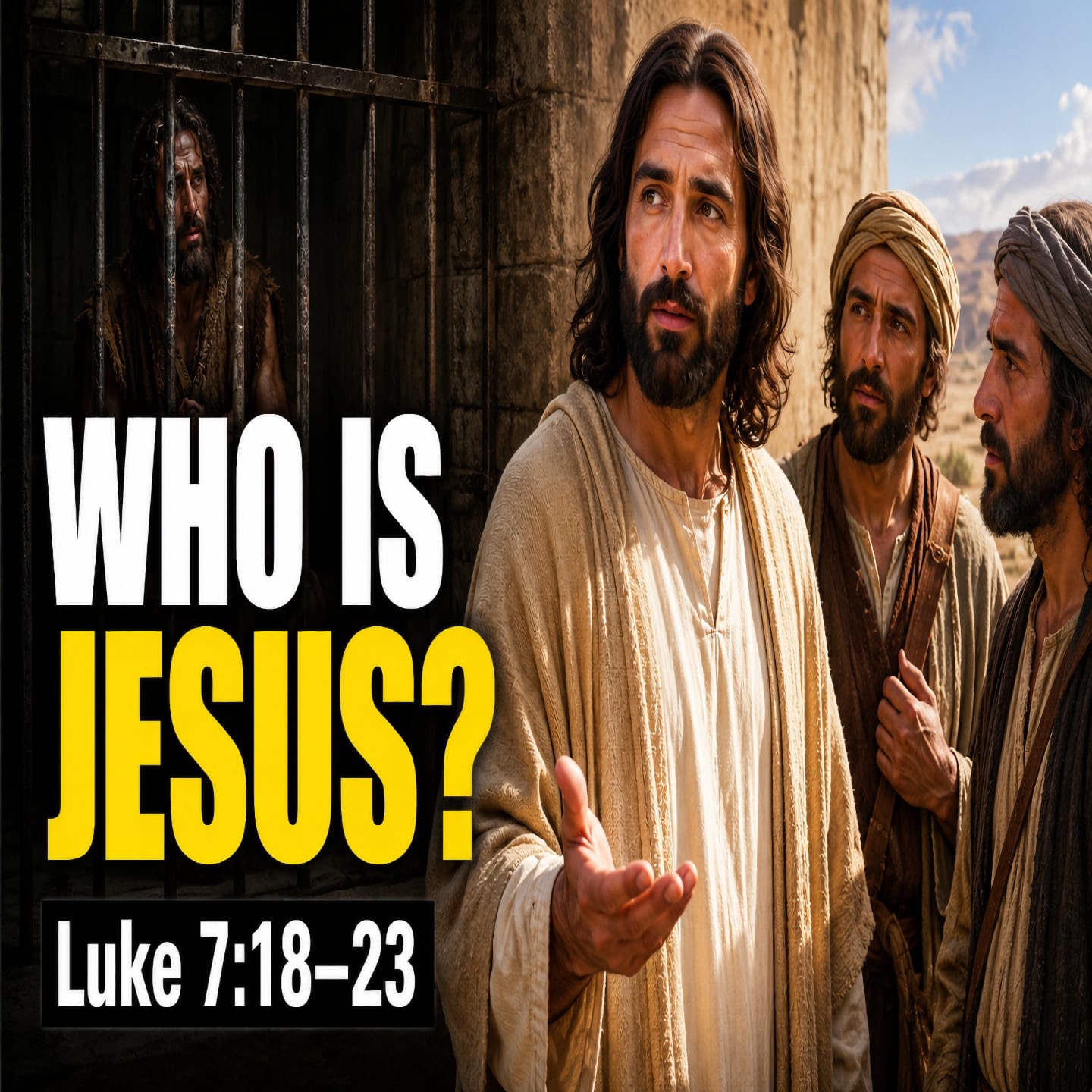
Who is Jesus? (Luke 7:18-23)
4w ago00:14:44Tap to summarizeWho Is Jesus? — Luke 7:18–23John the Baptist knew Jesus was the Messiah, but he did not yet understand the full order of His mission. John expected judgment; Jesus revealed that salvation would come first.Through His works, Jesus fulfilled the prophetic signs of Isaiah and confirmed His identity as the Christ. Even when God’s plan unfolds differently than expected, faith rests in who Jesus is.Read the full lesson and supporting study notes here on Let's Talk Scripture.Advertising Inquiries: https://redcircle.com/brandsPrivacy & Opt-Out: https://redcircle.com/privacy
Transcribe →
Why You Can NEVER Lose Hope! (Hebrews 6:9-20)
4w ago00:43:36Tap to summarizeWhy You Can Never Lose Hope — Hebrews 6:9–20Christian hope rests on more than emotion or circumstance. God confirmed His promise with an oath, showing that His purpose cannot change and that He cannot lie. Because Jesus has entered God’s presence as our eternal High Priest, our hope is described as “an anchor of the soul, both sure and confirmed.”Read the complete lesson at Let’s Talk Scripture.Advertising Inquiries: https://redcircle.com/brandsPrivacy & Opt-Out: https://redcircle.com/privacy
Transcribe →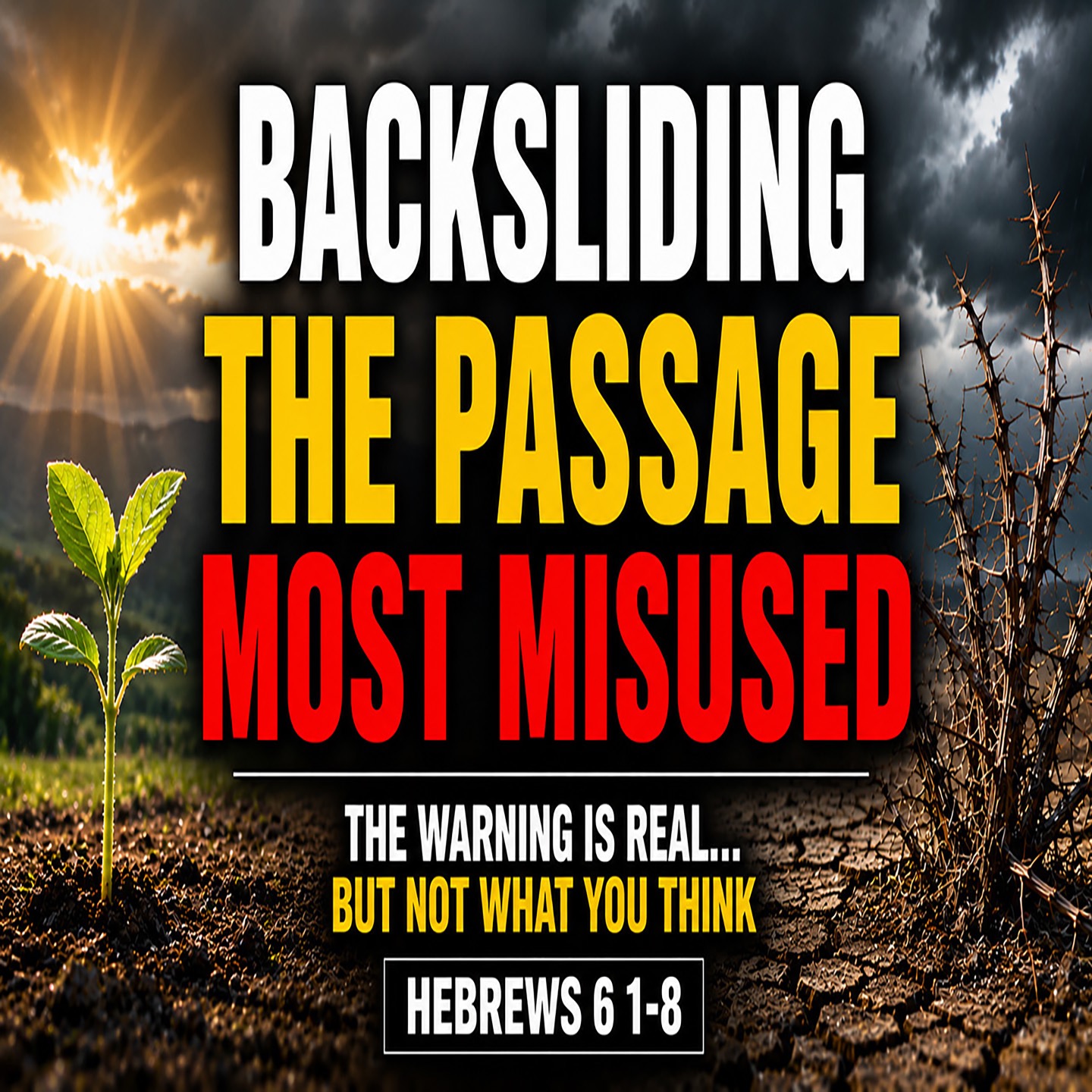
Can a True Christian Backslide? What Hebrews 6 Really Teaches (Hebrews 6:1-8)
Jul 1501:12:00Tap to summarizeWe’ve just finished working through one of the most misunderstood passages in the New Testament—Hebrews 6:1–8.Many use this text to argue that a true believer can lose salvation. But when examined carefully in its context, the warning is not about eternal loss—it’s about the गंभीर consequences of spiritual immaturity and regression.The writer is addressing believers who have received tremendous spiritual privilege, yet are failing to grow. The warning is severe because the stakes are real: not loss of salvation, but unavoidable divine discipline for unfruitfulness.In this lesson, we walk through the passage step by step, connecting it to Isaiah 5 and Numbers 14, and showing how God consistently deals with His people—faithful to preserve, but also faithful to discipline.This is a passage that should not confuse you—it should sober you and move you forward.Advertising Inquiries: https://redcircle.com/brandsPrivacy & Opt-Out: https://redcircle.com/privacy
Transcribe →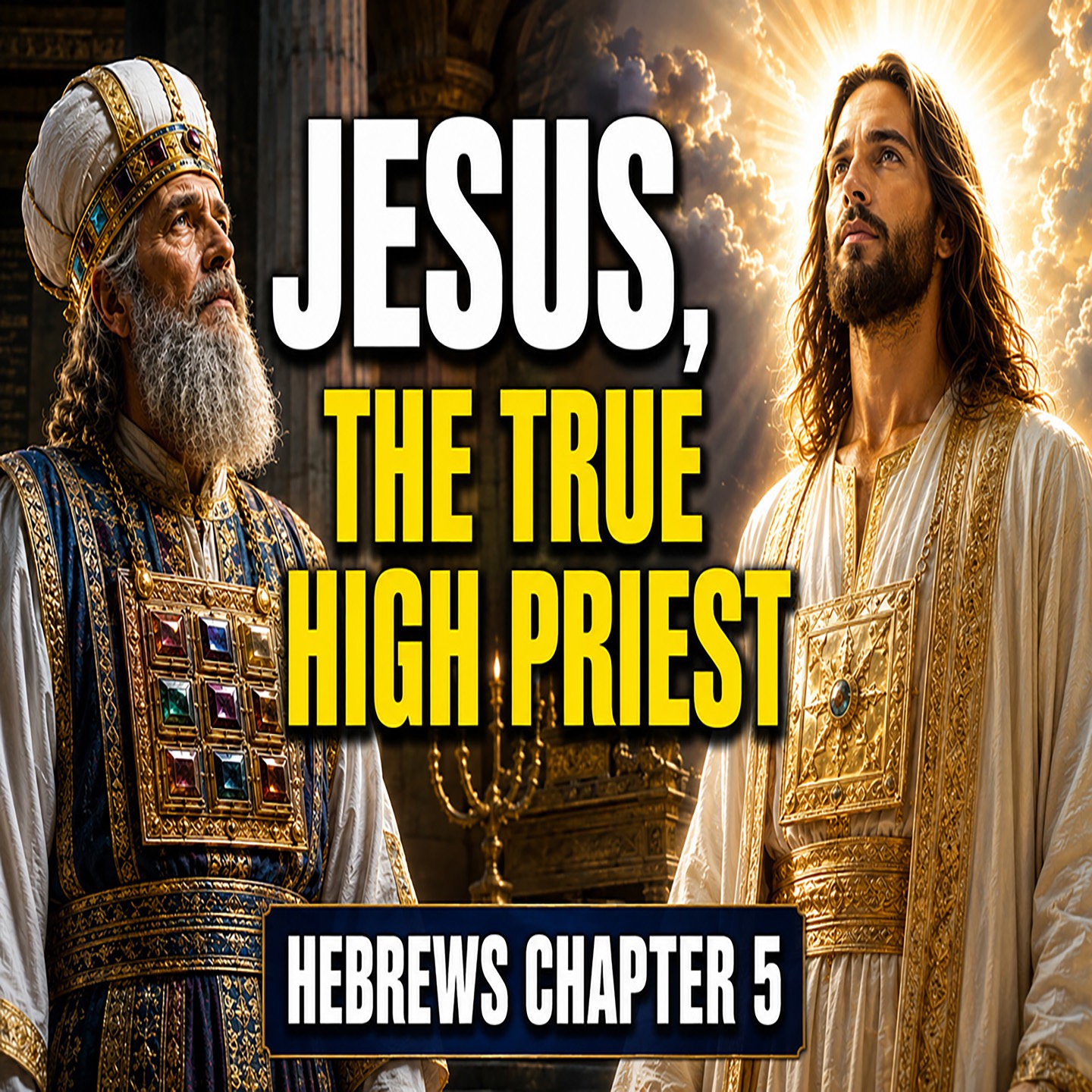
Jesus, the True High Priest (Hebrews Chapter 5)
Jul 801:01:52Tap to summarizeGet the notes for this teaching!Jesus: The True High Priest Who Understands Our StrugglesThe Book of Hebrews is a masterful demonstration of how the New Covenant in Christ completely surpasses the Old Covenant shadows. As I dive into Hebrews Chapter 5, the theological focus shifts explicitly to the high priestly ministry of Jesus. If you have ever felt like God is distant or disconnected from your daily struggles, this chapter offers immense comfort and profound challenge.To mediate between a holy God and a broken humanity, a true high priest must be taken from among men. He must understand our condition. Under the Old Covenant, the Levitical priests, starting with Aaron, fulfilled this role. Because they were beset with their own sinful weaknesses, they could deal gently with the people. However, they first had to offer sacrifices for their own sins.Jesus radically changes this dynamic. In the incarnation, God the Son took on human flesh to become our ultimate High Priest. He experienced human fatigue, sorrow, and temptation—yet He remained entirely without sin. He didn’t just offer the blood of bulls and goats; He offered Himself. Because He is flawless, His sacrifice is perfect.Furthermore, Hebrews 5 reveals the incredible truth that, although He was a Son, Jesus learned obedience through the things He suffered. God used the crucible of suffering to bring Christ’s earthly obedience to its absolute climax on the cross. If the Father utilized trials to perfect the obedience of His sinless Son, we should not be surprised when He uses hardships to refine our faith. We are called to grow, moving beyond the elementary “milk” of the faith into the deep, spiritually mature “solid food” of God’s Word.Advertising Inquiries: https://redcircle.com/brandsPrivacy & Opt-Out: https://redcircle.com/privacy
Transcribe →
Where Do You Find Strength in Trials? (Hebrews 4:14-16)
Jul 200:29:42Tap to summarizeCategories:Bible Study Lesson, Study of HebrewsFinding Unshakeable Strength in Times of Crisis: An Exposition of Hebrews 4:14-16Every believer eventually encounters a cultural storm or a personal trial that tests the very bedrock of their faith. In the first century, Jewish Christians walked through a similar matrix of intense social isolation, economic displacement, and pressure to bend to the dominant cultural status quo. The temptation to quietly slip back into comfortable, compromise-driven patterns was real. Yet, the timeless counsel of Scripture speaks directly into our moments of profound vulnerability, revealing that God has already established an active, cosmic provision for our endurance.To navigate these structural trials successfully, we must move past a fragile, conditional faith and enter into what can be described as a “made-up mind.” This state of deep spiritual maturity allows us to remain entirely unmovable, regardless of changing societal climates. Our confidence does not stem from our own willpower, but from the structural superiority of our High Priest, Jesus Christ. He has ascended past any earthly, human-made structure directly into the uncreated glory of God the Father, combining ultimate divine authority with an authentic, historical understanding of human suffering.Scripture guarantees that our Savior is not a distant, detached cosmic monarch, but one who actively suffers alongside us, intimately aware of our personal weaknesses. Because He faced intense external temptations yet remained completely spotless, He understands the psychological weight of the pressures we face daily. Therefore, we are explicitly commanded to approach the throne of the universe not with fear, shame, or defensive posturing, but with absolute freedom of speech. At this unique “Throne of Grace,” we are promised a dual provision tailored to our moment of crisis: mercy to heal our past failures, and seasonable, dynamic supernatural strength that manifests at the precise second the pressure reaches its peak. Stop fighting spiritual battles with earthly strength; turn your eyes to the cosmic Advocate who stands ready to bring you through.Advertising Inquiries: https://redcircle.com/brandsPrivacy & Opt-Out: https://redcircle.com/privacy
Transcribe →
Have You REALLY Entered His REST? (Hebrews 4:1-13)
Jun 2400:55:34Tap to summarizeGet the notes to this teaching!Have You REALLY Entered His Rest? The Timeless Warning of Hebrews 4:1-13The journey of faith is rarely a path of pure, uninterrupted comfort. For many believers, the reality of spiritual exhaustion, cultural hostility, and personal trials can create a persistent temptation to slip backward—to return to old, familiar patterns of reliance or comfortable, traditional systems of religious performance just to escape the immediate pressure. In the profound text of Hebrews 4:1-13, this exact spiritual crisis is met with a timeless, high-stakes warning and an explicit call to examine the true nature of our faith.The writer of Hebrews anchors this exposition in the tragic history of the wilderness generation of Israel. Fresh out of Egyptian bondage, having witnessed some of the most spectacular displays of divine power in human history, this first generation fell into a catastrophic pattern of murmuring, rebellion, and deep-seated hardness of heart. When faced with trials, they repeatedly doubted God's goodness and questioned His sufficiency. As a direct result of their ongoing unbelief, God swore a solemn decree of judgment: that generation was strictly barred from entering His rest, and their corpses fell in the wilderness.But what does it mean to enter His rest today? As our study unfolds, we discover that biblical rest operates on a powerful dual continuum: the already and the not yet. In our immediate, daily experience, entering His rest means arriving at a state of unwavering spiritual maturity—a fully resolved, unshakeable mind that refuses to compromise or turn back from following Christ, regardless of the cultural price or personal sacrifice required. It is an internal sanctuary of peace that remains completely firm amidst the storm.Yet, there remains a magnificent future dimension to this promise. By examining the biblical timeline, we see that hundreds of years after Joshua successfully led the second generation of Israel into the physical land of Canaan, King David wrote an urgent message in Psalm 95, stating: "Today, if you hear His voice, do not harden your hearts." This proves that physical Canaan was never the final destination or ultimate fulfillment of God's promise. There remains a distinct future Sabbath rest preserved for the corporate people of God—an eternal kingdom where we will permanently cease from our earthly struggles, trials, and daily warfare against sin, perfectly resting in the finished work of our Savior.The passage concludes with an urgent reminder of our absolute transparency before the Creator. The Word of God is explicitly described as living, active, and sharper than any double-edged sword, piercing straight to the deepest divisions of our inner thoughts, hidden motives, and secret intentions. No one can hide a compromising heart behind beautiful religious rituals or empty public performance. All things are completely naked and laid bare before the eyes of Him to whom we must ultimately render an account. Let us therefore shake off complacency, reject the destructive patterns of unbelief, and walk with absolute diligence and active trust, knowing that our security, our peace, and our ultimate rest are anchored forever in Jesus Christ.Advertising Inquiries: https://redcircle.com/brandsPrivacy & Opt-Out: https://redcircle.com/privacy
Transcribe →
Are You Holding Fast or Falling Away? (Hebrews 3:12-19)
Jun 1700:56:23Tap to summarizeGet the notes to this teaching!Are You Holding Fast or Falling Away? The Real Warning Behind Hebrews 3:12-19The human heart possesses an alarming capacity to seek comfort over conviction. For the first-century community of Jewish believers receiving the Epistle to the Hebrews, this struggle was intensely practical. Facing profound social ostracism, economic destruction, and raw physical persecution from the religious establishment, they were severely tempted to drop their public confession of Jesus and retreat into the relative safety of Temple rituals and the Mosaic economy.In Hebrews 3:12-19, the author confronts this temptation by issuing a high-stakes diagnostic warning. Addressing his audience affectionately but firmly as “brothers,” he unmasks the anatomy of spiritual compromise, revealing that “falling away from the living God” is rooted in an evil, unbelieving heart. Far from a loss of eternal salvation, this warning recalls the tragic archetype of the Wilderness Generation at Kadesh-Barnea. Though physically redeemed from Egypt, that entire generation saw their carcasses strewn across the desert sands, barred by divine oath from entering the Promised Land—not because they weren’t God’s people, but because their unfaithfulness invited devastating temporal judgment.To counter this danger, the Holy Spirit establishes an essential corporate defense mechanism: continuous, daily mutual exhortation. We are commanded to intercede in each other’s lives “as long as it is still called ‘Today,'” protecting our local assemblies from being petrified by the deceitfulness of sin. In this context, sin’s deceit is the false promise of relief from cultural hostility at the expense of public allegiance to Christ. As permanently joined partners (metochoi) of the Son, our calling is to maintain our initial confidence firm until the end, entering into the active spiritual rest, maturity, and inheritance God has earmarked for those who endure.Advertising Inquiries: https://redcircle.com/brandsPrivacy & Opt-Out: https://redcircle.com/privacy
Transcribe →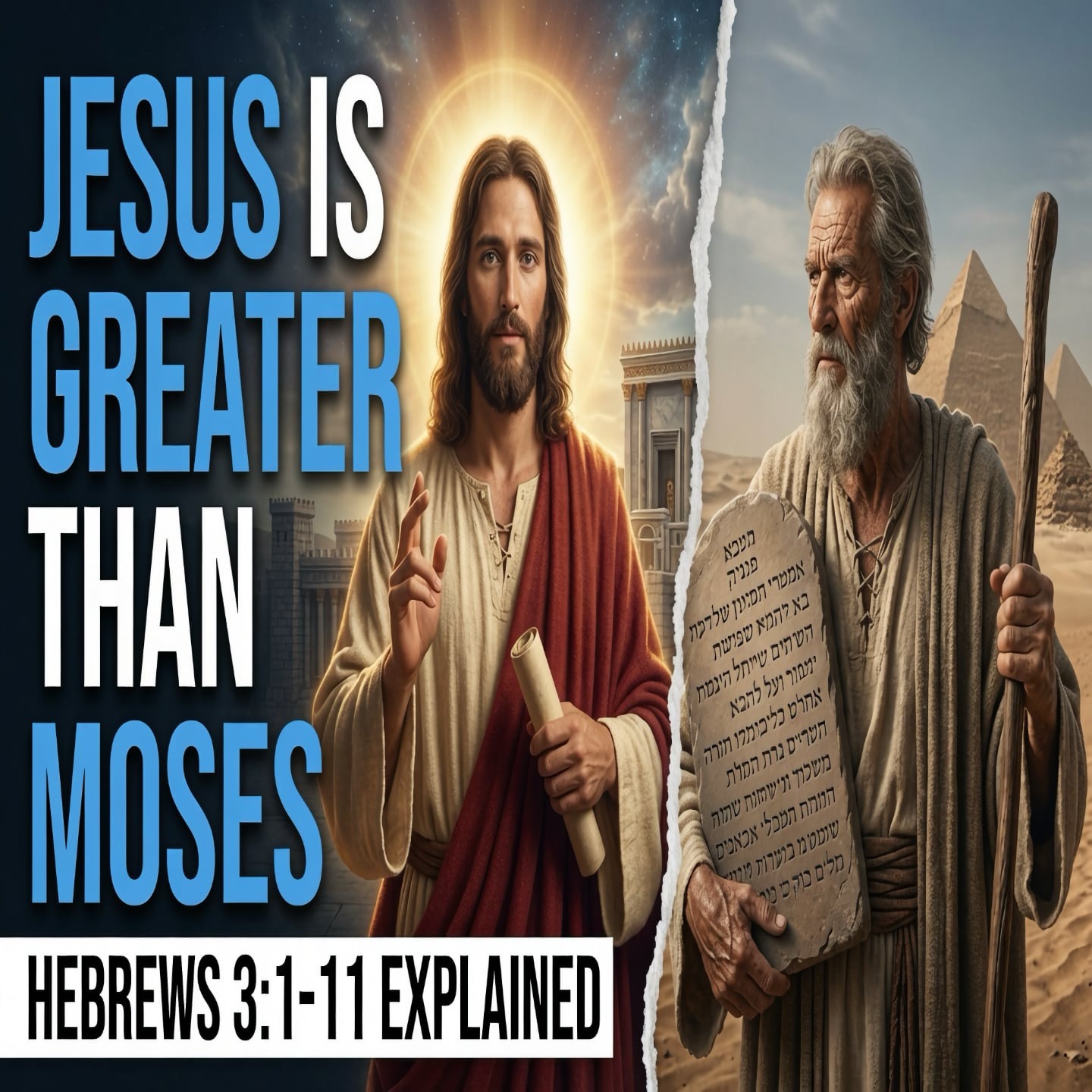
Jesus is Greater Than Moses! | Hebrews 3:1-11
Jun 500:58:15Tap to summarizeGet the notes!Jesus Is Greater Than Moses: An Exegetical Exposition of Hebrews 3:1–11The opening chapters of the Epistle to the Hebrews construct a strict structural hierarchy designed to anchor believers under intense social and theological pressure. Moving from the cosmic, ontological domain of Christ’s superiority over the angelic realm analyzed in chapters 1 and 2, Hebrews 3:1–11 pivots directly into the concrete, historical, and covenantal structures of the nation of Israel.By executing a verse-by-verse structural evaluation of Christ alongside Moses—the foundational human mediator of the Old Covenant—the text establishes a definitive standard of authority that demands complete covenantal exclusivity.1. Consecration and the Dual Offices of Christ (0:00–5:15)The corporate identity of the New Covenant community is firmly anchored in the finished, consecrating work of the cross rather than physical lineage:Hebrews 3:1 — "Therefore, holy brothers and sisters, partakers of a heavenly calling, consider Jesus, the Apostle and High Priest of our confession..." The Character of the Calling: The structural description “partakers of a heavenly calling” reorients the reader’s expectation away from the localized, earthbound, territorial inheritance of the Mosaic economy toward an unshakeable, eternal reality.The Imperative to Scrutinize: The absolute command to “consider” stems textually from the Greek verb κατανοήσατε, denoting an intensive, scholarly fixing of the mind and uninterrupted mental investigation of an objective reality.The Operational Convergence: Christ is simultaneously designated as the Apostle (ἀπόστολος)—the ultimate Envoy sent forth directly from the Father to manifest final divine revelation—and the High Priest (ἀρχιερεύς), the exclusive sacrificial mediator who secures permanent access to the divine presence.2. The Architect and the Artifact: Verses 2–6 (5:16–12:10)To prevent a simplistic, hyper-critical reading of the Old Covenant, the text openly confirms Moses’ flawless execution of his historic duties, drawing textually from the divine validation detailed in Numbers 12:7. Moses is explicitly situated within the boundaries of “all God’s house” as a crucial, protective steward of a provisional administration.However, Verse 3 introduces a distinct categorical separation of glory based on an architectural analogy:The Analogy: The builder and designer of an estate naturally commands exponentially greater honor than the material house itself or any component within it.The Classification: Moses is historically categorized as a created component within the house, whereas Jesus is revealed as the uncreated, transcendent Builder who engineered the entire structure.The Syllogism: The formula in Verse 4 asserts that while every house is constructed by someone, the Builder of all things is God, explicitly declaring the absolute deity of the Son.This distinction culminates in a precise semantic shift in status between the two leaders:Moses as Servant (θεράπων): This term indicates a high-ranking, valued supervisor who executes tasks on property belonging to someone else. His entire ministry was prospective and forward-looking, operating as an anticipatory “testimony to the things which would be spoken later” by the programmatic declaration of the gospel.Christ as Son (υἱός): This title establishes absolute, hereditary ownership. Christ reigns directly over His own ancestral house. The living community of true believers constitutes this authentic temple, provided they actively hold fast their objective theological confidence and the triumphant boast of their hope firm until the final consummation.3. The Voice of the Spirit and the Peril of Unbelief (12:11–20:00)The latter half of the passage pivots to a sobering, pneumatological warning utilizing the text of Psalm 95:Hebrews 3:7–8 — "Therefore, just as the Holy Spirit says, 'Today if you hear His voice, do not harden your hearts as when they provoked Me...'" Scriptural Animation: The introductory formula “as the Holy Spirit says” confirms that the Old Testament Scriptures are not handled as dead historical artifacts, but as an active, living, vocalized divine warning addressed directly to the contemporary reader with absolute immediacy.The Anatomy of Rebellion: The historical collapse of the Exodus generation occurred because they witnessed visible, supernatural miracles for forty consecutive years, yet remained fundamentally blind to the structural “ways” and internal character of God.The Judicial Consequence: Systemic unbelief and progressive hardening of the heart evoke divine holy indignation, culminating in an unalterable, binding oath of absolute exclusion from the physical and spiritual rest (κατάπαυσις) of the promised land.Ultimately, this historical failure under Moses serves as internal scriptural proof that physical entry into Canaan under Joshua was never the final destination or design of God’s rest. When read alongside the wider truths developed later in Hebrews 12, believers recognize that severe temporal trials are forms of divine discipline designed to strip away shallow, nominal commitment, ensuring that the covenantal community is stabilized to inherit an unshakeable kingdom.Complete Hebrews 3:1–11 Educational Resource PackageTo equip pastors, small group leaders, and serious students of Theology for deep, systematic study, the complete publication-grade curriculum portfolio for this lesson is now available for download.This digital package is engineered strictly without bullet points, utilizing a clean alphanumeric nested hierarchy (1, A, B) that preserves all indentations, typography, and structural lines when copied and pasted directly into Microsoft Word.The integrated curriculum portfolio includes:🍎 Teacher’s Guide & Facilitator Syllabus: Complete with specialized instructional objectives for every chronological video segment, advanced textual discussion prompts, and comprehensive commentary unpacking original Greek terminology.📖 Guided Student Study Workbook: An active learning tool featuring structured fill-in-the-blank text anchors synchronized with the video timeline and defined reflection workspace blocks for vocabulary synthesis.📝 Expository Evaluation Exam: A rigorous, 10-question publication-style examination utilizing standard numbering and alphabetical option fields to evaluate comprehensive textual comprehension.🔑 Master Answer Key & Exegetical Defense: A definitive reference asset providing complete theological rationales, original language mapping, and scriptural defenses for every exam question.[Access the Complete Hebrews 3:1–11 Expository Curriculum Package Here]Advertising Inquiries: https://redcircle.com/brandsPrivacy & Opt-Out: https://redcircle.com/privacy
Transcribe →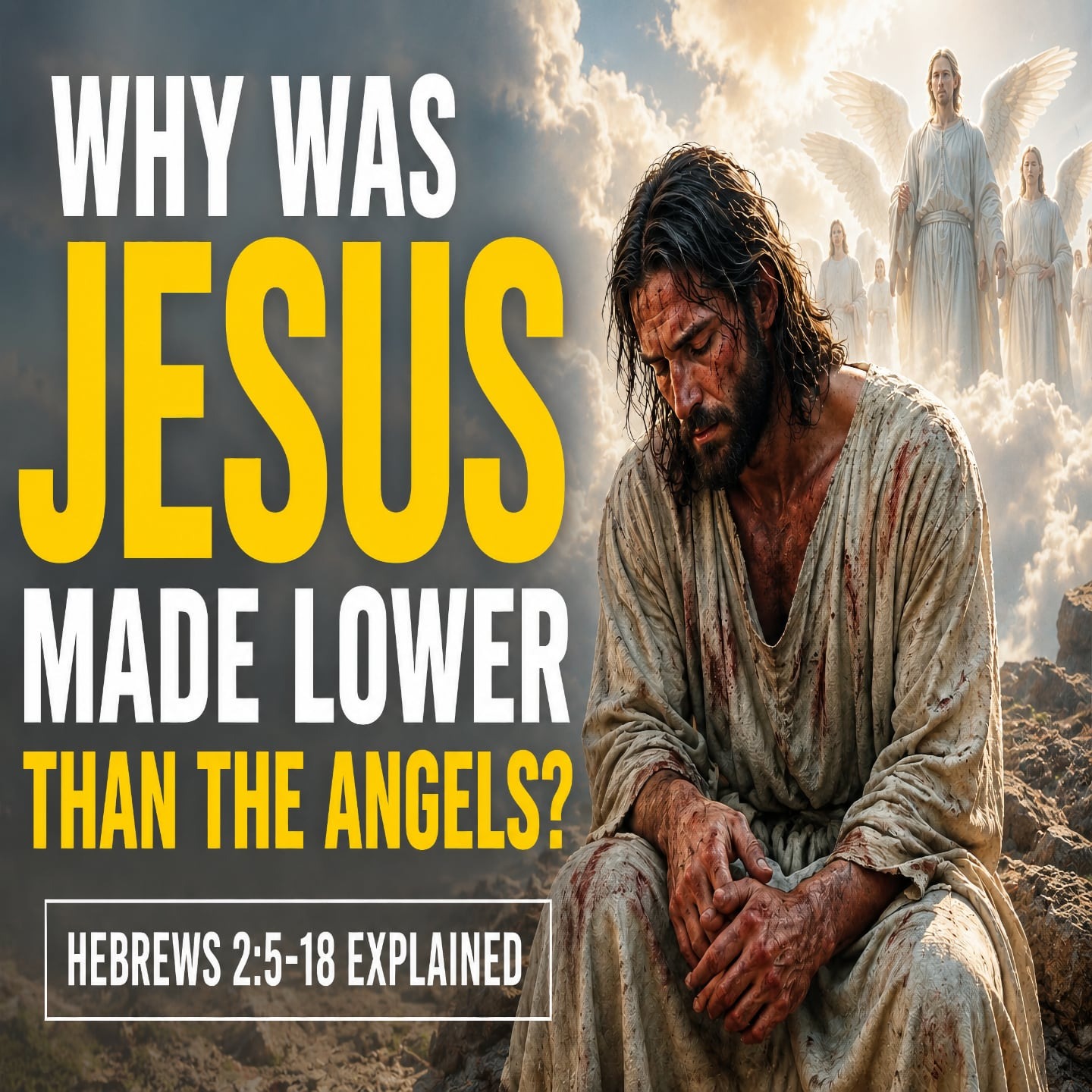
Why Was Jesus Made Lower Than the Angels? | Hebrews 2:5-18 Explained
Jun 301:10:07Tap to summarizeGet the notes!THE HUMILIATION AND CORONATION OF THE SON: EXPOSITION OF HEBREWS 2:5-18The structural integrity of the New Covenant rests upon a profound Christological paradox: the sovereign, pre-existent Creator—who holds absolute ontological supremacy over the angelic realm—voluntarily entered a state of temporary human limitation to achieve cosmic redemption. For first-century Hebrew Christians enduring severe social, economic, and physical persecution, the temptation to drift away from the apostolic message and retreat into the safer rituals of traditional temple Judaism was immense.To ground these suffering believers, the author of Hebrews constructed a brilliant legal and covenantal defense. The text demonstrates that the original creative intent of God was to establish complete human dominion over the earth and the world to come—an authority tragically forfeited by the first Adam at the Fall and illegally transferred to Satan. To justly reclaim this dominion, the Savior had to become a real human being. Through His life, suffering, and substitutionary death on the cross, Jesus defeated the devil, broke the power of the grave, paid the penalty for human sin, and brought a new family of brothers into a restored relationship with God.MAIN EXPOSITIONAL MOVEMENTSI. The Exclusivity of Human Governance over the Coming Age (Hebrews 2:5-8)The author resumes the primary theological argument by declaring that God did not subject the “world to come” (οἰκουμένη τὴν μέλλουσαν) to the authority or administrative control of angelic beings. In New Testament eschatology, this phrase refers directly to the literal, terrestrial Messianic Kingdom predicted throughout Old Testament prophecy and described in Revelation 20 as Christ’s 1,000-year reign on earth. Citing Psalm 8:4-6, the author outlines the unique design of humanity. Though ontologically lower than angels because man is terrestrial (dust) rather than celestial (spirit), humanity was sovereignly crowned with glory and honor and appointed over the works of creation.II. The Tragedy of the Fall and Forfeiture of DominionThe comprehensive dominion outlined in Psalm 8 was initially deposited into the hands of the first man, Adam, acting as the federal head of human nature. Adam failed the test of covenantal love in Eden by violating the negative prohibition regarding the tree. Consequently, human dominion was lost and illicitly transferred to Satan, establishing him as the temporary “ruler of this world” (John 12:31). The text provides a sobering diagnosis of the current age: “But now we do not yet see all things subjected to him”. The immediate state of creation displays severe fragmentation, visible in the agricultural curse of Genesis 3 and the paradigm of natural terror introduced in Genesis 9.III. The Legal Necessity of the Incarnation and Atonement (Hebrews 2:9-13)Because a human head lost human dominion through sin, it was legally and transactionally essential that a genuine human head regain it. Jesus was made “for a little while lower than the angels” by assuming a true human nature and entering directly into the limitations of the human experience. By the sovereign grace of God, Christ tasted death on behalf of everyone (ὑπὲρ παντός), acting as a perfect substitutionary sacrifice to satisfy the righteous wrath of God against human rebellion. Because of His perfect obedience unto death, Jesus was resurrected, ascended, and is currently crowned with supreme glory and honor at the right hand of God, legally recapturing the dominion lost in Eden.IV. The Conquest of the Grave and the High Priestly Office (Hebrews 2:14-18)Since human children are bound to a nature of blood and flesh, Christ deliberately partook of the exact same physical reality. Christ utilized the very reality of physical death to break and render utterly powerless the devil, who previously held the power and authority of death. By emerging victorious over the grave, Christ dismantled the existential terror of death that kept humanity in lifelong spiritual slavery. Having offered His own body as a perfect propitiation (ἱλάσκεσθαι) to satisfy God’s wrath, He currently sits at the right hand of the Father, operating as a faithful and merciful High Priest interceding for His people.📦 COMPREHENSIVE EXPOSITIONAL STUDY SUITETo facilitate deep contextual study and rigorous classroom instruction on this passage, the complete academic curriculum packaged from this teaching is available for download below. Formatted to preserve precise alignments, outlines, and indentations, these printable premium files are engineered to meet the highest editorial standards of Christian publication.📝 Expositional & Doctrinal AssessmentA formal, non-interactive evaluation tool containing a 12-question, multiple-choice testing framework.Designed to measure student comprehension of original language contexts, federal headship, and the mechanics of propitiation.Formatted strictly with questions only and capitalized option fields to serve as an objective examination tool for small groups or church academies.🍎 Teacher’s Guide & Instructional BlueprintA master pedagogical resource equipped with complete lesson plans, detailed lecture breakdowns, and expository teacher notes.Provides strategic insights for leading classroom discipleship and analyzing the legal necessity of a human Savior.Includes full, definitive answer keys cross-referenced with exact video timeline markers down to the second.📖 Student’s Guide & Expositional WorkbookA comprehensive, beautifully formatted layout designed for independent study or interactive group accountability.Contains guided expository content outlines mapping the Christological shift from the cosmic height of Chapter 1 down to the redemptive lowliness of Chapter 2.Integrates rigorous text-dependent objective evaluations and underlined contextual fill-in-the-blank drills to ensure theological retention.🔑 Official Answer Sheet & Exegetical ExplanationsAn authoritative master reference key pairing every numbered query with its correct capitalized choice.Delivers exhaustive, paragraph-formatted rationales that explore the contextual fluidity of Hebrew names like Elohim and eschatological kingdom boundaries.Features precise video-timeline mapping to synchronize every solution flawlessly with the masterclass video.STUDY SUITE SPECIFICATIONSDigital Delivery: Immediate high-resolution PDF download format.Design Standards: Classical academic typography, clear border formatting, and double-ruled section framing designed specifically for pastors, scholars, and small-group curriculum administrators.Core Value: Provides a turnkey, text-dependent educational infrastructure that replaces conversational padding with rich, unadulterated biblical exposition.Get the comprehensive study package now!Advertising Inquiries: https://redcircle.com/brandsPrivacy & Opt-Out: https://redcircle.com/privacy
Transcribe →
Can True Christians Drift Away? (Hebrews 2:1-4)
May 2700:47:08Tap to summarizeGet the notes!Can True Christians Drift Away? Understating New Covenant Accountability in Hebrews 2:1–4The book of Hebrews contains some of the most profound christological declarations in all of Holy Scripture, but it also contains some of the most sobering warnings. In Chapter 1, the text establishes the supreme, uncreated deity of Jesus Christ. He is revealed as the exact representation of the Father’s essence, the immortal Architect of the cosmos, and the Sovereign whose throne is everlasting.However, immediately following this grand opening, the inspired author abruptly pauses the doctrinal discourse. Before detailing the high-priestly necessity of Christ’s humanity, he introduces the first of five major hortatory warnings found in the epistle.This systematic study guide explores the critical mechanics of spiritual drift, reconciles the text’s urgent warnings with the absolute reality of eternal security, and unpacks the powerful a fortiori (lesser-to-greater) argument constructed to demonstrate New Covenant hyper-accountability.I. The Doctrinal Grounding of Exhortation (Hebrews 2:1)Hebrews 2:1 — "For this reason we must pay much closer attention to what we have heard, so that we do not drift away from it." A. The Conjunction of NecessityThe opening phrase “For this reason” functions as an architectural hinge point linking christian duty directly to the grand disclosures of Chapter 1. It establishes a permanent principle for the church: practical christian responsibility is always anchored in the objective reality of who Jesus Christ is. Because the Son is uncreated God and King, the audience bears a heightened obligation to guard His specific revelation.B. The Mandate for Urgent GuardingThe text issues a strict command to pay “much closer attention” to the received apostolic message. This identifies the primary defense against spiritual decay as continuous, purposeful immersion in the truth of the Gospel. Spiritual decline is resisted not by human willpower alone, but by actively anchoring the mind to christological truth.II. Exegesis of the Verbal Phenomenon: “Drift Away”A. Linguistic ProfilingThe text implements the specific Greek verbal form pararuomen (παραρυῶμεν). This word is classified as a hapax legomenon—occurring only this single time within the entire text of the Greek New Testament. The author chose this rare verbal marker intentionally to disrupt casual reading, forcing the student to contemplate the unique mechanical danger of spiritual sliding.B. The Nautical MetaphorIn classical Greek maritime literature, pararuomen outlines the behavior of an unanchored sailing vessel carried past its safe destination by local tides and prevailing currents. The vessel does not turn away in sudden, violent mutiny; it simply floats past its safe harbor because the crew is passive and unmonitored. This illustrates that spiritual decay within the church is rarely a deliberate departure, but rather a slow, unperceived slide into compromise caused by unresisted cultural currents.III. Theological Harmonization: Drift vs. Eternal SecurityA. Refutation of the Loss-of-Salvation PremiseArminian interpretations routinely isolate the warning language of Hebrews to claim that a true, regenerated believer can forfeit their salvation and experience ultimate condemnation. Isolating the text in this manner creates an artificial contradiction with the clear, systematic unity of the New Testament.B. The Uncompromising Blueprint of Eternal SecurityUnder the absolute blueprints of John 6:37–39, true believers are designated as a corporate love-gift from the Father to the Son. The preservation of the believer is maintained entirely by the omnipotent keeping power of Jesus Christ, who promises to lose absolutely none of those entrusted to Him, but to raise every single one on the final day. Christ performs this keeping ministry explicitly because it is the unalterable, sovereign will of the Father.C. The Nature of Salvation as an Unearned GiftSynthesizing this text with Ephesians 2:8–9 demonstrates that salvation is by grace through faith—a free gift completely detached from human works. Because human effort did not earn salvation initially, human weakness cannot dissolve it. Salvation belongs exclusively to the Lord.🏛️ The First-Century Historical ContextTo understand the exact nature of this warning, the reader must evaluate the crisis facing the original recipients. These early Hebrew believers were enduring intense societal persecution, physical suffering, and the systematic confiscation of their temporal properties. Under the heavy weight of this pressure, they were tempted to suppress their public, outward confession of Jesus Christ and quietly retreat back into the institutional safety of Rabbinic Judaism simply to escape physical trial. The author is not warning them of eternal damnation, but is confronting the dangerous sin of growing cold and “neglecting” the unparalleled price of New Covenant reality.IV. The Logic of Covenantal Contrast (Hebrews 2:2–3a)A. Accountability Under the First CovenantThe author identifies the Mosaic Law as “the word spoken through angels,” reflecting the historical mediation of celestial messengers at Sinai. This covenant was legally absolute and structurally unalterable; every trespass (sins of commission) and disobedience (sins of omission) received a precise, mandatory penalty. The corporate life of Israel stands as visible proof of this principle, culminating in the real historical judgments of the Assyrian exile (722 BC) and Babylonian captivity (586 BC).B. The Argument from Lesser to Greater (A Fortiori)The author constructs an unanswerable comparison:The Old Covenant: Mediated via created angels; validated with the temporary blood of animal sacrifices sprinkled over stone tablets and the people.The New Covenant: Instituted directly by the uncreated Son; validated through the localized shedding of His own divine, spot-free blood at Calvary.The conclusion is absolute: If violations under a lesser, angelically-mediated covenant brought certain, inescapable discipline, how can anyone imagine escaping divine correction if they treat the superior salvation accomplished by the Son with casual, nonchalant neglect?V. The Reality of Temporal Fatherly DisciplineA. Distinguishing Present Discipline from CondemnationThe warning query “how will we escape” points to unavoidable, temporal, remedial discipline within this present earthly life—not eternal damnation. When corporate Israel was judged historically and driven from the land, she never ceased to be the chosen covenant people of God. For example, though describing a structural divorce in the book of Hosea, God commands the prophet to buy back and restore his unfaithful wife, mirroring God’s permanent ownership of His people.B. The Blueprint of legitimate SonshipConnecting this text directly to Hebrews 12:5–8 reveals that the administration of divine correction is the definitive operational proof of legitimate sonship. God disciplines His children specifically for their correction, preservation in holiness, and restoration—never for their destruction.VI. The Threefold Triangulation of Gospel Verification (Hebrews 2:3b–4)The New Covenant message does not rest on speculation; it is historically verified through a threefold line of evidence:Phase I (The Proclamation): This majestic salvation was first articulated, unfolded, and brought to light directly by the spoken words of the incarnate Lord Jesus Christ Himself during His earthly ministry [00:33:02].Phase II (The Transmission): The message was accurately preserved, confirmed, and transmitted to the church by the original apostles, who operated as firsthand eyewitnesses of the resurrected Christ [00:34:24].Phase III (The Attestation): Almighty God verified and stamped the apostolic message through signs, wonders, and various miracles given specifically to validate the truth of the spoken word [00:39:59]. This was completed through the supernatural distribution of specific spiritual gifts by the Holy Spirit according to His independent, sovereign will [00:41:00].🎒 Bring This Lesson to Your Assembly: Complete Curriculum Resource PackageAre you preparing to teach this text to your local church, Sunday school, or home Bible study group? We have packaged the complete, publication-grade study materials used to produce this teaching into an instant digital download.This comprehensive resource pack equips you with everything needed to lead a deep, notation-precise study of Hebrews 2:1–4.What is Included in the Digital Package:The Master Expository Outline: A highly structured, chronologically time-coded outline matching this teaching point-for-point. Features a clean alpha-numeric indentation layout, making it completely ready to copy and paste directly into Microsoft Word without losing your formatting margins.Instructional Teacher’s Guide (🍎): Packed with advanced technical references, Greek text evaluations (such as the maritime profiling of pararuomen), historical background briefs, and critical theological safeguards defending the doctrines of grace and security.Interactive Student’s Gu...
Transcribe →