
Podcast
Librivox Audiobooks
Hosted by Librivox Audiobooks · EN
Free classic audio-books available, narrated by real people and distributed for free, in audio format on the internet. Over 40,0000 classic Audio-books as Sherlock Holmes,Pride and Prejudice,Dracula,The Time Machine in English,Spanish,German,French and 40 other variety of main spoken languages.
Thanks for Listening!
96episodes
Episodes
Newest firstAll episodes
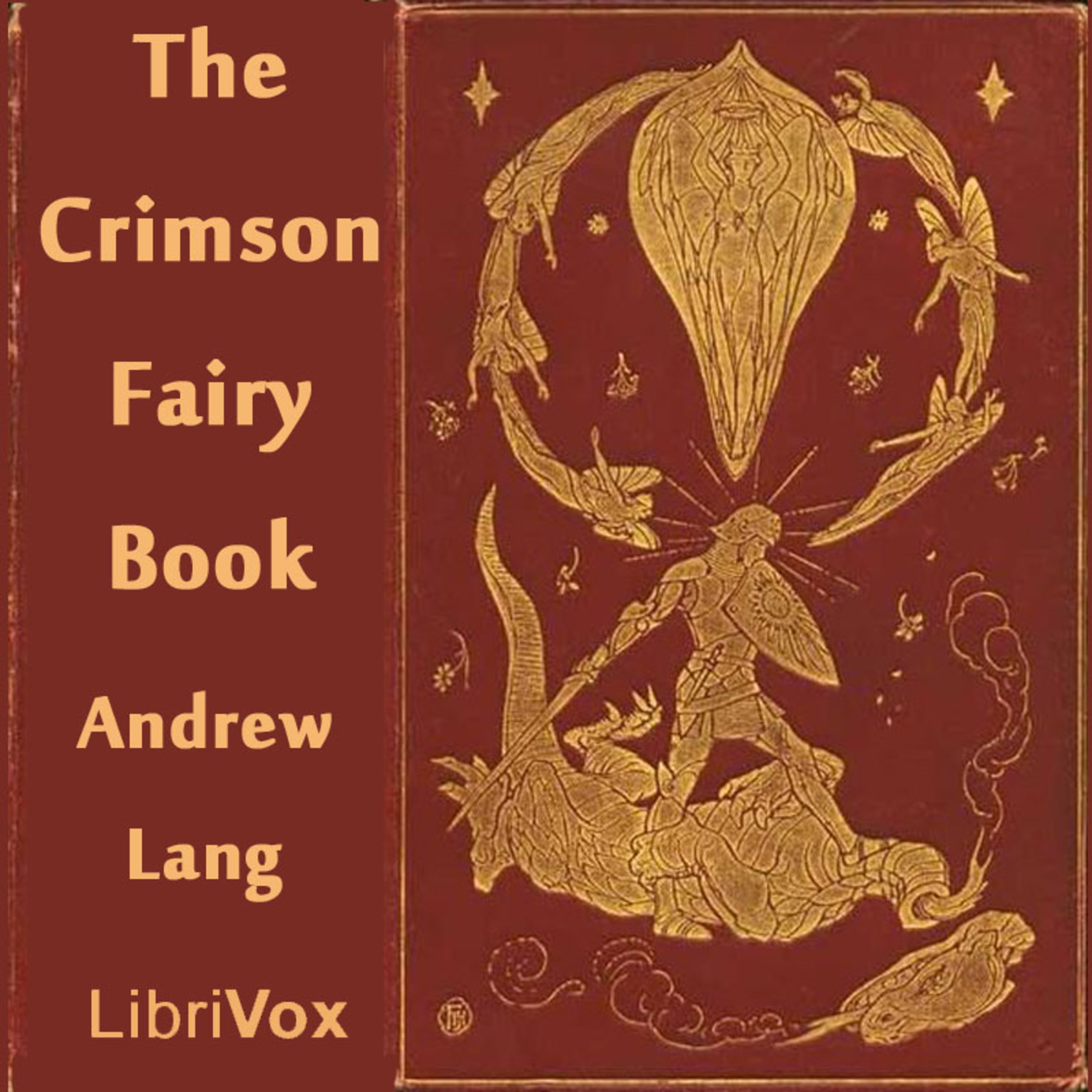
The Crimson Fairy Book
Jun 2910:04:28Tap to summarizehe Crimson Fairy Book contains thirty-six stories collected from around the world and edited by Andrew Lang. Many tales in this book are translated, or adapted, from those told by mothers and nurses in Hungary; others are familiar to Russian nurseries; the Servians are responsible for some; a rather peculiarly fanciful set of stories are adapted from the Roumanians; others are from the Baltic shores; others from sunny Sicily; a few are from Finland, and Iceland, and Japan, and Tunis, and Portugal. No doubt many children will like to look out these places on the map, and study their mountains, rivers, soil, products, and fiscal policies, in the geography books. The peoples who tell the stories differ in colour; language, religion, and almost everything else; but they all love a nursery tale. The stories have mainly been adapted or translated by Mrs. Lang, a few by Miss Lang and Miss Blackley. (Summary from the preface)Genre(s): Myths, Legends & Fairy TalesLanguage: EnglishKeyword(s): children (1119), fairy tales (283), andrew lang (8), crimson fairy book (1)Group: Andrew Lang's Fairy Books
Transcribe →
Crime and Punishment (Pt.3)
Jun 2806:29:24Tap to summarizeCrime and Punishment (Pt.3)Fyodor Dostoyevsky (1821 - 1881)Translated by Constance Garnett (1861 - 1946)Crime and Punishment focuses on the mental anguish and moral dilemmas of Rodion Romanovich Raskolnikov, an impoverished St. Petersburg student who formulates and executes a plan to kill a hated, unscrupulous pawnbroker for her money, thereby solving his financial problems and at the same time, he argues, ridding the world of evil. Crime and Punishment is considered by many as the first of Dostoevsky's cycle of great novels, which would culminate with his last completed work, The Brothers Karamazov, shortly before his death. (Summary from Wikipedia)Genre(s): Published 1900 onwardLanguage: EnglishKeyword(s): literature (1959)
Transcribe →
Crime and Punishment (Pt.2)
Jun 2707:32:08Tap to summarizeCrime and Punishment (Pt.2)Fyodor Dostoyevsky (1821 - 1881)Translated by Constance Garnett (1861 - 1946)Crime and Punishment focuses on the mental anguish and moral dilemmas of Rodion Romanovich Raskolnikov, an impoverished St. Petersburg student who formulates and executes a plan to kill a hated, unscrupulous pawnbroker for her money, thereby solving his financial problems and at the same time, he argues, ridding the world of evil. Crime and Punishment is considered by many as the first of Dostoevsky's cycle of great novels, which would culminate with his last completed work, The Brothers Karamazov, shortly before his death. (Summary from Wikipedia)Genre(s): Published 1900 onwardLanguage: EnglishKeyword(s): literature (1959)
Transcribe →
Crime and Punishment (Pt.1)
Jun 2609:23:50Tap to summarizeCrime and Punishment (Pt.1)Crime and Punishment focuses on the mental anguish and moral dilemmas of Rodion Romanovich Raskolnikov, an impoverished St. Petersburg student who formulates and executes a plan to kill a hated, unscrupulous pawnbroker for her money, thereby solving his financial problems and at the same time, he argues, ridding the world of evil. Crime and Punishment is considered by many as the first of Dostoevsky's cycle of great novels, which would culminate with his last completed work, The Brothers Karamazov, shortly before his death. (Summary from Wikipedia)
Transcribe →
Creditors
Jun 2501:30:46Tap to summarizeCreditorsAugust Strindberg (1849 - 1912)Translated by Edwin Björkman (1866 - 1951)Creditors is a tragicomedy by August Strindberg that plumbs the depths of the twisted triangular relationship between Tekla, her husband Adolph, and her ex-husband Gustav. (Summary by Elizabeth Klett)Cast:Tekla: Elizabeth KlettAdolph: mbGustav: Bruce PirieNarrator: Diana MajlingerAudio edited by: Elizabeth KlettGenre(s): Comedy, TragedyLanguage: EnglishKeyword(s): drama (199), strindberg (4), creditors (2)
Transcribe →
The Cowardly Lion of Oz (version 2)
Jun 2405:16:19Tap to summarizeThe Cowardly Lion of Oz (version 2)Ruth Plumly Thompson (1891 - 1976)Mustafa of Mudge has heard of the famous Cowardly Lion of Oz, and decides to capture him and put him into a zoo! He enlists the help of Bob Up and a clown called Notta Bit More - the master of disguise! The Cowardly Lion meanwhile travels though Oz and meets a stone man, who offers to turn the Cowardly Lion into stone: after all, a stone lion doesn't feel fear! Is this the solution to the Cowardly Lion's quest for courage? Or is it a trap, and does the stone man want to trick him for reasons of his own?The Cowardly Lion of Oz was published in 1923, and is the seventeenth in the Oz series created by L. Frank Baum. It is the third by Ruth Plumly Thompson, and comes directly after "Kabumpo in Oz". The main themes are disguises, honesty, and being true to who you are. (Summary by Beth Thomas)Genre(s): GeneralLanguage: EnglishKeyword(s): Oz (37), l. frank baum (2)Group: Oz books
Transcribe →
Cottage Economy
Jun 2305:50:22Tap to summarizeHow can you tell when your pig is fat enough? Why should you never buy mustard? What's wrong with eating potatoes? Which is better, beer or tea? And what type of straw makes the best bonnets? William Cobbett is the man to ask. Here is his book of practical advice to the rural labouring 'cottager' (first published as a part-work in 1821-22), the precursor in many ways to the handbooks on self-sufficiency that today entice so many city-dwellers.A champion of the rural working class at a time of huge social and industrial change, a radical politician and a prolific writer, Cobbett is opinionated, passionate and enlightening, making 'Cottage Economy' a fascinating and entertaining window on daily life for the smallholders of his day, and still inspirational, almost 200 years later, to those who seek 'a good living' as the foundation of happiness. (Introduction by Philippa)The figures referred to in the section on ice houses can be viewed hereGenre(s): *Non-fiction, House & HomeLanguage: EnglishKeyword(s): advice (81), farming (33), agriculture (31), bread (14), beer (9), pigs (8), self-sufficiency (5), Bacon (4), brewing (3), livestock (2), 19th century life (2), smallholding (1), cows (1)
Transcribe →
Confessions of a Convert
Jun 2203:52:11Tap to summarizeRobert Hugh Benson was the youngest son of Edward White Benson, the Archbishop of Canterbury and his wife Mary. Benson was was a prolific and popular writer during his time, and in 1903 he became a prominent convert to the Roman Catholic Church from Anglicanism . In 1904 he was ordained a Catholic priest.This book is his personal story of his journey to the Catholic faith, containing comparisons between Catholicism and the Anglican religion. (Summary by Maria Therese)Genre(s): Biography & Autobiography, Christianity - BiographiesLanguage: EnglishKeyword(s): Catholic (225), priest (23), Anglican (15), convert (3)
Transcribe →
Confessions of an English Opium-Eater
Jun 2105:21:33Tap to summarize“Thou hast the keys of Paradise, O just, subtle, and mighty Opium!”Though apparently presenting the reader with a collage of poignant memories, temporal digressions and random anecdotes, the Confessions is a work of immense sophistication and certainly one of the most impressive and influential of all autobiographies. The work is of great appeal to the contemporary reader, displaying a nervous (postmodern?) self-awareness, a spiralling obsession with the enigmas of its own composition and significance. De Quincey may be said to scrutinise his life, somewhat feverishly, in an effort to fix his own identity.The title seems to promise a graphic exposure of horrors; these passages do not make up a large part of the whole. The circumstances of its hasty composition sets up the work as a lucrative piece of sensational journalism, albeit published in a more intellectually respectable organ – the London Magazine – than are today’s tawdry exercises in tabloid self-exposure. What makes the book technically remarkable is its use of a majestic neoclassical style applied to a very romantic species of confessional writing - self-reflexive but always reaching out to the Reader. (Summary by Martin Geeson)Genre(s): MemoirsLanguage: EnglishKeyword(s): memoir (101), autobiography (94), alcohol (21), opium (12), addiction (5), confessional (2), laudanum (1)
Transcribe →
Conceptions of Divine Love
Jun 2000:59:25Tap to summarizeConceptions of Divine LoveSaint Teresa of Avila (1515 - 1582)Translated by John Dalton (1709 - 1763)Conceptions of Divine Love was written in 1577. St. Teresa wrote this with the idea of explaining certain words found in the Book of Canticles. When her confessor read the title of her work, he ordered her to immediately burn it, which, of course, she did. But one of her nuns had copied the first seven chapters, which was then published in 1612. Here, Father John Dalton has translated only four of those chapters in 1852. (Summary by Ann Boulais)Genre(s): Christianity - CommentaryLanguage: EnglishKeyword(s): religion (744), Catholicism (32), Saint Teresa of Jesus (2)
Transcribe →