← Lighting Controls Podcast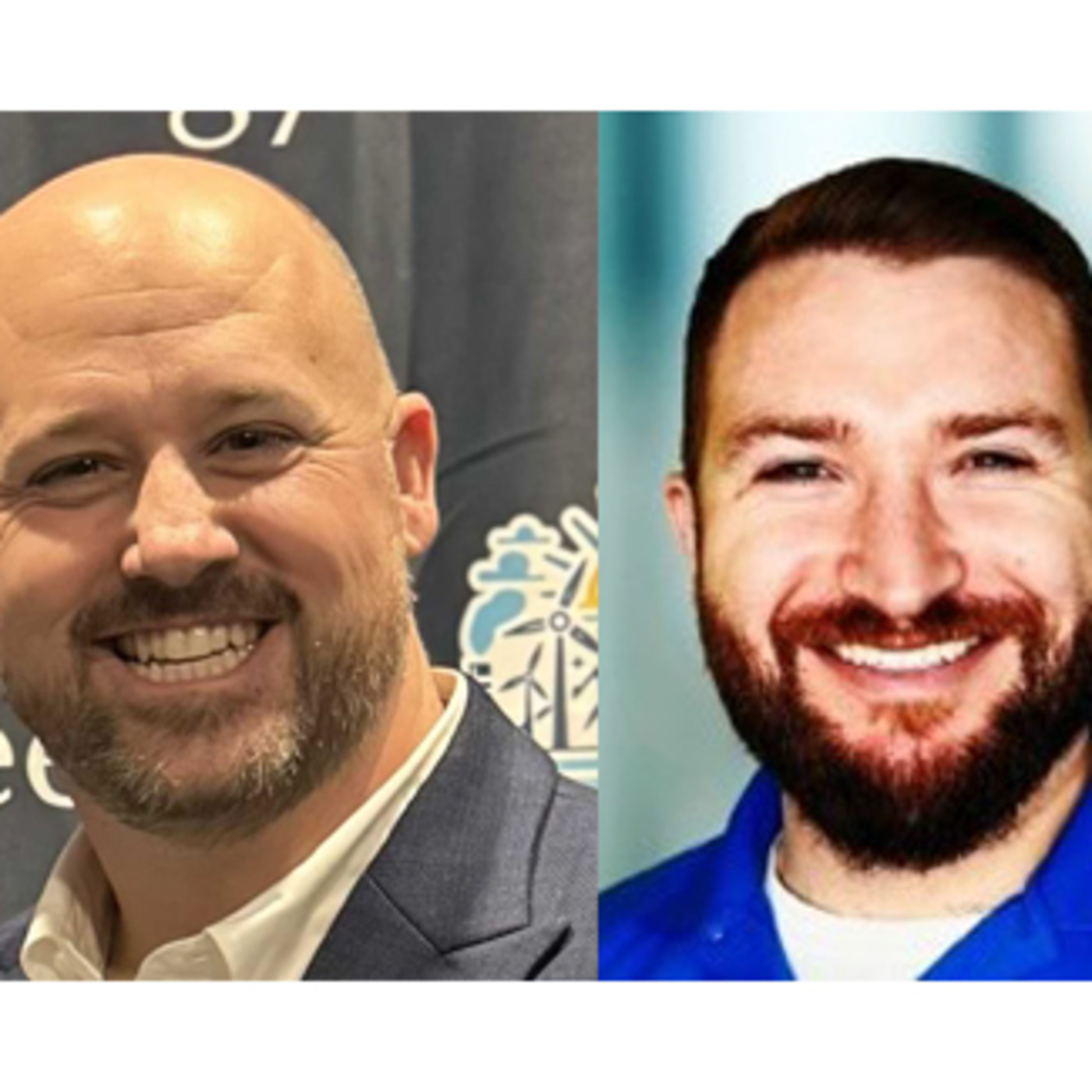
Lighting Controls Podcast
Everyone has a Smartphone with Andrew Cardello & Mike Berube
00:57:26
In this episode, hosts Ron Kuszmar and Webster Marsh sit down with two industry leaders:Andrew Ca...
Loading summary
Transcript47 lines
- [00:00]
Andrew
The opinions expressed are those of the participants and do not necessarily reflect the official positions of the sponsors, advertisers or presenters. Advertising does not imply endorsement by the sponsors and presenters.
- [00:16]
Host
Hey guys and welcome back to the Lighting Controls Podcast. We have a fantastic episode for you today with two amazing guests. Two guests who actually joined us at the Boston Lights Expo for our live podcast. And if you were there and you joined us, it was an absolute treat. We had so much fun we decided to bring these guys in for an actual episode. Before we jump into the conversation, let me take a minute to remind everyone. Today's episode is presented by the lca,
- [00:42]
the Lighting Controls Academy and it's financially supported by the national association of Innovative Lighting Distributors. Or nailed. Check out our website lightingcontrolspodcast.com got all all of our episodes and a whole lot more. But also huge shout out to our sponsor for this episode. We can cannot do this without your support. MaxLite and their C Max lighting Controls platform. It is a simple, versatile, future ready and scalable resource. And that's their talking points. But it is true, it is really worth checking out if you're unfamiliar with this platform. It has a patented USB C port on their controls ready luminaires from maxlite which gives you that ability to just swap out controls or even just plan out your projects and then add controls later on as you decide you want to add or remove lighting controls capabilities. You can add sensors, you can add luminaire level lighting controls. You can do a lot with this resource. So it's definitely worth checking out. Check them out at max l I t-e.com cmax but let's get into the conversation. So today we have Andrew and Mike. Andrew and Mike. Andrew, I'll start with you. Do you mind just giving us a quick break breakdown on who you are and what you do?
- [01:53]
Andrew
Sure, sure thing. Yeah, I mentioned it obviously like Ron said at the live podcast. But I am a program implementer. I work for a company called Resource Innovations. We partner with utilities across the country, working with them to manage their incentive programs. We do TA studies, we'll go in and do an initial scope on a building. But me and my team, we focus on the downstream prescriptive lighting program in New Hampshire and Massachusetts for municipal and large commercial customers. So my job is outreach manager for this program, really working with vendors every day, distributors and ESCOs primarily, and trying to help them navigate the incentive programs and try to maximize incentives for them.
- [02:45]
Host
Awesome. Well, thanks for joining us and Mike.
- [02:49]
Mike
Yeah, thank you guys for having Me, I am the vice president of sales for Independent Electric Supply. I support the Strategic Solutions division, which is a very well broadened approach to. We kind of help everybody do everything to an extent. So my background, I'm a licensed electrician here in Massachusetts. Been within the industry for over 15 years on the sales side of it with multiple distributors as well as the major New England Cooper rep here, Reflex Lighting for a number of years and about three years ago came onto this side with Independent, built out a great team. We do a lot of lighting and lighting controls. We work a lot in the efficiency programs across New England in multiple states and we collaborate with Andrew, the Eversource and National Grid team on implementation for certain customers.
- [03:44]
Host
Awesome. Well, thank you for joining us as well and thank you both. I think what's really fascinating about the two of you is you represent a piece of the lighting controls world that a lot of specifiers don't necessarily see or interact with. Just from that perspective alone, what would you say your familiarity or view of spec grade projects versus, you know, the projects that you're often involved in, like, how do you see those projects in comparison?
- [04:20]
Mike
So I would say when, when we're looking at the design portion where the specifiers are traditionally brought into a large project tenant, fit out outdoor lighting opportunities, it's a lot of design, a lot of intent is done and there's a window of time frame that's offered to that project where a lot of the times where we get brought in it is a need base, there might be a failure happening, there might be an offered incentive in the marketplace that has a window of time where it has to be completed by or there's not a large budget to bring in a design team and they're looking for someone to kind of field design or design build an opportunity. So when we look at those two different sides, we collaborate a lot with the specification community because the legwork and the time and effort that goes into the specifications and the standards for a lot of these customers, that's something that can be ripped away in 30 seconds. We try and keep the customer's intent. The customer brought a specifier in for a reason. We try and identify what are those key reasons for an opportunity and we try and keep that standard where we can keep it or try and create a collaboration opportunity. Some specifiers are more open to a collaboration with a distributor than others. And during that time we kind of learn and we communicate with the customer who brought us in. I think at the end of the day all of us are Working for the end user in some level. And, and I think it's, you know, we talked about it when we got together at Boston Lights and really it's, we're in that piece now where we need to start building that bridge again and we have to start looking at collaboration because that end user, they're gonna bring in both parties for different things on their campuses. So if we work together, we keep a spec, we keep an intent. We don't go in and just scrap it and get something in because it's the cheapest offer. So I think that's a long winded way of saying, you know, I think my view and my team's view is a little bit different than traditional distribution.
- [06:28]
Host
Sure.
- [06:29]
Mike
But we kind of look at it for the long run.
- [06:32]
Host
Yeah. No, and Andrew.
- [06:36]
Andrew
Yeah. I mean, Mike and I, Mike and I worked together when we were both at Reflex Lighting and we were kind of outside the spectrum side of the company, kind of working in the energy space. Design, build, retrofit opportunities are pretty much the space that we've lived in and that leans itself to the incentive programs. More white goods and trying to use DLC listed products to help pay for a project. I just feel we would love to, from an incentive standpoint, massive. We would love to get more specifiers included in the portal, included in the application process, included in trying to maximize incentives for customers. It's just having that conversation and giving them that training. I know obviously a lot of the spec lighting that is out there that some of your large lighting designers or architects in Boston especially are going to be using is not going to be DLC listed and probably won't qualify for any incentives. But some of the back, back of house, some of the areas that could benefit from a DLC listed option, you can help offset some of the cost of the entire project and avoid some kind of VE situation.
- [08:05]
Host
No. Awesome. No, I think that those are really great perspectives because I think that it is sort of a. There's a disconnect that happens between the two roles and I think there is a lot of synergy that could be, you know, created if the right, you know, if you knew how to contact, if you knew who to contact, if you were retained for that service. But so from your perspective, what are the most common projects that you, you get involved in?
- [08:38]
Mike
Andrew, you want to start? You want me to start?
- [08:40]
Andrew
Yeah, I can start. I would say primarily a lot of what we've seen. Resource Innovations took over the incentive programs. Massachusetts was January of last year, New Hampshire in November, October, November of last year, I would say primarily far and above what we've seen. We higher ed is what we have seen the most opportunity in. I'd say it's typically because you're looking at a lot of recessed troffers strips, mechanical spaces, stairwells, areas with a lot of white goods where you can. There's. There's a lot of opportunity there. And it's also a wider campus. So if you get in with one of those decision makers, it opens the door to other buildings when they see kind of what the, the payback is for some of the lighting, the retrofit lighting projects. They can. Oh well, I have this other building on our campus. It's got T12s in it. Can you take a look at this one too? And so that's. It just opens the door to more opportunity there. Hospitals is another one. We see a lot of hospital opportunity and moving forward with, with controls. I think it's going to be more of the same as well. Especially when you, when you get in with one of these larger campuses, it. It's great to have all of your buildings be on the same system. We've seen some like piecemeal stuff over time where you. Maybe one program was put in back in 2019 and then they put in another program, different manufacturer, different controls platform back in 2021. And so you have your whole campus separated. I see a lot of customers trying to unify all of their buildings onto one platform now.
- [10:38]
Host
Yeah, I am
- [10:42]
Mike
sorry guys. Sorry guys. I was going to say, you know, to add to what Andrew kind of said there, the higher. In the healthcare space, we also see a lot of stuff going on in the industrial spot. So industrial, it's not sexy, it dirty. It is running 247 in a lot of cases. There's. There's a lot of run hours and a lot of equipment to move around that impedes production and obviously revenue for that client. So we see a lot of high bay retrofits, high bays with controls in that space because they want to do it once and they don't want to touch it for 20 years. What they have now traditionally is the fluorescent T5HOs or some T8s and they are replacing those yearly where they have to shut down a line or change out an area, move machinery. The cost over time, it pays for itself so quickly and with the added incentive available in that space that is a gold mine for customers and consumers for an ROI because you just eliminated all that maintenance headache in the future. So. So yeah, I do agree with Andrew From a fixture perspective, it's a lot of troffers, it's a lot of strips and wraps. What we call the white goods. Right. We kind of went over what white goods really means during our podcast at Boston Lights. And you know, those are the traditional, what we call slots and dots. You know, from a design perspective, it's your squares, it's your circles, it's your linears. And we try and create, go after those because traditionally those are in a ceiling grid or in a gypsum ceiling. We're not dealing with decorative pendants and aesthetic fixtures. In a lot of cases, this crossover with design and our world of efficiency really we're looking to look at the utilitarian fixtures, the maintenance headaches, the products on a campus or location that are in large quantity. And that's where we focus our time again because it comes back to a maintenance savings long term and equal or improve the aesthetic of what's there now.
- [12:42]
Host
Nice. So we know there's still a lot of fluorescence out there. Right. But we also know there's a lot of LEDs that are starting to fail. But as we're seeing rebates start to change and we're losing fixture rebates. How is that changing the game for you guys?
- [12:58]
Andrew
Yeah, it's impacted a lot. So this year was the, the first full year where in Massachusetts for commercial lighting there were no fixture incentives. Municipal is changing at the end of next year for Massachusetts. New Hampshire is probably, I would say probably another year of fixture incentives left. At least they're in their last year of their three year plan in 2026. So it's kind of the, it's kind of a mystery to everyone what is going to happen with those incentive programs. But we've seen a lot of vendors struggling to get a good project. It's also from the utility side of things, the way that I, I've noticed personally the way that mass Save and NH saves qualify their con, the savings from their controls, it's not a lot of KWH savings and they've historically relied a lot on that low hanging fruit lighting kwh savings for their, their goals, their which leads to their budgets. It's, I think it's going to lead to a lot of changes when across the board there are no fixture incentives. And I think there's a lot of companies that are in this space, escos primarily who have kind of made their living on these lighting incentive programs. And it's going to be a difficult transition for, for those folks especially there's obviously other Measures that they get involved with. And I've seen more of them transition away from lighting into those spaces.
- [14:40]
Mike
Yeah, and I would, you know, to piggyback on that for you guys. Like when we, when we start looking at the controls landscape, there's been kind of like this good, better, best mentality. You know, the easiest path, path of least resistance for folks is go to an electrical distributor and grab a fixture that's discounted right at point of sale. And now I feel like as the consumer or the contractor, I've done a good deed, I've supported the programs. I'm putting in something that qualifies for that measure. The changes of no longer just grabbing a flat panel or a down light into. I have a control in it. It's a whole new world for them. Like, what do you mean I have to do more now? I didn't price that on my job. I need something a lot cheaper. How do I get cheaper? So we're starting to see a little bit of a press into the market of low tier value manufacturers. Folks that we really wouldn't have used on a daily basis. They're creeping in because of pricing and because the installers and the consumers in this space are not educated on controls. So, you know, that's something Andrew and I, and collaboratively with some of our peers, we've been pushing on this education of the front lines. We need to educate the contractor who's buying something to make it easy for him. So it's not a thought. You know, he just goes and he, he picks his brand that he likes at his distributor that he's comfortable with and he knows that there's a resource there in case he gets stuck on a project. He has folks in the channel like myself or Andrew or utility folks that he can call when he hits a speed bump. Then we get into the programs where Andrew and I live together, Express programs and more elaborate programs that are project centric based, where we're looking at savings goals, we're going to a site, we're auditing what's existing in a building. We're providing a solution based on where we see the parameters of the program. And we're providing that to the utility for approval. And then it comes back and then we share that with a client in those cases. That's where a lot of this is really starting to, to Andrew's point, the Esco partners in the marketplace, they're starting to look at these programs and say, why am I spending all this time doing it if the incentives are reducing? You know, it's not worth it on a cost project. And then we get into, you know, the comprehensive measures. You know, a comprehensive measure program is using lighting as a catalyst to do the mechanical or building management systems or we're going to go in and do, you know, heat recovery projects. All these other levels of opportunity are within the building. But traditionally your first line guy is not going to think about that. Even your second line, Esco, that's a, that's a bigger project. I can't do that. I'm just looking for that quick hit and get out. So, you know, we're, we're migrating into a more technical based salesforce, a more technical based consumer and installer. And a lot of the electricians in the marketplace, you know, everybody's got a cell phone, right? We've all got a phone. Ten years ago, I still remember half of the people had a flip phone, right? So it was really, I don't want an iPhone because if it falls off my ladder, it shatters and I just have to spend another thousand dollars on a phone. I don't want to do that. Well, now everybody has an iPhone now we've got 500 different types of cases. You have a smart device with you and now lighting controls is just another app that's on your phone. And that's what we're trying to get that frontlines consumer to understand. You already know how to handle controls, you just haven't tried it yet. And I think that model, and we transition that into these programs, it's the message that happens in the market. It can't be behind cloak and dagger about the programs and the efficiencies and how the incentives work anymore because traditional construction is already pushing that envelope. We're already looking at MEP firms quoting out wireless control systems that five years ago they would never have touched that they didn't want to deal with the channel complaining that, what do you mean you're taking work away from us? The educated contractor is now seeing a value prop in. I can get off a job faster. I can partner with the agent and I can have them handle the commissioning portion of this. So I think as we're moving through the opportunities at hand, I think it's all about education on the front side. As these incentives move up, move down. This is normal within the utility efficiency programs nationally, they're going to be ups and downs. You only get an incentive if it's code plus. So LED is now code. Why am I giving you money for putting in what you're supposed to? And I think that's the mantra that we try and resonate with a lot of the customers that we speak to. It's, we understand you're frustrated, we understand that that's not how it's always been for you. But this is code. Your entire career is based on meeting code. Here we are, it's just a change and we're happy to hold your hand and get you through it.
- [19:39]
Host
No, I mean, it really does kind of paint this, this picture of this exchange that goes on between the trying to motivate people to do the right thing or do the, the more efficient thing. And how do you do that? And we've had conversations with people about that before. But I want to bring it back to education because that's a topic that just keeps coming up again and again and again. And I'm curious, from your perspective, you know, what could the lighting controls industry do better to help educate the people that you're often interacting with? And you say they need education.
- [20:20]
Mike
You know, I, I think from my perspective, I think it's more support on the front lines. As a distributor, we have counters and branches and that's what people see us as. Oh, you go to the supply house and you get your widgets and then you leave. A lot of distributors within the market have leaned into the education portion over the last few years where they're doing training on H vac and mini split and heat pumps. They're doing training on new technologies that come through. And those trainings are great, but I think you have to meet the consumer where they are, which is on their schedule. We have multiple opportunities with manufacturers to do factory trainings. And for the industry folks, we get saturated in it. We're designing these things. They need us to help sell their product. That education is fantastic because that makes all of our comfort levels easier. To promote this in a marketplace, that is the goal of the manufacturer. But as a distributor, as an agent in the marketplace, as a contracted vendor for a utility, there's a piece of that that we all have to kind of look at in the mirror a little bit as to what are we doing to help educate that masses. Because it's not about the project today, it's about the project and the stability of the future. So, you know, I, I think, I think really it's, it's online training. I think it's a demand training. I think there is, you know, we, we've always, Andrew and I have collaborated with a number of manufacturers, do hands on trainings. You know, we'll, we'll work with Someone like a Max Light or an SLG or you know, acuity and we'll put something together and we'll have a collaborative lunch and learn or we'll go to a brewery, we'll put a bunch of fixtures out on a table and everybody gets to touch and feel it, see it without having to be stuck on a job while you're billing somebody and not knowing what to do.
- [22:10]
Host
Right.
- [22:11]
Mike
So there needs to be more of that, there needs to be more consumer based opportunities as well. And I think some manufacturers are doing a good job at that and they'll give out samples, they'll support you with product. RAB has always been tried and true to do that. Try one, see what you think. Because once they hook that installer with that one product, that one opportunity, they know it's a lot easier to just keep going with that consumer and expanding their relationship. And that's something I think that, you know, Andrew and I have bumped into. A lot of these manufacturers is, you know, it's, it is about the grassroots. It's not about this great idea and then here you go and then think it's just going to happen for you. You know, the channel has to support the future consumers.
- [22:56]
Andrew
Yeah. And as, as much as some of these contractors, they, they do tend to rely on the ability for the reps or a commissioning agent, someone to come in there and actually commission the triple LC fixtures that they are selling. I think the more they get the hands on experience of commissioning one of these sites and realize that it's really, it's a little bit more difficult than connecting your phone to a Bluetooth speaker. But it's not that much more difficult. So if you can get more experience, experience for some of these guys. I just had a conversation last week with someone who was interested in learning more about the incentive programs. Called him up and explained to him what the commercial incentives were for Massachusetts and that it was all control space now. And he was like, no, sorry, that's not really for me. Like I'm, I'm, I'm an older guy. I really am not looking to learn this new technology just for maybe like a few years and then kind of get out of the way for one of the younger guys. So I think, I think over time too, I like what Mike said about just meeting these contractors where they are having some trainings at some trade schools and, and just getting more younger folks involved with these controls and like I said, demystify it for them, just like get them to understand that it's really no difficult Like Mike said, it's a. Another app on your phone at the end of the day.
- [24:27]
Host
Right, right.
- [24:29]
Andrew
So if we can get more trainings and just over time I've seen it grow more and more. Unfortunately the incentive programs with the, with now, they're very rich in, in New Hampshire with the fixture incentives and the controls. There's there New Hampshire Saves has a bonus to give double the controls incentive for triple LC lighting from now until the end of the year. The time to sell these lights is now. So I just worry that the some people are going to get on board and the ship's already kind of stale. I think there's definitely the technology will still benefit everyone and from a payback standpoint from just your kwh savings and your maintenance savings, like Mike said, if you have a difficult fixture, if you have fixtures, we've seen some industrial facilities where there's, there's vats of acid liquid, a lot of facilities that the lights. In order to replace the lights over some of these difficult to reach fixtures, it's very difficult and costly. If you can make it so that light you don't have to worry about for 10, 15, 20 years. Whatever the future holds for LED lighting and the time saving you get from the controls, I think the projects are going to pay for themselves and people are going to adopt the technology just because it's the best thing to do for you.
- [26:03]
Host
So as we look forward at owner adoption and getting buy in on control systems, which is something we talk about a lot is getting people to buy into these systems, More people have had bad experiences. Know someone who's had a bad experience experience. You always hear about the bad experiences, not the good experiences. Mike, you mentioned something about everyone has a phone and so if we take the electrician out of the equation for a minute, you're right. Everybody has a smartphone. The owners all have smartphones now. So there are still going to be spec grade networked systems. But as we start looking towards the future, are we gonna. Do you think that we will see more owner adoption and you know, people buying into using lighting controls through a triple LC solution versus like a network system that requires them to bring someone in to program it or train someone on software and do all that fun stuff?
- [26:55]
Mike
I would say you're putting me in a slippery slope here. So my personal opinion is LLC is expanding what it does and how it operates. You see systems out there like Interact Pro right now they, they've adopted kind of your full circadian as part of your triple lc. We can add a wireless area controller to now make it bridged into an nlc. So I think the folks that are going to survive the evolution of lighting controls are going to be capable to forwardly adapt into what the consumer needs. What I really mean by that is if we take for instance like a college campus and a college campus, we'll just say it's a small one with five buildings. Four of those buildings could be triple LC's and one of those could be a head end unit, a traditional nlc. If we look at that campus and we say, okay, this is great, the triple LC is all work independently. They're doing their own thing. It's a living control system. Someone walks through the lights, do what they're supposed to do and they walk away. We have no visibility to what's happening on a daily basis by the individual fixture unless we add in a controller that then gives us access into a system. Do I, as the consumer, the end user, I hate saying it this way, but do I care what's happening if I know that it's efficient and it's reacting the way it's supposed to react? I don't, you know, it really, it used to be tied to a time clock solution. Times clock solutions were exactly what we needed for a college campus. Campus opens at 6am, campus closes at 10pm Nobody should be here. The reality is people are there 24, seven, right? So, so in those spaces the time clock could be there, but everyone's going to go to local switch and override it. Now you've got things all up and everywhere. You have to hire somebody to full time maintain that control system or you're pulling in outside integrator, a contractor to come in and manage that system. But at the end of the day it becomes a cost after cost after cost for an NLC system. There are clients that would like to have the visibility of everything going on because the operation of their space allows for that control. There are clients that like a hospital, a college, a municipality space. There are spaces that it is going to be a living system because of the world we live in. Now if I walked into a municipality and I looked at the elementary school, yeah, that could be on a time clock because who's really in an elementary school at 10 o' clock at night? Just the custodian, just through egress spaces and I can control that space. So I think the, the evolution is going to, you know, it's going to look at the triple lc, what works, what doesn't work. It's going to add features to Your app or to your system. It's going to allow you to scale and that forward scalability is what's going to be the future of NLC as it comes. We even see folks like Lutron, right? Lutron tried and true. We are head end unit. This is what we're doing, this is how we're going to manage our campus. We've got campus view, we've got this, we got this. It makes sense 10 years ago because triple LC didn't really exist and the triple LC's that existed were, you know, your space wise system or your easy sense. At the time of the OEM side, it did your daylight, your grouping and your aux sensing and that was it. And it was good for back of house and nobody really wanted to look at it. Now the features available now we look at L70s, over a hundred thousand as a standard. We look at these fixtures, once they go in, nobody really wants to touch them. So am I going to put my consumer, my customer, my end user in a position where they have to pay 150,000 a year for maintenance just to have somebody worrying about an nlc or do I go down this direction? And Lutron's even done it with Vive and now into their Athena system they're going backwards. You know, from a technical perspective they're going wider but they're going more closer to the easier control system versus elaborating on their head end system and staying, staying put where they are. They're willing to adapt and that's what's going to make them survive through this evolution.
- [31:11]
Host
Yeah, so I mean I think that these are all really great and it's a different perspective because a lot of specifiers don't view triple LC as the future. They view NLCS as a central platform and they think of triple LCs as sort of like a gimmicky low cost solution. And so, you know, I'm curious when you hear that, what is your thought like this because this is a rift that has happened between the rebate side and the spec side of lighting controls.
- [31:51]
Andrew
I could definitely see specifiers coming to the table with that position. Like Mike said, I mean historically you've had manufacturers like Lutron who were at the cutting edge and had a full network lighting system. They had the ability to have full bacnet, all these, all these systems to communicate with a building wide program. Then you, you're really dumbing it down for people when you, when you made triple LC and you're putting all of these really basic controls into an app all you need to do from an incentive standpoint is check a few boxes, make sure that your lights are have occupancy on, make sure that you can do daylight harvesting, which doing it right is a different story. But and also putting a high end trim on your lights. It's pretty like from a saving standpoint you're really doing the bare minimum. So I could, I just don't see it necessarily going away with the amount of large fixture manufacturers who have invested a lot of money into their triple LC systems or who have partnered with a third party to be able to utilize triple LC in a building wide solution. I don't know Mike, what's your, what are your thoughts on it? Because you, you've seen the transition more than I have on that.
- [33:29]
Mike
So, so I think there's, there you got two different sides like you said Webster. Right. So we got, we've got the design community that has their standards right. We, and we've got our white paper that says xyz, this is what I need to meet code. Here's my solution for my standard. We live in a world where there's a transition happening between a wired and a wireless solution. We all know that. And that starts at specification for large projects. That designer, that MEP firm is making a decision to commit to this is how we've always done it, or let's try something new. They're not looking at both options per project. They're picking which project should qualify based on who they know and who's involved in the project design. They're not doing what's best for the customer day one, because if they were, they'd offer both. Right, here's, here's a, here's a wired solution that's standard and here's what we'd recommend as our standard for a wireless solution. I think if we look at your major controls folks, they have spent a lot of money and a lot of time promoting a wired solution to create a standard for the design community so that we can check a box. And I don't mean that in a negative way, but like this is what we need and this is what it is and this meets what the design intent is for the project. When we start looking at a wireless or a triple lc, it restricts the design community on what fixtures they can utilize. So if we go triple LC into a design space and we had a great project, I want to say now it was, gosh, 15 years ago, we did with Mass General Hospital in Somerville, Mass. They built the new MGH building, the Partners Healthcare headquarters. That project was designed with Lutron Quantum. I got brought into that through Mass General, through some of the guys that were in the design group, the engineers, as well as the facilities team, because we had started retrofitting for triple LC's at the main campus. And as the design group was going through with a number of designers involved in the Boston market and out of New York, the question started rising of why can't we do both? You know, and for me, that was the first time I had a major customer as well as the spec community kind of clashing together in one big boardroom. So that was an interesting dialogue. And as we're talking through this, this is my flashback moment. But we had the design team standing there saying, this is what we've designed. This is what it is. Why are you doing this? And I had to kind of sit in the room and say, well, the customer is Mass General. It's Partners Healthcare. Like, at the end of the day, that is who makes the decision for all of us. They can throw you off the job tomorrow. I'm still going to be here because they call me for emergency stuff. I'm just bringing a solution to the table that they're interested to integrate into the design. Good, bad or indifferent. And the main driving force at that time was all the fixtures that we had were free based on the utility incentives at the time. So your troffers, your down lights, your slots, your strips and wraps, all the back of house stuff, the white goods were all free. We had at the time the opportunity to utilize some new products, which were remote sensors that could be used for decorative or other components down, like clusters at entryways or elevators, linear pendants, other products. But the problem at that time was the MEP firm felt like they needed to redesign the entire engineer drawings for this whole thing, which they had to do at the end of the day because the customer said, we want to do it. That project. We saved them close to 8, 8 million dollars on that project in lighting control, lighting fixtures, lighting controls. So when we start talking about the. The why do we do it? And, you know, we start talking about, you know, spec community versus the energy and the distribution community, I think we all look at it from a different glass a little bit. And, you know, I think. I think an education side, you know, we get a lot of education from 100 manufacturers in the distribution, the energy space because we're the ones that'll take the meeting, right? You know, your traditional, your stuffy firms. We only deal with these six controls guys. Those are our guys. We don't talk to anybody else. They're beneath us. Right. That's the, that's the ivory tower mentality of our channel. Right. So, so design is up here and we're just the lowly guys that just make it happen. I, I think at the end of the day, those larger guys like a Lutron are starting to widen their breadth of what they're offering and that's opening the eyes of the design community. And now they're letting people. In the last couple of years, you know, I mean, we saw it at Boston Lights. Every single manufacturer that was there had a controls idea, they had a concept, they had a partner where controls agnostic. Well, they never would have said that unless controls meant something to the future of this industry. So I think as we're navigating the, you know, the pieces and parts of where controls fit in the spec community versus where we are, I think it goes back to that bridge we talked about in the beginning. You've got to figure out how do we both meet in the middle. And some jobs are going to be heavy spec and wired solutions because of the need vivarium. We just did a couple of vivarium retrofits. It's a wired system. It's not going to ever not be a wired system because in case there's ever some issue, we can't disrupt the testing that's going on, the animals that are involved, there's life implications in those spaces. In healthcare spaces, like I mentioned Mass General, we're doing common spaces. We're not doing ORs. Right. ORs are wired. So I think there's still a push and pull of where these have to come together and live in the same ecosystem. But I think consumers are trying to standardize everywhere they can standardize. Now I want to pick one wireless and one wired. And that makes my life easier from a facilities perspective. I know what widgets I need on the shelf for an emergency replacement. A contractor walks in. We're standardized on this fixture and this controls. They can get themselves up to speed on the technical updates for those control systems before they walk in the door for an emergency call. So yeah, I guess that's again like as you start to look at the different systems and where they fit, it's never going to be one or the other. It's just not right.
- [40:11]
Host
So as we start to look at so like the ROI on things like this. Right. So, you know, not every job is going to be an mgh. Not every job is going to have that kind of savings. But you know, is this now, you know, using that as sort of a case study, is this where we start getting in front of the spec community a little bit more and saying, look, we, there's, here are the, the actual real life implications and applications for a hybrid system? And, and how do we get people or, and is, does it have to be driven from the owners? How do we get people to understand the ROI is there so that we can get more adoption and we don't always have to hear controls are too expensive.
- [40:51]
Mike
Andrew, you want to start with that one?
- [40:53]
Andrew
Yeah, I think it's, I think it's tough because I, as much as you can tell a great story with the case study, I feel like sometimes that just, I feel like sometimes you, you need an actual real world experience. Some of the specifiers would need to come up to a customer who is looking to make that change and they go through the process of either bringing an outside party or getting an ROI done to show them. Like we can save a lot of money here on this project and put capital toward other expenses that we have by making this hybrid system. We don't necessarily need everything to be wired, networked together. Yeah, it's, it's, it's difficult. I think, I think like I said, it's a lot of real world experience that I, I don't think a case study necessarily will paint a full picture.
- [41:59]
Host
Right.
- [41:59]
Mike
Yeah, I think with, with some of this. Right. You know, it's the, the construction costs. Right. So if we look at just your wired controlled system project with troffers. Right. We'll say that's a very simple one for everyone to relate to. If I'm going to wire that I need to have power coming in, I have to have line voltage feeding those and I also have to have a low voltage zero to 10 volt or some sort of a low voltage cable to handle, depending on what the controls system is going to be in the space. So now I'm running wires twice or I'm pulling luminaire cable and I'm kind of pulling something special which has a premium cost to it. So from a contractor perspective and the cost of labor which drives a lot of these projects, that's my premium product. When I go in and put in a triple lc, I only have to have power. I have no wire, no low voltage wiring to any fixtures unless I'm doing remote sensors with down lights or other, other pendants and decoratives. So right away you're eliminating roughly 30% of the cost to install one fixture. That's a real number when you're looking at large projects, it's a real number when you're looking at 50 fixtures in that space. Especially where you can relate that to both a new construction application and a retrofit application. I'd also say when a triple LC fixture is installed and powered up, it works right out the gate. Turn the switch on, lights go to 100%, turn the switch off, it goes down. There is no, there's like a, an industry misnomer that you have to commission everything before you, you leave the building. It's not true. Every one of the fixtures that is out there in, in a, from a max light or an SLG or somebody with integrated controls, those fixtures operate perfectly fine out of a box in some cases, some of them. And Andrew and I have been on a few calls with some of the controls players that are looking to get into this market with some cool adaptive and AI integrated controls. Those systems will also be pre commissioned out the, out of the factory. So if the customer says I want everything at 80%, I want occupancy set up on everything and daylight set up on everything, they can do that. We can eliminate one or the other, we can move those things around and now I ship them and everything's a standard. Here's our out of the box control for that space. You're eliminating a lot of headaches and a lot of cost right out the gate. When we look at an ROI for an investment with a controlled fixture versus a standard fixture, usually we're seeing an ROI in, in years and that doesn't matter what the number of fixtures is at that point really depends on union, non union and all those other semantics. But you're looking at a two year to a four year ROI to do your entire system in a triple lc. If you have to go to a wired solution, your ROI is in the 6 to 10 year range because it all has to get put in right. So all of the wires, the low voltage stuff, the head end desk unit, you know, someone managing it, that cost just adds up. It goes back to what makes the most sense for that customer. And I would say too like, and Andrew, we've done this in a lot of places with the utility partners. I would say that specifically in New England and I would, I would venture to guess nationally. There's a lot of large customers in the healthcare and higher ed space that have already dabbled in a triple lc. Whether it's a conference room, an office, a laboratory, they have put these in everywhere. So the fact that most people Might not know if it's there or not. You gotta ask the question. You know, you talk to the director of facilities, the head of the electrical department. Have you guys ever put these triple LC things in? They're gonna look at you and say, what is this, the tier two thing from 10 years ago? Yeah, I got three of those. And it comes back to like, oh, can we go take a look at it? And now it's like, oh, we really love this, or we hated that. And now from a design perspective, you know, the path you're going, you know, if it is a good solution and you've already got buy in on the ground floor, you bring that to the spec side and say, hey, they said they've already got this in there. Or can you dig in and ask the customer their thoughts? Now you're designing to what makes sense for the space and you're not worried about are they going to accept it or not. I think that's just kind of part of it as well.
- [46:00]
Andrew
And, and as we run into people in this space who have kind of got bit from putting in a triple LC maybe 10 years ago or so you, Mike and I talked, we run into a lot of customers who were bit with a wired solution as well. Either a very expensive system that went in, one person on campus was in charge of kind of the, the point person for that control and they left the company. So now they had a super expensive system that no one knew how to use or technology changes. Some people put in a wired solution with fluorescent lights and now all of a sudden those fluorescent ballasts aren't available anymore. You have to switch to an LED solution. Up the LED solutions five times more expensive as your old fluorescent option because of the driver, not because of the, the actual LEDs themselves. So we do run into people that, yeah, maybe it's the other way around. Maybe they, maybe they've dabbled in wired and now they want to experience triple lc. Some. It's the other way around.
- [47:09]
Host
I mean, this is, this is all really helpful and, and I just want to like package what we talked about here because, you know, for me it's, it's fascinating. I love hearing about these sorts of things, but I mean, we basically have these two perspectives when it comes to lighting controls. One is, you know, focused on providing high quality lighting controls that might be a little bit complex, might have added features, but really, you know, has a history of being utilized consistently and a newer technology that is evolving on a daily basis. And so what we're looking at really is NLC network lighting controls and triple LC luminaire level lighting controls. And because of the way the North American market operates, we have strongly adopted 0-10 volt in the commercial environment, which really limits our capabilities. So a solution to that widespread adoption is to embed the controls and the sensors inside of the fixture so that you don't have to run an entire system and wire all the, you know, connect all the controls wires correctly and circuit them correctly. And because of the fact that we have already kind of achieved energy efficiency with LEDs and they're now required by code, the incentive to really get people to adopt it has, has faded. We're now going away from the carrot to the stick. You know, if you haven't adopted LEDs by now, you have to adopt LEDs. And because of that, the incentives are disappearing. But we're seeing a more grown interest in providing lighting controls incentives because that's the next step. Lighting controls, while they're required by code. You know, there's other things that you can do with lighting controls that code doesn't necessarily mandate that you can improve upon the efficiency in the building. However, installation of lighting controls is complicated. It's not a hot swap from one fixture to another unless you're doing triple lc. And so that's why incentives have really focused a lot more on LLC as being that workhorse for the incentives. Can you get incentives for NLCs? Absolutely. But the incentive percentage is going to be lower than if you do triple lc. And so we are seeing an asymmetric focus within that rebate environment on triple LCs. And for groups that aren't focused on rebates, they're going with the more traditional style of lighting controls more frequently. Is there one that's better than the other? No. And so as a result, it is sort of that. What do you want? Do you want a really inexpensive, easy to install system that might not have everything you need or might not look the most attractive llc? Do you really want that high level lighting control system that really looks great, kind of disappears and doesn't, you know, impact the, the aesthetics of the fixture, but also has, you know, higher capabilities that you might want to do on top of just lighting controls? Maybe NLC is the better choice to go there. So, and, and hybridizing the two systems is always an option. And I think there's, there is sort of that, that switch mentality of either or you. It's like, are we going LLC or, or are we going nlc? But really it is sort of like space by space. Okay, is This a janitor closet? And can it just be llc? Great. But then is this like a lobby that has, you know, a bunch of custom fixtures that really can't have a LLC installation? Then that should be NLC and the two can communicate. It's possible to do this. It just requires a little bit more awareness and knowledge of what. What's out there. And so we really need to do a better job of educating everybody in being able to see both options as a viable solution to lighting controls.
- [51:30]
Andrew
Yeah, I completely agree. No, I don't think so. I completely agree. I think the people who do see that and take advantage of it are the. The vendors in the space that are going to thrive. And I. I had listened to some of the. Your podcast with Umesh from maxlite.
- [51:51]
Host
Oh, sure.
- [51:52]
Andrew
I. I think shout out to Omesh. I think it's kind of what Mike was saying with the. The scalable solutions. If you have a manufacturer who has a scalable solution, you can then choose the areas that you have that are NLC and the areas that you have that are more llc, even standalone. The Max Light has standalone options that you use the same port you could for storage. Right. Some kind of storage faucet that only has one fixture in it. You don't need a triple LC in there. Just put a standalone sensor so the light will shut off when someone walks out. Yeah, I think it's ideal for manufacturers like that and people who are selling the lights to see the opportunity where you can try to do the best for the customer in each space of the building.
- [52:46]
Mike
Yeah. And, you know, to support kind of what Andrew's saying, too. And follow up on what you said, Webster, is a great summary of the conversation. You know, I think. I think the world of lighting controls is still growing. Right. I think. I don't think there is a final line that we're at right now. I think we're looking at a lot of major fixture consolidation in the market for us right now. In our world, you've got a lot of brands being gobbled up by the big guys. They're trying to figure out who they want to be when they grow up. I think we look at supply chains globally right now, and components. There is a number of different controls, components that are made overseas that are integrated into the masses here in the US Market that are starting to push back a little bit. They want to be. They want to be the leader and have lighting follow them. And I think that shift in paradigm that's about to happen here with some of these, you know, OEM control systems, it starts to kind of look at lighting and fixtures as a secondary solution. So I think, you know, I would challenge the marketplace to dig in a little bit, kind of see what's happening in controls globally. Understand that your major player, your type, a item you always put on every one of your jobs, ask them what they're doing about controls because you might get blindsided on a project you designed today that goes through in three years. Your fixture might be off that schedule because you're not adaptable. And I would pressure those manufacturers to look into this and identify. And again, once a consumer or a client decides on a controls platform, you can challenge your manufacturers to integrate that into your, into their product. There is no manufacturer that's going to say no, I'm not doing it. There's always a premium, there's always a cost. But Andrew and I have worked with a number of manufacturers that are DLC listed but their controls agnostic. So that basically means, well, the customer wants to put space wise in your fixture. Can you guys connect? Yep, no problem. Let me make a phone call. Great. You know, and, and it's not on a cut sheet. It's, it's kind of just, you have to do your due diligence.
- [54:51]
Host
Yeah.
- [54:52]
Mike
But I think, yeah, as the market, you know, performs, we're, we're in a cool spot as a group of us, you know, for sure in, in a New England hotbed that's focused on efficiency and growth and collaboration with multiple different efficiency methods. Lighting's not going away, controls are not going away. They're just going to get a little bit more difficult, a little bit more technical and, and that's why the experts are here.
- [55:14]
Host
Love it. Andrew, Mike, guys, thank you so much for your time today. I really appreciate you guys taking the time to come back and be with us again after being with us in person. So thank you so much. And it's amazing how these two conversations weren't the same. Right? Like that conversation had a different spin than this and again, if you weren't there, you missed it. So you get this one instead and it's all good. But I think the ever, the ever evolving and growing theme is that control are ever evolving and growing and there is not one networked solution or wireless solution for everything. There is not one magic bullet. Right. We need to learn to be adaptive and look at creating hybrid and mixed use systems and do what's right for the customer. Because at the end of the day, you said it earlier, Mike, we are there to service the customer. They are our priority first and foremost. Not our own egos, not our own wallets. And we everyone needs to take the time to remember that we service them first and if they have a good experience, everybody wins. Right? That's what it comes down to. And that's where we need to put our focus and remember that. So guys, thank you so much for your time again today. Really appreciate it. I will just start to close this out and remind everyone. Today's episode is presented by the lca,
- [56:31]
the Lighting Controls Academy and it's financially supported by the national association of Innovative Lighting Distributors, or nailed. Check out our website lightingcontrolspodcast.com got all of our episodes and a whole lot more. But huge shout out to our sponsor. We cannot do these episodes without their support MaxLite and their CMax lighting controls platform. If you aren't sold already from this episode, let me just emphasize that they are an excellent resource for four rebates. They're DLC listed, both lighting and controls and they can really help you achieve maximum efficiency within your building. So check them out max lite.com Cmax Otherwise, thanks for joining me and gentlemen, thank you. This was a great conversation.