← Living Influence with Bill Thrall and Scott Boyd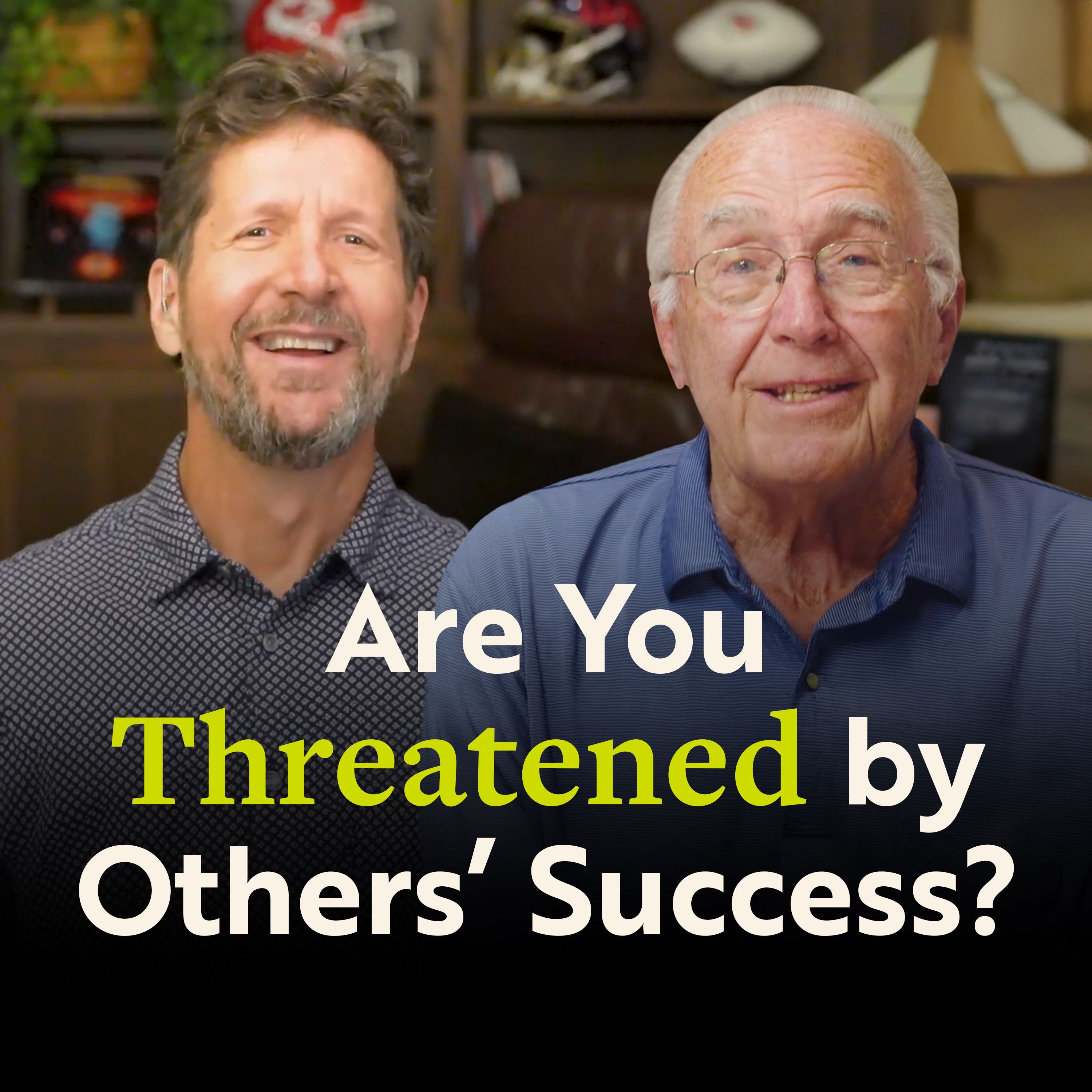
Living Influence with Bill Thrall and Scott Boyd
Mature People Delight in the Success of Others
00:18:46
Loading summary
Transcript27 lines
- [00:04]
A
The mature delight in the influence of others. Welcome to living influence, Bill. We're talking about people maturing, and we're talking about how, as we mature, we begin to delight in those around us maturing rather than competing. And. And I think you used the example of Saul and David. You want to just give us a little bit on that?
- [00:31]
B
Dear Saul, he's this big king. He's a big man. He's everything. And then this little shepherd boy shows up, and the people start singing songs. And the songs they sing are that Saul had his thousands and David his tens of thousands. And they were exalting David and Saul because he was immature, got bitter, and when in the bitterness of his heart, instead of being able to honor David, he pursued to kill him. And I just want to pause there and say immature leaders really struggle with other people being honored. Mature leaders delight in others being honored and even surpassing them. So lots and lots of times, and I've been in ministry a long time, lots and lots of times, ministry leaders often are just so careful that they're number one, and I'm the most important person in whatever. And that's immaturity. That's not maturity. The main emphasis is this. How do I learn to delight in the influence of others? Where it starts for me is the modeling that I receive, Scott, from some individuals who chose to delight in my maturing, chose to delight in my having influence.
- [02:05]
A
Yeah.
- [02:06]
B
Early on in our ministry, God was blessing us. And in the little group, the denomination that we were a part of, there just was, quite honestly, jealousy amongst the folks as to the significance of all these things that were happening. And a dear friend, a man who was highly esteemed in that denomination, made a decision one day to defend me. And. And he called the elders together of all these little churches. And God is so great. And before we went in, we were in the car, and he grabbed my knee, and he said, now listen, you don't ever open your mouth. You do not say a word. What? You don't say a word. Okay? So. So we went into this meeting, and there were the elders there from seven different churches. And. And he just stood up and. And he did something that I'd never seen modeled before, Scott. He said, you are passing rumors about this young man that are not true. And I'm telling you this. And he just exalted me, said a lot of really good things about me. And then he said to them, and today this is all going to stop, because I will begin. Because he was a highly influential leader in the organization. He Said, I will begin today to make sure that people are hearing the truth. I never said a word, Scott. And guess what? It stopped that moment, that day, that moment, all of that harassment was over because one person just made the decision to stand in the gap for my benefit. That has had a profound effect on me, Scott. It has allowed me to be intentional for the benefit of others. He taught me that that day.
- [03:58]
A
I've told stories of my childhood growing up. I had an alcoholic dad left in fifth grade, and I kind of. I did. I ended up raising myself a lot. Seemed like I was left alone. I had to figure things out on my own. I went to this. It was actually a Henry Cloud, John Townsend Ultimate Leadership Conference. And at the very end of the conference, I got asked a question, and I knew the answer. And the answer was that I hated my dad. And those are the words I said. And when I said those words, I ended up, like, cathartically crying. I ended up on my hands and knees. I was just a mess. And that was literally the last hour of the conference. So we got up and we went home. And I'm like, what do I do with this? And, you know, you're supposed to honor your mother and father. And I found a counselor, and I started to see him, and his name's Ross. But over time, this man became my friend. And I remember talking to him about leadership and what was going on with my business. And at one point, in a real stern way, he just leaned forward and he said, just how much blanken evidence do you need that you're a leader?
- [05:23]
B
What a great moment. What a great moment.
- [05:27]
A
Convincing me that something was true about me, that I wasn't believing that was true about me.
- [05:34]
B
Absolutely. And, Scott, just pause there for a minute. Because of the significance of what you said. A person seeing you for who you really were, someone you trusted, declared a truth over you that you finally believed. And your life has never been the same.
- [05:58]
A
It hasn't? No. That's. You're giving me goosebumps right now, because it hasn't. I began to believe that that was true, and that gave me confidence. Yeah. Yeah, for sure.
- [06:09]
B
And in our. Tragically, you mentioned two significant influences. One, a father that your language that you hated and won, a kind counselor who became your friend, who you trusted. And that's an amazing illustration, but it really sets the point of what we're talking about, and that is because I know you now, and I've watched your life some, and we're together a lot. I've watched you become that Person for others.
- [06:50]
A
Yeah, I have.
- [06:51]
B
I really would love you to tell us about how you see that working itself out in your business, because I think this story you tell is just amazing. It doesn't have to be for businessmen, although I hope some are listening, but just a story of how much different a man like you can make when he puts trust into the environment. Just tell us that story, Scott. Everybody. I think they need to hear it.
- [07:18]
A
I think I was five years into starting the business, and it was beginning to become successful. It's like, all right, maybe this is going to work. We had a few years where we weren't quite sure. And I know I had a moment where a couple moments. One where someone came to me and says, oh, my gosh, I just love working at questech so much. I want to have my career here. And when they said that to me, it was like, oh, my gosh, I'm playing with live ammunition. People are organizing their life about this thing that I'm trying to do, this little thing in business that I'm trying to do, and they're, like, changing their life and ordering their life around it. And it's like. And so it was this almost a panic, but almost just a seriousness of, like, I better figure out how to do this well, or it's really going to be painful because people are counting on this. And it's not just me and my family, which was big enough and scary enough, but now it's. It's other people and their families, too. And so I had this moment where it's like, I got to find a reason to do this besides my wallet. And the reason became an individual. He's still with me still. He works for my son now. His name's Matt. He's the vice president over all of our field operations now. He was my very first apprentice. We started this apprenticeship class to teach people to be pipefitters and plumbers. And we hired some teachers, and we had paid for this curriculum, and it was being done in the career center. And he was one of the first students. He was. He and another guy were the first students in our class. And. And so here it was five years later. And he was a foreman for us and one of our best foremen, and he was running projects and doing a great job, you know, and if I try to scratch my head and figure out what causes a project to go well, well, it then took a brain scientist. But I started noticing, well, every project Matt's on seems to go well. Maybe there's something to do with Matt. But watching him grow and take those steps was what I thought about when I thought about the question, I gotta have a reason to do this besides my wallet. And so the reason for me became questec, which is a plumbing and mechanical contracting company. We provide opportunities for people to grow. That became my core value. And so I let that value direct me. And so if there was an opportunity to take a risk and it would enable us to grow, I would take that risk. I had seen other guys who had competitive companies, other companies that we competed against. These guys, these men had gotten what they wanted and they were successful. And now it was about preserving their success. And so they became, as they grew older, more risk adverse and their companies would stagnate and I would just watch people. It's like, okay, I'm here in position B and the guy in position A is only five years older than me, so I'm going to have to wait 20 years before I could get a promotion. And I, I didn't want that to be true. I wanted to provide opportunities. So it just became, I guess, a guiding principle for us of like, well, we're just gonna keep taking opportunities and stepping into them and seeing what happens. And, and the amazing thing is, is that that then transformed into having questac believe that we could give people careers. So now it's just like, we're not now just offering them a job. We have a job we need to fill and we're looking to hire somebody for this job. But now when we would interview people, we had a career to offer. And so it changed how we interviewed. And in our interview, we're actually wanting to know, what are you hoping for in your career? And as we would get people to trust us and tell us what they were hoping for, it could direct us in the position that we offered them and the opportunities that we knew would come and we'd have them in the mind of like, oh, this guy could actually jump into this spot. And it transformed the company. It's what fueled our growth. We never set goals for growth. We just, I would just work on eliminating the friction spots. Who's really stressed? If we could get that guy unstressed, we'd, we'd figure out how to get his job where it wasn't so stressful. And all of a sudden we would grow again because people were hungry and, and wanting to do that. And so we want to see others flourish and others flourishing doesn't actually cause us to be threatened.
- [12:44]
B
Right, if, if you're mature. Yes, because that's. That. That was the Original point, Scott, that's such a good story. I. I want to dwell on it with you just a couple more moments. Because of the things you said.
- [12:57]
A
Yeah.
- [12:58]
B
What. What you're modeling, Scott, for anyone. It doesn't have to be a business. It could be a parent. This could be anyone. When you decided that you were going to give them an opportunity to see a career and not a job, you were speaking into their potential and their significance, and that's critical. Because of your maturity. You learned something valuable because of grace. God. You learned that this isn't all about you. This is about the possibility of others and even your illustration. And some of these businesses that have grown up with you over these last 15 or 20 years have become stagnant. A couple of them, as you know, have gone out of business. Why? Because they made it about money and themselves. And you were able. Because of God's grace, in my opinion, you were able to look beyond yourself and see the possibilities of others. Even though right now, Scott, you could still be running this business, you've chosen to turn it over to your sons. And I love what you tell me. And they're doing better than you ever did.
- [14:15]
A
I'm doing better than I ever did.
- [14:16]
B
How delightful is that? Yeah, how delightful is that?
- [14:20]
A
They remind me of that every once in a while, how much better they're doing now. Yeah. Yeah, they do.
- [14:27]
B
But as we think about just this, the. The idea that the mature delight in the influence of others, I. I'm imagining then people that are listening and watching us right now going, oh, how do you do that? How do you delight in some. I've. I've had people in my cohort say, what do you mean delight in the success? I have never had my turn. When do I get my turn? And. And I say, wait a minute, here's the reality. When you understand at the core of your person who Jesus Christ has made you to be, the intention of your heart changes from you to them. And as you and I, Scott, have had this privilege of knowing and working with each other, our message to our audience is this. Would you be willing to grow into learning how to trust who God says you are so that those you influence could rise to the significance of their person? That's really what we're talking about.
- [15:37]
A
Yeah, we are. You know, just to add another level to this, because I think it fits as well. God talks about communities like the church as if it's a body. And I think a local church is like a body. I think a company is like a body of people. A community of people. Right. And when you begin to recognize the significance of each person and how those, how they're necessary for the body to grow, whatever the body is, if the body's a company, if the body's a family. I mean, just think about with a family, a family God gives, a family with children. And as we release those children into their significance, they dramatically affect our family and how it's enjoyed and how it loves one another and how it protects each other and how they, you know, uncles cheer on others, the nephews and all that kind of stuff. It's just amazing how this message of grace and about the significance of the person just feeds into the significance they are to the body and how the body becomes this organism that I'm a part of, but it's bigger than me.
- [17:04]
B
Amen. Well said. Very well said. And, and, and, and not to be a downer, but to just be remembering. If I have never learned to trust the significance of who God says I am, I will never be able to honor the significance of who you are.
- [17:29]
A
And that's why we are talking about influence, isn't it?
- [17:32]
B
Absolutely. And that's why we, in every angle that you and I can imagine for our podcast guests, we keep saying, this is our reality. Can I buy God's grace? Truly live in to the miracle of who he has made me. Because when I do, I will become a vehicle for you. Isn't that beautiful?
- [18:01]
A
That's right.
- [18:01]
B
I will become a vehicle for you. That's our goal.
- [18:04]
A
People are amazing. And what that means is that you are amazing. You have amazing potential to influence, amazing potential to contribute. We want you to catch a glimpse of that and begin to imagine that that's true because it's changed our lives as we've done the same. Thank you for being here on Living Influence. We hope to see you next week. Thanks for listening. Thanks for listening to Living Influence. We appreciate you. Just a call to action. We would love it if you would share our podcast with one or two people this week. Thanks again.