← Living Influence with Bill Thrall and Scott Boyd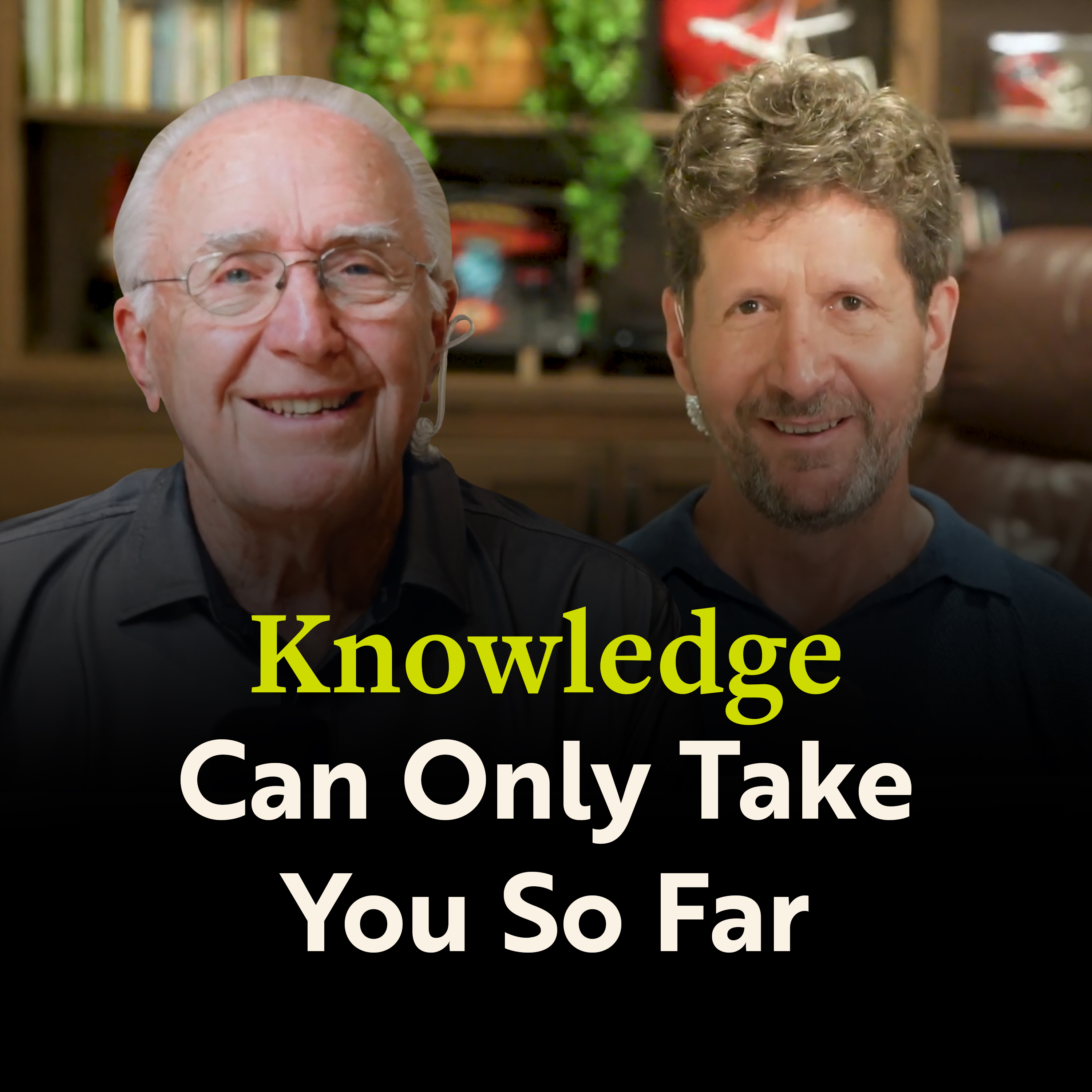
Living Influence with Bill Thrall and Scott Boyd
Why Knowledge Alone Doesn’t Lead to Maturity
00:20:55
Loading summary
Transcript41 lines
- [00:04]
A
Hey, guys, I just want to tell you about something else that Bill Voldemort and I are working on. It's called Living Influence Leadership. It's for business leaders who also happen to be Christians. We think we've got some great stuff that can be amazing in your company, as it wasn't mine. Check us out@livinginfluenceleadership.com welcome to Living Influence. I'm your host, Scott Boyd, along with my friend, my mentor, Bill Thrall. Bill, how are you doing?
- [00:30]
B
I'm doing well, thank you, Scott. Good to be with you again.
- [00:32]
A
Yeah, same, same. Excited. We've been doing a process on our podcast, talking about the process of maturing. Yeah. So I got a statement that Bill's written that we're going to start with. Maturing is a process when nurturing someone. Make sure not to push them beyond the pace it takes for their character to mature. Right answers do not equate to right choices. So, yeah. So don't push them beyond it. The pace it takes for their character to mature. So are you. So you're pushing them.
- [01:13]
B
If I'm teaching someone, even theology, if I'm not careful, they will learn what I'm teaching them, but they'll never experience what I'm teaching them. And so what happens is they won't mature. So when I use the word there to push, it's like, all right, I've gathered these guys and I'm really going to help them mature. Be careful. I have a screaming careful in my voice right now because something has to be true. If what I'm teaching is not being experienced because they're not learning to trust it, they'll never grow up, no matter how much they know. Let me give you my own example, Scott, my own life. I went to Bible college. I learned a lot of theology. Believe me, I had a lot of right answers. And even though I was in my early 20s, maybe 24, 25, 26, I was doing a lot of public speaking in these little churches, and I had learned a theology, so I knew the right answers. My life, Scott, was a holy mess. I mean, I was in the most tragic downturn of my life up until my late 20s. So what I'm learning is this maturing is a process, and it requires my trusting truth. It doesn't just acquire. It's not a matter of acquiring more knowledge. It's not a means of getting more answers. There are lots of people, Scott, who know a lot about the Bible and are unbelievably spiritually immature, like it's almost. Well, what do you mean, Bill? Trusting truth? Well, what I mean is here's, here's an interesting truism. The knowledge of the Bible is a wonderful thing, but it never requires my trust. It just requires my agreement. Oh, yeah, I believe that's in the Bible, thank you very much. But, well, how would I know, how would anybody, Scott, know that they are actually trusting truth? Because this is a difference that is profound. When you trust truth, the evidence that you trust it is that you act upon it.
- [03:54]
A
Yeah.
- [03:54]
B
See, knowledge doesn't require action. It just requires agreement or assent.
- [04:02]
A
And so a question is, so when I act on truth and I experience the fruit of that action, it's the experience that transforms me.
- [04:15]
B
Absolutely. Well said. Well said. Experiencing truth is transformational.
- [04:23]
A
And experiencing truth only happens when I act on the truth.
- [04:27]
B
Exactly. Just think of all of the characters in the Bible who God used at a particular time to act upon truth he gave them. And, and this is, this is a wonderful thing to know. And when they did, their lives were never the same. See, maturing actually changes me. Now, I, I, we have to be careful here with our words. The goal of our Christian life is not to change who I used to be. The goal of my Christian life is to mature into who I am. It's to mature into who I am. But as you just said, Scott, when I in fact act upon truth, I will experience that truth and it will change me. I'm saying that so carefully. So many, so many people, Scott, wake up every day with this huge desire. What do I have to do today to be different? What do I have to do today to become more godly? What do I have to do today to be this and that? What if we could help them with just a couple changes of words? What if they, instead of getting up in the morning, they could say this. Who do I need to trust today so I can be different? And what if I included in the who God? What if I included in the who God? You know, he reminds us in Hebrews that, that without faith, without trust, it's impossible to please God.
- [06:04]
A
Right? Yeah.
- [06:07]
B
So it's a process.
- [06:09]
A
I remember when I first found your books, I had actually found grace before I found your books.
- [06:17]
B
I remember you telling me that. I believe that. Yes.
- [06:19]
A
Yeah. And for me, grace involved, you know, I was struck by the words in Galatians. Abraham believed God and it was counted to him as righteous. Righteousness.
- [06:31]
B
Amen.
- [06:32]
A
Amen. And it's like, wait a minute. He believed that God said, I'm going to Give you a son. And so he believed him. And then now he's righteous, and it's like, but that's all he did. And so I was wrestling through this. It became for me a cliff that you had to leap off of. Let me leap off this cliff and trust that Christ is in me.
- [06:59]
B
Amen.
- [06:59]
A
And then the experience of doing that, I'll leap off the cliff, and I'm going to trust Christ is with me. And so I'm going to trust what I find. I'm going to trust God is with me. And. And the crazy thing is scary, is that I would scare people with this talk of like, you just got to leap off the cliff and try this grace, because it's amazing when you do. But the truth would be I would find God really was in me, and that that discovery only happened in the presence of faith, which is also trust. Amen. It's almost the same word. Okay, Leap off the cliff and trust that God's in me and be me, because that's where he is, in me. I mean, people would like, wait, you're being impulsive. And I'm like, no, I'm not being impulsive, but I'm. But I just tell you, it changed my life. My doing, like, I don't know, exponentially grew that the things I was doing for God. When I quit trying to do and just trusted, that's where I was. When I found you and you began to use this word trust, that was a much better vehicle, I thought.
- [08:27]
B
But it's the same concept, isn't it, Scott? It's the same concept. You knew that by jumping off the cliff, you. You were trusting God with you, and you discovered a God that you could trust. By the way, that is grace, Scott. That is grace. And so that experience, I scream amen. That is your reality. Tragically, Scott, it's not the reality of a lot of people, because we have made a mistake. And I don't know when it started or who started. I wouldn't blame anybody for all of that. But we've made a mistake. And the mistake we've made is we've created systems of theology and Christian living that when practiced, presumably will help you mature. That's. That's what we've done. And yet the process of maturing is always essentially the same. Today, who am I trusting to be able to meet a need in me that I and my own are not capable of meeting? Can. Can my God when I trust him? Your example, can my God in fact meet me? Your name is Scott, but meet Me, Bill, in this reality, for instance, Scott, we teach this together a lot. Maturing is a process. It begins with, can I trust God with who he says I am?
- [10:21]
A
Yeah, that's where it starts, right?
- [10:23]
B
That's where it starts. Can I trust God with who who he says I am? And this is going to sound like a broken record to some people, Scott, but. But let's say it again. When my theology, when my preacher is reminding me on every Sunday morning that I am a sinner, that preacher every day is triggering my shame. And I see myself through the lens
- [10:55]
A
of my shame, just like the guy that wrote us his letter about his men's group. Every time they went to the men's group, they incited each other's shame.
- [11:06]
B
What a truth. But what a tragic reality. But what if, and we're going to spend so much time together with our audience repeating some of this a hundred times if we have to. Scott. But here's part of the deal. What if, starting today, I would look at who I am through the lens of who God says I am, not my shame. What if I could do that? Today you mentioned wisely, Abraham believed God and it was accounted to him for righteousness. Scott, here's what Romans screams. Paul screams at this in Romans 5, 6. Here's what he's saying. Do you understand that you died and you no longer have to serve sin? That ain't who you are anymore, but you get to do something new. You have a new master. It's called righteousness. How many Christians do we know are being taught how to serve righteousness? I can tell you the majority of Christians are being told how to sin less, and it never works.
- [12:19]
A
Yeah. So tell me more about that. How do I serve righteousness?
- [12:24]
B
Jesus did something with his disciples, but it's for us. He was talking to you and me. He said to his disciples, a new commandment I give you. I want you to love each other just as I have loved you. Now, the disciples, they understood something. The Old Testament commandments were given to humanity not as a code of conduct, although they were trapped in that code of conduct for years. The Old Testament law was given to show humanity they were unrighteous. That was the that. Now Jesus says, I'm going to give you a new law. And Scott, this is my new law. And I'm going to tell you something. You can keep it, Scott. And Scott's going to go, wait a minute, wait a minute, wait a minute. You're messing with me here. I just learned that I can't keep the Law, because I. Oh, I get it. I couldn't keep the law because I was unrighteous. Oh, I get it. I can keep this law because. Oh, wait a minute. I am righteous. And what is the law? That I would love you. So back to your question. How in the world would we practice righteousness? By loving one another, Scott. See, humanity's great need is to be loved. That's our greatest need. And so how would I practice righteousness? Wait a minute, Bill. You're really messing with me here. Are you telling me that if Scott and I and others that we met were loved, well, we would in fact be giving the evidence of our righteousness? Yes, I am. Yes, I am.
- [14:08]
A
I was in a Chamber of commerce panel discussion where they put these three business people up. I was one of them. Most of the people, you know, I have a plumbing company. I'm mechanical contracting, but we do plumbing. Most of the people thought, oh, a plumber. What's he going to have to say?
- [14:30]
B
What does he know?
- [14:33]
A
I actually had somebody come up to me says, man, you were the last guy I really wanted to listen to, but you were the best guy. I loved what you had to say. So one of the questions they asked us was, what would be something that you know today that you wish you would have known?
- [14:47]
B
Oh, great question.
- [14:48]
A
20 years ago.
- [14:50]
B
Great question.
- [14:51]
A
And my answer to the question was, I wish I would have known when I started my business if anything was going to endure, if anything was going to build upon what's been built upon before and continue to grow, if anything is going to flourish. At its core, you will find a love for people, a love for your customers, a love for your employees, a love for the craft that you do and what it provides. But love would be at its core. And I didn't know that at the beginning. You know, I thought you had to be good. You had to be, you know, a great marketer. You had to, you know, all these things that you had to do really well. And you do. You have to do those things really well. But. But at the end of the day, the things that endure that cause a company to grow stronger involve loving people.
- [15:46]
B
Amen, Scott. Very well said. And. And I'm going to ask you something.
- [15:51]
A
Okay.
- [15:52]
B
In that process of loving others, you taught me that what you did is you chose to trust others. And, Scott, I want you to talk about that. How. How did your trusting them change their contribution?
- [16:10]
A
Yeah. Trust is such an amazing word. I have a funny story. I have a really good friend in Guatemala. We were going to dinner and he was dropping us off at the restaurant, but he had an errand to run. So he told his wife, hey, just order me something from the menu. And I, like, you know, being a smart aleck, said, oh, I'll order your meal. And he goes, oh, that's great, Scott. I trust you. It was like, darn, he ruined it. I was going to look for the craziest thing on the menu to order him, and now he said he trusted me.
- [16:46]
B
Right? He used the magic words.
- [16:49]
A
He did. And because he said that, it's like, oh, I gotta order him something that he would like now. I mean, it just. It changed how I show up. And so in my company, if we hired you and you became a part of our company, there's a subcontractor. As an employee, we chose to give you trust as table stakes. So we're going to trust you from the get go. You can earn your way out of the trust, but we're going to start by trusting you. Because here's what I found. When you trust people, they show up differently. They feel valued, they feel seen, they feel appreciated. And so trust became this thing that we gave away freely. And I think it gave such a huge return to us. I think we still do it to this day, even though I'm not there.
- [17:47]
B
Yeah, I think you just combined some thoughts, Scott, for me that are very helpful. You started off with your talk about love, and you demonstrate it by trusting your employees that you love them. And I just want to combine in my own thinking those two words. Do you know, Scott, that no one can experience love until they trust someone?
- [18:16]
A
Yeah. Yeah, that's true. And so us trusting our employees created an environment where they could trust us. And then when they would trust us, we would ask them to share with us. What is it you hoping for in your career? What is it that you're really wanting for you in your career? And as they would trust us with the truth of what they really wanted. Because people want all kinds of different things and all kinds of different jobs, but when they would trust us with that and then we could help them get into that position or that spot or that career path, that. That. That could happen for them. Oh, my gosh. The engagement we have in our company has been phenomenal. We have a lot of coaches that coach all kinds of different levels of leadership in our company. You know, just to give you the size, the scope of it, last year we did 150 million in business, and we spent over 400,000, almost a half million dollars in coach coaching. And our profits continue to grow even though we're spending that much money on coaching, which is crazy. But the coaches, the coaches that work for us, they get together and they tell us. We've never seen a community of people that. You don't know how much these people care about you and your company. It's crazy how much they care about you. And it just is. Blows my mind when I get to hear those stories and. And I get to hear an outsider that's come in and working with our people and they hear what's in our people's hearts. It's been very cool. It's. It's why. And. And, yeah. What are the words? Trust and love. Amen. And. And. And that's. Those are the key ingredients to. To maturing, being trusted and being loved. Gosh, this has been a great conversation, Bill. Thank you. Thank you. Yeah. And to our viewers, please hit, like, subscribe, share all those kind of things. We just want to spread this message. I really have a passion for it, and I love it. We'll see you next week here on Living Influence. Thanks again for listening to Living Influence. We appreciate you. We'd love it if you'd go to Living Influence, contact us and send us an email. We'd love to know what you're thinking. See you next week.