← Living The Red Life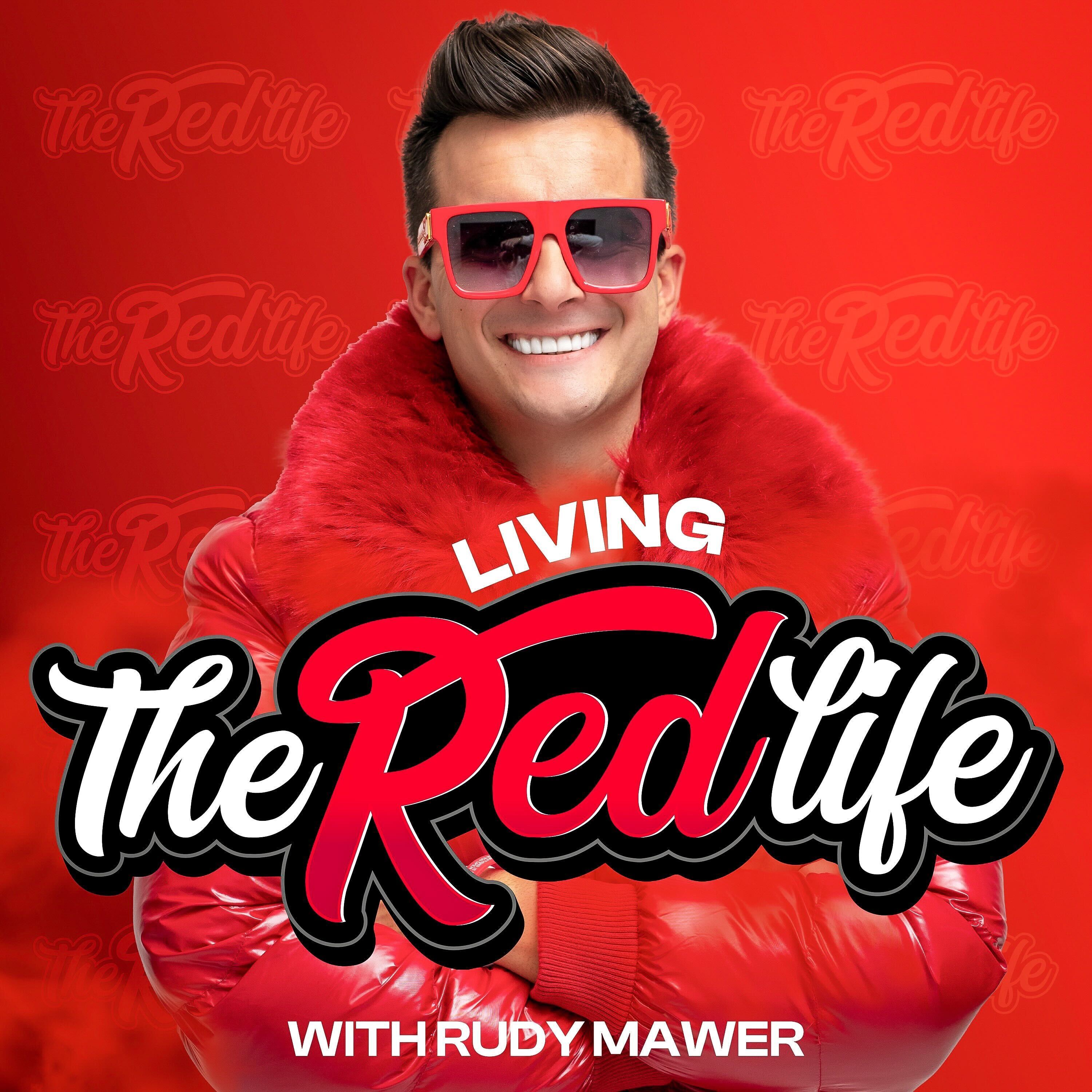
Loading summary
Transcript137 lines
- [00:00]
A
I think that we all too often have invisible change that we don't realize that. And it could be, you know, dad, mom, because their views and beliefs are a certain way. And that could really be holding you back. Bosses could have held you back.
- [00:14]
B
Sure.
- [00:14]
A
So it's really just saying, like, hey, it doesn't matter where you come from. Like, you can be what you want to be no matter what. Like, change your mindset. Quit thinking about what other people think about. You just do you, you know, and it was like, go to college now you get married, and then you have kids. It's the traditional way of doing things. And I absolutely did the opposite. I started school and I was like, this is not for me. I'm already a manager for this place, this retail place, and I'm making more money than my brothers were as nurses when they first started. I was like, I think I could do this. I could run my own thing. And I decided that.
- [00:46]
B
Where did you find the funding for your first big, bright idea?
- [00:49]
A
We grew organically built one room at a time, and just.
- [00:53]
C
My name is Rudy Moore, host of Living the red life podcast, and I'm here to change the way you see your life in your earpiece every single week. If you're ready to start living the red life, ditch the blue pill. Take the red pill. Join me in wonderland and change your life.
- [01:07]
B
Welcome to another episode of the living your legacy podcast, the red life edition. For inside Success. I am Ray Gutierrez. Now that we've got it past all the boring brands, it's quite an honor to introduce to you Kristen Avalon. She is an author, a chemist, a coach, and most importantly, a woman of power. Kristen, how are you?
- [01:29]
A
Good, thanks.
- [01:30]
B
Dude. We just wrapped up your episode. We just finished filming. How do you feel?
- [01:35]
A
I feel great now. It was actually not as bad as I thought it was going to be. The nerves went away fairly quickly. You made it very easy for me. Cool. So I would definitely say I feel good about it. I feel like I can make a big impact for sure.
- [01:49]
B
Right on. Well, welcome to the show. Welcome to Miami. Do you visit Miami frequently?
- [01:52]
A
Well, I'm actually from Jacksonville, Florida.
- [01:54]
B
Oh, right on.
- [01:54]
A
And surprisingly.
- [01:55]
B
So, the real Florida, right?
- [01:56]
A
The real Florida, right?
- [01:58]
B
Yeah.
- [01:58]
A
Like. Well, we call that South Georgia because, you know, it's really South Georgia regret because we have a good mix of, you know, hillbillies and rednecks, you know, so. But no, I never came to South Beach. I never did the thing. Five years. Yeah. I was like. But it was also because my dad's like, no, he can't go there. That's a meat market. Like, that was like one of those things. Like, I.
- [02:19]
B
He's not wrong.
- [02:21]
A
So I wanted so bad to go for spring break and my. He was like, he is not having it. And you know, you can't disobey that.
- [02:28]
B
Well, for good reason. Being born and raised in Miami, I'm a late bloomer, let's put it that way. It was too chaotic to bloom here, so I moved to the west coast where things are way more chill. We'll talk about getting chill in a moment, but we'll talk about your party side. Every arch enemy or every hero has an origin story. What is your origin story?
- [02:53]
A
Well, I would say that I started partying like when I was super young. I mean, like, I was already. I think I had my first beer at 13. I mean, I tried it. Horrible. Absolutely horrible. Would never do it again. My generation, we drank Boons. That was like the go to cheap way to get drunk. But in Jacksonville. Yes.
- [03:15]
B
Yeah, Even better.
- [03:16]
A
Yeah, right, right.
- [03:17]
B
Especially so that moonshine.
- [03:19]
A
My partying started at such a young age and then it continued obviously into the 20s, because you're allowed to actually do that, those kind of things.
- [03:28]
B
Sure.
- [03:29]
A
I really didn't slow down until maybe like when I actually started my own business. But even at the beginning of that, like, you still go hard. Cuz you got to entertain people and like my life, everybody's like, this is kind of cool. You get to grow cannabis, you get to smoke it, you get to enjoy those properties.
- [03:46]
B
What a pivot you went from like everyone. We have no idea that you. You're into this business, but you brought it up. Right, right. I'm trying to tell a story. Damn it. All good, all good. So how is the cannabis business now that. Now that we're just going to jump in, how are things?
- [04:02]
A
Well, you know, I started that back in 2013 when nobody was kind of doing. When nobody was really doing. So Arizona was the first one to come online. And originally with Arizona, they're like, you have to fill out your application and all that good stuff. So the spot that was chosen was way on the outskirts because, you know, I came from that underground world and wanted to have the closest environment to Northern California as possible. And Prescott Valley was it. Like, that's just below the snow, above the heat. So that was how I originally started, got into that industry. And I will tell you, it was the most rewarding. At first I was like, people just want to get high. It's cool, you know, and coming from like the California world, underground world, like, that was just a cool thing to do. You get some OGs, and, you know, that's what people wanted.
- [04:49]
B
Yeah.
- [04:50]
A
But, you know, I really loved the people that it did actually help medicinally. Really started to truly believe in what we did. So I would say, man, the cannabis industry is extremely fun, especially when we first started. A lot of people, though, came in for that get rich quick, you know, that green rush. Oh, yeah. And the thing is, I truly do believe, like, you have to evolve 100%. And the cannabis industry was on that path, but I think it kind of has fallen short now because everybody kind of forgot where we came from.
- [05:24]
B
Yeah.
- [05:24]
A
They forgot the culture, the coolness of, like, hey, I'm growing a new build or. Or building a new grow. And so come on over, we're going to have a couple beers, you know, let's have a great time. And it's not like that anymore. And it's like, yeah, and it's. I get it. We have to evolve. We have to go in that corporate world, but you really just. You can't forget where you came from.
- [05:44]
B
Yeah, I totally agree. Like, especially you. You can't. You can't forget where you came from. You can't forget where you started, really. I remember my transition over where I was, like, I'm clearly very manic, very panicked. I'm an only child. There's a lot. There's a thousand things always running in my head. And when I started to medicate is when I finally heard the silence.
- [06:01]
A
Right.
- [06:02]
B
If you catch my meaning. And it was just kind of like, even now, like, I'm still very. It's clearly one man, operations studio one, which I thrive on. And again, only child. But there's got to be some sort of, like, you know, checkpoints in my brain where it's like, all right, from 9 to 10 to 10, like, there's a system. And thus that system helps because of medication. So thank you for. For that and for being an amplification of how it's helping folks like me kind of ascend. Talk about the challenges of educating and telling folks that are putting up the guardrails that it's time to kind of, like, loosen them up a bit, you know?
- [06:37]
A
And I get it. The thing is, is that it has. You don't go to the doctor's office, and your doctor doesn't say, hey, smoke these, you know, pills, and then you're going to be a. Okay. You know, So I really get that. And I think with my dad, he actually didn't know that I was in the cannabis industry for about a year. So the only reason why I ended up telling him was because it was on the ballot for Florida. And my brothers were like, you need to tell dad. You need to tell him because he's about to vote no. And I was like, crap. Like, this is gonna be a hard conversation to have. So I told him. He's like, wow, holy crap. That's gonna be like the new oil industry. I was like, there you go. You happy, dude? Like, this is awesome. Like, so awesome. But what he brought to my attention is he's like, so, like, how does this work? And I said, well. He goes, do you just smoke it? And I said, well, yes, at the time, because we were still evolving and making products. He goes, okay, well, here's a prescription pad. Tell me how you would prescribe this to somebody.
- [07:33]
B
Whoa.
- [07:33]
A
And I was like, well, crap. Like, there's different percentages, and then everybody's different. Like, it doesn't matter. And so when I started to think about that, I was like, we need to regulate if people are truly using it for medicinal purposes. We need to regulate how they're using it, how much they're using it, so that way they could still be functional. Because I think a lot of people overuse sometimes, which is fine. You know, like, we can overindulge, but if you're going to use it for medicinal purposes, let's find that right milligram content that works best for you.
- [08:03]
B
It's funny, because nowadays I don't get the lucid experience as much anymore, and that's by nature, I'm okay with that. It's essentially now it's just become part of my. My everyday life. It's a lifestyle now where it's like, I'm not getting high. I'm just getting normal.
- [08:14]
A
Right, right, right.
- [08:15]
B
That. It just. How's. How's that helped out in your personal life? Are you using your own medicine or.
- [08:22]
A
You know, I am a firm believer when I was actually growing it, that you don't get higher in your own supply, even though it's a real business. Right. I was a firm believer of that. But after I sold it, I protect a lot at night because it would help me sleep. And, you know, it really shuts off your. Your brain. Because when you're the type of person that's just got ideas and you're like, oh, I can make a business out of this, I can make a business out of this. But if I would actually partake, either being edible or Smoking it. It actually kind of calms your mind and kind of helps you organize a little bit better.
- [08:55]
B
Right on.
- [08:55]
A
Yeah.
- [08:56]
B
From one entrepreneur to the next. Oh, I guess we're both sativa users or big ideas. Always constantly writing things. And how. How does one find funding for said a thousand ideas and keep it sustainable? Like, where did you find the funding for your first big bright idea?
- [09:11]
A
Well, I just grew organically. I mean, started a lot of the stuff actually underground and you know, and continue to grow organically. We, a lot of people came into the industry with millions and millions of dollars. I mean, when I did a bunch of consulting in Vegas and these people, you had to show l liquid of 750,000 per license. And plus you had to show liquid in building it, the liquid for at least one year. Like, that's a lot of money. And that really pushes out the people that really enjoy and love the industry. Yeah, so I really did. We grew organically, built one room at a time, and just. We just ran with it.
- [09:51]
B
Do you think they make it as painful as possible for folks that just chicken out? Like, why is it so painful? Why all the regulations? Yes. For our own safety. I get that. But I almost feel like they're making it painful on purpose.
- [10:02]
A
Well, and that's the crazy part, because when Vegas actually came online, they came up with so many different regulations about certain pesticides and stuff like that. And as I've spoke at some of the symposiums, I'm like, you do realize these are all the same pesticides that you use on food.
- [10:19]
B
Jesus.
- [10:20]
A
So why is cannabis so highly regulated and our food industry isn't? This is not something that somebody would do every single day, all day, but they bet you they probably eat an apple a day.
- [10:30]
B
Sure.
- [10:31]
A
And that has the same pesticides. They highly regulated it. And I really think it was to kind of keep the riff raff out a little bit too, because you got to think about underground. We didn't really. I mean, yeah, you guys use Eagle 20. That is like the worst thing to use, but it is the best thing to use anything, you know, but the thing is, is that, like, I get it. We have to evolve. Well, let's evolve everywhere then.
- [10:55]
B
No. Right on. Yeah. Talk about that evolution. Your packaging is some of my. One of my favorite packaging. Talk about your philosophy of keeping it simple, clean, modern, even though what's inside is.
- [11:07]
A
So this is actually my CBD line. Now you want to hold it. So, yeah, so this is my CBD line. The thing is that I felt, because I came from A little bit of, like, the retail world, understanding that you have to take up real estate, understanding that colors make a difference, while keeping it still simple and clean. Because in the cannabis industry, we still, at the beginning, culture was there, still there. So it's like tagged, you know, packaging, which was cool for that. But what I did was to try to create something that's clean, that could be on an average retail spot. But also it doesn't look intimidating.
- [11:41]
B
Yeah. It doesn't look like it's for children either.
- [11:43]
A
No.
- [11:43]
B
Which is a big, big no.
- [11:44]
A
No, no. And I think that's the biggest problem. I think that when you go into the cannabis space and a dispensary, and although these dispensaries are beautiful. Oh, yeah. Some of them are like Apple Stores. Yeah. Yes. And I'm like, what the heck? I was like, can I just go back to Santa Ana and just go, like, you know, in the middle of nowhere to get the best weed going to the basement? Yeah. You know, but it's still intimidating to a lot of people because still nobody really wants anybody to know that they're using it. So the goal is to keep something that was super clean. Something could be on a retail shelf. You don't feel intimidated by it, and it gives you all the basic information you need to know. But you go to the website and it really can educate you on it.
- [12:27]
B
Right on. Right on. What, what is the website?
- [12:29]
A
It's Hive Mind Refinery dot com.
- [12:31]
B
Hive Mind Refinery. Great name. Yeah. I love the fact that you've said online three different times in this conversation. You can put that down if you want. I know you're just going to hold, right? No, it's okay. You've said online three different times in this conversation. So I picture you staring up in your bed in this massive map, and you're just seeing states come online when. When cannabis is legal. Is that kind of what works?
- [12:51]
A
Yeah, pretty much. You know, so originally starting in Arizona and then Nevada came online, and I went out there, spoke at a couple symposiums. They really. It was a good old boy town. Like, there was definitely some side deals and stuff like that, but I was able to do a lot of consulting, do business plans for people to get those licenses. And then I was just like, wow, like, look at all these places opening up. This is great. You know, I even had an attorney, he was working on potentially being able to cross state lines if you are legal state to state. So, I mean, hopefully, I know it's going to be hard to get it regulated federally. Like, I. I Know, there's a lot of red tape with that, but man, if you're able to cross lines from legal state to legal state, that's. That's a huge step. Huge step.
- [13:39]
B
Yeah. Yeah.
- [13:39]
A
Because, you know, no offense to the Arizona weed at all. Well, anyway, California weed is in the OG's. Those guys, that's. There's hard to beat.
- [13:52]
B
Yeah, Yeah. I was just gonna say for someone that developed later in California, yeah, there's definitely a, a different taste to it. It's when it, when California made a medicinal. I got my card through an app because of a friendly doctor back in the day. This is like 2012 or whatever it was. And I was like, whoa. And it was just like that was my self exploration with said substance. And that's when it became medicinal. And I was, I was working at PlayStation. It was hella cool. Like I was microdosing. I was discovering this new culture and discovering new friends that were kind of just higher level folks that were using it beyond just recreational. They were using it for work. And I was like showing up to work lucid, but also very functional, very happy. And I noticed when I was happier, it wasn't just what was happening in here, but what was happening around me. Clearly the energy, me and the frequency in the room would fluctuate and I can just see things manifest.
- [14:44]
A
Yeah, absolutely.
- [14:45]
B
Talk about the, the secret power of that manifestation and what your product is helping folks like me do.
- [14:51]
A
So mostly I think the challenge that people have is this. It's just astigmatism. That's, that's, that's all it is. Like everybody's so afraid to use it, but really like the first time someone uses it and we make the biggest mistake. You eat a 30 gram milligram, you know, edible, and you're like, you only eat half of. And you're like, oh, it doesn't work. And then all of a sudden you do it and then you just have this whole horrible episode and you absolutely hate it. But what we try to do is with, even with the cbd, is we try to put you at the lowest dose because the side effect, in my opinion is getting high. So where do we put you in that sweet spot to where you're not getting the, you know, potentially some people get the visions and. Or you feel like you just can't move. You know, it's just really dialing that in, you know, to help people. It helps people with anxiety. It helps with so much stuff and we forget that, you know.
- [15:42]
B
Yeah, it's, it's Helped me with anxiety. It's helped me with a plethora of things, but it's also helped me kind of, like, put my mind at ease, where I'm essentially no longer stimming or stimulating with playing with. With something. It just helps me control, and it actually helps me control with. With just mature thoughts. As in, like, not thinking before I speak or all sorts of. All sorts of.
- [16:04]
A
Do that get you in trouble?
- [16:05]
B
Yeah, yeah. Things that get you in trouble. Which is why I'm great at podcasting, I guess.
- [16:11]
A
So.
- [16:11]
B
Yeah. Where can people find you? Actually, let's rewind. What can we learn about you and your Women in Power episode? What are we going to learn about you?
- [16:18]
A
You'll learn a lot about overcoming adversity. I think that we all too often have invisible change, that we don't realize that. And it could be dad, mom, because their views and beliefs are a certain way. And that could really be holding you back. Bosses could have held you back.
- [16:37]
B
Sure.
- [16:38]
A
So it's really just saying, like, hey, it doesn't matter where you come from. Like, you can be what you want to be no matter what. Like, just change your mindset. Quit thinking about what other people think about you. Just. Do you. You know?
- [16:49]
B
Yeah.
- [16:49]
A
For sure.
- [16:50]
B
Yeah. Before we wrap it up, I want to talk about your book.
- [16:52]
A
Oh, yes. Yes.
- [16:54]
B
Stepping into Love. Bam. Navigating the Journey of a Stepmom. What's the backstory here?
- [16:59]
A
So I actually. I was married before he had a daughter, and. Crazy story. Actually. Not a lot of people know about this. A friend of mine who actually got murdered at 18. Her name was Marianne. And when I met my ex husband, he lived on Marianne Street. So I was like, wait a second, is he. Is she telling me, like, I. I'm supposed to be here?
- [17:22]
B
Sure.
- [17:22]
A
And when I realized that the relationship wasn't working, not because we didn't care about each other or fighting or anything like that, it was just. Yeah, it just didn't work, you know? And I realized that she put Riley, my stepdaughter, into my life. Wow. That's who I was supposed to be. And I would tell you, like, I grew up where my dad was, like, don't date anybody with baggage. Like, that's like a big no, no, you know? And so that's kind of like the reason why I have, like, the suitcase, because it was kind of a joke, inside joke with our family, you know? But I will tell you, I. This is one of the best joys of my life as being a stepmom, you know? And I wanted to share and write a book about the trials and tribulations of step parenting, because, you know, at the end of the day, you can put your heart into anything and everything that you want, and you can put your heart into that stepchild, but at the end of the day, that's still not your child, and people forget that, and that is hard, you know, especially, you know, her and I, we were. She was softball, and we would practice every single night that I had her. Every night. I was at every practice, every game. And I remember one time she. I was so excited for her. She did pitch so well. And she came out and went to her mom first, and I was like, that was a reality check for me because I felt like, man, I've been here for her for so much, but she's always going to pick her mom. And I realized I was so young that I kind of took it personal, but now I'm like, no, that's okay. She knows that I'm going to be there for her no matter what, and vice versa, for sure. She is now a naturopathic doctor. I'm extremely proud of her.
- [19:03]
B
I have full credit for that.
- [19:03]
A
Yes, absolutely. Extremely, extremely proud of her. She did put in a lot of hard work. And all I can tell her is another funny story about that.
- [19:11]
B
Yes. Please share.
- [19:13]
A
Parents teach you the American dream, you know.
- [19:15]
B
Sorry.
- [19:16]
A
You know? Yes. So the goal is to, you know,
- [19:19]
B
excuse me while I grab an edible.
- [19:21]
A
You know, the goal is to be successful and to have your own business and had the. The house, the white picket fence, the family, the perfect marriage, you know, and the thing is, is that I just forgot where I was going with that.
- [19:33]
B
That's like. I love when that happens.
- [19:34]
A
I know, right?
- [19:36]
B
Oh, gosh. I had that. I have one too many edibles.
- [19:40]
A
So. So with her, I never.
- [19:43]
B
There you go.
- [19:43]
A
Like, even though that's what my dad wanted me go to school, go to college. Like, you're not going to play sports. Sports aren't for women. You don't really go anywhere. She's not wrong, but I was still mad at him for not letting me play sports, you know, and it was like, go to college now. You get married and then you have kids. It's the traditional way of doing things. And I absolutely did the opposite. I did the opposite. I started school, and I was like, this is not for me. Like, I. I'm already a manager for this place, this retail place, and I'm making more money than my brothers were as nurses when they first started. I was like, wait, A second, like, I think I could. I could do this. I could run my own thing. And I decided that. But when it came to my daughter, I did the same thing my dad did. I said, no, you go to school.
- [20:24]
B
Of course.
- [20:25]
A
Security. Yes, security. And it was like, I gave her the same path that I hated that my dad gave me, but she ended up doing something and running with it and being extremely successful. So I'm very proud of her.
- [20:38]
B
I was gonna say, I'm very proud that you're a great stepmom because my stepfather, which passed away during COVID unfortunately, he recognized me at a young age, where he's like, he's not gonna be really good at academics, but send him in front of a computer or give him a sketching board. He just like, I blossom. So if it wasn't for him, I probably would be very miserable because, like,
- [20:56]
A
a lot of parents don't recognize what they're. What you could be successful in. They just have Filipino culture. Is.
- [21:03]
B
You're.
- [21:04]
A
You're a nurse. Doctor in medical field. So I said, well, guess what, dad? I might not be a nurse, but I'm in the medical field.
- [21:09]
B
Yeah.
- [21:10]
A
Of some sort.
- [21:10]
B
Of some sort. And the ones that matter, it's. It's absolutely future proof.
- [21:14]
A
Absolutely, absolutely.
- [21:16]
B
Right on D. Well, thank you so much for such a great conversation and a lovely time. How can people find you again? What's your website?
- [21:23]
A
Hive mind. Refinery.com. and then my life coaching is when you have choices dot com.
- [21:27]
B
Right out. When you have choices dot com. Actually, before we go, I want to ask you, you. You just sold your company in 2020.
- [21:32]
A
Yes.
- [21:33]
B
And you started it in 2013.
- [21:35]
A
Yes.
- [21:36]
B
What's that like going from creating your company and then selling it off?
- [21:39]
A
Oh, man, it was hard. I mean, it was hard to let go because it was like the baby. And like, I literally did the floors, I put up the walls. I did the electrical on, like, low voltage electrical.
- [21:54]
B
Sure.
- [21:55]
A
Did all the irrigation, built the tables. Like, I. My dad taught me all of that stuff. So why outsource it? And also, we. We didn't outsource a lot of stuff because a lot of people were putting extra 30% tax on us because it was a hazardous job. Like, gosh, you're getting paid. You're not even in the industry. All you're doing, doing the electrical work. Like, what in the heck is production?
- [22:17]
B
Yeah.
- [22:18]
A
And two, you can't go down. Like, there's living plants inside. Your electrical goes down, you need to be on it immediately.
- [22:27]
B
Generated further generator ac.
- [22:28]
A
I mean, I had a recovery pump to be able to pull Freon to fix AC units and. Holy. So, yeah, like I was.
- [22:34]
B
You're like a mechanic.
- [22:35]
A
You just loved it. I love the way things work. I grew up watching how things are made. I love it.
- [22:42]
B
And I love YouTube channel too.
- [22:43]
A
Yes. I love how people, they have. They started and then where they are now and how much they evolved. And the cannabis industry is eventually going to get there. But I still think that the personal touch that the growers and the trimmers put into it, you really can feel it. You really can.
- [22:59]
B
Is the natural migration. Mushrooms and then possibly lsd. Are we heading in that direction where microdosing is going to become a thing?
- [23:06]
A
Absolutely. So I also microdose mushrooms. Love helps calm your mind. Obviously, if you accidentally take a little too much, you know, definitely feel it. Yeah. You have a great time.
- [23:17]
B
Yeah.
- [23:18]
A
But no, that is absolutely on the next forefront. I believe Colorado is legal now that you can do it. Yeah. I may, may or may not have my hands in some of.
- [23:28]
B
That's a great.
- [23:30]
A
It's a great crate. Yeah.
- [23:31]
B
A great idea for crates. It's a, that's a culture.
- [23:33]
A
Right.
- [23:33]
B
So that's just waiting to thrive with that. We'll, we'll leave that off to the sequel for your more powerful, powerful, powerful episode of Women in Power Part 2. Kristen's such a joy. I'm sure we rabble, we ran, but I don't care for inside success and Women in Power. Keep living your legacy. I am Ray Gutierrez.