← Living The Red Life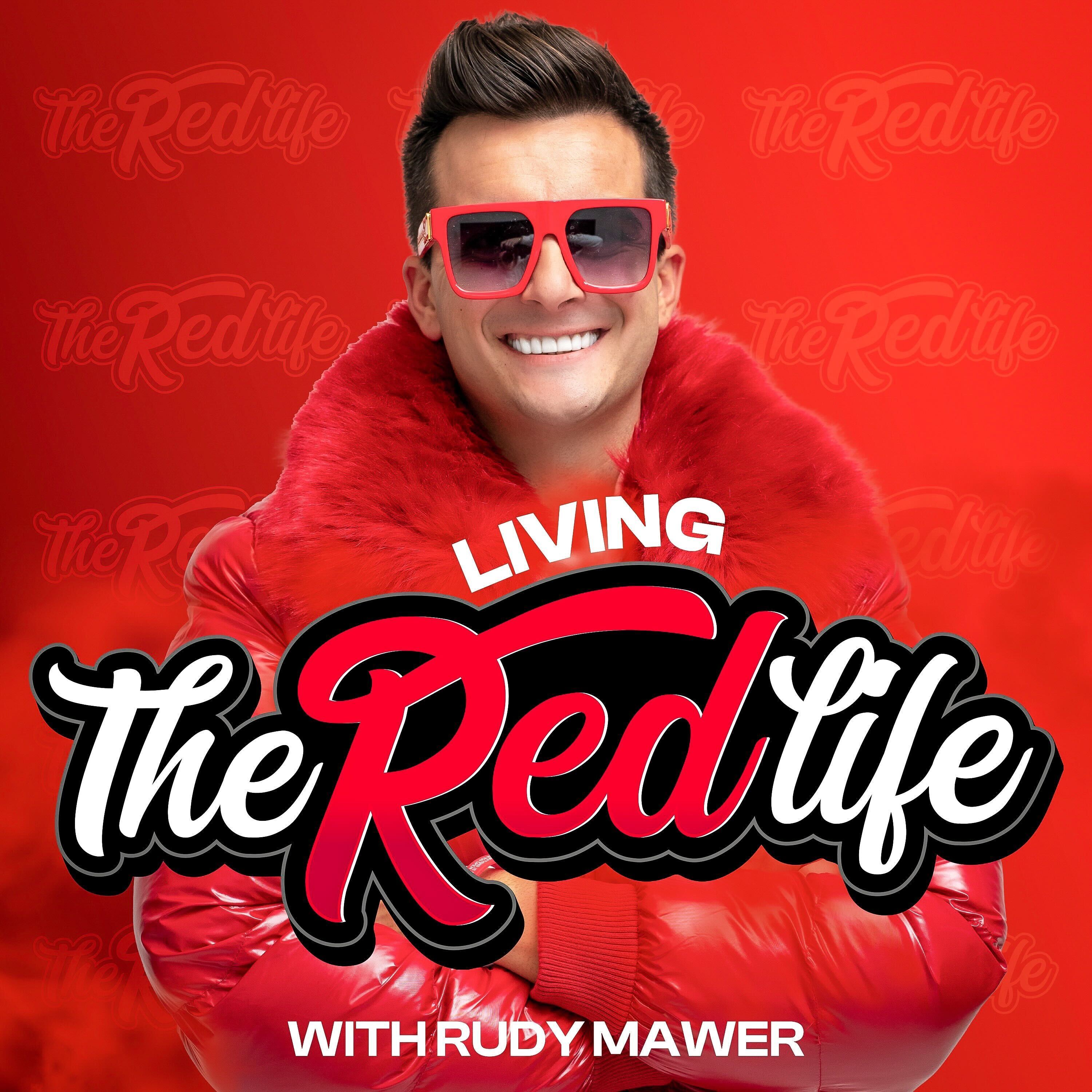
Loading summary
Transcript132 lines
- [00:00]
A
It's okay to not to be okay. It's okay to understand that you were exposed to something that a lot of people would not know how to handle, or you yourself may not know how to handle. And it's okay to seek help when you need it. And I think that is a key staple to the growing footprint of my company.
- [00:20]
B
Stop second. You're guessing yourself. Get out of your own way. And timing is everything. Really?
- [00:24]
A
Timing is everything.
- [00:25]
B
Musicians know this. It's a rule of thumb. Timing is everything.
- [00:28]
A
Timing is everything. And if you fail today, it doesn't mean that you're not going to be successful tomorrow. It took seven different runs and it took me better part of eight years to be able to put the 30 seconds of explaining a patch and everything else that was over eight years. So most people will turn around and second guess themselves or turn around and not give themselves enough credit. My advice to people when they're asking.
- [00:53]
C
My name is Rudy Moore, host of Living the red Life podcast and I'm here to change the way you see your life in your earpiece every single week. If you're ready to start living the red life, ditch the blue pill, take the red pill, join me in wonderland and change your life.
- [01:07]
B
Welcome back to another episode of the living your legacy podcast, the Red Life edition. Joining me today is another maker of legacies, Sean Solar, all the way from Long Island. He's got quite the company name though. We got to start there, man. What is the name of your amazing company?
- [01:22]
A
The name of my company is Medicine in bad Places.
- [01:25]
B
Sean. That's a great name, dude. Where does a name like that come from, Sean?
- [01:28]
A
So early on in my career as a medic, I was looking to start a company and I was also at the same time trying to see if I was going to join the military. And one of the things for pre hospital medicine in the military was good medicine in bad places.
- [01:41]
B
Right on.
- [01:42]
A
And you know, I, I did a little deep dive and a deep search on it and more and more I just kept seeing it everywhere. I didn't really like the term good medicine because medicine is medicine and sometimes you, you don't have a choice. Sure, yeah. So what we wound up doing was we dropped the good, put medicine in bad places and we made it a brand.
- [02:01]
B
Yeah, you dropped the. Done. Facebook.
- [02:02]
A
Fantastic. That's it.
- [02:04]
B
Talk about the journey. The day this brand found you. The name.
- [02:08]
A
When I finally figured out that I wanted to do and create a company that was going to try to prepare people for emergency based action, right. I stuck with medicine in bad places. And then what I did was I made a logo and a design for it. The logo that's on my left chest is just happens to be that logo.
- [02:26]
B
Fantastic.
- [02:26]
A
And we have a couple of different logos right now, but this logo is a little different. This was the first logo of the company. It was the brand that started it. All right. If you say like where it started. And the shield logo is that of a protector. So the logo itself has the shield in it. The dragon is the year of my birth. So my. The year I was born was the year of the dragon, which I found very interesting. And, and tied that into this log. And then above the dragon is the caduceus and the heartbeat of life. That was in the first patch for the New York City EMS system. The first patch that New York City had built had the heartbeat in it between the two caduceus. So I took a little bit, blended it and I made it into what it is currently today.
- [03:10]
B
Wow. Talk about some of the superstitions of being an entrepreneur or a business creator. A lot of folks kind of ignore the symbolism behind such, you know, how important it is.
- [03:20]
A
So everything that we do has a meaning behind it. There's always meanings behind everything. Whether or not people understand that they're putting meanings behind something or not is a different story. That's a different topic. Right. Different podcast. Right.
- [03:32]
B
Cheers.
- [03:33]
A
So different podcast. But. But the meaning behind what we are putting forward is to. To under. To have people understand where and what we want to do, how we want to do it. Right. As far as the company backing and being an entrepreneur, nobody's ever going to get rich. And I tell this to a lot of different people. Nobody's ever going to get rich. Have owning a training company, it's how you enhance that training company to fit into the logistics around you that will make you successful. And that just doesn't go for a training company. That goes for any other company that could be out there that has its own lane, if you will. So most people will turn around and, and second guess themselves or turn around and. And not give themselves enough credit. My advice to people, when they're asking, because we've helped other people start their own companies, is very simple. Stop second guessing yourself. Oh, yeah, that's the first. That is the first rule of, of owning something is to stop guessing yourself. Get out of your own way yourself.
- [04:31]
B
Yeah, get on your own way.
- [04:32]
A
There's a reason why you're being put in this for whatever reason that is. And it's probably more often than not because you know where you're supposed to be and what you're supposed to be doing. And that's what I think is a little bit of a different sales pitch, if you will, of people that are looking to start companies. How do you do it? That would be how you would. That's the first rules that we start giving is like stop second guessing yourself.
- [04:57]
B
Yeah, stop second you're guessing yourself. Get out of your own way. And timing is everything. Really.
- [05:01]
A
Timing is everything.
- [05:02]
B
Musicians know this. It's a rule of thumb. Timing is everything.
- [05:05]
A
Timing is everything. And if you fail today, it doesn't mean that you're not going to be successful tomorrow. It took seven different runs and it took me better part of eight years to be able to put the 30 seconds of explaining a patch and everything else. That was over eight years.
- [05:20]
B
Oh yeah.
- [05:21]
A
And then even the name itself started when I was younger looking into that military world and becoming part of that pre hospital care setting for the in military world. Now I never got to the military. It was not in my cards as the way they were dealt with. But I changed the way I played the game accordingly. Because what I did was I elevated in my field where I was as a medic and then elevated my field as when I was a police officer. I've elevated my field and I've tried to capture those little bits of success along the way. And really I own. I owe everything that is in my life today for what I've done with that mindset, that positive mindset and that always moving forward. You got to take, you gotta have to appreciate the lows to really enjoy your highs.
- [06:07]
B
Well, let's talk about the, the highs and the ascension. Listening to you speak, it's very much. You are operating at a fifth dimensional level speaking to the third dimension, which is what we are here today. It takes a lot of patience to be blessed with this divine energy. But you've had this energy for quite a while now. Some folks call it dyslexia, some folks call it whatever, but you've had, you have that. You've had the ability to understand this reality differently. Talk about your earliest experience.
- [06:34]
A
The reality of the fact is I set myself up for success by watching and emulating people around me. So a lot of people that have been in my life, whether it was on the they had their lowest day or they had their most successful day, there was always a lesson that was learned and taught in between. What I unknowingly did when I was younger was I took those lessons and I said Listen, I, I want to set myself up for this. I want to set myself up for that. Or maybe I want to stay away from this. And that's where it starts. Ultimately you have the opportunities being put in front of you every day. Absolutely. It's. If you take the chance, that is the difference. And really what happens here is if you don't take the chance, you already know the outcome. Yeah. But if you take that chance, you never, you know, you can't say you know the outcome unless you, you go through it. And nine out of 10 times people are surprised at what actually comes through with taking that chance. I've been lucky. The chances that I've taken, I've capitalized on and making more so a positive in not just my life, but other people's lives as well. And, and here I am today. And I in 2025. If you would have told me 20 years ago that I'd be doing this, I would have looked at you like you were crazy. Yeah, yeah, yeah. It's just not something I ever saw, but I'm open to it. And, and here we are.
- [07:57]
B
We definitely are here. Let's talk about the here, your present day before we rewind and go back into the future. Or into the future. Into the back, whatever. Watch Back to the future. What is your mission today? Because you talked about opportunity. Let's talk about the opportunity of their. Your business. What did you see? And it happened around Covid.
- [08:14]
A
Yeah, we turned a training company while Covid, you know, shut down the country. We turned a training company that you need to be in personal space with people to train. We took that and it was pretty much dissolved overnight.
- [08:29]
B
Engaged to live. Sorry, I have to interrupt immediately.
- [08:33]
A
Just dissolved. We woke up one morning and the country was shut down. So now what are we going to do now as a small business, as a small back business and everybody's working two and three jobs. Most people would have taken that as a sign to say, you know what, I'm not going to continue on with this. Well, I surround myself with like minded individuals and those people actually brought it to my attention of, hey, you know what, this is really depressing time. Let's do something about it.
- [08:57]
B
Yeah.
- [08:58]
A
What we did was we created an apparel line. We created an apparel line that thrived through Covid. And why? It was for brand recognition. Not just brand recognition, professional recognition. Because the professionals, the men and women in the EMS world, in the fire world, in the police department, in the hospital based, you know, in the hospital based world, all of these people are, are Being mandated and hit with hour after hour of. And it's a lot of sadness and
- [09:28]
B
sorrow and no one's celebrating them.
- [09:30]
A
Nobody's celebrating them. Nobody, nobody wants to talk to each other. Everybody was scared. So what we did was we came up with a couple of designs on a couple of T shirts to accentuate what we were going through as a society. And it hit and it was something that I could tell you never in a million years would I think that I'm now I'm going to sell T shirts. Right. So my company pivoted to save itself, to continue going down a path while everything is in chaos. All we did was take that deep breath, pivot and then we turned that into another successful venture where we've actually enjoyed the successes of having our own apparel, our own designs and everything that goes along with that.
- [10:11]
B
Yeah, your brand's now transcended into a mythos. It's really become a lore 100%.
- [10:16]
A
And even down to the logo itself where people say, and like you said, it's, it's catchy because once you hear it, yeah, it. We do things a little bit different than most. And one of the things that we're known for in the industry is to continuously bringing different information to the market because we stay so in tuned with what we're teaching, even down to the CPR. CPR. 20 years ago you were taught to do compressions and breathing cpr. Today you can do a hands only cpr. Learn how to pump hard and fast on the chest. You're still becoming that difference and making the difference. That's what I mean by just changing the rules of engagement as you will in whatever you're being tasked with to accomplish.
- [10:58]
B
For sure. Let's dive into your Laura. Let's rewind way back into the past and talk about Long island and growing up there.
- [11:04]
A
Sure. Long island is very quiet. Right. There's not really too much going on. A lot of people across, you know, the globe know the Hamptons as, as the, the go to place to party. Right. As I'm sitting in Miami doing that. Right. So it's a little bit on a different side. Right.
- [11:20]
B
Kind of the same water.
- [11:20]
A
It's still kind of. Right. I think your water is a little cleaner, but Long Island, New York, Suffolk County, New York, very quiet place to live. I enjoyed my childhood. I grew up there. It was nice and quiet. It was close enough to the city where we could partake in the city atmosphere and environment. But it was far enough away to remove yourself from the trials and tribulations of.
- [11:40]
B
For sure.
- [11:41]
A
Of the heartbeat always beating in that rhythmic pattern of like you're always on. Right. You get to sit back and relax. You get to enjoy a little bit more of, you know, serenity, if you will. Peace. Long island is great. Today, Long island is a totally different dynamic. The Hamptons have grown, they've, they've spread. You know, it's. It's a cultural thing. Oh, it's almost a cultural and a rite of passage for sure. Future generations as they get to that age, to come out to the Hamptons and celebrate and to party. It's a, it's a big party. Right. It's not only for the affluential, it's also for the day to day people that just want to go and have some fun. Yeah. And that's what I like about it because it's, it's a, almost like a crossroads for a lot of different entities to come to and enjoy themselves. That's what I see Long island as right now. Long island is totally different. When I was growing up as a kid, it was very quiet. Nobody knew how to spell Hamptons, let alone to be in the Hamptons, in the atmosphere world. And it was really reserved for those who had either a summer house out there. It was very quiet. You look at it today, it's not like that anymore. So that's the differences in the last 20 years of like what Long island was and what it was like to grow up on Long Island. Because today's generation growing up on Long island, they see it as a lot more than what I ever saw. Oh, yeah. When I was a child.
- [12:58]
B
Yeah. Which is why my next question is, my friend, you know, I'm born 83, I'm an 8, I'm an 80s 90s kid. So every time I saw a gritty action movie, it was New York.
- [13:08]
A
Yeah.
- [13:08]
B
And there they were, the Twin Towers.
- [13:10]
A
Yeah.
- [13:11]
B
You saw New York and bam. It's a little different these days.
- [13:14]
A
It's a little different. I'd like to say that it's. I mean, over the years we've lost a tremendous amount of life with the, with the terror attacks from 9 11, which we just recently, you know, acknowledged as we're moving through the month. We just got into October.
- [13:28]
B
Yeah.
- [13:29]
A
It gets a little bit easier, but it doesn't. It doesn't in some ways, if that makes sense.
- [13:34]
B
Oh, it does.
- [13:35]
A
There's a lot of. I lost, personally, I lost quite a few friends during the, during the 911 terror attack. And what I've seen now replace the Twin Towers is the reflection pools where it gives the families a little bit of an understanding where a little bit more of an acknowledgement. I know I found a little bit of peace in seeing that be built, but I also saw hope for the future. Right. I also saw the Freedom Tower standing in a spot where we're not replacing something that was there. Rebuilding something that was there, I don't think would have been the right thing. And I've heard people say that before. Building something new and more to the time, the Freedom Tower that stands right now, I think is a symbol of moving forward, a different type of hope, and a different type of moving forward.
- [14:27]
B
Got it.
- [14:28]
A
Because what we had will never be able to replicate. Even if we replicated right, we could have replicated and rebuilt. But I think by rebuilding in a different direction, it sent a very powerful message, not only to the first responders that were a part of it, not only to the people that lost loved ones, but also to the people that didn't want to see us thrive or come out of it. Oh, yeah. The message is very simple, I think. And that message is that we can overcome anything as a society. And that's when I said, when I saw people come together that I never in a million years would ever see come together and work together to achieve a task that was a very defining moment in my life, to turn around and see that firsthand or be a part of it. Not even just see it, but just be a part of it. And although I don't talk about, you know, 9, 11 too much because of. Out of. Mostly out of respect. Absolutely. I. I just. I don't consider myself anything other than doing everything that anybody else in my shoes would have done at the time. And that's why I say it like that. The. The. There are a lot of different stories out of 9, 11. And one of the things that I. I take with that being said is everybody has their own opinion and their own. Their own understanding of it. Everybody has their own experience. My experience may be totally different from yours, but at the end of the day, there's one thing there. We grew and we overcame. We overcame a lot by even building that tower, the Freedom Tower that stands in now, the reflection pools. We overcame a lot. We put all of our petty differences aside, and we work together as. As society to rebuild as a. In America.
- [16:11]
B
Right.
- [16:11]
A
And we haven't seen that since we built those to begin with, or the Empire State Building in New York, or the Chrysler Tower, or, you know, Rock Plaza. Pick one of these landmark pieces.
- [16:22]
B
Oh, yeah. Just listening to you, sir, like being a great storyteller, because I've always been fascinated with New York, and I always visit New York in the holidays just to. Because the romance. And I never got to see the towers in person, but my grandmother was always obsessed with them. And when I saw what happened, I was, we're on Washington in 12. I was an Alton in 12. You know, so that gives the kind of perspective of like, I'm still on the island.
- [16:44]
A
Sure.
- [16:44]
B
And we're talking about something that happened decades ago.
- [16:46]
A
Yeah.
- [16:47]
B
Now talk about the divine that day and how that moved you forward to who you are today and kind of connecting the dots of like, hey, we were there. Now Covid comes along, no sweat. But it was still a new challenge. But we've persevered, we've built resilience.
- [17:03]
A
Another tragedy that hit us in my timeline. Right. Would be Covid. We lost a lot of people to Covid. And it was. I wouldn't say it was because we failed to do what we were supposed to do. I would just say that sometimes it takes time to fix something that's broken.
- [17:22]
B
Oh, yeah.
- [17:22]
A
And Covid broke the health system. Pretty much broke it clear in half. We had one side talking one way, we had another side talking another in between. We had this, you know, the vaccine, which again, that could be a podcast in and itself of talking each one of these things. But if you look at it, its entirety, the, the takeaway messages, once again, what we did was we saw that we were deficient and that this time with COVID it wasn't just a, you know, in America, in New York thing. This was a national thing. This was every. All around the world. And it didn't matter where you came from or how affluent you were, Covid could still hit and strike your family at any given time.
- [18:03]
B
Pain is pain.
- [18:04]
A
Pain is pain. And it doesn't matter where you're going to go with it. But when I say it doesn't matter where you're going to go with it, it matters how you react to it. It's a positive reaction. Or are we just going to sit and be left a hand of cards for somebody else to tell us what to do?
- [18:19]
B
Oh, yeah.
- [18:20]
A
And I think we saw that. And I think even my company's aspect, I was told I have to shut down my company. I cannot train in person anymore. And I didn't accept that. I didn't accept the fact that I didn't have to. I, I had to conform to what everybody else was telling me. And a lot of People went to the digital era, they were going to do video trainings. For the training that I'm offering, even down to cpr, you cannot visually watch a video and check a, check a box. You just can't do that. You need to have an understanding of putting your hands on and actually getting involved. Right. That's the difference. So when they told me to shut down, I was like, I'm not going to shut down. I'm just going to change the way I see my company in the space right now. And what I saw was I saw a lot of heartache, I saw a lot of burnout from first responders. Yet again being over tasked to deal with things that normal people don't usually see. I think it was said recently that, you know, in the course of a human life, a person doesn't matter. Man, woman, doesn't matter. Right. A person usually experiences one, if not two tragic or grief stages, like traumatic grief for a law enforcement, fire, ems, any first responder. Those tragedies are magnified by tens, twenties, hundreds. The average career for a civil servant in law enforcement, fire and EMS is about 20 to 25 years. The average trauma that they experience is going close to almost 50 interactions. That's notifying a family that a loved one is no longer with us, they're deceased. That is going to a car accident and having family members respond to that car accident. That is pulling a kid out of a body of water. Yeah. Or a fire. Or having an elderly lady screaming through a wall that you can't see her, you can't get to her and there's fire surrounding that room. You could go on and on with this for instances and examples. And that takes its toll on the human body, that takes its toll on the human mind. And that mental health is something that I think is the future of where we're going with first responders today. And medicine in bad places is still trying to develop programs to help today's first responders deal with that stuff.
- [20:54]
B
How do you help first responders? Is it something, it happens beforehand or is it something that's happened already and then you're kind of decompressing, Removing defrag.
- [21:03]
A
That's a great question. So the best way to help. Right. Is to acknowledge what the job entails. When I became an emt, they never told me that I was going to be jumping out of the back of an ambulance and responding to somebody else's emergency to the extent of it actually happening.
- [21:22]
B
Wow.
- [21:22]
A
You know, yeah, we're going to be there for the car accidents. And all this other stuff and you're engaged into it. But what you don't realize is it takes a little pieces. It chips away at your personality, it chips away at your identity, it chips away at who you actually are as your core. That's the part now in 2025 where I think we're doing a lot better explaining to people, hey, listen, you're taking on a profession that's needed. You're taking on a profession that you actually are becoming a difference in somebody's world and you could affect a save, but you also should be ready for this. So you do actually crack the door open in the industry, if you will, to turn around and say to people that want to come into the industry, hey, listen, this is what you're going to be seeing. This is what you're going to be doing. Do you understand that you need to take care of yourself in this light.
- [22:13]
B
Right.
- [22:13]
A
Because that was never spoken of when I was coming through. If you don't decompress, you're just, that's it. You're always on. If you spoke of it, you were weak or there was something that was wrong with you collectively. Not. Yeah. If that's not the case anymore, thank God it's not the case anymore. I say that humbly because to be honest with you, first responders are in demand today. We're running out of people that want
- [22:38]
B
to do it because everything is first now. Everything first for sure.
- [22:42]
A
That's it.
- [22:42]
B
Everything's first.
- [22:43]
A
And unfortunately, if we don't address these serious situations, which I think we've done in the industry, we've done, I know my company, we've developed training programs, awareness level programs for the individual to take accountability and say, hey, you know what? That bothered me. Yeah. And some people in the audience may still think that, that, that is a something that you don't want to say out loud. And I'm here to tell you that, I mean, we have put our own selves through it, to acknowledge it. You know, I'm sitting here with you right now and I'm telling you that a lot of the stuff that I've seen has affected me and has changed me as a person. I don't know how many thousands or tens of thousands of people are going to hear this or see this. But what I want the take home message to be, if they found interest in the tuning into it, is it's okay to not to be okay. It's okay to understand that you were exposed to something that a lot of people would not know how to handle or you yourself may not know how to handle. And it's okay to seek help when you need it. And I think that is a key staple to the growing footprint of my company because not only do we initiate telling people that have no medical background whatsoever and hey, this is the steps you need to take to help, we also take the seasoned first responders, whether they're brand new, or the veteran first responders, law enforcement, fire and ems, and we turn around and we simply explain to them that there's going to be a come a time in your, in your career that you're going to have to deal with something. Oh yeah, it's okay if you're having a hard time dealing with it, but you need to express that sooner than later. If you don't express it, it's the equivalent of having a pot boiling over onto the stove, you know, and eventually you're not going to have anything left in that pot. So we want to do is we want to bring it down to a nice simmer so you can digest what you just been exposed to so you can be that more effective in the future for the next job that comes along.
- [24:46]
B
Right on.
- [24:46]
A
And that's the way to go through it.
- [24:48]
B
Now I'm curious, what are some initiatives? Are you putting them in, you know, solitary confinement and yelling at them for 20 minutes?
- [24:54]
A
How does one build the resistance? That would be a different class. We charge 10 times more for that. So we wouldn't do that.
- [24:59]
B
People would actually enjoy that.
- [25:01]
A
Totally different class. Right? That would be a totally different one. What we do is we hit them with what's called, what I like to refer to as shock reality. So there, there's many different people in the industry. And again, I'm not disparaging any, any one way style or the other. Some people like to tell stories, some people like to embellish stories, some people like to fulfill stories of their own personal, you know, reasons. And then you have somebody that actually will sit and when it's, when it's time, explain how they intimately felt after. So it's not just a story, it's how I felt afterwards.
- [25:40]
B
Sure.
- [25:41]
A
And what happened afterwards to me, you know, I can attest to like the first time I had to pull a body out of a fire, it stayed with me. And it's not something that I like to go back to, but for the audience. And when I do talk about these things, I bring it into, and I bring it into the visualization and even down to what I smelt, what I remember as seeing what I tasted and things like that. Because right afterwards in ems, especially with horrific things, we joke around and we're told that we have no personality and we. There's no sense that we're. We're cold. It's not being cold. That's a defense mechanism. So by joking around about something, we lessen it. Right. Any of the horrific scenes that I've been on, I used to equate it to being on a movie set. Right. In the movie industry, we can make a set and we can make it look as real as possible, and we are entertained by that. Right. But then it's. They say cut and it's over. So the way I used to work and where I used to train and still to this day train is when I start seeing things that I'm making me uncomfortable and they're making me very edgy, if you will. I start thinking of myself as like playing out a role in a movie. Oh, yeah. And by doing that, what it does is it makes me capture that moment in time and it makes me a little bit more effective to deal with that person's emergency. But I do also put myself first after I get done doing what I'm doing to acknowledge that if I need help or I need some type of understanding and where I'm going with it, and that ultimately leads to the best. I think the best way to tell or explain to first responders or future first responders how they're going to. What they're going to partake in and then give them advice on how they may want to try to work through things that they're going to be bearing witness to.
- [27:39]
B
For sure. That. That's fascinating because you essentially just described what creating an avatar is in this. In the world of solopreneurs and entrepreneurship. It's just like, who do I have to create to be able to solve this problem or rattle the right cage? You're clearly playing a role to achieve a goal which is very much acting. But. But it's just creating an avatar. So you're essentially simulating the person that you would need to become to achieve the primary objective.
- [28:04]
A
Yeah. And again, we've seen success in it in the industry, you know. Yeah, we've seen success in it, but the acting is. When you say acting, I want the audience to understand with the acting aspect. Right. So competency, acting, the role in playing that part of the first responder is only one of a series of events. The understanding and knowledge base that goes behind the uniform that you're wearing.
- [28:26]
B
Oh, yeah.
- [28:26]
A
Carries a Lot. You can make a break. Yeah, you can make or break the interaction with the family member. You know, you talk to a family member with any type of, any issues that you're having, you could turn around and it could become a problem very relatively quick.
- [28:41]
B
This is Lauren, by the way. Laura is looking for the camera here. We were just talking about. Dude, this is all fascinating stuff. I'm sure we're running over and I don't care. Talk about your mission today. How can people find you? How can people discover you and continue this, this journey?
- [28:59]
A
Sure. A lot of people ask us or a lot of people have said to us because we, we've traveled through the states and we've been outside the United States and a lot of people ask us like you'd never come here. For us that's not the case. Medicine in Bad Places has grown into this company that we actually cater and customize trainings based off of what our clients needs.
- [29:19]
B
Nice.
- [29:20]
A
Are at that moment in time. So we will bring a course to your location or to your agency to deliver that cutting edge training that we're known in the industry for. It doesn't have to be fancy. It could be anything from a small engagement like a 8 hour class, it could be a 40 hour class and everything in between. What we do is we usually start off by telling people if they're interested in our services to look at us. Start vetting a couple of other companies that are in the industry because everybody has something to offer and that may align one way or shape with you that maybe at my company doesn't. But at the end of the day what we offer is we offer consistency and continuity in our training programs that are custom designed for the end user. If for instance, you are a paramedic in Texas, your rules of engagement are a lot different than here in Miami or in New York. So what we do is we take an understanding or an interest in and a liking to develop the program around your rules of engagement. And then we were going to put you through the test. Flooding? Yeah, that's flooding. Well, flooding is swift water rescue. And then that's another lane that we can talk about and we can go through. Because with all of the trainings that are out there and there's thousands upon thousands of trainings that are out there, you can get a good training. You can get something that is still a good training but not what you thought it was. Right. And what I mean by that is not all trainings may be the, the, the flash bang boom. Right. Some trainings may Be a little bit more subdued.
- [30:54]
B
Yeah, for sure.
- [30:55]
A
Equally, there are points of contention to be made and capitalized on in either training. They used to. There was an old adage that was out there a long time ago. It says those that can't do, train. Right. Yep. While the perception shift that I like to tell my client base when they bring that up or it's something that's brought up right. Is very simple. Those that can't. Those that can't do could also be followed with those that can't do anymore. Because for instance, myself, my personal injuries, I've sustained several debilitating injuries. I can't sit too long, I can't walk too long because of my leg injuries. And again, that took me into retirement. But I'm still not done yet with generating some type of understanding of what a first responder goes through. So I can't do it anymore. It's up to the people that are in the audience or the people that are actively doing it. I may not be able to ride that ambulance or be in that police car anymore, but at the end of the day, what I can do is I can explain to them some of the things that they may see in their careers and how, more importantly, how to deal with them.
- [31:59]
B
Sure.
- [32:00]
A
And then give them the out of the fishbowl presentation or view, if you will. Because it's not our emergency, it's the person that we were called to. To assist. That's something that we instill in our first responders even to this day. It's don't make it your emergency. If you make it your emergency, then they're not able to come out of theirs. And that is a very strong and powerful suggestion when you talk to somebody that they are dedicating their lives and their careers. Oh yeah. You know, to help and make a difference in other people's lives. Complete strangers. It's not a very high paying field. Right. I think EMS is still consistent as consistently ranks as one of the lower, you know, paid professions in the industry where I, if, if it was up to me, I would say they should be elevated right underneath the doctors and nurses in the hospital because the people that are in the hospital are waiting for the people that are bringing them there. And they're not just driving an ambulance. They're actually participating in team health dynamics which make it different for that individual that's going through it. That individual's emergency is not yours. It's, it's mine to try to help and then pass along to somebody else so they can Help them a little bit further down the road.
- [33:16]
B
Right on. When is your book coming out, sir?
- [33:19]
A
So I was thinking about a book. Being dyslexic is a little rough. Right.
- [33:23]
B
Then write it backwards.
- [33:24]
A
There's a lot. Right. So I could, I could read it
- [33:26]
B
backwards, probably just write it backwards, but Dyslexic edition.
- [33:30]
A
So I was thinking about doing a book and the reason why I was thinking about doing a book is because I do have a little bit of in. In my own acknowledgment of myself.
- [33:39]
B
Sure.
- [33:39]
A
Because I don't think I'm any different than anybody else. That's how.
- [33:42]
B
Dude, you're a legacy maker now come on.
- [33:44]
A
Even, even being here with you today. And again, it's a privilege to be here with Same same. I don't consider myself any different than anybody else. I think we're all equals in this world and I'll let everybody deal with people and their personalities the way they want to deal with it. For me, I'm nothing special in this world. I do have, however, a little bit of real world experience that I can help guide people if they're going to be in this career path. And I also have some real world experience where I can make a difference in people that in industries like corporate financial industry, like the sectors of, you know, be working in a school, for instance, or working in a library or working at, you know, the waste management plant. Because every single place, no matter where we work, there is an inherent danger and a risk associated with it.
- [34:34]
B
Right.
- [34:35]
A
Jokingly, when I said that once, somebody said, well, the librarian's worried about a paper cut. Right? I said, sure. I said, but the librarian could also worry about somebody falling down a flight of stairs too. Right. Or if they were eating in that cafeteria in the library setting and they are choking. Oh yeah. Oh yeah. So there is always an era of caution to be had in any place that we, we are, are in at any given time. It's how your perception allows you to see it. That's what makes you formidable not only in the game of life, but also in the game of being a company owner or owning something or being a part of something. And it's also goes a long way in how you treat people. I treat everybody as equals. I don't think that my experiences elevate me above anybody else at any given time. The only difference between me and somebody else is the, the lineage or linear motion.
- [35:30]
B
Sure.
- [35:30]
A
You're a different person. That's it.
- [35:32]
B
Right on. Well, Sean, we got to wrap it up. It's Friday. We got to get you out to Miami so you can enjoy yourself.
- [35:37]
A
I'm looking forward, brother.
- [35:38]
B
It was such an honor, man.
- [35:38]
A
It was a pleasure. Thank you so much for your time. And again, this has been a rewarding experience because it gives me an opportunity for the first time to share with others, maybe in the industry or not. Real emotion. Right. It gives you. It gives an opportunity to express to other people, whether they didn't know anything about EMS or if they're involved in it, that these are the people like me. People like me are out there. People like me are actually constantly looking to produce better for people. It's not about money. It's not about. It's not about the bigger house or the faster.
- [36:13]
B
Oh, yeah. No.
- [36:14]
A
It comes down to allowing you celebrate and enjoy your life as best you can.
- [36:21]
B
Oh, yeah.
- [36:21]
A
But also knowing that there's people like me out there, God forbid something happens, somebody's going to pick up those pieces.
- [36:28]
B
Yeah.
- [36:28]
A
And there are a lot of people out there like that, like me out there. I just happen to have an opportunity to be able to get in front of a camera or speak about it and speak about it in a way where I think is a positive for the industry, if you will.
- [36:42]
B
Right on, brother. A real life guardian angel.
- [36:45]
A
I appreciate you, man.
- [36:46]
B
Thanks, man. I appreciate you, too, man. That concludes another episode of the Living your legacy podcast, the red life edition for inside Success. That's Sean and I'm Ray. Good night.
- [36:56]
A
Good night.