Loading summary
Transcript45 lines
- [00:00]
A
You probably notice who I'm sat next to right now. Someone that I've looked up to for many years. Mr. Dolph Lundgren, welcome.
- [00:07]
B
Thanks, man.
- [00:08]
C
Dolph Lundgren is a legendary action star best known for his iconic role as Ivan Drago I must break you. And a decades long career in Hollywood. Today he's transitioned from the big screen to the business world as the founder of Hard Cut Vodka, bringing his trademark intensity and precision to crafting a bold, sweet, smooth, American made spirit.
- [00:27]
A
You know, even more recently you've had the, you know, Aquaman and Creed and Expendables and I think some people from the outside, they think it's just, oh, that person's just successful. What's the truth?
- [00:38]
B
Well, the truth is that it's a struggle. It's always when the going gets really rough and you have no help and it's up to yourself and you think you're not going to make it. That's when you have to push through because that's what gives you the success. I mean, the people I can push through that are successful, the ones who don't, they're never successful.
- [00:57]
A
You had this extensive Hollywood career. Now you're getting into, you know, more my roots, the entrepreneurship. You're having to manage staff and people and vendors. How's that? Like, what have you taken from the successes and applying it into your entrepreneurial ventures?
- [01:12]
B
Oh, entrepreneurship.
- [01:14]
A
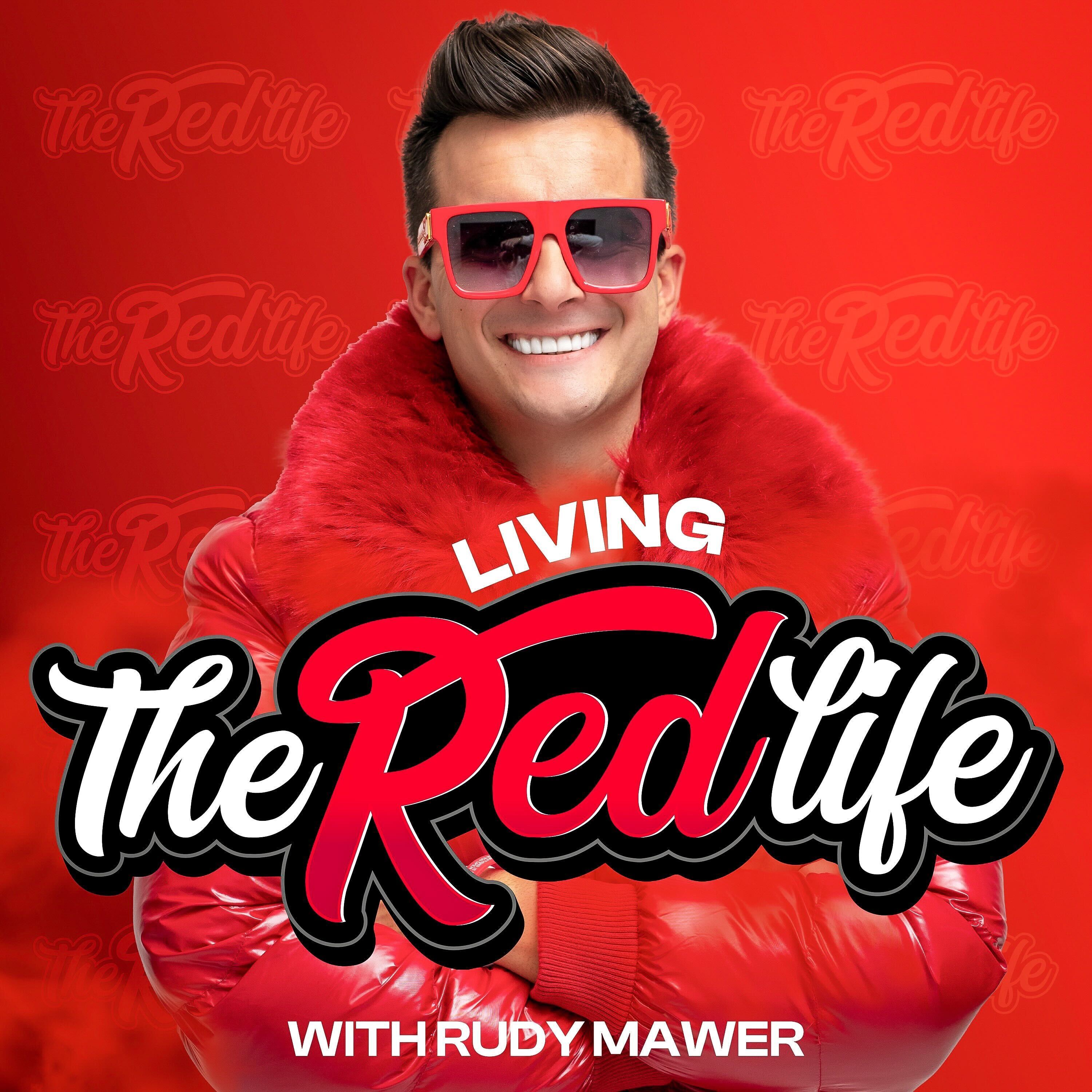
Well, my name's Rudy Moore, host of Living the Red Life podcast, and I'm here to change the way you see your life in your earpiece every single week. If you're ready to start living the red life life. Ditch the blue pill, Take the red pill. Join me in wonderland and change your life. Hello and welcome back to another episode. You probably notice who I'm sat next to right now. Very, very famous actor, someone that I've looked up to for many years. Mr. Dolph Lundgren. Welcome to the studio and thanks for being here.
- [01:44]
B
Thanks, man.
- [01:45]
A
So, you know, I grew up watching Rocky. My mom, you know, was a pro athlete and she would listen to the soundtracks all day and, and the training scenes that you're part of. So I'm very excited to be here with you. And, you know, you've become an iconic action sort of hero, right, and obviously a bad guy in some of the movies. But your story is a story that I can get wrong, can resonate. You know, like me, you came from Europe. He had this dream of coming to America. That's where the action was. So do you mind kind of summarizing that for people listening.
- [02:17]
B
Yeah. I grew up in Sweden. My mom and dad were academics. I. I was a kid sick as a little kid, and my dad was kind of abusive toward me, my mom. So I ended up trying to live up to something and become strong and, you know, do martial arts and sports and. And then study chemical engineering to kind of please him to some degree. But, you know, somewhere along my. In my road, I started. I discovered show business, and I realized I wanted to be a creative person, and I wanted to. I wanted to be emotional and I wanted to express myself, and that's what I ended up doing.
- [02:58]
A
Did, did you ever. You know, obviously you liked America. You watched the movie. It's kind of like I. I got into basketball, and that's what brought me to America. Did you ever. Do you ever. Were you ever watching a movie or something and going, one day, that'll be me?
- [03:11]
B
I watched Clint Eastwood and Charles Bronson when I was a kid, but I didn't really think I was going to be an actor. I. I don't know. I just. I was attracted to the American society, to. To the, the opportunities and the people seemed to. To have fun, to. To work hard, to believe in yourself. It was. It was about a positive experience to me in both movies and music, and that's kind of what I wanted to be part of. I. I didn't really know I wanted to be an actor until I was 27 years old.
- [03:45]
A
Well, and what I love about your story, too, is you, you know, working your. Literally your whole life to basically get to mit. You get the full scholarship, which is the creme de la creme. Right. You kind of made it. And then right at that moment is when you sort of fall into acting because you're in New York and your whole life is spun around. And I think a lot of people that are afraid to take risks, they would have gone with the full scholarship. And did you ever think back, like, how different your life could be now if you had just gone that academic route?
- [04:16]
B
Yeah, I would have ended up like my dad, probably frustrated. And I think he was just frustrated with his life. He wanted to do other things, but his parents, you know, wanted him to study, and that's what he did, and he stuck with it, and he became an engineer, which is. Nothing bad about engineering. I'm just thinking, you know, for me, I think in my life, I've always. I've always seen another opportunity. Ever since I was a kid, I. I realized life is short and you have to get the most out of it and I, you know, I, I did sports, I did engineering. I, I used that to get to America. But when I was here, I realized, oh, there's something more interesting to me, which is show business. And now lately I've realized there's something more interesting perhaps was interesting than show business, which is business to, you know, run a company. So that's kind of what I'm doing now.
- [05:09]
A
And we'll get to that in a minute. But just before that, I mean, I'm interested. What would you say if someone's listening, you know, the safe route is going to MIT with the scholarship. The very risky route is acting because not many people make it in reality. Right. What would you say, someone listening that has two paths, a risky one and a safe one. Well, what, what advice would you give to them?
- [05:28]
B
Well, you know, it's always good to have some kind of safety in the back of your pocket, like you could, you know, I had a degree, I had a master's degree in chemical engineering. But I, I knew it wasn't going to make me happy, so I wanted to follow my, my passion. I think you have to follow your passion. If I would have been very passionate about engineering, I would have done it, but I wasn't. There was something I was more passionate about, which was entertainment and acting.
- [05:54]
A
Love that. So let's fast forward a bit. You, you've kind of fall into acting, you get a couple of roles and then, you know, you land into this role. Rocky, right. I'm Rambo at the same time. And this changes everything. You have one of the most, I still believe, like the most iconic training scenes in history of movies, you know, you and Stallone. Right. It's still, it's quoted and then remade into modern day movies these days. But you told me a story. You sat, you didn't really know it was going to be that big. So you sat in the premiere watching it and there's this oh, wow moment. Like this is it. How did that feel?
- [06:29]
B
Yeah, it was. Well, the whole experience of shooting a movie even and being on screen was Sly and actually acting with Apollo Creed and people I've seen on the movies. And James Brown was there and that was unreal as well. But I think seeing it on the big screen, that's when I realized it was going to change my life. I think any of those scenes, I think as soon as I came on screen, I realized it was a very powerful character. And I could tell in the theater, you know, it's a communal experience. We're all sitting there and the first time people saw that character, especially in the Vegas scene with Apollo Creed, when he. When I kill him, I remember I was. I was shocked myself. I felt really bad, like, have I done this? Like, what's gonna happen to me? I was just as blown away as the rest in the theater that, you know, the power of cinema, it's. It's quite amazing.
- [07:24]
A
And was there a moment there where you were like, all the risk and the time you've doubted yourself, maybe, or other people have doubted you? And I'm sure you got rejected from auditions and told no and things didn't go your way. Did you? Like, okay, now it's worth it.
- [07:38]
B
Yeah, it was worth it. For sure. It was worth it. When I came out of that theater and suddenly people want to take pictures of me and all that work. That was sly, all those months and all the auditions and all the rejections. I remember when I moved to LA from New York to train with him, and I wanted to borrow money from my agent. I didn't have any money, so I was gonna. I said, can you lend me 500 bucks, you know, and I'll pay you back, you know? And I did pay him back, but I know he told somebody, I'll never see that money again. So. So I think that, yeah, it was a good feeling to kind of. To see the proof that I. It was going to work out for me.
- [08:23]
A
And it's kind of cool how cinema has such an impact on the world. Like, still now you go to signings and fans and how does that feel? All these years on?
- [08:32]
B
It feels great. And I can meet fans and sometimes I hear a story about their, you know, their dad, who is. Who died, but maybe the son remembers that they had that moment watching one of my movies. And. And now, you know, when I sign something for him and he comes up to me at the table and it's like a truly emotional moment. Like, it means a lot to them. And when I was a kid making those movies, I didn't realize that, but now I'm realizing that. I think that was the gift that I had to be able to make people feel better or trying to give them something and. And kind of enlighten their lives, you know.
- [09:08]
A
And. Next question. You know, you've had this long career and, you know, even more recently you've had the, you know, Aquaman and Creed and Expendables, but it's not a straight line to success. Right? You said yourself you had, you know, laws in the middle and all these things. I think some People from the outside, they think it's just, oh, that person's just successful. What's the truth?
- [09:30]
B
Well, the truth is that it's a struggle. Every day is a struggle. You know, you have to get up in the morning and you have to face, you know, eight bad moments and then hopefully, you know, 10 great moments, you know. And you know what it's like. You know, it's always when the going gets really rough and you have no help and it's up to yourself and you think you're not going to make it. That's when you have to push through, because that's what gives you the success. I mean, the people that can push through, that are successful, the ones who don't, they're never successful. That's unfortunate, but that's how it works. That's just how nature set it up for us.
- [10:08]
A
Yeah, and. And how was it, you know, more recently filming Expendables Creed, Aquaman were the cool, like, you know, Aquaman, massive budget.
- [10:16]
B
Right?
- [10:16]
A
Was that like a cool experience? And Expendable, you got like 10 iconic good actors, right?
- [10:23]
B
Yeah, the Expendables is just a good time because I know all these guys. Lion, Arnold and 50 was a new guy now. And you have Randy Couture and Jason Stathaml Gibson, all of these icons. It's great to see them all in one little room. It's almost weird, you know, bizarre. But, you know, Aquaman was terrific because big budget picture, you know, you're hanging in wires for, you know, hours at an end and, you know, you don't, here's your 5,000 man army. There's nothing there. You're just looking. Okay, what's over there? Well, that's the, you know, big kingdom of so and so. And you have to imagine everything is done afterwards. So they actually have two movies. They have. They have the movie they're shooting, then they have a animated version of the picture that they'll show you. This is what it's going to look like. So then when you go on set, you realize what you're about to face. You know, it's totally, you know, 80% of it is made in the computer.
- [11:20]
A
Was it cool to see that finished product, too?
- [11:23]
B
Yeah, really cool. Like they had my character do something and then I got a certain match it over here. But then they'll. Sometimes they'll adjust. But that means sometimes you got to do 30 takes. It wasn't your performance. It's the fact that you didn't move proper the way it's supposed to be. So interesting. Tedious. But, I mean, I'm not crazy about the Marvel movies for that reason that it's very, very tedious. It's kind of hard to enjoy the act.
- [11:49]
A
They're kind of creating like a masterpiece almost right where they're doing these takes.
- [11:54]
B
Because, yeah, it's total masterpiece. And guys like James Wan, who did Aquamana, he's a master of that. But I wouldn't want to direct a picture like that. It's just too tedious for me.
- [12:05]
A
Good. So, last couple of questions.
- [12:06]
B
Yeah.
- [12:07]
A
You had this extensive Hollywood career. Now you're getting into, you know, more. My roots, the entrepreneurship. You're into manage staff and people and vendors. How's. How's that? Like, what have you taken from the successes and applying it into your entrepreneurial ventures?
- [12:22]
B
Entrepreneurship? Well, it's very hard. There's a lot of ups and downs. It's very difficult. Shit happens every morning you wake up and you have, like, this email. What. What's going on? Like, you know, it is kind of like making a movie, but when you're filming a movie or the hardest part is the production, and that only goes for so long. But, you know, entrepreneurship, you're looking at, you know, a year, five years. I think the perseverance, something I brought along, I think also working with people and trying to motivate people, being creative as well. But I do think that it's. It's a. It's different and it's. It's more difficult in some ways. Also, in our case, it's a liquor brand. We're selling alcohol, and selling alcohol is very regulated. So, you know, you're dealing with all of that, a lot of rules, a lot of legal stuff. But to me, it's been a. It's been a wonderful challenge and something I really enjoy doing actually now. Good.
- [13:22]
A
So last question. If people want to learn more about, you know, your more recent projects and this alcohol line, where can they find it?
- [13:30]
B
Alcohol line. Well, it's hardcut vodka dot com. You can check that out. Coming to you soon. Smooth. Or like we say, hard cut, smooth finish, Very smooth vodka. About my career. Well, I got a new couple of new things coming out. I got a documentary about my life at the Newport Beach Film Festival, Turin Film Festival. Submitted to Sundance at TIFF Toronto Film Festival. There's a book coming out with Harper Collins next year. I got a couple of big movies coming out. Some of them are secret because they're remakes of other things I've done. I do love small appearances. I am producing a couple of things for my wife. One movie set in Hollywood, playing myself. Somebody Stole My Dogs, and I'm upset about it. That's an action comedy kind of. You figure that out. Yeah, that's it. And a few other things. So I'm staying active.
- [14:28]
A
Busy. Yeah.
- [14:29]
B
Yeah. Thank you. Well, good.
- [14:30]
A
Well, I love. You know, I love hearing the story. It's been so fascinating, and it's so great to just kind of see how your life unraveled, you know? And just like all of us as entrepreneurs, it's like you didn't know where you'd end up. You just believed in yourself and you kept moving forward, right?
- [14:45]
B
Yeah. Yeah. That life is an adventure, and you just got to keep pushing forward and believe in what you got to do and believe in this world and believe in what you can give to it. And I think that's the important part.
- [14:54]
A
I love that. Dolph, been a pleasure. Thank you so much. Thank you, guys. Take care. That's all right.
- [14:58]
B
Thank you. Bye. Bye.