Loading summary
Transcript112 lines
- [00:00]
A
The human experience can be very confusing. On one side of it, you're blessed with children, life, new love, and then on the other side, you're tested again.
- [00:09]
B
It was both the most amazing blessing and the hardest thing in the world to watch another woman carry a baby that I fully intended to carry.
- [00:23]
A
Being an entrepreneur or CEO is quite a lonely path. Like, you have to make sacrifices, you.
- [00:28]
B
Have to figure out what's in here. And when you start tapping into your own power and taking it back unapologetically, things just change. The way that they function, change, you're militarized, you're weaponized.
- [00:39]
A
You're a baker, you've been through some hard shit, and here you are.
- [00:44]
B
So many women feel the mom guilt of, you know, they have to be everything for everybody. And the truth is, my name's Rudy.
- [00:54]
C
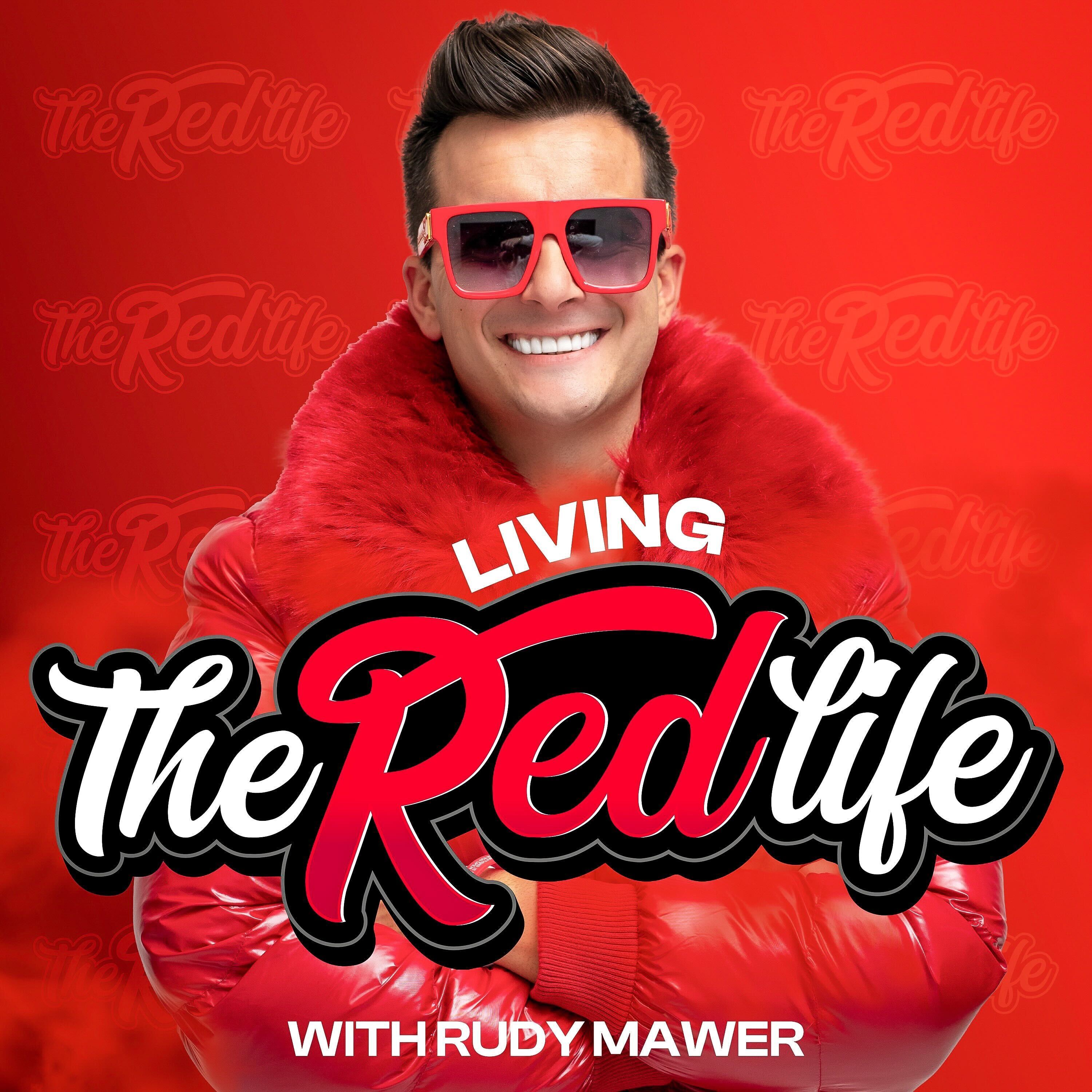
Moore, host of Living the Red Life podcast, and I'm here to change the way you see your life in your earpiece every single week. If you're ready to start living Living the red life. Ditch the blue pill.
- [01:03]
A
Take the red pill.
- [01:04]
C
Join me in wonderland and change your life.
- [01:07]
A
Welcome back to another episode of the Living the Red Life podcast. For Inside Success. This is Ray Gutierrez. Today we are focused in powerful women. We're actually on the verge of filming Kate Casey's episode. She's the founder and CEO of Urban Homesteadings. Kate Casey, welcome to the show. How are you?
- [01:25]
B
Hi. Welcome, Rai. Thanks for having me.
- [01:27]
A
Gosh, we're. We are. You're going to film with Lauren your episode. Lauren is running Studio 2. We have quite the operation here. What are we going to learn about you today in your Woman of Power episode?
- [01:38]
B
So, Ray, I enlisted in the air force in 2008, and I have a really unique situation where I spent all of my time overseas. So I actually didn't live in the US until 2018.
- [01:52]
A
Wow.
- [01:53]
B
And when I came back to the States, I got really sick and I couldn't figure out why. So the docs had recommended being gluten free, but I had just left Italy. Right. So I wasn't breaking up with pizza and pasta. And so fast forward.
- [02:10]
A
Sorry.
- [02:11]
B
Yeah, exactly. And so fast forward, my husband and I got pregnant with twins and we did look beautiful. My pregnancy, I was very fortunate.
- [02:21]
A
Oh, I've met your husband.
- [02:22]
B
Oh, he's not bad either.
- [02:26]
A
Sorry, I had to tease because when you say, we are pregnant, I immediately thought of your husband. Like, wow, he must have looked beautiful.
- [02:30]
B
God, he. Yeah, he would have loved all the free snacks and extra attention.
- [02:35]
A
I love it.
- [02:36]
B
But no, so My pregnancy was phenomenal. Towards the end of it, I was treated for preeclampsia, and I was given a medication that made it to where my body could not clot.
- [02:47]
A
Oh, boy.
- [02:48]
B
And. And so when you're pregnant with multiples, you get tested for clotting markers because there's usually complications. And so I didn't have an issue, but after they got the boys out, I internally hemorrhaged, and then I woke up in the middle of it. So, yeah, in recovery, with five people in my abdomen trying to save my life, my husband in the room, and I lost my ability to have any more kids. But we still had another embryo from ivf, and so that really rocked me. Being prior service, the thought of not coming home one day is really not foreign. We have a will. We get prepared for those things. But almost losing my life, having my kids in America in a hospital with a NICU was just not something that I was prepared to deal with. And so I hit a level of, like, rock bottom that I didn't even know existed.
- [03:54]
A
Wow. I know. It's. The human experience can be very confusing. You're. You're in one side of it, you're. You're blessed with children, life, new love, and then on the other side, you're tested again.
- [04:05]
B
Huh.
- [04:06]
A
How do you think you. You passed the test while still ascending into your new life with your children?
- [04:12]
B
To be honest, I was waiting for someone to give me permission to get up off the floor, and at the same time, or shortly after, my doula from the birth with my twins offered to carry our third son, who's Cedric James. And I just. It was both the most amazing blessing and the hardest thing in the world to. To watch another woman carry a baby that, like, I fully intended to carry. People talk about birth trauma, you know, in a way where it's. It's common, and sadly, it is. It is way too common, but there's so much shame surrounding it that women don't outwardly talk about it. So it wasn't until I started talking about it that I realized there were so many women in my life that had similar stories.
- [05:21]
A
I don't want to pivot to. To being a misogynist and a male here. How I myself have experience trauma at that level. Clearly, I wasn't carrying the child, but I was with a partner. That was. What advice would you give to. To partners that are helping but also suffering in those tough times.
- [05:39]
B
So for us, it was hard. We're a military family. We didn't have our village and Being stateside, it's not the same as when you're overseas because you become really close. I wish that someone had supported my husband so that even though he was struggling to support himself and me and my trauma, so that I still had someone. Do you know what I mean? Like, there were days where me and the kids didn't get out of bed. Like, I had nine blood transfusions. I had an emergency hysterectomy. I wasn't supposed to be carrying anything. And I got sent home with two NICU babies. And I. I don't mean to sound cocky, but. Right. I've never felt unequipped in my life. And I. I did. I just. All I had was what was in front of me. And the. The days blurred and the bottles blurred. And I guess my biggest hope is that other women realize that's okay. You know, there's so much outside pressure for us to just get it together, you know, snap back once the baby's done. Like, who? You know, be grateful you lived. Be grateful you had a surrogate. And the word selfish is really. That's one that I really struggled with, was feeling like I was being selfish. And I wish someone had told me that that was okay.
- [07:09]
A
It's a part of the process, really.
- [07:11]
B
Yeah.
- [07:11]
A
What are you doing now to educate folks to. To avoid the trauma that you suffered? What is your goal today? What is your why?
- [07:20]
B
I mean, I hope that women advocate for themselves. It's really easy, especially as a first time mom, to get swept up in what you're being told, and that kind of lends to my sourdough specialty shop. Right when I was at my lowest point, I just needed something to. To get ahold of. And to be clear, I drove semis and tow trucks in the Air Force. I was not a baker.
- [07:46]
A
Inside joke.
- [07:47]
B
Yeah, not even close. But. And it sounds corny, but it saved me.
- [07:53]
A
Wow.
- [07:53]
B
Like, being intentional with what I was making and the. And how I was feeding myself and my family was like. All of a sudden the lights came back on and I don't know, I think every woman has that. We're just. You end up in shock and you're like a deer in headlights and you can't move. And then society's like, well, aren't you put back together yet?
- [08:17]
A
Yeah. What took you so long?
- [08:18]
B
Like, yeah, where's your six pack? Why aren't you in the gym?
- [08:21]
A
Especially with social media now, it's like, well, according to this, you're just fine. I'm like, I took that 10 years ago.
- [08:26]
B
Exactly. So now my platform is, like, going back to basics. I make things the way my grandmother would have made them.
- [08:34]
A
Amen.
- [08:35]
B
And as far as, like, family goes, I'm the anti hustle. I don't work Sundays. I don't work holidays. I spend them with my kids. Most bakers, their lives are miserable over the holidays, and they're always available in this instant gratification. But when you live overseas, it's a totally different vibe and lifestyle. And I spent a lot of time in Italy and Hawaii, and when I got back to the U.S. i was like, oh, my God, no wonder everybody's on Xanax, because it's just constant, like, all the time. And I just don't want to set that example for my kids, not for my daughter, not for my sons. And it's a constant struggle every day to be like, I can be successful without holding myself to society's standards.
- [09:23]
A
Absolutely. Absolutely. Yeah. It's your own. Your own vortex field that the folks call it a delusional distortion field, but it's your own bubble. It's your own hemisphere. It's your own world. A lot of folks that ascend or watching this, they. They understand that they have a basically an energy force field around them, and their energy basically extracts from them, and they attract and interact with anything that enters into this hemisphere. So what you're feeling is quite. Quite confirmed and affirmed. So which is what brought you here. What are we going to learn in your Women in Power episode? Give us a preview.
- [09:56]
B
So part of it is my story. Before I got pregnant, there was a lot of adversity that I faced while I was in the service. There was only ever one or two other females in my shop. And so I feel like that, that primed me to have a lot of grit, not as much grace as I would have liked to have learned to have with myself. And then the transition into motherhood was just completely opposite of anything that I had been prepared to do. You really have to step into a different energy when raising kids. And I waited until I was out of the service to do so, and I'm really glad that I did, because when you have competing forces and they are competing, you end up missing out.
- [10:43]
A
Oh, for sure.
- [10:44]
B
And so one thing that I had spoke to a couple women at the Mastermind conference about was, you know, when men want to have a family, not only is their life expectancy and their quality of life made better, but no one asks them, like, do you want a career or do you want a family? And so my biggest message is not only am I coming for both, but I'm going to do it unapologetically and on my terms.
- [11:10]
A
Good for you. Which one do you think I chose? I'm 42.
- [11:15]
B
Which one? A fan? Well, a career.
- [11:17]
A
Yeah, that's what I'm like. Which one do you think I chose? Having children.
- [11:20]
B
Yeah.
- [11:21]
A
But I own a house and I run five studios, but I don't have no kids. So it's. I've got those happy days, and then I've got those what am I doing with my life days. You know what I mean? So, like, I, I, I, I, I, I, I. I'm assuming you heard me, because that's, it's, it's, it's not troubling, but it is an experience. Like, being an entrepreneur CEO is quite a lonely path. Like, you're not, you're not just because you're divine and you're, and you're destined to, like, do great things to feed hundreds of folks, hopefully the good, good CEOs. You have to make sacrifices, like normal human sacrifices that were blessed to you since the day of the Garden of Eden. You have to go a different path. And there's a much more different podcast for that, that theory. But back to you, I'd like to know how, how are you now using that pain and transforming it into a positivity? What is the name of your company? What is the name of your brand? How do you turn pain into progression?
- [12:16]
B
So our brand is Urban Homesteadings. When I got back to the U.S. i went to California, and we have a lot of farming, a lot of agriculture, but I couldn't figure out how to tap into it to bring that into my home. Like, when you go to the grocery store, everything doesn't say, you know, farmed or made in California.
- [12:33]
A
Sure.
- [12:33]
B
And so when you think of homesteading, I thought I had to have 20 acres and cows and chickens and all these things. When really, when you take it back to urban, everybody can do something as far as homesteading, whether it's supporting your local farmer's market or someone who. We have egg dealers, you know, that we, that we, our egg dealers are some of our favorite ladies. But it's so cool. And so it's all about, like, rebuilding that community and that focus. And so when you live overseas. Right. The government mostly is responsible for people's healthcare, and so the investment then into their food is different because they don't want to be floating the bill for type 2 diabetes and cancer. Right. But then when you come to the U.S. it's very different and quite the opposite. But most people don't know they've never lived anywhere else. And my thing is, my kids still have McDonald's once in a while, but I know I'm informed, right. Of what the payoff is, of what the trade off may be down the road. And so while our sourdough specialty shop is really about bringing real food back to real people, it's a huge piece of our food education. And my baker, after all. Yeah, well, and then, you know, dealing with birth trauma, because so many of us women just walk around with it, and you really wouldn't know unless you walk up to a woman and say, well, I had a emergency hysterectomy and almost died. And then they're like, oh, yeah, me too.
- [14:13]
A
I had a partner that almost out of emergency history, lost one because of that.
- [14:16]
B
Well, so where's the village? Like, when women used to have babies, right. All the other women in the village would come together.
- [14:23]
A
The phone calls were like, oh, my God, you're expecting. And then no one called.
- [14:26]
B
Yeah.
- [14:27]
A
When we broke the news.
- [14:28]
B
Yeah.
- [14:29]
A
No one called.
- [14:30]
B
No. People don't know how to handle trauma, and they don't know how to support people with trauma. And I think there's such a vibe when you bring other women who are tapped into their internal power, but it gets taken from us at a very young age. Around, like, 6, we start separating the boys and the girls, right? And all of a sudden, the girls are supposed to.
- [14:53]
A
Now you're speaking military.
- [14:54]
B
Yeah. Well, they're supposed to be polite and quiet and obedient.
- [14:59]
A
There is a structure to the world, ladies and gentlemen. There is a math and an equation to how this works. That's why the fact that you're militarized is just, like, amazing. Continue, please. Yeah, I'm gassing you up.
- [15:10]
B
Yeah. Well, I appreciate it, but no. So it really is like, we all have power. I think we just. It's taken and we. And then this shift happens where we start giving it up because we want to blend in, we want to be successful. And it's just. You have to figure out what's in here. And when you start tapping into your own power and taking it back unapologetically, you. Things just change. The way that they function change. I mean, the women that I've met and I've connected with, I never. I just never thought I'd even be in a room with those types of women.
- [15:48]
A
You start partying season, talking to burning bushes.
- [15:50]
B
Yeah, yeah, Jimmy. Yeah. Yeah. And it's amazing. Like, when women come together, there's just. There's this power. But we're so often separated and pitted against each other. I'll be honest, most of my toughest critics have been other women in my life. Absolutely. Like, you had to start a bakery. Now you have three small kids.
- [16:13]
A
How do you make the time? Oh, my God. As they sip on their wine, how do you make the time?
- [16:17]
B
Exactly. Exactly. Or okay, so I, ironically enough, took my lsat.
- [16:23]
A
Not that there's anything wrong with that day. Drinking is completely okay.
- [16:26]
B
Within recent. But no. I had taken my LSAT to go to law school at the same time that I started baking food for my family.
- [16:36]
A
Literally. Breaking bread.
- [16:38]
B
Exactly. Breaking bread. Yeah. And rising. Right. Rising is a big thing for us. But. So what had happened was I passed my. Or not passed, but I did well enough on my LSAT to go to law school.
- [16:50]
A
Hell, yeah.
- [16:51]
B
I had my heart set on Gonzaga, so I went up to visit my sister Christina.
- [16:55]
A
Hi, Christina.
- [16:55]
B
And. And we went and walked the grounds of Gonzaga, and I just didn't. There was something missing. And I really struggled with imposter syndrome of like, who. Who am I to run a bakery? Who am I to be a stay at home mom and become a CEO and, you know, employ my husband? Right.
- [17:18]
A
Isn't that nuts?
- [17:19]
B
Like.
- [17:19]
A
And the children. Are you employed the children yet?
- [17:21]
B
Eventually.
- [17:21]
A
I know. Are they 8, 12. Yet when they're 12, get to work. You're a tax break.
- [17:26]
B
Not. We're getting there, but a lot of people were like, well, who's gonna take care of the kids? And it's like their whole other parent. But there's no. I mean, and my husband has really stepped into his role as being a dad and a caretaker. But that wasn't the example that was set for him.
- [17:44]
A
Gosh, no.
- [17:46]
B
Right. And then when I turned down law school, I really struggled and felt like, who was I to turn down law school? Like, I should be so grateful, right. That I did well enough to go. But then it was just, do I want to spend, you know, 12, 13 hours in class? Do I want to miss out on this time with my kids to defend someone else's story?
- [18:12]
A
Not your own.
- [18:12]
B
Exactly.
- [18:13]
A
You know what I mean?
- [18:13]
B
Come on. Exactly. But choosing what we want, I feel like, is something that women struggle with when someone else is telling us what to do. Like, I was always told I'd make a great lawyer. And then when I joined the service, right, they. It's everything from hair to fingernails to makeup. You name it. And then I was surrounded by men Mostly men all the time. So then I made this shift into.
- [18:40]
A
Most men that are having a hard time figuring out how to man, by the way, and. And they're just standing there at attention, figuring out, is this how you do it? Cause this is the way I was taught. Or I get beaten by the way. That's what's happening in my brain as a man.
- [18:50]
B
Yeah. Yeah. Well, it can be. Yeah, it can be really complex. And so then you're sitting there, like, transitioning into the civilian sector as a woman and trying to connect with other women, and then you get pregnant and come into motherhood at the same time. And it was just like, holy.
- [19:09]
A
You can curse.
- [19:10]
B
Yeah, holy hell. Like, where was the. Nobody warned me of this. You know what I mean? I know how to deal with a chem warfare attack. I know how to deal with an active shooter, but I can't go to, like, mom's playgroup and have something constructive to. To add to the conversation.
- [19:27]
A
For some odd reason, I just saw that Terminator 2 scene of her Linda Hamilton. I'm fire. I'm like, you can handle that, but you can't handle the Rugrat children running around the entire time.
- [19:36]
B
It's a lot. It is a lot. And some of them do it with more poison than. Than others. And that's another thing, like being the perfect mom.
- [19:44]
A
The perfect mom.
- [19:45]
B
Oh, my gosh, that's not possible. I mean, I love arts and crafts. I love cooking with my kids. But there are also times where it's like, if I hear mom one more time when I'm just trying to go to the bathroom with the door shut, it's like. And that's okay, too. So many women feel the mom guilt of, you know, they have to be everything for everybody. And the truth is, you can't be anything for anybody until you show up for yourself.
- [20:15]
A
Amen to that. Let's. Let's. I'm gonna. We're gonna end that with that strong exclamation mark. But I want you to look at this camera, and I want to you to encourage or educate women that are need of someone like you. How do they find you? How do they. How do. How do you become part of their journey?
- [20:33]
B
Well, you can always reach out to us at the website. It's urbanhomesteadings.com you can send us a message. And please, even if it's something not having to do with the bakery, please reach out. I mean, if it. If it ends up that we connect on some level or something that I'm saying resonates please don't hesitate to reach out. The village that you build ends up being so much stronger sometimes than the village that you're given. And it's not worth waiting to find out that you didn't build the support that you needed. You know what I mean? Because when that moment comes, the village is there. You just gotta build it.
- [21:13]
A
Yeah. It's becoming less and less lonely. Thank you for doing that. Thank you for your time and energy. I really appreciate the chat. This is quite the way to wrap up my Friday K. Casey, thank you so much for being such an amazing woman of power, of. In power, actually. You know what defines you? The power or the woman? I always like to ask this. Are you more a woman or are you more power because you're militarized, you're weaponized, you're a baker, you've been through some hard shit, and here you are.
- [21:44]
B
I would say a woman. Because there is a power that comes from being a woman that no one can give you, they can't instill in you, they can't provide it for you. That is organic.
- [21:58]
A
Hell, yeah.
- [21:58]
B
And that, I mean, it's forged in the fire, right? And I want women to know, like, you don't come into that power without going through hell first.
- [22:09]
A
Do you lead in fire? Cause I do.
- [22:12]
B
Yes.
- [22:12]
A
Both.
- [22:13]
B
Always.
- [22:14]
A
Always. And that concludes our Women in Power episode, Red Life Edition. For Inside Success, I'm Ray Gutierrez. Sam.