Loading summary
Transcript174 lines
- [00:00]
A
I'm trying to contain this guy. If you know who he is, you know he's hard to contain. I just had the most fantastic hour, so I'm so excited to be now sat in your studio doing the podcast.
- [00:10]
B
Well, thank you. I like what you do. Howie Mandel. Howie Mandel is more than a legendary entertainer. He's a bold entrepreneur. Beyond his roles as a comedian and television personality, he has strategically diversified his.
- [00:20]
A
Portfolio through ventures in real estate and technology.
- [00:22]
B
From high return real estate deals to backing cutting edge tech like Proto Inc. How he continues to play big behind the scenes. Whatever I believe it takes to be successful in one word. That one word is yes. I think we have too many noes. And no is spelled N O, which is the first two letters of the word nothing. The key now for success across all businesses is one word, and it comes from social media. And that's.
- [00:55]
A
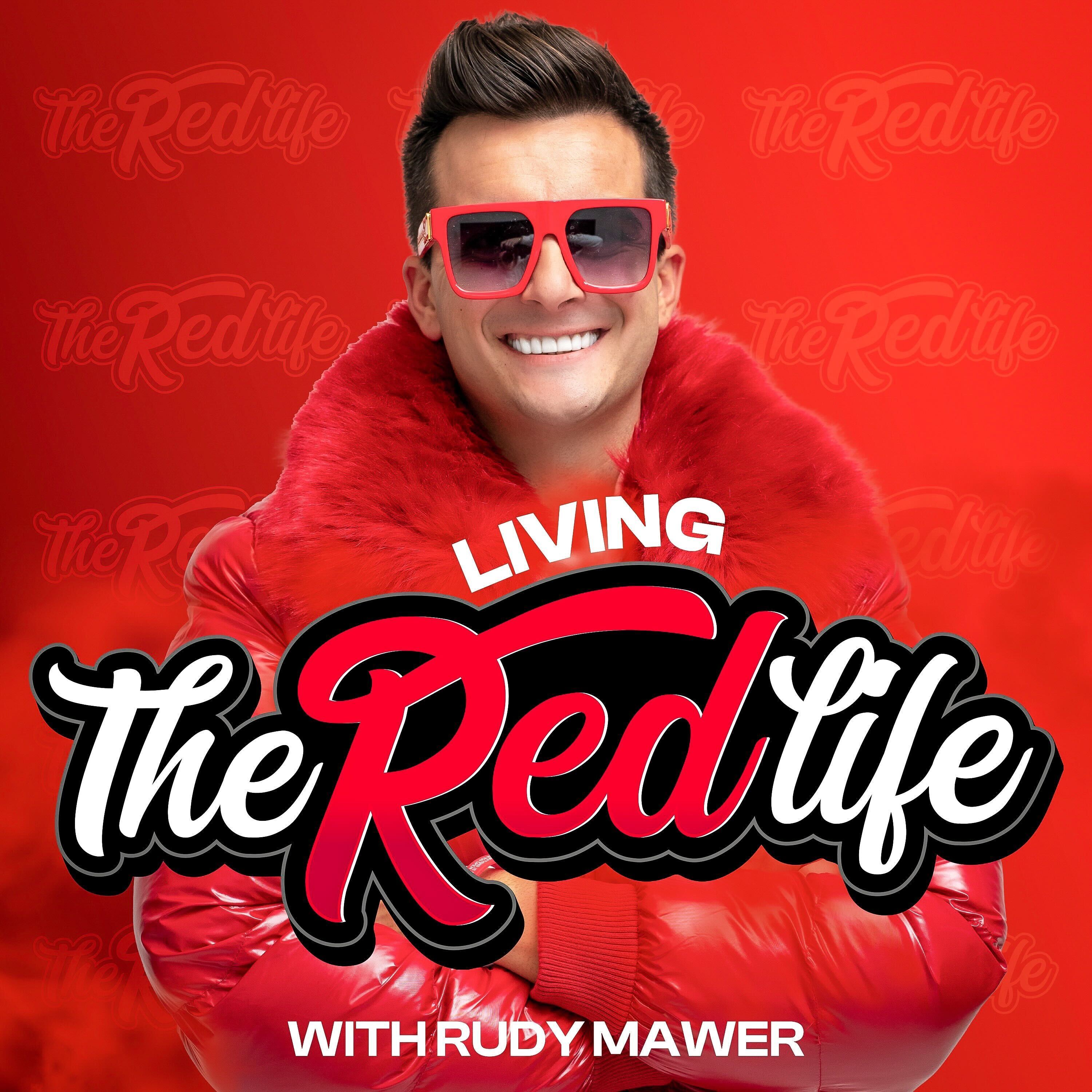
My name is Rudy Moore, host of Living the Red Life Podcast, and I'm here to change the way you see your life in your earpiece every single week. If you're ready to start living the red life, ditch the blue pill, take the red pill, join me in wonderland and change your life. All right, guys, I'm trying to contain this guy. If you know who he is, you know he's hard to contain. His name's Howie. He's a legend in his own right. And I just had the most fantastic hour. So I'm so excited to be now sat in your studio doing the podcast after I saw a virtual you. A virtual me, a French me, a Spanish me, a Mandarin you as well. Right. So I want to dive into that in a little. But firstly, thanks for taking the time and welcome.
- [01:37]
B
Well, thank you. I like what you do.
- [01:38]
A
Good, good. I follow you and I love what you do. I said this studio and experience is similar to my office, just less red.
- [01:46]
B
I was so interested in you because I love, I believe, just being entrepreneurial is, as a good friend of mine told me, do you know who Robert Greenberg is? You. Yes, Robert Greenberg is a good friend of mine. Sorry, Contractually I have to hold up sketchers, but he owns Skechers. He said it's a sport. It is, it is. And making money and trying to be successful is a fun game that even if I am not in the shape you're in, I could play the game and sometimes score a goal.
- [02:23]
A
Well, the game of business and success, like we were talking offline. I came from a family of pro athletes and my parents weren't wealthy at all, but the same core traits of becoming a pro athlete is the same in business. And that's what I want to talk to you about as well today, is in being successful in entertainment too, right?
- [02:41]
B
Just being successful.
- [02:43]
A
Yeah.
- [02:43]
B
And I think just being successful in whatever it is that you pursue. I think. And I said this to somebody before, if. If I could tie up whatever I believe it takes to be successful in one word. That one word is yes. And I think we. Too many noes. And no is spelled N O, which is the first two letters of the word. Nothing. Nothing comes from no. Yes. Even if yes leads you into a failure, that's a piece of education. That's an experience. That's a path that you won't travel down again. But no gets you nothing. So I've said yes to everything I am not doing or existing in a place that I ever dreamed I would be. You know, even geographically.
- [03:35]
A
Yeah, yeah, yeah.
- [03:36]
B
You know, me too. Yeah, yeah. So. And I think it's just as human beings, and I think everybody has the capability. I believe that as a human being, instinct is king. The problem with what we do is instinctually we know what we're drawn toward. And then intellectually, we think about it. And if you think about it, there's so many reasons why not to go with your instinct. And most people are where they are in life because they overthought. And I don't think there's anybody alive your age or my age that doesn't have a shoulda, coulda, woulda. And if you could minimalize your shoulda, coulda, wouldas, I think you'd be further ahead.
- [04:22]
A
It's funny you say all this, because my Instagram post this morning was about this. Like, I'm not even kidding. Yeah. Yes. I'll put it up on the screen. If you guys are. Are watching, I will read out a quote because it's so important. So the post was right. Decisions create destiny.
- [04:37]
B
Right, Right.
- [04:38]
A
And the caption, it's not long. It says, everyone sets goals, wants to change the world, have their product, and those big dreams are great, but most beginners fail because they're afraid to make the decision. Right. And then I go on to say, all the most successful people I know, they make decisions fast and say yes.
- [04:56]
B
So then that was. Look at it. We're of the same.
- [04:58]
A
Look at that.
- [04:59]
B
The difference is, for me, I'm not goal oriented. I don't believe in a goal. To me, in my mind.
- [05:06]
A
Sure.
- [05:06]
B
To me, if you set a goal, if you. There's your goal.
- [05:10]
A
Yeah.
- [05:11]
B
So. And. And this is Just semantics. But then you're aware that you're not there.
- [05:18]
A
Interesting.
- [05:18]
B
And you're spending your time and your effort. That makes it more negative. I. Everything that I've ever achieved in life and where I am now isn't where I planned to be. And I don't know that you planned to be this. So what you do instinctually in the moment, you know, you go, I feel like putting my left foot in front of my. In front of my right. I'm going to do that. I'm going to put my right foot in front of my left. I'm going to do that. I'm going to put my left foot in front of that. And then you end up here. Now, I wasn't standing here going, I want to be here. I was enjoying putting my left foot. By the same token, I. I got dared in the mid-70s. I'm not an athlete. I'm not good at sports. I don't drink. I don't play cards. I don't gamble. In the mid-70s, disco was big. I'm not part of the disco era. In my hometown of Toronto, Canada, they opened up a comedy club. And I just went to the comedy club to watch the show. The guy, the people that I was sitting with, or the guy that was the host of the show, Yuk Yuk's Comedy Club, Mark Breslin, said at midnight, if anybody wants to try this.
- [06:23]
A
Yep.
- [06:24]
B
Well, you get five minutes at midnight. And somebody at my table went, you should go up. I went, okay. And I don't think of ramifications. And what was the. I'm not a comedian, so what do I have to lose?
- [06:35]
A
Yep.
- [06:35]
B
And I thought it would be funny if somebody went, ladies and gentlemen, Howie Mandel. And they went, ladies and gentlemen, Howie man. And then I had nothing. Nothing. And I. Nothing but terror of all these strange people just staring at me, you know, And. And they were staring at me, and I didn't know what to do. And I have a rubber glove because I carry rubber gloves because I have OCD and I didn't want to touch anything. I put it over my head and I blew it up. And it popped off. And that became, you're too young to know, but that bought me my first house. That became. They said, come back tomorrow night and do it. Come back. And I just took incoming calls. My intellect told me that this is not a living. This is not. But I wanted to get married. I've been married for 45 years. I have three kids, three grandchildren. I was already with my girlfriend. I Was engaged. I wanted to be support her. So my favorite game growing up was Monopoly.
- [07:23]
A
Yeah, mine too.
- [07:24]
B
So wow, we have so much in common, you know and I did you ever play chess? I, I do, I, I, I do. But it's so strategy and then, but, and, and you don't. I always say to people, you know, I don't have a ged. Do you know you live in America? I don't have a, I didn't go to, I got thrown out of high school. Later on I, in my 40s I got diagnosed but I have severe ADHD. Every time somebody gave me a job in this business and even to this day I truly don't think this is going to get me someplace or it's going to get me my next job. So I've always been of the mind to make what, you know, make whatever I get work for me.
- [08:10]
A
Yeah.
- [08:11]
B
You know, I read a book years ago, do you know rich dad, Poor Dad?
- [08:14]
A
I do Robert.
- [08:15]
B
Yeah, I love.
- [08:16]
A
That's great.
- [08:17]
B
Now I don't know that it's the best book, but it is the best theory.
- [08:20]
A
It's great.
- [08:20]
B
And every dollar that comes your way, think of that dollar as an employee. If that or a lot of people take that money and they go, what can I buy? Yeah, I take that money and go, what can I make? My wife got mad at me when I made my first $10,000 when we were here, I bought a term deposit, a CD, a term deposit at 12% and I had $600 left in the bank and we were watching, I, I landed a, a series called Saint Elsewhere. That's where Denz and me came out of the same, that's where we both started. On television.
- [08:54]
A
Yeah, yeah.
- [08:55]
B
I had a black and white tv. I wouldn't spend any money on anything. I didn't buy anything. I was so cheap. But it wasn't cheap. I just thought like if I'm out here, I don't know anybody out here. People are giving me jobs pretending, you know, I'm going to pretend like I have money and they gave me good money. But the first $10,000 I had, I bought a term deposit for like a five year term deposit that was paying 14% at the time. You know, it was the beginning, end of the 70s, the beginning of the 80s and I was guaranteed that I was going to make fourteen hundred dollars a year. And that was exciting to me. That and I didn't even have to work.
- [09:32]
A
But that's way different to most people because when they have especially quick success like athletes Entertainment. They go out and buy a new BMW. Right. Or something. So.
- [09:40]
B
So they buy a debt.
- [09:41]
A
Yes.
- [09:42]
B
They buy something.
- [09:42]
A
Liability.
- [09:43]
B
They gotta. They gotta keep digging themselves. I never want to dig myself out of anything. So everything that I do in life, everything I've always done so that if I can't show up, it's. I'm still in the.
- [09:59]
A
Yeah.
- [09:59]
B
In the black. I know you like to be in the red, but I don't know if you're familiar with accounting.
- [10:04]
A
I do. Yeah.
- [10:05]
B
Red is not the best representation of somebody who wants to make it.
- [10:09]
A
I agree. I. But just to talk about the investment side, because I was, you know, I shared with you earlier, I worked in my teenage years buying and selling, then in fitness and health as a personal trainer. And I saved every penny to buy the deposit on my first house.
- [10:23]
B
Right.
- [10:24]
A
But then once I got the first one, I bought a new property every year because I rolled all the profit of that, plus work in two jobs.
- [10:31]
B
That's exactly right.
- [10:32]
A
It's the same thing. It's the same thing. And. And then, you know, I think eventually, and I used to, when I, Even when I was making millions of dollars, I lived like a normal person. It took many, many years until I was like, actually spending a decent amount of income.
- [10:45]
B
But still, I would imagine, I don't know you that well. You say spending a decent amount of income, if you go by percentages.
- [10:52]
A
Very small percent.
- [10:53]
B
That's what I'm saying.
- [10:53]
A
Very small.
- [10:54]
B
So the average person overspends a percentage of what they are making. I think if you have the mindset of this is not all for the giving.
- [11:06]
A
You know, it's funny because I, I teach that too. I said, for the last eight years, I paid myself the same salary, even though my business has grown 10 times bigger. Right. And people are like, what do you do with the money? I buy more real estate, invest it into new businesses and share whatever. Right. But I think that's so important. And most people, I say in entrepreneurship, and it's a famous saying, the first stage of entrepreneurship is figuring out how to make the money. But the hardest part is keeping the money.
- [11:36]
B
Absolutely.
- [11:36]
A
Yeah.
- [11:37]
B
But that's why, you know, there's an old saying, you can't make money without money. But it's not without. You could do it without spending money. You can do it. A dollar is the best employee you will ever have. And with what I, you know, we talk about even where we're sitting right now, you know, there are people here who are in my, in my space, who are not Only my partners, but they're my tenants and they're. And so, you know, there is a source of income just to have this. Even this studio like this could be considered a large overhead. Yeah, not if it's being paid for. When I'm not talking into this, somebody else is talking into this and they're paying.
- [12:23]
A
We think the same. Because I can tell you the same as me, because any time you want to buy something, you go, how do I make money from buying that?
- [12:29]
B
Right.
- [12:30]
A
That's what you do. I'm the same.
- [12:32]
B
Right.
- [12:32]
A
I want to buy. I got a 12,000 square foot studio on Miami beach, right. I'm like, how do I cash flow this versus it being a liability? And I can tell from how.
- [12:41]
B
Well, I would imagine whatever you can earn in there, plus studio rentals, people.
- [12:46]
A
Come in and plus the write off.
- [12:48]
B
And what you're saving in your taxes.
- [12:49]
A
Yeah.
- [12:50]
B
So you want.
- [12:51]
A
So how did you. I want to ask you this. You've obviously been so successful in the entertainment space. How, how do you incorporate the, the brands and the entrepreneurship? Because I meet a lot of people very successful in the entertainment space, but they don't have the entrepreneurship side that you do.
- [13:10]
B
Well, here's, here's what. First of all, successful is. Is just a word. What is success? For me, success is being excited about what you're going to do today. I became successful April 19, 1977, when somebody dared me to get up on stage. As soon as I found that, it's the first time I had any acceptance. It's the first time I was excited about getting on stage again. I still to this day will drop in on the. Even when I'm not touring, and I'm always touring. If you go to howiemandel.com I'll drop in on club at the Comedy Store, the Laugh Factory, the Ice House, just to get stage time. I love doing it, not for the money. And I even say when people fly me to concerts and they want to pay me a lot, they're not paying. They're paying for me to leave this fun place to walk away from my family, to get in a, to stay in a, in a hotel room. Stage time's free. So the idea, the chasing the entrepreneurial, being an entrepreneur was the need to be able to sustain myself and give me the time and the place where I can just. I can go tonight to the Comedy Store even without getting paid.
- [14:19]
A
Yeah, yeah.
- [14:20]
B
And an hour or two, three times a week and do that. I don't have to take three jobs and not have Time to do what I want. I understood that this existed because even in show. Show is one syllable, business is two. Business is the bigger word. Everything is a business. Absolutely. And everything is basically real estate. Yeah, it really is. So even you're doing this podcast, you're creating a property where you're not making money. Now, talking to me, the way you'll make money is we've probably had one or two ads already that people have seen and is this on YouTube right now?
- [14:56]
A
We don't actually run in stream ads, but I play such a long game. It's all about the brand and like building the.
- [15:02]
B
So.
- [15:02]
A
But.
- [15:02]
B
But ultimately. So this is your. Your.
- [15:04]
A
Your people listen and they're part of my ecosystem system. Right, Right.
- [15:08]
B
But you'll make money with this. Not. This is not.
- [15:11]
A
Not the job.
- [15:13]
B
Right. So. But what I'm saying is I realized, you know, I was a carpet salesman when I got thrown out of school. I'm colorblind. But I realized I'm. I'm still a carpet salesman. I'm just selling. I'm just creating a brand. We all are a brand. And that's the only way to expand is being a brand. And the more people that know your brand, the more access you have or the more. I don't think there is anybody alive that doesn't have an opportunity. I think doors open for everybody every day. I just think they don't step further.
- [15:44]
A
Most people don't. They don't. Yeah.
- [15:46]
B
They're not going to. You know, it's ridiculous. And I would imagine, including what you're doing. What I'm doing is ridiculous. I was engaged to be married. I, you know, I had a job in Toronto in retail to take my fiance 3,000 miles away. For me, this is a culture shock. Like, for you, it's a very different world to a place where I don't have any connections, don't know anybody, and think that I'm going to support myself, put food in my stomach and hers and eventually our children's by putting a rubber glove on my head. Is. Can I swear?
- [16:23]
A
Yeah. Yeah.
- [16:23]
B
Is fucking ridiculous. It's ridiculous. But I didn't think about that. You know, if. If I really think about it, I probably wouldn't have done it.
- [16:31]
A
No.
- [16:32]
B
And by the same token, at this age, at this stage in my life, you know, I'm 70 this year. Why would I buy a warehouse? Why? Why? But this is the most fun. And when I bought it, it's not like I didn't even have a plan. I just thought, I just Want some space? It might be part of my adhd, but I don't think of ramifications. I don't think of the downside. It never hits my head, but I thought I could have fun. There's a lot of room and I showed you when we were walking through, I bought Go Karts and I was just here. I bought this eight years ago in my 60s. I bought go karts and I have a big empty warehouse. And I'm just driving around alone in the warehouse and listening to TikTok like an idiot. And then I find a band on TikTok that I like. I say, wanna come in the warehouse? And they come in the warehouse and then I see a guy who's able, who put Tupac at, at Coachella on instagram and I DM'd him and I said, can I see your new product? And I went and saw it and I went, this is great. I'm gonna invest in this company because I want to be part of it and you want to expand. I have a, I have a warehouse. So come to my warehouse. So now this is the head office for Proto Holograms, which is blowing up all over the world. And then I, you know, other people, there's just so many. There's a gaming, I like gaming.
- [17:51]
A
Yeah.
- [17:52]
B
Esports here. There's art. People who do art.
- [17:55]
A
Yeah.
- [17:56]
B
Where? And in any given day, today's a, kind of a slow day, but any given day you walk around and I don't know what's happening because these are mostly just friends or like minded people who either are part of my team or they're just. I'm part of their team and they do their own. You know, I'll walk in. The other day I walked into that room and there was Ice Cube shooting something. I don't know what they were shooting.
- [18:20]
A
Well, you need, like me, you need the creative energy, right? You, you feed off that energy.
- [18:24]
B
I do. And I don't have an office. Yeah, I don't.
- [18:27]
A
Yeah, I didn't have enough.
- [18:28]
B
I wonder. Me too. Say me too.
- [18:30]
A
There you go.
- [18:30]
B
This is your me too episode. I walk around and I get inspired and somebody says, you want to do this? And I'll sit down. They're playing, you know, like Call of Duty and it's live and it's streaming and I'll sit down and, and, and play or talk to their team. And then all of a sudden I've, you know, the key now, the key now for success across all businesses is one word, and it comes from social media. And that's engagement.
- [18:56]
A
Yeah.
- [18:56]
B
If you can engage, it's not only seeing you, but if you can engage somebody where they, they want to interact with you, they want to buy what you're talking about. They want to be like you. They want to, they see you, but you need those. We live in such a fractured society because of social media. Everybody's got their own algorithm and they're really, you know, their feed is, is so different.
- [19:22]
A
I teach a. Fighting for the brands. I teach. You're fighting for engagement. Right. It's not just about having a good product these days. You've got to stand out and grab the engagement and build that long term customer.
- [19:31]
B
Right. And that's why I'm sitting and talking to you. I, I'm hoping that somebody who wants to pay a lot, like a hair, a hair product brand, will come to me because why would they? But sure, if I engage with you, there's a good chance I could be the next l' Oreal.
- [19:49]
A
L' Oreal? Yeah. There we go. Well, have eyebrows. Quick question. Talking about engagement. I do want to come back to the proto.
- [20:00]
B
Proto, which I think is the most exciting thing that I'm involved in.
- [20:03]
A
I'm fascinated by it. First hour of being here, I'm like in awe of how good quality it is. So can you explain it?
- [20:09]
B
Yes, I will explain it. So I was, I sought, you know, originally these people put Tupac at, you know what I'm talking about, Coachella. That technology, that company is. The technology is Pepper's ghost. Do you know? Have you ever heard of that? Pepper's ghost is kind of easy. Everybody knows it. If you go to Disneyland or Disney World and you go into the haunted House, you've been to the haunted house. You know how. So you have to create. You have to light a whole space or not light a whole space, make it dark, and then project something on an opaque screen like a piece of glass. So that. And then what happens is if you light the area behind that, you see all the people at the dinner table and then all the people that you can kind of see through, or if it's Tupac and you can't see through it, he's in front and Snoop was in back. Right. That is the most cumbersome kind of setup in lighting. David Nussbaum, who was sitting right there, was smart enough to say, well, people are intrigued by this. But how? We can't spend thousands of dollars and hundreds of hours every time somebody wants to see a hologram. How can we send a person in real Time or an image, at least in real time, outside from another place, which, other than a projector. And he built from this dream in his living room, he built this protobox and it is this box and there's real depth in it. It is, you know, it's, it's not just the screen. It's about how it is lit, it is about how it is built. And he built a software company where you could stand anywhere in the world with the lowest technical footprint that you can imagine. There isn't anybody watching this right now that can't do this. They can stand in their kitchen with their iPhone and that image will be projected onto the hardware that he has created in a three dimensional image.
- [22:11]
A
Yeah.
- [22:12]
B
In real time with no latency. It is like facetime or zoom on steroids.
- [22:18]
A
Well, and it's why I'm laughing, because I'm still in shock how good quality it is. That's what I can't get over. Well, that's why it looks like you're there.
- [22:27]
B
You are there. I'm telling you, you haven't used it yet, you've just been on it.
- [22:31]
A
Yeah.
- [22:31]
B
I am telling you as somebody who uses it, and I'm telling you as a germaphobe, you know, the reason what intrigued me was the fact that in the middle of the pandemic, I was doing all these zoom shows and then I saw this and I said, well, this is not zoom and it looks better. Like you're saying it looks, but being on that until you use it, I'm talking about using it until you stand in front of it and your return could be, you know, just a laptop or whatever to see what the box is seeing. The. I'm in the room, I don't feel like I'm on the phone. And maybe it's because I'm standing there freely, you know, I'm, I'm here.
- [23:08]
A
Yeah.
- [23:09]
B
Whereas FaceTime, I gotta stand like this.
- [23:11]
A
Yeah.
- [23:11]
B
Or zoom. You set it up and you're, you're, you're, you're adjusting it. The fact that I'm standing here, like I'm sitting here with you. It can put a stool in front of it and you project my full body. And I could look in the thing and I'm looking, I'm going, rudy, I'm right here.
- [23:26]
A
Yeah.
- [23:26]
B
And I've done this in front of live audiences of thousands and they screaming.
- [23:33]
A
Yeah.
- [23:33]
B
And you saw during March Madness, they used it, ESPN uses it and on game day, they bring in athletes from their homes. The arena went crazy. Like they're there we've done a festival, 20,000 seat country festival where every artist showed up themselves. One artist for whatever reason couldn't make it and decided to beam in on our Proto. They got like 10 million or 100 million clicks on that. That was. People were more fascinated and enjoyed that because he was taking suggestions from the audience. Because it's not just you're not watching a video.
- [24:11]
A
Yeah. That's you are talking to the person.
- [24:14]
B
But beyond that companies have come in and said well you know, you know what I think I could do with this? I can. And our app is agnostic. Right. So you can use our app and build.
- [24:27]
A
Yeah, yeah.
- [24:27]
B
Your own, your own platform on it. So jewelry companies have come in and scan their jewelry. Their jewelry's on it and then they, you know, it's. It's got Bluetooth so you can operate whatever you're seeing on the screen from your mobile device and move it and order it and buy it and communicate with it. Medicine is using it where doctors are now have the ability to see and communicate and help people. In rural areas where you can't get the top doctor. Not everybody can go to the Mayo Clinic, but the Mayo Clinic could go to everybody.
- [25:03]
A
Yeah. Wild use. I can see this just changing the entertainment space. Shopping, e commerce like I'm so fascinated.
- [25:11]
B
My dream and the reason I invested in it and this is where I believe it's going to go. It's going to be ubiquitous. I believe that Proto is going to be like Kleenex and you know Kleenex, you know the term because you came from London. Kleenex is like is tissue.
- [25:24]
A
Yeah, yeah.
- [25:25]
B
People call it a Kleenex.
- [25:26]
A
Yeah.
- [25:27]
B
Right. So the point is, you know, I'll proto you at 4.
- [25:30]
A
Yeah, yeah.
- [25:31]
B
I believe that. Or I just went to shopping today. I just proto'd. You should see the stuff I got.
- [25:38]
A
Yeah, I love that.
- [25:38]
B
You know and people are finding ways to interact and ways. And the beauty of it is the, the amount of creativity that people are putting into inside and outside of it. Whether the box is going to. And it's wrapped by a company, the Coca Cola. And now Coca Cola presents whatever they're seeing or. And you will see them now maybe now that we've talked about it. They're in airports, they're in schools, they're in hospitals, they're in all the Christie's there. There isn't a business that is not using it now.
- [26:08]
A
Yeah.
- [26:08]
B
It's in stadiums, it's in the O2.
- [26:10]
A
Yeah.
- [26:11]
B
It's. It's all over the world. We're in 39 different countries now, you know, and the. Traditionally, I think Proto is more of a software company and I am fascinated now that this is their head office and this is the. I share that. This space with them. This every week. Every week. The, the leaps and bounds of what they are doing in the world of AI and connectivity and engagement is what makes this company. I think everybody is going to have it in their house and you're not going to have to be rich. Right now. You could have it in your house for like six grand.
- [26:49]
A
Yeah, yeah.
- [26:49]
B
Which is not great. Which is not everybody's going to spend six grand now. But I believe that there'll be a time within the next few years for a few hundred dollars for less than your iPhone.
- [26:57]
A
It's like the DVD player, right when it came out, it was a lot and then it was like $30 at the end.
- [27:02]
B
But the amount from getting to where this started in David's living room to being able to put it in Your house for 6,000 has not been that long. So being able to put it in your house for a few hundred dollars and you can, that could be your form of entertainment. That is going to be your form of family communication, family connection. Instead of a phone call, I'd rather you stand in front of me and talk to me.
- [27:21]
A
Yeah. Love it. So, last couple of questions as we wrap. I always like to ask people this. What. What for you when we talk about legacy and long term, what. What is something you want to be remembered for?
- [27:33]
B
People ask that. And I'm sorry that I don't have an answer for that because I don't think I'll be remembered. I don't think anybody. Well, maybe I'll be remembered because my hologram will be living forever on Proto. But the truth of the matter is I am a father and a grandfather and I believe I'm fascinated by the fact of people in my business who chase fame. You know, you chase, you know, people recognizing.
- [28:00]
A
Sure, sure.
- [28:01]
B
I don't really chase that. I love what I do. I love comedy. I like it. For me, it's like an art.
- [28:07]
A
Yeah.
- [28:07]
B
You know, I love comedy. I love business. It's also an art and a sport. And I'm fascinated and blessed by the fact that somebody wants to come up and spend any time with me because there's so much out there, there's so many people out there, but the biggest stars of the world, the biggest stars, it is so fleeting and so fast. I mean, maybe your viewers and listeners right now like, the Beatles don't mean anything to my grandkids.
- [28:32]
A
Yeah, yeah.
- [28:33]
B
And that's just one generation away. So as big as you could possibly get. And there was nothing bigger than the Beatles at that time. And they're forgotten. Most people can't name every president. They were the president of the biggest power in the world. They can't name every president. So to be remembered is kind of shallow. But here's what the legacy that I leave is to try to be a good human being, charitable human being, a respectful human being. And hopefully from doing that, my kids learn to be that, and their kids learn to be. Be that. So my legacy is to leave other human beings here who maybe were changed a little bit toward the good. I like that because of who I am and how I am.
- [29:19]
A
Yeah, yeah.
- [29:20]
B
But. And. And. And that's. That's all it is. And while I'm here, I'm gonna have fun. And no matter how much we make. You know, as Sharon Osborne once said to me, she goes, who's the richest person in the graveyard? We're all on equal grounds. We start the same, we'll end the same. Let's just all play, have fun.
- [29:39]
A
No, I love where you're coming from with that. And I can tell you. I was gonna say the fun part in the process, and then you said it, because I can tell me, too. You're like, me.
- [29:50]
B
Yeah.
- [29:50]
A
I always. Everyone calls me a big child. They say I'm like, I want to make lots of money, have lots of impact, but be a kid. I'm a kid at heart. I just want to have fun every day. And I posted the other day to finish this episode on the day you wake up and dread Mondays is the day your life should change.
- [30:05]
B
You know, that's me, too. So I always say, like, in. In America, I don't know that they say it anymore because I don't really listen to radio.
- [30:11]
A
Yeah.
- [30:12]
B
I don't know that anybody does, but there used to be Wednesday was considered hump day. Have you heard the term hump day?
- [30:17]
A
Of course. Yeah.
- [30:18]
B
Well, hump day, the connotation is you're halfway over this dredging hump.
- [30:23]
A
Yes.
- [30:23]
B
To get to the weekend. Because you hate every day. And then you're going to get to the weekend where you're just not going to. You're not even going to do anything exciting. You're just not going to have to do the things that you find crappy.
- [30:34]
A
It's not a lie.
- [30:35]
B
And I'm telling you, as somebody that's 70 years old. This goes fast. Every day, every moment that you waste, this is all you have. All you have is now. That's why I don't say set, set a goal. Because you don't know if tomorrow is even going to come. You don't know what tomorrow brings. You don't even know if yesterday is exactly the way. If two people spend the day together, they'll have two different stories. So that's not even real. That's just make. That's just pretend. Or your perception of how yesterday went. The only thing that's real is now. And if you can make the most of now, if you could say yes and live in the now, I promise you. I promise you, you can interpret that as success.
- [31:12]
A
Love that. Well, no better way to end an episode. Thank you so much for your time. Much more to come. We could talk all day but we'll wrap here. Guys, go check out the amazing products. We'll link them below. And really do look into this. It's a game changer that we talked about.
- [31:29]
B
Protohologram.
- [31:30]
A
Proto. So check that out. I will link that too. Thank you so much, buddy. It's been a pleasure and we've had a lot of fun. And guys, keep. Keep working away. Have impact and build a legacy. I'll see you guys soon.
- [31:49]
B
Sa.