← Love Your Life Show: Personal Growth, Mindset, + Habits for Busy Moms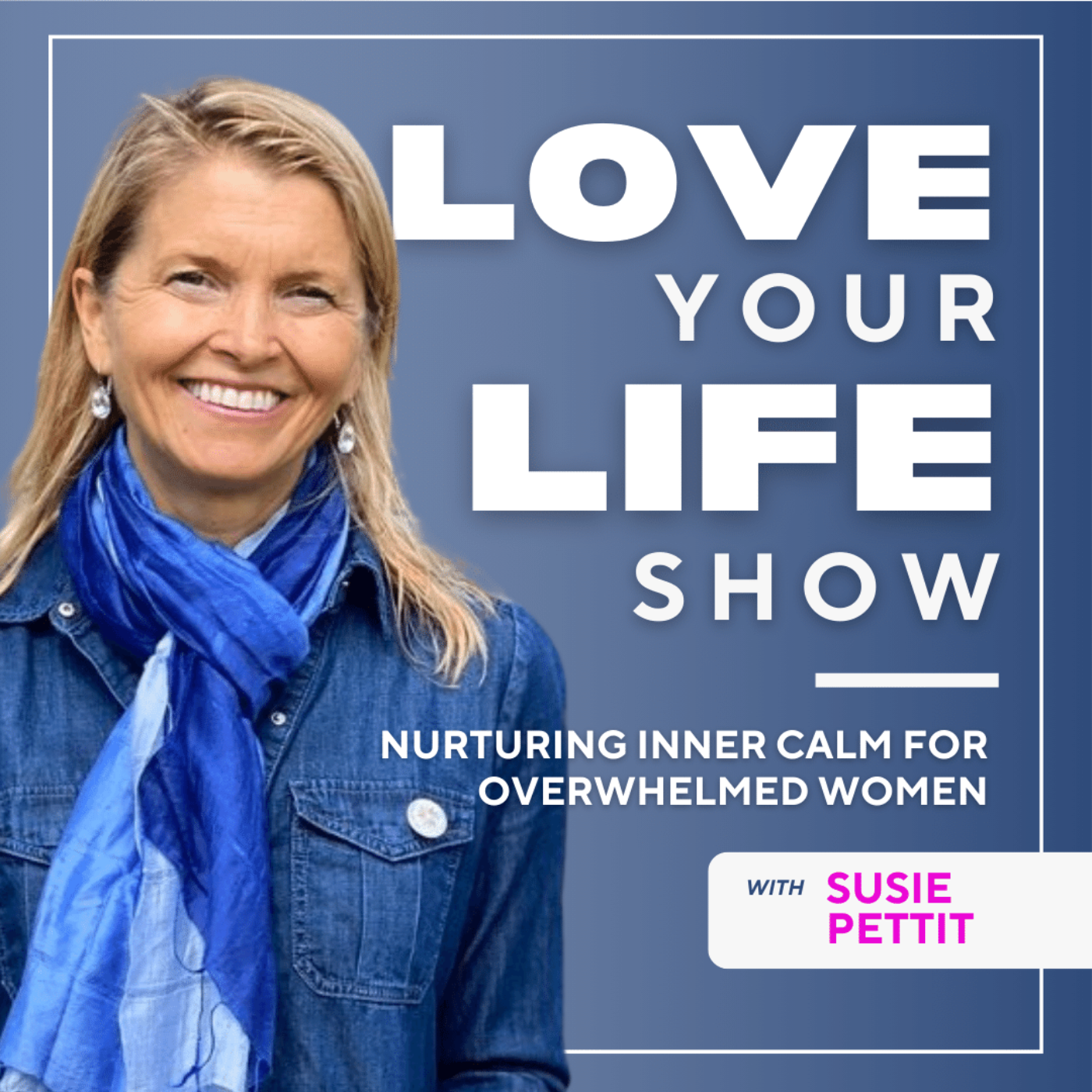
Love Your Life Show: Personal Growth, Mindset, + Habits for Busy Moms
7 Losing Strategies in Marriage and Parenting Teens
00:21:13
Relationships can be one of the most rewarding parts of our lives ... .and, let’s be real, they can also feel like the most challenging. - In this episode of The Love Your Life Show, I’m diving into the sneaky ways we sabotage the connections we crav...
Loading summary
Transcript66 lines
- [00:00]
A
Hello, this is Susie Pettit, host of the Love youe Life show, episode number 342. Today I'm teaching about the seven losing strategies in relationship.
- [00:19]
B
Hi. This is the Love youe Life show with Susie Pettit, certified life and wellness coach. Join Susie as she helps you with your wellness and mindset so you can live a life you love. Lets go, Warriors.
- [00:34]
A
Why, hello, warriors, and welcome back to the Love youe Life Show. I'm Susie Pettit, and I am wearing my relationship coach hat today. I love using February to dive into relationships in the podcast and in the Love youe Life School. And today I'm bringing you something us relationship coaches know about and use in. Like, I use them in my sessions, but I want to bring it to you today because I know it'll help you. And what are these things? Drumroll. The seven losing strategies we use in relationship. Like, seven things we do that are not the winning strategies.
- [01:09]
C
So. Sounds fun, huh?
- [01:11]
A
It actually is. What's fun about it is that once we learn about something, we're more likely to spot it. And since these are losing strategies, we want to split spot them. Because, trust me, when we're doing these things, whether it's with our partner or our child or our parent or our friend, when we're doing these things, we're increasing drama in our life and in our own suffering, which means we feel worse in the long run when we do these things. And since this is not the like, let's learn how to hate your life show, this is the Love youe Life show. I wanted to bring these to you. These are sad seven strategies that come from two powerhouses in the relationship field, Relationship therapist Terry Real. And then the magical Jennifer Finlayson Fife, who I hashtag podcast goals. I want to get her as a guest on my show someday. If you are familiar with the Gottman's work, you'll be able to spot some of their four Horsemen in here, too. So let's go Warriors. Because my intent for this episode is to help you find ways that will bring more ease into your life. I want to do a general overview of these seven strategies in the Love youe Life School. We'll be diving into each of these to see where we're using them with our partners and with our kids. So that's a great. This is a great time to join the Love youe Life School. And if you're a private client of mine and one of these just, like, comes out at you like, oh, my gosh, bring it. Like, we've got it. Let's dive in. So I am excited for all of this, for the whole show. So if you're feeling stuck, resentful, or misunderstood in any of your relationships, this episode is for you. Diving right in. Losing relationship strategy number one is the need to be right. This one is close to my heart. You know that feeling, but I'm right. And that urge I get at least to explain, like, just over and over how right I am. It probably doesn't come as a big surprise that this need to be right is a disconnector in relationships. And yet when we're in the thick of it, it is so hard to step back and see, like, who the heck cares?
- [03:26]
C
Okay.
- [03:26]
A
As experts say, would you rather be right or in relationship? The truth is, focusing on being right doesn't help in healthy relationships. Healthy relationships are all about connection, not competition. Now, notice how I said healthy relationships. This is super important to note with all of these losing strategies is because, like, these come up because sometimes in unhealthy relationships, we had to use these more as protective. Like, for me, in my past relationships with my parents and with my first husband, if I was wrong or if I quote, unquote, did the wrong thing, it wasn't safe. Safe for me. So it makes sense that I would pull on this strategy to show how I'm right.
- [04:12]
C
Okay?
- [04:13]
A
And so this podcast episode and these strategies are not for you. If you're in that sort of primary relationship, okay, you need to reach out to me or another mental health coach so that you can get the help to get out of that dynamic. That is not a life, you know, that's just not where I want you to be. And whether you're like, let's say that you're still in that marriage or that you still have that dynamic with your parents, you can still listen into this and see where you're using this strategy with other people in your life, like your kids or your friends.
- [04:49]
C
Okay.
- [04:50]
A
This week, maybe start to notice where you feel really tight chested and justified in your rightness.
- [04:57]
C
Okay?
- [04:57]
A
That's a sign that this one's at play. Like, what's coming out of your mouth? Come to the Love youe Life school. As I said, we'll definitely be working on this losing strategy number two, controlling your partner. Oh, me, oh, my. This is what I'm talking about at the beginning. That it's not a question of, oh, I wonder if I do these things, but rather, oh, yeah, we all do these things. No shame is necessary. You're listening.
- [05:25]
C
And.
- [05:25]
A
And Learning now, this is how we change. Controlling our partner can look like us saying things outwardly or to be more passive aggressive in an effort to control them, to get them to do it our way. Which if you go back to number one, is of course the right way. I did this all the time as a mom, okay? Like, say my husband would say he's taking the kids to the park. I would be over his shoulder micromanaging what he was putting in the diaper bag or which park he was going to, or whether he put sunblock on the kids and oh, my goodness, guilty. I thought I was helping. But what does that lead him? To feel belittled and criticized. Okay, be on the lookout for this one. Look for places where you say, like, you ask for something to be done, then you come in behind as sort of the cleanup crew. Like an example, if you ask someone to load the dishwasher and then you come in and you like, look and you reorganize how they did it, or you check to see if quote unquote, it's done the right way.
- [06:32]
C
Okay?
- [06:33]
A
Now if this could be the case, whether this is like your spouse, so another grown ass adult in your house, or it could be your kid, either way, back out. Because how did you learn the quote unquote, right way to load the dishwasher? Probably by going to unload the dishwasher after it's run and you see that dishes are still dirty.
- [06:55]
C
Okay?
- [06:56]
A
Let them learn that too. They need that learning experience. Give them the whole task, start to finish, and then step the heck back. For the sake of the relationship.
- [07:07]
C
Okay?
- [07:08]
A
For the sake of your relationship, if it's your marriage, for the sake of a learning opportunity, actually, if it's your kids. I don't know if you know this about me, but I used to. I have my master's in education. I used to be a high school teacher. So a lot of my background comes from how to raise confident and, you know, resilient kids. And this is one of the things that we do often as we come in and we micromanage, giving them the impression that we don't think they can handle it for themselves and also not giving them the opportunities to learn and problem solve for themselves.
- [07:39]
C
Okay?
- [07:39]
A
So this is this, number two, control does not inspire love. It breeds resentment. And it also can create a feeling in children and spouses of belittlement and like, just a lack of confidence.
- [07:54]
C
Okay?
- [07:54]
A
So we want to be on the lookout for that. Look, being on the lookout for losing strategy number three is officially called Unbridled self expression. This, to me, can look like words are coming out of my mouth before I even know what. Like, my head is not aware of what I'm saying. And this is the difference between venting your emotions and being in a calm emotional state and mindful about your communication.
- [08:22]
C
Okay?
- [08:22]
A
What happens to many of us is we keep our true feelings inside. We might say things like, I'm fine, or it doesn't matter. Maybe we don't say anything at all. We do a little more of that, like, silent stomping until we can't bear it anymore, and then the words come out of our mouth in a rush. Feels like more like emotional vomit.
- [08:43]
C
Okay?
- [08:44]
A
Venting our emotions is not the same as emotionally mature conversation.
- [08:51]
C
Okay?
- [08:52]
A
And if this is super common for you, I get it. Come to a coaching session because there are lots of little things. This is, like, a really good area. There are little things we can do to tweak that help a lot in this area. Been here, done this. Losing strategy number four, retaliation. Okay, now, that word might feel harsh, like, oh, I don't retaliate, but I urge you to shift the question instead to how do I retaliate? As that opens you up for the learning and the growth that I'm offering here in this episode. Because retaliation is very common. It's a very common, protective thing for us to do, actually.
- [09:32]
C
Okay.
- [09:32]
A
It helps keep us. It's like, it's sort of protective for our, like, inner child or like, when we're feeling vulnerable. A retaliation in a relationship looks like us maybe making a snarky comment or giving the silent treatment or withholding affection. And what I mean is it's sort of protective and immature is that, like, say, your kid, know, gets in the car after school and is snippy with you and is, you know, whatever, and you're just. And you just try to, like, shove it under the rug or, you know, what we're saying before. And then later, you know, he's like, hey, I'm going wherever can I get my allowance? And you say something snarky like, must be nice to get your allowance after you were so snippy to me in the car or something like that. Okay, that's a great example of retaliation because the really, like, mature and adult skill here would have been in the car to say to him, hey, you know what? I don't. I don't like it when you talk to me in that way, or I don't allow people to talk to me in that way, or, hey, if that's going to be coming out of your mouth. Could you be quiet for the car rider? You setting some sort of boundary and expectation for how you want to be treated in the moment instead of later? Sort of. So we're sort of shoving down their behavior, and then later it comes out and we're like, oh, yeah, you want allowance?
- [10:50]
C
Mm, sure.
- [10:53]
A
Or maybe giving the silent treatment to someone like our husband after he didn't do something we wanted him to do, as if that will solve it. Like, he can read our minds as we're, like, stomping around the kitchen just saying okay or something. I see a lot in my client sessions being annoyed about something and withholding affection instead of addressing the thing we're annoyed about.
- [11:19]
C
Okay.
- [11:19]
A
Whether it's, you know, a kiss or a hug or in the bedroom. These are all things we do to protect our vulnerable little inner egos and all things that create distance and disconnection in relationships. I've done all of them, and I can help you with the counter moves in coaching. Number five is withdrawal. This can be physical or emotional. Withdrawal is very different than a winning relationship strategy of taking a break. Okay, Taking a break looks like intentionally saying, like, wow, I'm a little unregulated right now. I need to walk away.
- [11:59]
C
Take a break.
- [11:59]
A
I'll be back in three minutes. Or I'll be back and can we take up this conversation again in an hour? Or whatever. Physical. This sort of withdrawal is doing it without the words. Okay, so physical withdrawal might look like us leaving the physical space.
- [12:14]
C
Space.
- [12:14]
A
Going to our office to bury ourselves in a task or going to our room to ruminate on his awfulness. Or maybe we, like, are having an issue with them and we just. We take that break without saying the mindful thing. Or we're having an issue and we shove it down and we don't say anything, and then we just get on the phone with, you know, our mom or our girlfriend, and we emotionally emote there. We're withdrawing from the relationship. We're not leaving this opportunity for the relationship to grow.
- [12:41]
C
Okay.
- [12:42]
A
It really looks like us putting up protective shields and not sharing things and not, like, moving closer. All right, Again, this is super common for those of us like me, where our past relationships were unsafe.
- [12:59]
C
Okay?
- [13:00]
A
So that's super important to have some compassion with you, like, you needed to withdraw for your safety. When we are in healthy relationships or. Or when we are with our kids, it is important to note this pattern and to step into our emotional adulthood and say something about it instead of withdrawing and closing Ourselves off. If we close and pull ourselves off, the other person is often left with the feeling that they're living with, like an ice queen. In fact, many of us I know are familiar with the codependent term, and we are working on codependent recovery. And, and when we're working on codependent recovery, we sometimes swing all the way from this, like, you know, needing the other person to be all and do all for us into this hyper independent side of like, I don't need anything or anyone. I've got it type attitude. Both are unhealthy and harmful to you and to your relationships. Dear one, okay, looking at where you're doing this so you can learn and feel deeper emotional intimacy with those who matter to you is work worth doing.
- [14:12]
C
Seriously.
- [14:12]
A
Feels so good. It's hard. I've been there, as I say, but it's work worth doing and you matter to me. So let's work on it. Losing strategy number six is keeping score. This is so common and so harmful. It's one of the first things I look out for when I'm coaching couples or when I'm talking to an individual about their relationships that, like this me versus him approach as if there's some finish line where we're like, yep, you win. You're right.
- [14:42]
C
Okay.
- [14:43]
A
Relationships are not about fairness. They're about partnership. We don't need another model of ourselves. We have this other person in our life who augments our life here, not who we're in competition with. When we are doing this, this strategy, the keeping score strategy, it's almost like we're back in some, like, emotionally immature sibling relationship. Like, oh, yeah, well, I did the laundry, the dishes, the grocery shopping, and, and like, what have you done? It's a, it's a recipe for resentment and something I'd love to help you step out of. Finally, strategy number seven. Some call this refusing to take responsibility, I think is the official term. So refusing to take responsibility, I like to ask myself and my clients, like, I like to say, like, where am I playing the victim?
- [15:35]
C
Okay.
- [15:36]
A
It's when we're feeling very victimy. This looks like us blaming our behavior or our feelings on someone else instead of us taking responsibility and knowing that, you know, circumstances happen. It's what I think about those circumstances that make me feel, feel the way I'm feeling and how I feel drives my action.
- [15:58]
C
Okay, so this would look like a.
- [15:59]
A
Saying something like, well, I said this because you did that, or, yeah, I yelled because you didn't clean up the blocks when I Asked you to instead taking responsibility. Like the word says, responsibility, ability to respond. Things can be going down around us warriors, and they will be. But the one thing we always have control over is the ability to respond. And in this losing strategy, we play the victim and blame external things for how we feel internally. It is a lose lose strategy. It can feel self righteous in the moment. Trust me, I've been here. It's like, like, well, of course I feel this way.
- [16:48]
C
Okay.
- [16:48]
A
And yet how do you feel when you feel victimy? Maybe a short term like self righteous indignation, but like long term. And in order to feel victimy, we need a villain.
- [17:03]
C
Okay?
- [17:04]
A
So first of all, like the people we're in relationship, we end up vilifying them. Not great for sustaining relationship with people we want to be in relationship with. And also it puts all of sort of the control of the situation outside of us, like on them. Because if we're like, well, if they keep doing this, then we'll feel this way. Which continues the cycle of us feeling victimy, which is what we don't want to do. Again, this is a general overview of all these. I feel like I could do a year of podcast episodes on this one alone. So come to your individual coaching with me. Or if you're new noticing any of these strategies in your parenting, Whoa. Is this an impactful area to shift? Because not only will you build more connection with those humans that are so important to you, when we're doing them with our kids, we are changing the future.
- [17:58]
C
Okay?
- [17:58]
A
You shift their future when you are no longer using these strategies as a model for them. You don't need to get all teacher like and explain it to them. Trust me, how they learn is by watching you. And if you are not doing these strategies, if you are not keeping score and looking to see who's winning and playing the victim and withdrawing, they learn. And their future and like your grandkids and all of that. And whoever you have influence over changes.
- [18:31]
C
Okay.
- [18:32]
A
In fact, how about this? If you sign up for the Love youe Life School before March 1, I will throw in a free parenting consultation, which is usually $250. So we can. Because it is just a great way for me to like dive in and just give you some quick like, let's do it.
- [18:47]
C
Okay.
- [18:47]
A
We'll be working on these strategies, the losing and the winning, in March in the Love youe Life school. So this is a beautiful time for you to join. If you're listening to this sometime in the future, don't worry like if it's 2027 or something, email me@supportmbwell.com and I'll see what special something I can throw in for you. Because increasing our emotional adulthood in parenting is one of the most healing things we can do for this world. And I would love to help you. Speaking of helpful and helping, can you think of one person who could benefit from learning about these seven strategies? Someone like you, who learns loving about yourself to grow yourself that know yourself to grow yourself. I love that the more of us out here noticing where we're using these losing strategies, the more of us who are breaking generational patterns of emotional immaturity and taking steps towards greater connection and feeling better. That's what the Love of youf Life show is all about. We don't have control over those other humans. We don't. If anyone figures out how to control other humans and show them what you know to to get them to change, great. We don't want to show them what's what they're doing wrong. Actually that's not helpful. But this is where you know, us helping ourselves, me helping you feel better. Learning how to human a little easier makes everything better. So if you ever have a doubt and you feel alone and you're like, who's supporting me? I am. I am here supporting you, cheering you on every step of the way.
- [20:29]
C
Let's go.
- [20:38]
B
Thank you for listening to the Love youe Life Show. If you want to hear more from Susie and support the show, be sure to subscribe to this podcast on itunes. Also, leave a review and share this podcast with friends and family.
- [20:49]
C
You'll get a Warriors Sam.