Loading summary
Transcript482 lines
- [00:15]
A
What's up, everybody? Welcome to Love it or Leave It. Live from Hollywood, I'm John Lovett. And it must have smelled insane inside that horse. We got a great show for you tonight, but first, let's get into it. What a week. For months, right wingers have been losing their minds over director Christopher Nolan's casting of Lupita Nyong' o as Helen of Troy and Elliot Page as a Greek warrior in his adaptation of the Odyssey. It's so important to accurately represent the historic figure Helen of Troy, who hatched from an egg after being fathered by Zeus in the form of a fucking swan. Here's right wing YouTuber Matt Walsh.
- [00:56]
B
Nolan set out to subvert a classic to bludgeon a monum monumental story with
- [01:00]
C
flat writing and incoherent creative decisions, along
- [01:03]
B
with the modern mandates of feminism, transgenderism,
- [01:06]
C
and anti white ism.
- [01:07]
A
If transgenderism gets its way, Helen of Troy will come back to Sparta and say, I'm just Troy now. I no longer identify as Helen. And Agamemnon is like, does that mean I'm gay? And Troy is like, this is Sparta. We're all fucking gay, bitch. Here's one American news network.
- [01:24]
D
And it wouldn't be as preposterous, Dan,
- [01:27]
A
if they didn't subversively cast Lupita Nuongo, who is a. You know, she's a black woman playing
- [01:37]
D
Helen of Troy or Helen of Detroit,
- [01:39]
A
whatever you want to call her. Yikes. When rehearsal, I was like, I hadn't heard that. That racist fag's voice. Can I say that? I don't know if we. How about this? If we let the most famous rapper from Detroit be white, we can call it even. Walsh wrote on X back in May, Christopher Nolan knows that he would be called racist if he gave the most beautiful woman role to a white woman. Nolan is technically talented, but a coward, yes. Nolan will never understand true bravery casting a beautiful white woman in a movie that famously brave act. Elon Musk responded to Walsh's post with quote, true, then went on to have a full meltdown over the film. But Elon Musk would hate Helen of Troy no matter what, since her face launched a thousand ships that didn't explode. The richest person in the world who could spend his one precious life doing anything he wants to do. He could create a traveling carnival that sets up in the parking lots of children's hospitals, that gives families in the midst of terrible trials a wonderful afternoon. He could create a fund with $100 billion that throws off 10 billion a year in Pure interest. That could cover experimental treatments for with cancer. He could choose an endangered species and save it. He could go to the dozens of liberal cities he hates and offer to close their budget gaps in exchange for policy concessions. He could build a university or a library or a museum or a network of public parks. But no. He's posting on the social media platform. He bought, and I quote, chris Nolan has shown total contempt for the Greek people. And Chris Nolan is an anti white racist. And Chris Nolan is pissing on Homer's grave. Disgraceful. And if that's a disgrace to Homer, just wait till Euripides finds out who Tyler Perry cast as as Medea. And you know what, Elon? You love Homer. You're such a big fan, and you want to make sure that no one pisses on his grave. But here's the good news. There is no grave on which to piss, because Homer is basically a mythical figure in his own right. This is like accusing someone of pissing on Santa's grave by not casting racially accurate elves. Besides, there must have been a lot about the Odyssey that rang true to Elon Musk. Like a father not seeing his son for 20 years or accidentally being on drugs for a decade. And you must identify with the whirlpool monster Charybdis, because it's a big hollow void that fucking sucks. And then the movie came out. Not only is it a critical success, it is a massive hit, earning $264 million during its opening weekend. More like my big fat Greek box office. Even Ben Shapiro loved it, calling it a masterpiece. To paraphrase Nicole Kidman, even woke feels good in a place like this.
- [04:31]
D
It doesn't take me out of the film that there's a multiracial cast. If you want to make the case, everybody needs to be Greek to be authentic. I think you can make that case. If you want to make the case, everybody has to be white. I think that that is a lesser case because white people and Greek are not quite the same thing.
- [04:43]
A
Such a good point, Ben. I'd also add there's a fucking Cyclops who I think is meant to be Portuguese. Shapiro did complain about Nolan casting Elliot Page, but also told conservatives to get over themselves.
- [04:56]
D
If conservatives want to be effective in the culture, you can't just label the entire piece of art bad because a decision in the art is bad. I think the broader theme of the movie is actually very much in line with many things that conservatives think. If you let Elliot Page kill that for you, I think you're missing out on an incredible moviegoing experience.
- [05:14]
A
It's like how liberals don't let Kelsey grammar ruin the progressive messages in Frasier messages like Therapy and Seattle. In a lengthy post on Tuesday, Shapiro defended the movie's Christian ethic, suggesting critics are, quote, missing the biblical forest for the woke trees. For those unfamiliar, woke trees are what they cut down to print Toni Morrison's the Bluest Eye. All in all, a big win for woke. And boy, we needed one. They really throw around the R word in Toy Story 5. At the same time, the right is furious about diversity. They still want to enjoy the fun, cool, exciting parts of it. The World cup came to a close in the final between Spain and Argentina on Sunday. Or, as Trump described the game, Mexico versus Mexico. And Trump, of course, tried to make himself the center of attention. The president joined Spain on stage after their victory, despite attempts by both the players and FIFA president Johnny Infantino, giant baby, to shoo him away. Get the fuck out of there, fucking oaf. I don't want to see Trump anywhere near a stage. Maybe stage four, I don't know. I don't know. So Trump wants to celebrate with Spain, but here he was at NATO just two weeks ago. I don't want anything to do with Spain. Cut off all trade with Spain, please. Including visits. Don't even talk to them. They're hopeless, bad people. Here's a question. Why does this make me want to fuck Spain? So Trump mocks Spain. Spain wins. He pressures FIFA to reverse a red card for the US and then Belgium crushes us. He attends the NBA Finals and the Knicks lose that game. There is a Trump curse. Everything Trump's hand touches ends up like his hand. And it makes sense. All Trump has ever wanted is respect and admiration, but it only comes from those who are themselves unworthy of it. So his presence at any apolitical event hangs in the air like a fart. So you can see how Trump's support might drag a team down without believing he's angered the ancient gods. The Odyssey, on the other hand, is a story about the divine misfortune that follows you when you give in to hubris and betray your moral code. It's also a story about getting all worked over sirens and strangers, like who wrote this a dog? And every day we see the pain and horror that follows from Trump's violations of basic decency and judgment. And no, I'm not talking about this insane font he put on the side of the White House. Just last week in Biddeford, Maine, I shot and killed a 25 year old father Sebastian Duran Guerrero, a delivery driver from Colombia. This follows another killing by an ICE officer in Houston of a Mexican home builder who had lived in the US for decades. The officer responsible in the main killing, David Brulette, has been accused of abusive behavior and violent tendencies by two ex wives, which was documented in court records. When he told one of his exes and that he was hired by ice, she thought he was having some kind of a mental health episode. Trump gave this guy a gun. The Republicans in Congress, including Maine Republican Susan Collins, funded hiring and arming him and letting him loose on our streets. And we don't really have any jokes about this, so here's an unrelated one. How many Greeks does it take to kill a Cyclops? Just one, but they're trans Meanwhile, Iran and the US Are back at war. At least three US Service members were killed over the weekend, and Trump, with his trademark tact and empathy, posted this to minimize the deaths, even as these families are grieving this terrible loss. He posted the death tolls of previous wars to make light of the deaths in this conflict. Imagine if your husband or wife or son or daughter was killed and you turn on the television, you see the President at the World cup, and then he posts how the death count is quite low actually, and pretty good by comparison. Again, no jokes about this. A centaur and a minotaur walk into a bar. Ouch. Says the centaur, who is Trance. Yes, right wingers are furious that Nolan didn't respect the historical accuracy in casting for a movie that also includes a witch who turns men into pigs. Not much of a witch, if you ask me. Now let's see her turn men into human beings. Am I right, ladies? Even if Homer was real, which he probably wasn't, and even if the Odyssey wasn't just a collection of songs cobbled together over centuries, which it probably was, you're talking about an epic poem written hundreds of years after the events it described. But it has endured not just because we wish for a world where there is cosmic justice, where the morality of our acts is measured and the consequences carefully meted out by gods above. These stories endure because on some level we believe we already live in that world. That despite all of life's unfairnesses, a righteous life is, on balance, rewarded. And those who give in to cynicism because everyone cheats and steals will find themselves conned and robbed in the end. That when someone cuts us off in traffic, they will one day be eaten by wild dogs. Order, liberty and democracy are at root in effort to build a society in which we don't need Poseidon or Zeus or kings or queens to keep score because we have each other. It's why Trump's violation of that order, carefully built and easily wrecked, is so galling. And it is why he is, and I mean this, cursed. But what about the rest of us? It makes sense that conservatives are furious about the Odyssey. It's a story that celebrates cleverness over strength and humility and perseverance. A story at the heart of the Western canon they supposedly revere. But it comes at a time when. When in order to be part of the conservative project, you have to abandon conservative virtues or any virtue at all. So, Christopher Nolan, forget the haters. I love this movie. And I'm going to be the first in line for your retelling of the Passion of the Christ, starring the great Sandra oh. And oh, have we got a great show for you tonight. W. Kamau Bell and Patrick Rena are here and we'll be right back.
- [11:14]
B
Hey, don't go anywhere.
- [11:15]
C
There's more of Love it or Leave it coming up.
- [11:18]
A
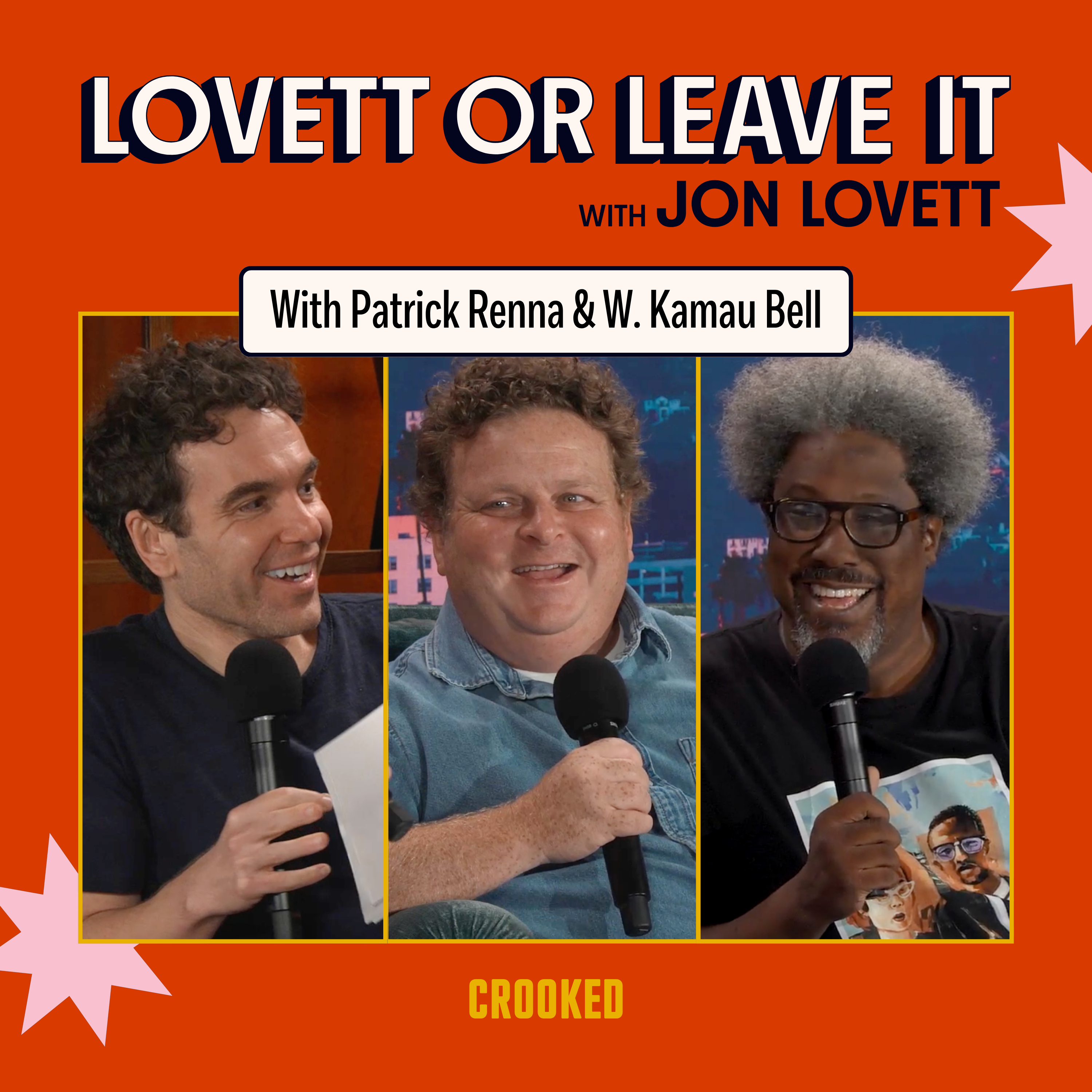
Love it or Leave it is brought to you by Tommy John this summer. Don't be that guy. You know exactly who I mean. The one sweating through his clothes and dealing with things sticking where they absolutely shouldn't meet. Air underwear. Your Heatwave approved upgrade for all day comfort air underwear is perfect under light summer fabrics. No visible lines. Guaranteed. Tommy John's lightest underwear yet. Designed with micro perforations for max airflow all summer long so you stay cool, dry and significantly less swamp. Like from the very first layer. Whether it's a full day at the office, a long commute, or just getting through peak summer heat. Air is built to keep your base layer breathable, lightweight and barely there so you're not dealing with trapped heat, sweat buildup, or that uncomfortable. Too warm all day, feeling incredibly light, incredibly durable. The lightest underwear you'll ever wear. I love Tommy John. I wear Tommy John every day. I'm wearing the second skin underwear as we record this because it's my Go to Air is a summer essential. It's. It's so. It's so light and you'd be so hot. You'll be so glad to have it. So go to tommyjohn.com today and save 25% on your first order with code Love It. Comfort perfected. Just use Code Love it at checkout and upgrade your essentials today. This episode is presented by Planned Parenthood Federation of America. Regular listeners know the reality. Recent decisions by Congress, the administration and the courts have restricted healthcare access across the country, forcing patients to pay the price. The Supreme Court's ruling in Medina v. Planned Parenthood cleared the way for states to exclude Planned Parenthood from Medicaid programs, directly stripping patients of their right to receive care from the trusted providers of their choice. Furthermore, recent legislative and executive efforts to defund Planned Parenthood actively sought to dismantle the organization. These actions directly threaten low income patients access to critical health care services, including SDI testing, cancer screenings and contraception. That's why Planned Parenthood is fighting back. But fights like these take resources and supporters like you. No matter the size, your donation makes a real difference. Helping Planned Parenthood meet this moment and protect patients access to care when and where it matters most. Alongside people like you and me, they fight every day to build the future we deserve. One where everyone can get the care they need, no matter who they are or where they live. If you believe all people should get health care, no matter their income, donate now@planned parenthood.org defender and we're back. If you are not a subscriber yet, you are missing out on ad free episodes of all of your favorite shows. Plus more Pod Save America, including Only Friends and the only Tabs newsletter. Dan Pfeiffer's Polar Coaster, which does deep dives into polls, a discounted ticket to CrookedCon and on site perks your subscription help support pro democracy media you can trust. So please take a second and head over right now to Qriket.com friends to unlock all the perks. And if you're in LA, come to see us record this show live at Crooked.com event. You'll check out our new studio. We have a bunch of amazing upcoming guests. Please welcome to the stage. Finally, a voice of reason on this show. It's W. Kamau Bell. Good to see you.
- [14:07]
D
Pun it.
- [14:08]
C
Out of the way.
- [14:08]
A
Come here.
- [14:09]
C
Out of the way.
- [14:09]
D
Out of the way.
- [14:10]
A
There we go. There, she's got it.
- [14:12]
C
Hi.
- [14:13]
A
Nice to see ya.
- [14:14]
B
Combination of a TV show and your house.
- [14:16]
A
That's right. That's right. She likes you. She's interested.
- [14:25]
B
She learned. All right.
- [14:26]
A
Not a dog person.
- [14:28]
B
No, my family has a dog. I don't have a dog.
- [14:31]
A
There's a dog that lives in your home.
- [14:32]
B
That's the best way to put it. There's a dog that lives in my home.
- [14:35]
A
That is the same excuse that Alito used about the flag that flew in front of his house, that it was his wife's flag. So just think. And you'd. You didn't. You Didn't. Did you take. Did you agree with him then?
- [14:45]
B
Wait a minute. So we're going there already?
- [14:46]
C
I just think.
- [14:47]
B
I just think if Alito was a window into. Is Kamau like Samuel Alito?
- [14:51]
A
I just think if Alito has a flag, you have a dog. That's all I'm saying.
- [14:54]
B
If Alito has a flag, I have a dog. It's a good name for the, for our speaking tour. I don't know. I'm with Alito. My wife. My wife has a dog.
- [15:03]
A
Just clip that. Just clip the part where he says,
- [15:05]
B
no, I'm with Samuel Alito on this one specific point. So you see, I'm reaching across the aisle.
- [15:12]
A
Beautiful. It's beautiful to see. You performed your stand up show at the Kennedy center in February of 2025. That was right at the jump.
- [15:20]
B
That was the first show after he announced he had taken it over.
- [15:24]
A
First of all, what was the vibe called?
- [15:26]
B
A hero and a sellout in rapid succession.
- [15:27]
A
Wow. Well, you know, it could be both.
- [15:30]
B
Yeah.
- [15:30]
A
Some heroes sell out.
- [15:31]
B
Yeah.
- [15:32]
A
You know, would you perform there again now? Like, what was the vibe like that? Like, what was the thinking? How do you feel about it now?
- [15:38]
B
No, I mean, so I found out, first of all, no, I would not perform now under any circumstances. The. I found out he was taking it over on the flight to the Kennedy Center. So I wasn't like, I didn't have a lot of time to think it through on the plane. People started dropping out off the Kennedy Center. But I. I think as a standup comedian, we in a very specific position, especially if you're like, I do in the tradition of stand up comedy, I do where I can actually say things about the situation. I'm not a musician or an orchestra where you have to sort of just play your thing. So I was able to speak directly to power in the Kennedy Center. I called him everything but a child of God that night. So it's the best review I ever got from the New York Times was that night at the Kennedy Center.
- [16:17]
A
That's cool.
- [16:17]
B
Normally they hate me.
- [16:18]
A
Really?
- [16:19]
B
The comedy guy does.
- [16:20]
A
Why?
- [16:21]
B
He's not very smart.
- [16:22]
A
Oh, no.
- [16:24]
B
He doesn't have good taste in comedy. It's fine. He loves Louis CK thank you. Over here. You get it? Yeah.
- [16:31]
A
So speaking of taste in comedy, you wrote an essay on Substack about the Kevin Hart Roast, which I thought was a very thoughtful look at what has become of the roast. And you talk a lot about how the evolution of this. And I remember watching this because I remember when Comedy Central Started airing the Friars Club roast, and I loved them because I felt like, as someone who wanted to be in comedy, I felt like I was being let into this private world. It was so exciting. And I wasn't. I don't think I was like, I understood what was happening when all of a sudden, the Friars Club brand fell off of it. And then it just became the Comedy Central Roast. And then they became bigger and bigger, and it was less about friends roasting each other and more of just about a spectacle. And that culminated in this roast of Kevin Hart. Just like, what was your feeling when you saw. What did you think about it?
- [17:22]
B
I mean. Well, you just. The way you just said it, is that the roast, when you go to, like, the roast. So first of all, the roast started out as fundraisers for the Friars Club in New York. So a small group of people, instead of just having a dinner to honor somebody, they would make fun of the person. And they all knew each other. And comedians were very good at it because we're mean to ourselves and mean to other people. So then once it started, once it was televised, you have these roasts from the Dean Martin roasts. It's still comedians who know each other and talking about each other. It's also celebrities. But you also start to notice that, like, if there's a black person on stage, automatically the white comedians are gonna say, this person is stealing things. This person is. If it's Wilt Chamberlain, he's having sex with my wife. There's all. Whatever, whatever. You start to see that it relies on very sort of old school tropes of humor, stereotyp types of humor. Then by the time you get to the. To the Comedy Central roast, no longer are these people friends. The most famous one is the one, the Roast of Chevy Chase, where he literally sat there with his sunglasses on for most of the evening and just looked like he was smelling bad things.
- [18:20]
A
Yeah.
- [18:21]
B
And so. Yeah, so it was not so. By the time you get to the Netflix roast, it's just about. Netflix wants our eyeballs more than they want our respect. So it's just about the biggest spectacle possible. And, I mean, think about the Kevin Hart roast. Think about the community who weren't there. Chappelle's not there. Eddie Murphy's not there. You know, it's not his friends. It's just the hired guns.
- [18:39]
A
Yeah. Like, I. You know, and it's obviously, you know, it's not like these other. These older roasts. Like, I remember, there's a. There's a. It might have been in one of the Dean Martin kind of a similar event, I think it's Rickles going after Muhammad Ali, and it's. And it's, like, brutal. Yeah, brutal. And it works in the room for the most part, but only because there's no black people in the room. I think maybe other than Muhammad Ali and maybe. I don't know who else but he, like, you see him. You see Muhammad Ali kind of, like, question it.
- [19:08]
B
Is this white man allowed to talk to me like this? Doesn't he know I beat people up for a living? Yeah, yeah. No, I think that's. I think there's always that moment with the roast, and the more it gets outside of the room, like, I have friends that I will roast when we're hanging out with each other, but I wouldn't put it on stage in front of people, you know? So I think that. And I think the idea that the roast comedians have said is this is some sort of essential part of comedy, and it's not an essential part of comedy. It is just a thing that. That happens.
- [19:31]
A
Yeah. I mean, like, there was a bunch of racist jokes, obviously, that drew a lot of attention, but there were also jokes about, like, really, like, really kind of, you know, jokes meant to shock about, like, Charlie Kirk. Yeah, right. Like, part of it is the. The, like the experience of saying the unsayable thing, the kind of, like, danger of that. And what this is really the question I wanted to get you about this, which is there is obviously a difference between, like, there are people that were mad at Shane Gillis for certain jokes he told, and then there were people mad at Tony Hinchcliffe for jokes he told. Shane Gillis is very talented. Tony Hinchcliffe is not. Does that difference matter? Even in jokes about that are. Have. That are racist? You know what I'm saying?
- [20:18]
B
Does it matter if the person is talented?
- [20:21]
A
Does it matter that the joke is a better constructed joke, even if it is a racist joke? I'm asking if there's a. If you draw a distinction, even in the jokes they told that night between Shane Gillis and Tony Hench.
- [20:30]
B
Well, first of all, let's. I think we got to agree that all of this is subjective.
- [20:33]
A
Yeah.
- [20:33]
D
Yeah.
- [20:34]
B
You may think something is funny, and I may something think something is not funny, and we're both right. I think that's where the problem is, is that we think our sense of humor is the sense of humor. So would I want to be in the. Would they say, kamau, tonight you're going to be roasted. You get to choose Between Shane Gillis and Tony Hinchcliffe, it's like I choose the bullet. The coach is like, I don't want to go to the roast at all. Do I have to go? What did I do wrong? I think the whole thing is sort of broken. I can't wait to see who Netflix gets next year to do it, because everybody who's done it so far, Tom Brady and Kevin Hart, has had to then afterwards explain how it hurt their feelings or how it caused them controversy.
- [21:10]
A
I did a roast at my wedding. My Friday night dinner was a roast.
- [21:13]
B
And that's it did air on Netflix, right?
- [21:15]
A
It did not air on Netflix because those fuckers said, no, but cannot get on television to save my fucking life. But. But that's sort of. I enjoyed the adult. It's sort of my kink.
- [21:26]
B
It's your friends. But if they had said, we're here to roast you. It's your wedding. Also, special guest, Tony Hinchcliffe.
- [21:32]
A
Yeah. And by the way, I was disappointed with how anti Semitic Shane Gillis was at my wedding.
- [21:40]
B
Beggars can't be chooser.
- [21:42]
A
Now, I know you don't like roast jokes, but I wrote two roast jokes about you. Can I tell you them?
- [21:48]
B
Yes. Now, I may not be as polite as Muhammad Ali, but let's keep it. Let's go.
- [21:52]
A
W. Kamau Bell. Did you hear about this? He won Celebrity Jeopardy. Here's the answer. Woke Nonsense. Here's the question. What is W. Kamau Bell's substack?
- [22:05]
B
You got one person who enjoyed it.
- [22:08]
A
According to his Wikipedia, Kamau had a vasectomy, so now he's shooting blanks at home and on stage.
- [22:16]
B
I love that they got their feelings hurt.
- [22:19]
A
How would you think of those?
- [22:21]
B
Those aren't good.
- [22:22]
C
Okay.
- [22:23]
B
I mean, you know, I mean, you know, I don't want to put any writers down.
- [22:26]
A
I mean, I wrote them.
- [22:27]
B
You wrote them?
- [22:29]
A
I wrote those jokes in a room full of people who said, I mean, I guess.
- [22:33]
B
Yeah, yeah, yeah.
- [22:34]
A
And I said, nah, they're gonna work.
- [22:36]
B
You got brain him to punch these up? He could have, because he know. Because he knows me.
- [22:39]
A
So he's so busy.
- [22:40]
B
Yeah, yeah.
- [22:42]
A
Now, did we. I believe you were. You have roast jokes that were given to you that you did not write about me from the writers of this show, which you can see, see, there's
- [22:52]
B
one person here who wants a roast to happen. Everybody else is like, can we move on to that? Yeah, I'll read the roast jokes that. Are they here? I just didn't want to take credit for them. Love it. So white Elon Musk wanted him to play Helen of Troy in the Odyssey. It's a good joke. I might as well take this opportunity to roast Elon Musk, too. I would do that. If Elon was any more racist, sexist, and anti Semitic, Lovett would have endorsed him in the main Senate primary.
- [23:20]
A
Fucking assholes. I didn't endorse. I didn't endorse no endorse.
- [23:23]
B
Look how much funnier these are because they know him. See, mine literally said, your Wikipedia page says, why?
- [23:30]
A
Because I did it, Kevin. I did it Netflix style. Yeah.
- [23:32]
B
Yeah. Let's see. Love it. This one's gonna. I feel I know how people gonna do this. Love it. Is so good at so many things. If only one of them were hosting a live podcast.
- [23:42]
A
Wow, wow, wow.
- [23:45]
B
That's true.
- [23:45]
A
He's not good at it.
- [23:47]
B
Lovett is really into Pilates, which was developed by Joseph Pilates while he was interned in a prison camp. Can't wait to find out what exercise I'll invent by the time this show is finally over. It's funny because I hadn't read it, and I was like, where's this going?
- [23:59]
A
That was a thinker. That's a comp. That's a journey, that one. I liked it.
- [24:02]
B
And also Pilates invented by a black woman who worked for him.
- [24:06]
A
Oh, really? Yeah.
- [24:06]
B
Yeah.
- [24:07]
C
Oh, wow.
- [24:07]
A
I didn't know I was falling for Joseph Pilates propaganda.
- [24:11]
B
You knew. You knew.
- [24:14]
A
Well, you got it. You got me. I'm devastated. You hosted a podcast called Denzel Washington Is the Greatest Actor of All Time. And I just.
- [24:24]
B
It was called Denzel Washington is the Greatest Actor of All Time. Period.
- [24:27]
A
And I love Denzel Washington, and I just want to talk about how he's the greatest actor of all time in part because he does something that's very hard, which is. I feel like it was Brando who. Who said that, like, it's. You can trick people by doing nothing, and people think you're being deep, but it's much harder to be big and, like. And Denzel is big, and he's great. Like, he's Al Pacino, Meryl Streep. They're like that. They're these big performances, and, like, Hollywood does favor a little bit more of the small, like, kind of. Kind of still face kind of. He's so big. He's so good.
- [24:58]
B
Yeah. Also, they favor the white faces.
- [25:01]
A
Yes, for sure. For sure. They favor the white faces.
- [25:04]
B
Okay, so here's the thing. If you want to say he, you want to say the way you do the podcast is give me your top five favorite Denzel Washington movies in order from five to one.
- [25:11]
A
I did. I'm organically prepared for this.
- [25:14]
B
And you will be judged.
- [25:15]
A
Great. Judge me. Judge me all you want.
- [25:19]
C
I'm going to.
- [25:20]
A
I'm going to say fifth is Philadelphia. I'm going to say fourth is Crimson Tide. I'm going to say three is Training Day. I am. I'm gonna say. Did I say Malcolm X yet? You'd have to say Malcolm X. I'm saying Malcolm X.
- [25:37]
B
And so Malcolm X is 2.
- [25:40]
A
I kind of want to put.
- [25:41]
B
That's a bold choice. It's your list.
- [25:45]
A
Well, I'm realizing I kind of wished I put. Did I say Training Day?
- [25:48]
B
You did say training.
- [25:48]
A
I kind of want to put Training Day above Malcolm X. I kind of
- [25:51]
B
think it's a real bold choice. That's the kind of guy who endorses Platner.
- [25:56]
A
Didn't endorse. Didn't endorse. Just. Just had conversations about it.
- [26:00]
B
Real platinum endorsing decision there. Yeah. I like the angry criminal black guy over the black guy who's uplifting the black race.
- [26:07]
A
You can't say anything these days. And then it's funny because I feel like, man, it's hard to rank.
- [26:15]
B
So you have Training Day, and so what's number one? We haven't even gotten it.
- [26:18]
A
It might be Crimson Tide. Is that crazy?
- [26:21]
B
Yes.
- [26:21]
A
I just think he's so good in it. I just love.
- [26:24]
B
He's not even the star of that movie. Really?
- [26:25]
D
Yeah.
- [26:25]
A
Oh, yes, he is.
- [26:27]
B
I mean, I guess he's.
- [26:27]
A
It's a two hander.
- [26:28]
B
Yeah, it's a two hander.
- [26:29]
A
It's a two hander. But so is Training Day.
- [26:31]
B
No. Okay. Not in the way the training is a two hander. Like, the Harlem Globetrotters playing the Washington Generals is a competitive game.
- [26:40]
A
I guess what I'd say is that, like, if.
- [26:41]
B
If that was a real reference. Sorry.
- [26:43]
A
I love, like. Because here's the thing, like, Malcolm X made a huge impression on me. But if, like, if a movie's on Training Day.
- [26:51]
B
Oh, yeah.
- [26:52]
A
Even like man on Fire. Crimson Tide. Like, I'm watching.
- [26:56]
D
Yeah.
- [26:56]
A
I'm not watching. If Phil W. Is on. I'm not like, oh, let's sink in, you know? Let's sink into Philadelphia.
- [27:03]
B
Crimson Tide is a TBS classic. Yes.
- [27:05]
A
Yeah. How'd I do? You think that's a. I mean, what's your list?
- [27:10]
B
My list? It's been a long time since I did my list. So since I'm A true aficionado. I mean, list. I name movies that people don't really think about. So we're gonna go.
- [27:20]
A
I've never seen Glory.
- [27:22]
B
That's another Platner Field.
- [27:24]
A
I know, I know. I just wanted to confess it to you because I was just like. I just. I was. Because I was. When I was going through the md, I was like. I never came back to Glory. What came out in 1989. I was seven years old and I never saw.
- [27:33]
B
You never seen any movies before 1989. You've never seen any movie before 1980?
- [27:40]
A
Well, I'm starting at the beginning, so I've seen a lot from like about 1888 to like 19.
- [27:43]
B
Oh, you've moved up, moving forward. So you haven't seen.
- [27:45]
A
I'll catch up yet. I'm catching up. Well, that came out this. Yeah.
- [27:48]
B
You're working from both ends.
- [27:50]
A
Yeah, yeah, from both ends.
- [27:50]
B
Helping to meet at What's. What's in 1989?
- [27:54]
A
What's your fucking list?
- [27:56]
B
Number one is Malcolm X. Number two is man on No is Book of Eli.
- [28:03]
A
Oh, yeah. You know what? I'm not gonna be. I'm not.
- [28:06]
B
Yeah, you are.
- [28:07]
A
Yeah, you're right.
- [28:07]
B
Yeah. Number two is Book of Eli. Number three is man on Fire.
- [28:11]
A
Man on Fire is.
- [28:12]
B
Number four is Training Day. And number five is. Is a little known Denzel Washington movie called out of Time.
- [28:19]
A
Oh, out of Time.
- [28:20]
B
Yes.
- [28:23]
A
Man on Fire is great.
- [28:24]
B
Man on Fire is great. Especially. I think it's one. There's. There's. He has errors of Denzel and when you become a. For me, when you become a dad, man on Fire gets real good.
- [28:32]
A
What I like. Denzel Washington has something that is rare, which is he can like man on Fire with someone else. I don't. Is it even a movie?
- [28:44]
B
It could be a Jean Claude Van Damme movie.
- [28:45]
C
Yes.
- [28:46]
B
Someone else.
- [28:46]
A
Yes. But you put it in his hands and he. Like that. That's actually almost like a different list. List where like his presence. Courage Under Fire. Oh, yeah, that movie without Denzel Washington. What are we doing here? Shut it down. Close the set. We're done.
- [28:58]
B
Pelican Brief is another one. Like those.
- [29:00]
A
Well, yeah, and Julia Roberts. His Pelican Brief is good.
- [29:02]
B
I mean, I'm not. I'm not. It's not on my list. I'm just saying that, like, you know, it makes him. That.
- [29:07]
C
That's.
- [29:07]
B
That would. Makes him, you know, he elevates that.
- [29:10]
A
Ah, we right back.
- [29:14]
B
Hey, don't go anywhere.
- [29:15]
C
There's more of Love it or Leave It Coming up.
- [29:17]
A
Love it or Leave it is brought to you by blinds.com Imagine a home where the light behaves exactly how you want and you wake up on your own terms, not the Suns. Blinds.com has spent 30 years perfecting the window shopping experience, backed by 50,000 five star reviews and over 25 million windows covered. We make it effortless to transform your space. You are in good hands. Whether you go full DIY or use their license pros, you're always in the driver's seat. Need a hand choosing your style? Book a free consultation with a blinds.com design expert today. They'll even ship samples to your door fast and free. Choose from a huge variety of style options at prices that fit any budget. Everything is backed by blinds.com's 100% satisfaction guarantee. Because at blinds.com, the only thing they treat better than windows well, that's you. You a human being. You're not a window, you're a person. And they treat you better than they treat windows. And they treat windows great. We love blinds.com as I said, we have blinds.com blinds in our office. We would get this beating sun in the late afternoons that heated our office. You'd walk in and it'd be toasty and we'd be all at each other's. We'd be at loggerheads because of the heat in there. And then we cooled the room down and now we're getting along better. You know, every day feels like a better day because of these blinds. They changed the show. The show is change the company. The company's changing politics. That's what blinds can do. Blinds.com is giving our listeners an exclusive $50 off. When you spend $500 and more. Just use code. Love it. At checkout, limited time offer rules and restrictions apply. See blinds.com for details. And we're back. Now you have a podcast and substack and live tour called the who's with Me Podcast, substack and live tour. And so in honor of that, we're gonna do a segment we're calling who's With Me?
- [31:05]
B
Okay?
- [31:05]
A
And here's how it works.
- [31:07]
B
You stole my logo and everything.
- [31:09]
A
Honored your logo.
- [31:10]
B
Okay. All right. Here's how gentrified my logo. So there's a little kid right there. Do you know that little kid?
- [31:18]
A
When did you get here?
- [31:20]
B
Have you been there the whole time he's been here? I saw him because he was trying to look around the person in front of him. He was doing like this. I feel bad. It's my dad. Radar, I'm happy you're here. I just want to also honor your presence.
- [31:33]
A
Now, here's how it works. We each have prepared takes that. Maybe they're a little controversial. Maybe they're just things we feel strongly. And we're just going to see if we're with each other on them. Okay? So I'll kick it off with Juan. Astrology is just a religion without any of the work, which is why it's currently so popular.
- [31:57]
B
Astrology is a religion without any of the work.
- [32:01]
A
You get all the fun of the mysticism, of there being an order to the universe given by mythical and cosmic forces. But you don't have to go anywhere on Sunday. There's no real moral code to follow. You can eat as much pork as you want. There's no boring parts of it. You don't have to sit. There's no boring. There's no work. There's no responsibility to it. And that's lovely for people, but couldn't
- [32:24]
B
you say that that's because people aren't putting the work in that astrology asks the way that there's a lot of, like, Jews out there who are eating pork and not going anywhere on Saturdays.
- [32:33]
A
Yes.
- [32:34]
B
All right. Being from the Bay Area, I feel like I can't put down astrology. I won't be able to give. I won't be able to go to the farmer's market in Berkeley. I gotta, like, you know. Cause I know astrologers who are like. Like, deep and be like, no, what second were you born? You know what I mean? Like. And so.
- [32:48]
A
No, for sure. They've definitely put on, I think, people cycles.
- [32:52]
B
Yeah. They like to dip into astrology. But there's actually. You can go all the way in the same way you can with any religion.
- [32:57]
A
Well, I feel like there's a. You can definitely learn more and become more technically proficient in astrology. But it's not like. It's not like, as part of astrology. It is. There's no, like, buildings people go to once a week and gather and do food kitchens with their fellow astrology people. Like, Right. There's no religion.
- [33:11]
B
There's no, like, good that people go to buildings once a week, though some of those buildings do.
- [33:15]
A
I think it depends on the building.
- [33:16]
B
Exactly. Maybe it's better they don't have a building. A lot of bad things happen.
- [33:19]
A
I'm not saying Christianity didn't live a big opening. I'm not saying they weren't. They weren't. Listen, mistakes were made.
- [33:24]
B
There's centers around La that are buildings. I don't know if we've.
- [33:27]
A
That's true, that's true, that's true, that's true. Okay. Okay. Well, why don't you go?
- [33:31]
B
There should be more tipping in society. We should allow tipping in every profession. We should make tipping easier. You should be allowed to easily tip anybody the way you tip somebody at a coffee shop. We should all carry around those screens that at the end of a conversation, you just go, like, if I had one at the end of this conversation, you'd be like, how'd I do?
- [33:49]
A
Well, while you're standing there, I feel like I'd hit the middle one.
- [33:51]
B
Exactly. Fine. Good enough for me. Yeah. So I think here's where it came from. I was at. I flew into an airport. I got off the plane, I started to leave the airport, realized I left my laptop on the plane. Yeah. And I've done that before, and, like, lost laptops forever. And I was like, ah. And so I went back and, like, had to talk. They go, you got to talk to this person. Talk to this person. I finally got this lady. She's like, wait here. Over the course of an hour, she kept coming back and checking in. Finally she goes, your laptop's upstairs. I went and got my laptop. I wanted to tip that lady. I wanted to give her. I actually took $20. Like, here, buy yourself some lunch. She's like, we're not allowed to take that. Like, you're not allowed to take $20. Isn't this America? And so I feel like. I just wish I'd been able to be like, boop.
- [34:33]
A
Right? But isn't it. Isn't it better a world in which the fact that you can't. That she knew she couldn't be tipped but cared enough anyway in a world in which we're all caring towards each other is kind of tipping each other with kindness?
- [34:46]
B
That'd be great if we didn't live under American capitalism.
- [34:48]
A
But you're trying to add more to it, but you're putting more capitalism in.
- [34:51]
B
We do live in American capitalism. And I'm sure she could have used that $20 or she could have passed it on to the next person.
- [34:57]
A
But here's the thing.
- [34:59]
B
You sound like a person who has health insurance.
- [35:00]
A
For sure. For sure. And there's no tipping involved, which I'm glad about. But. So here's the thing. The problem, right, is not so obviously giving someone money who could use the money is better than not giving someone money who could use the money or
- [35:12]
B
also giving somebody money who you said I really appreciate the thing you did. And so here's a couple bucks. Just the way to go. Hey, thank you for that.
- [35:19]
A
But if you are creating a. If you're creating a circumstance in which tipping is an expected part of the income that people make in a job, you. Tipping generously is a kindness. However, what really matters is the average tip over time per hour, and as a result, what you're really doing. It's a. Tipping in our society is a wealth transfer from the people that pay salaries, from the people that tip to the people that pay salaries, but more importantly, from the generous to the less generous. The generous people subsidize the less generous people. That's all tipping ultimately results in. Which is why, to me, it's like, the goal should be to reduce the amount of tipping in our society generally.
- [36:00]
B
I would say, until we live in a society where we all have access to health care, schools, safe, safe, safe neighborhoods, all the things we need in this society. I'll take a couple extra bucks if you enjoyed my conversation.
- [36:17]
A
You want me, you. I'll tip you.
- [36:18]
B
That's what I'm saying. I just think that, like, we don't live in it. We're sort of, we're sort of saying, and because we don't live, because it would make things complicated, we shouldn't do it.
- [36:26]
A
Well, what I would say is I agree.
- [36:29]
B
And I'm not saying she should make less money because I, I'm not saying tips are mandatory. I'm saying that like, like, this lady makes whatever her. Because she's clearly, if she's united, she's probably in a union, whatever, and she makes her. She make. But also, you did a really nice thing, and I want to. And I want to give you this $20. And she couldn't take it.
- [36:44]
A
Right.
- [36:45]
B
I felt it was like, I thought we lived in capitalism.
- [36:47]
A
I don't want to get rid of tipping and keep a world where people could desperately use the tips. But we should be having policies in which a culture that revolves around tipping is frowned upon in part because, like, if you go to, like, there's certain. If you go to, like, Australia and they say, like, please don't bring your horrible tipping culture here. We take pride in paying a living wage and we don't want to create the kind of perverse incentives that tippings create. Tippings creates terrible perverse incentives in an economy. And so, like, I don't want to get. I don't get rid of tipping, then figure out the details on the living wage. I want to figure out the living wage and then live in a society where we move away from tipping until
- [37:18]
B
we figure out the living wage. I think we just give everybody one of those little screens.
- [37:21]
A
All right, fine.
- [37:22]
B
Because we haven't figured out the living wages. Why should we live in. In. Why should we live in shit? Here's a little way to dig us out of that a little bit while we work on a basic income.
- [37:33]
A
Okay, fine. I'm in.
- [37:34]
B
Okay, good.
- [37:35]
A
Next up. We all ordered food delivery based on a delusion, which is that it mostly arrives in good shape, when in reality it almost always is disappointing. But we hang on to the idea that it won't be. Sushi is an exception.
- [37:46]
B
So you like sushi delivery?
- [37:48]
A
I do.
- [37:49]
B
You just argued against yourself in that little.
- [37:51]
A
I'm being. I'm being. I'm showing nuance.
- [37:53]
B
Okay? I'm showing nuance.
- [37:55]
A
I'm saying that. I'm saying that we have an idea in our mind what it is to order delivery. And we know it's more than it would be if we picked it up or made food ourselves. But it's such a luxury. Oh, how nice it is to get delivery. That's a lie we tell ourselves that lives in the time between when we order and when it arrives. The disappointment we feel when we open the container to the mush that is contained within, where the cold is warm and the hot is cold.
- [38:18]
B
You're almost saying frozen.
- [38:21]
A
We blame all the reasons it arrived in this way, but the. The occasions where it arrives as we hope are vanishingly rare. And so there is a delusion that's propping up all this delivery food. And I think it's time we face it. Are you with me?
- [38:36]
B
I have three children, so thank God they can bring me a half cold pizza sometimes and I don't have to cook for sure. I feel very happy about the fact that my wife won't order ramen delivery because there's no way to get it to you in a way that's gonna rough replicate what is at the store.
- [38:53]
A
No, you're doing like chemistry when it arrives.
- [38:55]
B
Yeah, yeah, yeah. And. And my wife won't eat. That's what. Sushi surprised me because we will order sushi for the kids, but we. My wife is not a big sushi delivery people because it doesn't come as cold and all the things. So. So. But I believe that, like, I will. I will take. I will take the quality fall for the convenience because I have three children and I don't have to cook that night.
- [39:14]
A
Okay, I accept that.
- [39:16]
B
Yeah. But. And also I tip them.
- [39:19]
A
See, I don't believe.
- [39:20]
D
I don't.
- [39:20]
A
I don't believe in that. I tip them. I tip them. I tip. I tip.
- [39:24]
C
I'm kidding.
- [39:25]
A
You're just like Alito get absolutely destroyed. This could be edited together. Be like, no tipping, no tipping, no tipping, no tipping. Do you have another one?
- [39:33]
B
Sure. This one is more fun. If white Democrats don't get over their blind spots to white supremacy, then the Democratic Party is doomed to always come in second when it matters. I'm thinking specifically of Jasmine Crockett treatment after her loss, Palestine and the Grand Platner story, in addition to so many other things.
- [39:50]
A
So.
- [39:52]
B
And that's why I'm not saying racism specifically. I'm saying this bucket of white supremacy that includes misogyny, misogynoir and racism and ableism and transphobia, all these things. If they don't. If white Democrats specifically don't get over that, then we're doomed.
- [40:09]
A
Okay, great.
- [40:13]
B
Are you ready to unendorse Graham Platner is what they're saying.
- [40:17]
A
Just. We just. He was interviewed on the pod. Endorse, Grandpa. I'm not a candidate. I've been going on endorsing main candidates, but I take your point. Yeah, I mean, there's the. The interesting thing in the Platner situation, though, is like, there is a little bit. Now, you know, there was a. Like, Trump serves a very. A role in the Republican Party, which is as long as you're for Trump, you have some flexibility.
- [40:42]
D
Right.
- [40:43]
A
And there is increasingly a little bit, especially on the left, like, if you have, like, if you are against military aid for Israel, if you're seen as sort of with, you know, in the right on Israel, you have more flexibility and there is more forgiveness. There are a lot of people that I think were a little bit more forgiven of Graham Platner because he was coming at the party from the left.
- [41:05]
D
Right.
- [41:06]
A
And so there's a little. And so there's a little bit of, like a. There's a. There's a little bit of tension even inside of the categories you have together that are kind of a little bit in a fight with each other.
- [41:17]
B
Yeah. I just think that, like, when. Yes, we want the. We want candidates who think the right thing, who think the things we want and support the issues we want to. But when people start to go. When there's a. The problem, when people start to say, I see some red flags, and because you love the candidate so much or his issues, you actually then ignore these other people who are trying to Go. I think there's some red flags here. And that's the blind spot I'm talking about. Because those blind spots are like. Are things he did or things he is known to have done that people are like, do you want. And people like, I just want the issues in there. I don't care about the human. And I think those. And when you don't want to care about the human, you're sort of allowing a lot of awful behavior that seems no different than what the Republican Party does generally.
- [41:55]
A
Yeah, yeah, that's true. I'm not going to do my serious one. I'll save it for another day.
- [42:00]
B
I just did white supremacy.
- [42:02]
A
I'll do my serious one, which is legalized assisted suicide is a dangerous path toward a future where people feel pressure to not be a burden in their declining years. But being a burden assumes that the act of caregiving is purely a sacrifice. It should remain illegal while everyone kind of looks the other way. When a doctor lets people rip with the opiates. That's my.
- [42:27]
B
You're against the assisted suicide.
- [42:30]
A
I am. I. I just have to. I'm not a. I suffer. No, I think everyone has to be cool with kind of being chill about it. But we can't. I mean that as a society, we cannot have a policy in which it is legal. The government cannot sanction people taking their own lives because it creates a perverse incentive in which people will.
- [42:52]
C
The.
- [42:52]
A
The slow, steady creep of more and more people viewing as an option. That is my great concern. And I think it. I think.
- [42:59]
B
Who are you worried about viewing it as an option? Like which. The people who are the sick, the people who are. Who want to be assisted suicided, or the people who are the people who are like, ma, could you die already?
- [43:11]
A
Well, I think it's. I think specifically, I mean, I think it is about very old people who are declining, not in good health, feel like a burden to their kids, worry about depleting the money they want to leave to their. Their kids, and it becomes kind of culturally acceptable to kind of hit the. Hit the old dusty trail a little early to kind of Irish, goodbye Earth.
- [43:31]
B
So my mom is 80, 89 years old. So she is. She's in the demographic you're talking about. Thanks for bringing this up. And I think probably like twice a week I have to talk her out of wanting to die just because she's 89. Not that she's not like. She's just like. It's just things have slowed down. She knows her memory's going and I Have. And then my job is to be like, Is to sort of go. There's lots of things going on. And every now and again. So I understand the idea that you get to a certain age and I've seen it with my mom of being like, I'm just sort of tired of this, you know. Now if my mom got to the point where she was like, I really think I'm done. I don't, I don't trust. Like you said, just be chill, be cool about people just doing it without the state being involved, just like we should allow people to do.
- [44:17]
A
I think, I think that a. Here's that I am very persuadable on this topic. But. No but like. And if. And I, I just think when you
- [44:26]
B
say let the state be chill about it, that doesn't usually work out for black people.
- [44:30]
A
Well, you'll, you'll be dead, so it doesn't matter. But the, but, but, but how did I just die? Well, cause what I mean is that, like, when someone is greatly suffering in an acute and terrible way, like, it is, I think, morally unacceptable to require them to live in agony in their final days. I of course agree with that. But if that, to me, that is the kind of like archetypal case that is then used to set a broader policy. And inevitably you end up in situations where the policy then becomes applied in ways that I think run. I think that go further than you would have ever hoped. And I find it, I think, on the left there is just not nearly enough concern or care about that, especially when you see how it's happened in other countries. And I will, I feel, I feel very, very worried about a society that doesn't value life, even kind of the hard parts of life at the end. That, that's, that's how I feel.
- [45:29]
B
Well, I, I would say that. I mean, I started with decriminalizing assisted suicide.
- [45:37]
A
Again, I'm very persuadable on the topic. Like, I don't think people should. This is where it's like, I don't, I, I Again, it's like.
- [45:42]
B
Because who gets to pick what the line is, I guess is the problem.
- [45:45]
A
Well, that'. In a democracy. That's what a democracy does.
- [45:47]
B
Every. We go to the polls and vote on if grandma can die.
- [45:50]
A
But that's what it means to have
- [45:51]
B
a law that allows each individual grandmother.
- [45:53]
A
Well, yes.
- [45:54]
B
On killing Gladys.
- [45:55]
A
Well, whether we have a. Yeah, no, that's so funny.
- [45:58]
B
Like every, Everybody, Everybody who's like, I'm ready to go. We all go to the polls like In California.
- [46:02]
A
Yeah. I don't. I wasn't thinking of, like, a plebiscite.
- [46:04]
B
I wasn't thinking.
- [46:05]
A
We do a plebiscite on Aunt Gladys.
- [46:07]
D
But.
- [46:07]
B
But because I don't. Because when you go, that's not suffering enough. That's the thing I'm worried about.
- [46:11]
A
But regardless. But see, of course, this is like. That's esthetically uncomfortable. Right. But all of this is ultimately us as a democracy deciding where the line is. The line will be arbitrary and. But it will be drawn. Right now, we don't draw it at all. And I have a problem with that. Of course I see the problems with that. But in.
- [46:28]
B
I think we let each individual person draw their line as we. Like where. Like, where they go. This is too far. I think if. I think it's. I think the line is going to be arbitrary no matter what. Because when can you say. Because eventually there's gonna be some doctor standing over a person? I don't. Sadly, we looked at your chart. You're not in enough pain.
- [46:46]
A
Well, I know, and this is where it's also like, I believe in bodily autonomy, and so I do. I just. I think we are not talking enough about this tension. That's all. And it's happening without much of a debate. And I'm worried about that.
- [46:58]
B
I mean, I feel. Again, I feel the same way that I said earlier. If society took care of everyone's needs and housing, education, healthcare, food, safety, maybe people don't want to. Maybe then you have less people wanting to get out of the game. But I think that I can. So we're talking about a bigger issue with society. But I do like the idea of maybe it's a reality show. Does this old person get to die? We have eight terminally ill old people, and by the season end. I'm trying to help you get on tv, by the season end, Lovett is going to tell you which one of these grandmothers is going to die.
- [47:31]
C
Come on.
- [47:32]
A
I'm trying to think of last.
- [47:33]
B
Let Gladys die.
- [47:37]
A
Yeah.
- [47:38]
B
Game shows make a lot of money.
- [47:39]
A
It's so funny. It's so funny. I'm holding here the final vote as to whether or not Gladys will die. And I will reveal it right after this break.
- [47:53]
B
Exactly. Yes. I mean, to be fair, I see this being a Nick Cannon show. To be fair, he just seems like, sort of like. He seems like he's a good host. He's a good host.
- [48:03]
A
Yeah.
- [48:03]
B
Yeah.
- [48:04]
A
America's Got Suicide. We'll be right back.
- [48:08]
B
Hey, don't go anywhere.
- [48:09]
C
There's more of Love it or leave it. Coming up.
- [48:11]
A
Love it or leave it is brought to you by SimpliSafe in the U.S. a break in happens every 26 seconds, but most alarms only alert you after Someone is inside. SimpliSafe is different. Their AI powered cameras spot threat instantly, alerting live agents who step in to deter intruders before they ever cross your threshold. With Simplisafe, there's no long term contracts or cancellation fees. Simplisafe earns your business by keeping you safe, not by trapping you in a contract. It's fast and easy to set it up on your own. No drilling required, no waiting around for a technician. The app guided installation walks you through the process so you can get your system armed in less than an hour. I did it myself. Very easy to do. You can just customize at your home. It comes, you set it up, and then you have the peace of mind to know you have a great system. And the app is really great and simple and intuitive. And the customer support was always reliable. And best of all, SimpliSafe is actually affordable. Monitoring plans start affordably at around $1 per day. I want you to experience the peace of mind of real home security, which is why we've partnered with SimpliSafe to offer an exclusive discount to love it or leave it listeners. Right now, you can get 50% off your new system by visiting SimpliSafe.com. love it. That's half off@simplisafe.com. love it. There's no safe like Simplisafe. And we're back. Please welcome to the stage, it's the great hambino himself, it's Patrick Rena. Hi. Thanks for being here. Yeah, you good? Come here. You're gonna come see her.
- [49:36]
C
Come here. Join me.
- [49:37]
A
Show me.
- [49:37]
D
Come here.
- [49:38]
C
Come here.
- [49:38]
A
Come on over.
- [49:39]
C
Sit on you.
- [49:39]
A
No, no.
- [49:40]
D
Come here.
- [49:40]
B
You go.
- [49:40]
D
Right there.
- [49:41]
C
Perfect. Come here.
- [49:42]
A
There you go. Perfect. Hi, Patrick.
- [49:46]
C
How you doing?
- [49:46]
A
It's nice to meet you.
- [49:47]
C
Nice to meet you.
- [49:49]
A
Now, use everyone. Hello.
- [49:50]
D
Hello.
- [49:52]
A
Now, you starred in the iconic 1993 kids movie the Sandlot, but you remember the year's other highlights. Let's see what else you remember in a game we're calling on Cloud 90s. First up, Whitney Houston's iconic I Will Always Love youe was number one on the charts at the beginning of 1993. What Disney song bumped Whitney down to number two? Come March.
- [50:19]
C
Disney song?
- [50:21]
A
A Disney song.
- [50:23]
C
This is stressful. I. I didn't realize. I will always love you. Was that that long ago?
- [50:27]
A
Oh, oh, yes. Yes.
- [50:29]
C
Bodyguard. Right around this.
- [50:30]
A
It must have been. It Must have been 1992. Must have been the Bodyguard.
- [50:34]
C
Have you ever tried to hit that note right at the right time, you know.
- [50:37]
A
You know, impossible. Well, we like to time it. It's when people time it. It's impossible. It's impossible.
- [50:44]
C
Wait, so a Disney song that came out at that time. I don't know it.
- [50:47]
A
I'll give you a hint. A genie might tell you the answer. Oh, it's a whole new world.
- [50:53]
C
A whole new world.
- [50:54]
A
Whole new world.
- [50:57]
C
Should have.
- [50:58]
A
No, it's a. I mean, it's amazing to think of a time where, like, the two number one songs vying it out, where I will always love you in a whole new world. What a simpler time. What a kind culture that was in that moment. I suppose the Bodyguard is spoiler alert for 1993's Bodyguard about a sister trying to murder her sister.
- [51:16]
C
Yes. But, you know, it was just all in good fun.
- [51:20]
A
All in good fun, for sure. Yeah. No, it was a simple time. All right. Based entirely on the visual cue before you, you. What is the name of this Coca Cola product which fell off in the US by 2003, but remains available in Canada and Australia?
- [51:36]
C
Wow. That's a Coca Cola product?
- [51:38]
A
It is a Coca Cola product giving me a headache. And I think that's why it didn't do so well.
- [51:46]
C
Orange Slice.
- [51:49]
A
It is. Fruitopia. Fruitopia. Remember Fruitopia?
- [51:53]
C
I don't. So I don't even know what.
- [51:56]
A
That's what even calling it fruit. It's a perfect world of fruit.
- [52:00]
C
Yeah.
- [52:01]
A
An impossibly perfect world of fruit.
- [52:04]
C
I feel like I'm getting, like. With you saying that and looking at that, I'm, like, going in.
- [52:09]
A
Yeah. Beautiful design work. Very much of that moment.
- [52:13]
C
Yeah.
- [52:13]
A
Well, a lot to think about. The next question, to which bill are they referring in this clip?
- [52:24]
C
That's Bill Nye Science.
- [52:25]
A
You bet it is. Premiered in September of 1993.
- [52:30]
D
Yes.
- [52:30]
A
Be a month of 33 years ago. In November, Beanie Babies released their first nine stuffed animals. Which one of these was not among them? Squealer the Pig Pinchers the Lobster. Shelly the Turtle Legs the Frog. Squealer the Pig Pinches the lobster. Shelly the Turtle Legs the frog.
- [52:51]
C
Feels like Legs the frog.
- [52:52]
A
Unfortunately, it is Shelly the Turtle, because the turtle, when it did emerge, was named Speedy.
- [52:57]
C
Okay.
- [52:58]
A
Well, all right.
- [52:59]
C
Well, I'm one for three.
- [53:01]
A
You're doing great. Who is this?
- [53:03]
B
Hello?
- [53:05]
C
Oh, Mrs. Doubtfire.
- [53:06]
A
Mrs. Doubtfire.
- [53:07]
C
Yes.
- [53:10]
A
You'd probably have to have Supervised visits today. I think if you heard the story absent of the movie, you'd have to do supervised visits. I'm sorry, I don't think. I think a disguise of that nature is something we can simply look past here at Family Court. What was the name of the other beloved kids baseball movie that came out summer of 1993? It was directed by Daniel Stern of Home Alone fame.
- [53:33]
C
Oh, it was Angels in the Outfield. Rookie of the Year.
- [53:37]
A
Yes, Rookie of the Year. It was Rookie of the year.
- [53:40]
C
Well, it was one or the other.
- [53:42]
A
I loved Rookie of the Year.
- [53:44]
C
Did I get like a good and a bad on that one?
- [53:46]
A
Yeah, yeah, you got it. You got. I mean, it's not. You got. It was your second guess.
- [53:50]
C
Yeah.
- [53:50]
A
You've won the game.
- [53:51]
C
Wow.
- [53:54]
A
So here's a question I have for you. You're a parent now. There's a dog here.
- [53:59]
C
Yep.
- [54:00]
A
So you're a parent now, but you weren't when you made the sandlot.
- [54:03]
C
No. Not like you were a child. I was a child, yes.
- [54:05]
A
Then you were child now. Parent.
- [54:08]
C
This is. Yeah, I see where this is going.
- [54:10]
A
Who, which kids do you think have it better, the 90s kids or the 2000s kids?
- [54:16]
C
Well, okay, 90s for sure. But I feel, I have a theory on this, that every generation that's asked that question has the same answer. So I think when our parents. Or my parents. You're a little younger than I am or a lot younger than I am.
- [54:31]
A
I don't think so. I think we are contemporaries.
- [54:33]
C
No. Okay, well, fine. Then our parents. I feel like when they. The boomer generation, I feel like when they were asked that question, they said boomers had it way better. And this new generation is ridiculous. So I think that that view is constant. So I don't know that I would answer that my generation had it better, but I don't know that that's true.
- [54:53]
A
Right. Well, I guess, I mean, we all. I guess like the. I wouldn't be able to tell you, like what pre phone childhood, how different it was like in the 90s, in the late 80s, early 90s. I feel like that is the era of the news is about people being grabbed in vans and kind of there is like increasing fear of letting your kids roam free. But I know that I. When I was a kid, I didn't have many friends, but boy, when I did, I was out there, you know, biking around. We'd bike to the pizza place, that kind of thing. And then, you know, I'd go. It would go dry for a few Few months and we'd find a new friend and try again. But the sandlot, those kids are unparented. They're loose.
- [55:34]
C
Oh, yeah.
- [55:35]
A
Were you loose as a kid?
- [55:37]
C
Yeah, I was. I lived. I grew up in Boston, and I would come home when the lights came. When the lights came on, I had that vibe going, and we'd bike all over Dorchester, and we were just allowed to do what we were allowed to do. I think the main difference between then and now is digital, and that is the one thing that defines my generation as an analog childhood. Adult, digital adulthood. That transition, I think, has been rough, and it's tough to see because I. I see the difference of. Especially, like, iPhones and tablets and, you know, I don't. I shouldn't say iPhones, because it's not just them. It's androids, too.
- [56:17]
A
Yeah, it is Androids, too.
- [56:19]
D
They're all.
- [56:19]
A
They're all. They're in some. Yeah, yeah. I think they're both doing the same thing. Roughly.
- [56:24]
C
Yes, yes.
- [56:25]
A
When you think about it. But. But, like, do your kids have, like. Like, I. I feel like there's this tension, first of all. There's a. Like, I know, like, my friends who are parents and they're going through it. It's like there's just a certain age where a critical mass of other kids have the phone and there's a. There's a kind of contact safety, find my phone thing that happens.
- [56:44]
C
Yeah.
- [56:45]
A
So do you, like, where. Where are you on, like, letting your kids roam free versus knowing their location?
- [56:49]
C
Well, my kids are a little young, I think, for cell phones still, because my oldest is nine, so I definitely won't get into that and social media until they're at least in the teens. I'm sort of in the middle on that. I'm not the guy that will look at a parent who's got their kid on a tablet at dinner and judge, because I do it sometimes. You know, I try to not do it as much as possible. We really try and, like, honor what the school asks, which is nothing during the week and then movies and stuff on the weekend. And we try. Sometimes we fail miserably, but generally, that's where we go. And I do that because I see the difference. I see how different my kids are when they come off of tablets. I mean, go see Toy Story 5. It's all about that. It's crazy. Did I just plug Toy Story 5? Like, do they actually need my help?
- [57:37]
A
Let's bleep that.
- [57:37]
C
Yeah.
- [57:42]
A
So 90s movies. Something I wanted to ask you About. I'm going to say this probably tactlessly because that's sort of my nature. You played. You were in an archetypal role, which was the role of the kind of funny, chubby kid. I was. I was a funny, chubby. Can we show the picture of me and my. There we go.
- [58:04]
C
Oh, my gosh.
- [58:05]
A
I was a little bruiser.
- [58:06]
C
You were.
- [58:07]
A
And that's inside profile. That was my best angle. Here's the thing. Here's the thing. Like in that photo.
- [58:14]
C
That's like a flattering angle.
- [58:15]
A
Yeah, for sure. Also, I just think that, like, it's hard to tell. It's sort of like how in the film the Odyssey by Christopher Nolan.
- [58:23]
C
By who?
- [58:24]
A
Christopher Nolan. Thank you. It's based on a poem about a trans person, I think. But so they had smaller actors. They had like little actors play against big actors to play the giants. What I'm saying is what's not coming across. If you saw the rest of the kids. I look like a bruiser, but I'm miniature.
- [58:45]
D
Right?
- [58:46]
A
So I'm just a small, little husky backbencher here who kind of like, like even look at my. Actually, if you look at my eyes in that picture, don't I. I look terrified.
- [58:57]
B
Yeah.
- [58:57]
A
Like, I look horrified.
- [59:00]
C
Hey, are you okay?
- [59:01]
A
No, I'm fine. I just hadn't seen the picture blown up like that in many, many years. My mother did send that to me this afternoon. Afternoon. But like, like, there must have been like a. A part of you that was like, oh, like I am the chubby. Like, did that. Was that, like, frustrating to you? Upsetting to you? Did it bother you? Was it fun? Like, how did you think about that? Well, it's. As a kid especially.
- [59:21]
C
It's funny, truthfully, I. I'm 5, 7, 58 on a good day. When I was 13, I was like 5 6. Like, I did all my growing pretty early, so I was bigger than everyone, generally speaking. So I don't, Like, I was kind of a bigger 13 year old. So I think I didn't get picked on that much because of that. And if there were times that I did, it hurt, you know, like anyone who gets bullied or picked on, it hurts. So of course, if that ever did happen. But I think it didn't really dawn on me until I got older and, you know, I wanted to date girls and that was harder. Chubby. So I got. I lost a lot of weight. I've, you know, it's been a struggle. Okay. I got happy and married and gained it all back. What can I say, you know, when you have kids, you get pregnant with your wife. It's.
- [60:21]
A
It's no for sure eating the haage
- [60:23]
C
over there as well. But so I lost like a ton of weight and got really skinny in my late teens, early 20s, because I just, you know, I got in really good shape and, you know, was just a young, young adult. So it wasn't, it wasn't like this miserable existence. But it definitely had its challenges, for sure.
- [60:44]
A
Yeah. It's like. Because I feel like it was. There was. There was a lot in the 90s that was just like. Like everyone was patting themselves on the back about how much progress society is.
- [60:55]
C
Sure.
- [60:56]
A
And then. But there was like, still like, but boy, we are gonna fucking rip the shit out of these chubby characters. They are gonna be a fucking joke. Let's get some cupcakes out there. Let's really fuck em up.
- [61:07]
C
Yeah.
- [61:07]
A
You are producing a new show called Dugout Dads.
- [61:09]
C
Yes.
- [61:10]
A
About parents with kids in Little League. How did the idea come about? And do the dads get together and talk about which ones are gay?
- [61:21]
C
That's season two.
- [61:22]
B
Yeah.
- [61:22]
C
We didn't tackle that one in season one. No. But the. So I coached Little League for my kids up until it started to be like I was actually harming the kids with my lack of baseball knowledge. You know, like when they were younger, you're just wrangling cattle and it's good. But then I was like, wow, these guys actually need real coaching. So I stopped at about 8 years old. But during that time, I remember my son's team made it to the championship game and they lost. And I look out, all the parents, we start like kicking coolers and hugging and crying. I'm gonna miss you. And I look out on the field and the kids are playing tag five seconds after they lost, and they couldn't care less. And I was like, this needs to be a show. Like the parents care more than the kids. So then I. And I never sort of made it. I have a production company called Hambino Media and I have a partner there. And. And we never really made it. It just wasn't there. And one day I think I had seen all the sandlot guys at an appearance that we sometimes do together. And I came into the office and I went, dugout dads. Sandlock guys are all the dads. And we were like, that's a show that would be so fun. So I got to reunite with them and just have a fun concept that. And we do take it a little too seriously. And we have fun with it. And we have a bunch of great cameos in it. Mike Pena did one, Creed Bratton from the Office, Manon Matthews, who does a bunch of social media stuff, She's Hysterical is in it. And then we brought Will Hornuff, who played Phillips back for that. So we have a fun cast. And it was pretty fun. It was exciting. I always think I said fun a lot there, but it was fun.
- [63:03]
A
It's the right amount.
- [63:04]
C
Yeah.
- [63:04]
A
I always find it interesting watching kids learn about how much to care about winning versus losing and watching parents who take very seriously how to be good parents thinking about. Because you don't want kids to not care about winning at all. You want to be. Want to strive, try and care about winning. Winning is better than losing. And being good at trying to be good at something is better than not trying. But you don't really care too much. And I sometimes think a lot of what's happening in our politics, politics is like that, that if losing is not just something that half the teams and half the candidates always do, but something grievously ego wounding and embarrassing, like that's a terrible thing for society.
- [63:45]
C
Right.
- [63:45]
A
You have to be able to lose. And by the way, that goes for kind of being sore winners too.
- [63:51]
C
Well, what's happening in our politics?
- [63:54]
A
Oh, just it's a little bit noisy,
- [63:55]
D
but it's not idea.
- [63:55]
C
Yeah. Father of three.
- [63:58]
A
More of. Yeah. More of a big baseball guy.
- [64:01]
C
But I do think it's a good point. And you know, to me, what always highlights it the best, because you say it shouldn't be that we're all. That half is losing. It should be that we're all one team. And you know, like, so that you're right, that losing thing, there is a certain element that. Where is that? Where's that line where it matters? And I always find that the primaries are the ones that are so weird to watch because it's like they kill each other and then they root for each other because you know what I mean? So it's a really interesting thing to watch that on both sides. That kind of what you're saying, that losing thing, I don't know. I think that's the problem.
- [64:42]
A
Your kids ever gets upset when they lose and you have to like, how does that work?
- [64:45]
C
Honestly, they have not. They haven't gotten upset when they lose. But the struggle that I have always tried to figure out is when they want to quit and how to get past that. Because you've agreed to be with your team and that no matter what, even if you don't like the team, that is your team.
- [65:06]
A
And sometimes you just don't like playing the viola and you pretend for a really long time and then finally you just tell your mother, like, I fucking hate this. Why am I playing the viola?
- [65:14]
C
I know.
- [65:14]
A
Why did I pick this? That doesn't even get any solos. Thank you, Patrick.
- [65:18]
C
Yes.
- [65:18]
A
Keep an eye out for a special. There's an announcement at Comic Con about Dugout Dag. It's coming.
- [65:23]
C
Yeah, we're releasing the trailer and the release date and the key art poster and all that fun stuff.
- [65:28]
A
And don't you think if they made the sandlaut today, like, one of the kids would just be gay and wouldn't that be nice?
- [65:33]
C
For sure. Yeah.
- [65:35]
A
Patrick, Rena, everybody. And we're back. So the podcast, the stand up tour, the sub stack, you can. Who's with me@wcamau?bell.com. also, you have a children's book out in October called Rock, Paper, Scissors, cheese. That's right, wcameowbell.com all right, and now it's time for Second Thoughts. My producers have let me know where, when, and how I goofed up during tonight's show. Some of it edited out, like how I had to reintroduce second thoughts because I fucked it up. And if you come out of any second thoughts about tonight, please. This is a space where we share. We learn from our mistakes. Even in the past hour. That's part of the fun. First up, I assume Patrick would remember a lot about the 90s, but it was equally long ago for both of us. Just because he's famous for a movie in the 90s doesn't mean he knows more about it.
- [66:28]
B
Also, he was a child in that movie in the 90s.
- [66:30]
A
Yeah, that's true.
- [66:31]
B
Probably wasn't doing grown up things like, I want to go see the Bodyguard. I hear that song all over the radio. Ma, can I go see the Bodyguard? No. You got auditions to go to. You got a call back for the sandlot.
- [66:43]
A
Yeah, now shut up. I gotta put this powder on you. We gotta get it. Get to the studio.
- [66:47]
B
He's 11, but he plays eight.
- [66:51]
A
I reflected on a childhood photo of myself in a way that prompted my guest to ask, are you okay? Let's see. I had a conversation with you about how much you hate roast and then made you do roasts.
- [67:04]
B
Yeah, that was. That was.
- [67:05]
A
That seems sort of obviously a mistake.
- [67:07]
B
Yeah, that was. That was. We all got to figure things out.
- [67:12]
A
A second thought for the audience. You felt too bad for me during the Roast. It hurt my feelings more than the Roast jokes. You were too pitiful. You were too pitying towards me. You showing pity to me made me think there might be more truth in these jokes than I otherwise realized, and that hurt my feelings. I'm very successful. I don't need your pity. Do you have any second thoughts?
- [67:34]
B
This show requires a lot of homework for as a guest. Yeah, yeah, yeah, yeah. I got the thing today. I was like, oh, my God, I gotta clear out my skin.
- [67:42]
A
That's just. That's actually a. Just a criticism of us.
- [67:45]
B
Oh, what was I supposed to do?
- [67:47]
A
Like something you regret, not something you wished we regret.
- [67:52]
B
Oh, I mean, I'm sort of saying I regret, but anyway, just regret doing it. Try to be polite. Like, I was trying to be like Muhammad Ali.
- [67:58]
A
I was trying to be like, sorry. You did something with subtlety and tact, and I missed it.
- [68:02]
B
Yeah, no problem. No problem. No problem. Problem. Thanks, everybody, for coming out tonight.
- [68:08]
A
Oh, by the way, just before you go, though, I do want to say I really like the podcast. I. You had a great conversation with Ted Danson, which I thought was really interesting, and I. I really appreciated that you got into, like, him in the 90s and the Whoopi thing, and it was really interesting hearing him talk about that. And he said something interesting in the. In the episode. We said. I didn't. I wouldn't talk about this, but I would only talk about it with you.
- [68:31]
D
You.
- [68:32]
A
Yeah, that must have felt nice.
- [68:33]
B
That was nice. I mean, yeah, Ted Danson. I, you know, I didn't. I just. For years, he's just the guy from television. And then I met him on his podcast, and he was. He's been very nice and said he only wanted to have. He really wanted to have the conversation about the. The roast with Whoopi Goldberg and said he showed up, like, ready to have it with me, which I was not aware of. So I'm. I'm a. I'm, you know, I'm a fan of Ted Danson Morgan now.
- [68:54]
A
God, it was a roast. I didn't even think about it that way.
- [68:56]
B
Yeah, no, it's all connected.
- [68:58]
A
It's all connected. It's all connected. W. Kamal Bell. Thank you so much for being here. This is great. I really appreciate it. And that's our show. Thank you so much to W. Kamau Bell and Patrick renner. There are 104 days until the midterms. Will be back Friday with Greg Araki and Brendan Hunt. Thank you all for being here. Love it or leave it is a Crooked Media Production. Our show is produced by Kendra James, Bill McGrath, Kelsey Gante and me, John Lovett. Our production team includes Hallie Keeper, Sarah Lazarus, Ramen Fox, Borsalino, Peter Miller, David Toles, Claudia Shang, Jay Banks, Gavin Purcell and Matt De Gro. And our staff is proudly unionized with the Writers Guild of America East.