← Luke's ENGLISH Podcast - Learn British English with Luke Thompson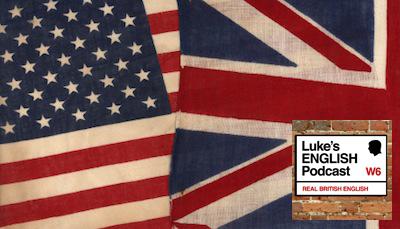
Luke's ENGLISH Podcast - Learn British English with Luke Thompson
121: Americanisms (Part 2) What do British people think of American English?
Loading summary
Transcript5 lines
- [00:00]
A
Thank you for choosing Luke's English Podcast for more episodes with specific vocabulary and pronunciation teaching plus ad free listening access to the premium community and to show your support for the podcast, sign up to LEP premium@teacherluke.co.uk premium
- [00:21]
B
Every idea starts with a problem. Warby Parker's was simple. Glasses are too expensive, so they set out to change that. By designing glasses in house and selling directly to customers, they're able to offer prescription eyewear that's expertly crafted and unexpectedly affordable. Warby Parker glasses are made from premium materials like impact resistant polycarbonate and custom acetate, and they start at just $95, including prescription lenses. Get glasses made from the good stuff. Stop by a Warby Parker store near you.
- [00:52]
A
A password manager should be the first security purchase you make for your team. Why? Because compromised passwords are the number one way bad actors attack companies, and small businesses are their favorite targets. But unlike a lot of security challenges, passwords actually have a pretty simple solution. 1Password lets you manage all your business's credentials so you can feel confident that your data stays secure as your company grows. Find out more@1Password.com specialoffer and start securing every login. You're listening to Luke's English Podcast. For more information, visit teacherluke.podomatic.com hi listeners, and welcome back to Luke's English Podcast. This episode is the continuation of the last one, which was all about Americanisms. In that episode, I went through a list of American expressions which British people don't like. This is a list published by the BBC of comments made by British people about American expressions that they hate. Yes, hate. It's a pretty strong word to use. But basically, British people can be very sensitive about hearing American expressions used in British English. Many of them just don't like it. It infuriates them, causes their blood pressure to rise and their blood to boil. But is it really worth getting so angry about the way British English is influenced by American English? Are the expressions genuinely wrong grammatically in most cases? I don't think so. Most of the expressions are grammatically okay. They're just examples of standard conventions of American English. And it's quite natural for American English to influence British English. We watch American TV shows, interact with Americans on the Internet, and meet more and more American people in our daily lives. Perhaps some Americanisms sound less sophisticated than their British equivalents, but in fact, many Americanisms really are efficient bits of language. They're effective tools of communication most of the time. Also, they're just the normal way in which Americans use the language. And essentially the American English has just developed differently to the way British English has. When British people don't like hearing other Brits using Americanisms, I think it's pretty small minded. Especially when the criticisms given are things like it's grammatically wrong or it makes my blood boil. Is it really grammatically wrong or are you just arrogantly assuming that British English is the only way? And if Americanisms really do make people that angry, they should just calm down a bit? British people like to think that because we're British we have the right to be superior about the use of English, as if to say, well, it's our language so we can decide how it should be used. I think we feel we have a connection to the real source of English heritage, Shakespeare and all that. However, in my experience, most British people don't really have the linguistic knowledge of to back up their complaints about American English. So when they complain about Americanisms they just sound conservative, small minded or snobbish. So really, when a British person complains about American usage, do they really have a good linguistic point or are they just being a bit judgmental about American English? In this episode I will continue to go through the list of British people's most hated Americanisms as published by the BBC. I will explain each comment and then give my opinion. I've also got some comments from a language expert called Grammar man who works at the University of Carolina. The main questions I consider when judging these Americanisms are are they grammatically correct or not? Are they effective tools for communication? Do they effectively communicate a message and is the complaint really justified or is it just snobbishness? There is a transcript for pretty much everything I'm saying in this episode. Again, you can check it out on the website, which I'm sure you know by now. Luke. Do I? What is it again? That's it. Teacher Luke. Teacherluke.podomatic.com how could you forget? How could I even forget that? So you can read whatever I'm saying and if you're. If there are words and phrases that you hear me say and you think what does that mean? And then I don't explain it. You can check it out on the transcript. Okay, so. So where did we stop in the last episode? I believe it was Comment number 16. So here it is. So number 16 I'm good for. I'm. Well, that'll do for a start, says Mike in Bridgend in Wales. So he's complaining about the expression I'm good instead Of I'm well. That would be for example, hi, how are you? I'm good, thanks, rather than hi, how are you? I'm fine, thanks, or I'm well. To be honest, I don't think we say I'm well when someone says how are you? How are you doing? I'm well. I don't think people do that. Even so already, Mike, you're on shaky ground because I think we say I'm fine, thanks. And so what's the problem, Mike from Wales with I'm good? Well, I've heard lots of British people complaining about this before. Americans do say that, hey, how you doing, mate? I'm good, you know. And so lots of British people say that this is. Well, first of all, they think it's grammatically incorrect, which is not true because it is grammatically correct. Because if you think about it, good is an adjective. Fine, like fine is an adjective. And adjectives are used in this structure. We have, for example, the subject, for example, I the verb be, which in this case is am. And then you can have an adjective. It's just a well known structure. It is interesting. For example, I'm good. So grammatically it's fine. Good is an adjective. You can put an adjective there in the sentence. I think another thing that British people complain about sometimes is that the meaning is a bit ambiguous. As if to say I'm good could mean I'm a good person. But to be honest, I don't think that's usually a problem. Because in that context you'd have to try to misunderstand, wouldn't you? If you said to someone, hey, how are you? And they say, well, I'm a, I'm good. And you think, does he mean he's a good person? I don't think that would happen. I think it's normal for you to assume that I'm good means I'm good, I'm not ill, I'm sort of healthy, right? I'm in a good mood, I'm not unhappy, so I'm good. So I can't imagine really how anyone could misunderstand I'm good to meet, I'm a good person. Unless, you know, you're in sort of a Lord of the Rings movie and where it's very important to establish that you're a good person when you meet someone before you can kind of get to know them. Because, you know, in the Lord of the Rings or in Star wars, most people are just good or bad, aren't they? So if you meet someone, so hello Stranger, how are you? Don't worry, I'm good. I'm a good guy. Don't chop my head off with an axe. But in the real world, of course, you don't do that. You don't establish whether you're a good person or not at the beginning of a conversation. So I think you'd have to try to misunderstand I'm good to mean I'm a good person. What does Grammar man say? Well, he says there is a difference between good and well. Indeed. The former is an adjective, the latter an adverb. This distinction does elude many Americans, I admit. So he's saying that sometimes the difference between the adverb and the adjective is not obvious to some Americans. For example, how is the project going? Is it's going good. Now, I can understand that you'd say it's going well because you need an adverb there. You shouldn't say it's going good. So that is a mistake that Americans make sometimes. But how are you? I'm good, thanks. I think that's all right. He goes on to say, however, adjectives, not adverbs, follow linking verbs. Verbs like to be. Hence, the correct response to how are you? Is, in fact, I'm good. The Brits are wrong again. Well, I don't think we're all wrong, because I think I've got it. But I think Mike from Wales, you don't really have a point. I think I'm good is okay, and it's just more a question of usage. The Americans tend to say that, whereas the British would say, I'm fine. So I suppose when Mike hears that, he goes, I can't bear to hear American English being used in the United Kingdom. The United Kingdom. It's called the United Kingdom because apparently we're united by a king. In fact, actually, it's a queen whose family originally come from Germany. So, you know what. What does that say? I don't know. So, right, number 17. And we've got lots of points to go through, so I shouldn't mess around. Let's just get through these fairly quickly, shall we? Okay, then, number 17. Bangs for a fringe of the hair. Bangs for a fringe of the hair. That's Philip hall in Nottingham. Well, we don't really say bangs in the uk, but I think in the usa, you know, like a girl has got a fringe that is just above her eyes, or maybe just the fringe of the hair is just on the eyebrows, you know, that kind of look. Someone like Reese Witherspoon tends to have this haircut which is like a fringe going over the eyebrows, okay? And in America they call that bangs. Bangs of hair, right? And in Britain we don't say that. And in fact, we don't really have a name for the individual bits of hair in a fringe. In America they do, they call it bangs. So in fact, really, we're missing a word there, aren't we? Because we don't know what else to call it. Grammar man says, I don't know what else to call them. So I think this is just a case of American English having a word that we don't have in British English. So Philip hall in Nottingham, you've learned a word, right? You should be happy. Right, moving on to number 18. And this one is from Simon Ball in Worcester. I think we've heard from Simon Ball before, haven't we? Anyway, Simon Ball from Worcester complains take out rather than takeaway. So take out rather than takeaway. So he thinks we should say takeaway. And he gets annoyed when he hears people saying take out. So if you go to a restaurant, let's see, if you go to a Starbucks and you order a coffee, you can either drink the coffee in or you can go out with the coffee. A takeaway, right? You get a takeaway coffee in the UK and in America it would be a takeout, maybe a takeout meal or take out coffee or something like that. But Simon, come on, what's the problem? Take away. Fine, it's clear. You take it. You take it away from the, the place where you bought it. You don't eat it there. Take out. But that's clear too, isn't it, Simon? Take out. I'm going to take it out of the restaurant. I'm not going to eat it in, I'm going to take it out. I think that's fine. You can't say that takeaway exclusively is the only way to explain that and that takeout is wrong. I think takeout is fine. It's just another way to say the same thing. Grammar man says, well, it's six of one and half a dozen of the other. Okay, well, half a dozen means six. Okay? A dozen means 12. And that's like a sort of traditional word which would have been used by like people who sold things in shops. You'd buy a dozen eggs, for example, and it means 12 eggs. So six of one and half a dozen of the other just means six of one and six of the other. He's basically saying it's just the same way to say two things, right? Six of one, half a dozen of the other means that there's no real argument. It's just a, you know, Americans say take out, Brits say take away. And they're not really that different. Number 19. This is from Bob in Edinburgh, and he says rather positively, I enjoy Americanisms. I suspect even some Americans use them in a tongue in cheek manner. Right. What's a tongue in cheek manner? What does that mean? To use something in a tongue in cheek manner? Well, tongue in cheek just means when you do it sarcastically or ironically. Okay, so if you do something tongue in cheek, you do it ironically. So let's see. Tongue in cheek. Okay? For example, if I was to win an award, I might do a kind of tongue in cheek speech, which is where I'd say, I'd like to thank everyone for voting for me in the awards. I'd like to thank Father Christmas for all the help that he's given me over the years delivering gifts. I don't know how you do it, Santa. I really don't. Well done, though. And, you know, thanks for keeping the dreams of millions of children alive so that they could then grow up happy. Happy enough to vote for Luke's English podcast in the future. So thanks a lot, Santa. That's kind of a tongue in cheek acceptance speech, because I'm not really being serious. You do something without being too serious. You do it a bit ironically. You do it in a tongue in cheek manner. Right? So he's saying, I enjoy Americanisms. I suspect even some Americans use them in a tongue in cheek manner. So he thinks that some American people use Americanisms, a kind of a joke, like a word joke, maybe. For example, that statement was the height of ridiculosity. Ridiculosity. In fact, it's ridiculousness. But you do have some nouns that end in ossity, like velocity, virtuosity. So what he's doing is he's taking the word ridiculous and he's putting a different suffix on it. So it's not ridiculousness, but it's ridiculosity. And that's quite funny because if you think about it, the word ridiculosity is somehow more ridiculous than the word ridiculousness. So this is an example of creative misuse of language. Grammar man says this is a great example of wordplay. So, yeah, maybe some Americanisms are just the American Americans having a bit of fun with the language. Number 20, this is a half hour instead of half an hour. And this is from EJB in Devon in the uk. So he thinks half an hour should Be correct. And a half hour is incorrect. But oh, come on, a half hour is pretty clear. And there are other examples of this. Like you would have a half pint. A half pint. That's half a glass of beer. Right? A half pint. So why can't we have a half hour? I think it's all right. Grammar man says, I suspect this person has a half brain. Oh, grammar man. There you go again. Right, number 21. This is a heads up. This is from R. Haworth in Marlborough. A heads up, for example, in a business meeting. Let's do a heads up on this issue. I've never been sure of the meaning a heads up. Well, I suppose this means if everyone in your team is working on a project, they're kind of. They've got their heads down. Their heads are down and they're working and they're focusing on just their one thing. They're not looking at each other, they're not communicating because they've got their heads down. So if you do a heads up on something, I guess it means that everyone looks up. I've just received a text message. If you do a heads up, it means everyone looks up and they kind of look at each other and they communicate what's going on. So to do a heads up is like to have a meeting, have a quick meeting just to check what everyone is up to and what the progress of the project is. Let's do a heads up. It could be maybe to bring attention to something. You know, if you bring attention to something, then people will put their heads up. So that is a heads up. I suppose you could say it's not very sophisticated to say, let's see, heads up to make that into a noun. Just those two words into a noun. It's a, you know, it's a bit unconventional, but that's what it means. But it is an example of a kind of a cliche that might be used in management speak or business sort of this kind of business English. You find a lot of idiomatic language in business English because somehow they like to. Like to be a bit flexible with the language just to be efficient sometimes. But it can result in slightly annoying or cliched bits of language. Grammar man says, I've never claimed to understand what happens in business meetings. So he's saying, well, I suppose this is something specific to the business world and he's not really sure what it means either. Okay, shall I check the text message that I got? Let me see. I didn't put my phone on silent while I was recording this. Oh, look, it's from my mum. That's nice. And it's. Oh, it's about Christmas presents. Because Christmas is coming up and everyone's asking each other what they want for Christmas. So I've got to tell my mum what I want for Christmas. Oh, what would I like? What would be good as a Christmas present? I mean, obviously, I've got to think. I've got to sort of be a bit sensible. I can't just ask for, like, a helicopter. That would be good. Maybe. Maybe I should scale it down a bit and just go for a jet pack. That might be a good idea. No, I think I'm gonna just ask for a jacket, actually, from my mum. So, Mum, if you're listening to this, you can get me a jacket. Maybe a leather. Like a brown leather jacket. I might show. I might send you a link. My mum listens to this sometimes. In fact, she's not been very well. She's had flu. She's been in bed with flu. So, Mum, if you're listening to this, I hope you're feeling better, okay? I hope that you're. You're back on your feet again. And we're very much looking for. Looking forward to coming home for Christmas, Mum. Looking forward to that. Right? So, actually, Mum, I wonder what you think. Wonder what you're thinking of this episode, because I know that sometimes you don't like Americanisms. Maybe I'll have to talk to you about that at Christmas. I might even record it so that the listeners to Luke's English podcast can listen in and just learn. Just, like, learn loads of English while they're doing it. Yes. Right, Moving on. Number 22, train station. My teeth are on edge every time I hear it. Who started it? Have they been punished? That's from Chris Capewell in Queen's park in London. So he doesn't like the expression train station. I suppose he thinks that railway station is better. In fact, he hates train stations so much that his teeth are on edge every time he hears it. If your teeth are on edge, it means you're, like, finding it really difficult. It's really horrible to hear. So it makes you squirm and it makes you shudder and cringe. My teeth are on edge. I can't stand it. Who started saying train station? Well, I don't know. Is it specifically American? Maybe. But come on, what's wrong with train station? I mean, really, it's a station. Trains, that's where you go to get a train. Trains stop in them. Let's Call it a train station. I don't see the problem. Railway station as well, fine. I mean, railway is the track that the trains travel on, but, you know, it's pretty much the same thing, isn't it? There's nothing wrong with saying train station. Just in the same way. There's nothing wrong with saying railway station. It's just another way of saying the same thing. So there's no need to punish people for saying train station. Chris, come on, man. Grammar man says, have you been punished yet for talking out of turn? Go and stand in the corner and don't come back until you have a good point to make. Okay, let's take a little break from the list now, and let's hear from an American reader. So this is. This is a comment from Melanie Johnson, and she's a master's student in applied linguistics here in the uk. So she's actually from America, but she's living in the UK and she's studying a master's degree in applied linguistics. So I'm sure that she's going to have quite a balanced view on this subject, you know, being an American living in the UK and generally being very educated about linguistics. Let's hear what she says. So she says, the idea that there once existed a pure form of English is simply untrue. The English spoken in the UK today has been influenced by a number of languages, including Dutch, French, and German. Speakers from the time of William the Conqueror would not recognize what we speak in British as English. They would not recognize what we speak in Britain as English. This is because language variation shifts are constantly changing. Five years ago, you might have found it odd if someone asked you to friend them. But today, many of us know this means to add them on Facebook. The increased use of technology in combination with the rise of a globalized society means language changes are happening faster than ever, especially in places with highly diverse populations like London. Young people are usually at the vanguard of this, so it's no surprise to find London teenagers increasingly speaking on what's been termed multicultural ethnic English. Changes in word use are normal and not unique to any language, but English does enjoy a privileged status as the world's lingua franca that began with the British but has been maintained by the Americans. It's difficult to predict how English will evolve, but one certainty is it will. So she's saying something. I think we've probably already made that point that, you know, the influence of Americanisms on British English is all part of the natural way in which language changes over time. And you can either understand that and go with it, or you get very angry and annoyed and complain and throw your toys out of the pram. Right, let's move on. Number 23. We're almost halfway through the list. We are 23 minutes into the podcast, so let's go. So this is from Chris Fakrell in York in the uk, and he says to put a list into alphabetical order is to alphabetize it. Horrid. So he thinks that the verb to alphabetize something is horrible. That means put it in alphabetical order. For example, I alphabetize. I alphabetised my record collection. Well, I don't know. Is it really intrinsically horrible to say alphabetize? I mean, it's rather a long, slightly clumsy sounding word, alphabetize. And you might say that it's a bit basic to just take the word Alphabet and turn it into a verb, but it's pretty effective, isn't it? You know what that means? To alphabetize something means to put it into alphabetical order. It's certainly easier to say. Grammar man says, no doubt. We Americans are notorious for transforming nouns into verbs. If we hadn't introduced this practice, imagine how annoyed you'd always. Imagine how annoyed you'd be always having to say, I'll add you as a friend on Facebook instead of I'll friend you. Okay, I think we get the point. Saying I'll friend you is just a much quicker, much easier way of saying, I will add you as a friend on Facebook. And I suppose the same applies to alphabetize. Right? Number 24 people that say my bad after a mistake. I don't know how anything could be as annoying or as lazy as that. That's from Simon Williamson in Lymington, Hampshire, in the uk. My bad. Okay, so, for example, if you. Let's say you take the wrong bus with your friend and you're riding along and your friend says, oh, no, we're on the wrong bus, we're going the wrong direction. And you go, oh, yeah, sorry, my bad. That means it was my fault. I did a bad thing. I chose the wrong bus. In this case, my bad. My bad. Yeah, I suppose it's not really grammatical because you can't say my and then an adjective. You have to say my followed by a noun, don't you? I mean, you might say my bad mistake, but essentially it's my and bad. Sorry, it's my and mistake. My and a noun. So not saying my and an adjective is. Yeah, it's a bit. It's not really grammatically correct, but still, it's Clear what it means. It means I did something bad. So Grammar man says, for a while I thought the British were actually more sophisticated than us. Then I picked up an issue of the Sun. My bad. All right, so not really answering the particular point, but he's saying that he thinks my bad is okay and that you can say it. In fact, he then makes fun of the British, saying that he thought we were sophisticated. And then he picked up an issue of the Sun. Well, the sun is a newspaper in the uk and I agree with Grammar man, it's not sophisticated at all. It's deeply unsophisticated, very sort of, sort of small minded. And it's the sort of sun that sells news. It's the sort of newspaper that sells papers by doing stories about celebrities and showing pictures of girls with their boobs out. So I don't know, guys, if you're in, if you're in England, pick up a copy of the Sun. It's just a naked girl on page three. In fact, it's one of the most popular newspapers in the country, one of the most best selling newspapers, and they've had a naked girl on page three for years and years and years. It's almost like an institution. But is that really a serious way to, you know, sort of conduct journalism? Well, no, it's not, is it? So it's not a sophisticated paper. They have ridiculous stories, a lot of them not really true. They, they get their information in a very dodgy ways. And only recently there's been a big scandal about how the tabloid papers in this country were kind of hacking into people's mobile phones and things like that. So I agree the sun is a pretty awful paper. Nevertheless, if you read it full of idioms and it's full of phrasal verbs, there's loads of language that you can learn from the Sun. But as a piece of journalism, no, it's not very, it's not very sophisticated. Right, point 25. This is from Tom Gabbard in Huddersfield in England. And he says normalcy instead of normality really irritates me. Normalcy instead of normality. So you might say in New York after the hurricane, it took a long time for things to get back to normalcy or for things to get back to normality. Well, Grammar man says these words are in fact different and people should be corrected when confusing them. Though I don't think the confusion is particularly American. Are you confused? So he's saying that actually these, these two words are separate words. And it's true a lot of People confuse them, but he doesn't think that's just the Americans. Normalcy and normality. Right. Okay, I'm gonna have to Google this one. Normalcy and nor. Okay, there it is. Normalcy and normality. Okay, so this is a website called grammarist.com and normalcy versus normality. Normal. Normality and normalcy are different specialists, spellings of the same word. Okay, so that kind of contradicts what grammar man said. Normality is centuries older, though, and many usage authorities consider it the superior form. Nouns ending in cy are usually derived from adjectives ending in t. For example, pregnancy from pregnant, complacency from complacent, hesitancy from hesitant, while adjectives end ending in l usually take the ity suffix. Normalcy is unique in flouting this convention. So maybe there is a case here for saying that normalcy is kind of wrong and normality is okay, well, we will see. Maybe in the future everyone's going to start saying normalcy, but I doubt it. I think we'll continue to say normality, normalcy, normality. Normality is longer. It's got four syllables. So maybe normalcy is slightly more efficient. Word number 26. As an expat living in New Orleans, it is a very long list. But burglarize is currently the word that I most dislike. That's from Simon in New Orleans, but I expect he's a Brit. Okay, burglarize. Well, do you know the word burglary or to burgle something? Well, a burglary is. Is when someone breaks into a building in order to steal something. So it's a kind of theft. So breaking into a building to steal something is called burglary. And the person who does it is called a burglar. And in British English, the verb is to burgle something. Like you burgle a property. Well, hopefully you don't burgle a property, but people do burgle properties sometimes. And so Simon's complaint is that burglarize is an unnecessary verb that we already have burgle. But I expect in America, they don't really use burgle. Grammar man says, again, you should thank us for making a habit of verbing nouns. All right, okay. Well done. Yeah, it's well done for verbing nouns. But we've already have. We already have burgle. You don't need burglarize. Burglarize. It sounds funny to us because we already have the verb burgle. So if you add I's on it, it's like, what Unnecessarily long burglarize. Burgarilizationisms. That's a common complaint that Brits have about Americans in their English is that they unnecessarily lengthen words. You know, burger. There have been a number of instances of burglizationism itties over the past few monthsizationisms. Okay, but burglarized? Well, I'm not that bothered. I think it's just that we use burgle and the Americans don't. Number 27. This is from John in London. And John says, oftentimes just makes me shiver with annoyance. Fortunately, I've noticed. Fortunately I've not noticed it over here yet. So it makes him shiver with annoyance. So annoying. Calm down, John. It's not that bad. Oftentimes. Well, actually, oftentimes is used in Macbeth by Shakespeare. Banquo, one of the characters in the play Macbeth says oftentimes. So it's an example of English that was used over here. The Americans then took it over there and we stopped using it. They continued. And now we just get pissed off about it because we assume it's wrong. So Shakespeare used it. John, you'd know that if you'd read some. Then again, if you read Shakespeare these days, it's seriously difficult to understand. Thing is, though, I think oftentimes it's pretty clear, isn't it? Oftentimes. Really it's not necessary though. You can just say often. So I agree that it's. It's not a great word, but actually if you say I've. If John, if you say fortunately, I haven't noticed it over here yet. Well, you haven't noticed it because you haven't read any Shakespeare. In fact, it was over there, you know, 500 years ago when Shakespeare was knocking around. So, okay, number 28. Eatery. An eatery. This is from Alistair in Maidstone. And he says eatery to use a prevalent phrase. Oh, my God. So an eatery is a noun which is a place where you eat. Okay, Grammar man says, while you're at the eatery, would you like some fish and some french fries with your wine? Okay, there's another kind of word joke here from grammar man with your wine. Wine, as we know, is a drink. Red wine or white wine. But also wine is another word spelled W H I, N e. And to wine is to complain about things in an annoying way. Oh, God. Why do the Americans have to use different English? That's to whine about something. So he's saying, would you like some fish and French fries with your wine? So he's just suggesting that English, that Alistair is just whining about this particular word. And also, there's a kind of a dig here from Grammar man about fish and chips, that in America they don't call them chips, they call them fries or French fries. So he's saying fish and French fries. Actually, it's fish and chips. All right, number 29. This is from AMI in New York. And the comment goes, I'm a Brit living in New York. The one that always gets me is the American need to use the word bi weekly when fortnightly would suffice just fine. So the one that always gets me is the American need to use the word bi weekly when fortnightly would suffice just fine. Okay, so fortnight is two weeks. Okay, I'll see you in a fortnight. It means I'll see you in two weeks. Fortnightly is the adverb. And the Americans might say bi weekly, but okay, I don't think there's really anything that wrong with bi weekly. Bi, we know it's a prefix which means to like bicycle, bisexual, for example, bi means to bi weekly. I mean, I think it's really clear. A bi weekly meeting, it means a week meeting that's going to happen every two weeks. And Grammar man says the meaning of the former term is more obvious and it's three characters shorter. So he's saying that bi weekly is actually more obvious than former fortnightly. And I kind of agree. And it's three characters shorter, so it's actually a shorter word. So he's suggesting that bi weekly is better. Judging whether deciding whether a word or, you know, one word is better than another is really very subjective. And so if the Brits say fortnightly, they prefer it just out of habit, just because that's the language that they speak and it's all part of their cultural identity. And so it's very Just a subjective choice. You just know fortnightly because you've heard it since you were a child. And so when you hear bi weekly, it just feels wrong, feels unnatural. But really, if you take a look at the language properly, it's not really wrong. It means something. It's not grammatically incorrect. It's just different. Okay, number 30. I hate alternate for alternative. I don't like this. And as they're two distinct words, both have distinct meanings, and it's useful to have both. Using alternate for alternative deprives us of a word. That's Catherine in London. And Grammar man says, you have a point, but I Don't think the confusion is particularly American. So he's saying that we all get confused between alternate and alternative, and that's not just an American thing. Number 31, hike a price to. Does that mean people who do that are hikers? No, hikers are ramblers. That's M. Holloway from Accrington in England. So to hike a price basically means to raise a price. Okay, but we also have a word hike, which means go for a walk in the countryside. And a hiker is a person who goes for the person who goes for a walk in the countryside. A rambler is the same thing. And Grammar man says, no, hikers are backpackers, ramblers are wanderers. Okay? So he's saying that basically in. In America, a backpacker they call hikers backpackers, and they call ramblers wanderers. So backpackers and wanderers, just different, you know, just two sets of words that mean the same thing. Right. So in England, we say hikers and ramblers. In America, they say backpackers and wanderers. So there you go. Deal with it. Number 32, going forward. If I do so, I shall collide with my keyboard. That's Rick Allen in Matlock. So going forward is an expression again, that you might hear in a business meeting, and it basically means going into the future or moving forward into the future. So going forward. But it's a cliche. So people just drop that into a sentence all the time when they're talking about things to do in the future. For example, going forward, I think we need to look carefully at our marketing campaigns. Right. Going forward, we need to broaden our product range, for example. Okay, so going forward. So I think Rick Allen is saying that going forward is confusing because if you go forward, you will collide with your keyboard. You'll actually literally go forwards. But come on, Rick. Going forward is clearly an idiomatic use of the language. And you can't be unaware that English is full of idiomatic expressions just like most languages are. So going forward doesn't mean literally going forward. Come on. It just means sort of metaphorically going forward. And Grammar man says British schools must be in a worse state. State than American schools if a Brit is allowed to pass English without understanding the difference between figurative and literal language. So figurative language is like sort of metaphorical language. And he's saying basically he's surprised that Rick doesn't know the difference between figurative and literal language. Hmm. Right, let's take another break from the list here and look at some commentary about the idea of language change and how people feel about Unwanted elements in language. This is from an article by Sue Fox from the Linguistics Research Digest, and you can see the link on the page and it goes like Kate Burridge, a researcher and professor of linguistics, has taken a look at the attitudes and activities of ordinary people as reflected in letters to newspapers, listener comments on radio and and email responses to her own comments made about language in various broadcasts. She states that linguistic purists tend to make a very clear distinction between what they see as clean and dirty in language, in other words, what is desirable or undesirable. There are two aspects to this distinction. The first is that purists tend to want to retain the language in its perceived traditional form, and they therefore resist language change. And the second is that they want to rid the language of what they consider to be unwanted elements, including foreign influences. Burridge likens linguistic purism to dealing with taboo practices generally the human struggle to control unruly nature. Some of the examples that Burridge provides are quite alarming. People often get very abusive. This is when they feel upset about unwanted elements in language or language change. People often get very abusive making aggressive statements about how people who use certain wrong usages should be killed. Some people seem hysterical about language change. One person referred to the rape of the English language as escalating out of control and indulged in by people of all ages. As Burridge notes, these are clearly passionate and confident responses indicating that language matters to a lot of people. Burridge also notes that many extracts that she has examined express concern over the Americanization of English, especially as it pertains to New Zealand and Australian English, where the topic is hotly debated. She refers to newspaper headlines such as Facing an American invasion and to one writer who considers that English is deteriorating into a kind of abbreviated American juvenile dialect. Why then do people hold such strong views about language use? The view held by Burridge and indeed most linguists is that such concerns about language, such concerns about language use are not usually based on genuine linguistic worries, but are reflections of deeper and more general social concerns. She suggests that the opposition to American English is more to do with linguistic insecurity in the face of a cultural, political and economic structure superpower, and that somehow American English poses a threat to authentic down under English and perhaps to Australian and New Zealand cultural identity. Similarly, links are often made between bad language and bad behavior and there is often an unjustified idea promoted that if a person has no regard for the nice points of grammar, then then that person will probably have no regard for the law. With such deeply Embedded attitudes towards language use. It is perhaps no wonder that we find such emotionally charged responses. What though are the views of younger people who've grown up with awareness of linguistic variation and change? School children are taught about American. Sorry. School children are taught about standard and non standard uses. And in the media there is a wide array of regional accents used by presenters and broadcasters. E communication is also playing a role in promoting colloquial and non standard language to the point where it may be achieving a new kind of respectability within society. We might think that these new attitudes could signal the end of linguistic purism. But according to a survey conducted by Burridge among first year universities linguistics students, the results revealed that there was still an overwhelming intolerance towards language change, especially when it came to American English influence. Of the 71 students interviewed, 81% expressed concern that the use of American elements was detrimental to Australian English. It seems then that language attitudes are very deeply entrenched by and that new attitudes and practices will take much longer to change, if they ever will. As Burridge concludes, the definition of dirt might change over the years, but the desire to clean it remains the same. Okay, so I guess making a few points. One is that people are very, very passionate about their feelings regarding language change, particularly when it's from a foreign source like America. And so they get upset about it because it somehow goes right to the core of their cultural identity. And also it seems that even young people who are kind of in, sort of educated about linguistics, they still don't like the American influence. And so the fact is these things are very deep and personal. Okay, moving on. Number 33, let's get through this list in the, in this episode. Let's keep it in one episode if possible. Okay, number 33. This is from Joseph Wall in Newark on Trent in Nottinghamshire. And Joseph says, I hate the word deliverable used by management consultants for something that they will deliver instead of a report. So we, you know, we'll be able to set a few deliverables. What kind of deliverables can you give me on this? I suppose, meaning sort of what kind of reports can you deliver? Well, grammar man says, I will not be held accountable for either the actions or the discourse of corporate America. So again, he's kind of distancing himself away from the business world and saying, he's suggesting, I suppose, that in business people do strike things and they speak in strange ways. So they, in this case they've turned the word deliver into a noun and said deliverable. But there we go again. The Americans turning nouns into verbs. They're quite fond of that number 34. This is from Gordon Brown in Coventry. I don't think that's the former Prime Minister of Britain, Gordon Brown. I think it's probably just a coincidence. Maybe it is Gordon Brown. Maybe I should do it in a Gordon Brown voice. That I've never ever tried to do a Gordon Brown voice in my life before, but I'm going to do it now. You probably don't know who Gordon Brown is. Well, the fact is he was the Prime Minister of Britain for quite a few years between 2000 and. When did he become prime minister? 2007, I think until about 2010. So just about three years. He wasn't very popular, but. But anyway, this is what his voice sounds like, or this is what I think his voice sounds like. The most annoying. No, I can't do it. No. In fact, I've just realized I can't do it. But what I will do is I'll do it in the voice of Sean Connery because it's the closest thing I can do to Gordon Brown. Okay, so the most annoying Americanism is a million and a half when it is clearly one and a half million. A million and a half is. Is one million.5 where one and a half million is 1,500,000. That's Gordon Brown in Coventry. That was the crappiest Sean Connery voice I've ever done. Honestly, I'm normally much better at that. Anyway. The most annoying Americanism is a million and a half when it's clearly one and a half million. A million and a half is one million point five where one and a half million is 1,500,000. Okay, well, grammar man says you may have a point. Maybe you have a point. A million and a half could mean a million and half of one. You know, like a million point five. Okay, fine, a million and a half. But I think we all know what a million and a half is if you say that. I think so, but maybe there's a point. Maybe you should say one and a half million. Okay, number 35. This is Nerina in London, and she says reach out to. When the correct word is ask. For example, I will reach out to Kevin and let you know if that timing is convenient. Reach out. Is Kevin stuck in quicksand? Is he teetering on the edge of a cliff? Can't we just ask him, says Narina in London, to reach out to someone instead of to ask someone? Well, Narina, these kinds of phrasal verbs, they're not just exclusive to American English, are they? I mean, we have plenty of these phrasal verbs in English. It's not just something the Americans are doing. For example, let's see. To, you know, just to go past. In fact, you would just know to go past is a good one. All right, so copy me in on a message. Can you copy me in on that message? Copy me in on the message. Can't you just say, can you copy me in the message? Copy me on the message. Why do you have to say in on the message? I mean, there's no real logic in many cases to phrasal verbs. And the way that they use prepositions, they just become separate items of lexis. So reach out to is okay, but I understand that the meaning of it. Why do we say reach out as if someone is, like, somehow difficult to reach, and you reach out to them? Like stretching your arm out to get in touch with someone. Okay, well, grammar man says that idiom has its uses, but it can be overused. I agree. So to reach out to someone can be useful. Maybe if someone is, like, so difficult to contact or they're not likely to get back in touch with you, you reach out. You know, it's difficult to contact them. Maybe you reach out your arm and hope that they will come and grab it in the same way that you try and make contact with someone and just hope that they reciprocate and make contact with you. So you reach out to someone. Maybe someone is very angry with you and you want them to forget you, want them to forgive you. You don't know if they will, but you just kind of reach out to them and, you know, really politely plead that they forgive you. Might be the case when it's used. But maybe reach out to is overused and we should just say, ask in many cases. Number 36. Surely the most irritating is you do the math. Math. It's maths in capital letters. Okay, you do the math. So you do the math Is like, you work it out. Okay, so let's see. Let me think of an example. You do the math. Mm. Okay, so let's say you're speculating on something. So you'd say something like, Kate Middleton is in hospital, and William has been. And William has been talking about buying baby clothes. You do the math. That means you. You work it out. Meaning, I think that Kate's pregnant. You do the math. Meaning what? If you look at the evidence, Kate Middleton's in hospital and William is, like, buying baby clothes. You do the math and work it out, you'd work out that, wow, Kate's pregnant. But the issue is that in America, they say math for mathematics, and we say maths with an S on it for mathematics. Okay, mathematics, math or maths. It's a pretty small thing. I mean, maybe maths is correct because it's plural, but it's an abbreviation. So you don't always pluralize abbreviations, you know, so math, I think it's. It's all right. It's just again, just two different ways to say something. Two different ways to abbreviate mathematics. Grammar man says, really? Do we have to capitalize all the letters too, or are you trying to compensate for something? So that's because Michael, in his message capitalized the word maths, so it's M A, T, H all in capital letters. So he's saying, is that necessary or are you trying to compensate for something? Okay, if you make something a lot bigger, you may be trying to compensate. So maybe if something that you have is small, you'll need to make something else big in order to compensate for the fact that you, you know, you seem to have a lot of smallness going on in your life. That's difficult to explain. All right, let me give you, Let me give you another example. Let's say a man has a small penis. Okay, let's say a man has a small penis. And so in order to compensate for that, what he does is he goes out and he buys a really big car because he feels inadequate. He feels somehow not good enough, not big enough. And so he buys a big car in order to over. In order to compensate for it. So basically, grammar man is suggesting that Michael, by putting maths in big letters, is trying to compensate for the fact that he has a small penis. So basically, grammar man is saying, I, Michael Zealy in London, you've got a small penis. Okay, next, number 37. I hate the fact I now have to order a regular Americano. Whatever happened to a medium sized coffee? Says Marcus Edwards in Hurst Green in London. Is it in London? Michael Edwards in Hurst Green in England. Now a regular Americano. Yeah. Okay, well, it sounds like rather convoluted language for just medium coffee or a small coffee. But the fact is that, you know, coffee is a bit complex. There are many different ways to serve it and prepare it. And an Americano is basically an espresso with water in it, isn't it? It's like a long coffee or maybe a filter coffee, I think could be that. So grammar man says, first we take over your language. Then we take over your coffee. Although I hear the Antipodeans are making a move on your coffee, too. So he's just making fun of Marcus, saying, first we take over your language, then we take over your coffee. But that's quite an interesting point, that maybe Marcus's complaint is not necessarily about the language, but about the fact that the culture is changing, too, and that we now order Americano coffee rather than just a black coffee. So maybe there's something in that, that it's not just a question of language change, but general cultural change as well. How do people feel about it? Well, they get a bit upset about it, don't they? Because it's all part of their way of life. Number 37. My worst horror is expiration, as in expiration date. Whatever happened to expiry? Said Christina in London. Okay, expiration date or expiry date? Well, you know, if you buy something, let's say you buy a yogurt from the supermarket, and on the top of the yogurt there's a date, and that's when you should eat the yogurt by. You should eat it before that date. So in the UK it's called an expiry date, and in America an expiration date. And, well, again, two words to mean the same thing. But expiry might be better because it's slightly smaller. It's quite slightly more efficient. Grammar man says, I'd never considered the latter word. I quite like it, and it's shorter, so there you go. He quite likes expiry. Remember, latter and former when you've got two options. The former is the first one, the latter is the second one. Okay, number 39. My favorite one was where Americans claimed their family were Scotch Irish. This, of course, is totally inaccurate. As if. As even if it were possible, it would be Scots, not Scotch, which, as I pointed out, is a drink. Said James in Somerset. So James gets very upset about the fact that Americans who have, like, family from Scotland or Ireland call themselves Scotch Irish. And apparently that's not correct because Scotch is. Is a kind of whiskey, and that the correct word is Scots, not Scotch. This is kind of a common thing that people say that Scotch is the adjective for Scottish, and apparently it's not. But I think in America, if you have, like, family history from that part of the world, everyone in America who comes from Scotland or Ireland might call themselves Scotch Irish. Can you not just let them choose the way they talk about their own culture? Grammar man says, I never get between a Celt and his drink. So he's saying that you never get between a Celt and his drink because Celtic people are known for drinking a lot. So you should never get between a. Never get in the middle of a Celtic person and their drink because it's just not going to be a happy situation. All right, number 40. I am increasingly hearing the phrase that'll learn you. That'll learn you. That will learn you. When the English and more correct version was always, that'll teach you. What a ridiculous phrase says Tabitha in London. That will learn you. So that will teach you. For example, if someone, let's say a child is doing something stupid and they fall over and they hurt themselves. Ah, hurt. That hurts. And you go, that'll teach you. You shouldn't climb on that. It's dangerous. Don't do it. That'll teach you. So apparently some people say that will learn you. And true, it's not strictly correct. I mean, because learn you don't. Something doesn't learn you. You learn something. Right? Something teaches you. But I think that will learn you is kind of part of usage in certain American dialects. Like maybe in the south they might say that that'll learn you. But most people don't say that. A grammar man says, no self respecting American with a high school diploma would ever say that except in jest. So they would only say it as a joke. Actually, that phraseology may reflect the standard convention in the Appalachian dialect, in which case it would indicate a systematic and therefore regionally appropriate use of the verb. So if enough people in that region use it, then that kind of makes it all right, I suppose is what grammar man is saying. But most people don't say it. It's just something in a particular dialect. Number 41. I really hate the phrase where's it at? Where is it at? This is not more efficient or informative than where is it? It just sounds grotesque and is immensely irritating. Says Adam in London. A grammar man says, you're absolutely right. This is one of the two Americanisms listed here actually worthy of your scorn. The preposition at the end, unarguably superfluous. So superfluous means not necessary. Okay, so where's it at Is not necessary. You can just say where is it? Fine. But you'd still hear that. It's like cool language. Yeah, the language of the kids. I don't know, I'm making a fool of myself. But where's it at? Yeah, where's the party at? Meaning where is the party? But I mean, I suppose if you want to sound cool with your Friends, if you're a teenager or something. Now, I'm obviously making a fool of myself here because I'm in my 30s. I've forgotten what it was like to be a teenager. But if you are a teenager, you might not want to say to your friends, okay, everyone, where is the party? You know, you might want to say, where's the party at? If you're a teenager and you're listening to this, what would you say? You can send your emails to luketeacherotmail.com or alternatively, just leave a comment below this episode of the podcast. And I'd love to hear from you. Oh, yes, number 42, period, instead of full stop. From Stuart Oliver in Sunderland. Well, a full stop is the dot at the end of a sentence. It just shows that the sentence is finished. Full stop. Okay, but in America, they call that a period. Fine. Two words, same thing. Full stop. In America, they say period. You know, like you might hear that in movies. Your ass. You're. You're off the case. You're off the case, Johnson. Period. Meaning you're not. You're. You're not the police officer that's going to handle this case. And that's it. Full stop. Okay, Grammar man says they're just different terms for the same thing. Okay, number 43. My pet hate is winningest, used in the context. Michael Schumacher is the winningest driver of all time. I can feel the rage rising even using it here. That's Gail in Nottingham. So she gets really angry at the expression winningest. Okay, so the word winningest. Well, you know, the word to win obviously is the verb you want. Winner, contest. Winning is that, you know, if you say, I'm winning, obviously, that's the present participle. So winning has become kind of a buzzword on the Internet. So if you're winning, it means that generally you're sort of like being cool or doing something well, as opposed to failing. Failing is when you're sort of doing something badly or doing something wrong. Winning is. Means. Means you're doing it well. You're having a good. Having a good time. You're cool, you're down with the kids. Yeah, winning, right. So winning. Charlie Sheen, for example, said winning a lot when he was on the Internet having a mental breakdown not long ago. Winning. So it just means being successful. Right. So winning ist is now like a new superlative adjective from the word winning. So it's. It's just a case of the language being. Some people are just playing around with the language, changing it around just for their own enjoyment. Grammar man says, if I were living in a country that could never use that term self referentially. If, if I was living in a country that could never use that term self referentially, I would hate it too. So he's saying that when people say winning ist, they're doing it as an ironic self referential thing. They know that they're doing it. So he's saying that, he's criticizing Britain, saying that in Britain people can't use a term in a self referential manner. Well, that's not really true because British people love to be ironic about the language they use. But basically, Gail in Nottingham don't get too upset about it. It's just people playing around with language. Number 44. My brother now uses the term season for a TV series, hideous. That's from Dee Henderson in Edinburgh. Hideous. Hideous means absolutely awful. Absolutely horrible. So using the word season for a TV series, hideous. Well, it's not really hideous, is it? Because like a TV series, A TV series is obviously like a set of a number of shows that are kind of broadcast within a certain period. We call it a series in the uk, whereas in America they call them seasons. You know, have you seen the first season of Lost, for example? But I don't see what's wrong with season season really, because it kind of often these TV series from America, they're quite long. They might last for three months, in which case it's appropriate to call it a season. It's all right, it's not hideous, it's fine. Grammar man says a TV series can run for multiple seasons. Do you or your brother not realize that number 45 having an issue instead of a problem? Says John in Leicester. So an issue or a problem? Well, there is a difference between the word issue and the word problem. First of all, the word problem has a kind of negative feel to it. So what happens is people tend to avoid using the word problem because they don't want to accentuate the negative, they want to keep it positive. So they say, we've got a couple of issues to deal with. It makes it sound more positive, it makes it sound less dramatic. And it's very common at work. We talk about issues rather than problems just because it's more positive. So that's really a case of subtle nuance. Subtle means like with very small detailed differences. And nuance means detailed difference or slight difference. So there is a slight difference between saying there's an issue here and there's a problem here. Maybe you, maybe you have an issue with the idea of like choosing to paint something in a positive light. Maybe that seems contrived, but really it's okay as a. As a piece of use, as a. As usage, because it's clearly using a nuanced. Like it's expressing something in a slightly more nuanced way, isn't it? Yeah. What's wrong with that? Grammar man says, apparently the Brits have an issue with nuance. Very funny, number 46. I hear more and more people pronouncing the letter Zed as Z. Not happy about it, said Ross in London. Well, basically, in America, they say Z, and in Britain, we say Zed. So although with the rapper Jay Z, we still call him Jay Z, we don't call him Jay Z. Okay. It's not the first time that's happened. Just in case you were falling asleep, there was a little jingle just to kind of keep you on your toes. And that also suggests to me I've got to hurry this up, because this is a very long list. Quite an ambitious episode to think I can go through the whole list and keep it riveting and keep it fascinatingly entertaining. Maybe you're falling asleep. I don't know. Maybe if you. Maybe if you are. Great. You know, I hope you're having a lovely dream about Americanisms somehow, anyway. Right. Grammar man says, I'm not happy about your criticizing my pronunciation without explaining your own. So. Good point. What's. Why is Zed correct and Z wrong? Huh? Come on, number 47. To medal instead of to win a medal. It sets my teeth on edge with a vengeance, said Helen in Martock in Somerset. To medal instead of to win a medal. Okay, so, like, you know, Chris Lewis meddled three times at the Olympics instead of. Chris Lewis won a medal three times. And Grammar man says, how many times has your soccer team meddled in the past 11 World cup finals. Okay, all right, Grammar Man. That's a bit below the belt, isn't it? Anyway, it's football, not soccer. Thanks. The sport that you refer to as football hardly involves contact between the ball and the foot. It should be called headbutt or something. And what about the Baseball World Series? Come on. Only America takes part. You know, in America, they call American football. They call it football, but they don't really use their feet. They throw the ball with their hands, and then they, like, smash each other in the head with their helmets. And in baseball, their big competition is called the Baseball World Series, but it's not. It doesn't. Only America takes part in that. So it's a bit arrogant. To call it the World Series. So come on, Grammar man, if we're going to start sort of sparring here over sport, I'm going to have to pick you up on that one. Number 48, I got it for free is a pet hate. You got it free. Not for free. You don't get something cheap and say you got it for cheap, do you? Said Mark Jones in Plymouth. Well, I got it for free. I got it free. Okay, well, I think you'd say, I got it for £10, but if you got it for nothing, some people might say, I got it for free, I suppose because on the price list you'd see either £10 or. Or just the word free. So I got it for £10 or I got it for free. I suppose grammatically, you don't get something for free, you get it for nothing. You get it free. Okay, fine. But, you know, whatever. I don't mind that bit of. That kind of use of grammar there. It doesn't really bother me that much. But I suppose technically it's not correct. And Grammar man says, you're right. You can't get grammar lessons for cheap. You can either buy a grammar book for 15 to $50 or you can read my blog for free. Okay, fine. He doesn't really talk about whether buying something for free is correct, but he uses read my blog for free. Yeah, okay, number 49, the penultimate point. Turn that off already. Oh, dear. Said Darren in Munich. Turn that off already. Turn that off already. So turn that off already. Meaning turn that off now. Turn it off immediately. But already. You know, we don't use it with. With now, do we? We use it with like, present perfect. I've already turned it off. But this is like with the imperative. The imperative. Turn it off already. You can't. Grammatically, it doesn't work. You can't say, turn that off already. Just turn it off now. Turn it off immediately. Okay. And Grammar man says, you may have a point. So he kind of agrees with him, basically. And number 50, the last one. This is from Jonathan in Birmingham, and I'm going to do a Birmingham accent for this one. I could care less. Instead of I couldn't care less has to be the worst opposite meaning of what they're trying to say. So I could care less instead of I couldn't care less. Yeah, okay. It's actually the opposite of what they're trying to say. So I couldn't care less means I don't care at all. But if you say I could care less, it means I could care Less than what I care about now. So Grammar man says, you're without a doubt right. This is the second Americanism worthy of your school scorn. As you point out, it means the opposite of what it's intended to mean. Okay, so final words from Grammar Man. We Americanisms appreciate the language you Brits gave us. We only wish you would appreciate the improvements we've made since then. Very good, Grammar Man. So he's saying that these language changes are improvements. Well, you know, some of them are, some of them might not be, but they're all just part of the way in which English changes. And there are two and more than two, many more nuances and things in the language. But generally speaking, you may, you may say there are sort of two versions of English Americanism. American English and British English. You also get things like South African English, Australian English, New Zealand English and other types of English. But American English is the most dominant. Then also British English too. They're just different. You as a learner of English just have to be aware of the differences. But the main thing I would say is just try and make sure it stays grammatically correct and make sure it's clear and efficient and functional. That's it, I think from this episode of the podcast. Look forward to more episodes soon. In fact, I hope to do a follow up episode to this one which will all be about Britishisms. Those are British bits of language which are invading American English and it's quite interesting to note the differences. So, for example, in the uk, people basically are a bit hostile towards Americanisms. They hate them, they think that they're ugly and wrong and a disgrace. Whereas in America they look at Britishisms and they see them as being quite cool, quite trendy, quite cute. I suppose it's because British English poses less of a threat to American English. Or maybe it's because Americans are a little bit more open minded about influence on their language. Okay, that's it from this episode. Thank you very, very much for listening. If you managed to listen all the way to the end, then well done. You should just have a cake or a biscuit or something as a way of congratulating yourself. Yourself or just congratulating yourselves or congratulating yourself. Okay, thanks again for listening. Bye bye, bye, bye, bye, bye bye. Thanks very much for listening to Luke's English podcast. Don't forget you can visit teacherluke.podomatic.com for more information.
- [76:40]
B
Foreign. Hey, this is Paige Desorbo from Giggly Squad and today I want to talk to you about Boost Mobile Quick question why are we letting our phone bills bully us? Here's a money tip. Stop paying a carrier tax when you bring your own phone and Switch to boost mobile's $25 unlimited forever plan. You can unlock up to 600 in savings. That's real life money, not money trapped in a pricey phone bill. $600 is a trip, a shopping spree, or paying something off. Your money belongs in your life. You get unlimited data, talk and text for $25 a month with no contracts and no minimum line requirement. Your phone, your rules. Head to boost mobile.com to switch today and unlock the savings you actually deserve. After 30 gigabytes, customers may experience lower speed. Customers pay $25 per month while active on Boost Mobile Unlimited Plan Savings claim based on a January 2026 Boost Mobile survey comparing average annual payments of major carrier customers to to 12 months on the Boost Mobile Unlimited plan. Visit boostmobile.com for details. Shipping, Billing, Admin Payroll marketing. You're managing all the things, so why waste time sending important documents the old fashioned way? Mail and ship when you want how you want with stamps.com print postage on demand 247 and schedule pickups from your office or home. Save up to 90% with automated rate shopping. That's why over 1 million small businesses trust stamps.com go to stamps.com and use code podcast to try stamps.com risk free for 60 days.
- [78:14]
A
If you enjoyed this episode of Luke's English Podcast, consider signing up for Luke's English Podcast Premium. You'll get regular Premium episodes with stories, vocabulary, grammar and pronunciation, teaching from me and the usual moments of humor and and fun. Plus, with your subscription you will be directly supporting my work and making this whole podcast project possible. For more information about Luke's English podcast Premium, go to TeacherLuke.co UK/PremiumInfo.