← Making It with Jon Davids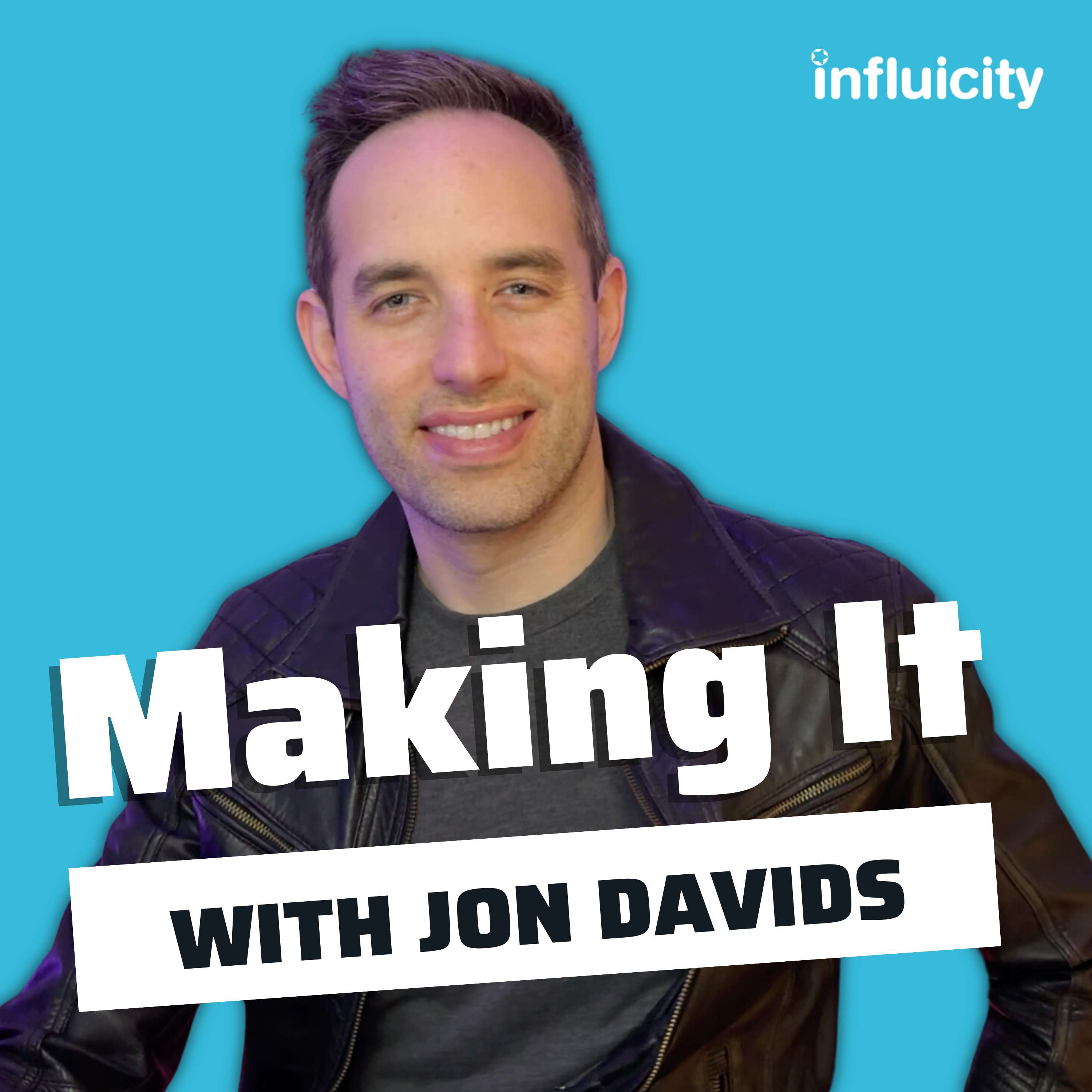
Making It with Jon Davids
162 - This is What We Predict for 2025 | Daniel Rowles vs. Jon Davids
00:40:08
Loading summary
Transcript43 lines
- [00:01]
John Davids
What's up, guys? JD here. And today it is the 2025 predictions episode and I'm doing it with my special guest, Daniel Rolls, host of the Digital Marketing Podcast. Now, if you're a fan of this show, you probably know the Digital Marketing Podcast because it is also a top 10 global marketing podcast and they've been there for a lot longer than I have. There is so much to go over with Daniel. We get into AI, we get into creative social media and why he thinks so many businesses are going to fail in in 2025. That's coming up in just a sec. If you're a fan of this show, make sure to hit the subscribe button wherever you're listening. Apple, Spotify, and of course, leave a rating, leave a review. I really appreciate it. All right, now let's get to my conversation with Daniel Rolls. You're listening to Making it with John Davids. Daniel, this is the predictions episode 2025. Let's kick it off. What is your first prediction in marketing for this year?
- [01:08]
Daniel Rolls
So I'm going to start with a real cheerful one and I'm going to say business failure rates are going to go through the roof. And I mean that from the point of view. There's a couple of reasons for that. The first is we've obviously got the generative AI stuff going on and everyone's very excited about it and it's opening up all sorts of new opportunities. But what it's also leading to is a situation where you'll launch something new. A startup comes into the market, whatever that startup might be, and suddenly it's baked into an AI platform elsewhere. So we're seeing huge amounts of that kind of happening. We're also seeing lots of people coming to the market, but lots of incumbents already in the market. And if they're not being able to innovate at that appropriate rate to build some of this AI functionality into what they're already doing, their product just isn't staying pace. And one of the things that I do is I teach digital transformation strategy at Imperial College. So Imperial College, as a university in London, we're ranked second best in the world. So we've got MIT then ourselves. And the program I teach is basically digital transformation. It's really saying, where are you now as an organization? Where do you need to be to operate in this fast changing environment? But what you're really talking about is how do you bake agility into an organization? How do you create an organization that can change quickly? Actually, large organizations are not good at Changing quickly. So this has been going on for a long while. We've seen for quite a while that actually what's happening is that the market's changing rapidly around us. Organizations aren't changing quickly enough to stay pace, but that's just getting worse and worse. And I think the environment with the pace of change we're seeing with the AI stuff is actually meaning that if you haven't got that agility, the struggle is getting kind of worse and worse. It's a real challenge because you're getting behind and then playing catch up is getting incredibly hard because for a large organization there's a lot of building blocks you've got to place in the first place to be able to even get there. So it's tough.
- [03:02]
John Davids
When you talk about business failures, are you seeing that more in the startup world failure, or are you saying that established companies are going to start to fall like dominoes?
- [03:12]
Daniel Rolls
Yeah. So what we've seen is that it used to be, if I took you back three years, the stat was it was about 70% of business disruption. So someone entering a market and disrupting in some way was done by startups. So you'd have your kind of credit card app would suddenly turn up and it was competing with the major banks. Okay, so that was that level of disruption. What's now interesting is a stat we looked at Imperial College a couple of weeks ago is 72% of market disruption is now by industry incumbents. So suddenly people in the market are starting to adapt and adopt these kind of things, which means if you're not, you're at risk from startups and competitors that are being smart about this. So actually we're seeing a faster failure rate with startups because there's so many ideas being thrown into the market. It's so much easier to launch stuff now with AI that a lot of it's failing, maybe because it's not a great idea, maybe because it's not really planned out particularly well, haven't understand the customer need and so on. But also we're seeing existing organizations getting disrupted more quickly as well. So in a large market where you have lots of infrastructure in place, so if you were to look at retail, you know, getting a new grocery retailer coming to market is not an easy thing to do because you've got huge infrastructure that sits behind it. But actually if you are a university is a great example. If you're a training business, actually you can do some really smart stuff that used to be really hard to build. And it infuriates me I mean, you know, Target Internet is basically a training company. And what we see is that we're having to innovate more and more quickly to stay up to date with things that people now can just buy off the shelf and throw into the market. So unless we really get our brand and understand what differentiates us and so on. So what's interesting is you've got to adopt this kind of innovation process of being really good at taking things to market quickly, experimenting and so on. You need a culture of learning because you need to be constantly learning about this new stuff. But actually to go back to the old school as well, which is to say, what's our brand? What do we stand for? What do our customers actually want? And you need all of that stuff aligned. And a lot of us haven't got those fundamentals right.
- [05:14]
John Davids
It's so true. AI is kind of a double edged sword in the way I see it in that you have obviously and this is so over discussed, I won't even get into it, but you know, lots of potential, opportunity, scale, et cetera, et cetera. But the other side of it is it's creating a lot of laziness and a lot of over alliance. And I see this even with my own peers and colleagues, not in my company per se, but others where I'll be looking at, you know, they'll send me a piece of copywriting they've done or they'll say, hey, I just wrote a new, you know, a new tagline or a new thing for our website. What do you think? And they'll say I just wrote. And then the, the spiel they send me clearly was written by ChatGPT because I can see all the telltale dive into this and Dell and say, okay, you didn't think of those words and if you did, you're not very good at this because it sounds like a robot wrote it. I feel like there's a bit of a laziness and people are getting ahead of their skis. I think AI will get there in two, three, four years. But these days people use it as though it's like the smartest friend or the smartest colleague they have. It's really not there yet for the most part. And then, you know, but the reason I say it's double edged is because the companies that do know how to work the prompts and actually use it in the right way, there is a lot of potential there.
- [06:20]
Daniel Rolls
Yeah, I think you're absolutely right. I mean we've done a lot of surveying around this and we've seen that when we ask most organizations, something like 70% of them have dabbled with ChatGPT, for example. So they played around with it, they test out, maybe got to write some stuff. They haven't got to the stage of teaching it tone of voice effectively, of building it like a cancel list of words. Do not use this phrase, you know, exactly some of the phrases you were just talking about. And actually it's that whole piece of learning and staying on top of what is the latest large language model with. Even with ChatGPT, you know, how more effective is this version, the previous version, are we utilizing it effectively? And so on. So there's that big differentiator between learning as well. And I think if there's one big superpower for companies that are going to do well in this environment, it's that culture of learning piece. It's, you know, if you've got that thing of yes, we do send people to training courses, but also are they listening to podcasts? Do we have peer groups that are getting together? Do they have a community that they're part of? Because that, you know, that community engagement to make a huge difference. That's the stuff that's embedding the learning in. And it's gotta be that culture of learning that it means it's ongoing. It's not just an add on, it's not something, you know, once a month we go off to a training course, have a bit of a jolly and, you know, come back and just carry on as business, as normal. Because you can't have a culture of innovation without having a culture of learning.
- [07:37]
John Davids
I love that. Yeah, it's a good segue actually to my first prediction, which is I think we're going to see a lot more reliance and leaning into the creative as opposed to the quantitative. And you know, when I look at our clients over at Influicity, for the longest time it was all about what's the cpc, what's the cost per conversion. It was, you know, very, I call it marketing math. And that was really all it ever was. And, you know, it still is that because you need to obviously make sure that your dollars are flowing and moving the needle in the right way. But I think what we've seen with the platforms is that creative is really winning the day. It doesn't matter if you have 3, 4, 500,000 followers on Instagram, your content sucks. That reel is not going to be seen. And the flip is also true if you have 2,000 followers on Instagram, but you put out a banging piece of content, it's going to do really well. And I feel that this is sort of shifting our clients at least into understanding the value of creative brand community. All those fuzzy words that we talk about, but no one really knows how to calculate the value. And now I'm actually seeing, hey, if you do, you know, content A versus content B versus content C, this is gonna do a whole lot better organically. Way better. I mean, you'd have to spend a ton of money to get this, this kind of reach through paid and you're able to do it organically and people are actually sharing it and we're seeing all those metrics. So I think a move to leaning on creative as opposed to just trying to get the marketing math done, that's something I see happening a lot more in 2025.
- [09:05]
Daniel Rolls
Well, great, great minds think alike. Cause one of my others was marketing goes back to the old school. And what I mean by that, and.
- [09:12]
John Davids
I'll say it so much better than me.
- [09:14]
Daniel Rolls
Well, I just think there's this, if you look at where we are, it's harder and harder to stand out. There's more and more noise, there's more and more AI generated tsunami of terrible content. Like all that stuff's there. And then we've also got two other kind of things going on that are really interesting. The first one is that whole piece of the algorithms don't want you to leave the social platforms. So you end up with, you know, if you put a link into your content in most platforms, it's not going to do as well as if there wasn't a link in there. Okay, so there's a, there's a small incentive not to drive people away. But also people don't want to click out of the social platforms particularly. They want to stay in LinkedIn, they want to stay on Instagram, they're quite happy sitting within the feed. Not to say that you don't, you know, you can't link out at all, but if you look at those two things, we end up in a no click environment where you're scrolling stuff is getting your engagement, it's making you think it's driving search behavior afterwards. You are going on to do something afterwards, but your analytics can't tell you that. And this is a huge issue. So we always used to say, well, what happens if you click through from a social platform, from LinkedIn, from Instagram, then I leave, then I come back and I visit twice from Google and then I convert. I do the thing you want me to do and you Say, well, it's okay, we can untangle that because Google Analytics 4 has got great attribution modeling built into it, and we can look at each of those steps and I can tell you, yeah, that social media post had an impact. The problem is now what's happening is you're seeing the social. You're scrolling, you're stopping, you're engaging with the content by looking at it, by watching it, by reading it, then you're not clicking. Maybe another day you're searching for something, suddenly you're on my website from Google. So suddenly this solution we've talked about for years is like, oh, we can measure. Everything in digital marketing has gone. Because attribution modeling just doesn't give us the level of insight it used to do. And the reality is, actually, you say, well, marketing in 2025 is like marketing 1965 then. Because actually, what you need to do is come up with an amazing creative concept. You need to get it in front of the right eyeballs, and then hopefully they'll do your stuff, they'll buy your thing. Well, that's. That's the madman area of great advertising. Right. It's coming up with these. These great kind of concepts that really resonate with the target audience. So we've gone full circle a bit.
- [11:26]
John Davids
It's totally full circle. And it's the attribution mirage. People feel as though, because they can see something, somebody clicked to my website from Google and it cost me 74 cents. I can attribute this client to that. But you didn't see the six pieces of social content. They saw the billboard, they saw the commercial, they saw the ad, they saw the friend who told them about it, and then they saw an email and then they clicked. And so it's complete. You know, it makes you. It's the old expression, 50% of my marketing doesn't work. I just don't know which half yet. You still don't know which half, even though Google has convinced you that you kind of do. There's a whole lot of missing information there. And I think you just kind of summed it up properly with, yeah, they've landed on your site today, but there was three months of activity that you just can't see.
- [12:10]
Daniel Rolls
Yeah, and I think that we've been fooling ourselves for a long time because we came into digital marketing. So you can measure everything now. And actually, Kieran, who I do the digital marketing podcast with, is this great expression of saying, really what you're doing is measuring the least wrong thing. So, you know, because really, what you're trying to do is work out how somebody's head works, okay? And you're trying to do that and how they make decisions when they don't know why they make decisions, they don't really know why they prefer one brand under another. They don't even notice half the interaction points they've had by seeing a billboard or, you know, whatever it might be. And Kieran always tells a great story, which is that he was working this E commerce brand and they'd set a load of kind of stuff running. And then they come in on the Monday and sales have gone up 2000% and everyone's like, wow, this is exciting. Let's look at the analytics. And they see an increase from search, from direct traffic, people typing a website address, from social and from email and they're like, this doesn't make any sense. And they're sitting there going, well we ran this campaign and that campaign, they try and untangle it and then suddenly they notice that they got a two sentence mentioned in a national newspaper over the weekend and suddenly people saw it, they googled them, they typed in a website address, they went to their social, they clicked on emails that already had. So sometimes, you know, you're not getting the full picture in there. Maybe you can untangle it, but maybe you just won't know. And I think it's kind of going back to saying yes, we can measure, but it doesn't tell us the full picture. And actually, exactly to your point, it's creative that matters and it's that alignment.
- [13:37]
John Davids
It's so insightful. That line you just mentioned about how even consumers don't exactly know why they choose it. I'd mentioned, I just came back before we heated up the mics, I told you, I just came back from vacation with the family and I stayed in this area where there's just a row of resorts and you had a lot of nice hotels, the Four Seasons, the Ritz Carlton, the Conrad. And there's sort of hotel after hotel and we stayed in one of those. And if you ask me why did you pick that over the other seven you could have stayed in? I honestly have no idea. Maybe I just have a good feeling because I've seen them before and a friend stayed there, I heard a nice thing, but I don't actually know. It wasn't price, it wasn't because I had any direct experience. So consumers don't exactly know why they choose what they choose. But there's definitely something happened in the brain. And yeah, all I can do is sum that up to brand.
- [14:21]
Daniel Rolls
Yeah, I give you another example of that, which is where you could partially measure it, but actually it's more complicated is that I stay in hotels two or three nights a week. So I'm backwards and forwards where I live, doing training. So I'm constantly in hotels. So my first kind of measurement is is it a Bonvoy hotel? Because if it's not a Bonvoy hotel, I'm not standing because I'm not getting points, because I'm using those points for my personal stuff, you know, after I've spent all this kind of business time in hotels. So okay, that's going to limit me to some extent. But there are a huge amount of Bonvoy hotels, huge amounts of brands from very, very expensive to really low cost value. So then what happens is I go in, I look at the area, I look at availability, I bounce back and forwards, I'm doing Google searches, I'm on TripAdvisor, I'm looking where I've stayed previously, I'm looking. So there's so many steps going on there. Now the ones that that particular brand could measure, they could see probably 50% of the journey, whereas 50. And even though there's a huge amount of interacting with their website, with their app, comparing prices, there's still so much stuff going on in the background that you can't measure. So even your data rich doesn't mean you've got the full picture at all. So I think, yeah, going back to the old school, focusing on creative and actually I think getting web marketers, digital marketers to think like journalists and from the point of view that anyone can write an article. But why, why do you buy a newspaper? Because everyone's got an opinion on the news. You buy it for informed opinion, for research, for insights that you can't easily get elsewhere, that these people have qualified themselves to write about these topics. And that's what we need to think about is if I want to be the person that people read, I need to have those journalistic qualities, whatever the topic is, that I need to create content that actually stands out by being exceptional in some way.
- [15:59]
John Davids
So good and so accurate. I think a lot of brands would do themselves well thinking about themselves as journalists versus marketers. Let me jump over to my next which sort of kind of dovetails on this, but I think, and I just wrote down these two words, I'm not even sure if I have a solution, but I have a prediction. I wrote down the words marketing exhaustion. And the reason I think marketing exhaustion is because When I go onto Twitter X these days, or Instagram or TikTok, I see so much copycat content of brands trying to look and feel like what they think people want to see. It's like authenticity by copying everybody else. It's not really authentic if 1700 other people are doing this. And I've seen this for years. There was a point when Gary vee came out 15 years ago, and then everybody's content started to look like Gary Vee. And then it was, you know, on Twitter you have threads, and now everybody's threading about all these different topics. And, you know, this guy did this. And I think I've seen the same thread about the guy who created Soracha 15 times, you know, and everybody wants to tell the same stories over. And I feel like there's really a gap in the market to be completely different. And when I say different, I don't just mean the same as everybody else. But now it's your face. I mean, really try different creative formats, different types of storytelling, really thinking about the platforms. And this is also where best practices get in the way because people hear things like, oh, you know, it should be three minutes, it should be two minutes. You need to. This should be your hook. I feel like a lot of the time brands would do well to kind of throw everything out, think about what works for them, and then maybe after they have their creative down, try to fit it into some type of digestible story format, you know, that works for people. But, yeah, I'm just seeing marketing exhaustion. Are you seeing that at all?
- [17:42]
Daniel Rolls
Yeah, I mean, this has been a thing that's been getting worse and worse for years, I think, in that as marketers, you're constantly. It's one of those careers where you are constantly playing catch up. There's always something new to try. You need to get more stuff out the door. No one else you're working on really understands what you do. Like, why aren't we here? Why aren't we doing this? Why don't we rank for this keyword? Why aren't we on TikTok, et cetera, et cetera. So there's always been that acceleration that's led to more and more noise. AI has made it tenfold worse, I think, in terms of the amount of low quality content out there. But to come back to your point, this is a great interview we did the other day with Jay Sweddelson, who does the do this, not that podcast. Really great podcast, really worth listening to. And Jay always tells the story. And he was Inbound. And he was telling the story and said he's going to start doing a podcast. And he starts interviewing, you know, various people. And he's just sitting there thinking, oh, man, this is just. This is the form that everyone else is doing, not the interviews are bad. And. And basically to say that I wouldn't listen to this, so why am I doing this now? We would always. Yeah, if I was teaching podcasting, they would say, what. What's the optimum period of time for a podcast? And I would say, 30 minutes. 30 minutes is great. And that's from like, we've got huge amounts of stats. We're doing podcasts for 15 years now. And it's like we can see those stats go, right, that works for our audience. Doesn't mean that's optimum for our audience. It means that's what they're tolerating or they seem to like. It works for us. Doesn't mean something else couldn't work. And what Jay went in and did, which was kind of clever, was that he went and did 12 minute monologues. He would go in and he would just talk at the camera about something. He's got kind of got prepared, really passionate about it, really properly authentic. And the authenticity thing is really fascinating because, yeah, everyone else is doing it. That's great. He did a thing where he was at the inbound conference and he did a meetup. And at the meetup, he, rather than having a huge stand that he paid a huge amount of money for, he just had loads of swag to give away. But one of the biggest things of that was stickers. And I think he had about 20 different stickers printed. But what was amazing is when he looked at the stickers and I'll send you a picture of some of these. You can drop into the show notes as well. Essentially, they had no branding on them. It was literally like, it was like, he loves reality tv. So there was loads of stuff about, you know, if loving reality TV is wrong, I don't want to be right. And just stuff like that kind of fun stuff now. You know, we had a discussion, I said, but there's no branding there. Like, you're, you're doing this stuff, people seeing it, they're not walking with your brand. And he said, no, but they have a memorable experience. Because what happened is you went to this meetup, they were all laid out on the table, you had to kind of work through them. There were mobs of people kind of coming in and it was kind of fun. So he's authentic to the point. What you see is what you get. The brand is kind of like, he's very honest about what he likes and so on. That works. He tried a different format for his podcast, Short Sharp. That worked. And he's giving people an experience. So, yeah, doing something different. And I think that that works.
- [20:30]
John Davids
It's so true and it's funny. This is getting very met up because. And I'll talk to you about this offline, we're making some changes to this podcast. For 2025, it's been going super well. We're, you know, we're ranked at the top of the charts as you are in the top 10 globally. And one thing I've noticed is episodes that I really enjoy doing. But you would look at the best practices, quote unquote, and say, well, people won't like that. The length is wrong. Maybe you don't have a guest or you're talking about this or that and they're not interested in it. And the funny thing is I actually enjoy doing those episodes better and they perform better. And so that makes me think, I was thinking about this over the break. I thought, well, if I like doing it better and people seem to enjoy it, who cares that it's off? Best practice. Maybe the best practice is whatever I'm really good at. And people seem to be enjoying. Just like you mentioned, the 30 minute episode on the digital marketing podcast, Joe Rogan goes three hours, four hours exactly. You know, so who's right? I don't know. You guys are both doing well. So it's interesting how you really get caught up in this spinning wheel, hamster wheel, like I say, and you end up in the world of marketing exhaustion. But when you just start to think about what's actually something that I would do if I wasn't on the clock, if I had nothing to sell, what would I do that I enjoy? Hey, it's giving out stickers at a conference, talking about how I love reality TV and that's going to connect much better than a $50,000 booth with. With a big sign.
- [21:49]
Daniel Rolls
Yeah, and exactly that. And I think what's interesting with that, we normally do three people doing the podcast having a discussion and we do interviews. Both formats seem to work. I asked the audience what you prefer. They said, no, a mix of both is great. Okay. And then suddenly, just before Christmas, we've done the last recording session, the other members of the team are off doing their thing and I was like, I want to get this out, so I'm just going to do A monologue I'm just going to. And I never do that. I never kind of do that. I've always thought it's really not a great way of doing it. So I just did it 12 minutes and I said, by the way, at the end, is this format useful? Because what we might do is we might actually increase the frequency. We'll do the normal ones, but I'll drop these in between when I've got something I want to talk about. And I got a flood of comments on Spotify, people saying, yeah, this is fantastic. And actually if you look at the kind of average numbers of where we are with downloads, that particular episode, and I think the duration helped as well, and maybe timing, there's so many variables, is actually doing better than average. So I don't think maybe if we only did that, we'd do well. But actually mixing up, experimenting with formats, exactly as you said, that that's what you can actually learn from and start working out that optimum mix and be open to that experimentation. You might have to do that within a framework if you're working for a particular brand. But actually, you know, format doesn't necessarily. A brand doesn't have to define an exact format. You can play around with that.
- [23:08]
John Davids
Marketing executives, business owners. If you are running a company and looking for a fresh perspective on how to grow that company, take a look at Influicity, that's my marketing agency where we work with brands across influencer marketing, podcasts, social media, AI content, paid ads and so much more. But don't take my word for it. Go to Influicity, check out our case studies from all the amazing clients we've worked with over the last decade. That's inf l u I c I t y influicity.com and I'll see you there. Your third prediction, Daniel?
- [23:44]
Daniel Rolls
Well, this is a an interesting one in that it's moving pretty quickly, is that AI agents, we're going to see a whole industry building around this. Now that won't inherently be a good thing at the beginning. So if people aren't familiar, the idea of an AI agent is an AI that you can get to do a particular thing, but you kind of string these things together and you can get them to do sequence of things. But actually if you think about an app store where you have got, you pay for access to certain apps, we've already seen within ChatGPT, where you have got the custom GPTs, where other people are creating their own versions of ChatGPT connected quite often to an External tool. Well, agents is a kind of step further from that, that you can give it something, a document, a file, whatever it might be, it can do something to do it and it can pass it back and you can move these between the different agents. What it's going to mean is that you're basically going to have lots and lots of microservices online.
- [24:38]
John Davids
So I've heard a lot about AI agents and I've been digging into them. I was listening to a podcast with Marc Benioff. I think they have agentforce.com now, their new service. So can you give me an example in the marketing world of what a marketer might use this for?
- [24:51]
Daniel Rolls
Yeah. So for example, HubSpot are doing some really interesting stuff. So if you go to agent AI, they've launched up this platform where you can play around with this as well. So for example, they'll have one where you pass it a company name. So I could pass it Target Internet and it will come back and it will go right, these are the top five competitors. Here's a competitor analysis in that market, but it's very fine tuned to do a very specific task and it has to be done in a way that is slightly better than other platforms are doing. But the idea in the longer term is that you can take these and kind of string them together. So maybe I want to build a marketing strategy and there might be an agent that's really good at doing competitor analysis and one that's good at doing market research, one that's connected to a social media listening tool that will allow me to go off and get really good in depth insights. And basically what you're seeing is the ability to use these services, string them together and create something with them to some extent.
- [25:45]
John Davids
So if I wanted to do, let's say as you said, a market analysis, so I need to do an environmental analysis, I need to do a SWOT analysis, a competitive analysis, instead of having people sit there for hours and hours and collect this data. That could all be done in a matter of minutes with robots.
- [25:58]
Daniel Rolls
Yeah. And the key thing here is that if you think about it manually, it adds some speed to what you're doing. That's fine. But if you start thinking about stringing these things together using an API programming interface, I can suddenly build a website and say, okay, well I want this website to offer this functionality. I'm going to use those 20 different agents, put them together in a certain combination, build something and output something that other people can't do. So it's basically taking a Lot of the stuff that's out there at the moment, but building it together into building blocks. And suddenly you think, well, at the moment I've got a programmer that does that. Well, actually you could have a drag and drop kind of interface that allow you. And that's what this, they're doing at HubSpot with this agent AI. And it's Dharmesh, one of the founders of HubSpot. This is kind of a side project that he's kind of gone off and done and built. He likes to talk about these things. But it's really interesting because you suddenly go, well, I don't need developers to do a lot of these tasks now. I can bring together things to improve my own productivity, but I can actually create a new product or service very quickly as well. And if you think about like the idea of a microservice, if I could just pay a couple of cents to use that particular service, suddenly there's something there that becomes a whole kind of interesting marketplace as well. So I think that it's worth looking at. I think it's overhyped at the moment in terms of what it's actually capable of. But we're at the very beginning of it and it starts to get quite interesting. Now, on a kind of side note, connected to this, these idea of these standalone AIs, we did a big panel and we got a load of leading researchers into AI. So we had Cambridge University, Imperial MIT and a few others. And we said, do you think AI will be a good thing in the short, medium and long term? And the answer was quite interesting and slightly disturbing was short term brilliant productivity experimentation, Loads of interesting things. Midterm, lots of concern about deep fake video in the, you know, the societal impact of very, very perfect deep fake video will get, you know, bigger and bigger. And we've got, we need to think about how we manage that, how we regulate it. If we, you know, what are we going to do about it and how are we going to cope with it as a society when you can't trust anything you see anymore? And then the third one was long term worried. It's like, why? Why is that? And it's when AIs can create AIs, you start getting into a very strange and unpredictable world. And I think agents are kind of maybe the first step on this, where you've got these autonomous AI agents doing tasks. If they are trying to do a task that they don't know how to do, can they work out and learn how to do that? And then you Start getting into security risks and all sorts of things. So I think it's fascinating, I think it's one to keep an eye on. I think pretty early stages, but we will see a number of markets developing off the back of it. And actually trying to be the hub of where all these things live is kind of maybe what HubSpot have done. The first steps into agent AI, the.
- [28:39]
John Davids
Professional network for AI agents. And I remember hearing Dharmesh on a podcast talk about this and I think the way he described it was almost like LinkedIn for AI agents, but a job board slash marketplace app store where you could go and find agents that do specific things, which I think is very smart. And by the way, on that study, in terms of AI, good, bad, in terms of the short term, medium term, long term, I think the long term impact of AI, and this is just a pie in the sky thought, is it's very, very hard to imagine it would be like asking a caveman what's the world going to be like when you have cars, computers and airplanes. Like, you can't even picture that because it's such a different world. You know, likely what, what will happen is that in the long term, when AI gets to that level, we as a human race will have advanced and created laws and sort of regulations. But the only caveat there is, depends how fast Are we talking about 20 years in the future or are we talking about two years in the future?
- [29:34]
Daniel Rolls
Well, this is the problem. I was asked to go to the House of Commons in the UK and we ran a debate. So the House of Commons is basically the centre of government and you've got cross party all there. And we ran this debate about the risks that AI was posing or how you should regulate it. And the point we were making is that you can't regulate it. And the reason you can't regulate it is because it's moving faster than the regulators will ever be able to. And you only need to look at cryptocurrency to kind of see this in context. That the major financial regulators in the uk, for example, said, well, we're not going to regulate crypto because we just can't keep pace with it. And it's led to all sorts of scams and problems and kind of challenges around that as well. So if you've got something you can't regulate in the normal way, how do you kind of manage that? And it means to some extent that brands have a big role to play in this, because if a brand says we will do this, but we won't do this. And you can trust us. And if you interact with us, we're using AI in a responsible way. It's a bit of a differentiator. So it means there's never been a more important time to have a trusted brand. But it's also probably the easiest period in history to destroy a brand very quickly as well. Because you have one cyber leak of some description, something goes wrong, people don't trust you anymore. You're found to be using something that's a fake that, you know, you said was real, and so on. So I think leaning into things, and there's this great expression that I heard from Professor Celia Moore, Imperial College, and she's the ethics professor, and she always says her job is not to tell us what's right and wrong, but it's to get us to challenge the way that we're thinking. And she says when everything's fake, you need to lean into your humanity. So the idea of like, in our brand, what makes it human? And it's about community, it's about human interaction. It's about all those kind of things that have always been important. Narrative storytelling is those things that have always been important. But actually maybe we've not used them as much as we possibly can. And I think it's nice because it threads together a lot of the things you said, John, which is about, you know, talking about creative being really important again as well. Going back to really thinking about how we could approach, do things differently and stand out. That's all about leaning into our humanity. So I think the more everything becomes fake, the more that human stuff becomes important.
- [31:37]
John Davids
So my final prediction, and I think this might be over discussed, but you know, there's two guys on this podcast that if anybody should talk about it, we should, and that is the rise of podcasts. We saw this enormous rise in the US Presidential election. I think podcasts, many people would say, were a defining moment for Trump, you know, in terms of just putting him out there into a whole new audience in a very authentic way. He was never gonna get that on Fox News or cnn. And I think podcasts as a whole, people hear these numbers. You know, there's 5 million podcasts, and it's very competitive and, you know, yada yada. But I always say is, yeah, there's 5 million podcasts, 99% of which have less than 10 episodes and haven't published a new episode in four years. And let's be honest, most of them are garbage. They're not, you know, done by people that have Put in the hours and hours of work, I think you said, you know, how long were you doing your podcast for Daniel before you'd say it really took off?
- [32:31]
Daniel Rolls
Yeah. So we've been doing it for 15 years pretty much now. And I think it was the first. It was the first 18 months, two years before we got any traction at all. I mean, literally, we were putting out episodes regularly, and we were just speaking into the void. It just felt like nothing. And then it kind of hockey sticks because what happens, you get a bit of an audience. They start to talk about it. You might end up in a chart somewhere. If you're in a chart, you get found. Your discoverability gets better, and it. It kind of builds up. I mean, we obviously had first lead advantage and that we were, you know, in podcasting really early on, but it took a long time.
- [33:00]
John Davids
It really does. So, you know, and my story, I took even longer. I think I started publishing in January of 2021, and now we sort of, at the end, I would say Q3 of 2024, we started to hit the charts, and then we just started to fly. And now I see the numbers. We've gone from dozens of listens to hundreds of listens to thousands and thousands of listens per episode. And so that takes a long time. How many people can publish 150 episodes like I did, where nobody's listening, or a few hundred episodes like you did and really just stick with it? It takes a certain amount of perseverance and persistence. You have to also kind of enjoy what you're doing enough to. To kind of, you know, hit the mic, you know, a few times a week. So. But. But I do think on the. On the flip side is that once you have a podcast, the engagement with the audience is really unlike anything else you would. You would see in marketing. Have you had any experiences where you've seen the podcast deliver in a way that other formats just don't?
- [33:56]
Daniel Rolls
Wildly. I mean, yeah, it happens all the time. Because if you think about it, if we go back to our leaning into your humanity piece, you can read an article fine. You can. You can watch a video to some extent, but something about listening to audio when you're doing something else. So, I mean, video podcasts work great. What was interesting for us is we moved to video. Huge increase in cost. We'd have to get everyone, fly everyone into the studio in the same place. You've got the video crew. We're doing all that. We did it super freshly. We had four cameras set up, panning cameras face Cameras, the whole thing. And I looked at and went, that's probably 3% of audience that are actually watching the video as opposed to listening to it. Because people like to listen when they're doing something else. And there is something about listening that kind of triggers your brain in a certain way. You're listening to someone's voice, you mean? And it's very human and it's conversational. And if I give you an example, we quite regularly get emails. I say regularly. Maybe once a month we'll get an email as someone saying, but listen to your podcast for ages. And I was super fed up with my job. And it's really. It encouraged me to start my own business or encouraged me to change my career, or I understand something now that I wasn't confident about before, and it's like, wow, that's. That's the stuff that's pretty. Like, okay, people are really connecting this. I didn't even know this person was listening. And suddenly they've changed their life in some way because of the podcast. So that's. You wouldn't get that from writing a blog post, I don't think. I mean, you might do for an exceptionally good blog post, and it hit the right people, but, you know, it's much easier to connect in a human way via someone listening to your voice.
- [35:16]
John Davids
And yeah, you connect on a different level. And now what I'll tell you is the downside of it or where brands go wrong. So at Influicity, we make a lot of podcasts for a lot of brands. And. And, you know, we try to balance what we know works versus what they're asking for, which sometimes are sort of at odds with each other. But where brands really go wrong is they look at it like a commercial platform, as though people are tuning in to learn about their brand. And what I will tell you is that nobody is tuning in to learn about your brand. They're tuning in to be entertained, educated, or inspired. And those are the three things. You have to hit at least one of those three things.
- [35:50]
Daniel Rolls
And.
- [35:51]
John Davids
And the brand comes last. We do. I mean, I do episodes of my podcast where I'll do a whole episode and, you know, I'll put in a commercial maybe for my company, but I'll put that in after many, many minutes of delivering value. Cause I want people to actually stick around and listen and get something out of it. And by the way, consumers aren't stupid. If you do a podcast and you don't mention anything about your brand, just like the sticker story you mentioned, they're gonna seek you out. They're gonna go to Facebook and Instagram and Google and LinkedIn and. And find you. So you don't need to hammer them over the head with your brand. You can say, hey, I'm John Davids. Here's a great story. Here's something that you can learn today, and that's enough that they will seek you out.
- [36:30]
Daniel Rolls
Yeah, I completely agree with that. And what was interesting is I've always been really nervous in the podcast of mentioning the brand too much or like, saying, we've launched this amazing new thing. I wanted to tell you about it. And I actually went out to the audience and went and said, look, if I want to just drop in a little segment about what we do, how do you feel? And everyone was like, we got literally thousands of emails, people saying, that would be fine. There's no problem with that. Actually, you know, like, we trust you. You've built that up as well. You're providing a value. It's a bit of an exchange. And actually, because I'm talking about what I'm passionate about, I'm talking about the team did this, and we went here, and this was a disaster. And one of the things we've learned works really well. And this is how the podcast started. It started as a bit of a therapy session between me and. Me and Kieran because we would. We would. We used to meet up, like, once a month and just go, oh, this didn't work. And that didn't work. And I can't get the pay per click to work. It's just the cost per click's too much. And we'd kind of have these discussions. And then we thought there must be other people feeling like this is a bit of a struggle. So let's. Let's record a couple of them. And we would just discuss what had worked and what hadn't worked. And there was none of this, you know, make. Make $10 million in two weeks. It was kind of really like, well, that was an abject disaster. And. But that was pretty good. And that was fun. And I don't like this. And actually, it resonated. And because of that, then we built the trust. So therefore, when we did mention the brand, people are kind of. They were. They were fine with it because they trusted you already. And that's what you're building, is building a brand, is building trust. So I think that's important.
- [37:51]
John Davids
Let's wrap up the podcast convo by talking about what success looks like. How do you know if what you're doing is working. We talked about this before a little bit about how there's charts, obviously the Apple charts, chartable, just shut down. But there's still the Apple charts, the Spotify charts, where you can see how you rank and that can be gamed. People can do all kinds of things to sort of work their way up the charts. But in terms of listenership or audience response or rankings, how do you know that a podcast is working?
- [38:18]
Daniel Rolls
For me, it's a long term goal, but it's the unsolicited connections and actually lead generation. So we're, you know, we're B2B fundamentally. So we are selling a service, a subscription to an online learning platform. And what I'm basically seeing is if someone, I get an email out of the blue saying, oh, I've got a team, I'd really like you to come up to school. It's like, where do you. Oh, I've been listening to podcasts for ages. You don't have to have thousands of those, but you just need if you're seeing a steady flow of people communicating with you. And actually for me it's response. It's if I ask a question in the podcast and I get a load of emails or I get a load of newsletter signups, or I get people leasing comments in Spotify, I know it's working because it means that they're listening and they're making enough effort to go and do something, even if that's leaving a comment, it means they might be willing to do something else. So a very, very low percentage of engagement versus the major audience is showing me, okay, these people are listening.
- [39:11]
John Davids
Bottom line. It takes time, but it's worth the investment.
- [39:14]
Daniel Rolls
100%.
- [39:15]
John Davids
Daniel, we've covered a lot AI creative businesses failing and so much more. Any parting words you want to leave with people for 2025?
- [39:23]
Daniel Rolls
I think coming back to your point about focusing on creative, thinking, about being a journalist, thinking about storytelling, those things are always going to hold true. And the more we can focus on that rather than trying to find the latest great trick to kind of game the system, forget the algorithms and focus on the human connection.
- [39:40]
John Davids
Happy New Year everyone. Daniel, thanks so much.
- [39:43]
Daniel Rolls
Thanks for having me.
- [39:44]
John Davids
Thanks for listening. Hope you enjoyed this episode. If you haven't already done so, make sure you subscribe to us wherever you listen to podcasts and let me know what you think of the show. You can get me on Twitter. Eel John Davids R E A L J O N D A V I D S of course. Hashtag making it. We'll talk to you guys next time.