← Marketecture: Get Smart. Fast.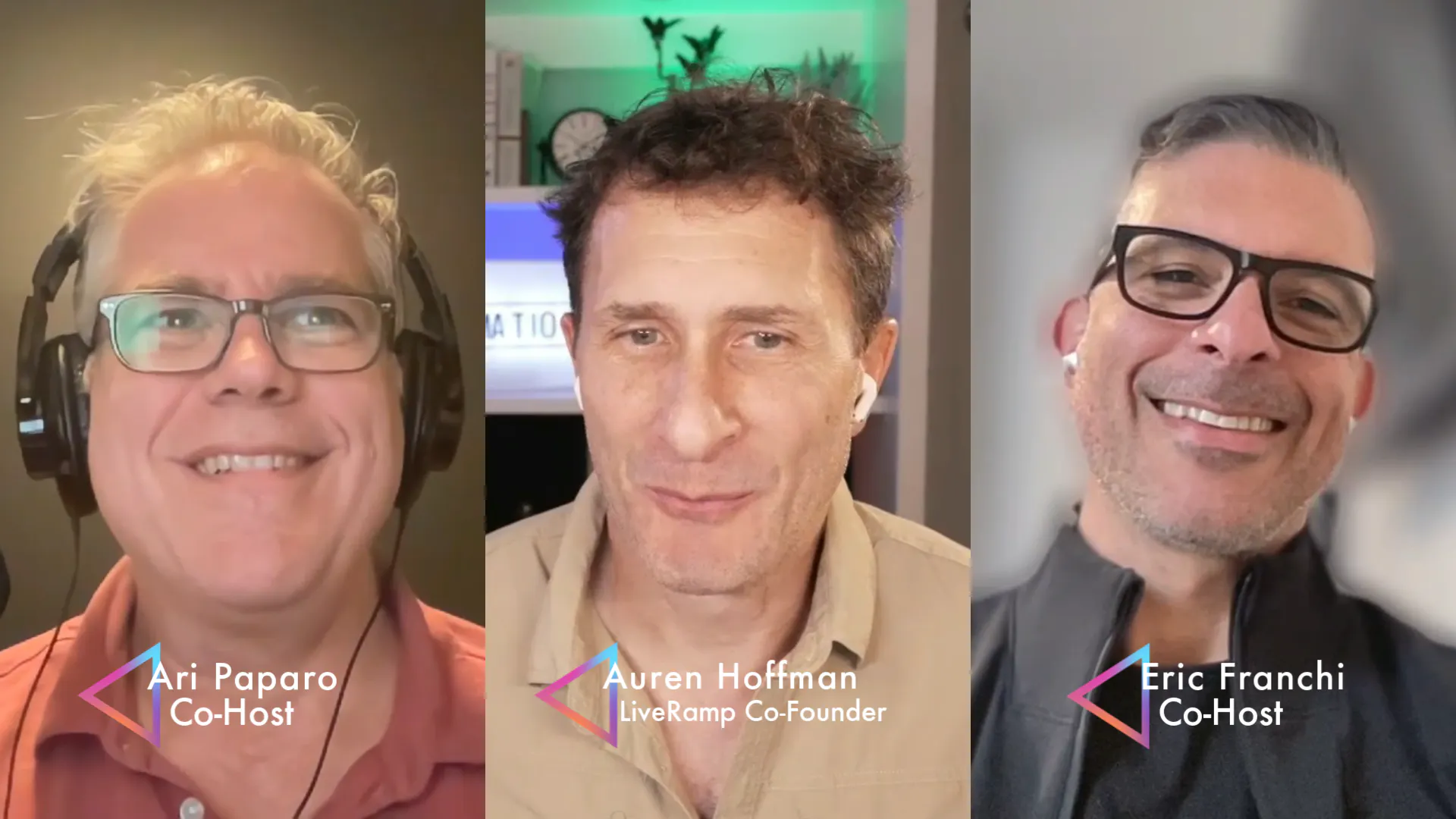
Loading summary
Transcript156 lines
- [00:00]
A
Hey everybody, this is Ari. Here's a quick heads up. If you're going to be at Cannes this year, I'll be there as well with the team. And we're going to do a handful of one on one podcast recordings throughout the week. It's pretty straightforward. You pick the topic, we sit down, have a conversation, and publish. So if you've got something you want to talk about this year, like a launch or your perspective, whatever it is, it's a good way to get out there. We're only doing a limited number of these, so if you're interested, go to our Cannes lion events page@marketecturemedia.com that's@marketecturemedia.com. look forward to seeing you there. This podcast is brought to you by the Build, a new podcast from the guys behind Sincera, Michael Sullivan and Ian Myers. They built their company by figuring out clever solutions to a few important ad tech problems in our industry. And that's exactly what the show is about. Mike and Ian, interview some of the smartest tech minds in the biz to hear about how they identified opportunities, solved their hardest challenges, and grew their businesses in the process. Listen to the Build with Mike o' Sullivan wherever you get your podcasts. Welcome to the Market Extra podcast. This is Ari Paparo. I'm here with Eric Franchi and we have a big news week. The news that everyone is opining about the Liveramp acquisition by publicist. How many op eds, how many podcasts have you heard at this point, Eric?
- [01:36]
B
The takes on LinkedIn. Oh, my God. So number one, everybody's got a take. You know, it's a free country. Everybody can have a take. But then number two, it's how. How what does this mean for my business? Why is my business positioned so well for this agentic future where the publicist owns Liveramp? Make it stop. That said, I recorded a pod I couldn't help myself with Bob Walzack from.
- [02:02]
C
Yeah, yeah, from.
- [02:03]
B
From MadConnect. And we got into it. You got to talk about this stuff. I mean, Terry Pawaja said this is the most potentially most impactful M and A deal since Google bought DoubleClick.
- [02:14]
A
Okay, and I.
- [02:15]
B
You know what?
- [02:16]
A
That's a take. That's a take.
- [02:17]
B
Yep, it's a take. But come up with one that may have been more impactful.
- [02:23]
A
Okay, okay, I'm not gonna play that game right now. But you know, Terry, Terry wants more M and A startups want to be acquired.
- [02:31]
B
They do.
- [02:33]
A
Joe Zappa wants to get attention. I want people to read my Newsletter. Keith Petrie threw out one this morning about why, you know, you should really use Vayant as your dsp. That's what this proves. I'm kidding. That's not. Wasn't his whole thesis but it was there. But we've got them all beat. You know why? Because our guest today knows the real deal. Our guest is Mr. Arne Hoffman who was the founder of Liveramp and a consistent lover critic from the sidelines over the past 10 years since he sold the company. And he has, he's going to come on and give us his thoughts about why, as he wrote, this is a steal, that they got a good deal, 2.2 billion, what the opportunity is, what the agentic angle is and all that sort of stuff. I can't think of anyone better to give his point of view.
- [03:22]
B
Now this is a big one, Orin. I've spoken to Orin about Live Ramp over, over the years and you know, he's got a very particular POV around what they should have focused on, where things went wrong, what he'd have done different. So I can't wait to get into all of this stuff. Makes me excited about the deal even more frankly because it create, you know, kind of shows where some opportunity might be.
- [03:45]
A
Absolutely. It's a very interesting deal. Definitely a Rochemont kind of situation. Everyone has their own point of view about what's going on here. So I want to talk about market sector live. So we're coming back. I mentioned earlier a couple weeks ago that we're coming back on September 23rd in Chicago. So we're doing a full day conference in Chicago. Chicago is generally the second largest media and advertising market in the country. Doesn't get nearly enough love, doesn't get the conference circuit. We want to bring it back there to get, you know, the same energy, the sold out show, the sharp insights, the conversations, no panels. Our usual architecture event. I'll be emceeing it so the whole crew will be there. I hope to see you there. So early bird registration starts next week on Wednesday the 27th. So you can lock in your ticket at chicago.architecturelive.com the tickets are next Wednesday the 27th. We're recording this on Thursday the 21st. So you'll probably be hearing me shill my tickets a lot more between now and then. With that said, let's get going. So Orin Hoffman is the general partner of Flex Capital, the CEO of an incubator whose name is NQB8, which I didn't know what that meant and Then it was explained to me as incubate NQB8. All right. Love the acronyms. And most notably, the original founder and CEO of LiveRamp. So let's hear from Oren about this deal of the century. All right, Oren Hoffman, thank you for joining us to talk about the deal of the week, the deal everyone wants to talk about. How you been, Oren?
- [05:12]
C
I've been great. Great to see you, Ari. Great to see you, Eric.
- [05:15]
A
So when you heard the deal had closed, the live ramp, or a bit announced, the public acquisition of Liveramp hasn't been closed. You did you just immediately run to the keyboard and you're like, I got a hot take.
- [05:30]
C
I didn't, I didn't hear about it. Right? I mean, like, like a lot of people, I just kind of, someone forwarded to me and heard about it. I mean, it's a deal that's been a long time in the making. So we just had a company where it's been roughly flat for 10 years. And, and so we need to reinvigorate that company. The good news about the company is that even though there hasn't been a lot of product enhancement over 10 years, the company still has 70% market share. And there are very few businesses left in the world that are, that actually have a moat, and Liveramp is one of them. So Liveramp is a business that could definitely be $100 billion business with the right product.
- [06:15]
A
You've been a critic of Liveramp for, for some time. Sort of a loving critic that I love Live Ramp.
- [06:22]
C
I didn't sell my stock, unfortunately, and, and so kind of kept it during those 10 years. I, I, I feel deeply about Liveramp. It's a company that is just such a great product in that it's such core in the ecosystem. But it had customers that really basically all hated it. It had partners that all hated it, and, and then still somehow survive just because it's so key to that, to the ecosystem. And so if they could just make that product better. And, you know, the key stat on Liveramp is just the number of connections. Liveramp's a middleware product, right? So it's basically routing you as a marketer to other marketing technology companies. The average company today probably uses 7, 800 marketing technology companies. Liveramp's routing you to usually less than 10. So the first thing is, can we go from less than 10 to 100 and then can we go from 100 to 1,000? So that'd be like the first thing that Liveramp would need to do. And Then the second thing Liveramp need to do is get more customers. Instead of the super large B2C companies, could they get the medium sized B2C companies, could they get the B2B companies, et cetera. And that's really about ease of use, self serve, et cetera.
- [07:42]
A
Yeah, yeah. So in your article which in which you called the deal steel at 2.2 billion, you brought up those points. More connections, more customers. And the criticism of the company product hasn't been invested in. Too slow, too bureaucratic, too hard to work with. I'll also point out that we had Scott Howe on the show, I don't know, three, four months ago. Is that right, Eric? I can't recall A little bit longer.
- [08:06]
B
Yeah.
- [08:06]
A
And I kind of gave him a little bit of a hard time about some of this too. That it's often hard to get your Liveramp account manager on the phone or figure out what your contract said or actually use the product. And it seems like a consistent source of pain among their customers.
- [08:21]
C
Yeah, I mean it's really hard to find any customers or partners that were happy and so, and, and, and still they didn't switch. So that's like, that's the crazy thing. It's like, so it's like, it's like imagine, imagine if you just made them happy.
- [08:36]
A
Right, Right.
- [08:37]
C
Or just made them like not hate you. So they don't have to like be happy, they just have to like get to the next stage. Right. Like imagine like what, imagine what you could unlock there.
- [08:47]
A
Right.
- [08:47]
C
Imagine what you can do. And yeah, there are plenty of other companies have been successful with their customers hating their product, but it's just not a good long term strategy.
- [08:55]
A
Yeah, exactly. Nielsen Ratings would be probably the classic example. So let's talk about the company. So you just had 70% market share. What do you consider the market to be? Who has the other 30?
- [09:06]
C
It's very hard to know because there's all these other kind of things that are out there. The core middleware product is also about 70% of LiveRamp's revenue and it's like 7,000% of LiveRamp's profit. Right. So the other stuff is just not good that they have. So one would be just not having those things just focusing on the middleware, which maybe a company like googlesys has the advantage because they don't have to do all those other kind of like ticky tacky type of things. They could just focus on like the core thing. And most of the acquisitions, I would say every acquisition it's done in the last maybe seven or seven years or so has been the kind of lighting, lighting cash on fire. It's been negative return. More than negative return probably just was like distraction and all these other types of things as well. And then, and then just like just the cash buybacks, the stock buybacks have all been done at like they always, they always pick like the highest point, do the buybacks for some reason. So it's like. So it's just been, it's been just bad stewards of shareholder. And then of course like just the share count has been growing so rapidly in that company over 10 years. So even when they did the buyback, they're just diluting the shareholders year after year. So it was just a bad place to be a shareholder. It was not a shareholder friendly place. And companies like Publicis are generally better managed on that front as well. So there's a lot of opportunities to, to make that company better. Make, make Live Ramp great again.
- [10:36]
A
I'm interested in your point of view about the acquisitions. Because they acquired. To come to mind, they acquired Habu about two years ago for clean rooms. I think they paid like 150 million if I didn't look it up. But I think. Were you on the other side of that, Eric? You're always on the other side of everything.
- [10:52]
B
No, very niched out knowledge of ad tech deals.
- [10:56]
A
Okay, 200. And then they acquired data plus math, I guess a year earlier than that. I remember the acquisition price.
- [11:02]
C
That was a little while ago actually. A few other acquisitions before then. Yeah.
- [11:09]
A
So what's your take specifically on clean rooms? And is that not. Is clean room not a core part of the value prop here? Because a lot of the folks looking at this acquisition are saying, or they're not saying the word clean, remember they're saying like data combinations, privacy, save executions, et cetera, et cetera.
- [11:25]
C
I mean in the end the core function is the middleware, like moving data from one marketing system to another. And companies have lots of marketing systems. We've all seen the Lumascape slide. It hasn't gotten any cleaner over the years. It's just more and more complicated. And you have an action in one marketing technology space or one marketing system. It could be even a tv. And that action should help you do marketing in your other places. So let's say somebody clicks on your email. Well, that should inform all your other market. They should be coordinated together. That's the whole goal. Yeah, that's the whole goal. Now of course, if you're only coordinating Amongst your like 5 to 10 most important places. You're really missing out. And so it. And because Liveram was just so hard to use, you need. It was essentially like there's this whole professional services arm that like kind of helped you do it was which you didn't need. It could have just been done with technology. Like you had to start it that way. Like we started doing that way. This is like 12 plus years ago. But you can do a lot of that stuff with technology now and just make it easy and then just try to drive everything possible to get more and more connections. And then the pricing also was a problem. If you're charging just like hundreds of thousands of dollars a year per connection and someone is not. It's just like a random marketing tool. Well they're never going to connect it. And so you got. You have to have a different type of price. Okay. It's going to be x for the first 10 and then it's you know, it's x over 4 for the next 10 and then it's x over 16 for the next 10, you know, or something like that to really encourage people to get more and more connections out there.
- [13:08]
A
The pricing was a bit extractive. Like it was per channel and then per. And so.
- [13:13]
C
And it was. And it wasn't. It wasn't actually good for live ramp. So this is the whole thing is like very good for maybe this like short term quarter by quarter thing. But like it actually didn't grow revenues from the accounts because it didn't and it didn't grow usage. And then a lot of the other stuff like they were able to use like quasi competitors or other types of things on the other side. So it wasn't a. It wasn't a good. They did a lot of short term things at expense of the long term.
- [13:41]
A
Yeah.
- [13:42]
C
And the nice thing about a publicist is like Liveramp right now such as tiny percentage of publicists so they have the ability potentially we will see but they have the ability to think much more long term.
- [13:54]
A
Yeah.
- [13:54]
B
If your goal was to build a network effect you would have done the opposite from a pricing and execution perspective. Then they did. So the opportunity is there.
- [14:04]
C
And this is a company that even with just a little bit better product would have been a $30 billion company but has a potential to be a 100 plus billion dollar company.
- [14:14]
A
So this was. I wrote a newsletter on this past Monday about it where I called out the agentic angle because the CEO of Publicis really talked up the agentic angle in his announcement and pretty much most commentators said oh, that's just like fluff. That's just. You have to talk about AI in any acquisition nowadays. But I think it's real because I think my thesis was that if you have agents telling your deciding what to do with media, then your execution becomes the bottleneck. And if the agent says, oh, I want to move this group of consumers onto Meta and run a new campaign for them and you have to wait 24 hours for that to happen or more or it doesn't happen or there's a cost, you've slowed down the value of the agentic. What's your take on my take, Oren?
- [15:02]
C
Yeah, I agree with that. The other thing is that in the world of AI, there are so many assets that are less valuable and the very few assets that actually have some sort of network effect, those are going to go skyrocket.
- [15:17]
A
Yeah, exactly. You know, I've been doing a bunch of AI coding and the biggest bottleneck to AI coding is the LinkedIn API. Like they could charge an infinite amount of money for the LinkedIn API.
- [15:26]
C
I can give you lots of ways around that, actually.
- [15:30]
A
All right, we'll go off.
- [15:31]
C
Offline on that one.
- [15:31]
A
Yeah, go offline. Teach me the tricks. So let's talk about the politics of this being owned by an agency because really in your piece, the. You called it a steal and then a lot of your argument was about how you as sort of an operator, a CEO, would make it more valuable. Right. It's not clear that that's what public has bought it for. Right. So is that.
- [15:51]
C
It's not clear. They, they could just be trying to get a 20% IRR on it.
- [15:56]
A
Yeah.
- [15:56]
C
And just grow that company. And, and that would be great. Right? That'd be great. That's a great acquisition. And great for public to get their 20% IRR. And they're probably likely going to do the. That Then the question is, is there some sort of chance where they can take that 20% IRR and maybe take it to 30, 40, 50% kind of IRR? Will they do that? We don't know. They have the opportunity to do that if they, if they, if they grasp it right.
- [16:27]
A
But they're going to lose a lot of business. So Omnicom has already basically said they're moving, they're moving up their date for getting off of Live Ramp. So they already going to get off Live Ramp. Liveramp's number of customers, someone pointed out to me earlier, has already been declining like year over year. AD Age reported today it's behind a paywall I didn't read the whole thing, but basically that Horizon Media is looking to get off Live Ramp. So it seems as though they buy it for 2.2 billion and it's like a two and a half multiple of revenue or something like that. I'm not a financial guy. And then it's going to be. Revenue is going to go down over the next year.
- [17:03]
C
Initially it may. Yeah, initially. And maybe it should, because a lot of times they've been overcharging their customers. So to keep some of these customers, they may have to do that. But you got to invest in the. The reason that all these people are going to move before the acquisition was because the product wasn't up to snuff. So you have to invest in the product. And by investing in the product doesn't mean you have to spend more money. Like Liveramp. Spend gazillion way too much money on. You can cut almost all these things that Liveramp was doing. Most of the people were not on the core product in the company. Probably 70, 70 to 80% of the people were not working on the core product. Again, the core product was, was 70% of the revenue and again 7,000% of the profit. So like, let's get rid of the other products. Let's focus on the core product. There's no reason you can. You can cut at least half the salaries. So it'll be very, very profitable, be accretive in that way, and then we can make that company great again.
- [18:06]
A
So one of the wrinkles in this whole story is that IPG could have owned this, right? Because they acquired Axiom a couple years back and Axiom owned Liveramp. And for some reason, I don't recall why Live Ramp was intentionally excluded from
- [18:22]
C
the acquisition, because at the time, that's what they didn't want. That was the whole goal. That was actually the best thing that Scott Hat did was sell Axiom. He sold Axiom for a massively inflated price. He got all this cash. He kept the core asset, the most important asset, which was Live Ramp. He had all this cash. Now, the problem is he lit the cash on fire, but he had a couple billion dollars of cash, and that cash was really valuable. You could have done a lot of interesting things with it. And he did a few acquisitions that weren't very good, and then he did the stock buybacks, which were essentially kind of negative.
- [18:58]
A
Right. But why didn't, why didn't IPG want Live Ramp at the time?
- [19:02]
C
I think they did want it. I think the whole then. But then you Know, but I think the, the smart move was not to sell the crown jewel, which was, which was live. So, so they got an amazing price. Like that was literally the best of all the things that he's done that I mean, obviously buying Live Ramp and then, and then those two, and those two are like he should get rewarded for those two things. Like those two things are really incredib, incredible things. Right? Buying Liveram was key. And then selling Axiom at like the very peak, right? Was, was like incredible. And getting all that cash for it.
- [19:34]
A
So, so he bought Liveramp from, from you and the other investors, right? For what was the price? Was it discussed?
- [19:41]
C
310 was. And then you know, obviously some other stuff on top of that. 3:10 was the top line.
- [19:46]
A
So. And then he sold it for 2.2 billion 10 years later. So are you, is that a bad ROI?
- [19:53]
C
Well, yeah, I mean getting like he, he bought a bunch of other things on top of that and stuff. So, so is that not a fair?
- [19:58]
A
Is that not a fair?
- [19:59]
C
If we just, if we just ran Live ramp, it probably could have sold it for, for 30 billion. Right?
- [20:04]
A
All right. I'm getting the sense you might be making a bid. Are you gonna make a counterbid?
- [20:08]
C
I, I, I, I, I'm not, but I wish. I, I mean it sounds like you want to do bittersweet things, right?
- [20:16]
A
You can't wrangle up 2.2 billion. Come on, man.
- [20:18]
C
We certainly could, but then, you know, then you have to go. Then you have to go do it. You have not. Fine.
- [20:24]
A
Yeah, right. That's the problem, right?
- [20:26]
C
It's, it's a lot of work. Like, like making live great again isn't easy. And you know, I can, I can appine for my, my nice office here and stuff, but it's not an easy thing to, to go do. Like you have to get in the wheeze and really do it. You have to really invest in the product. You have to really care about the customer. Like you have to be product oriented. Like these companies, the, the companies that win are the product oriented companies. Right. If you think of the CEO of Apple, Evan, he's the most product oriented person in the ad tech ecosystem.
- [20:59]
A
Yes, he is.
- [20:59]
C
There's, that's, that's why ad level, if he was a sales oriented guy, it would not be a successful company. The second most product oriented person is Jeff Green. He's incredibly product or he cares deeply about the product, wants to make that product better. Like that's why these companies have been so successful. You put like Some sales guy or something as the CEO of these companies, like they're just not gonna. At some point they're going to dwindle.
- [21:25]
A
Look, I love sales guys, but still. Go ahead, Eric.
- [21:30]
B
Could you raise less than 2 billion, some. Some degree less than 2 billion and build a live RAM competitor?
- [21:36]
C
Obviously someone can build a live RAM competitor. I wouldn't do that because I care too deeply about it. So I, I would never, I'd never want to kind of compete. Even even though I don't. Most people I know are not no longer at the company. I would never want to compete with it because it still is, it's, you know, it still is your baby, it still is your child, stuff like that. So I would never, I never want to compete with it.
- [21:56]
A
Yeah. So there's a lot of emails going around and text and stuff about the set of potential alternatives and the set of potential acquired. Acquiring target Acquisition. Sorry, that's the word I'm looking for. So you have ID 5 which both Eric and I are investors in, which is. Got a graph and it's pretty widely distributed, but doesn't really have as much of an onboarding business. Not as mature an onboarding business. You have hitouch, which I'm really not familiar with, which seems to be directly competitor to Liveramp. And I think Brian Weiser brought them up in his newsletter. Have you talked about High Touch, Eric?
- [22:36]
B
We talked about them a couple of weeks ago. They raised at a super high valuation, maybe close to what Liveramp was acquired for just a few weeks ago.
- [22:43]
C
Awesome.
- [22:44]
B
And what kind of got that started as a cdp, so sort of makes sense.
- [22:49]
C
Yeah.
- [22:50]
A
Yeah. I think we're having someone from a High Touch on the pod in a week or two, so we'll learn a lot more. We got mediawalla, small company, probably not on a lot of people's radars, but they do that. You have MadConnect, Bob Walzack. So Eric, you interviewed him earlier today or earlier this week. What's his pitch on why? What's his pitch? I'm an investor also. But what's his pitch on why this is relevant?
- [23:14]
B
He basically said exactly what Oren said, which is the whole value here is in connectivity. That's also Hammer Nail is Thing one and thing two. You make the company more valuable by really stepping on the gas with respect to building more connections because it could allow you as a customer to do so many more interesting things. Allows Liveram to build those network effects. So that's his perspective. He made an interesting comment that's counter to this whole narrative about the holdcos. You know he, he said something to the effect of I would hate to be IPG and cutting a check to my biggest competitor in the case of Liveramp. And somebody chimed in because I use that in my post viral idea and somebody chimed in and said customers actually cut the check to Live Ramp. They're not cutting. You know, it's like not agency to agency. So you know, this whole idea about, you know, kind of pulling out because zoned by publicist may not be as clear cut as one might think it is.
- [24:14]
A
Yeah. The papers with the marketer. Most of the customers are marketers. Not. Not agencies. Right. Or you have that decision or you brought up the Trade desk and Jeff Green the I have a two kind of a two part question here. Is this a missed opportunity for them? Should they have bought this a year ago when their stock was flying high and related is id id UID 2 a hidden asset within the trade desk?
- [24:41]
C
I mean True Desk is an incredible company and it's run incredibly well and there's a lot of assets within the trade desk. The I think a lot of companies should have bought Liveramp a long time ago and a lot of companies could have bought it. The problem with Live Ramp the whole time is like everyone thought it was a falling knife and it was. And so nobody wanted to catch that knife. But people just didn't realize like how sticky all these things are. And it took like 10 years of like nobody investing in the product to like realize how sticky it was in some ways. Like Liveramp was like MCP before mcp. Right. And something like like all it is about connecting data and moving data around.
- [25:23]
A
Yeah. And you could imagine that if Liveramp was a more modern tech stack and you could instantly move data from any source to any source with pricing and weightings and stuff like that would be a hugely valuable asset.
- [25:35]
C
Yeah. And that is not that hard like that. That can be done very, very, very quickly. So that particular thing can be done really quickly. There are some other things that are much more hard to do and some of the self serve stuff is hard and other types of things there that are more difficult.
- [25:49]
A
All right, well I guess we're all wait and see. Will another offer show up? Will the deal just close? Will everyone cancel their accounts? Will Oren come off the bench and you know, do the hard work to make Live Ramp great again? We have a no for now. I'll take it as a no for now is probably the most interesting thing to happen to ad tech. In a while. So we'll keep watching this. We're going to take a quick break and we're coming back with Google I O news and a bunch of other stuff that's pretty interesting to happen this week. So hold on. This podcast is brought to you by CloudX, the agentic platform for mobile advertising. Connect to the CloudX command line interface, or MC and have Claude or Gemini pull reports, run experiments and automatically drive better outcomes for you. CloudX add infrastructure for the intelligence era. Head to CloudX AI start to get started. That's CloudX AI slash start.
- [26:48]
B
We are back with the refresh, aka the news of the week. We got a bunch of stuff to talk about today and we'll take a break from talking about data marketing data and talk about some other stuff. So first thing is Google I O. Google had something like 100 announcements during Google I O. Ari, you've done the Lord's work of curating them into just a handful that you found interesting and relevant. And I think maybe the one that's got everybody in ad tech and media land talking is the change to Google search. So effectively, this is a quip from Liz Reid, the VP of Search. Google search is AI search and they made a change to search, which is fundamental with respect to how information is presented to the user and how the user no longer really goes off of Google and clicks off of blue links. There was a article, you know, rip Tenbu link, something like that. Walk us through what you kind of took away from the Google search change.
- [27:46]
A
AR yeah, first, I'll give a little credit to John Ebert's tip sheet, who I often my cribbing is his cribbing in some cases, and that quote he pulled out. So, you know, the cynical view is they made the search box into a text area so you can write longer prompts. But you know, I, I have to acknowledge Google is just moving so quickly to not be disrupted. And if you go back 18 months, 18 months ago, it was like, oh man, they're so far behind. People are looking for answers instead of blue links. And now and they move, they move out with AI overviews as an add on and then it increases in percentage and then they added an AI tab and now they're like, okay, we' doing it. The search box is a new thing. So really admire their, their lack of fear of disruption and they're diving in here and turning it to their advantage.
- [28:42]
C
Ari, why don't you think Google can do AI on their own tools? Like if you want to search your inbox or Your calendar. Right. If you want to search your inbox or your calendar or Google Docs, you can't do it with Google.
- [28:55]
A
It's a company. It's incredible.
- [28:58]
C
If you point Claude on it, it will do an incred like Claude is so good at searching your own calendar. Why can't Google do that?
- [29:05]
A
I think it's, I think I don't
- [29:06]
C
want to give Claude access to my stuff, but I have to because Google's so bad.
- [29:10]
A
Yeah, Google, Gemini and Gmail, you might as well just not be there. So yeah, I think the number one reason is privacy in that they, in internal mechanisms, the systems are different, they have different privacy constraints. And so moving the data into, let's say, a rag for Gemini is a hard technical problem. Just because of the way the assumptions that these systems are built on.
- [29:34]
C
I think they're just asleep. Like, I think they get so easy to do. Like they just, I don't know why they're not doing it. It would just be so good for users. Like every user is like, why are they allowing. But. And they're allowing Claude to come in there or OpenAI or whatever you're going to use, which is so much better than, than, than Gemini on your own data. The second you should be able to do it on your own data.
- [29:55]
A
If you should. The more cynical answer you can opt in. You don't have.
- [30:00]
C
They can have a whole disclaimer saying that. But you should say okay, just because, just like if you point Claude at your stuff like you're, you're opting into it.
- [30:08]
A
Look, the more cynical answer is that they don't care because there is no chance of someone switching off of Gmail to a different mailing system. And if they're a year late or two years late on this, there's no dis. They're not going to get disrupted. This is not a disruptible area. And the, the group that's in charge of apps is in cloud and they just don't make, make that much money on the apps. They make money on the cloud and so it's just not a priority to make it really work very well. And there's a third answer which is actually in some cases true, which is linking products across Google is very regulated and in. So I found this out recently that there used, there used to be a function in that allowed you to go from Google Calendar to Google Maps so it would tell you like directions to your next meeting. And they actually had to remove that because the EU objected to having the, having the products tied
- [31:04]
C
actually that's actually an interesting thing that I hadn't thought about. Like the regulations, or at least the fear of the regulations could be massively hampering the product and giving a really big opportunity for places like OpenAI and Anthropic to come in.
- [31:20]
A
It could be a really big issue. They're like, well, you have a monopoly in email. So now you used it to get a monopoly in AI. It's like, okay, I get your point, but come on.
- [31:28]
B
Yeah, you know, yeah, the process for rolling out products must be really, really difficult in that spot.
- [31:35]
A
Pour one out for the Google product managers.
- [31:38]
B
Yeah, this does feel like, you know, another, you know, kind of like wall closing in on publishers. Right. Publishers traffic is down 30 to 50% because people are spending more time kind of in the box and not clicking out. Google is the main source of traffic out are keeping people in the box. So this feels like really like a shoe that dropped from a publisher perspective. I think when it comes to traffic and agents being the new searchers on the web and doing more searches as a result is I think, the next thing that happens.
- [32:16]
A
Yeah, Like a year ago we were on this pod talking about AI overviews dropping traffic to websites 30%, some 50%, some less. That hasn't stopped. The line keeps going. We're just haven't really been talking about it. Like, you know, last week we talked about how Conde Nast executives were telling their employees to expect zero web traffic from search in the future. And we have the story about Vox. Yeah, yeah, we have a story about Vox we'll get to in a minute. Which is definitely an AI story.
- [32:45]
B
Yeah. Oren, how much are you paying attention to this stuff in, in your seat now? Just, you know, incubating companies and working as a vc, not spending as much time in ad tech and media.
- [32:56]
C
I mean, I spent all my time building agents and building tools and basically doing software development today. And even a year ago I wasn't doing any of that. So I think that, I think everyone's job has changed. Starting in December, all of us, all
- [33:13]
A
of us Gen X former executives are like obsessively coding. It's like we have our Commodore 64s back.
- [33:19]
C
I think it's crazy. If you're not doing that, if someone's not doing that today and they're in the quote unquote tech industry industry, you might as well just like put a big tattoo on your forehead that says dinosaur, right? I mean, at some point you should just go buy that winery that you've been wanting to do. And get out of the industry. I mean, it's just like you have to be. You have to be in it. It's so exciting. It's the most exciting thing I've ever seen in my entire career by. In order of magnitude.
- [33:46]
A
Yeah. What's the coolest thing you've got?
- [33:48]
C
I mean, the beautiful thing is you can do something. You can. Sometimes it's just the idea of it. So like, just like the stupidest thing I did yesterday. And this is something I did yesterday. It's so dumb. But I have. Basically I have. I have Claude hit my calendar every day and if I go to a restaurant or a. Or a hotel or something like that, it just asks me like, how was it? And then I put it. And then we. I store it in my Obsidian kind of folder. I've got all my markdowns and everything like that. And anytime I go anywhere in the future, it could suggest things based on what I've done before. And I've got all. I've got Every. I've got 10 years of history of every hotel, every kind of restaurant in there. It can. It can decide things. I'm going to New York tomorrow. It can decide what restaurant to go to. It can decide lots of other things. And that whole thing took me like three minutes to do. Right. So it's like, it's just. It's almost like the idea is the hard thing to do. It not. It's just like. It's like, why not just make your life like. Like 0.1% better in three minutes? Like of course you're going to go do that like again, that's something silly for me. But of course you're doing things for our businesses. All of our associates and all of our analysts at our venture capital firm are AIs. We have no human associates or analysts anymore. And they're just doing like amazing work.
- [35:11]
A
Yeah, you got a short Patagonia because like they're not going to be selling any invests anymore.
- [35:16]
C
We got a few Patagonias for our a. So they're wearing them. Yeah, they have. They have AI versions. You can buy virtual Patagonia.
- [35:24]
A
It's important. Gotta get. Gotta keep Claude warm.
- [35:26]
C
Exactly.
- [35:29]
B
On this idea of, you know, agentic search or you know, agents doing. Doing more search than. Than people. I caught this thing this week. I thought it was interesting. So it's company called Parallel Web Systems. Have had either of you heard of this prayer?
- [35:42]
A
No.
- [35:43]
B
Yeah. So it's the former Twitter CEO paragraph. So they launched this product called Index. So it's basically a platform that helps content owners understand how AI agents use their work and then earn compensation based on the content's contribution to an agent task completion. They came out, they've got Atlantic, Fortune, a couple of independent creators. I think this is super interesting, right, because if we continue to follow where the signal from Google is, there's going to be more searches happening by agents as a result of a given user query. So as you know, like publishers just keep getting hurt in terms of traffic and ad sales. There could be like green shoots of like interesting new economic models happening here or not and they're like totally screwed. What do you guys think?
- [36:32]
A
I think that we've talked on this pod about the idea of content marketplaces where in real time AIs are asking, asking permission and paying micro payments to publishers, but the pricing issue has not been resolved. You know, how much is it worth? Is a article from People magazine worth more than an article from a blog that has the same piece of information? So there definitely is an opportunity for middlemen or tooling should this come to pass. I don't know if this is just a tool that helps you sue people better or is it a tool that really gives you insight on dollar amounts. But either way, I think this is an opportunity area.
- [37:12]
C
I mean a lot of these publishers, like they, they weren't publishing the content that was that good in the first place. A lot of them were just gaming the system. They were putting like these crazy headlines as clickbaits and stuff like that. They weren't actually like helping people learn that much. So I don't necessarily feel bad for them if they weren't actually putting something like useful in the world. If you have something that's putting like really great content really useful. Like Matt Levine. I mean his content is just amazing. He's. I think he's the best writer I've ever, I've ever seen in, in at least, at least currently the current writer, he's not, he, maybe he's no Tom Wolf, but the current of the current writers out there, he's just incredible. He's putting out really good, really interesting, like really valuable content every day. And yeah, I think Kim and Bloomberg where his platform should get rewarded for that. But if you're just putting out slots, well, you might as well just have the AI slop now. Like who, why, why have, why have these other kind of things?
- [38:11]
B
Yeah, well said actually that it makes me think of this next thing we saw the Axios had a, an article about the value of some of these high Flyers of the previous era and what they sold for. So I'll call out some prices here. And this is from, you know, kind of catalyzed by Buzzfeed. So Buzzfeed. Peak valuation 1.7 billion sale price 231 million. Food 52300 million peak valuation sale price 10.3 billion. CNET 1.75 billion. Sale price 100 million. And it goes on. Oh maybe vice 5.7 billion. Peak 350 million. Latest sale price. That's crazy.
- [38:54]
A
Yeah, it's not great.
- [38:56]
C
It's a hard business.
- [38:57]
B
It really is a hard business.
- [38:59]
C
Most of these were shouldn't have never been venture funded businesses in the first place. Right. I mean you guys run a content business. Like it's a tough business. It's hard to really get to venture scale. You can build a nice business, but to build a truly great business from content in the last, I mean there's very few companies that have done that in the last 20 years.
- [39:19]
A
Yeah. And the money really isn't in turning journalism into eyeballs. Like that is just that worked when you had subsidies from things like broadcast regulations or you know, classified ads on newspapers. But in the web that, that equation of paying a decent salary to a journalist and then having, you know, banner ads pay for it. The economics have never worked and they've gotten worse.
- [39:43]
C
Yeah. If you have a nice conference and you know, a few other types of things like you could build a good business. Yeah, you could build a business that gets to 20 to 80 million dollars in revenue and very profitable and very people are super happy. But it's hard to think of like how that scales to like a multi billion dollar business. It can happen. But there's been extreme, very, very, very few of those in the last 20 years. And I mean maybe zeros, really hard to think of like companies that have been super successful doing content over the last 20 years.
- [40:12]
A
But there's still attempts. I mean there's Semaphore would probably be the example where they've raised quite a bit of money to become kind of like the digital financial times.
- [40:20]
C
More or less. Yeah, yeah. And look, they, they, they've got a very successful con conference and they'll build a good business. I, I wouldn't bet they build a great business. So it's not a, it's not a venture capital bet.
- [40:34]
A
Yeah, exactly.
- [40:34]
C
So if you're trying to raise, if it, you're kind of raising from people who like I want the news to be better or they're more philanthropic or something like that.
- [40:42]
A
Right.
- [40:42]
C
That makes sense to me. But raising it from a traditional venture capitalist, though, some of these people have done incredibly well. So if you can time it right, it's great. But these are just generally not enduring businesses.
- [40:53]
A
Yep. Let's talk about vox. Let's talk about vox, Eric. I'm not going to talk about vox.
- [40:57]
B
Okay. Yeah. Well, this one is interesting because James Murdoch, son of Rupert Murdoch, he bought a few assets from Vox. He didn't buy the whole thing. So he bought the podcast, he bought New York Magazine, I think he bought Vox.com. he did not buy the other web properties. The other web properties I think are going to be different codes run by Ryan Pauley, by the way, friend of the pod. So if we see where maybe some of the signals around, like what's interesting to what he's building, it's pod, it's an iconic brand, isn't necessarily some of these digital properties.
- [41:34]
A
Yeah. And this ties into the other things we've been talking about. So Iter, Verge, these are good web properties that have their traffic plummeting because of AI. They are dependent on a mixture of affiliate fees and advertising and some subscriptions. And it looks like they're marooned here. They're the versant of digital media. They're not assets that James Murdoch wanted to buy. And presumably he bought the things that he thinks have a exciting future.
- [42:06]
B
Yeah, Enduring brand. And podcasts. Right. Like creators makes a lot of sense. Speaking of affiliate fees, Amazon cuts affiliate fees by 50% out of nowhere. So for some of these publishers that depend on, you know, these, these referral articles like Kneecap.
- [42:22]
A
Kneecap. Yeah, it's, I, it's interesting because Amazon, probably the largest affiliate company, I'd imagine, largest payout. So, so they, they did a deal just as a callback thread like a year ago where they license from the New York Times all of their product review content for their AI. And so you have Wirecutter, which is probably one of the biggest affiliates out there, who drives traffic to Amazon and makes tons of money on that. They license the content so Amazon could have the content on its own site and its own AI. And now they stop getting the traffic. Affiliate fees when someone reads on Wirecutter or they get 50% cut. And I think that's sort of a bit of the dynamic here. This is an in housing of reviews and attention.
- [43:06]
B
Yeah.
- [43:07]
C
And people are going to these publishers less anyway. So now you have like a double whammy that's hitting them.
- [43:11]
A
Yes.
- [43:11]
B
Yeah.
- [43:12]
A
Less tra, less traffic, less monetization per page. Not great.
- [43:16]
B
Yeah, I got one more that was interesting, kind of weird this week. So a few weeks ago or a month ago, OpenAI bought TVPN. Had everybody kind of scratching their heads. This one happened this previous week. Have you guys heard of Iran? I'm sure. Oren, you know, iron. It's a, it's. It's a data center company. It's been like one of those, like stocks that's gone vertical over the course of the past year, like 5x in the public markets. I mean, it's a data center company. They bought a creative agency. So along the same lines of, you know, just like tech companies wanted to have their own content arms and, or a brand voice, they bought a creative agency called Awaken Creative Media Agency, specializing in content strategy and brand development. They now work for a data center. So weird, but like on the surface, also makes so much sense for these companies that are just like the next generation of leaders.
- [44:05]
C
There are a lot of. I think a lot of these services companies are going to become pretty valuable.
- [44:10]
B
Exactly.
- [44:11]
C
A lot. In the past, there were a lot of services companies that masqueraded as software companies to try to get a good valuation.
- [44:19]
A
Right.
- [44:20]
C
The better. But it's hard to sell software. It's very, very hard to sell software. The better thing is to have a software company masquerading as a services company. That's actually the better move. It's much easier to sell services. And then of course, you want that those services to be amazing, so you need software, you want it to be repeatable, so you need software, you want it to be expensive, so you need software. So we're going to see a lot of companies in the services space really grow dramatically.
- [44:49]
A
And that's a little bit of publicist buying Liveramp. Right. They're. They're going to, they're going to go to their clients and charge them for some data activation and behind the scenes, they're charging for Liveramp.
- [44:58]
C
That might be.
- [44:59]
B
Yeah, makes sense. Ari, want to end it here?
- [45:02]
A
Yeah, let's call it here. It was an amazing episode. Oren, thank you for giving us all your insights. I still don't believe you that you're not working on a secret deal to buy Live ramp for. But, you know, I guess if anyone out there is working on a secret deal, you know who to call for advice. Let's put it that way.
- [45:20]
B
Absolutely.
- [45:20]
C
Thank you so much.
- [45:21]
B
Yep, that's the pod. See you next week, everybody. Thank you for subscribing to marketecture.
- [45:26]
A
New interviews are added every week at Market TV and your favorite podcasting app.