← Marketecture: Get Smart. Fast.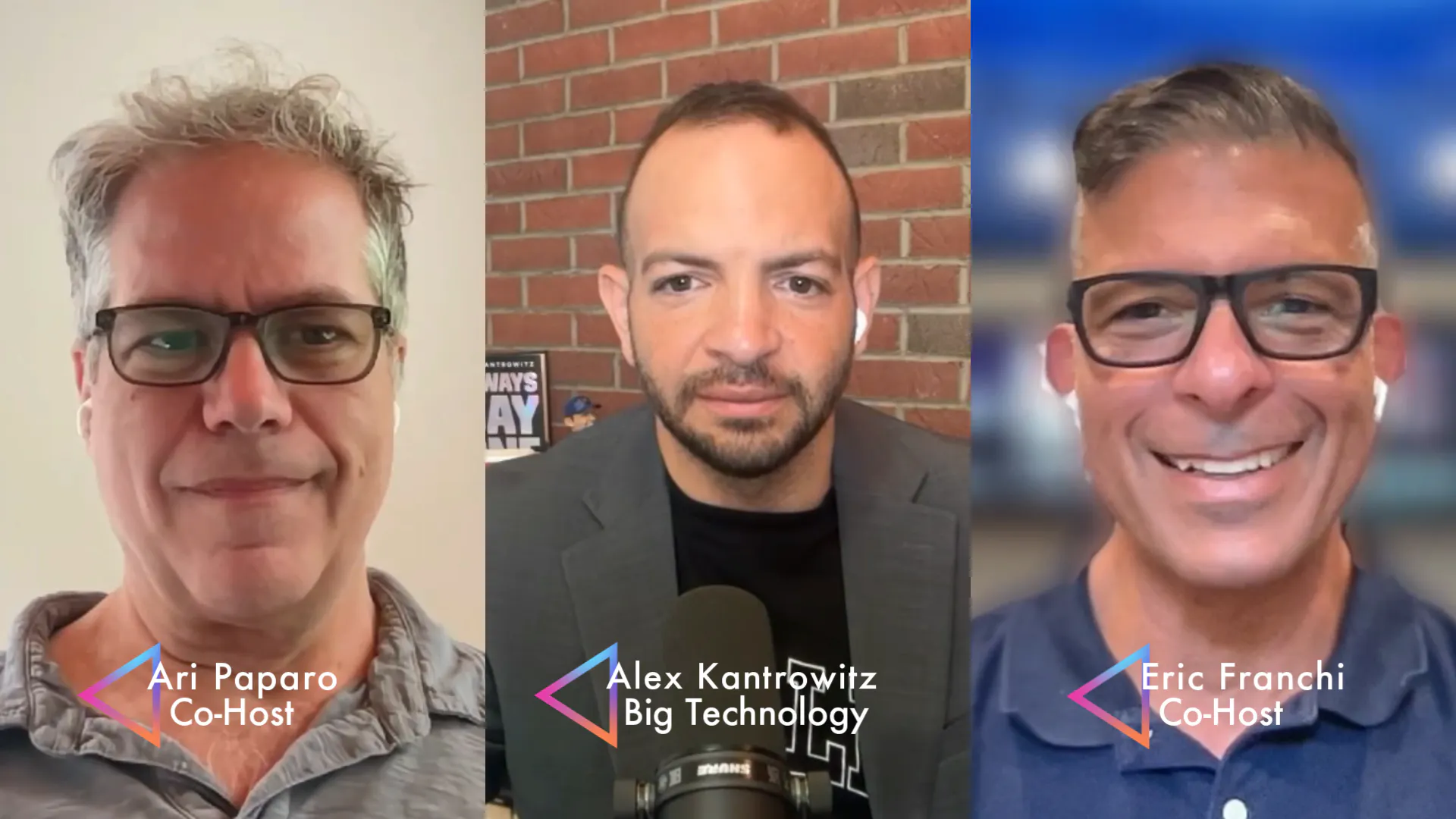
Marketecture: Get Smart. Fast.
Episode 181: Alex Kantrowitz on OpenAI and Big Tech's Latest Approach to Advertising
00:48:10
Loading summary
Transcript155 lines
- [00:01]
A
This podcast is brought to you by the Build, a new podcast from the guys behind Sincera, Michael Sullivan and Ian Myers. They built their company by figuring out clever solutions to a few important ad tech problems in our industry. And that's exactly what the show is about. Mike and Ian interview some of the smartest tech minds in the biz to hear about how they identified opportunities, solved their hardest challenges, and grew their businesses in the process. Listen to the Build with Mike o' Sullivan wherever you get your podcasts.
- [00:35]
B
Oh hello, I'm Jeremy Bloom, co founder and CEO of Market and boy do I have news for you. Marketexture Live is back and if you've been watching from a distance, thinking that looks phenomenal. But a trip to New York is just a bridge or several too far. We've got great news for you. We're bringing market share live to the beating heart of Adland. That's right. On September 23, 2026, Marketexture Live is coming to Chicago. We're going to be bringing the same sold out energy, sharp insights and industry defining conversations to the center of advertising's biggest transformations from from media and commerce to AI tech and modern marketing. This is where the people shaping what's next for the ad industry will be, want to be and need to be. Early registration is live now, so lock in your ticket@chicago.architecturelive.com Again, lock in your ticket@chicago.architective.com Disclaimer I live in Chicago. It's not Chicago, it's Chicago.
- [02:02]
A
Welcome to the Market Extra podcast. This is Ari Paparo. I'm here with Eric Franchi and our guest today is Alex Cantrowicz. From the host of the big technology podcast, longtime reporter in our sector. He was at Adweek. He's been in many places. I've been on his podcast multiple times times. So we're really excited to hear from him. His perspective on big technology. Like what are the big guys doing? How do they. We're just an advertising podcast, but he covers everything going on with Google and Meta and all those companies. So we'll find out what's going on. Eric, you've known Alex for a long time, right?
- [02:34]
C
Yep. I've known Alex for what feels like 10, 15 years. We're probably figured out on on this pod. He went from being a ad tech beat reporter at I think it was Ad Age to writing books interviewing the top CEOs, you know, covering this in a unique way. He is a one man media company so it's fantastic. And he is in the rooms at some of these, you know, big technology companies. I think he's going to give us some real insight into how what they're doing, what they're thinking about, relates to our little world of advertising.
- [03:04]
A
Absolutely. I'm excited for the conversation. Quick reminder, we have Market Chicago Market Live. Chicago is coming up in September. The early Bird tickets end on July 14th. That's next week. If you want the early bird discount, go to chicago.marketexturelive.com after that, we'll be announcing a lot of our speakers. We have some very exciting speakers lined up, and the tickets will go back to their full price. So that's your option right there. And as usual, don't email me asking for free tickets. I barely work here. I can't help you in any way with that. Let's just jump in and get to the conversation with Alex. Be back in a second. Alex, thanks for being here.
- [03:47]
D
Thanks for having me. Great to see you both.
- [03:49]
A
Yeah, great seeing you. I've been on your podcast a couple times. Is this the second time you've been on this one? I'm, I'm trying to remember. You were on a couple years ago.
- [03:56]
D
I, I, Oh, I have been on this podcast. Maybe it's the second time I can't remember we did a show together. I just remember you being on mine.
- [04:03]
A
I know you've been on three or
- [04:05]
D
four of my shows. You've been on Land of the Giants with me when I was doing that with Vox. You were on the this Week in Tech News when I was the guest host. I know you were on Big Tech War Stories. I'm pretty sure you've come on the main big technology podcast. So, Ari, I might have had you on four different podcasts.
- [04:21]
A
I think that is a record. Well, it's ozzies. It's time for you to. You to give back or me to give back. I'm not sure which way.
- [04:27]
D
Face the heat.
- [04:28]
A
Face the heat.
- [04:29]
C
I have props. I have props. I have props. Okay, look what I got in my office.
- [04:34]
D
All right.
- [04:35]
C
Copies of both of y' all books. And they're not autographed because I bought them myself retail.
- [04:41]
A
For those, for those on the audio. What. What is the book from, Alex and where can we Buy it?
- [04:47]
C
Always Day one, How the Tech Titans Plan to Stay on Top Forever. Awesome book. And then I have this other one called Yield by some dude.
- [04:57]
A
I read your book about Walmart. What was that called again?
- [05:00]
D
Walmart.
- [05:01]
A
Didn't you write a book about retail media?
- [05:03]
D
No, no, I did not.
- [05:05]
A
I'm Sorry, my bad. I read a book by Walmart, Someone I love.
- [05:08]
D
Someone I love that. My reputation is that I've now written two books. People should believe that. Let's go with this. I thought, this is good misinformation.
- [05:16]
A
I'm gonna. I'm gonna fire our research person.
- [05:18]
D
I spent many, many days in Walton. Is it Walton?
- [05:25]
C
Bentonville?
- [05:26]
D
Bentonville. Why did I say Walton?
- [05:29]
A
They didn't rename it Waltonville.
- [05:31]
D
You know, anytime you've been around people who've been anything close to associated with Walmart, they tell you, oh, yeah, Bentonville. That's the place to be now. It's got all the stuff. It's not a small town anymore. Anything.
- [05:42]
A
They've got an art museum. So there we go.
- [05:46]
D
This is the spiel.
- [05:47]
A
It's got to be. All right, well, let's actually talk about something.
- [05:50]
D
So we get into the real material.
- [05:52]
A
Yeah, Real stuff. So I wanted to have you on because I. You know, your beat is big technology. You're in. You're in Silk Valley. How often do you go to Silicon Valley? Are you, like, on a commuter flight?
- [06:01]
D
Oh, my goodness. Yeah. You know, at first, my plan. So I lived in San Francisco from 2015 to 2021 and then moved back to New York in August 2021. And my plan was to go back once a quarter, which in my head meant once a half. And it started out like that, and now it seems like I'm back there every month.
- [06:21]
A
Yeah, they always have announcements. They always, like, rent out the Computer History Museum. You've probably been in the Computer history museum, like, 400 times.
- [06:27]
D
That's right. There's a certain. You get a familiarity with the venues there. The Computer History Museum, SF Jazz, Commonwealth Club, the Palace of Fine Arts, and Moscone center, when you want to go to the big ones. But I. If there's. I feel like I have a rule where there's, like, if there's more than 10,000 engineers at an event, I should just watch the live stream.
- [06:46]
A
Yeah, you could always just hang out in the. At the bar at the Four Seasons and, you know, get the good scoop. Anyway, so advertising and big tech obviously have a. Have a deep interconnection, and we wanted to kind of hear what's going on. What are you hearing from the advertising point of view with, like, all of this big stuff going on, these. The AI revolution, etc. And get your perspective, because you're kind of coming at it from a different angle. And so, like, I thought the easiest way to do this is just, like, go Round the bases, name some companies and let's get the tea. The big one obviously is Open AI, so they're making a, a full court press on advertising. I think it just announced this week that they are doing user uploads, you know, audience match. So they're just following this game plan. So I kind of wanted to get your sense on OpenAI. Like, is this, like, is this a full commitment? Is Sam committed? Is it just a bunch of rogue Facebook people who are building all this? What are you hearing?
- [07:44]
D
Yeah, so I would say first of all, things have moved so fast that the idea that anything is a full commitment outside of building these transformer models bigger and better is. There is no commitment outside of that. So for instance, I'll give you an example with Sora, the video generation engine, where the, you know, made this, they made the social app with it, OpenAI, and it became number one in the world for a while. It's gone now. Right. So that's how quick things go from hit to, you know, dead in this AI world because this is a really fast moving technology and things are certainly progressing with a speed and a pace that you have to sort of double down on the winners and get the losers out of the way. Even if they're showing some promise, do
- [08:34]
A
you think they're trying to ramp up to a specific kind of goal pre ipo? Do they think they need some sort of revenue number pre ipo?
- [08:42]
D
Well, I think that they're, you know, just as we saw with SpaceX, the gap between the revenue that we're going to see with OpenAI and the valuation is going to be like one of the biggest you've ever seen in history. Their valuation is going to far outpace their revenue. Now they'd like to show some revenue acceleration, especially because you're catching up to Anthropic, which has had like an all time curve in terms of the revenue acceleration there. I mean, I remember being with Dario at Anthropic about a year ago now, so last July, and Dario was telling me, well, in 2024 we did a billion in revenue, and in 2025 we might do 10 billion in revenue. We're at a $4 billion run rate in July. And I, he's like, and I expect that to continue to increase as our exponential picks up. And you know, as a journalist who's used to hearing big proclamations from Silicon Valley figures, I was like, okay, sure, right. Because we, we don't typically don't see accelerations like that. Well, turns out I was the dumb one. Right. Because they did hit that 10 billion, 9 or 10 billion annualized run rate by the end of the year last year. And the rumors now are they're like, Potentially in the 45, 50, $55 billion pace to, you know, for revenue this year, and they may make a billion dollars in profit. Right, which is sort of. They're accidentally making profits. So they are a powerhouse. So OpenAI does want some stuff to counter that, and that's where advertising comes in, for sure.
- [10:16]
A
So we'll get to anthropic one second. But back on OpenAI, is it a hiring frenzy? I know when, if we remember, you know, 15 years ago, when Sheryl Sandberg joins Facebook, they just started hiring, and everyone. It was like bringing an army to bear. Is that going on with OpenAI? To all the customer success people, salespeople, et cetera.
- [10:38]
D
I'm, I'm smiling and I don't know if I should say this, but whatever. It's a podcast. Let's get the gas out. You know, there's someone that I was speaking with at Meta recently, and just this week, they're like, all right, I'm leaving. And I'm like, where to OpenAI? And I feel like that's happened, like, to me, you know, maybe 10 times over the past year. So there is this march of meta executives to OpenAI. And in some ways, it makes a lot of sense, right? You are building a product that you're going to want to grow. I mean, that's OpenAI's advantage is they have a billion users of ChatGPT. Whether that's announced or not, that's the number. And they are trying to turn that into, you know, build on that growth advantage and then turn that into money. So one way they're doing that is obviously they're. They have this big plan to bring Codex, which is their, like, you know, you could call it their coding application, but really it's the agent, right? So when you say, I want to do this, it will take control of your computer or browser and do it for you. And so the idea is that when that hits, you know, right now, 5 or 10 million people are using it. When that hits a billion people, that's where people might end up paying subscription. But on the other side, there's going to be people that don't pay the subscription. And, you know, we all know this. Like, how do you end up making money off of those people? It's advertising.
- [11:59]
A
So a lot of ad tech people who probably listen to this pod are secretly dreaming of their Companies getting acquired by OpenAI, obviously, you know, if you're working on rumors or whatever, please, I imagine you won't want to tell us, but like, do you think that's feasible? Do you think the ad tech people might get saved by that, you know, gusher of equity from OpenAI? A bill here, a bill there, and it adds up.
- [12:25]
D
Yeah, I feel like we've, we've, we've all known each other for at least I've known both of you guys for over a decade. And the question of whether ad tech is going to get saved has been something that's just, you know, we keep asking. So if it hasn't been saved yet, I wouldn't hold your breath.
- [12:39]
A
Yeah, it's like generously synergies, ungenerously, it's a lifeline.
- [12:44]
D
Exactly. But that being said, I think the way that I see this playing out is that there could be some M and A activity, just like there was, by the way, with every big tech company that wants to, wanted to do advertising. Whether that's, you know, start, started with the Microsoft's, the Amazons, meta, Twitter, you name it. These companies will need, will need ad tech. Because even if the ads are going to be, I actually like the way that they've presented these ads which are, you know, additive, very brand heavy, helping you, let's say if you're interested in traveling, helping you find the right hotel, you know, you sort of get that populated, even if, like, you weren't going to use ChatGPT for that. So that's additive to the experience. But we all know things like targeting and attribution are going to be, you know, very important parts of the picture, as they always are. It's like, you know, in Instagram. Just give one example. With Instagram, I think you guys remember there was an, there was a moment where Kevin Systrom, the founder of Instagram, had to approve every ad because it was his art project and he was dedicated to it. And now what are they? The most programmatic platform on the planet right now. So the same thing will happen in ChatGPT.
- [13:54]
A
Okay, we could probably talk about opening for an hour, but let's, let's move on to anthropic Dead in the Water and advertising. They obviously ran those super bowl commercials. They're not going to do it, right?
- [14:04]
D
Yeah, they'll be a bigger spender on advertising than they will be a seller of advertising. And you know, they, they, the super bowl ads, just remembering like they, they were basically punching OpenAI in the face for, for implementing advertising so like kind of ironic ads against ads, but that's what they were doing. And in fact, like there's going to be. I think this will be a way that OpenAI's competitors try to differentiate themselves from it. Even Google. Right. Which inevitably will do ads. In Gemini, they took a moment to, to relish in the fact that OpenAI was running to ads. I was speaking with Demis Hassabis, the head of Google DeepMind earlier this year, and I was like, I was like, well, how about, you know, you know, OpenAI's doing advertising and, and I was like, some people have joked that, you know, you're probably not close to AGI if you have to sell ads in your chatbot. And suffice it to say Demis liked that one. He said, oh, that's telling, isn't it? So, so I, I think that OpenAI's competitors may use it as like sort of counter marketing point to them. Yeah, just like Anthropic did. But Google will do it. Google will do it. Facebook will do it. Anthropic doesn't need to. So I think they won't on Google.
- [15:20]
A
It was a little confusing because I think earlier this year Demis said, or I'm not sure if it was Demis, someone in executive position said there wouldn't be ads in Gemini, while meanwhile, there are quite a few ads in search overviews. Did you, did you hear that and did that make any sense to you? Is that a conflict of interest or a conflict of vision there, that there
- [15:41]
D
would be or wouldn't be?
- [15:43]
A
Well, I should look it up, but I think one of the most senior executives on the Gemini side said there would not be ads in Gemini, but there were obviously our ads in Gemini in search.
- [15:53]
D
So Demis said that to me. So I'll take credit for breaking that news. And so I think the key way, when you do these interviews long enough, you understand when something's imminent, when something might happen and something never will happen, although again, never is sort of a tenuous prospect in this world. I think that Demis really had the for now perspective, which is like there are. No, you don't. You know, when someone is considering something or when someone might do something in a year or two but doesn't have immediate plans, they'll just say we don't have any immediate plans to do that. And that was the line that Demis took with me.
- [16:31]
A
Okay, let's talk about Meta. So I think the feeling about Meta, or the conventional wisdom is that their advertising business is the greatest advertising business. In the world and it's, and they're just adding AI and it's unstoppable. But meanwhile, Zuck hates it and would rather spend money, spend time and money on other things. What's, what's your reaction to that kind of conventional wisdom?
- [16:53]
D
I mean, I, I think that they are, aren't they like the best at advertising, maybe outside of Google? So, um, clearly it's working for them. A lot of the actual money that they've spent on AI in the past has been something that's, you know, boiled up to their ad business. Like they wouldn't have as good of an ad business as they do now without artificial intelligence. So it both like, you know, it, it reinforces itself. I think for Meta, the main goal is like they, they are going to have the same problem that they've always had, which is that like they're going to have big ambitions, but they're just going to be an app on the iPhone and Android. And you know, how do you build personal super intelligence when you know the company that you have to channel that through has built its own personal super intelligence that's literally accessible by a button on the phone itself and can look at every, all your data because it's the operating system. Then you, like, you're coming, you come to the, you come to the fight and you're Meta and you're like, yeah, open my app and I know some more about you because I have your Instagram. It's a really tough, tough spot to be in. And that's why you see them doing the glasses, because they want to get around Apple. But I don't know if that's going
- [18:09]
A
to work as in glasses coming soon.
- [18:11]
D
Well, they, they, I mean they have like the, they have the quote unquote AI glasses with the camera in them and the speaker and, and the Meta assistant in there. And you know, as always, those glasses will be as useful as the assistant inside. But a very interesting thing. You know how Apple rented Gemini effectively from Google and built their latest Siri on top of it? Well, Meta is doing the same thing. It's renting models from others, not just relying on its own. Oh, I didn't know that. That, yeah, that's, that's new. And so that is something that could help them catch up quickly. Yeah.
- [18:48]
A
It's unclear what if Meta is really committed to being a foundation model company. They, they were running the kind of obvious game, open source models to try to commoditize what their rivals were doing and it sort of ran out of Steam, because, well, the Chinese were doing that too. So what's the point of investing like that?
- [19:05]
D
You know, an interesting thing that building their own models enables them to do is when they're going to rent these models, they have leverage. So you could go to Google and say, hey, can I use your model and use your. Whatever, fork it. And, well, Google could say, okay, yeah, that's $100 billion. And Meta could say, well, we'll just use our own. And then Google will say, okay, it's 2 billion. And that's kind of part of the strategy for Meta.
- [19:31]
A
All right, speaking of glasses, let's Snap. So, once again, conventional wisdom is that Snap is a terminal underperformer in advertising and always will be, and the only chance is for the company to get acquired, and it won't get acquired because Evan loves being CEO. Is that conventional wisdom accurate?
- [19:50]
D
I think so. I think so. I love how you introduced it of speaking with Glasses, which has been the most embarrassing product reveal of the year, I would say, over the past, like, two or three years. Except for the fact that we had, like, you know, that humane pin that was Tension Pro.
- [20:05]
A
I think Apple Vision Pro was the most embarrassing.
- [20:07]
D
And, well, did the company's stock, like, drop immediately after, like, Tim Cook word on cnbc? No, because that's what happened with Snapchat and Evan.
- [20:18]
A
Okay.
- [20:18]
D
I mean, I don't relish the fact that they're doing poorly, but, you know, they have added a lot of users, but they're a chat app and. And, you know, maybe they'll. Maybe he'll get tired of it eventually and sell, but he's shown himself to be someone with some good ideas but just cannot crock the CEO position, unfortunately.
- [20:39]
A
So speaking of kind of smaller companies, Pinterest has been on the sidelines, not a super important player in. In the tech world or advertising world. And then they made sort of a surprise acquisition earlier this year of TV Scientific to get into the TV advertising business and potentially bolster their overall advertising approach. What's your take on their position in the hierarchy and where they're headed?
- [21:05]
D
So I remember going out to Silicon Valley in 2015 and had my remit of companies to cover, which included Facebook and Twitter and Snapchat. And because I was covering the social and communications companies, like Pinterest was on the list. And I remember thinking, pinterest, is that really a thing? And then people telling me, no, no, of course it is. They have hundreds of millions of users and very eager Pinners. And I kept saying, okay, you know, if that data exists. I'm sure there's something there. And we're 11 years after I moved out to San Francisco, I'm back in New York now and I still have the same feeling about them. I don't know, maybe worse.
- [21:44]
A
Eric, do you want to. Since you were an investor in TV Scientific, do you have a bullish case on Pinterest you'd like to share?
- [21:50]
C
I love Pinterest.
- [21:52]
A
You use it.
- [21:53]
C
I love the company because they acquired mine. No, no. Yes, I have the bull case. It's a sizable user base. Checking on this one, I think it's 600 million users primarily. Usually it is, is uniquely a mid funnel data set that is that I think there's a competitor for. Right. So if you think about like Amazon and others point of purchase, if you think about perhaps Instagram inspiration all the way through, through you know, kind of, kind of purchase, people are expressing what they're shopping for. They're expressing what they're interested in. They're you know, and they're, they're declaring that and I think take that, multiply by like a decent sized user base. It's pretty unique. And I think what they haven't done yet and where I'm excited about TV Scientific and others is actually using that data to power an advertising business. That's the bull case on Pinterest.
- [22:51]
D
Reminds me, sorry to be the negative one on this. It reminds me a little bit of like Foursquare's attempt to turn itself into a data business after people stopped using the Foursquare check ins. But I guess Pinterest has more users. I don't know. Eric and Ari, um, don't you think like when we think about Sasspocalypse isn't whatever user based Pinterest have kind of like in the crosshairs of AI because like let's say I'm thinking about redecorating my living room for instance. You know now I might go to Pinterest for pinspiration. But like in the future are my. Aren't I just going to like take a picture of my living room and ask ChatGPT how should I decorate this thing?
- [23:29]
A
Did you say pinspiration?
- [23:31]
D
That's what it is.
- [23:32]
C
That was beautiful.
- [23:34]
A
I think the Pinterest PR team just got more out of this than all the negative talk to Biden. Yeah, I think you're right.
- [23:42]
C
I buy that. I buy it.
- [23:44]
A
All right, so two last ones. So Amazon. I'm not sure what I have anything to say about Amazon except they're sort of unstoppable relentless Borg who will absorb everything. I guess to direct a specific question, how serious do you think they are about sports rights and tv?
- [24:02]
D
Very serious. Very serious. I mean, you know, they, they are locked in a streaming war with an unfair advantage, and that is that they don't, they don't necessarily need to make the money back on advertising because their data shows that the more time you spend on Amazon.com watching sports, the more you're gonna buy. And, and that does uplift their, their video platform as well. So, I mean, Thursday Night Football has been a tremendous success for them, I think. Not only, by the way, does it look better than, than any other sports broadcast of the NFL. Like, their quality is exceptional, but it's additive to, to Amazon itself. And then the wild card that I don't think enough people speak about is Andy Jassy is like a sports nut. Like one of like top 1% sports fan. And for him, he will never lay off of sports rights. And you know, he, he had like Ryan Fitzpatrick and Andrew Whitworth who like, are like, you know, they're like the Thursday Night Football commentators into his, like, man cave where they talked about sports on the Fits and Wit podcast. And I think for Jassy that that might like, make worth, make running this company worth it. Despite all, like, the intense, like, work that needs to be done to keep Amazon afloat, because despite the fact that it is this Borg giant that will eat everything, it's also very vulnerable in a very, in a low margin. Space, has real competitors with cloud and is now like, trying to figure its way through the AI world. So that's Amazon.
- [25:39]
A
Do we know what Jassy's favorite sport is? Is that a way to estimate where he's going to put the money? Does he like American football? Baseball?
- [25:46]
D
Pretty sure it's football. I think, I think it's football. I think he's a major, major New York Giants fan.
- [25:51]
A
Oh, interesting. Last, last topic. So one of the biggest stories in advertising over the last two years has been the growth of Applovin from a company that very few people paid attention to, to, you know, market cap over $100 billion has meta and Google running scared in their app business. I don't know if you cover them specifically, but have you heard anything about this sort of, you know, backlash or how it's washing up on the shores of the big tech companies and their concerns about it?
- [26:22]
D
No. Maybe you guys can tell me more about that.
- [26:24]
A
Okay, the, what I've heard is that, you know, their growth has largely been taking Share from Meta and Google in the app install market, which is extraordinary. You know, you don't expect the share to be heading out of the big tech companies and that they're both very concerned about it. So. So to the extent that it's a big tech story now, the top line
- [26:45]
D
numbers have just looked exceptional for Meta and Google recently. So I think they're going to be all right.
- [26:51]
A
They'll be all right. All right, we'll be back in a minute with our news of the week. We have a lot of news. We have this Critio takeover rumors, more AI stuff and changes at iis. So we'll be back in a minute. Here at marketecture, we know what you need more of in your life Adtech podcasts. So I'm thrilled to tell you about the MediaOcean podcast network. Three different shows currently live and a bunch more launching soon. There's Femme Forward, a show about women in leadership. Add it up, which is Basically Ad Tech 101, and FRAP Rap with G Dog, which defies all descriptors. Check them out@mediaocean.com podcastnetwork. That's MediaOcean.com podcast network available on Apple, Spotify and YouTube. And thank you Media Ocean for supporting Market.
- [27:45]
C
All right, we are back with the refresh news of the week. Now, most of you people know Alex as the host of Big Technology and your favorite author on Big Tech. We know Alex from when he got his start as in his career as a beat reporter for Ad tech. Is that right, Alex?
- [28:03]
D
That's correct. I was the ad tech reporter at Adage, and I'm pretty sure that was must have been 2012. I'm pretty sure both of you guys were like among my first phone calls. So it's nice to still be talking, what is it, 14 years later.
- [28:20]
C
Yeah, don't remind us. Yeah. Anyway, so we're going to bring you back to your early days of ad tech news and gossip. I'll have some mainstream stuff in between. So big news this week. Takeover rumors of one of the big public ad tech companies and a bunch of AI stuff, both, you know, kind of super niche ad cp, Ad CP and otherwise. And we'll bring some other stuff in at the end. Start from the top. Takeover rumors on Criteo. I don't know if anyone saw this coming. So two PE firms, Vista and Quinti, submitted an offer last week that valued Critia at more than a 50% premium to its recent share price. Stock popped like 20 something percent, giving it a market value of about 1.16 billion. And according to sources. This is all according to sources. Critio has not made a decision yet on how to respond to the takeover approach. So it's still a little bit of tbd. Ari, we'll start with you. Surprised?
- [29:20]
A
Not at all. In fact, I was in my Schwab account about to press buy on some Critio stock last Friday, and I was like. Because I left can after having done an interview with the CEO and with Todd Parsons, the cpo. I was like, this company is undervalued. They have a lot of interesting stuff going on. They have all kinds of product development. And going back to the OpenAI conversation, they're like the most important partner in ad tech for OpenAI and could easily be an acquisition candidate for them. I didn't press the button, so I did not trade, unfortunately. Got cold feet, but I would. I'm very bullish on. I'm very bullish on the stock. Fundamentals are complicated. It's a complex company, but I think the stock is very undervalued.
- [30:04]
C
Alex, it was the last time you looked at Critia.
- [30:07]
D
Well, Critio's former CEO, Greg Coleman, actually became, I think, either CEO of head of revenue at BuzzFeed when I worked at BuzzFeed. And I just remember meeting with him and going from someone who, like, you know, reported on him to now reported to him, and I don't know, it was. It was. We had. We had some interesting times, obviously, like, you know, I think Critio is doing better than. Than BuzzFeed did. So clearly, the Critio legacy lives on. You cannot. You know, there. There are some things in that. In ad tech that you sort of, uh, will. Will stand the test of time no matter what. And I remember, like, back in the day, like, the real story with Critio was like, is retargeting, you know, gonna. Gonna make a. Is it gonna make its. Its stand and be. Be around forever? And clearly the answer is some version of it has lived on, you know, a decade plus since. Since those days. So I don't really have any thoughts about the takeover because I'm not. I'm not dialed in enough. But the longevity of cardio is pretty impressive.
- [31:13]
C
Yeah. Yeah, that's. That's true. Week or so ago, when the Vibe acquisition by Walmart happened, we pointed to, man, you could buy a couple of companies for what you spent on. On Vibe, which had far higher revenue, and Critio is one of them. So I think it. This makes a lot of sense. We'll see how the company reacts though, because this is a premium on current share price. So you know, it is something that they need to take seriously with shareholders. But it is not a premium on where they were trading a year or two ago. So remains to be seen or if other, other bidders come in.
- [31:48]
D
Ari, why didn't you buy.
- [31:50]
A
Yeah, I just want to make the bull case on open AI buying them for one second which is. And, and I. You what Critio ha. What Creo has, among other things is probably the largest set of retail product feeds available from anyone other than Google. You know, they've been ingesting product feeds for you know, 20 years. They have thousands and thousands of retailers on the system. They also have the data, they have conversion feeds. So OpenAI just buying their retail business would instantly give them so much intelligence to enable agentic shopping, advertising based on retail, etc. I mean if you bought it for $3 billion in OpenAI stock it would be, it would be instantly accretive in addition to getting the team, global team that really understands advertising. Plus they have an identity graph. I don't know how important identity is going to be to open AI's future, but Critio has an amazing identity graph once again. You know, 15 years of collecting data on apps and phones and web etc. So I would, I would be, I would not be surprised if that were to happen.
- [33:01]
C
That is a very well reasoned thesis and probably why you should have hit buy on the stock.
- [33:07]
A
I should have hit buy. I still might.
- [33:09]
C
Yeah, well that's not financial advice listeners generally. Yeah, generally these takes actually don't amount to anything. So we'll see what happens end of year.
- [33:20]
A
Thank you. That's our motto. Our takes don't amount to anything. Listen to our podcast anyway.
- [33:26]
C
I mean the public of any stuff anyway. Let's go on. All right, there's a lot of AI news this week. Let's start with something that you flagged is really interesting which is we think perhaps this was the first two sided negotiated ad CP deal. So Vox Media using booster portfolio company of Ethereums seller agent successfully received, negotiated and completed a media purchase with zero manual intervention. That seems like really cool.
- [34:02]
A
Yeah, like to date almost all the folks who have done AI based media buying have really been one sided where it's just been a convenience more or less for an advertiser to like kind of discover what inventory is available, discover what segments are available. But really most of it was human beings and it was, it was equivalent to using the API in this case they're claiming that and they didn't name the buyer, that the entire order was completed entirely using AI. Also, I think this re re reinforces my general thesis, which is this ad CP stuff is going to be controlled by publisher agents. So booster in this case is a workflow kind of solution. Most of the interesting stuff going on here, sell side, it's all like the SSPs, the order management companies, anyone who has publisher relations. Because what the AI needs access to is all the publisher specific business context and data. The buy side is much simpler and not really requiring a vendor at this point.
- [35:04]
C
Yeah, the thing that's interesting about this is, you know, if you start looking at everything on a line item level, there is probably real yield to. To capture for publishers if it's like, you know, negotiations on really, really fine tuned stuff.
- [35:20]
A
Yeah. And it's both setting up private deals and doing direct deals. And it's unclear how important how well direct deals will work. But private deals make total sense because those have always been things that were negotiated using humans and could be automated.
- [35:36]
C
Yeah, yeah, no, this is exciting stuff. Okay, let's move on. Cloudflare monetization gateway. Alex, do you cover Cloudflare? Do they like meet the big tech bar or they like maybe middle tech?
- [35:48]
D
Matthew Prince has been on the show before talking about his efforts to give publishers an opportunity to charge the bots for accessing their content. So that's the extent of it, sort of their relationship with the big AI companies.
- [36:05]
C
Yeah, this is interesting. So a year or so ago Ben Thompson had this article. I think it was something around like the web's original sin, the agentic web and the original sin, which is effectively like if the original sin of the Internet of the web was advertising. The next generation, as it becomes more agentic, will be not just advertising but payments for content and data. And you need a few things including stablecoins for enabling micropayments. And this is basically what Cloudflare just announced with this monetization gateway. So monetization gateway, what is it? It's an engine that will give Cloudflare customers the ability to charge for any asset protected by Cloudflare. So that means web Pages, data sets, APIs or MCP tools, basically anything. And then the other interesting thing is payments settle in stablecoins over this thing called XF X402, which I had to get like very quickly, kind of up to speed on. It's like a collective of basically all the major Internet companies by the way, that will power like web payments using this protocol. Why is this important? If we think that the future of the web is agents, if we think that agents are going to be doing things not just like looking at data, but actually taking actions, if they can pay for things using their wallets that are filled with stablecoins, this I think becomes really, really interesting for future payments generally on the web, but for publishers specifically, who just are not getting compensated unless they're doing these licensing deals with the, with the big AI companies. So this feels significant.
- [37:42]
A
Yeah, I mean, the problem with micropayments has, is usually the consumer, the consumer has to spend more emotional energy on deciding whether they want to pay 5 cents, then the 5 cents is worth it, plus the credit card, plus all the other problems. But if you're doing it programmatically, if you have, let's say, a vibe coated scraper and it needs a budget to get the data, that's easy. That's like no problem. I mean, I currently run MAD db, our database aggregator for architecture, and I would be happy to pay a cent, an article or whatever it is if I only had to pay it once. So I think this is a really nice development. I'm still skeptical about why I have to pay in stable coins. Is there something wrong with Visa and MasterCard? Like, I don't understand the obsession with chains. Just stop with the chains. But you know, I love the idea of a very simple way to pay.
- [38:33]
C
The reason why is stablecoins can settle in like many fractions of a cent. I don't think that's a game that Visa, MasterCard want to get into, but maybe they will need to over time. And then ultimately you need the wallets. Right, which agents can like set up the wallets. So I think it's actually very geared towards this future. But to your point, it's not really like rooted in how we as humans buy things.
- [38:59]
A
As a human, I would like it to be human centered.
- [39:02]
C
As a human, you would like your MasterCard. I realize that Warner Brothers Discovery launches an agentic ad tech powered by AWS AI. Did you read this one, Ari?
- [39:14]
A
I didn't, unfortunately. Sorry.
- [39:15]
D
Okay.
- [39:17]
C
All right, I read this. Adam Heimlich tweeted this one out or posted on LinkedIn that you know, this is significant effectively, like Warner Brothers Discovery is working with AWS across everything. So Agent Core, Amazon Bedrock is hosting the models employed in WVD's closed instance. They're like, you know, basically like building their agentic stack on top of aws and only AWS if I understand this correctly. So deals like this is pretty Significant as Amazon looks to become more of a, more of an AI player, starting with the media space.
- [39:56]
A
Yeah, Alex, I guess I have a question for you which is like how is Amazon thinking about not having foundation models itself? Is it fine with that or is there causing problems inside the company that they are reliant on other models?
- [40:08]
D
Well, they do have their own models, they're called Nova, but they're no good. So I think that they should, you know, if, if only for the leverage side of things, they should attempt to make this happen. But you know, it's like what are the ingredients into a great AI foundational model? It's a lot of data which Amazon has, its algorithms which Amazon should be able to put together and it's a lot of compute which Amazon has. So they should be a player here. And you know, you know Microsoft is attempting to do it on its part after its relationship with OpenAI has frayed. So I think Amazon should do it as well. I think they would say even if it doesn't work out, we're happy as long as people are renting other models on our services. But you know, I don't know, maybe that. And you know what? Now that, now that I think about it, maybe that is totally fine business to be in because there's, there's an argument that's being made now in AI that like all foundational models will commoditize and maybe that's right.
- [41:12]
C
What else we got? We got WPP Enterprise. So WPP is launching kind of a Competitor to the PWCs of the world. AI business transformation consulting seems like a good idea.
- [41:26]
A
Yeah, I mean I guess publicist has sapient and everyone is getting into this business, the forward deployed engineers. It's pretty obvious that ordinary enterprises are going to have some really significant challenges adopting AI and they need, they need help. And I think this is the gold rush for all the services companies. I, I, I put this on the notes just because I thought it was interesting that WPP had a new division to do this and their new CEO is pushing it. But I don't think it's going to be unusual. I think pretty much everyone's going to be doing this.
- [41:57]
C
Yeah, makes sense.
- [41:58]
D
So if I'm like business services company or whatever, small, you know, mom and pop shop that needs or meets medium sized mom and pop shop that needs some AI transformation. Why would I go to like WPP over a traditional consultant?
- [42:14]
A
I would think what if you're like kind of a marketing centric enterprise, like
- [42:20]
D
regional fast food chain, actual total addressable market is small. Small.
- [42:26]
B
Yeah.
- [42:26]
A
It's a consulting service but it would get you much deeper into the client if the client were you know, very marketing heavy sales, heavy enterprise that already maybe is using the rest of WPP for its advertising. But I get your skeptic.
- [42:42]
D
I think that makes sense.
- [42:43]
A
We'll take. Is that not skeptical.
- [42:44]
D
I'm just trying to see like what the market actually is for something like this. But actually you've shown me that it's bigger than than I initially anticipated.
- [42:51]
A
I don't think it's small business. I think it's like it's big enough to be using WPP for other things would probably be a size but isn't OpenAI also hiring a whole bunch of like for deployed engine. They're trying to do enterprises.
- [43:03]
D
The new hotness in all of AI is the forward deployed engineer which like sounds like a military term but apparently it's just, you know, someone who can code with social skills.
- [43:13]
A
Yeah, basically. I totally forget who tweeted this, but someone tweeted that like back in the day. It used to be that Anderson Consulting and all those consulting companies were a way of getting high quality college graduates into the workforce before they went into like the enterprise because they needed a couple years of like post training on how to work in business. And now that's sort of being taken over by the forward deployed engineer is now the career path for the. For the recent grad.
- [43:44]
D
Yeah, it's. It is. By the way speaking I know this is a marketing show. It is, isn't it? Excellent branding. Forward deployed engineer. Oh it's beautiful.
- [43:52]
A
I think came up with to me at my office in my cubicle. I want it forward deployed here in a flak jacketed camo just like hacking away at my legacy system.
- [44:02]
D
I love that.
- [44:03]
A
Putting an AI and just like ringing a bell whenever he removes one of my old code modules.
- [44:09]
D
Anytime I'm going to take a meeting from now on I'll have a forward deployed engineer go and scope it out.
- [44:14]
A
Well, you're a forward deployed engine. You're a forward deployed journalist. You should start calling yourself that. You like go into their offices and get the stories.
- [44:23]
D
That's right. Yeah. That's my new. That might be my new title.
- [44:26]
C
I love that I'd point to the TAM question. Alex is just like, you know, you look at the revenue of companies like McKinsey that focus on the Fortune 2000s. I mean these big companies spend billions of dollars on consulting services. So I think it's actually like a pretty attractive opportunity for Everybody. And to Ari's point, you know, WPP has the differentiation of, you know, if you're really thinking about marketing as the initial wedge for your AI use cases, I think they've got a credible story. But we'll say what else we got. All right, we got a couple more things and not too much time.
- [44:59]
A
What do you want to hit new new leadership at iis.
- [45:02]
C
Yes. Lisa, friend of the POD two times guest UT Schneider steps down as the CEO of ias. She's being replaced by Lydianne Jones, who was a former CEO at Slack, which I think is a pretty interesting background.
- [45:21]
A
Yeah, I think it speaks to the ambition they have, the PE owners have for IIS about, you know, becoming sort of a. I'm not sure what their vision is exactly, but certainly it's very enterprise y long term relationships, less transactional and. And it is a challenging situation because it's effectively a duopoly between them and dv. DV has been winning share for the most part but the TAM isn't growing. So you see DV acquiring cybids are getting into optimization.
- [45:52]
B
Is.
- [45:53]
A
Is has some interesting assets, but it's a little bit of a mess internally what the products are. So I think they need to. To rejigger things pretty significantly over there. I think that they did hire someone who's more of a salesy kind of operational person than a product person. I'm not sure if that was the right call because I do think they have some pretty significant product issues.
- [46:16]
C
Yeah, they have Publica still sitting in there, you know, a. Yeah, a CTV ad server that still has some customers, by the way.
- [46:25]
A
No, Publica is probably a pretty successful business in is. It just doesn't have any synergy with the rest of is. And I've been on the record saying that from the minute they bought it, they could probably sell it for, you know, a big increase in the valuation they paid because TV and control over TV is so important to so many companies and I hope they would consider that.
- [46:45]
C
Absolutely. How about we call it there?
- [46:47]
A
It sounds great. All right. This was a great conversation. Alex, thanks so much for being with us. Where can people find you? What should they subscribe to?
- [46:56]
D
Big technology podcast in your podcast app of choice. And thank you guys for having me on it. You know, it's always, it's really always fun to talk. I can't believe we've known each other for as long as we have, but every time we sit down with each other or look at each other through a screen with microphones, it's always a blast for me. So thank you, guys.
- [47:12]
A
That's definitely how I like to relate to other people.
- [47:17]
C
And we are super proud to have seen your career trajectory, Alex, again, starting from the beginnings of that age to now, what you're doing. It's fantastic. So super proud of you.
- [47:28]
D
Thank you, Eric. I don't know if big technology podcasts would exist without you, because when I launched Big Technology, I said, all right, I gotta create my own podcast. I have no idea how to do it. You emailed me, actually, after I said, hey, I'm going independent. Connected me with the team at Red Circle, and I. It was at that point that I had realized that actually building a podcast or starting a podcast was way more complicated than I initially anticipated. Red Circle talked me through, brought me on the platform, and the podcast just kind of grew from there. So I owe you a debt of gratitude for that, Eric. Thank you.
- [48:04]
C
Anytime, my man. All right, we'll see you next week, everybody.
- [48:07]
A
Thanks, everyone.
- [48:09]
C
Take care.
- [48:11]
A
Thank you for subscribing to marketecture. New interviews are added every week at marketecture tv and your favorite podcasting app,