← Marketing Beyond with Alan B. Hart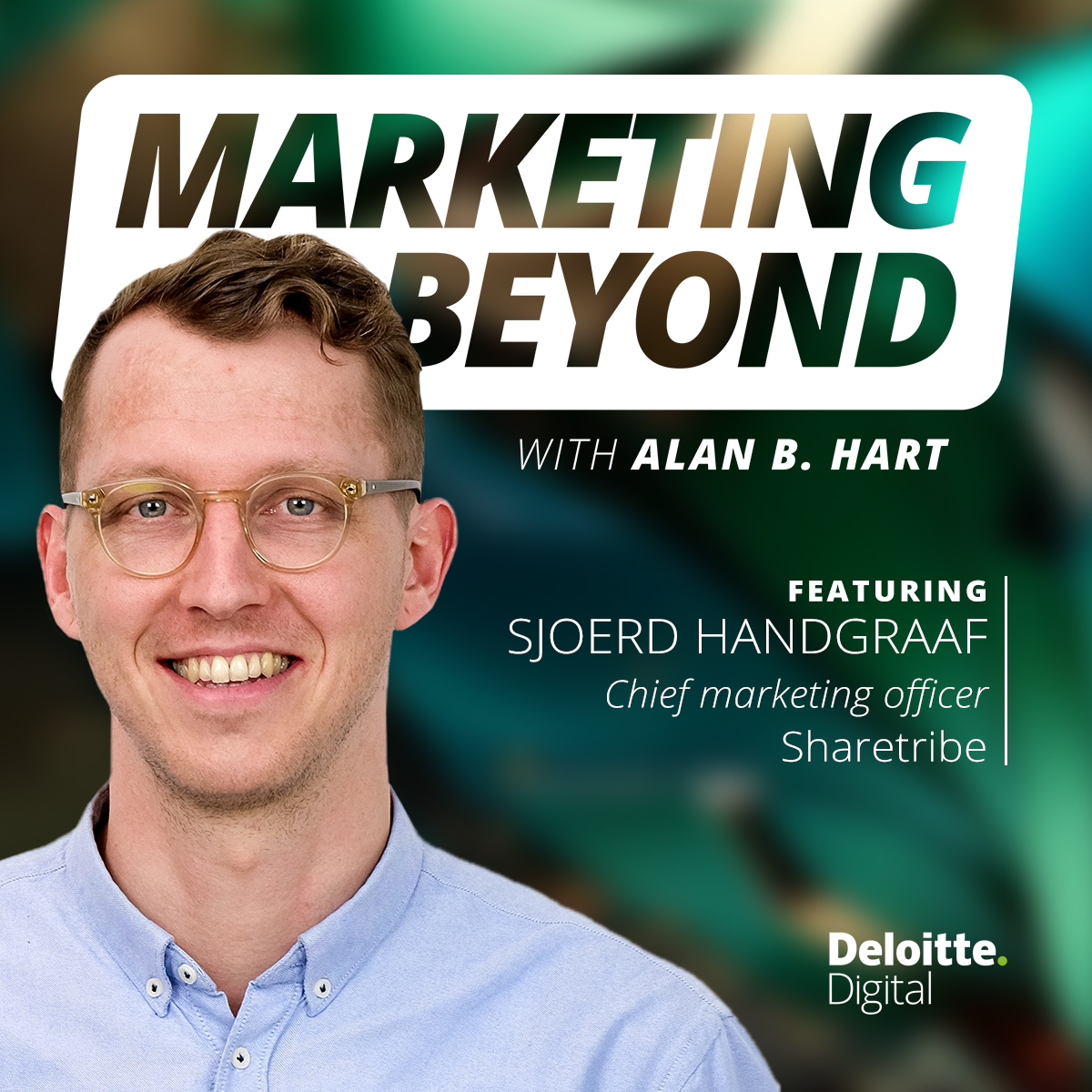
Marketing Beyond with Alan B. Hart
13: Ways to nail your product positioning: Insights from Sjoerd Handgraaf, chief marketing officer at Sharetribe
00:47:36
How do you determine your product's market value beyond its features? In today’s episode, Alan and Sjoerd Handgraaf, Sharetribe's chief marketing officer (CMO), discuss Sharetribe’s origins, product evolution, and how Sjoerd’s team...
Loading summary
Transcript69 lines
- [00:00]
Alan Hart
Foreign Are you ready to go beyond the basics of marketing? I'm Alan Hart and this is Marketing beyond, where we talk about the questions that spark change and share ideas that challenge the status quo. Join us as we explore the future of marketing and its endless potential.
- [00:27]
Sjord Hongrof
Why do people choose us? Like what words do they use? So we went through support history, we went through all our reviews online, both good and bad. Like what other terms that how do people, how do people out there actually understand our product? And what do we think is the benefit?
- [00:49]
Alan Hart
Today on the show I've got Sjord Hongrof. He's the CMO at sharetribe. Share Tribe is building a no code marketplace software for founders. Jord has over a decade of experience in digital marketing and growth for startups with a focus on democratizing technology. He's also a marketplace expert who advises marketplace startups on early growth strategies. Additionally, he hosts Two Sided the Marketplace podcast where he interviews successful marketplace founders, investors, experts to discuss topics related to starting, building and scaling online marketplace businesses. On the show today we talk about the two sided marketplace, how it's unique, what it means for Share Tribe. We talk about the power of getting your positioning right to get go to market clicking. And we talk about his philosophy around Give first. That and much more with my guest, Shaard Hangra. Foreign welcome to the show.
- [01:55]
Sjord Hongrof
Thanks for having me.
- [01:57]
Alan Hart
We're going to have a lot of fun talking about your company, what you're doing from a marketing standpoint, etc, but there's this thing about your background that I hear you were an aspiring record label mogul and I'm not sure I've had one of those on the show before. So let's talk about that.
- [02:14]
Sjord Hongrof
Yeah, I think that's a, that's a grave, grave exaggeration. Now I used to be, well, still am, I think. You can never really say that you're no longer a punk, but I used to be really into punk music and the punk scene when I lived in the Netherlands where I'm originally from. And yeah, there is this sort of DIY do it yourself philosophy there that, you know, anybody can do what they want to bring out of the record, you know, or play guitar even if they can't. I mean, that's sort of the foundation of the music. And so I had a little record label because we wanted to put out my friend's band. And so I don't think I've ever been like aspiring. You know, there's not a lot of money in punk rock, but I was a record label boss For a while. I mean, we put out. I think actually I should have looked this up, but I think we put out like one cassette, a CD for those who still remember, and a dvd. So.
- [03:07]
Alan Hart
Nice. Nice, nice. Well, you shipped products, so you technically are a record label. Yeah, true. Well, you did mention you are Dutch, like birth. But you're living in Finland today, right? Is where the company is based.
- [03:25]
Sjord Hongrof
Yeah. I don't know.
- [03:27]
Alan Hart
Cultural differences. Are they similar or very different?
- [03:31]
Sjord Hongrof
They're quite a bit different, actually. Like, the reason I'm there because I did a student exchange with probably a country that couldn't be more of the same than the Netherlands, which is Denmark, where then on the exchange I met my wife, which is the reason why I'm now moved to Finland. I think Finnish people are quite like. I mean, you know, from a global perspective, probably quite similar, but there are some things about. They don't do small talk around here. So it's. And that's something to. Especially in the Netherlands, because I think Dutch people have reputation of being extremely straightforward and just saying it like it is. So that. That has been, you know, that has some friction or adjustments on my side. Also. Also within the marri. But culturally, I still think, you know, they're like Northern, Western European still many, many other things. But. But yeah, it's like I. I think in the States, like, I think like the Midwest comes to mind. I think, like, that there's a lot. And like northern, like northern Michigan, like, Upper Peninsula is where a lot of Finnish people go. And I think that sort of. I think that's where you need to look for the. I. I was talking to someone earlier who. Who. Who's from Missouri and described himself as like the show me state. And I think that is really also what Finnish people are like. It was a great opportunity for a marketer because they're not so great at marketing themselves. You know, they're like, oh, the product sells itself, so.
- [04:49]
Alan Hart
Right.
- [04:49]
Sjord Hongrof
So a lot of opportunities for me. Yeah.
- [04:52]
Alan Hart
That's funny. Yeah. I work with some great Dutch colleagues and you're very. You're very accurate about the directness, which I appreciate, to be honest. Especially if they're on my team, we can get right down to business. But it's a little stilting when you first. When you first experience it, so.
- [05:08]
Sjord Hongrof
Yeah, yeah, yeah. No, it is. I mean, especially, like. I think there's a lot of problems with British people. Even though we're like really close, like geographically. They're like just the way of saying things without saying things that the British has sort of elevated to an art and those people are like, why don't you just say it? Yeah, it's fun, it's fun. Those things.
- [05:28]
Alan Hart
I love it, I love it. Well, from your I guess Dutch background growing up to school in other countries, what's been your path to where you are today, which you're the CMO at Share tribe.
- [05:40]
Sjord Hongrof
Yeah, that's a one. You know, the doctor like the punk history maybe already sort of spoils it a bit. But I wasn't never thought I was going to be a cmo. I hadn't really even really thought about marketing as a profession. I think like growing up my dad has worked in the same steel factory which sort of like I come from this sort of Bruce Springsteen kind of town where like more than half the population works either directly or indirectly in the steel factory. So marketing was not like something that people discussed at our house. And I was actually trained to be or like educated to be an English teacher. I have a bachelor from University of Amsterdam in English language and culture and a minor in education. But then when I came to Finland, so after I met my wife at the exchange, I came to Finland, say okay, let's see, let's see what's up? We had a nice time, why not go there? And I realized that the education system here is much further developed. Honestly, like it has very well regarded worldwide also the Finnish education system. And so my degree didn't really give me any opportunity to do that as a profession. But then because of the punk rock thing, like part of that was a lot of things happening on the Internet, like forums, et cetera, communities. I was part of this online music community and then combined that I think a little bit with the sort of entrepreneurial mindset that I had from the record label and some other small projects. I was able to get a job with a startup here, a local like a domestic country here, which made like a website builder, kind of like what WIX is. But then like 2008, 2009 and they were looking for a community manager because they had just launched sort of their global brand. They were very successful nationally and they're like, hey, we can do this internationally. So then I got into this thing called startup which was also new to me. Like I had never heard of what is a startup? Like no idea. But for those people who work in like startup and tech startups, you know that like sort of traditional education isn't really that important. Like it's very much merit based career growth. So I started there this company called Mugo at the time it didn't, didn't make it internationally, nationally, still a big success. And I started as community manager, then became project manager, then sort of moved slowly more and more towards like business development and marketing side, especially marketing side. And then, you know, Finland is a rather small country so once you get into that startup scene you sort of roll. Well, not automatic role, especially if you're a foreigner like myself and you don't have the, you know, you have to build quite actively on your network but then you, you, you move. It's a special skill set that you get I think from working in a startup. You don't assume that things are taken care of. There is this little bit DIY thing like you need to take responsibility. And so I moved to another startup where I had a little bit more senior marketing role, like sort of purely marketing focused. Then I had a great opportunity at this company called Usician. They were a music learning app or they still are a music learning app. Probably every anybody who's ever played guitar or tried to look up a guitar playing video tutorial on the net has seen a commercial by them, I'd imagine. And from there on I got an opportunity to work at Share Tribe who were looking for their first marketing hire and I was really on board with their sort of mission. So it was around the time like I started there, 2016 and it was just around time when like, you know, Airbnb was getting really big. There's a seedy impact of these like marketplace type companies. So these two sided companies that don't own their own inventory. And I saw sort of a huge, you know, it was also I think the peak of like what was called the sharing economy at the time, which may be in retro retrospective might be a bit of a misnomer, like a bit more benevolent name than the industry actually was. But yeah, I was really convinced by that business model and that's what ShareTribe basically provides. Maybe, maybe I can talk a little bit about that. Otherwise this story doesn't make so much sense. Sense.
- [09:26]
Alan Hart
Yeah, yeah. Tell me a little bit more about what is Share Tribe. How do you guys operate, who do you serve? That kind of thing. That'd be great.
- [09:34]
Sjord Hongrof
Yeah, yeah. So ShareTribe basically makes software for marketplace founders. So if you have an Airbnb for X, Etsy for X idea, then we have a SaaS solution, software as a service solution for anybody who has just a little bit of Internet savviness. I would say non technical but like myself, like I said, English, English Leads English lead major, not a coder. Of course I've gotten a bit more technical over the years, but anybody who's not technical or doesn't want to spend too much time or money upfront coding can launch a fully comprehensive marketplace handling everything from user management, listing management, payment booking, calendar, the whole like any feature you can imagine for that model comes pretty much out of the box. Of course there are exceptions and. But we help. Yeah, we try to help founders and we help. Currently, I think more than 1200 marketplace projects are powered by Share Tribe. So. So yeah, so they were like, their mission was really like, they sort of targeted the thing like, hey, we want to democratize the share economy. And I was very, maybe the punk thing again, I was like, hey, that is something I can get behind. Like that is a very, very cool thing. And it was for me a opportunity to become the lead of a, of a marketing team. So that was, that was a cool, very cool opportunity.
- [10:45]
Alan Hart
That's awesome. I mean, you guys serving this like the Marketplace creator, if you will. Pretty unique. I'm curious, in the evolution of the startup, was that always the focus out of the gate?
- [10:59]
Sjord Hongrof
No, no, actually it's a, it's a really cool story. Part of this, you know, comes. I wasn't there at the very beginning. I'm not one of the founders, but one, like I said, one of the earlier employees. But the idea actually came was born as part of university research projects. So here there's a very good technical university here now it's called Aalto University, but it used to be the Healthy Key Institute of Technology and they had a research project to make campus more sustainable and part of that was this sort of lending platform. Right. Like as a student, if you've ever lived on a campus, you know that like, who has a drill, you know, I need a drill. Who. We're throwing a party tonight. Who has a smoke machine? Like we have like that kind of exchange was sort of happening that or that was what they wanted to facilitate and it was quite a success. I think it was quite a popular platform. Like I said, like it was early. I think that was maybe 2009, 1011, around that time. And then the research project ended and the two founders, Auntie and Juho, they were. And they got quite excited by this sort of like being software operator thing and they're like, hey, we would like to, we would like to build a. We would, we would like to turn this into a business. So they first started with trying to sell that platform to other universities and other Institutions but I don't know anybody who's ever worked with organizations like that is not a sales cycle's are rather long. So it's not like, you know, it's not like a hockey stick startup growth that you want to see. But then throughout like moving through that scene and talking to a lot of people they had met a lot of people with really great ideas about bringing two things together like sharing economy or marketplace platform ideas who all ran into this problem of the platform. And so then you know, like bold moment like hey actually we have this platform, why don't we make it available to others and maybe earn some money off the back of it. So that's how the idea for Shadow was born. So it wasn't always like the, it wasn't always the business focus but quite soon that became the business focus. And we started with a very like for the time, very cool app which is sort of like a WordPress type approach where you just sign in, you know, you call it ellenheart.chatro.com it's immediately live. You can immediately, you could immediately get users payments running. You just needed to get a PayPal account connected. And it worked. It was very basic but it was extremely fast, extremely reliable. And over time we expanded the feature set a bit. The problem with that was that first of all this business or our target audience startups, 99 out of 100 don't make it. So there's a lot of natural churn which for subscription businesses is not great. And then on the other side there were a couple of customers who were really great at sort of proving their, you know, hypothesis with our product has sort of MVP going, even got some traction even having like some thousands of transactions who then ran into a need for some feature that we didn't have like some custom feature like each marketplace has a little bit own special sauce. That's basically sort of the premise of Sharetribe also that they share like 80% of the same features but then there's like 10 to 20% like special sauce that they need to build that we will never build so they can build on top. So then we, we were also losing the good customers. So then we built a new product around 2018 which was more technical. I don't know for those people who work with marketers who work with cmss around that time there was this rise of like the headless CMS like content for. Yeah and so that was quite promising that like hey, something that sort of is like the, the back end as a service but the you Know the thing in which presented you have to build yourself but we don't need to maintain it as a software company, which is quite good. So we built that, it was a success. But then we had the problem that to. In order to take that product into use, you need to build a client app or whatever, which is really, really a challenge. So we had, and we had a really good name in this being easy to use software. So we had a bit of a friction that we had these two products. It was hard to choose which one is fitting. Then we put basically we bet the entire farm on the third product which we released 2024, January 2024, which is sort of the best of both worlds. So it's the marketplace backend as a service with a sort of no code layer on top which anybody can get into use. And if you reach the point where you want to build new feature set, you just take what you already have from the no code platform, host it somewhere else and you can build anything on top. So I hope this wasn't too sales pitchy but it is sort of like a sort of natural development on, on how we got there and sort of what we learned from feedback from the founders and see, you know, what, what our customers are doing. So. And when I say founders, I mean like our customers actually like the marketplace founders.
- [15:39]
Alan Hart
Right, Right. No, I think it's, I think it's super helpful. It's not every day I talk to, you know, growth companies like yours that have learned, have had the benefit of pivoting the business a few different times and the learnings that you take and then how you reapply and retrench and go back after the market.
- [15:57]
Sjord Hongrof
Yeah, I mean, I mean it's nice to say it now. It was not, it was a pretty, you know, that last product, it took longer than we thought we had. Like you can look it up on our blog with the CEOs written quite a nice post about how we were basically like flat for two years, kind of like juggling these two products and then building the third one. So it wasn't like it was exciting, but it was also not nice at times. But luckily it paid out. I think we learned a lot. It's also on the marketing side. Those are things we learned through that journey.
- [16:36]
Alan Hart
Well, we've talked a lot about getting the product right. How did you think about getting your positioning right, how you talk about what the product can do and how does that as you think about it and maybe as you've gone through some of these pivots like how does messaging or positioning help to drive go to market?
- [16:56]
Sjord Hongrof
Yeah, that's a great question because that is definitely one of the lessons that I refer that we learned because imagine the situation where we were in, where we have this highly technical product that you need to be technical to use. You need to be technical to understand the benefit. And then the other one, which is easy to use but has technical limitations, then also internally suffering from maybe the bias that most tech companies have that you forget that 99% of the world doesn't even know that a software like yours exists. Like a category like yours is just unknown. So then to have to explain all of that on those couple of seconds that people. Oh, excuse me, couple of seconds that people spend on your website. It's like it's such an incredible challenge and we are doing it probably much worse than we thought we were. So then when we had this new product version of these two stories came together in our heads at least like before we launched it, we had a really great sit down with the entire company or like representative, all the, all the apartment. We're not a massive company that we're like 25 people in full time and then an army of freelancers and then remote people. But we had people from product people, from customer support coders and marketing people. And we really sat down, I was like, okay, what are the things? Like why do people choose us? Like what words do they use? So we went through support history, we went through all our reviews online, both good and bad. Like what other terms that, how do people, how do people out there actually understand our product? And what do we think is the benefits? And we sort of line them up and we use this great book called Obviously awesome by April Dunford. It's a book about sort of, it's truly like a sort of a guide to how to position yourself in a sort of medium sized to small business. And yeah, we went through, we went through this whole like her whole exercise. We adjusted a little bit to our needs, but it's essentially like map out what are the competitive alternatives? So not, not, not competitors, which I think is a mistake that marketers often make that you just look at like direct competitors. But what are the competitive alternatives of doing what you offer customers to do? And, and for most, for example, for most marketing software, the competitive alternative is spreadsheet and you know, like, like that, like that is that that's what people do. Or even worse like just not, not doing anything, like doing nothing is the competitive alternative. You know, like for example, if you if you think about like a marketing software, like increase lead quality or whatever, like most people just don't, just don't do that. Like they don't need to like, their solutions to their problem is just ignore it. So you look at those, then you look at what are your unique benefits compared to those and then try to wrap those in like value. So not features. Because a lot of especially tech marketers are like quite fond of listing the features. But like what is the value that it unlocks, right? Like what is the thing that it gives to customers? And then once you have a couple of convincing values, then imagine like who, who, who cares about this? Like who benefits from this? And that really gives you a really nice sort of recipe for coming up with your positioning. So you can tell like make it clear what is the category that you're in, what are your value props and who cares about them and try to sort of catch them. So for example, as an example, what that means is that we now the same way that I introduced ShareTribe also, if you go through our marketing site, we are marketplace software for founders. So we are not marketplace software for enterprises. We are not marketplace software for existing marketplaces, even though we get better and better at that. But that is not deny enterprise customers or existing marketplaces. But that is not how we position ourselves. This is not how we, we are really in a little bit of a transitioning at the moment, like towards more. As our product gets more and more mature, we are able to serve also more and more mature customers. But when we came out with the product, our positioning was crystal clear that we are for people who are starting businesses, like, not for people who want to transfer their marketplace business. And from all, you know, from the all, there's no clear metric on how you measure your positioning. But we can see on all cylinders that it was hitting really well. Like in terms of conversion on the page, in terms of clicking on the ads, in terms of converting in the product, you know, it was very, of course the fact that it was a great product also helped. No, no, like no small thanks to the people in product team. But I think it also just made everybody in the company internally also aligned. Right. So that whatever gets told in sales or whatever, whenever someone reached out to support with a question that they are already able to sort of narrow down, okay, what type of customer is this? What is the story that we're telling them? Are they the ones that care about the extendability, scalability or the price or the speed? So it was just very, I think the first time ever that we were like fully aligned as a company internally on who we are serving and what we're doing. And that was really. Yeah, it was really. I mean it sounds like it was really great. Like, it's really. No, it's, yeah, it's, it's really fantastic actually.
- [21:59]
Alan Hart
Yeah, it sounds, it sounds phenomenal. Just like the, to your point, like the galvanizing of the internal alignment. But the, the other thing I think about when you're talking about the values and who it speaks to, you know, the, the notion of like if the words and phrases that you're using in your communications or in your sales resonate that much heavier with your target, like they see themselves in your marketing. Right. Like they see themselves in your sales messaging and becomes, you know, no one loves to be sold to, but everyone loves to buy. And I think, I think it gives them an opportunity to see something that's worth buying. Right, right. Right from the get go. So it's pretty interesting.
- [22:44]
Sjord Hongrof
Yeah. And it's also, it can also be quite, you know, like I've imagined, like, I don't know if you do this, but you know, once you, you know, as your marketing career sort of progresses, you get some insights and then you sort of start thinking back at previous positions that you had or projects and like, ah, if I would have known, known this or you know, if we would have had, you know, I often think like, if we would have had Instagram advertising for one company I worked for, like, we would have, we would have, you know, been so much more. And I feel that like with positioning also, like, I feel like that, but also with some company I feel like, oh, if we would have done positioning, like I don't know if we would have liked the outcome of how people talk about us or what is the thing.
- [23:23]
Alan Hart
Right.
- [23:24]
Sjord Hongrof
Why do they us. Right. That they just buy us because we're the cheapest and not because of the feature or something like that. So.
- [23:30]
Alan Hart
Right.
- [23:31]
Sjord Hongrof
So I think I can imagine it can also be pretty, pretty brutal to do an exercise like that.
- [23:36]
Alan Hart
Yeah, it could be. For sure. For sure. Well, I think last time we talked, you, you talked about this notion of, or an approach of give first, ask later. And you talked about that in terms of like how you approach it with marketing and content. And I'd love you to just like tell us a little bit more about what that is because I, I was intrigued by the notion of give first.
- [23:59]
Sjord Hongrof
Yeah, it's, it's, it's again, like, it's nice to be here and have this conversation and make it sound, you know, like this is all well orchestrated plan. I think this is something that it's sort of morphed into. I think part of it has been indeed that we always want to. We've always been a bit of a value driven company who, which is honestly like, like genuinely like to help founders like you know that we were all. Most people from the early team are also very active in the local startup scene and so something that, that first of all into it. So the concept behind it is, is, is quite, it's quite simple is that in our case people, customers built the backbone of their business on our software. We're not a complementary software, we're not a, a CRM for veterinarians or something who already have a business practice. They just need something that helps them grow a little bit better. Most of our customers would probably not have been a marketplace founder if it wouldn't be for our business, for our software because they just simply, like I said, they can't afford a coder or they wouldn't know where to get started. But that comes with the, like, with the, with the turn as well because like we need to be. For people to you know, trust their entire business with us, we need to be a reliable partner. And I think that's where this sort of give first, ask later comes in as one part that we just want to be really, you know, we show like we give, we give first. We're very sort of straightforward in what we have to offer. We like to offer value out of the gate and only make the sale if it's really clear to them. So there's no features that you need to, you know, you need to pay for the trial. You can try out everything before you need to upgrade, for example. But it also comes to the content marketing. So what we do with our content marketing is that we have a sort of debris for all of our writing that we have done always, has always been that it should be able, it should be completely tech agnostic. So, so Marketplace business are actually quite special. Right. They're a very unique business. You're basically building two business at the same time. There are all kinds of concepts that do not occur in SaaS businesses or service business or consultancy businesses and there is surprisingly little written about it. So a lot of co founders make the same mistakes over and over again. And you know, we have seen that, we've worked with so many. So what we have done is basically we have just put a sort of a, like a marketplace. Well, we have a thing called the Marketplace Academy. We have a bestseller on Amazon called the Lean Marketplace. And we just sort of collected all of those lessons in there and we still do that type of things where we just bring out all the advice that you can use. You don't need to sign up, you don't need to leave your email address even. You can use all of that information, all of the knowledge that we have discovered through our, you know, 11 plus years of experience without ever touching a shared product. And when I say ask later, actually maybe we never really ask. Maybe we just hope that like, you know, you're like, oh, I've heard about this. You know, every time I Google for something relevant to Marketplace businesses or every other time I come across this share tribe, hopefully that will, you know, put into your mind, oh, maybe they're like the one to check out. Because now actually when I say this, I don't even know. Do we ask later? Like, honestly, like, we just, we just, we just put value out in the world and we hope that that convinces people to at least give us a try. I think a bit to a detriment, this might also be like the. I've talked about this with, with more with other people, especially from, from North America or states where they're. There's a little bit more, maybe salesy or like show like a little bit more showy approach to, to, to sales or to doing things. You're like, oh, why don't you cast your email here or why don't you like do demos this or, or something like that? Or why don't you hop on the, you know, don't do cold calling and stuff. I think it's part culturally because like I said, you know, actually good that we talked about this finishing because people, Finnish people don't like to like talk or convince people of things that are maybe not like, not entirely the case, but I think it's also just because we're a product that you really, you need us or you don't. This is not some intent purchase.
- [28:07]
Alan Hart
So.
- [28:07]
Sjord Hongrof
So our only job is to convince you that for your need, we are the best. And I think that's where it is sort of give first, ask later come from.
- [28:15]
Alan Hart
Yeah, no, I mean, I like the notion. I always think about it as you're educating, you're helping people solve their problems and yes, hopefully they will buy or you will prompt them to buy and it works out because you've kind of brought them along on the journey. So it's an interesting piece.
- [28:37]
Sjord Hongrof
Yeah. And I also think it becomes more and more important now, I got an email a couple of weeks ago from this. Well, not grove marketer would be a sort of. I would not do him just. But he's a venture capital partner at Andreessen Horowitz. He used to be earlier growth, it's called Andrew Chen. It's great. Like he blogged, he used to blog a lot more. But a lot of his old stuff is really good, like really like a growth guru in that way. And maybe guru is like a real growth expert, like someone with real experience at some really high skill companies. And he put out an email saying that like all channels, our marketing channels are dead. Meaning that like all of the channels that exist right now, they are completely saturated. Everybody has discovered the best practices. Every has. Like because for a while in marketing, you know, let's say from, let's say 2008 up onwards, we were in this sort of cycle where every couple of years something new got added, right? Like Facebook, like Twitter, then Facebook, then there was Foursquare, you know, there was local, there was mobile, there was, you know, it felt like there was a bit of a change everything. And so there was a lot of times or when this first social graph came out from Facebook that was like, like some. There was a really mind blowing progressions in sort of like digital advertising, digital marketing. And so I think for a while you could get by as a company and not get by, but you could succeed as a company by just being really good at a channel, being first mover and just really maxing out, you know, like this famous story from Airbnb for example that they did this cross posting to what is it called Craigslist, for example, or what it called like Zynga, you remember with like Farm Field that really just optimized the use of Facebook friend invite. So there were all these like, there was always some sort of thing, new thing on which you could drive your business. I think his point, I don't know if it is, but maybe I'm paraphrasing but I think his point was and I agree with that and I think a lot of marketers also sort of feel this intuitively like in their gut that that is a bit gone. And actually in marketing we are sort of moving more back to basics and like also in product that like everybody can do the distribution now equally well. So we're back again at is your product any good or is your messaging around our product any good? Because those are the things that are sort of unique to our business. And for example, when they give first Ask later. Is your brand good? Like, do you actually. Are you able to live up to that also? Because any company can be nice on the outside, you know, like so, so yeah, so I feel that it's a bit of. We've been lucked out a little bit and I think like, maybe that's something else to think about as a marketer nowadays. Like, is this like, what is our competitive advantage here? And I'm not sure if, if there is a clear answer, to be honest.
- [31:22]
Alan Hart
Well, one other thing I wanted to bring up is that you also have a podcast and it's called Two Sided, the Marketplace Podcast. We've been talking about marketplaces and you know, you, I think caveat that that podcast is about kind of lessons learned, et cetera. What have you learned doing that podcast about marketplace and marketing? 1.
- [31:44]
Sjord Hongrof
Yeah, I learned a lot. You know, like it was part of an exercise just to produce more knowledge for our customers, honestly, you know, because the job of the podcast is to discover what makes marketplace successful. So I learned a ton. Like I learned a ton about top things you shouldn't do as a marketplace. Can I. Do I have some time to tell one of those or.
- [32:05]
Alan Hart
Yeah, yeah, go for it.
- [32:06]
Sjord Hongrof
One of the lessons. Yeah, yeah. So I think, like, I think the first lesson that I learned and that we, we sort of also tried to instill our customers, which is a bit weird considering that we're selling platforms, is that marketplace founders often mistake their product, their platform for their product. Which by which I mean to say is that the product of a marketplace is not the platform, the app, the website, what it takes place, the product is actually making the transaction happen between the two sides. So there's this concept in marketplaces called liquidity, which is the likelihood that a seller is able to sell their produce and the buyer is able to find something that they want to buy, or it could be rent or whatever is the role and that is the livelihood of your marketplace. That is what you make, that is your product. Like liquidity is your product and it's less so it's much less about. I see a lot of founders could also be a bit nervous to go out there but like worry a lot about some details. Oh, maybe we need this integration, maybe we need that. It's like, no, actually you just need to go out there and bring both sides together and see do they care enough to give you some premium on top of this. Right? Because this is how most marketplace monetize that. Like you facilitate the exchange of value and you take a little bit off the top as your business model connected to that is sort of the second lesson, which is that you should make in the beginning. In most cases, you should make your marketplace as small as you can. Meaning that don't start a worldwide global marketplace for car rental or something like that. Because what you need to do, both marketplaces, you have some sort of limitations that demand and supply, they need to be in the same physical locations, for example. So just stick with the car rental example here in Helsinki. For example, if I would start a car rental marketplace, I should probably focus even on a neighborhood of Helsinki where, okay, when, when there's a peer to peer car sharing marketplace, like are there enough cars in this one neighborhood and do I get enough rent? I shouldn't even care about the entire Helsinki, let alone Finland. It should just be about those two things. That's where your marketplace start. So I think like, I think those, you know, if there's any sort of things, Two things that I've learned that I, I talked to a lot of founders like mentioned again and again. It's like these are the two things that I check off at the gate that like, where are you, what are you doing? Are you doing this or are you not doing this? Because I think this is the number one mistakes that number or number one and number two mistake that marketplace founders make. When it comes to podcasting. I don't know how much I learned about it besides the fact that, besides the fact that it's, it's hard to do, it costs a lot of time and maybe, and you can't really tell because it is a conversation, but to listen, to hear what, what, what, what's the guest saying? And then like, try not to, like try try to not to guide it too much. When it comes to marketing the podcast. I have just benefited from the fact that over the years we have had a pretty good mailing listing community around the brand already. So I think I was able to clean it. So I don't want to, I'm not, I'm not super comfortable giving and taking advice from me on how to grow the podcast because I think I had a bit of a, in starting capital.
- [35:19]
Alan Hart
Built in terms of brand built in audience. Almost exactly.
- [35:22]
Sjord Hongrof
Exactly.
- [35:23]
Alan Hart
That's good. That's good. Well, thanks for sharing that. I mean the marketplace learnings alone are, are pretty interesting and marketplaces in themselves are just so unique. So appreciate you sharing.
- [35:37]
Sjord Hongrof
Yeah. What is cool, what's cool about is that I see it a lot is that I think once you get into this mode, you start seeing Them everywhere or you start seeing opportunities for them everywhere. Right. Like, because. Yeah, there is this sort of divide between demand and supply on so many levels. I think it's just. Yeah, just a. It doesn't make always sense, like for. For unit. Economical reasons. But. But there's still so many to be built, I can tell you. Like, I talked for the last season, I talked to eight investors, like eight of the world's biggest marketplace investors or most special, and they. They're all still fully bought in on the thesis and still like investing all the time in this and seeing good outcomes also. Not just investing, but so, yeah, still wide open.
- [36:21]
Alan Hart
Love it. Love it. Well, one of the things we like to do on the show is get to know you a little bit better. There's a series of questions I want to ask you that we ask everybody that comes on the show. So my first question is also my favorite. Has there been an experience of your past that defines or makes up who you are today?
- [36:38]
Sjord Hongrof
Yeah, I think I have to go back to the punk stuff again. Like that, you know, like that that was just blew my mind. Just that like people who couldn't play played. Like people could play music starting and just set up shows and everything. This, this whole DIY thing is extremely powerful and actually has informed a lot of my marketing. All of our marketing experiments almost that I do in the company that I first. I first tried them out myself. I was like, like the podcast, for example, I could have. I was like, I can do this. And the first one I edited myself. I didn't hire an editor, you know, like, so I think that that has really just to sort of like anybody can do it is kind of like, I think an attitude that has really shaped me as a person and also as a professional in that way.
- [37:23]
Alan Hart
What advice would you give your younger self if you're starting this journey all over again?
- [37:27]
Sjord Hongrof
I think maybe the advice I would give myself is to be even more entrepreneurial. I think, like, if my younger self would live now, especially, I think the opportunities to be entrepreneurial, not necessarily saying everybody should be a founder, not everybody can be an entrepreneur. We can build a business. But to go out and do even more stuff, because I think the opportunity, anybody can be an amateur podcaster, video maker, marketer, you know, the entry level for most of these things that were previously hidden behind a job that you had to be in a job in order to do something, I think has just disappeared on almost anything. So I think advice to my younger self would be, I'll do even more you know, like turn the record label into a massive media complex, whatever. Like, I think that that's what I would give.
- [38:14]
Alan Hart
Awesome. Is there a topic either you're trying to learn more about yourself or you think marketers need to be learning more about.
- [38:20]
Sjord Hongrof
Yeah, this is going to be. I mean people are going to tune out in the episode around this time when I say AI, but. But it is, it is unfortunately. Like or not unfortunately, I don't know. I think it's unavoidable. I think we are in the middle of a really interesting period also within the company where we're trying to determine, like, and I think this might be for several other companies as well, that how much are people searching through AI instead of going to Google? How many people are actually asking ChatGPT for the more complex answers? And for example, for a software like ours, which is rather complex and the audience that we're in, the little bit technical audience, we can see because we have this question in our onboarding wizard, we can see a rapid rise in people who indicate that they first heard about us through AI. And I have no reason to expect that this is going away. So I think like one thing to learn I think is like how, you know, just imagine like I think maybe just generally for marketing AI, I think it's very scary for a lot of marketers. I saw some, I thought a CEO wrote an email last week about like basically telling everybody like, hey, sorry, my hands forced AI is coming for your job. If I'm like, I'm just. This was not a very considerate email, but I think that's a feeling that a lot of marketers have. And I think as a reaction, many marketers sort of like stay away from it, are like, oh, this can be good. And I think, and I think we can afford to slow roll on this one. I think like even just from your career, you know, there's loads of things not to like about it. Like let's, let's be clear. I think it's not good at many, many things, but I think it will probably pay off as a marketer, as a career now to be an AI maximalist. Just assume that what you know, the tech bros are saying is going to be the future, that it can do these things that it can then, and then just, just go with that, just dive in because it's all what's so great about it. And this is, you know what something that you can imagine, I'm excited about is that it's quite democratized. Almost everybody can afford a chatgpt subscription or one of these, like, AI coder subscriptions. And I think, you know, coming. This is, this might be my DIY thing talking, but I've been running all kinds of projects about creating little apps for myself. Can. Is it really true that it can do that, like, test out every time, you know, because they're like, oh, it's going to come for content marketing. Like, well, is it really? Like, what. And if so, like, right. What is the thing? Like, try. Because I think through that you start to learn also as a marketer, like, where is the unique thing that I can add? Like, where is the unique value? And I think that is really hard to do if you do not, like, what is the word? Like, emerge yourself.
- [41:13]
Alan Hart
Yeah, yeah, exactly. Yeah.
- [41:16]
Sjord Hongrof
So, like, that would be my advice.
- [41:17]
Alan Hart
Yeah, yeah. I mean, I agree with you. I think, I think there's a, a huge amount of learning that we need to do and maybe to bring it back to like your positioning conversation we were having earlier. We've got a position, the human piece, right?
- [41:34]
Sjord Hongrof
Yeah.
- [41:34]
Alan Hart
But the only way to do that is to your point, like, we've got to experiment, we got to use, we got to understand how we're different and what it, what the output is, etc.
- [41:44]
Sjord Hongrof
Yeah.
- [41:44]
Alan Hart
So we got to hear it, really.
- [41:46]
Sjord Hongrof
Yeah, I think it's really. Because I think it's like, it's both extremely scary. Right. And I think if we would have, you know, if job security would be a little bit better arranged globally, I think people would maybe be a lot more embracing of this. I think a lot of this has to do with like, but what about, but what about, like, but what if there's not been any more coders? And I think that that is just. I can see that around me that it sort of paralyzes people. And I think that in defensive AI, if, if, you know, like, if you, if that thing really can do something where you just don't add value, then we just don't add value. Like, there's no point for us to.
- [42:24]
Alan Hart
Right.
- [42:24]
Sjord Hongrof
Like, it's the same as like how automation used to go in factories earlier. Like, why would a human need to do that? Like, of course the downside is that we are still going to have to work 40 hours per week. Unfortunately. Like, they were not, like, maybe that's the one thing I'd like to change that. Like, hey, when are we seeing these, like, productivity increases? Like, reverted to a little bit more free time, but generally, like, career wise. Yeah, I think that's the approach to take.
- [42:50]
Alan Hart
Yeah, well, I got two last questions for you. One is, is there any, anything that you're just curious about that's going on in the world? It could be a trend, a subculture, anything like that?
- [43:01]
Sjord Hongrof
Yeah, quite, quite connected to this AI. I just really like this already for a while. Even pre AI, when they're like maybe two, three years ago, well, maybe longer, when there was this rise of no code, there was this rise also what they call like these indie hackers, you know, like, like single developers or single somewhat technical people who built these, what they call like micro SaaS. So they just build like a sort of portfolio of small bets like making very specific services like AI avatar or something or a particular thing about taxes for digital nomads or whatever. It's not always the most profound thing, but I just really like how they do kind of what I described earlier, that like they take sort of all the opportunities that the web and coding is offering nowadays and just sort of living this independent life. Like, like they're still working hard, like don't get me wrong, but I just really like this sort of creativity to the max and regard like sort of disregard boundaries. Are they a marketer or a coder or a product person? Are they, you know, some have a wide range of products that are absolutely unrelated. They just happen to share the same technology and then they figured out oh, this also works for insurance people or something, you know, like so.
- [44:16]
Alan Hart
Right.
- [44:17]
Sjord Hongrof
I really like that and I think maybe that's where some of the world is going also like as you can be more and more of a business with all these assisted things. So I think that's a really interesting. I like following those people.
- [44:32]
Alan Hart
I love it. Last question. What do you feel like is the largest opportunity or threat facing marketers today?
- [44:40]
Sjord Hongrof
I think I already sort of discussed that. Honestly. I think that's all these AI assisted things, I mean we can really disregard what I said about the free time, et cetera, but if you just purely think of what can you do in your job, how productive can you be and leave out the question of whether or not we should strive for that. But I think just the opportunities to level up your game with this sort of combination of AI and all this automation. The amount of things that we put out with Chatra, we're, we're not even two full time people in the content team. Like it includes myself and, and, and, and my colleague who, who doesn't work full time. And I think if you look at our, what we bring out, you would think we would have a quite, you know, if you compare that, like with five years ago, you, you would need at least like, I don't know, five, six people for that. And I think that is the power, Like, I think that's the opportunity and the friend, of course, because as that, as that thing, you know, as that thing progresses, you know, who will. Yeah, I mean, this is maybe not the nicest thing to end on, but. But as less people are needed, maybe then, like, what, what does that mean? I mean, that could be a threat to marketers. Like, if you're not right, if you're not adapting, where will that leave you? And I think that that is maybe the thing we can't really, like I said earlier, I think we can't really afford to have to wait for. Does that make sense?
- [46:01]
Alan Hart
Right? Yeah, no, it definitely makes sense. It makes sense. Well, it's been a, I mean, hugely thought provoking conversation and I've learned a lot, especially around Marketplace businesses, which I don't spend a ton of time thinking about every day. But Shwart, thank you so much for coming on the show. Really appreciate it.
- [46:19]
Sjord Hongrof
Yeah, thanks again for having me. I enjoyed several of your other episodes, so it's an honor to be here. Thanks a lot, Ellen.
- [46:28]
Alan Hart
The views, thoughts and opinions expressed are the speaker's own and do not represent the views, thoughts and opinions of Deloitte. Material and information presented here is for general information purposes only and does not imply endorsement or opposition to any specific company, product or service. Hi, it's Alan again. Marketing beyond is a Deloitte digital podcast. It's created and produced by me with post production support from Sam Robertson. If you're new to Marketing beyond, please feel free to write us a review and subscribe on your favorite listening platform platform. I also invite you to explore the other Deloitte Digital podcast@deloittigital.com US Podcast and Share the show with your friends and colleagues. I love hearing from listeners. You can contact me at marketingbeyondeloit.com you'll also find complete show notes and links to what's discussed in the podcast today and you can search our article archives. I'm Alan Hart and this is Marketing Beyond.