← Marketing Beyond with Alan B. Hart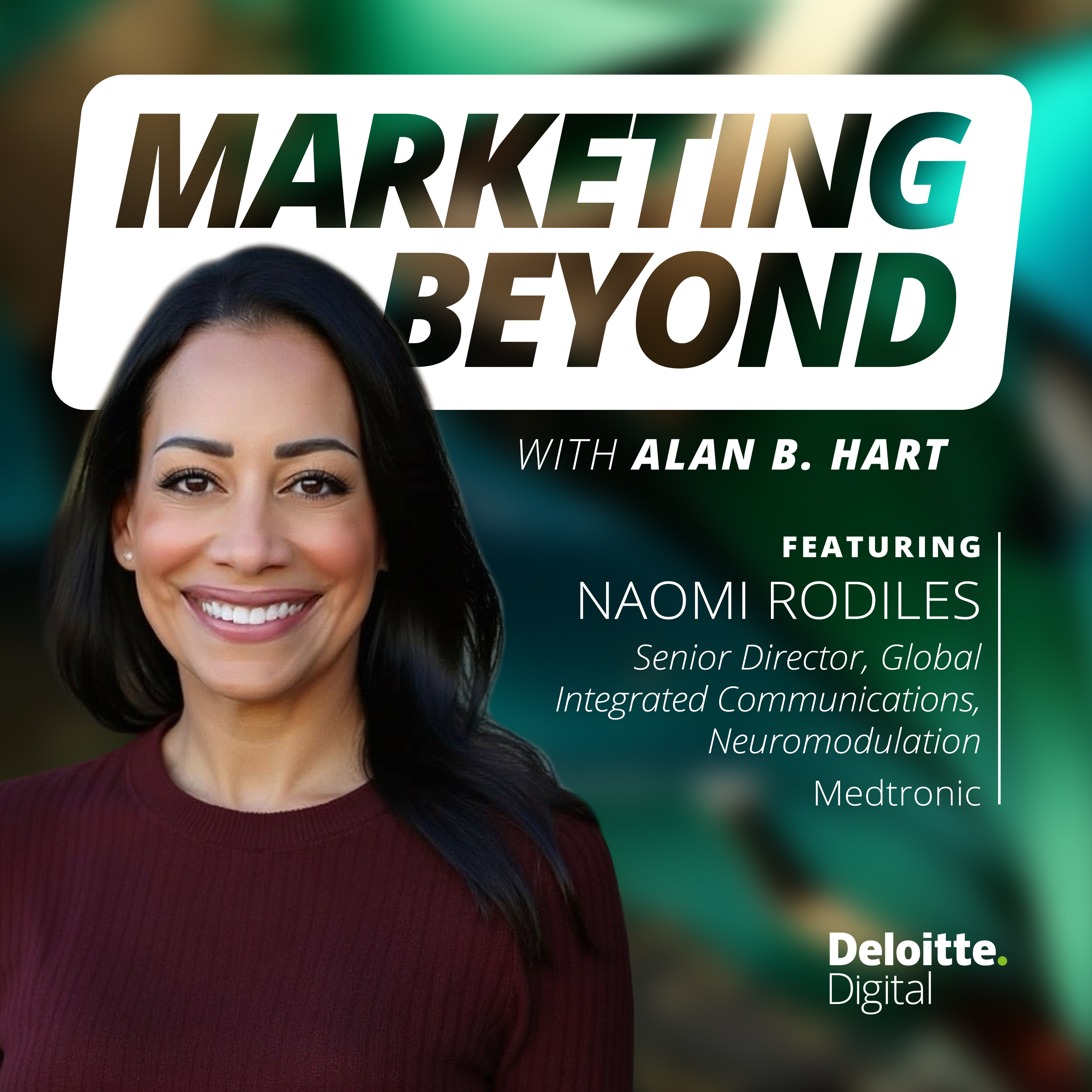
Marketing Beyond with Alan B. Hart
34: Reaching patients directly in medtech: Insights from Medtronic's Senior Director of Global Integrated Communications, Neuromodulation, Naomi Rodiles
00:20:11
Loading summary
Transcript41 lines
- [00:00]
Alan Hart
Today on the show, I've got Naomi Rodillas and she is the senior director of global integrated communications and neuromodulation for Medtronic. And she's been shaping the brand perception, reputation and digital engagement for all the therapies under that umbrella. And on today's show, we're going to talk about neuromodulation and the therapies that they're doing at Medtronic. We'll talk about how she markets those solutions and the digital transformation that she's been on. That and much more. With Naomi Radelis, are you ready to go beyond the basics of marketing? I'm Alan Hart and this is Marketing beyond, where I chat with the world's leading chief marketing officers and business innovators to share ideas that spark change and inspire you to challenge the status quo. Join us as we explore the future of marketing and its endless potential. Well, Naomi, welcome to the show.
- [01:01]
Naomi Rodillas
Thank you. Happy to be here.
- [01:03]
Alan Hart
Well, I'm almost never the cool one in any of these conversations, but you're like a special treat because your early job, I think at BET's Rap City back in the day, now I don't think you can get much cooler than that.
- [01:19]
Naomi Rodillas
Is it cool or is it cringe? No, that's super funny. Rap City, the basement takes me way back. That was like my first real job and what was a 10 year career as a broadcaster. So what that reminds me of is how, you know, looking back, how cool and how amazing pop culture has been and how big of an impact it's been on my life and, and my interests in addition to the power of storytelling, even if it's with something like music, television, that's always just been a big driver interest for me. Who gets hurt, who doesn't, what influences people, what doesn't. So that's, that's definitely been a goal and thread throughout my career.
- [02:10]
Alan Hart
Well, from those early days to now, you're at Medtronic, you're leading communications and marketing for neuromodulation. That's a big change. So help me. Like, how'd you end up where you are?
- [02:21]
Naomi Rodillas
I would say I've been really fortunate to be at this intersection of brand communications and marketing for the majority of my career and really strong focus on being a voice for those who may not have one or know little about, you know, what could benefit them and having a big role is that.
- [02:43]
Alan Hart
Gotcha. Well, tell me a little bit about this neuromodulation business. I've seen a little bit. It's very cool technology but it's also kind of complex. So maybe describe a little bit about the business.
- [02:55]
Naomi Rodillas
Medtronic is the largest ed tech company in the world. It's been around for 75 years. It's an incredible organization and very mission driven truly. I like watch the talk. When we think about patient centered we are very much interested and invested in building that direct relationship with PCMars. Most of our engagement historically has been with healthcare providers. Neuromodulation more specifically, which is the business where I lead integrated communications focused on therapies that solve the issues with aerodegenerative diseases like Parkinson's disease or other movement disorders and epilepsy as well as chronic.
- [03:43]
Alan Hart
Pain for folks that may not know what that looks like. With most of those you have some sort of tremor or unexpected motor activity. And so this solution, implanted solution helps to control that or turn down the noise. Is that, is that a good way to just think about it.
- [04:07]
Naomi Rodillas
Our therapies are absolutely incredible as a whole at Medtronic but specifically in this area of our business is truly, truly incredible. I'll sort of zone in here, laser in here on deep brain stimulation, which is the one that I think you are referring to. DBS uses electrical stimulation to support management of some of the symptoms and side effects of diseases like Parkinson's or other movement disorders as well as epilepsy. Basically a pacemaker for your brain and it is an absolute life changing therapy for for those who have been diagnosed with a movement disorder, for example come eligible four years post diagnosis. Really really great option for those where medication, the traditional medication is no working. It is quite incredible patients. I've talked to hundreds of them in my time in this role and they always tell me, almost always universally tell me that they wish they would have done it sooner, they would wish they would have known about it. Which has been a key opportunity in this role is that while some of our therapies, for example DBS has been around 30 years safe approving therapy with dramatic benefits for the patients but yet very little known. So therapy awareness is a huge challenge. We're setting out to to fix that.
- [05:43]
Alan Hart
I love it. Well, I mean it is such an impactful device and therapy and I've seen a video of it and so I my next question is like how do you market these solutions? Almost seeing is belief.
- [05:58]
Naomi Rodillas
Oh it is.
- [05:59]
Alan Hart
How do you think? I mean you've been marketing mostly I would imagine to the medical community but now it sounds like you're blending both medical and consumers.
- [06:10]
Naomi Rodillas
We understand and we always have engaged. I mean When I think about what I love so much about Medtronic is this true core to our mission. Everything we do from the technology that we create in very intentional way, we step through development. It's always with the patient at the center. So while we are not a B2C company, that investment in a direct relationship with consumers or, you know, patients has always been there, right? Very, very much has always been there. However, you and I both know that consumers are much more savvy about their health and health care and have taken a very invested role in driving their health care choices more than ever before. So we have a really great opportunity to be part of that ecosystem of education and informing about the therapies that they can benefit from. And one of our main focuses is to become more of a consumer facing marketing communications organization in these ways that we can have more of an active role across other channels, not just through our amazing HCP partners, but as an industry take a more concerted role in driving that conversation about the therapies that can help patients live on.
- [07:48]
Alan Hart
As you think about how marketing needs to evolve, like where does it need to go?
- [07:52]
Naomi Rodillas
I think we do a really, really great job of that relationship focused in most of our therapies, specifically in our neuromodulation business. So, you know, building relationships, trust, all of that credibility is not a problem. Like I said before, it's not the clinical efficacy that we're up against in terms of, you know, does it work, it's that people literally don't know our therapies exist. So we need a multichannel approach. And that means really being invested in engaging across many different channels in a digital first way with not just our traditional customer, but with consumers and caregivers and all different generations and helping them understand deeply the benefit of making a healthcare decision, like, you know, getting an implantable medical device, but in a way that is more educational and informational than, you know, promotional. When I think of that consumer, it's more about that relationship and building trust and I don't know, more of like an obligation to help people have access to the therapies that will help them than it is like a transaction I think as well.
- [09:19]
Alan Hart
I don't know if you would agree with this, but other categories of products and services that we all interact with as consumers are really defining what they expect, no matter what category we're going into. And so in this case.
- [09:32]
Naomi Rodillas
Exactly. And we need to, you know, frankly catch up because this is, it's not traditionally. Right, because you can't just, you know, go and put a, you know, a percept neurostimulator in your cart. Right. You can't do that. It is important though for those who are going to go and make that decision that they're well informed and they understand, you know, the, all of the benefits, the features and what kind of experience they're going to have with the technology. And no better people to educate than the, you know, developer and designer of the, of the therapy.
- [10:09]
Alan Hart
Love it. Well, you've been on this like transformation journey of like moving marketing I guess maybe towards the patient and the family. What have you learned going through that process that like may benefit other people that might be on that same gender?
- [10:29]
Naomi Rodillas
Well, I think one of the biggest learnings is what got us to this moment of understanding that we need to have a more active role in communicating with broader audiences beyond healthcare providers, beyond just our traditional channel of going to congresses and having an amazing salesforce. And you know, we're, we're on social media but, but how do we do that in a more, a broader, more meaningful, integrated way where there isn't just a channel where you will find information about us, but when someone goes searching for it, they'll find it. We need that same exact intentionality because the point that you're making is that that's what consumers expect. And so, you know, while again we're not making, there isn't a transaction or something to put in the card at the.
- [11:26]
Alan Hart
It.
- [11:27]
Naomi Rodillas
What it, what it is is a very well informed consumer that feels empowered and you know, we're doing our part to help them determine whether our therapies are the next best option for them.
- [11:40]
Alan Hart
That makes sense. That makes sense. And as you describe it, I'm thinking of, you know, the, you've got the education with the providers, the physicians, et cetera that you're doing and then you've, you're educating, informing and you know, essentially engaging and nurturing these patients and their families. And I would imagine that when that comes together, it's a much more fruitful conversation in the provider's office too.
- [12:06]
Naomi Rodillas
Oh my gosh, we have the most amazing health care partnerships. Our provider relationships are so incredible. They are. I mean this, this is an absolute beautiful marriage. Right? It's not to replace anything that's happening in the clinician's office, but to the point you're, it's that consumers are going in and having these conversations prepared. It's really interesting because I constantly hear from our healthcare partners, why aren't you doing more? This is so exciting. And why Is it taking so long for you to do this? Because this is what we need. We need people to understand, to be better informed about their options, and they feel very strongly industry has a role in doing that beyond, you know, what we do through them or with them, in partnership with them.
- [13:02]
Alan Hart
Well, one of the things we like to do is get to know you even a little bit better. We know what an early career job choice was. But my favorite question to ask everyone that comes on the show, has there been an experience of your past that defines and makes up who you are today?
- [13:17]
Naomi Rodillas
I knew at a very young age that I wanted to be a journalist. And, you know, this is back in the day when, I mean, I was. I remember being seven or eight years old, watching Katie Kirk and Bryant Gumbel on the Today show, and I was like, oh, my gosh, I love this. I love knowing what's going on in the world. I really had such an interest in people and their stories. And one of the things that I noticed early on is that there weren't a lot of people that looked anything like me on TV at that time or really the source of the news. And so I thought, wow, there's probably so many communities. As I got older, not at 7, 8 years old, but as I progressed in my quest to be a journalist, I knew that I could be a voice of a community that didn't have one. And that really, really interested me. And that's. That is 100% why I became a journalist, and it's why I'm still so motivated to do the work that I do today, because I get to be an advocate for, you know, patients who often lost their voice or don't have a voice or didn't even know our therapies were an option for them. So I take a lot of pride in that.
- [14:37]
Alan Hart
So it's hard to imagine what you might tell that younger Naomi. But if you were to look it back, what advice would you give young Naomi?
- [14:46]
Naomi Rodillas
Probably be something around burnout. You know, you, you, you know, hard work absolutely pays off, but not at the expense of your, you know, your, Your personal health, your. Your mental health, your. Your, your time standing in your power, being okay to say no, you know, not having to, you know, take it all on.
- [15:07]
Alan Hart
What's a topic you're trying to learn more about?
- [15:10]
Naomi Rodillas
Definitely AI. I've really embraced it. I definitely think it's here, and it's absolutely, especially in the work that I do, an asset. It is 100% going to be a game changer for content at scale Content efficiency, it's going to help us sort of superpower storytelling. And if we can find a way in a very highly regulated environment that I navigate as a marketing communications leader, if we can find a way to use AI to scale and drive content, that is going to be a game changer for us.
- [16:00]
Alan Hart
I agree, I agree with that. And what are you curious about in the world today?
- [16:05]
Naomi Rodillas
I'm also curious about AI for equity. So this is like a total aside. You know, health equity, educational equity and access. Those are like really, really true. Core to me, who I am, there's this, the startup actualized impact that is just doing this such cool work in building LMMs for educational organizations to help them expand access. I'm like, this is awesome. If they can unlock that, this is, you know, we're going to have a really much better world. So. So, yeah, very cool.
- [16:41]
Alan Hart
I think that, you know, information, getting the information in the hands of everyone that needs it is hugely powerful.
- [16:48]
Naomi Rodillas
Yes, exactly.
- [16:49]
Alan Hart
As you think about like opportunities facing marketers or potential threats, what do you see on the horizon?
- [16:56]
Naomi Rodillas
I think the threat is not. Is. Is resisting change. You know, it is somewhat cliche to say change is inevitable, but change is growth, change is power, change is transformation. Change is good, right? And it comes with its hard work. It is absolutely difficult to navigate and adapt, especially in large, complex, highly matrixed organizations like the one I work in. But being at the forefront or not even, even playing catch up in a world that we know is just going to continue to evolve and change, that's exciting. I mean, that is opportunity. And I think that maybe it's human nature, just this resistance to change. You know, speaking on AI flipping what it can't do or what it could be from the, you know, the negative to the positive is actually what I think we need more people to do. And instead of the resistance, like, how can we embrace this and use it for good?
- [18:09]
Alan Hart
Last question. We're at CES for doing this recording. And as you think about what you've seen so far, it's still early days at the conference. What do you think? What trend are you seeing, you think will change people's behavior this year in 2026?
- [18:26]
Naomi Rodillas
The one thing at CES that I think will be a game changer is AI finally transitioning to being helpful in everyday life. So from tools or flashy demos to actual useful behavior, change driving AI use cases.
- [18:49]
Alan Hart
Naomi, thank you for coming on the show. I appreciate it.
- [18:51]
Naomi Rodillas
Yeah, thank you. Foreign.
- [18:58]
Alan Hart
Hi, it's Alan again. Marketing beyond is a Deloitte digital podcast. It's created and hosted by me, Alan Hart and produced by Sam Robertson. We have even more cutting edge marketing insights headed your way. Be sure to subscribe to our channel to stay up to date with our latest episodes. I love hearing from listeners. Share your thoughts about the episode, the topic covered, or the show by commenting on this video or emailing me me@marketingbeyondeloitt.com if you're interested in more conversations with industry visionaries, we invite you to explore other Deloitte Digital podcasts@deloittedigital.com US Podcast. There you'll find the Marketing beyond webpage with complete show notes and links to what we discussed in the episode today. I'm Alan Hart and this is Marketing Beyond. The views, thoughts and opinions expressed are the speaker's own and do not represent the views, thoughts and opinions of Deloitte. The material and information presented here is for general information purposes only and does not imply endorsement or opposition to any specific company, product or service.