Loading summary
Transcript35 lines
- [00:01]
Amy Scott
Hey, hate to do this. Could we reschedule our morning hike?
- [00:04]
David Brancaccio
I was just about to ask the same next week.
- [00:08]
Amy Scott
Yes, it's Dunkin Original blend time. Staying at home with Dunkin'. Don't mind if I do.
- [00:13]
David Brancaccio
The home with Dunkin's where you wanna be.
- [00:16]
Amy Scott
This podcast is supported by Odoo. Some say Odoo business management software is like fertilizer for businesses because the simple, efficient software promotes growth. Others say Odoo is like a magic beanstalk because it scales with you and is magically affordable. And some describe Odoo's programs for manufacturing, accounting, and more as building blocks for creating a custom software suite. So Odoo is fertilizer Magic Beanstalk building blocks for business Odoo exactly what businesses need. Sign up@odoo.com that's o d o o.com.
- [00:48]
David Brancaccio
Everything you drink will be made by one company, it seems. I'm David Brancaccio. First, it is the economic policy that affects nearly every woman, man, child and pet in America when our central bankers dial in lower interest rates Stock index futures on this Monday are pointing to a lower opening on Wall Street. This follows a rally Friday seen as a response to America's central banker in chief, Jerome Powell saying changing economic conditions mean, quote, adjusting our policy stance. Market players took that to mean an interest rate cut is coming three and a half weeks from now. It is a shift from worrying about tariffs hurting inflation to a worry about tariffs and other factors hurting the job market marketplaces. Mat Mitchell Hartman reports the Fed's dual.
- [01:33]
Mitchell Hartman
Mandate from Congress is to pursue stable prices and maximum employment. Recently, a terrible July jobs report raised the risk that job creation is tanking. The Fed will try to head that off by lowering interest rates a bit, says MIT's Daniel Hornnung. But it still has to worry about inflation.
- [01:54]
Amy Scott
Tariff related price increases are just beginning to work their way through the system. And actually tariff rates are even increasing. It's likely that that inflation will move.
- [02:04]
Mitchell Hartman
Higher before the Fed meets to set interest rates in September. It'll have new inflation numbers to chew over.
- [02:10]
Amy Scott
Are the price increases only in tariff.
- [02:13]
Mitchell Hartman
Related import sensitive goods, electronics, tools, furniture.
- [02:18]
Amy Scott
Or are they spreading to other categories?
- [02:21]
Mitchell Hartman
Keep in mind inflation overall is still above the Fed's 2% target, says Jeffrey Roach at LPL Financial. We really need to see some of the categories that are a little more sticky in the services. Insurance prices ease up a little bit. Bottom line, says Roach, tariffs aren't going away. Inflation pressures aren't going away. But for the moment, the Fed appears ready to focus on risks to the job market First, I'm Mitchell Hartman for Marketplace.
- [02:51]
David Brancaccio
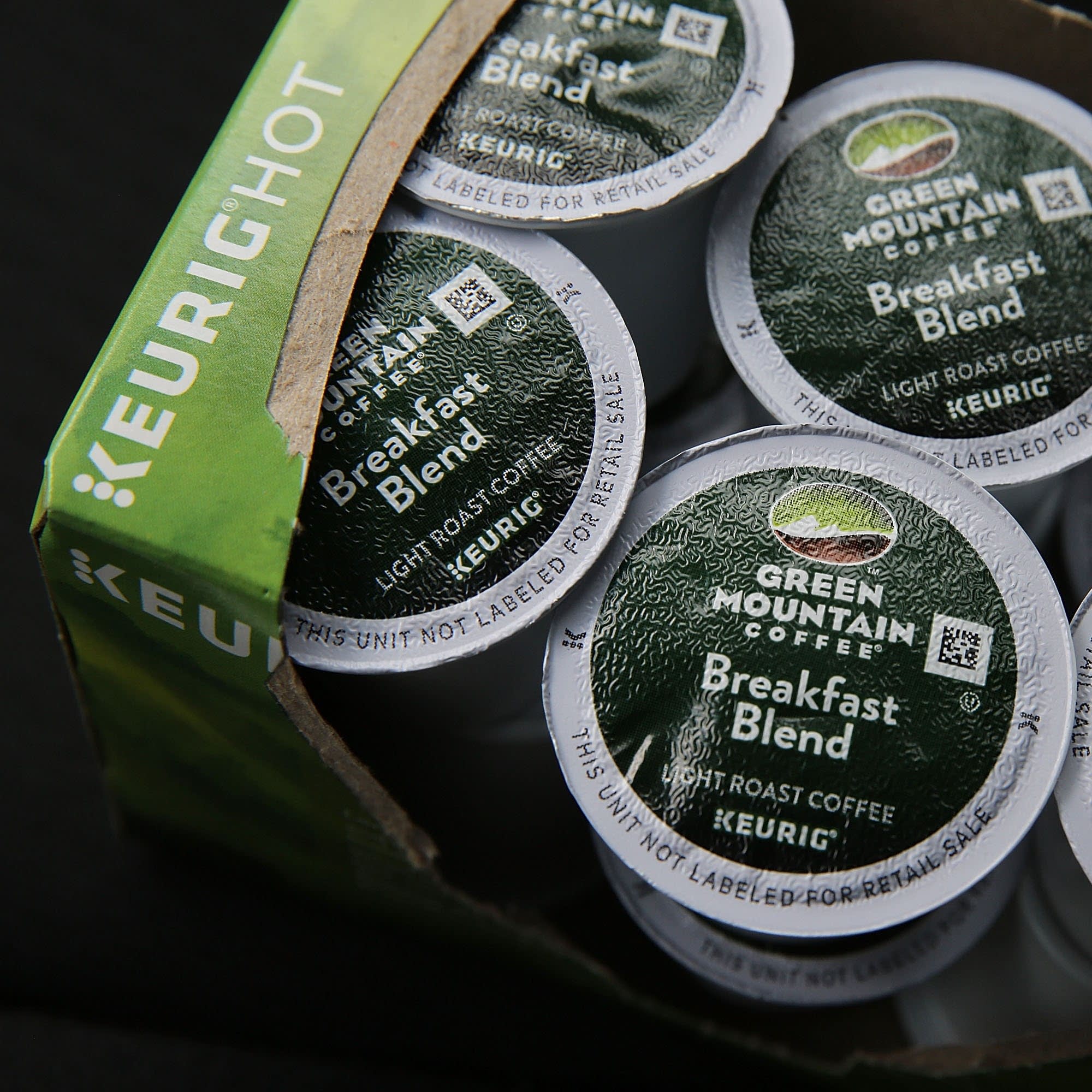
Now here's the cocktail recipe proposed by the mixologists at the mergers and acquisitions team. Lot of ingredients in the shaker, Dr. Pepper, 7up, Canada Dry, Clemado, Clamado, Yoohoo, A and W and then some Margaritaville mix. Plus add Pete's Gavaglia, Stumptown and Maxwell House coffees. Stir and enjoy. That is the cocktail produced by a merger just announced for the Keurig Dr. Pepper Corporation to buy J.D.E. peetz Corporation for $18 billion. Here's Marketplace's Nancy Marshall Genzer.
- [03:23]
Nancy Marshall Genzer
It's a tough time to be in the coffee business. Prices for coffee beans are up. Droughts caused a smaller harvest in Vietnam and Brazil. Plus President Trump has imposed a 50% tariff on Brazilian coffee beans. The deal Keurig Dr. Pepper and JDE Peetz has to be approved by shareholders and regulators. Assuming it is, the plan is to split into two firms, one focused on coffee, the other on soft drinks. Keurig Dr. Pepper's soda business is going strong. It includes brands like Dr. Pepper, Canada Dry, 7up and A and W. The company says the deal with JDE Peetz will increase efficiency, resulting in about $400 million in cost synergies. It expects the deal to close in the first half of next year. Hi, I'm Nancy Marshall Genser for Marketplace.
- [04:12]
David Brancaccio
And as a public service for non Dutch speakers like me, one of the Peet's coffee brands is not Dewey Egberts. I'm told it's Dauer Ekberts. Also. Apparently it's just pronounced Maxwell House.
- [04:45]
Grainger Announcer
If you work as a manufacturing facilities engineer, installing a new piece of equipment can be as complex as the machinery itself. From prep work to alignment and testing, it's your team's job to put it all together. That's why it's good to have Grainger on your side. With industrial grade products and next day delivery, Grainger helps ensure you have everything you need close at hand through every step of the installation. Call 1-800-GRAINGER click granger.com or just stop by Grainger for the ones who get it done.
- [05:16]
David Brancaccio
Higher ed is having a moment and for many campuses it is not a good one. Enrollment is slipping, costs are climbing, and White House policies are keeping away international students. Research funding and financial aid from gbh. Kirk Carapeza reports. At Clark University in Worcester, Massachusetts, this squeeze is already forcing big changes this semester.
- [05:38]
Kurt Carapezza
On Main street here in Worcester, there's a Salvadoran bakery right next to a Chinese Takeout joint. Just around the corner, there are Vietnamese and Dominican restaurants, a sign of Clark University's international flavor.
- [05:50]
Mitchell Hartman
Internationalization is a good thing. I'm proud of the fact that I walk around campus and it's extremely diverse.
- [05:56]
Kurt Carapezza
Political science professor Cyril Ghosh came to the US From India as a student. Today, as a faculty member, he values Clark's global feel. But he worries America is losing its edge as a destination for talent.
- [06:10]
Mitchell Hartman
The whole world thinks this. The Europeans are saying, welcome to us now with all the natural scientists. The Canadians are happy.
- [06:19]
Kurt Carapezza
A new report from the International association of educators projects the US could lose $7 billion and 60,000 jobs next year from a 15% drop in international students that would hit colleges, budgets and research and America's global competitiveness.
- [06:36]
Amy Scott
One of the real concerns is the timing.
- [06:38]
Kurt Carapezza
Clark president David Fithian says the school is bracing for fewer students from abroad in part because of a drop in visas.
- [06:46]
Amy Scott
Whether it's due to visas or the sense that America may not be the best place for international students to come right now, we're prepared to deal with that.
- [06:54]
Kurt Carapezza
Clark has been discounting its tuition by more than 60% just to fill its seats. Now it's looking at its lowest enrollment programs and in the coming years cutting more than a quarter of its faculty. The university is also repackaging degree programs for today's job market in climate, computing and health. Founded in the late 1800s, Clark has a legacy in advancing rocket science and psychology. Fithian says the liberal arts college is now taking matters into its own hands.
- [07:24]
Amy Scott
We're responsible for saving ourselves. I don't think that we should count on others to come and save us.
- [07:32]
Kurt Carapezza
In this polarized moment, colleges like Clark have few allies in the federal government.
- [07:37]
Amy Scott
Oh, there is no one coming to save them now.
- [07:40]
Kurt Carapezza
That's Kelly McManus with the Think tank Arnold Ventures. She says higher ed hasn't really changed in half a century.
- [07:47]
Amy Scott
No one likes to be forced into change, but it's coming. It's here.
- [07:51]
Kurt Carapezza
And McManus says college leaders who are really watching international and domestic trends know they have to rethink how they operate and make sure their programs actually lead to good jobs. In Worcester, I'm Kurt Carapezza for Marketplace.
- [08:07]
David Brancaccio
Checking markets again. S and p futures are down 3. 10 of a percent. The 10 year interest rate has eased slightly 4.28%. I'm David Brancaccio. You're listening to the Marketplace Morning report from APM American Public Media.
- [08:23]
Kyle Rysdal
Hey, everybody, I'm Kyle Rysdal, the host of Marketplace. I'm going to join Amy Scott on September 9th. She's the host of How We Survive and also science writer Elizabeth Kolber for a conversation about the economic consequences of our climate crisis. We're going to break down how the acceleration of climate change is going to disrupt jobs and entire industries, even our daily lives. But it's not all doom and gloom. We're also going to dive into the solutions that are giving us hope right now. Thanks so much to Odoo for sponsoring this free webinar, and you can sign up today at marketplace. Org Climate.