Loading summary
Transcript26 lines
- [00:00]
A
It's tax season, and at Lifelock, we know you're tired of numbers, but here's a big one you need to hear.
- [00:06]
B
Billions.
- [00:07]
A
That's the amount of money and refunds the IRS has flagged for possible identity fraud. Now here's another big number. 100 million. That's how many data points Lifelock monitors every second. If your identity is stolen, we'll fix it, guaranteed. One last big number. Save up to 40% your first year. Visit lifelock.com specialoffer for the threats you can't control. Terms apply.
- [00:32]
C
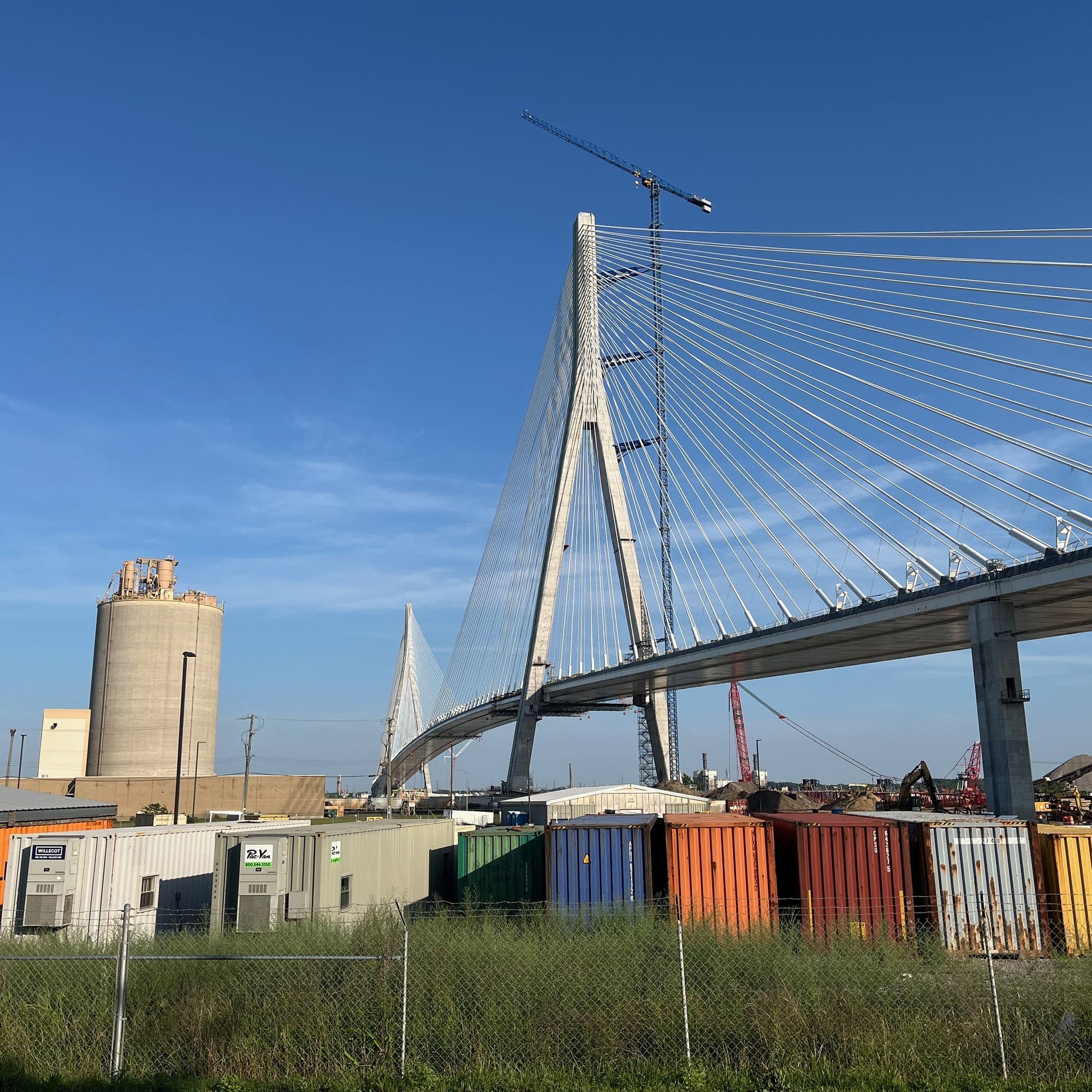
President Trump threatens to stop a new bridge between the US and Canada from opening. Live from the uk this is the Marketplace Morning Report from the BBC World Service. I'm Guy Kilty. Good morning. President Trump says he'll prevent a multi billion dollar bridge linking Canada and the United States from opening unless Canada compensates the U.S. in a lengthy social media post complaining about Canadian trade practices, Mr. Trump suggested the U.S. should own half of the Gordie Howe International Bridge, which connects the Canadian state of Ontario and the US state of Michigan. Here's the BBC's Gabrielle the Bridge, which.
- [01:10]
D
Will connect Ontario and Michigan, has been entirely funded by the Canadian government. But Mr. Trump said he wouldn't allow it to open until, in his words, the US had been fully compensated for everything Washington had given to Canada. It isn't clear what that means. The President criticized a range of Canadian trading practices, as well as Prime Minister Mark Carney's recent trip to Beijing. Mr. Trump again warned him against finalising a trade deal with China.
- [01:36]
C
Gabrielle Sungaleta, Drew Dilkins, the mayor of Windsor in Ontario, gave his reaction to our partners at cbc.
- [01:43]
E
I really can't believe what I'm reading, but it's par for the course. And let's go back. The Gordie Howe Bridge. This has been a bridge and a conversation that really, it goes back 25 years. There have been successive US presidents, there have been successive prime ministers that have been involved in the negotiations to get this bridge constructed. There have been presidential permits issued. And let's not forget Canada paid for the construction of the bridge. The US didn't want to pay. Canada said, we think it's important. We're going to pay for it, we're going to fund it to help facilitate international trade. And so the president, on one hand is criticizing a decision made by the government of Ontario to remove US alcohol off the shelves, but on the other hand, he's saying, I don't want to open a facility that's actually going to facilitate more trade between the two nations and then to layer on some conversation, I think the Post talked about China taking over hockey and banning hockey and stealing the Stanley cup or something like that. Like it's, it's just insane.
- [02:38]
C
Drew Dillkins there. Let's do the numbers. BP's share price is down around 5% this morning after the oil giant reported a drop in annual profits. The company blamed a 20% fall in the price of crude oil last year, and Japanese stocks extended gains on the back of Prime Minister Sanae Takaichi's general election win. The Nikkei 225 benchmark closed up 2%. Bangladesh and the US have signed a new trade agreement which will cut tariffs completely on clothes and textiles made using US Produced materials. Washington has also agreed to cut its reciprocal tariffs on Bangladesh from 20% to 19%. Bangladesh is the world's second largest exporter of clothes after China. Tariffs have been a defining part of President Donald Trump's economic agenda since he returned to office. For farmers, this has meant dealing with disruption to export markets at a time of higher costs and lower produce prices. The BBC's Sam Fenix had a chat with three farmers about their experiences.
- [03:39]
B
This relief will provide much needed certainty to farmers as they get Late last.
- [03:44]
F
Year, Donald Trump unveiled financial aid worth $12 billion for farmers to help them navigate exp export losses and persistent inflation. Ann Schwagel is a grain farmer in Minnesota and vice president of the Minnesota Farmers Union.
- [03:58]
G
The last year, with the number of tariffs, retaliatory tariffs, we have seen our markets really be increasingly volatile and our inputs are incredibly high right now. And many grain producers in the upper Plains, including myself, we're growing grains below the cost of production.
- [04:19]
F
Inflation has pushed costs up at a time when prices for some crops are down thanks to strong harvests and lower demand. On top of that, tariffs push Chinese buyers to look to other markets for soybeans. So have they returned as relations have thawed?
- [04:36]
G
We've seen some buying, but not nearly the same amount that there used to be in Minnesota. For every three rows of soybeans, two of them get exported and one of those goes directly to China. And when that market goes away, Minnesota producers are really hurt.
- [04:51]
F
Sid Miller is the Texas Agriculture Commissioner and an eighth generation farmer and rancher.
- [04:57]
H
We're seeing a little boost in soybean prices. Not as much as we'd like, but we're headed in the right direction.
- [05:03]
F
What about those short term cost increases though, that Ann was just talking about?
- [05:09]
H
Some of those production costs are coming down. They're not all going up. Diesel is an all time low. At least it is here in Texas. I filled up my truck for $2.75 a gallon.
- [05:18]
G
We're seeing the price of potash nearly double year over year and that's as a result of tariffs on that import which is primarily coming from Canada.
- [05:26]
F
Jeff Winton is a dairy farmer on Lake Erie in New York State. He's also been squeezed getting less for milk because wholesale prices have been affected by oversupply and changing consumer trends.
- [05:39]
I
A year or so ago we were getting $25, 100 weight. It's now down to $15. So we are really struggling. As a matter of fact, a number of farmers I know who are also dairy farmers are now getting second jobs off the farm in order to pay their bills, something that they never had to do.
- [06:03]
F
And Jeff says the administration's clampdown on immigration has contributed to labor shortages. Here's Texas Agriculture Commissioner Sid Miller again.
- [06:11]
H
We're gonna need less and less of migrant workers is because of technology. We have just about every kind of automated harvesting equipment now.
- [06:20]
G
How do you afford that when you're underwater on your cost of production? I can't afford unmanned tractor when I can't afford to pay my operating note. And I don't want a bailout. I want a market.
- [06:33]
F
Minnesota farmer Ann Schwagel concluding our chat there and emphasizing fundamental problems with the basic business model for many farmers in the US Today. I'm the BBC Sam Fenick for Marketplace.
- [06:46]
C
In the uk I'm Guy Kilty with the Marketplace morning report from the BBC World Service.
- [07:01]
J
Want even more Marketplace? Sign up to receive weekly tips from our editorial team to help you make the most of your money. Plus, you'll also be the first to know about exclusive Marketplace merchandise and local events. Text Marketplace to 80568 to sign up.