Loading summary
Transcript37 lines
- [00:01]
David Brancaccio
Hey there, and thanks for listening. We want to know more about our audience. Stick around at the end of this episode to hear about how you can help provide feedback and have a chance to walk away with a $75 gift card.
- [00:17]
Nancy Marshall Genzer
On WhatsApp, your personal messages stay private between you and whoever you send them to. So things like the passport numbers for your honeymoon stay between you and your fiance. And that video call for your gran's 80th stays in the family. Even your streaming password stays between you and your college roommates, who still ask for it every week in your group chat. Because on WhatsApp, your personal messages are yours. No one else can see or hear them, not even us. WhatsApp message privately.
- [00:49]
David Brancaccio
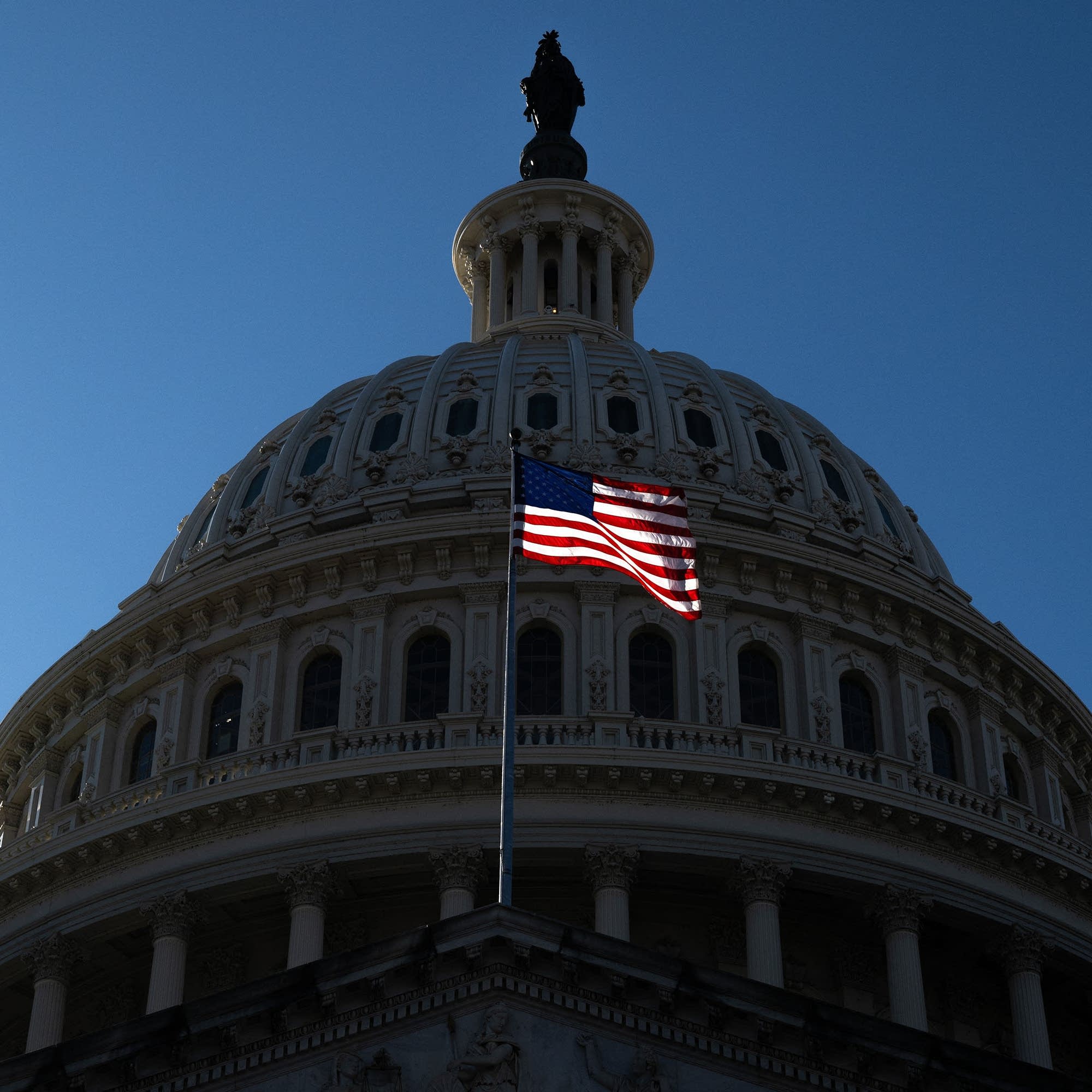
A creative way to get federal money sent back. I'm David Brancaccio in Los Angeles. Trump administration officials have identified a possible loophole that could enable what are often termed clawbacks. Marketplace's Nancy Marshall Genzer joins us now to explain.
- [01:06]
Bobby Kogan
Well, this is a process known as rescission. We talked about it yesterday, David. It basically cancels spending Congress approved. Since Congress has the power of the purse, only lawmakers can claw money back. And here's that loophole. Once the president sends a rescission request to Congress, the funding he wants to take back is frozen for 45 days. Now, funding approved by Congress for this fiscal year dies at the end of the fiscal year anyway, on September 30th. Bobby Kogan is a former Senate and White House budget staffer now at the center for American Progress. He explains it this way, and they're.
- [01:44]
Unnamed Speaker
Like, oh, we found a loophole where we can do it. Even if Congress says no, you send it up on on August 15th. Congress says no on August 20th. But you still have 45 days to pause, and you can pause at the end. That would be an insanely cool. But that's what they're arguing.
- [01:58]
David Brancaccio
And Nancy, administration officials are starting to make this case in public. White House Budget Director Russell Vogt, for example.
- [02:05]
Bobby Kogan
Yeah, he's been on CNN talking about this. Basically, the White House thinks it's found a way to formalize and legalize cuts made by Elon Musk's Doge Commission.
- [02:16]
David Brancaccio
Is it likely to actually work? Can you use this loophole?
- [02:21]
Bobby Kogan
Well, Bobby Kogan says the Government Accountability Office is the official arbiter here and it could challenge the admin in court.
- [02:30]
David Brancaccio
On this, Marketplace's Nancy Marshall Genzer, there's news. Procter and Gamble is cutting 7,000 jobs worldwide. The firm cites geopolitical volatility and consumer uncertainty taken as an oblique reference to the trade war.
- [03:02]
Zoe Saldana
Hi, Zoe Saldana. Welcome to T Mobile. Here's your new iPhone 16 Pro on us.
- [03:06]
Unnamed Speaker
Thanks. And here's my old phone to trade in.
- [03:09]
Zoe Saldana
You don't need a trade in. When you switch to T Mobile, we'll give you a new iPhone 16 Pro. Plus we'll help you pay off your old phone. Up to 800 bucks and you still get to keep it.
- [03:18]
Unnamed Speaker
There's always a trade in.
- [03:19]
Zoe Saldana
Not right now. @ T Mobile.
- [03:20]
Unnamed Speaker
I feel like I have to give you something in return for karma.
- [03:22]
Zoe Saldana
That's okay.
- [03:24]
Unnamed Speaker
I don't really have much in my purse. Oh, let's see. Hand sanitizer. It's lavender.
- [03:28]
Zoe Saldana
I'm good.
- [03:29]
Unnamed Speaker
Seriously.
- [03:30]
Let me check this pocket. Oh, mints.
- [03:32]
Zoe Saldana
Really, I'm fine.
- [03:33]
Unnamed Speaker
Oh, I have raisins. I'm a mom. Wait, wait one sec. I've got cupcakes in the car.
- [03:37]
It's our best iPhone offer ever. Switch to T Mobile. Get a new iPhone 16 Pro with Apple intelligence on us, no trade in needed. We'll even pay off your phone up to 800 bucks with 24 monthly bill credits. New line 100 plus a month on experience beyond Finance Agreement 999.99 and qualifying forwarded for well qualified plus tax and 10 connection charge. Payout via virtual prepaid card. Allow 15 days credits end and balance due if you pay off early or cancel.
- [04:01]
David Brancaccio
See t mobile.com now to social capital and saving a buck on rebuilding after a disaster. Our Altadena, California house was one of 16,000 structures burnt up in the big wildfires in January. In a video we posted as an excellent army Corps of Engineers crew cleared our ruins, I muse about the unpredictability of the cost per square foot for rebuilding when there's so much demand for labor and materials. It used to be maybe $400 a square foot to build from the ground up in that area before the fire. Now some are talking 550, 750, and the higher it goes, the fewer can afford to rebuild. Now we got multiple comments back from you with this. Good question. Was there a way homeowners could band together to keep costs down? By then, a loose knit group of neighbors was already working on this. It's called the Altadena Collective, which started after the Eaton fire among people with small Tudorish cottages built about a century ago. I spoke to one of the community members who helped spearhead that eff Tim Voortread, an architect who himself lost his cottage to the fire.
- [05:08]
Tim Vautri
I thought, wow, there's A lot of bad information out there. I need to find a way to inform people and not by just screaming into the void, which I think we all kind of did a little bit in the beginning. It needs to be in an organized fashion and help people understand what the process is for rebuilding and how many steps you have to take and what the sequence is. That's where we can share purchasing, essentially.
- [05:38]
Unnamed Speaker
These Englishy cottages that many people had. I had one, you had one.
- [05:43]
David Brancaccio
Both burned.
- [05:45]
Unnamed Speaker
They had, for instance, many of them, distinctive windows. They seem expensive to duplicate. But your idea would be if a whole bunch of people needed windows like that, we might be able to get a price.
- [05:55]
Tim Vautri
Yeah, I mean, the way you make a window, let's say you do it out of fiberglass, which is more cost effective than wood. It's also pretty fire resilient, which is a good practice these days. You extrude that in bulk. And once you say, all right, this is a funky shape that we have to do. A lot of these Jane's cottages had some very interesting window shapes, but if we're doing that 40, 50 times, they start to make fixtures in the factory that are specific to that shape, and then it becomes an assembly line, even at a small scale. So more efficient, more cost savings.
- [06:37]
Unnamed Speaker
We don't know what's coming. Tariffs, we don't know what's coming. Labor. There's a lot in flux in the general economy that affects people in this area as well.
- [06:46]
Tim Vautri
However, from the alternate collective perspective, because we're trying to be a resource that helps as much of the community as possible, just going into the right people and saying, hey, let's have a dedicated price book for Altadena. And contractors or homeowners will come in to you. Whether it's raw material or finished material will come into you, and they get this special treatment. That's what we're trying to negotiate.
- [07:13]
Unnamed Speaker
Might be more efficient and you might get a better price. If you can go to a builder and say, hey, there's seven houses all on this block that would like to use you.
- [07:23]
Tim Vautri
I think there's two elements that help that similarity in the actual structure of the home and proximity. If one contractor is able to lock up three or four adjacent homes or homes within a couple blocks radius, their mobilization costs and their logistics significantly reduce, and then they can start to sequence and stage their construction. So a lot of contractors say they have five homes next to each other. They'll have one or two framing crews. You know, one gets two weeks here, the next one gets the next two weeks. And then certainly with material drops or deliveries. Ordering. Yeah, ordering wood flooring for five homes is so much more cost effective than ordering it for one. These were done fairly cheaply 100 years ago and we need to take the benefit of that knowledge and replicate it.
- [08:20]
Unnamed Speaker
Tim Vautri, thank you very much.
- [08:22]
Tim Vautri
My pleasure.
- [08:23]
David Brancaccio
We're speaking about a community group that's arisen from the fires called the Altadena Collective Marketplace. APM on Facebook, Instagram and TikTok have videos with what I'm learning from those fires. In Los Angeles, I'm David Brancaccio with the Marketplace Morning Report from apm, American Public Media. Really quick, before you go, please complete a short anonymous survey by going to marketplace.org forward/survey. It should only take about 10 minutes. And as a token of our appreciation, you can enter your name to win a $75 gift card. When you've completed the survey, you do all of us at Marketplace a huge favor by filling it.