Loading summary
Transcript27 lines
- [00:00]
Wealth Enhancement Advertiser
This Marketplace podcast is supported by Wealth Enhancement who ask, do you have a blueprint for your money? Wealth Enhancement can help you build the right blueprint for investing, retirement, tax, and more. With offices nationwide, there's an advisor who's ready to listen and craft a blueprint for your future. Find out more@wealthenhancement.com build.
- [00:26]
Nyquil Advertiser
When the flu is keeping you up at night, don't try to tough it out. Knock out your flu symptoms with NYQUIL Intense Flu. You got this. It provides powerful relief of your flu symptoms so you can sleep well through the night. Nyquil Intense Flu the nighttime sniffling, aching, aching fever. Best sleep with a flu medicine. Use as directed. Keep out of reach of children A.
- [00:49]
Sabri Benishour
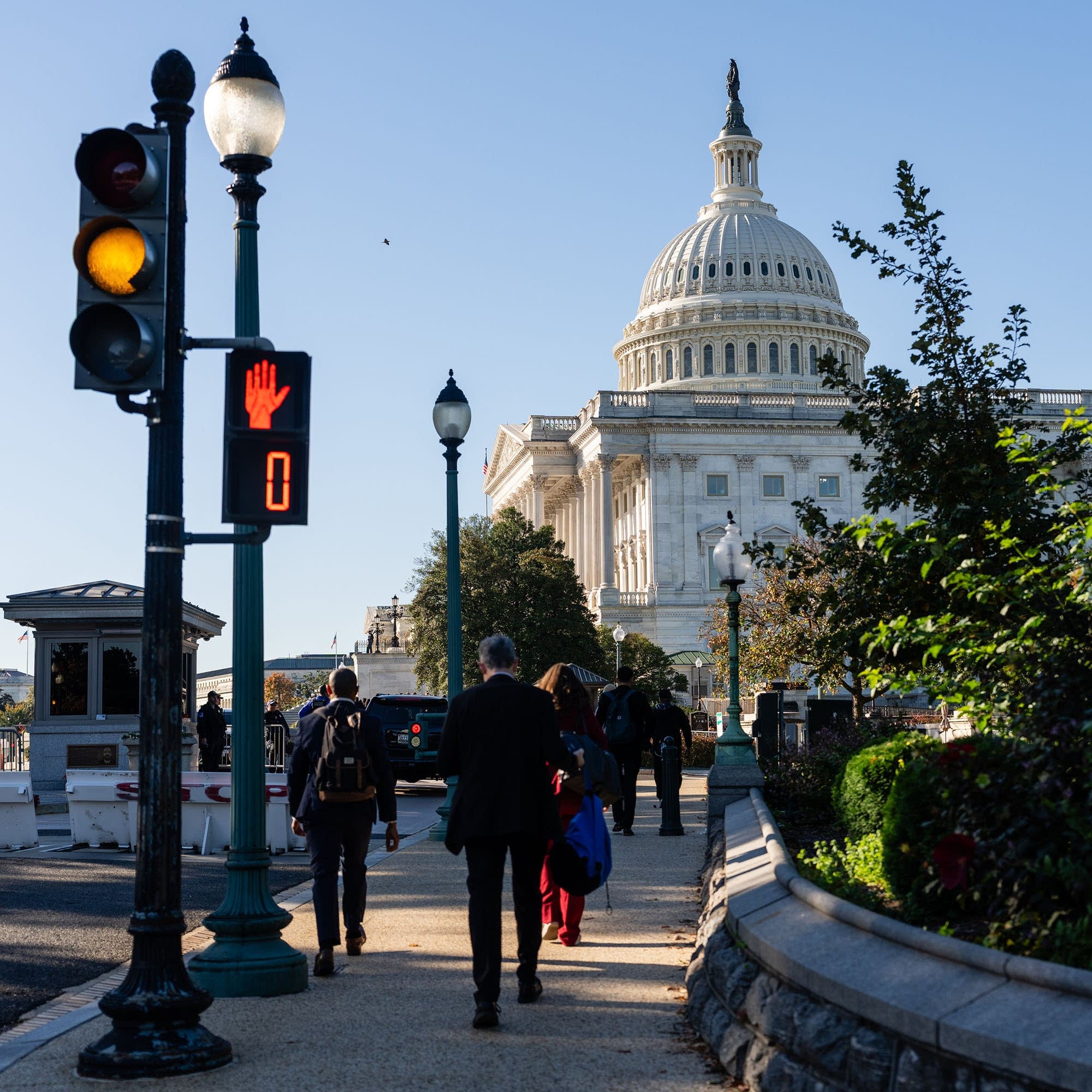
Defense spending bill that is about much more than defense spending From Marketplace, I'm Sabri Ben, ashore in for David Brancaccio. This week the Senate is set to take up the $900 billion National Defense Authorization Act. The House passed it last week. It is more than 3,000 pages of defense policy planning that the Senate will have to dig through. The actual funding of all these plans comes later. The bill includes a 3.8% pay increase for members of the military. It also includes $400 million of security assistance to Ukraine. But there's a whole lot of stuff in this bill that is not defense related at all. Marketplace's senior Washington correspondent Kimberly Adams has more.
- [01:33]
Kimberly Adams
The NDAA is considered a must pass piece of legislation, and because it's one.
- [01:37]
William Hartung
Of the few bills that always passes, people throw all kinds of things in there. All kinds of controversial debates will happen.
- [01:44]
Kimberly Adams
William Hartung is with the Quincy Institute for Responsible Statecraft. The House version would cut $1.6 billion in climate related spending and another 40 million by rolling back diversity, equity and inclus efforts.
- [01:57]
William Hartung
It's kind of like a lightning rod for things that aren't going to happen otherwise because Congress, you know, really isn't getting a lot done these days.
- [02:04]
Kimberly Adams
One change getting a lot of pushback has to do with the airspace near the nation's capital opening it back up to helicopter training flights close to a year after one was involved in a deadly plane crash. Here's National Transportation Safety Board Chair Jennifer Homendy speaking at a press conference after the bill passed.
- [02:22]
Jennifer Homendy
This is a significant, significant safety setback. It represents an unacceptable risk to the flying public, to commercial and military aircraft crews, and to the residents in the region.
- [02:36]
Kimberly Adams
Several senators from both parties are already calling to strike that provision. In Washington, I'm Kimberly Adams for Marketplace.
- [03:11]
Superhuman Advertiser
This Marketplace podcast is supported by Superhuman, the world is buzzing with AI tools, but instead of making things easier, they've made your workflow overwhelming. You're stuck copying and pasting, context switching and juggling too many apps. There's now a better way that outsmarts the work chaos. Meet superhum, the AI productivity suite that gives you superpowers everywhere you work with Grammarly, mail and coda. Working together, you get proactive help across your workflow, from writing to preparing for meetings, presentations, and so much more. Think of Superhuman as your AI dream team, proactively helping you go from to do to done faster. Superhuman knows what you might need and offers suggestions. Whether you're drafting emails, creating documents, or more. It guides you in the moment so you can sound like your best self and stay focused on what matters. There are even specialized agents designed to collaborate seamlessly and amplify your impact. Unleash your Superhuman potential today. Learn more@superhuman.com podcast that's superhuman.com podcast the.
- [04:10]
Range Rover Advertiser
Adage says it isn't what you say, it's how you say it. And when you lead with power, poise and performance, you're making an impact from the start. Introducing the Range Rover Sport, designed to set an example. With its assertive stance and refined drive, it blends dynamic elegance with agile precision. Whether you're navigating city streets or conquering rugged terrain, its cutting edge innovations, including a cabin air purification system and active noise cancellation, offer unrivaled comfort, control and peace of mind. Seven terrain modes Check A choice of powerful engines, including a plug in hybrid with a 48 mile range. Absolutely take on anything with a Range Rover Sport. Build yours today@range rover.com US Sport Explore the Range Rover Sport@range rover.com US Sport.
- [05:07]
Sabri Benishour
Moving money out of China in significant amounts is hard. The government puts tight limits on it, partly to ensure financial stability. But where there is a will, there is a way. And people have figured out how to get around these limits. And that has spawned a global industry of money laundering dominated by China. People trying to move money out of that country are paired, perhaps unwittingly, with criminal groups in the US or elsewhere trying to launder their money. More than $150 billion worth a year, the US Treasury Department estimates. This is all according to reporting from the Economist magazine. And joining us to talk more about this is Su Lin Wong, Asia correspondent for the Economist and host of the Scam Inc. Podcast. Welcome.
- [05:54]
Su Lin Wong
Hi Sabri. Great to be here.
- [05:55]
Sabri Benishour
So can we just start by talking about how money laundering works? Can you explain something called the mirror.
- [06:04]
Su Lin Wong
Transaction so you've got a drug cartel in the US and it needs to launder money. Then you've got a mother in Shanghai who's very wealthy and has a son who's studying in New York City, and she wants to buy him an apartment there. But she doesn't have a US bank account and she doesn't have US Doll. China has really strict capital controls. Individual Chinese people, in theory, can only bring out US$50,000 each year. So to get around this, she contacts a broker online, and she will transfer renminbi from her Chinese bank account A to the broker's Chinese bank account B, and she will be paid or reimbursed in US Dollars in some American bank account that she has access to, minus the broker's fee. That is actually often drug money. And so then, well, how do the drug cartels get reimbursed? They might want Chinese renminbi to buy, you know, fentanyl precursors in China or to buy legitimate goods that perhaps they're now exporting to Mexico. These brokers basically run massive underground banks.
- [07:17]
Sabri Benishour
So it sounds like it's. It's kind of like, I will pay your bill in the US if you pay my bill in China.
- [07:27]
Su Lin Wong
Yes, exactly.
- [07:29]
Sabri Benishour
So how and why did China become a leader in. In this world?
- [07:35]
Su Lin Wong
Until not that long ago, there were lots of different criminal groups that engaged in money laundering. But what we've really seen over the past decade is a consolidation of the industry, and that's to do with the Chinese government making it much, much harder for ordinary Chinese to take money out of China. There is actually massive demand from wealthy Chinese people who want to get their renminbi out of China. And it just so happens that these professional underground banks or money laundering services have huge amounts of illicit funds that come from drug sales and online scams and all kinds of other criminal activity that they need to launder.
- [08:19]
Sabri Benishour
Is this something that authorities have a grip on?
- [08:24]
Su Lin Wong
Not really. It's actually very difficult to even estimate the size of this industry because so much of this is happening underground or in the shadows or in the grey economy. Based on my reporting, law enforcement around the world, whether it's it's in China or the US is finding it very, very difficult to get a grip on this.
- [08:44]
Sabri Benishour
Su Lin Wang, Asia correspondent for the Economist and host of Scam Inc. A podcast about the global RIS of online fraud. Thank you so much. This was super interesting.
- [08:55]
Su Lin Wong
Thanks so much for having me.
- [08:57]
Sabri Benishour
Irobot, the company that makes the Roomba vacuum cleaners, has filed for Chapter 11 bankruptcy. IRobot's profits have been hit by competition from Chinese rivals, and it is facing a 46% tariff from the Trump administration on imports from Vietnam, where it makes vacuums for the US Market. Roomba owners were worried their vacuums would become bricks after the bankruptcy. Irobot says there will be no disruptions. In New York, I'm Sabri Benishour with the Marketplace Morning Report. From APM American Public Media.
- [09:39]
Million Bazillion Advertiser
Sometimes kids ask questions that reveal just how much adults still need to learn. Like can you explain what causes an economic bubble? And why are things so expensive at the airport? Or how much national debt might be too much? Fear not. Million Bazillion is back with a new season to help you and your kids become pros at understanding how money shapes the answers to all those questions and more. Listen to the latest season of Million Bazillion on your favorite podcast.
- [10:07]
Sabri Benishour
Apparently.