Loading summary
Transcript30 lines
- [00:01]
Lifelock Spokesperson / Reema Reis
Lifelock.
- [00:01]
Lifelock Customer Service Representative
How can I help?
- [00:02]
Customer / Podcast Guest
The IRS said I filed my return, but I haven't.
- [00:05]
Lifelock Narrator / Advertiser
One in four tax paying Americans has paid the price of identity fraud.
- [00:08]
Lifelock Customer Service Representative
What do I do?
- [00:09]
Customer / Podcast Guest
My refund though. I'm freaking out.
- [00:11]
Lifelock Customer Service Representative
Don't worry, I can fix this.
- [00:12]
Lifelock Narrator / Advertiser
Lifelock fixes identity theft guaranteed and gets your money back with up to $3 million in coverage.
- [00:18]
Customer / Podcast Guest
I'm so relieved.
- [00:19]
Lifelock Customer Service Representative
No problem. I'll be with you every step of the way.
- [00:21]
Lifelock Narrator / Advertiser
One in four was a fraud paying American. Not anymore. Save up to 40% your first year. Visit lifelock.com Specialoffer terms apply.
- [00:32]
Marketplace Reporter / Narrator
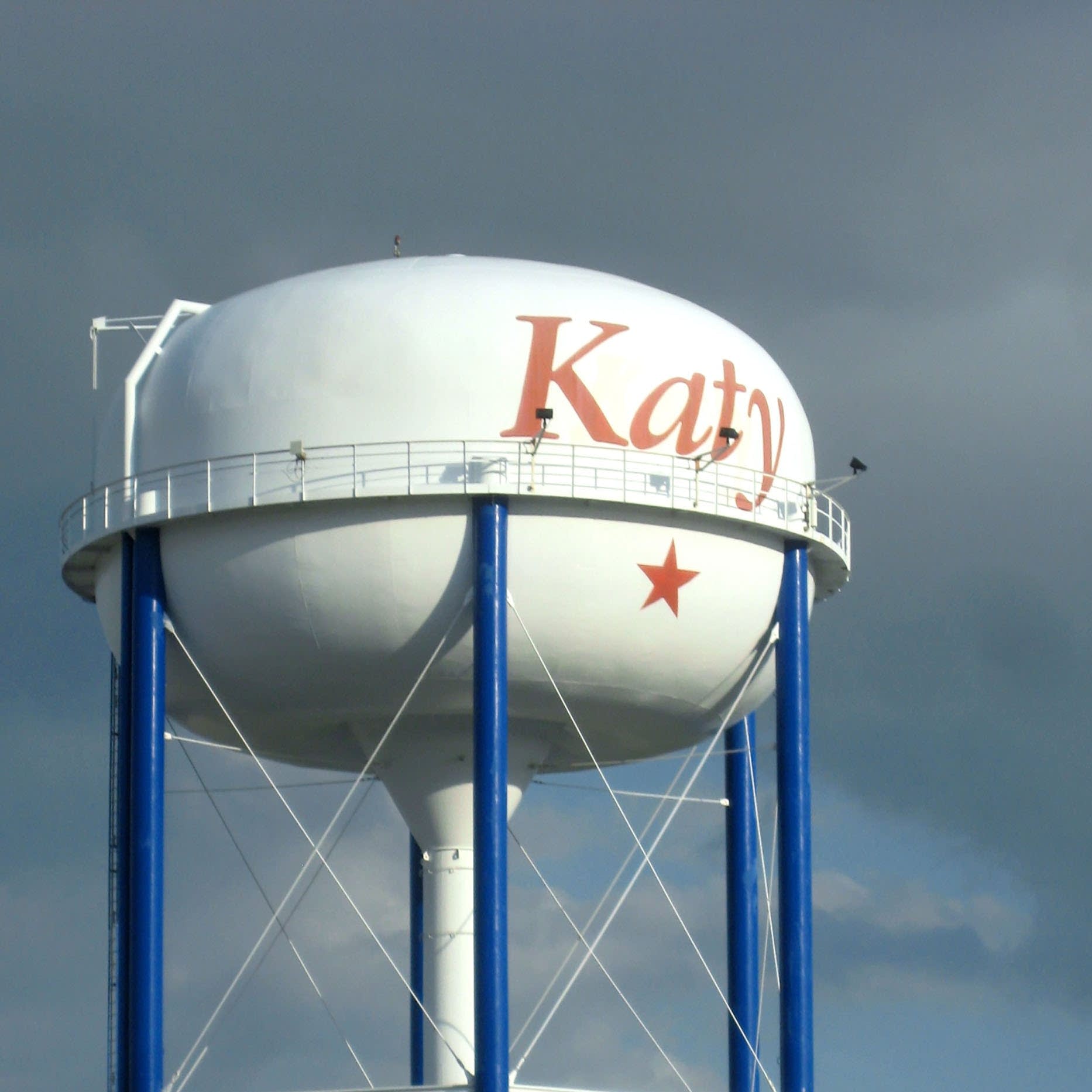
A visit to a Texas suburb that sits at the intersection of oil, immigration and Venezuela. I'm David Brancaccio. More refiners of Gasoline in the U.S. including Citgo and Phillips 66, are moving to buy Venezuelan crude directly from Venezuelan producers. This as the Trump administration has eased the licensing following the US Arrest of Venezuela's leader in early January. Meanwhile, the administration is taking away work permits and visas from many Venezuelans in the US to to pressure people to return to their native country. One place where this is playing out is a Houston suburb. Marketplace's Elizabeth Troval reports from Katy, Texas.
- [01:11]
Lifelock Customer Service Representative
La Pradera Latin Market, a clean, well lit store inside a dingy strip mall, you can buy Venezuelan coffee, chocolate and cheese. Ladelin Castellanos pulls a soft white cheese out of the fridge along with a container of special cream. Well, she shows me around. One of her regulars stops by. Hola, vien amiga. Adelante Castellanos opened her shop in 2019 to cater to a Venezuelan population that has grown to roughly 75,000 people in the Houston metro area. So many of them live in the small suburban city of Katy it's sometimes called. Katie Suela Castellanos and her husband chose Katy for the good schools and affordable homes. But this recent wave of immigration is not how Houston's relationship with Venezuela started. Before Houston received tens of thousands of Venezuelan immigrants, it was Americans who sought opportunities in Venezuela. In this training video from the 1950s, an American father is assigned to work in Venezuela's oil fields and is writing back home to his wife. Dear Anne, well, here I am at Lagunillas in the oil fields.
- [02:30]
Marketplace Reporter / Narrator
The offshore wells run along the edge of Lake Maracaibo for more than 40 miles.
- [02:35]
Lifelock Customer Service Representative
In Houston, Rice University professor Francisco Monaldi, who's from Venezuela, often meets Americans who worked there decades ago.
- [02:44]
Lifelock Narrator / Advertiser
I keep finding when I give a speech here people that tell me I lived in Venezuela, I was a petroleum
- [02:51]
Lifelock Customer Service Representative
engineer and now that the US Government wants to develop Venezuela's oil sector. We may start to see this dynamic again. Monaldi says U.S. companies are seeing which Venezuelans in places like Haiti might be interested in going back to Venezuela to work in the oil sector.
- [03:09]
Lifelock Narrator / Advertiser
They know the culture. They have families there. Venezuelans could serve as sort of guides to going into the country.
- [03:18]
Lifelock Customer Service Representative
A stint back in Venezuela at a big oil company may be attractive for some. But for Ladelin Castellanos and Katie, she fears returning to Venezuela would endanger her family. Rebuilding the country will take time, and her kids were raised here. But families like hers may not have a choice. The Trump administration has revoked protections and work permits for hundreds of thousands of Venezuelans. She says even if you have an id, even if you've had a work permit for years, even if you've followed immigration laws, there's no guarantee you won't be detained and deported. In Katy, Texas, I'm Elizabeth Troval for Marketplace.
- [04:12]
Marketplace Reporter / Narrator
Now to news today from the Commerce Department on the US Trade deficit, which widened in December, ballooning by nearly a third. The gap for all of 2025 was the biggest on record. Now, that's not the intention of our leaders, but there it is. Some of it had to do with, like everything else, artificial intelligence. Let's check in with Diane Swonk, chief economist at the audit, tax and advisory firm kpmg.
- [04:35]
Diane Swonk
What we're seeing is imports of AI inputs to data centers have soared. And part of that is to1, the AI arms race and the fact that the administration have given the tech behemoth waivers on AI imports. The inputs, we don't produce them in the United States. We import almost all of them. And as a result, in order to compete in the arms race, they had to give tariff waivers for the tech companies to build up their data centers, which is what we're seeing going on.
- [05:05]
Marketplace Reporter / Narrator
KPMG chief economist Diane Swonk there will get the index of leading economic indicators in just a few minutes. Stock market, The Dow is down 211 points, 4 10%. The S&P is down 3. 10%. The Nasdaq is down 5. 10 of a percent. Crude oil is up more than 2% now, 6,650. In New York, this with the biggest U.S. buildup of air power in the Middle east since the Gulf War as US Iran nuclear talks continue.
- [05:50]
Customer / Podcast Guest
With VRBoCare. Help is always ready before, during and after your stay. We've planned for the plot twists, so support is always available because a great trip starts with peace of mind running
- [06:05]
Odoo Advertiser
a business is hard enough, so why make it harder with a dozen different apps that don't talk to each other? Introducing Odoo, the only business software you'll ever need. It's an all in one fully integrated plan platform that makes your work easier from CRM, accounting, inventory, E commerce, and more. And the best part? Odoo replaces multiple expensive platforms for a fraction of the cost. This is why over thousands of businesses have made the switch. So why not you try Odoo for free@odoo.com that's O D O O.com
- [06:36]
Marketplace Reporter / Narrator
Union membership in America rose last year just slightly, but any increase is newsworthy. This even as the Trump administration was firing unionized federal workers and curbing federal agency for protecting the rights of people to organize and join unions. Marketplace's Nancy Marshall Genzer has more.
- [06:54]
Customer / Podcast Guest
The Bureau of Labor Statistics says 10% of U.S. workers were in a union last year and full time unionized workers made $230 more a week than non union employees. Black workers continued to have the highest rate of union membership. Union membership among public sector government workers was more than five times higher than the rate for employees in the private sector, according to the BLS and the agency. The public sector union membership rate increased by more than half a percentage point last year. The left leaning Economic Policy Institute says federal workers are turning to unions amid the Trump administration's layoffs. It says an additional 40,000 federal employees joined a union last year. President Trump fired the chair of the National labor relations board in 2025, leaving the board without a quorum for most of the year. It needs a quorum to consider violations of labor laws. I'm Nancy Marshall Genser for for Marketplace.
- [07:51]
Marketplace Reporter / Narrator
Nancy's near Washington. I'm in Los Angeles. This is the Marketplace Morning Report. From APM American Public Media.
- [08:05]
Lifelock Spokesperson / Reema Reis
What if the most romantic thing you could do is plan for the worst case scenario?
- [08:10]
Customer / Podcast Guest
I think there's nothing more romantic than actually knowing and being prepared for the future. Why would you want to have a messy divorce? That's unromantic.
- [08:20]
Lifelock Spokesperson / Reema Reis
I'm Reema Reis and this week on this Is Uncomfortable. We're talking prenups, the myths that make them feel taboo, what they actually protect, and the bigger questions they bring up about love and power. Listen to this is Uncomfortable. Wherever you get your podcasts.