Loading summary
Transcript31 lines
- [00:00]
Odoo Advertiser
Running a business is hard enough, so why make it harder with a dozen different apps that don't talk to each other? Introducing Odoo, the only business software you'll ever need. It's an all in one fully integrated platform that makes your work easier from CRM, accounting, inventory, e commerce, and more. And the best part? Odoo replaces multiple expensive platforms for a fraction of the cost. This is why over thousands of businesses have made the switch. So why not you try Odoo for free@odoo.com that's o d o o.com the
- [00:30]
Marketplace Morning Report Host
Marketplace Morning Report podcast is supported by Three Day Blinds. Shop for blinds from the comfort of your home with a local professional design consultant who brings physical samples, measures your space and handles expert installation. See what works in your space before you buy. Book a free no obligation consultation and save with buy one. Get one 50% off at three day blinds.com morning. That's the number three D A Y blinds.com morning one year of the one
- [01:03]
Kimberly Adams
big, beautiful bill act and more than 250 years of the American economy From Marketplace in Washington, I'm Kimberly Adams. We're just a couple of days shy of the one year anniversary of President Trump signing his big tax and spending bill into law. Changes in the law make it harder to qualify for programs like food assistance, and some states are already seeing dramatic declines in SNAP enrollment. Marketplace's Nancy Marshall Genzer reports the impact
- [01:30]
Nancy Marshall Genzer
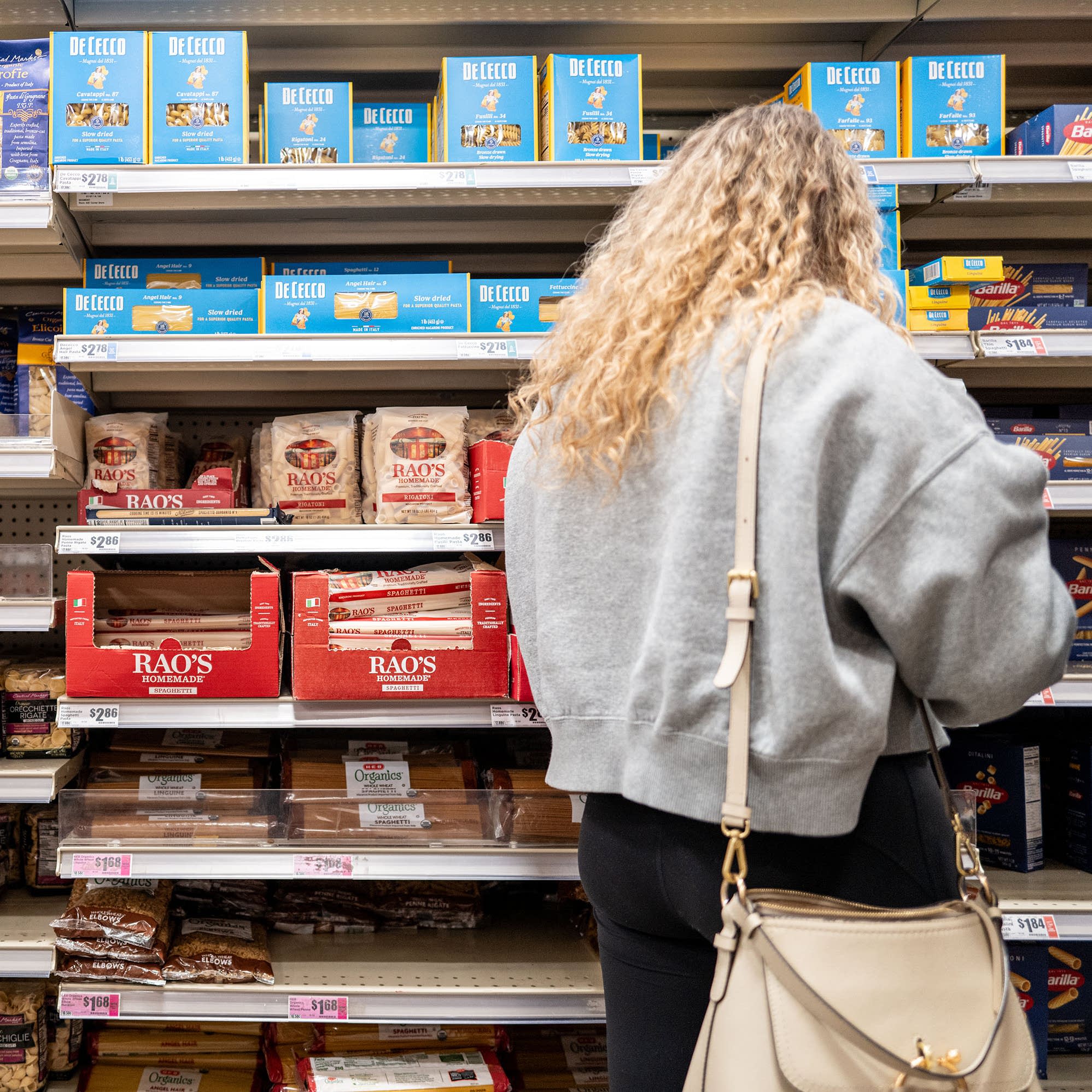
of the huge tax and spending law, also known as HR1, hit SNAP beneficiaries before the law was even a year old. Ed Bolen at the center on Budget and Policy Priorities says between the law's July 2025 enactment and March of this
- [01:46]
SNAP Beneficiary / Interviewee
year, over 4 million people have dropped off SNAP. That's close to 10% of the overall caseload.
- [01:53]
Nancy Marshall Genzer
The law now requires new groups of recipients to prove they have a job like adults without a disability up to age 64, who don't live with dependent children, or who live with kids over age 14. Boland says the new requirements also apply to young adults aging out of foster care, veterans and people experiencing homelessness.
- [02:13]
SNAP Beneficiary / Interviewee
Historically, we know people lose benefits when they're subjected to that work requirement because they're unable to prove that they're working enough hours to stay eligible.
- [02:22]
Nancy Marshall Genzer
About 85% of SNAP households do include a working adult, according to Census Bureau data. Boland says the drop in SNAP recipients is also due to new rules for states. They decide who qualifies and who doesn't, and sometimes they make mistakes awarding a SNAP applicant too much or too little. Right now the federal government pays for 100% of SNAP benefits, but if a state's error rate reaches 6%, they have to pay part of that cost. Gina Platanino at the Food Research and Action center says that's something the states are taking great pains to avoid. She says they're imposing more requirements for benefits, but staffers are overwhelmed by the additional paperwork.
- [03:04]
Kimberly Adams
Phones are now being picked up because historically state agencies have been underfunded.
- [03:09]
Nancy Marshall Genzer
So people who can't get through to state agencies to do that verification lose their SNAP benefits. That happened to 32 year old Dejan Limore. He moved to Georgia from Missouri in late 2024. He'd received SNAP benefits in Missouri but had to reapply in Georg. He did get a benefit card there but couldn't log in to activate it. He couldn't get through to his local SNAP office on the phone, so went
- [03:33]
SNAP Beneficiary / Interviewee
in person and then whenever I did go up there, they would hit you with the oh, we were supposed to like call or try to make an appointment and it's like no one's answering the phone.
- [03:41]
Nancy Marshall Genzer
Limor says he never could activate that card, even though he tried for a year. The card is expired now. He thinks it had about $900 on it, money he could have used to feed his seven year old son. Tobias Limor had to leave Georgia and move in with his parents in Kansas. He had a toe amputated due to his diabetes and lost his job helping manage a trailer park. Now he has to apply all over again for SNAP in Kansas while continuing to look for work. In the meantime, he's eating less to save money.
- [04:12]
SNAP Beneficiary / Interviewee
I do a lot of soup bases as well, so tomato soup, chicken noodle soup, fruit. The crackers with my soup too kind of helps fill up as well.
- [04:20]
Nancy Marshall Genzer
I wanted to ask someone at the Agriculture Department, which runs snap, why so many people have dropped off of it. They wouldn't do an interview, but I did get a statement from a US FDA spokesperson which says the households receiving SNAP are subject to recertification and quote Therefore the number of individuals receiving benefits is constantly changing. I'm Nancy Marshall Genser for Marketplace.
- [05:00]
Dell Advertiser
This podcast is supported by Dell. Back to School starts now. Get long lasting battery life on the Dell XPS laptop powered by Series 3 Intel Core so that you can work from anywhere now starting at $699 with exclusive student pricing starting at $599. And it's lightweight, portable and packed with enough processing power to make multitasking a breeze. So say goodbye to distractions and hello to more free time because you finished your work faster, complete your setup with savings on select monitors and more. Must have electronics and accessories, limited time deals and free shipping on PCs and more await you@dell.com deals. That's Dell.com deals
- [05:52]
Odoo Advertiser
running a business is hard enough, so why make it harder with a dozen different apps that don't talk to each other? Introducing Odoo, the only business software you'll ever need. It's an all in one fully integrated platform that makes your work easier from CRM, accounting, inventory, e commerce, and more. And the best part? Odoo replaces multiple expensive platforms for a fraction of the cost. This is why over thousands of businesses have made the switch. So why not you try Odoo for free@odoo.com that's o d o o.com this
- [06:23]
Kimberly Adams
week we're marking the nation's 250th anniversary by looking back at some of the defining moments and trends that shaped the American economy. So far this week we've covered the nation's first century from its founding through the Civil War. After the devastation of that conflict, the United States entered a turbulent period of reconstruction as the country attempted to stitch itself back together politically and integrate 4 million formerly enslaved black Americans. The post war economy. Key to that economic recovery was the rapid expansion of and investment in railroads. According to the Library of Congress, there were only about 45,000 miles of railroad in the US prior to 1871. Between that point and 1900, another 170,000 miles were laid. William J. Collins is a professor of economics at Vanderbilt University.
- [07:18]
William J. Collins
I think the very peak years of railroad line production happens in the 1880s. And so you're kind of in the midpoint of that transportation revolution in the United States that really knitted regions closer together with obvious economic implications for interregional trade.
- [07:34]
Kimberly Adams
Inter regional mobility around this time, a generation of settlers keen to expand west leaned into the concept of Manifest Destiny but ran into a Native population already settled and cultivating the land. What followed was a campaign, a forced relocation that brought about the Indian removal Act of 1830. It confiscated native land in existing US states and moved Native Americans to unsettled land. That removal, including the Trail of Tears, displaced or killed tens of thousands of Native Americans.
- [08:08]
William J. Collins
The rules of the game, in a sense, are being changed unilaterally by the federal government of the United States, putting indigenous nations at a disadvantage. And so they're ceding more and more land with this sort of threat in the background that if the land isn't ceded it may just be taken. And so as a consequence, indigenous nations are being kind of rolled back further and further west over time.
- [08:31]
Kimberly Adams
Then in the early 20th century came World War I, which reshaped the labor force as workers moved to industrial jobs in the Northeast and upper Midwest.
- [08:40]
William J. Collins
That tends to pull a lot of Southern migrants, including a lot of Southern black migrants, into these labor markets. And so the great migration of black Americans begins in this. In this period with World War I.
- [08:52]
Kimberly Adams
That's William J. Collins, a professor of economics at Vanderbilt University. Tomorrow, we'll look at how the prosperity and rapid growth of the early 20th century gave way to the Great Depression. In Washington, I'm Kimberly Adams with the Marketplace Morning Report. From APM American Public Media.
- [09:17]
Amy Scott
I'm Amy Scott, host of How We Survive, a podcast about the messy business of climate solutions. To a lot of people, geoengineering might seem like a dangerous, outlandish way to play God, but some are embracing this sci fi inspired approach as a solution to the climate crisis.
- [09:39]
SNAP Beneficiary / Interviewee
We're gonna launch some balloons and send them into the stratosphere.
- [09:42]
Nancy Marshall Genzer
A constellation of sunshades would cast an
- [09:45]
SNAP Beneficiary / Interviewee
even dimming of shade across the entire Earth.
- [09:49]
Nancy Marshall Genzer
Investing that much in building anything in
- [09:51]
SNAP Beneficiary / Interviewee
space creates a whole space economy.
- [09:54]
Amy Scott
Listen to How We Survive on your favorite podcast.
- [09:57]
Marketplace Morning Report Host
Applause.