Loading summary
Transcript26 lines
- [00:00]
Marketplace Host
This Marketplace podcast is supported by Dell introducing the new Dell AI PC powered by Intel Core Ultra processor. It helps do your busy work for you so you can fast forward through editing images, designing presentations, generating code, debugging code, summarizing meeting notes, finding files, managing your schedule, responding to long emails, leaving all the time in the world for the things you actually want to do. Get a new Dell AI PC starting at $699.99 at Dell.com AI PC how those ahead Stay ahead.
- [00:31]
Palo Alto Networks Representative
This Marketplace podcast is supported by Palo Alto Networks. Enterprises are deploying and experimenting with AI apps and agents, often without the right security in place. Leverage the power of a comprehensive AI platform to secure AI at every step from apps, agents, models and data. Deploy AI bravely with Prisma airs more at Palo Alto networks.com A Mountain Kingdom.
- [01:00]
Liana Byrne
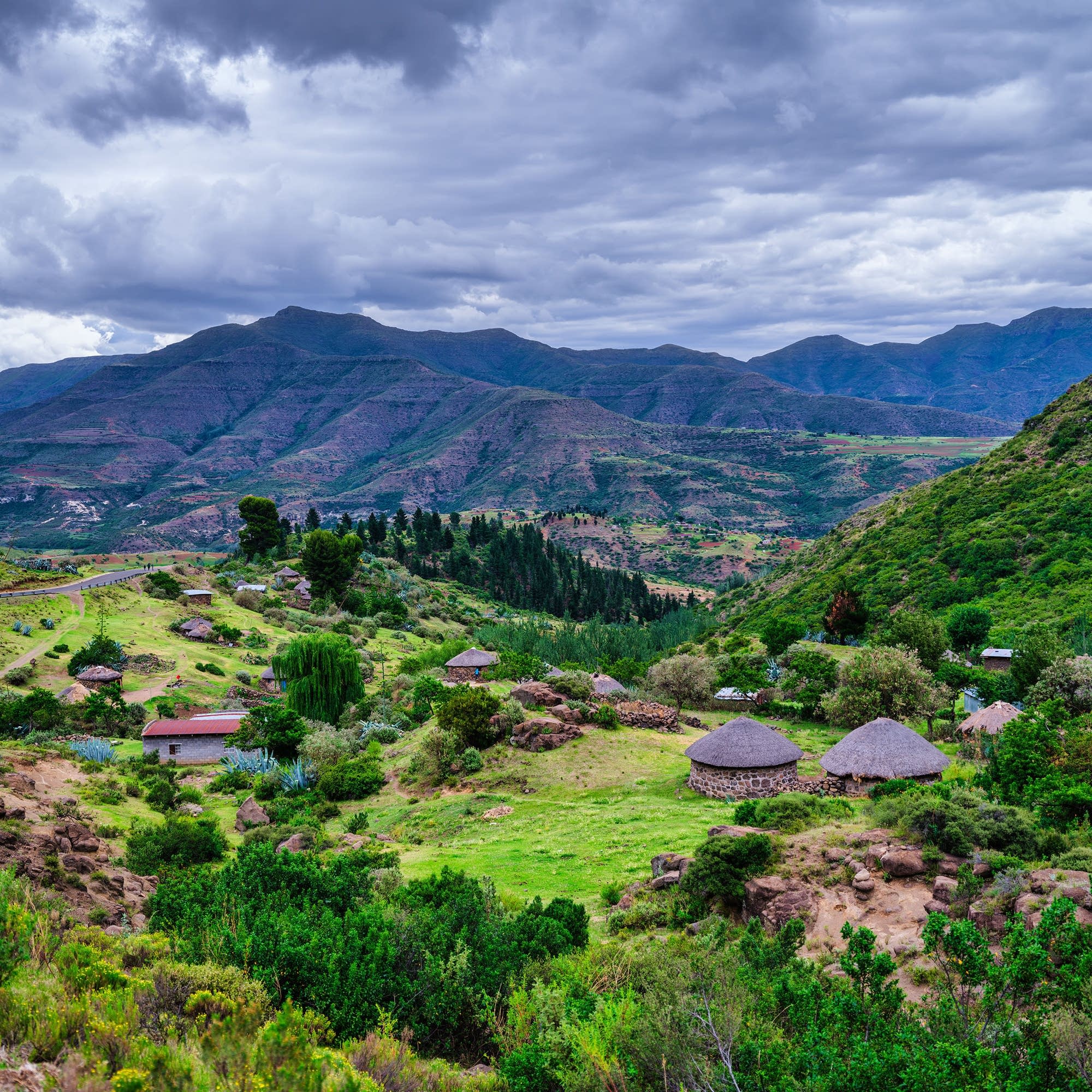
Sounds the alarm on jobs hello, this is the Marketplace Morning Report, and we're live from the BBC World Service. I'm Liana Byrne. So we're starting in southern Africa this morning, where Lesotho has declared a national state of disaster that will last for two years. The government says soaring youth unemployment, job losses have pushed the small, mountainous country into crisis and it's bracing for things to get worse. With US Tariffs and aid cuts announced by President Trump expected to hit the economy hard, officials say emergency powers will help redirect funding quickly. It's making moves like scrapping registration fees for small businesses. Earlier, Lesotho's Trade Minister, Mokatti Shalile, spoke to the BBC.
- [01:41]
Moketi Shilile
We have had a lot of many years of neglect in terms of generating jobs, especially for the youth. We we at the moment we have a youth unemployment that is higher than the national average. So they are a particular segment of society that needs to be to be supported. And this is the reason behind our national state of emergency.
- [02:08]
Liana Byrne
That was Trade Minister Moketi Shilile. Meanwhile, a cargo ship attacked by Yemen's Houthi militia has sunk in the Red Sea. It's the second vessel they've taken down in just a week. Ten of the 25 crew on board have been rescued. At least three are confirmed dead, and several others who are still missing may have been taken hostage. The Red Sea is a vital global trade route. Route. It's the fastest sea route linking Asia and Europe via the suez Canal. The BBC's Sebastian Ussher has more.
- [02:34]
Palo Alto Networks Representative
This ship, the Eternity Sea, was first attacked on Monday by militants in small boats in the Red Sea. It was attacked again on Tuesday and it sank this morning. There haven't been attacks like this since the End of last year, the Houthis had carried out more than 100 attacks in this area, the Red Sea, which is absolutely crucial for, for the transport of oil. And they'd done it in solidarity with Hamas and with the Palestinians. They reached an agreement with the US earlier this year that they would not carry out attacks on U.S. targets anymore. But they didn't say the same about Israeli targets. And I think the assumption is that they are thinking that these two ships have some connection with Israel.
- [03:20]
Liana Byrne
Sebastian Usher there. Now let's do the numbers. Shares in the U.S. maker of Kellogg's, have soared by more than 50% on reports that Ferrero, the Italian chocolate giant, is eyeing a $3 billion buyout. And Dutch pension funds are set to dump $147 billion in long term government bonds as they change their system. Could rattle Europe's debt markets. Okay, so recent cyber attacks and power cuts have exposed just how vulnerable modern payment systems can be. Cash is one of the few reliable fallbacks. But it's getting hard now. A growing number of countries are stepping in with new laws to make sure it doesn't disappear altogether. The BBC's James Graham has more.
- [04:04]
Juliana
In April, a massive power cut brought Spain and Portugal to a standstill, affecting millions of people.
- [04:10]
Moketi Shilile
Right now, there is no power, no electricity, no water.
- [04:13]
Juliana
This is Juliana from Malaga, a southern province.
- [04:16]
Moketi Shilile
And of course, you can only pay things with cash.
- [04:19]
Juliana
Journalist Ashish Sharma was in Madrid, where he noticed some restaurants still serving.
- [04:24]
Moketi Shilile
There were groups of people that were having meals with a nice bottle of wine and, you know, ordering a lot of stuff. And I thought, well, I hope these people have got cash on them. They're not going to be able to use the normal machines to make payments.
- [04:35]
Juliana
In fact, the payment system was working during the crisis, according to the bank of Spain, supported by servers with their own power supply. But many shops could not take card payments because their devices were out of power. Cash was an option as long as it was already in your wallet, because ATMs were affected. In Spain, there's more cash in circulation than in many other European countries. It's used in around 60% of in store transactions, compared to about 16% in the United States. In terms of cashless societies, Scandinavian countries lead the way. But there are now worries about how the system would function in an emergency. In Norway, nearly all transactions are now digital. But a new law means retailers can be fined if they refuse to accept cash. Carl Johanneson owns the Bergen Coffee Roastery in Norway's second city.
- [05:26]
Moketi Shilile
Until Covid, we had cash, it was A hassle because the banks didn't want to take our cash. So we needed a company to come and pick up our cash and then deposit for us. Or you had like a safe, you can deposit it, but it a lot of work and it also created a lot of mistakes. After Covid, it felt so nice not to have cash.
- [05:45]
Juliana
But the new law means cash has returned, although there's less of it, making up 3 to 5% of trade at the coffee shop. So it's easier to manage.
- [05:53]
Moketi Shilile
It's not a big deal to implement, but it's more like now the baristas, when they close, they have to count the money, put it in a safe and now we deposit it once a month in the bank.
- [06:04]
Juliana
In neighbouring Sweden, the Central bank has warned citizens to keep cash ready to use in case of emergencies. In fact, Sweden has been running an inquiry into the use of cash, proposing an obligation on shops to accept it for essential items. Central Bank Governor Eric Tudin thinks cash is crucial to national security.
- [06:24]
Moketi Shilile
The reason why we have pushed for this is that it's very much a resilience issue. Then of course we have been in close contact with Ukraine and I think also the Spanish kind of experience now to have something together with, you know, credit cards. So basically have a resilience system, so if one of them breaks, you can use the other one.
- [06:43]
Juliana
Natasha de Terran is co author of the Payoff How Changing the Way We Pay Changes Everything. She's not convinced new rules around cash will provide enough of a safety net in societies where digital systems are so entrenched.
- [06:56]
Moketi Shilile
Are there machines that will take cash? Are there enough staff to count the cash? Are there places to keep the cash safe? Can the shop bank it? So I don't think when the society has gone completely electronic, you can come back to cash and say, well, you know, we'll be fine with cash, because I don't know that we will.
- [07:12]
Juliana
So what about resilience for those countries that are almost cashless?
- [07:16]
Moketi Shilile
I think we need a very good.
- [07:17]
Juliana
Grid and it's not just about cash. Adds Natasha, when so much of our daily lives, from public transport to communication, relies on electricity. In the UK, I'm the BBC's James Graham for Marketplace.
- [07:31]
Liana Byrne
And finally, have a listen to this. So London Heathrow has teamed up with Grammy nominated artist Jordan Rakai to create a soundtrack using airport sounds for the airport. I have to say it is very soothing. And that's it from the marketplace. Morning report from the BBC World Service, I'm Liana Byrne. Have a great day and thanks so much for listening.
- [08:07]
Marketplace Host
Summer's here and it's time for your kids to have fun in the sun. But it's also a great time to nurture growing minds. Million Bazillion, a podcast from Marketplace, teaches your kids about something that impacts all of us money From a fun explainer on tariffs. Yes, it's possible to why some athletes make so much money. Million Bazillion tackles big questions with easy to understand answers. Listen to Million Bazillion all summer long. Available wherever you get your podcasts.