Loading summary
Transcript28 lines
- [00:01]
Wix Representative
Running a business is hard work. Building your website shouldn't be. With wix, you can express your ideas, give direction, then leave the heavy lifting to AI from site creation to branded content and images. Have fun with the details, customize what you want the way you want, and manage your whole business from a centralized dashboard with expert AI tools. Build, scale and enjoy the incredible results. You can do it all yourself on.
- [00:30]
Fundraising Announcer
This is it, folks. Our May fundraiser ends this Friday, and it's your last chance to help us reach an important goal. With federal funding for public media, shall we say on shaky ground, we're preparing for a future where we rely even more on you, our listeners. Your support powers trusted independent journalism about the economy and makes it accessible to millions of listeners. Let's hit our goal before Memorial Day weekend. Give now@Marketplace.org donate that's Marketplace.org donate.
- [01:05]
Liana Byrne
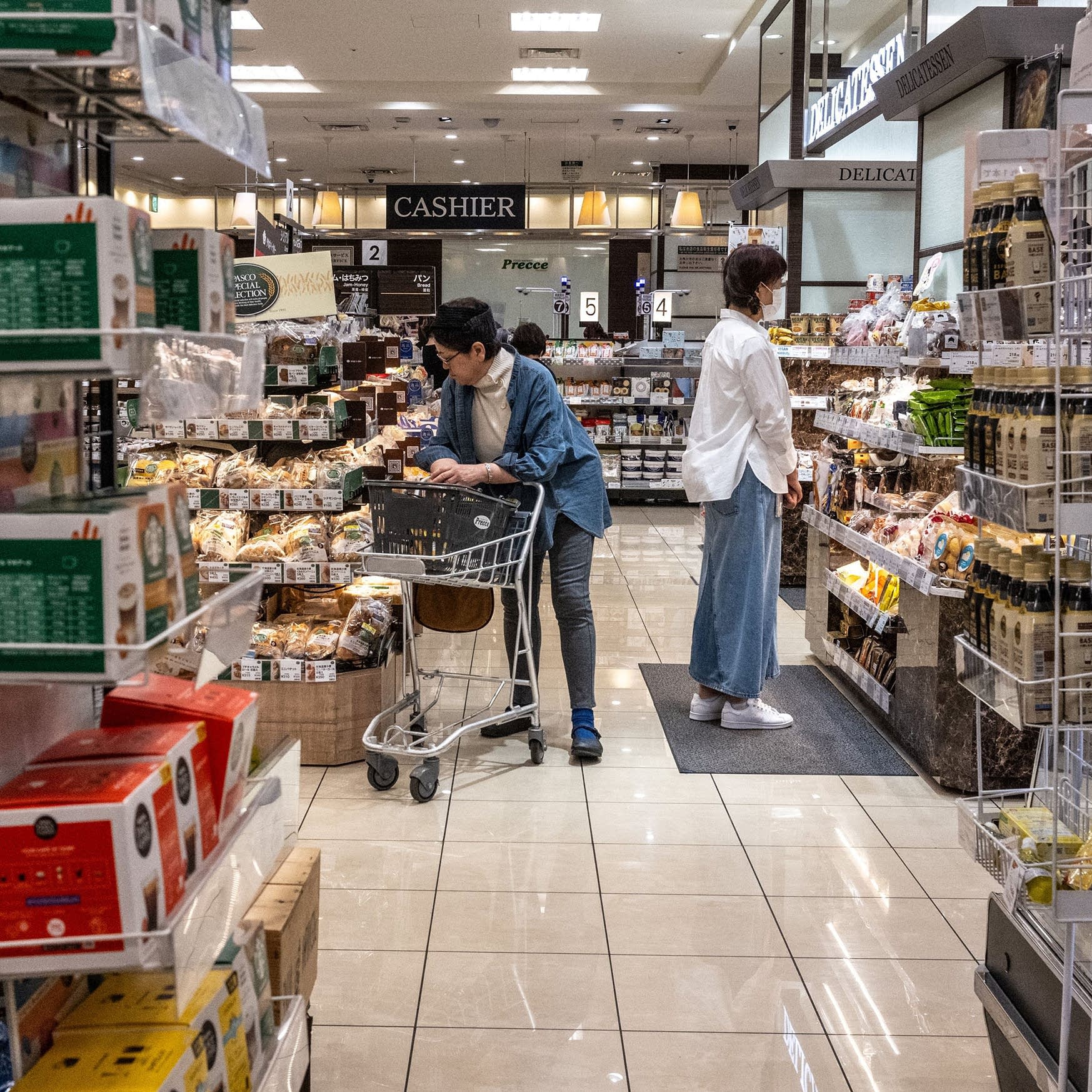
Japan's tackling a problem it hasn't had to deal with in decades. Inflation. Hello, this is the Marketplace Morning Report, and we're live from the BBC World Service. I'm Liana Byrne. Good morning. So Japan's inflation rate is heating up here, hitting its fastest pace in more than two years, 3.5% in April. And that could mean higher interest rates for the first time in years. It's a big shift for a country that's used to falling prices and a major challenge for the government and central bank. Kyoko Nagana runs a company called Sake Lovers Inc. She promotes and exports Japan's iconic rice wine. But lately, rising prices have made running her business a lot trickier.
- [01:45]
Seijiro Takeshita
Is ridiculously high right now, and rice.
- [01:48]
Liana Byrne
Is, you know, are staple food and.
- [01:50]
Seijiro Takeshita
It'S, it's really affecting people's lives.
- [01:52]
Liana Byrne
And soaring rice prices have become something of a flashpoint. Japan's farm minister had to resign after he admitted he's never had to buy rice because he gets it as gifts from supporters. So what's behind this spike in inflation? Seijiro Takeshita is professor of management at the University of Shizuoka in Japan. Seijiro, good morning.
- [02:12]
Seijiro Takeshita
Good morning.
- [02:13]
Liana Byrne
So inflation in Japan, it's at 3.5 inflation rate. Some people might say that's not huge, but for a country that's battled low inflation for decades, it is important, isn't it?
- [02:24]
Seijiro Takeshita
Absolutely. This is something that most of us have not experienced, at least for more than two decades. So, yes, it's quite big.
- [02:32]
Liana Byrne
And what's driving this surge?
- [02:34]
Seijiro Takeshita
Very much due to food. Basically half this rise can be explained by the food itself. One of the reason why Japanese inflation became fairly High is the Japanese have been very slow on passing on prices, especially in foodstuff. It's risen by 8 to 9%, which is much higher than US or eurozone. In fact, this rise of rice price in Japan is probably the biggest item that we talk about constantly. So this is becoming very serious. The rice price has basically doubled in less than a year now.
- [03:07]
Liana Byrne
How is the bank of Japan likely to respond? Because it's known for maybe not responding a lot of the time.
- [03:14]
Seijiro Takeshita
Absolutely. And I agree with you. You know, bank of Japan really do not have the deep pocket that they claim. Their maneuverability is very limited. Considering our debt position and also our economy not really coming back as strong as we expect. So it's very difficult position for bank of Japan. I think they will continue to take a wait and see attitude, although this is quite an alarming number for any of the central banks that considered inflation as their first political point enemy.
- [03:45]
Liana Byrne
And we'll have to wait until Japan's central bank decision on a possible rate hike as well. Seijiro Takeshita, thank you so much for joining us on Marketplace.
- [03:54]
Seijiro Takeshita
Thank you.
- [03:55]
Liana Byrne
Now, let's do the numbers. European stock markets are up after borrowing costs dropped and fresh data shows the economy is doing better than expected. The pan European Stoxx 600 rose for six straight week, up 2/10 of a percent. Germany's DAX also edged higher, up by 5 10. In Australia, its east coast was facing yet another round of heavy rains and major flooding. And in New South Wales, it's turned deadly. A natural disaster has been declared. Four people have died, entire towns have been cut off and tens of thousands have been told to evacuate. Among those hit hardest are the farmers. Fields are underwater, roads are washed out and livestock are at risk. Rebecca Reardon is vice president of the New South Wales Farmer association and she explains how it's affecting farmers.
- [04:43]
Rebecca Reardon
We're going to see it affect the milk supply, we're going to see it affect our beef supply, it's going to affect our oyster supply. There's a huge knock on effect and on top of that, we're going into winter, so there'll be no feed for the animals that we've actually managed to save from the floods.
- [04:59]
Liana Byrne
That was Rebecca Reardon speaking. Now, we've all probably wondered at what age will retire. And in Denmark, the answer might soon be 70. The country is on track to have the highest retirement age in Europe after its parliament voted to raise it from 67 to 70. Denmark linked retirement age to life expectancy and updates it every five years. The new rule won't kick in until 2040 now. Do you still use much cash? Cash use has fallen in many countries, including Sweden, where only about 10% of transactions are made using cash. But there are now worries this will leave it vulnerable during a national crisis. An inquiry is proposing laws to force some retailers to accept cash for essential goods. My colleague James Graham has been speaking to Eric Tadine, governor of Sweden's Central, who supports the idea.
- [05:48]
Eric Tadine
The reason why we have pushed for this, in a way also the inquiry comes to that conclusion, is that that's very much a resilience issue to have something together with, you know, credit cards. We also have mobile pay, so basically have a resilience system. So if one of them breaks, you can use the other one. The other thing, which is not something that we could force but we strongly kind of push for, is that private individuals keep cash at home or in their wallet. So in the event any kind of fallout of the rest of the system, they could actually use that cash to buy essentials, that is foods.
- [06:26]
Liana Byrne
If Sweden does use legislation to force shops to take cash, how would that be received? You know, perhaps some businesses don't really want to handle cash anymore.
- [06:35]
Eric Tadine
So this is going to be, I think, because there's been a lot of discussion before the inquiry presented their results. So for shops that already have it, they might even see some merit in it because they have, you know, a lot of clients. Some clients use cash for them. It's natural, it's no big deal. But I think it's going to be a discussion on, you know, where do we draw the line? If you have kind of local, small shops in the countryside that doesn't use cash, should you impose cash? And that's why I say that I think my idea, and this is going to be complicated to do exactly like that in law, is to basically, you know, have a freeze where we are now, rather than to say that if you skipped cash in your shop, you know, for three years, you should not, you know, be forced to impose it. I think that's going to be very hard. But to make it free so we don't continue in one direction and put a little bit of a break to the, to the development and again be able to buy groceries, for example.
- [07:29]
Liana Byrne
That was Eric Tadine, governor of Sweden's Central bank, speaking to James Graham. And that's it from the Marketplace. Morning report from the BBC World Service, I'm Liana Byrne. Have a great day. Have a great weekend. Thanks so much for listening. The Internet is a dumpster fire. And we are dumpster diving.
- [07:53]
Wix Representative
Mm. Ice feels so good.
- [07:54]
Liana Byrne
It's almost like watching a slap fight between a bunch of nerds.
- [07:59]
Seijiro Takeshita
I have to give you credit for being dogged with this boy.
- [08:02]
Wix Representative
How often do you think about the Roman Empire?
- [08:06]
Liana Byrne
Sorry, what? I was just thinking about something. Unsolved Mysteries, Untold Histories. Every Friday on our podcast, Endless Thread. So go wherever you get your podcasts and follow Endless Thread.