Loading summary
Transcript32 lines
- [00:01]
Assured Guaranty Representative
Are you looking to invest in municipal bonds? For extra protection, buy bonds insured by Assured guaranty. It guarantees 100% of your principal and interest will be paid when due. Assured Guaranty has demonstrated its reliability and financial strength for nearly four decades. That's why the bonds they back are one of the safest investments you can make. Visit assuredguaranty.com assured guarantee a Stronger Bond.
- [00:28]
Marketplace Host
This Marketplace podcast is supported by Fay Gree Drinker, one of the largest law firms in Minnesota with nearly 300 Minneapolis attorneys helping clients solve complex legal issues and meeting their goals in the Twin cities and beyond. Faygridrinker.com
- [00:46]
Sabri Ben Asore
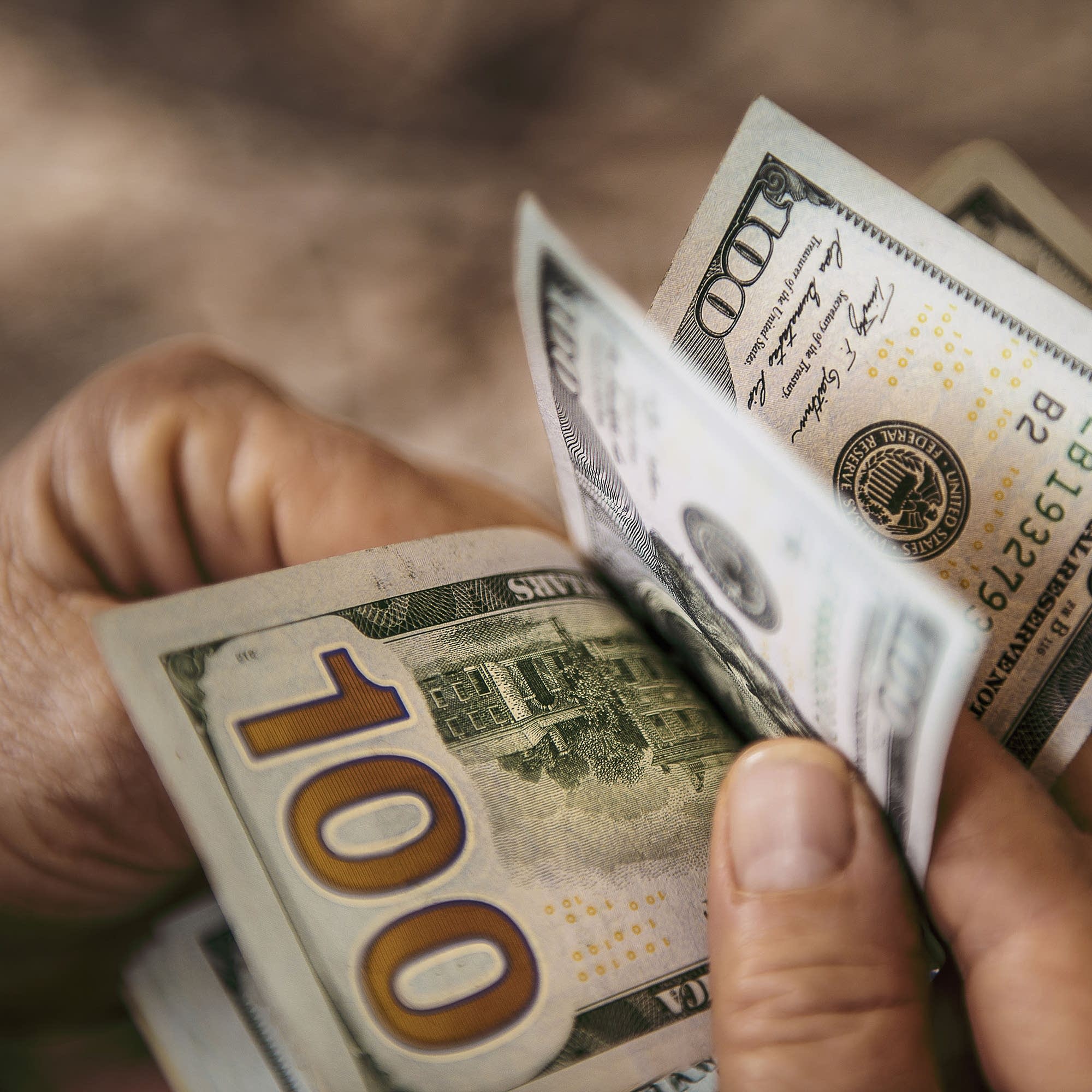
the dollar keeps going up. From Marketplace, I'm Sabri Ben Asore in for David Brancaccio. When President Trump said there were talks to end the war, markets rallied and the price of oil fell. When Iran said there were no talks, markets sank and the price of oil went up. Iran has since rejected President Trump's recent proposal. Meanwhile, in the background, the US Dollar on the whole has been getting stronger. We've got Jane Foley to help us understand what it all means. She's head of foreign exchange strategy at Rabobank in London. Welcome.
- [01:18]
Jane Foley
Thank you. Good morning.
- [01:20]
Sabri Ben Asore
You know, on the one hand, President Trump says there's a plan. He wants to end the war. Iran's response has been cool. Who are markets listening to?
- [01:27]
Jane Foley
Well, the market, of course, now is caught between the two, the optimism of Trump and the defiance really of Iran. And right now, today, well, perhaps it's the defiant tone of Iran that has led stock market futures, for instance, into the red, seen bond yields push a little bit higher. But as we head into the end of the week, we do coincide with that five day deadline that was announced by Trump just a few days ago ago. And if there is no real prospects of Iran coming to the table or conceding that they are at the table with respect to negotiating some degree of ceasefire, well, I would imagine investors will be getting nervous about what could happen over the weekend.
- [02:09]
Sabri Ben Asore
The US Dollar has continued to gain against other major currencies this week. Why is that happening?
- [02:14]
Jane Foley
Well, there are a few reasons for this. The first is that the dollar really has proven itself to be the safe haven of choice. And this is related liquidity. It's related to the fact that the dollar really is deeply embedded in supply chains and payment systems around the world. And like it or not, it therefore remains a safe haven of choice because investors will need dollars to transact, et cetera. So these aspects are seen to be protecting the outlook for the US Economy relative to perhaps Europe.
- [02:50]
Sabri Ben Asore
If the dollar has been gaining strength, meaning people want it, but at the same time bond yields are going up, meaning people are not so hot on bonds. Where are they putting their money exactly?
- [03:04]
Jane Foley
The most important thing is liquidity. And most of that liquidity will be going into the shorter end of the market, money market assets, so that people can put their money in and get them out again relatively quickly, if very quickly, if they wanted to.
- [03:22]
Sabri Ben Asore
Jane Foley is head of foreign exchange strategy at Rabobank in London. Thank you so much.
- [03:27]
Jane Foley
Thank you.
- [03:29]
Sabri Ben Asore
After a delay due to the war, President Trump says he will meet with Chinese President Xi Jinping in May. It'll be his first trip to China in eight years.
- [03:51]
Stoll Reeves Sponsor
Programming is supported by Stoll Reeves, a leading US Corporate litigation law firm providing sophisticated business clients high quality legal services with offices in seven states and Washington, D.C. stull Reeves is a nationally recognized leader in project finance and natural resources industries. From deals and disputes to compliance and counseling, clients turn to Stoll Reeves for their most complex business challenges. Learn more at S t o e
- [04:19]
Odoo Sponsor
l.com Running a business is hard enough, so why make it harder with a dozen different apps that don't talk to each other? Introducing Odoo, the only business software you'll ever need. It's an all in one fully integrated platform that makes your work easier from CRM, accounting, inventory, E Commerce, and more. And the best part? Odoo replaces multiple expensive platforms for a fraction of the cost. This is why over thousands of businesses have made the switch. So why not you try Odoo for free@odoo.com that's o d o o.com the
- [04:52]
Sabri Ben Asore
GOP's tax and spending bill from last year included a section on remittances that is basically people sending money think money orders. The bill included a 1% tax on these transfers. Supporters say it could raise about $10 billion and help deter illicit finance. Critics argue it's regressive and could push some transfers underground. Nara Sritaran is a research analyst at Aid Data, a research lab out of William and Mary. Welcome.
- [05:17]
Marketplace Host
Good morning.
- [05:18]
Nara Sritharan
A 1% tax doesn't sound like a lot, is it?
- [05:22]
Marketplace Host
On paper, it really doesn't sound like much. But the key is that the 1% is added on top of existing fees. The average cost of sending money from the US according to the World bank is already about 5.8%. With the tax, that rises to roughly 6.8% for those cash based transfers. So while the tax itself is 1%, it actually increases the total cost of sending by about.
- [05:50]
Nara Sritharan
When we talk about remittances, we often think about immigrants sending money back home. But the reality is much broader than that. Who uses remittances and how many people could this affect?
- [06:00]
Marketplace Host
Yeah, so a lot of people use remittances. We usually do talk about migrants. In particular, we talk about migrants who are coming for work purposes and they send remittances back. But in reality, a lot of average Americans send money to different places. So it's a lot of people that will be impacted by this. Regular people, businesses, and then, of course, the financial industry that now has to comply to these taxes.
- [06:26]
Nara Sritharan
One argument for this tax is that it could help curb illicit activity. But on the other hand, people, I presume, can get around this by sending money in other ways. How else would they send money?
- [06:37]
Marketplace Host
Some will switch to digital transfers to try to avoid the tax, since it only applies to cash. Others, this is particularly migrants, they might cut back on their spending here in the US So they can keep sending the same amount back home because those payments are often not optional. Some will move into informal channels.
- [06:57]
Nara Sritharan
If ultimately what people are worried about is, you know, illicit reasons for moving money around the world. I mean, if that is the concern, are there better ways to tackle that than attacks on remittances?
- [07:09]
Marketplace Host
Yeah. So for instance, back in 2015, the UN came up with these Sustainable Development Goals. And one of those goals is to reduce transaction costs for remittances down to 3%. So that's something that's internationally established. And they know that lowering transaction cost will draw people into formal channels because it's cheaper than any other option. Another option could be to do more of a tiered system. So much higher transactions get more scrutinized. And then, of course, expanding financial inclusion to the countries that are receiving money as well. Because even though we have banking access here, the people who are on the receiving end may not be able to access banks.
- [07:56]
Nara Sritharan
Nara Sritharan is a research analyst at AidData, a research lab out of William and Mary. Thank you so much.
- [08:02]
Marketplace Host
Thank you.
- [08:04]
Sabri Ben Asore
In New York, I'm Sabri Benishore with the Marketplace Morning Report. From 8:00pm American Public Media.
- [08:18]
Reema Reis
I'm Reema Reis, and this week on my podcast, this is Uncomfortable. We're looking at the rise of prediction markets where you can bet on everything from sports and pop culture to political headlines. A multi billion dollar industry that's growing at a time when more Americans are questioning the traditional paths to wealth.
- [08:35]
Marketplace Host
I feel like the kind of quote unquote, American dream is sort of breaking down. Like, how could I possibly get, you know, buy a home, be able to afford having a family? And then they're also going online and seeing people that are claiming to make all this money doing these alternative paths to wealth.
- [08:49]
Reema Reis
Be sure to listen to this week's episode of this Is Uncomfortable on your favorite podcast.
- [08:52]
Marketplace Host
Apparently.