Loading summary
Transcript25 lines
- [00:00]
Dell Advertiser
Introducing the new Dell PC. Powered by the Intel Core Ultra processor, it helps do your busy work for you so you can fast forward through editing images, designing presentations, generating code, debugging code, summarizing meeting notes, finding files, managing your schedule, responding to long emails, leaving all the time in the world for the things you actually want to do. Get A new Dell PC@dell.com AI PC how those ahead Stay ahead.
- [00:31]
Marketplace Host
You can turn to Marketplace to hear from powerful leaders and everyday people about the economy and their role in it. Now we hope we can turn to you. Marketplace is facing real threats and challenges as we plan for the future. As a public media program, donations from you are an important part of our budget. Here's one action you can take right now that will have a long lasting impact. Start a monthly donation to support our work. Five bucks a month is a great place to start. Head to marketplace.org donate and thank you.
- [01:07]
William Lee Adams
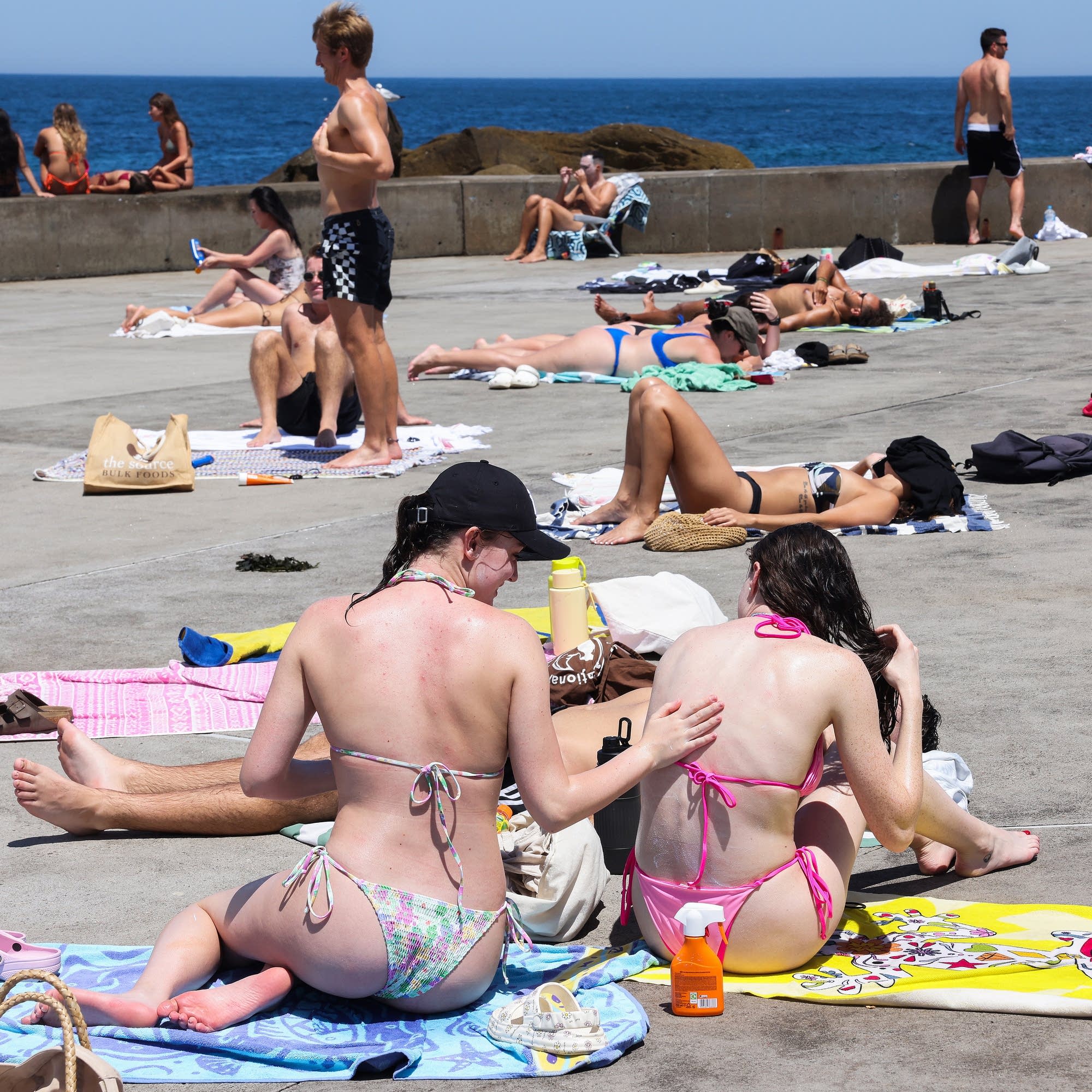
A Sunscreen scandal heats up in Australia. Live from the uk, this is the Marketplace Morning Report from the BBC World Service. I'm William Lee Adams. Good morning. We start in Australia where regulators have pulled 18 sunscreen products from the shelves over safety concerns. It followed testing by a consumer group that showed dozens, dozens of sunscreen products, including some by major global brands, did not offer the SPF claimed Australia has the highest rate of skin cancers in the world and two out of three Australians will have at least one instance in their lifetime. It also has some of the strictest sunscreen regulations globally. Here's the BBC's Katie Silver with more. Katie, hi.
- [01:47]
Katie Silver
Hi.
- [01:48]
William Lee Adams
So this all dates back to research that came out in June. What's the story?
- [01:52]
Katie Silver
So this was absolutely shocking in Australia. Back in June, Choice, which is a consumer advocacy group, did some research where they basically conducted lab tests on a series of sunscreens and found that a shocking majority of them failed to have the SPF or the sun protection factor that was advertised on the label. So one of them said that it had SPF 50. It actually was found to have just four in the test.
- [02:19]
William Lee Adams
Is this likely to have an impact on other countries or other companies around the world?
- [02:23]
Katie Silver
Yes, that research came out in June. Now we're hearing from the medicines regulator warning about 20 more sunscreens, basically saying that all come from this same base formula. Now, Australia is a massive sunscreen exporter as well. Many of these products are sold internationally. Sephora, for example, stocks internationally that ultraviolet sunscreen, the one that was the worst offender that had that SPF of 4. The other element as well is it's actually a lab in the US that had come up with this base formulation and the BBC has contacted them for response.
- [02:57]
William Lee Adams
How have the makers of the sunscreens responded to all this?
- [03:00]
Katie Silver
It's been interesting to watch. So that Ultraviolet was started by two business women in Australia and at the time they were perhaps a little bit cagey. But then one of the founders did a very teary video on Instagram where she talked about how devastated she was by this information. By all accounts, it didn't seem to be deliberately misleading. They then chose to voluntarily recall the sunscreen. Now, as I say, the medicines regulator following up with others and actually pulling it off the shelves themselves.
- [03:28]
William Lee Adams
Katie, thanks for joining us on Marketplace.
- [03:31]
Katie Silver
Thanks for having me, William.
- [03:32]
William Lee Adams
Let's do the numbers. Asian markets were mixed after the US government shut down. Japan's Nikkei 225 index shed 0.9% while South Korea's Kospi gained 0.9%. A judge in the UK has approved the $3.9 billion takeover of Deliveroo by the American firm Doordash. And a landmark trade deal between India and foreign four European countries comes into effect today. The agreement with Switzerland, Norway, Iceland and Liechtenstein cuts tariffs on 92% of tariff lines for India. Now, as the US tightens its H1B visa scheme, China hopes it will gain from the launch of a new program to attract foreign talent in science and technology. The K visa simplifies immigration procedures and applicants will not need a local employment sponsor, though other requirements on age, education and work experience aren't yet known as. When President Trump visited the Middle east earlier this year, he announced a major partnership deal to build what's expected to be the largest artificial intelligence campus outside the US In Abu Dhabi. The UAE wants to become the next AI powerhouse, but can it balance its energy trade with China and its technological and defense ties with the United states? Here's the BBC's Samir Hashmi.
- [04:49]
Samir Hashmi
When President Donald Trump landed in Abu Dhabi earlier this year, the Emiratis performed their traditional dance as part of the royal welcome. Hours later, he stood alongside UAE President Sheikh Mohammed bin Zayed al Nahyan to unveil a sprawling new AI campus, part of a joint UAE US Initiative.
- [05:09]
Hassan Al Naqbi
The two countries also agreed to create a path for UAE to buy some of the world's most advanced AI semiconductors from American companies. A very big contract.
- [05:20]
Katie Silver
Welcome to the new epicenter of innovation where American.
- [05:27]
Samir Hashmi
The project known as Stargate, is being billed as the largest AI infrastructure hub outside the United States. Nvidia will supply its most powerful chips for the project EMIRATI Tech firm G42 is leading the charge and Khazna is building data centers. Hassan Al Naqbi is the chief executive of Ghazna, the UAE's largest data center operator.
- [05:49]
Hassan Al Naqbi
UAE now is at the stage where it can be a data hub and it can be an AI hub. And we know that with the AI coming in and with the data playing a big part of the economy and actually probably creating its own economy, I think it's important to have an infrastructure.
- [06:09]
Samir Hashmi
I'm inside one of the data centers operated by Hasna. It's located in Dubai. This particular facility is used by a major tech company to power a part of of its AI and cloud operations. And right now I'm walking through the cooling corridor where there are these giant air conditioners or cooling systems as they are known, and they're working hard to keep the temperatures down. The Gulf's AI drive is also redrawing geopolitics. Trump's visit helped Washington gain ground, but at a cost. The UAE has scaled back China backtech projects and gained US approval to buy Nvidia's most advanced chips. Baghdad Gharaz is an AI investor and startup founder in the uae.
- [06:54]
Baghdad Gharaz
The choice to bet more on the US than China is rational beyond being first political. So the US have Nvidia and it's undeniable that Nvidia chips are way above anything else.
- [07:12]
Samir Hashmi
The Gulf states want to be part of the winning team and the US wants allies who can help it dominate the future of AI. Mohammed Salman is Director of Strategic Technologies at the Middle East Institute in Washington.
- [07:25]
Baghdad Gharaz
D.C. those AI deals with the Gulf are more about China than about the Gulf. It's basically us trying to bring a promising rising AI region which which is the Gulf to the American AI stack to be on Team America AI.
- [07:43]
Samir Hashmi
In this unfolding tech race, the US gains strategic partners not just in AI, but in global influence. And for Gulf nations like the UAE and Saudi Arabia, the partnership offers something just as vital a powerful ally in their search for a post oil future. In a region long shaped by energy, a new kind of power is now being brokered not in barrels, but in bites in Dubai. I'm the BBC Sameer Hashmi for Marketplace.
- [08:15]
William Lee Adams
That's all for today. Do subscribe to our podcast search for the global edition of Marketplace Morning Report on Apple, Spotify or wherever you get your podcast in the uk I'm William Lee Adams with the Marketplace Morning Report.
- [08:31]
Million Bazillion Host
This week on Million Bazillion, we're doing some traveling and tackling all your Travel Related Money Questions Find out how currency exchanges work, how money travels through the economy from where it's printed to our wallets, and we'll get to the bottom of why things seem so much more expensive at the airport. Don't miss this week's episode of Million Bazillion. Listen on your favorite podcast app.