Loading summary
Transcript27 lines
- [00:02]
A
Is manufacturing building a comeback for Marketplace? I'm Nova Safo in for David Brancaccio. We learned yesterday that business activity in the US Picked up in August, led by a big advance in the manufacturing sector, which had been in a slump but recorded its strongest growth in orders in 18 months. The question now is that turnaround a short term blip or, or a new trend? Marketplace's Sabri Benishour takes a look.
- [00:29]
B
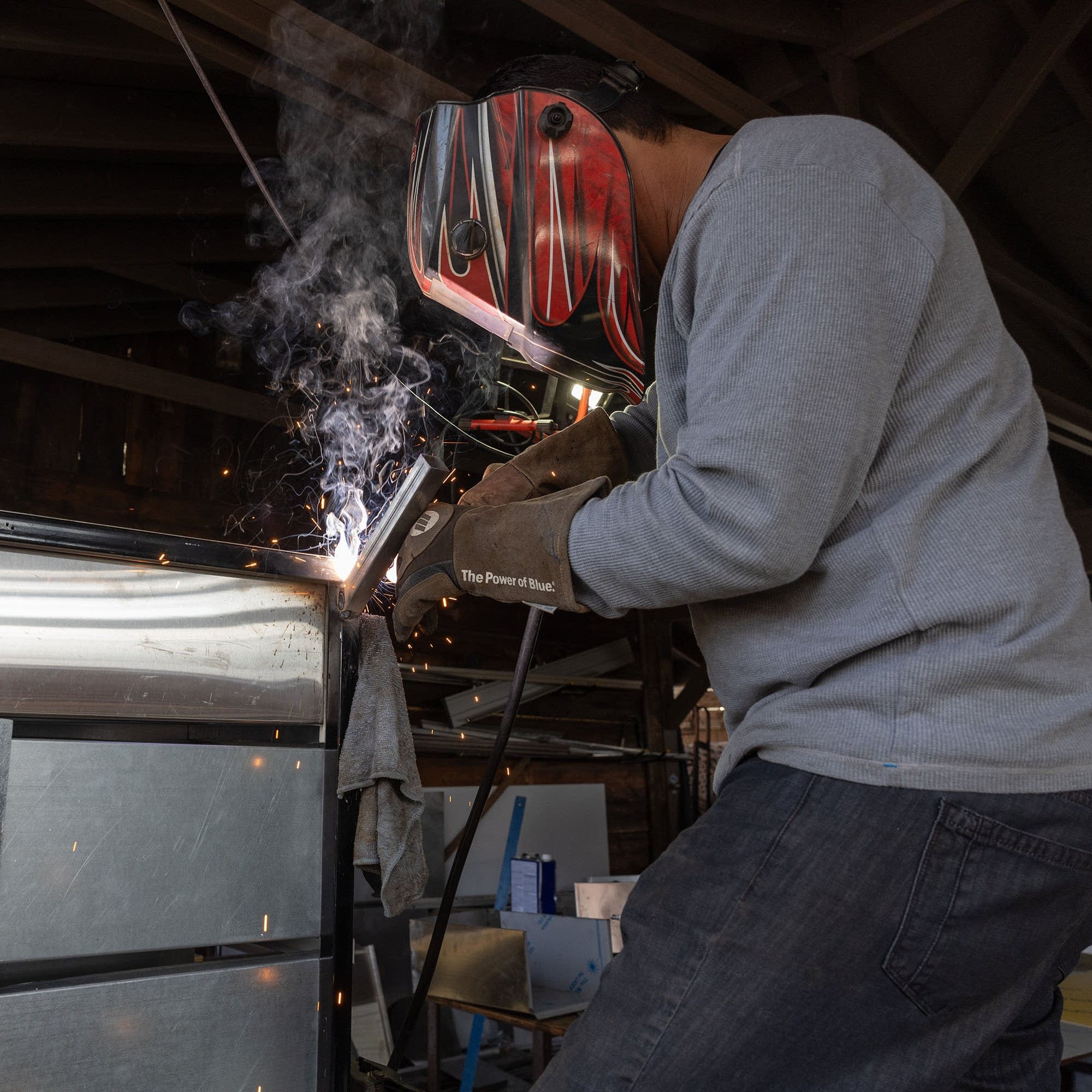
Things really were looking up this month for manufacturing. According to an early read of S&P's Purchasing Managers Index. That is basically a survey of businesses. Employment surged, production surged.
- [00:41]
C
This is the best performance that we've got in the US since that pandemic growth spurt in 2022.
- [00:47]
B
Chris Williamson is chief business economist at S and P Global Market Intelligence. Now, a lot of this manufacturing bump is has to do with tariffs, specifically trying to avoid them by stockpiling.
- [01:00]
C
Whether it's cars or chemicals or plastics, all these industries are sucking in these imports while they've got them and building stuff.
- [01:09]
B
And here is where the outlook gets a little murkier. On the one hand, some manufacturers say they expect more demand because the imports they compete with are getting more expensive. On the other hand, a lot of manufacturers are also importers and imports are getting more expensive. Liam Burke is managing Directorate B, Riley Securities.
- [01:31]
C
We're going to have an increase in input costs. Now, how that's divided between the importer, the buyer and the customer is still way up in the air.
- [01:42]
B
There's probably going to be, Burke says, a hit to profits for manufacturers. In New York, I'm Sabri Benishore for Marketplace.
- [01:50]
A
And in the midst of the uncertainty swirling around the US Economy, Federal Reserve Chair Jerome Powell is scheduled to speak shortly in Jackson Hole, Wyoming. It's the setting of an important annual meeting of economists and central bankers from around the world. We're awaiting any indication from Powell that the Fed might lower borrowing costs soon. We're also keeping an ear out for potential changes to the Fed's broader strategy on how it manages inflation and and supports the labor market. Evergrande, once one of China's biggest property developers, is having its shares delisted from Hong Kong's stock exchange. The company's spectacular rise mirrored China's ascendance on the global stage. The its ruinous downfall over the last few years threatened to weigh down the world's second largest economy for more marketplaces. China correspondent Jennifer Pak joins me now from Shanghai. Hello, Jennifer.
- [02:57]
D
Hi, Nova.
- [02:57]
A
So Evergrande has more than $300 billion in debt it hasn't been able to pay that debt. It's been ordered to liquidate. Take us back to the beginning. How did we get here? How did Evergrande get as big as it did in the first place?
- [03:10]
D
Good timing. Evergrande started in 1996, when there was explosive demand for housing. But more importantly, Evergrande got a lot of cheap credit to expand. And that was the same for a lot of property firms. Evergrande was just a lot more brazen.
- [03:25]
A
A lot more brazen. And it did rack up all that debt I mentioned, which made Evergrande successful, I suppose. But it was also responsible for its downfall.
- [03:35]
D
That's right. It just had too much debt, which is fine when home prices kept going up and cheap credit kept rolling in. But that all stopped in 2021. Beijing put a cap on borrowing.
- [03:46]
C
Plus.
- [03:47]
D
Plus, housing sales had slowed down. Evergrande just didn't have as much money to repay debt.
- [03:51]
A
Now, is there no way out for Evergrande at this point? Is there any way for them to restructure the debt they've accumulated?
- [03:58]
D
Not really, because their core business, property, isn't really doing well. So in the past, if everGrande was selling 500 billion yuan a year, that's roughly $70 billion in today's money. Now, they would be very lucky if they could even sell a tenth of that, according to a real estate researcher, Yan Yuejing from E House. Also, Evergrande spent lavish. It bought a soccer team, an electric vehicle company, and also planned fairyland theme parks to rival Disneyland. And China's government really doesn't want to keep encouraging this, so they're not interested in bailing them out either.
- [04:31]
A
And Evergrande's delisting from the Hong Kong Stock Exchange, that's not exactly a surprise, is it?
- [04:37]
D
No. Evergrande's shares in Hong Kong had been suspended since last year, so delisting just makes it official that shareholders are holding worthless stocks.
- [04:47]
A
And what about people who bought homes that Evergrande was supposed to construct but didn't? How is the country's property sector as a whole faring?
- [04:56]
D
Well, Chinese officials have tried to contain that part with home buyers. They have tasked local governments across China to finish millions of units. We did interview someone who received such a unit, and they said the work was a bit shoddy, but at least the condo was finished. Overall, though, the property sector is pretty weak. Since 2021, at its peak until now, housing prices have dropped by 35%.
- [05:21]
A
That seems like a really hard thing to recover from. What are the lessons for investors, what are they learning from the Evergrande episode?
- [05:29]
D
Well, first, experts say if an investment sounds too good to be true, like Evergrande was offering double digit interest rates, investors should question that. Also, using massive debt to fuel expansion is not a viable business model long term.
- [05:44]
A
Really a good advice for all of us. Marketplace's China correspondent Jennifer Pak in Shanghai, thank you so much.
- [05:49]
D
Thanks, Nova.
- [05:51]
A
Finally, there's Tesla's cybertruck. And then there's its cyberbeast, the fastest version of the electric pickup truck. It's also the most expensive and the price is going up by 15 grand to a whopping $115,000. Initially, the Cybertruck was supposed to start around $40,000. That never happened. And the pickups have not sold as well as hoped, probably about 45,000 of them on the road. I'm Novasafo with a Marketplace morning report from APM, American Public Media.