Loading summary
Transcript33 lines
- [00:00]
Base44 Advertiser
Got an idea for an app with base 44, you don't need to know a single line of code. Just describe what you want and base 44 instantly designs the interface, builds the database and connects the logic for you. Whether it's tracking invoices, planning meals, or managing a whole team, you can build at the speed of thought and customize it as you go. Stop waiting on developers, start running your business smarter. With base 44, visit base44.com and and turn your idea into a live app today.
- [00:30]
Capella University Advertiser
At Capella University. Learning the right skills could make a difference. That's why our business programs teach you relevant skills you can take from the courseroom to the workplace. A different future is closer than you think with Capella University. Learn more at capella. Edu.
- [00:48]
David Brancaccio
Would you pay to see a movie about mergers and acquisitions? David I'm David Brancaccio in Los Angeles. Published reports today indicate a big merger of movie and TV studios is in the works. Paramount Skydance is reportedly preparing an offer to buy Warner Bros. Discovery. Marketplace's Nancy Marshall Genzer is following us.
- [01:07]
Nancy Marshall Genzer
Paramount Skydance is home to household names like Paramount Pictures and television, CBS and Comedy Central. Warner Bros. Discovery includes Warner Bros. Studios and television, HBO and cnn. The Wall Street Journal first reported the proposed deal. It says par month. Skydance wants all of Warner Bros. Discovery. Warner announced in June that it plans to split into two media companies, streaming and studios, which would include HBO and global networks, including cnn. It plans to complete the separation by the middle of next year. There would be no split if Warner agreed to be acquired by Paramount Skydance. Neither Paramount Skydance nor Warner Bros. Discovery will confirm the deal, which would have to be approved by federal regulators. I'm Nancy Marshall Genser for Marketplace.
- [01:57]
David Brancaccio
Warner Brothers stock is up another 10% this morning. Well, looky here at this chart. The average 30 year fixed rate home loan is down at 6.27%. Gone for now are those 7 percenters. Christopher Lowes, chief economist at FHN Financial in New York.
- [02:14]
Christopher Lowes
Obviously the market expects the Fed is going to start cutting rates again next week. But when those long term yields come down, it means traders think it's actually appropriate to cut rates. Tariff effects are mostly in the numbers. They weren't as bad as expected. The job market's in serious trouble, suggesting the economy has slowed down, maybe too much. And all of those things. They justify rate cuts.
- [02:59]
Base44 Advertiser
Got an idea for an app with base 44? You don't need to know a single line of code, just describe what you want and base 44 instantly designs the interface, builds the database and connects the logic for you. Whether it's tracking invoices, planning meals, or managing a whole team, you can build at the speed of thought and customize it as you go. Stop waiting on developers, start running your business smarter with base44. Visit base44.com and turn your idea into a live app today.
- [03:30]
Audi Q6E Tron Advertiser
Listen. That's the sound of the fully electric Audi Q6E Tron, the sound of captivating electric performance, dynamic drive and the quiet confidence of ultra smooth handling. The elevated interior reminds you this is more than an EV. This is electric performance. Redefined the fully electric Audi Q6E Tron.
- [04:01]
David Brancaccio
Part of our ongoing project to look at the US economy through a wide range of prisms that includes class race from the shop floor to the boardroom is geographic diversity today to the upper Midwest with news the Minnesota governor, Democrat Tim Walz, plans a trade mission to Germany and Switzerland this fall to gin up regional business at a time of U.S. tariffs. Marketplace's Chris Farrell joins us from St. Paul with this economic snapshot. Welcome, Chris.
- [04:28]
Chris Farrell
Good to be here.
- [04:28]
David Brancaccio
David, you may have heard I was out there the other day at the huge Minnesota State Fair and it seemed like there was a ton of economic activity. It felt busy. But I like to put data to feelings. How's it really going in Minnesota and the upper Midwest?
- [04:47]
Chris Farrell
Well, you'd be glad to know, David, the data supports your feelings when you look at Minnesota in the upper Midwest, the region, it's highly competitive with the rest of the country when you use measures like unemployment wage growth and labor force participation rates. Yet like the rest of the country, economic cracks are starting to emerge.
- [05:07]
David Brancaccio
Well, what are you worried about?
- [05:09]
Chris Farrell
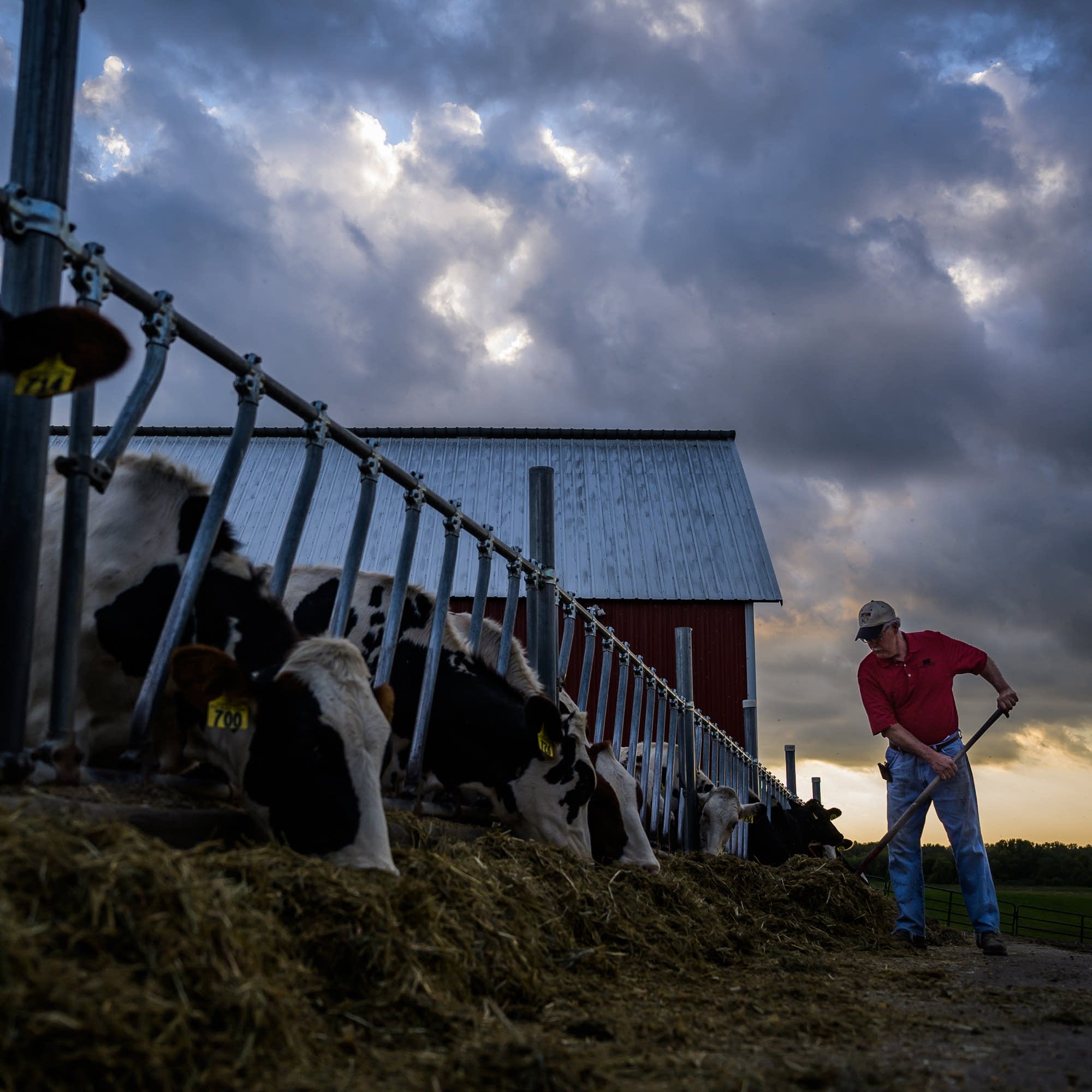
Since you were at the state fair and I assume that you enjoyed yourself, maybe you went to the cow barn or you saw some pigs. Let's start with agriculture because it's really a vital regional industry. You know, think wheat, corn, soybeans, much more. And the Federal Reserve bank of Minneapolis in its latest ag credit survey reports that farm incomes are down and lenders in the survey say that spending on capital equipment that's dropped.
- [05:34]
David Brancaccio
I mean, what are some of the factors there? I understand. I was doing some reading on this. Apparently the weather was too good.
- [05:41]
Chris Farrell
This is the hard thing about being a farmer, right? Yes, the weather was too good. You have abundant crops and that's pressuring commodity prices lower. And also weighing on much of the farm economy as President Trump's on again, off again, on again trade war as well as the administration's accelerating mass deportation campaign and the latter looks particularly important to the region's economy. For example, the Dakotas and Montana rely on immigrant labor and dairy, meatpacking, construction industries and mass deportations would worsen what are already existing labor shortages.
- [06:15]
David Brancaccio
Now, I like to keep my ear to the ground. That's my thing. What do you keep your ear to there in Minnesota?
- [06:20]
Chris Farrell
Speakers.
- [06:22]
David Brancaccio
Speakers.
- [06:23]
Chris Farrell
Speakers. Specifically Miscco speakers. Now, this is a family owned company. It's been making speakers in the twin cities for 75 years now. David, you go through that fast food drive in, you know, you look into an airplane cockpit or, and I know you would like to do this, you visit the International Space Station, you'll see Miscco speakers. And Dan Digrey, he's the company CEO, says tariffs are a real challenge.
- [06:47]
Dan Digrey
It's an import tax. It's applied at the port and then the parts come into our factory. So we're already paying the tax up front. So how do we become competitive when we have that?
- [06:59]
David Brancaccio
I mean, there's the challenge. Chris Minnesota has a strong manufacturing foundation, I suppose.
- [07:06]
Chris Farrell
Well, it does. It's the second largest sector. It makes up 12% of the state's total economy. Diggory emphasized the opportunities he's pursuing. Some customers now want products made in the usa. Miscco is investing in automation and in some cases they're getting business by bypassing.
- [07:24]
Dan Digrey
The US we have a lot of customers who moved part of their assembly also out of the United States. And so they're asking us to build our products outside the United States and then ship to their factories and therefore bypass the US completely. Now that's not our preference. I've got an American factory. I want to build things in America. But our customers are forcing an economic reality on us.
- [07:52]
David Brancaccio
A statement that encapsulates much of this era we're living through. Marketplace is senior economics contributor Chris Farrell in St. Paul, Minnesota. Thank you very much.
- [08:00]
Chris Farrell
Thanks a lot, David.
- [08:03]
David Brancaccio
The Economic Pulse Views of the economy from a range of perspectives. In Los Angeles, I'm David Brancaccio with the Marketplace Morning Report from APM American Public Media.
- [08:16]
Asma Khalid
America is changing and so is the world.
- [08:20]
Tristan Redman
But what's happening in America isn't just a cause of global upheaval. It's also a symptom of disruption that's happening everywhere.
- [08:28]
Asma Khalid
I'm Asma Khalid in Washington, D.C. i'm.
- [08:31]
Tristan Redman
Tristan Redman in London. And this is the Global Story.
- [08:35]
Asma Khalid
Every weekday we'll bring you a story from this intersection where the world and America meet.
- [08:40]
Tristan Redman
Listen on BBC.com or wherever you get your podcasts.