← Marketplace Morning Report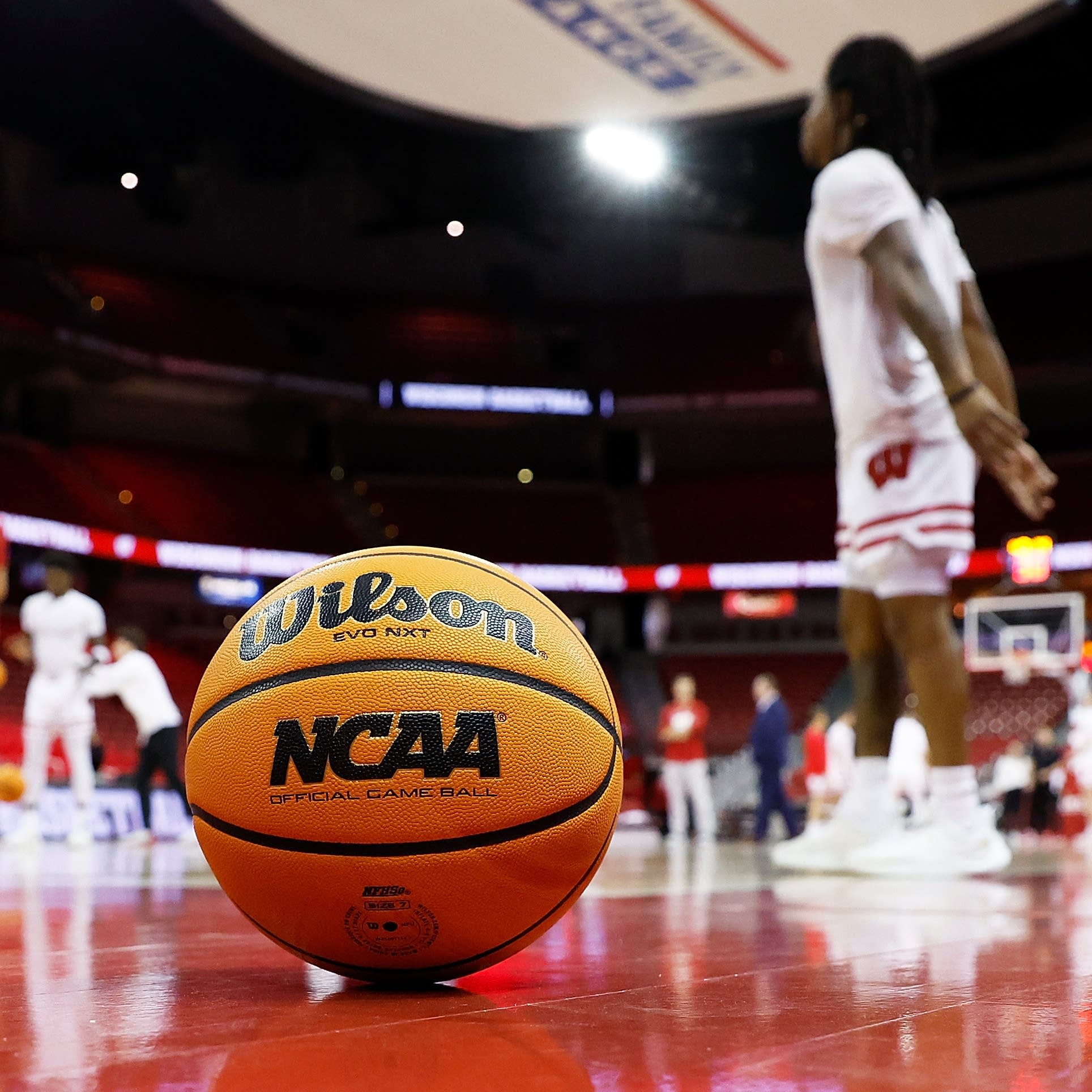
Loading summary
Transcript39 lines
- [00:01]
David Brancaccio
Hey there, and thanks for listening. We want to know more about our audience. Stick around at the end of this episode to hear about how you can help provide feedback and have a chance to walk away with a $75 gift card.
- [00:17]
WhatsApp
On WhatsApp, your personal messages stay private between you and whoever you send them to. So things like the passport numbers for your honeymoon stay between you and your fiance. And that video call for your gran's 80th stays in the family. Even your streaming password stays between you and your college roommates, who still ask for it every week in your group chat. Because on WhatsApp, your personal messages are yours. No one else can see or hear them, not even us. WhatsApp message privately.
- [00:49]
David Brancaccio
Is all this borrowing by Congress on track to what one famous investor calls a bond market heart attack? I'm David Brancaccio in Los Angeles. The big tax cutting and program cutting bill getting hammered out in Congress is not on track to be a free lunch. The Congressional Budget Office calculates it would add $2.4 trillion to America's budget deficit over 10 years, even more if you factor in interest on the debt. A billionaire investor who takes a very long view of how the government borrows worries the wheels could come off this thing if Congress doesn't start making harder choices. Ray Dalio is founder of the biggest of hedge fund firms, Bridgewater Associates. His latest book just published is called How Countries Go Broke. Subtitle the big cycle. Mr. Dalio, good to reconnect here.
- [01:37]
Ray Dalio
It's good to be back.
- [01:38]
David Brancaccio
You and I have talked about this before, Ray. There are business cycles, boom and recession every, I don't know, six years or so, administrations come and go, borrowing more, maybe borrowing less. But you're more concerned with what you see as the long debt cycles. Do you see us as getting close? Are we at one of these inflection points for the big cycles?
- [02:00]
Ray Dalio
Yes, we're approaching the inflection points. And let me describe what that's like. The big cycle is when debt and debt service rise relative to incomes. Think of the credit market system like the circulatory system in your body. And it brings credit to all different parts of the body and those are like nutrients and if they're used well, they'll produce productivity and incomes. But when you're in a position where the debt accumulates relative to the income, then debt service payments squeeze out spending. So you can see that happen. And in fact, if it becomes a serious situation, like it is becoming, the holders of that debt can sell that debt. And so you have a supply demand problem.
- [02:51]
David Brancaccio
A regular person is not going to say, oh my goodness, we're at an inflection point. They're going to be worried about a financial crisis. I mean, that's what you're talking about. If we don't get this right, and.
- [03:01]
Ray Dalio
In order to get it right, because we are approaching one of those. That's what I mean by an inflection point. It's like a bond market heart attack. We have to cut the deficit down to 3% of GDP. And there are three ways of doing that. The first, of course, has to do with taxes, tax revenue, not necessarily tax rates, but tax revenue. Number two is spending, and number three are interest rates. If you cut those expenses down or cut the budget deficit down to about 3% of GDP, you will have interest rate relief. And all three can work for, for a sustainable situation.
- [03:45]
David Brancaccio
These processes are certainly not happening in a vacuum. There's kind of a dialogue between the markets and maybe policymakers. Let me put it this way. Could it be argued that the main check on executive power in America, the president's power, you could say, is the bond market these days? Because the bond market calls it as it sees it.
- [04:05]
Ray Dalio
Yes, certainly. And unfortunately, because when that happens is the worst possible time to try to deal with it. In other words, it's to have the heart attack and then to be trying to deal with it. When you see the bonds go down at the same time as the dollar weakens and you see gold prices going up and you see stock prices going up, that is reflecting the withdrawal of capital from the bond market. I'm hoping that people will look at the supply, demand and mechanical aspects of this to see where we are. Treat it as though you're at your doctor and the doctor is saying this plaque is building up. You're getting to a very serious situation. Please deal with it now before you have a heart attack.
- [05:01]
David Brancaccio
Ray Dalio, founder of the largest of hedge fund firms, Bridgewater Associates. His new book is called How Countries Go the Big Cycle. Thank you very much.
- [05:10]
Ray Dalio
Thank you very much.
- [05:12]
David Brancaccio
Marketplace's Kristen Schwab is also tracking effects on the labor market of the federal government raids on businesses to deport people in the US without permission. Marketplace morning report podcast feed will have that later this morning.
- [05:40]
Zoe Saldana
Hi, Zoe Saldana. Welcome to T Mobile. Here's your new iPhone 16 Pro on us.
- [05:44]
T Mobile Customer
Thanks. And here's my old phone to trade in.
- [05:46]
Zoe Saldana
You don't need a trade in when you switch to T Mobile. We'll give you a new iPhone 16 Pro plus we'll help you pay off your old Phone up to 800 bucks and you still get to keep it.
- [05:55]
T Mobile Customer
There's always a trade in.
- [05:56]
Zoe Saldana
Not right now. @ T Mobile.
- [05:58]
T Mobile Customer
I feel like I have to give you something in return for karma.
- [06:00]
Zoe Saldana
That's okay.
- [06:01]
T Mobile Customer
I don't really have much in my purse. Oh, let's see. Hand sanitizer. It's lavender.
- [06:06]
Zoe Saldana
I'm good.
- [06:06]
T Mobile Representative
Seriously.
- [06:07]
T Mobile Customer
Let me check this pocket. Oh, mints.
- [06:10]
Zoe Saldana
Really, I'm fine.
- [06:11]
T Mobile Customer
Oh, I have raisins. I'm a mom. Wait, wait one sec. I've got cupcakes in the car.
- [06:15]
T Mobile Representative
It's our best iPhone offer ever. Switch to T Mobile, get a new iPhone 16 Pro with Apple Intelligence on us. No trade in needed. We'll even pay off your Phone up to 800 bucks with 24 monthly bill credits. New line $100 plus a month on experience beyond finance agreement $999.99 and qualify. Imported for well qualified plus tax and $10 connection charge. Payout via virtual prepaid card. Allow 15 days credits end in bal if you pay off early or cancel.
- [06:39]
David Brancaccio
CT mobile.com College athletes are about to get paid after over a decade of litigation, the federal judge has signed off on an arrangement allowing schools in the top conferences to make direct revenue sharing payments to athletes. Each school could pay out up to 20 and a half million dollars a year to start, and players of some sports will get the lion's share. Here's Marketplace's Savannah Peters.
- [07:02]
Savannah Peters
The NCAA was founded on amateurism, but players argued that model was exploiting them in an era when media rights for big time college sports can fetch billions.
- [07:14]
David Brancaccio
In football, men's basketball, and now increasingly, women's basketball.
- [07:19]
Savannah Peters
Maureen Weston is an expert in sports law at Pepperdine. She says universities use that money to subsidize sports that don't bring in cash. Now, Weston says they'll have to reevaluate.
- [07:32]
David Brancaccio
How do we fund all of our.
- [07:33]
T Mobile Customer
Sports if we are in this beating.
- [07:36]
Savannah Peters
Frenzy where it could cost tens of millions to field a competitive football team?
- [07:42]
David Brancaccio
A really important question that those institutions are facing will be where the money's coming from.
- [07:48]
Savannah Peters
Amy Privett Parco is with the Knight Commission on Intercollegiate Athletics. She says some programs are already tightening.
- [07:56]
David Brancaccio
Their belts since the potential new rules were negotiated, more than 37 teams have.
- [08:02]
Savannah Peters
Been dropped in sports like swimming and diving, men's volleyball and women's tennis. Privet Parco says the NCAA will face lawsuits from athletes in less lucrative programs and particularly women athletes, as it's not yet clear how Title IX gender equity rules apply to revenue sharing. I'm Savannah Peters for Marketplace.
- [08:25]
David Brancaccio
Our producers are James Graham, Craig Henderson, Linda Walker, Ariana Rosas, and Erica Soderstrom. Our senior producer is Alex Schroeder. Our supervisory sen. Producer is Meredith Garretson. Morby. You're listening to the Marketplace morning report from apm, American Public Media. Really quick. Before you go, please complete a short anonymous survey by going to marketplace.org survey. It should only take about 10 minutes. And as a token of our appreciation, you can enter your name to win a $75 gift card. When you've completed the survey, you do all of us at Marketplace a huge favor by filling it out.