Loading summary
Transcript30 lines
- [00:00]
Dell Commercial Voiceover
Introducing your new Dell PC with the Intel Core Ultra processor. It helps you handle a lot, even when your holiday to do list gets to be a lot like organizing your holiday shopping and searching for great holiday deals and customer questions and customers requesting custom things. Plus planning the perfect holiday dinner for vegans, vegetarians, pescatarians and Uncle Mike's carnivore diet. Luckily you can get a PC with all day battery life to help you get it all done. That's the power of a Dell PC with Intel inside backed by Dell's price match guarantee. Get yours today@dell.com holiday terms and conditions apply. See dell.com for details.
- [00:30]
Odoo Sponsor Voiceover
This podcast is supported by Odoo. Some say Odoo business management software is like fertilizer for businesses because the simple, efficient software promotes growth. Others say Odoo is like a magic beanstalk because it scales with you and is magically affordable. And some describe Odoo's programs for manufacturing, accounting and more as building blocks for creating a custom software suite. So Odoo is Fertilizer Magic Beanstalk building blocks for business Odoo exactly what businesses need. Sign up@odoo.com that's o d o o.com for natural disasters.
- [01:03]
Sabri Benishore
There's help for farmers for tariff disasters. Still working on that. From Marketplace, I'm Sabri Benishore in for David Brancaccio. The U.S. department of Agriculture is starting a second round of aid for farmers affected by natural disasters. The USDA says about $16 billion will be available for U.S. farms. Marketplace's Nancy Marshall Genser has that.
- [01:25]
Steven Vaden
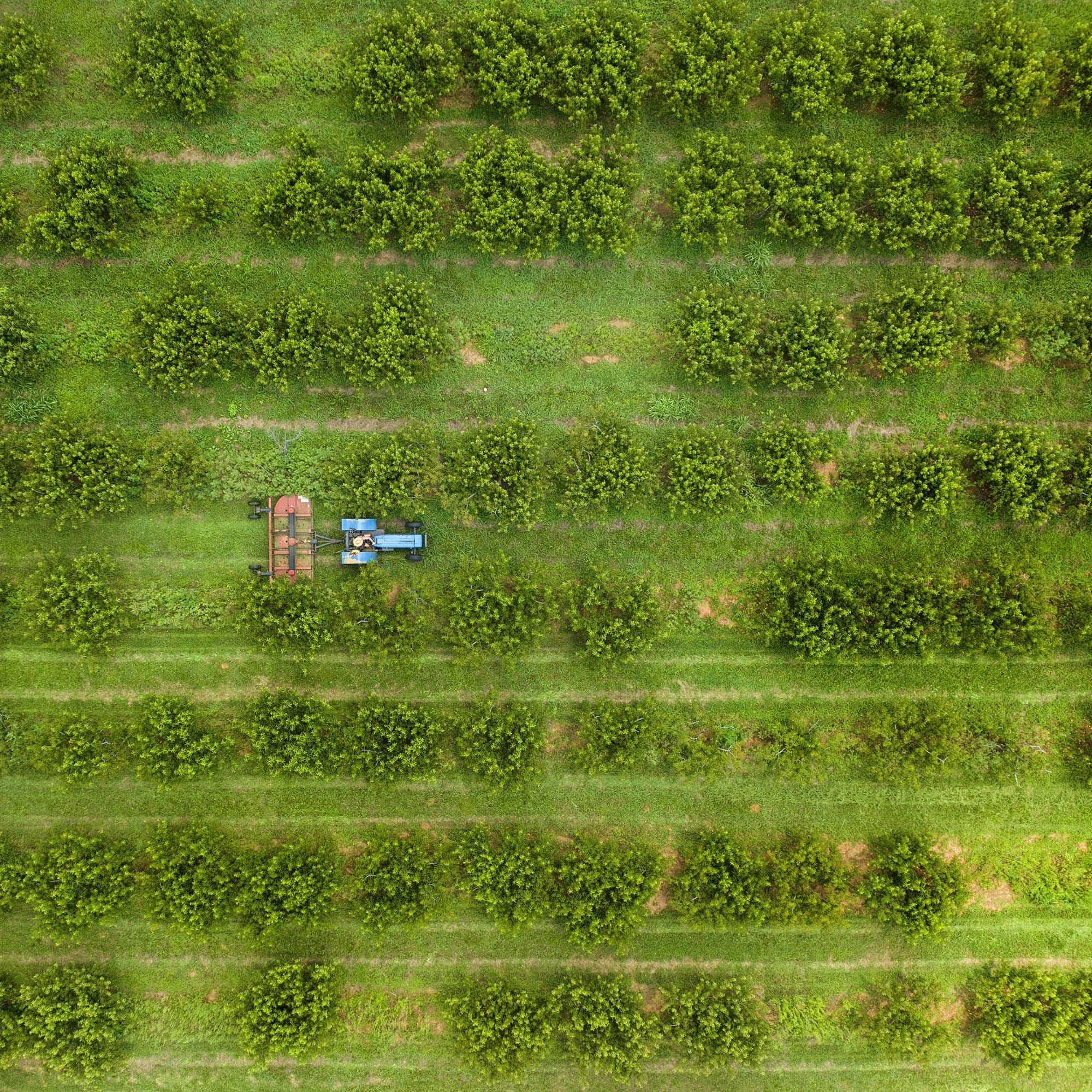
This is the second stage of the Agriculture Department's supplemental disaster relief program authorized by Congress last year. The first stage was for major commodity crops. Now USDA Deputy Secretary Steven Vaden says farmers who grow things like fruits, vegetables and tree nuts can apply for disaster aid.
- [01:43]
Nancy Marshall Genser
So that's going to bring in more so than in stage one of this program. A lot of your specialty crop producers in places like California, Arizona, these growers.
- [01:53]
Steven Vaden
Can get up to $900,000 in aid per calendar year if they earn at least 75% of their adjusted gross income from farming. USDA Undersecretary Richard Fordyce ticks off a long list of natural disasters.
- [02:06]
Nancy Marshall Genser
The aid covers wildfires, hurricanes, floods, derechos, excessive heat, tornadoes, winter storms, freeze, smoke exposure, excessive moisture, and in some cases, drought.
- [02:21]
Steven Vaden
Farmers will also be reimbursed for products that had to be destroyed because of a natural disaster, for example, milk that spoiled because roads were closed and delivery trucks couldn't get to farms. This is not new aid, though. Asked about the status of help for farmers hurt by President Trump's tariffs, Deputy Secretary Vaden said the Agriculture Department only woke back up from the government shutdown last week, and now they're busy crunching the numbers. I Nancy I'm Nancy Marshall Genser for.
- [02:48]
Sabri Benishore
Marketplace Markets are having one of those off days. It's not just that all the major indices are down, which they are. It's also bitcoin. It's also gold is down from yesterday. So we asked Drew Mattis about it. He's a managing director at MetLife Investment Management.
- [03:04]
Nancy Marshall Genser
You can't have an economy functioning well when only a few companies are doing well. And now, ahead of a whole bunch of data releases from the US Government, it's unclear what direction the economy is going to be heading in once we get all that data. And so for now, at least it's let's not take any risk until we know what direction of travel is for the US Economy.
- [03:25]
Sabri Benishore
I was wondering if this was all because of worry stirred up by Nvidia reporting earnings tomorrow, but I imagine it's bigger than just one company.
- [03:34]
Nancy Marshall Genser
The problem is that there are a few companies that have been driving everything, and so when that happens, risk becomes concentrated by default, because if one of those companies set something that people don't like, then everyone tries to kind of maneuver around it. And so the fact that so much of the equity market performance has been tied up in a single sector and a few names within that sector means that the market's more vulnerable to changes in expectations and perceptions about what the future might look like, as opposed to if it's being driven by the economy driving forward on a broad basis.
- [04:12]
Sabri Benishore
That's Drew Mattis there, over at MetLife Investment Management.
- [04:30]
Superhuman Sponsor Voiceover
This Marketplace podcast is supported by Superhuman. The world is buzzing with AI tools, but instead of making things easier, they've made your workflow overwhelming. You're stuck copying and pasting context, switching and juggling too many apps. There's now a better way that outsmarts the work chaos. Meet Superhuman, the AI productivity suite that gives you superpowers everywhere you work with Grammarly, mail and coda working together, you get proactive help across your workflow, from writing to preparing for meetings, presentations, and so much more. Think of Superhuman as your AI dream team, proactively helping you go from to do to done faster. Superhuman knows what you might need and offers suggestions. Whether you're drafting emails, creating documents or more. It guides you in the moment so you can sound like your best self and stay focused on what matters. There are even specialized agents designed to collaborate seamlessly and amplify your impact. Unleash your superhuman potential today. Learn more@superhuman.com podcast that's superhuman.com podcast the.
- [05:30]
Range Rover Sponsor Voiceover
Adage says it isn't what you say, it's how you say it. And when you lead with power, poise and performance, you're making an impact from the start. Introducing the Range Rover Sport. Designed to set an example with its assertive stance and refined drive, it blends dynamic elegance with agile precision, whether you're navigating city streets or conquering rugged terrain. Its cutting edge innovations, including a cabin air purification system and active noise cancellation, offer unrivaled comfort, control and peace of mind. Seven terrain modes Check A choice of powerful engines, including a plug in hybrid with a 48 mile range. Absolutely take on anything with the Range Rover Sport. Build Yours today at Range Rover.com USSport Explore the Range Rover Sport at Range Rover.com US Sport Two major economic stories.
- [06:28]
Sabri Benishore
From this year 1 the tariffs to the artificial intelligence boom. Slash, maybe bubble. And here's how those two stories intersect. Businesses that are investing in AI and implementing it may be getting a little bit of help cushioning the blow from tariffs, at least for now. There's more on this in a new supply chain risk and resilience survey from McKinsey. Here to talk about it is Mahir Mysore, a partner at McKinsey. Mahir, good morning.
- [06:55]
Mahir Mysore
Good morning. Thank you for having me.
- [06:57]
Sabri Benishore
Tariffs have touched companies across this economy. They're also kind of the first economic crisis to come along since the dawn of AI. Has AI come to the rescue at all?
- [07:07]
Mahir Mysore
And how for a company that's trying to manage tariffs, the first issue they bump up against is detail around data in the sense of what are the individual components that I'm importing? How much exactly are the tariffs that I'm paying when I import? When that detail isn't readily available, AI can be helpful in imputing what that data likely could be. We have also seen it being used to accelerate workflows and automation because the amount of actual workload associated with tariffs has grown so much. So in that sense, yes, it has come to the rescue.
- [07:49]
Sabri Benishore
McKinsey's research suggests that the resilience that companies are building by turning to AI to manage their supply chains and tariffs in its current form, it's a shallow kind of resilience. What does that mean? Why do you say that?
- [08:03]
Mahir Mysore
What they mean is there is still limited usage compared to the potential of what you can do with these powerful tools on NTR mapping and transparency. There's also limited use of tools that are related to what you would call an early warning system or being able to predict a potential disruption based on the signals, early signals that you see. There is a lot of potential to use AI, use machine learning to improve companies ability to detect, respond and recover from these kinds of disruptions.
- [08:35]
Sabri Benishore
In the world of supply chain management, in the world of tariffs, in the world of companies, logistics, is it helping or is it replacing?
- [08:46]
Mahir Mysore
What we are seeing is that by and large it is absolutely helping. There is such a dire need for skilled supply chain professionals that understand the nature of flows across industries. And also what is really important to a lot of companies is trust. It will be a very long time before a trust in the outcomes of that AI agent is actually established. And until that happens, having the right human in the loop, having the right individual supply chain analyst that knows AI, that understands how to navigate tariffs, there's an incredibly high demand for folks with those skills and capabilities.
- [09:30]
Sabri Benishore
Mahir Mysore, partner at McKinsey & Co. Thank you so much for joining us.
- [09:34]
Mahir Mysore
Thank you for having me.
- [09:35]
Sabri Benishore
Sabi In New York, I'm Sabri Benishore and you're listening to the Marketplace Morning Report. From 8:00pm American Public Media.
- [09:54]
Amy Scott
Imagine a future where chocolate and coffee are rare and expensive, where cheap nutritional staples like corn and wheat are threatened. Sounds unpleasant, doesn't it? Well, we could be heading there if we don't recognize that the climate crisis is also a food crisis.
- [10:13]
Sabri Benishore
I've seen yields drop because of drought and believe me, boy, have I seen them drop.
- [10:20]
Steven Vaden
We have had dry spells that have lasted years.
- [10:24]
Amy Scott
I'm Amy Scott. This season on How We Survive. We investigate how the climate crisis is threatening our most vital food systems and how scientists are racing to develop alternatives that will shape the future of food. Listen to this season of How We Survive on your favorite podcast app.