Loading summary
Transcript24 lines
- [00:00]
Chase Sapphire Reserve Advertiser
This is the table, the one with the view. This is how you reserve exclusive tables with Chase Sapphire Reserve. This is your name on the list. This is the chef sending you something he didn't put on the menu. This is 3 times points on dining with Chase Sapphire reserve and a $300 dining credit that covered the citrus, pavlova and drinks and the thing you didn't think you liked until you tasted it. Chase Sapphire Reserve now even more rewarding.
- [00:25]
William Lee Adams
Learn more@chase.com Sapphire Reserve call cards issued by JPMorgan Chase bank and a member FDIC subject to credit approval.
- [00:31]
Golddealer.com Announcer
Golddealer.com provides one of the nation's largest inventories of gold, silver, platinum, palladium and rhodium bullion. And our website offers live buy and sell prices. We specialize in precious metal IRA accounts, charge no setup or shipping fees, and provide one of the best storage programs in the business. Golddealer.com also provides a free audio quote line that is updated twice each day and and a gold newsletter that is published every week.
- [00:59]
William Lee Adams
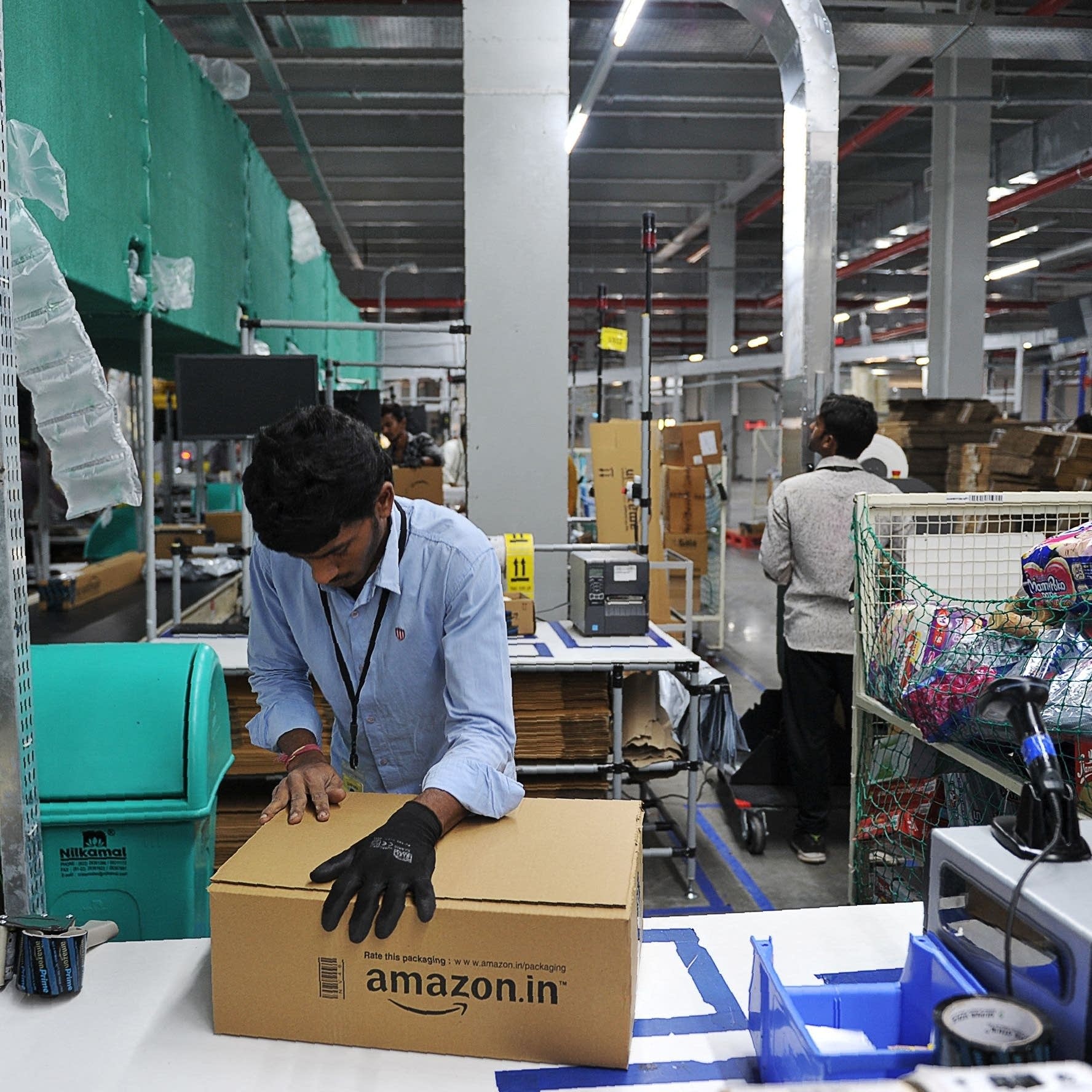
Amazon Becomes the Latest Tech Giant to Announce a Mega Investment in India Live from the UK this is the Marketplace Morning report from the BBC World Service. I'm William Lee Adams. Good morning. Amazon has announced plans to double its investment in India by 2030, focused on artificial intelligence and E commerce. It comes after Microsoft and Google also laid out multi billion dollar spending plans for AI in India. The BBC's Archana Shukla is in Delhi. Hi Arch.
- [01:27]
Archana Shukla
Hi William.
- [01:28]
William Lee Adams
So what commitments has Amazon made?
- [01:31]
Archana Shukla
Well, Amazon has said that they would be investing about $35 billion till 2030 and this is in line with the investments they have been committing over the last couple of years. We know that till 2024 the company has invested about $40 billion in India and now this $35 billion till 2030 will literally double their investment in Asia's third largest economy and a market that Amazon is really eyeing because of the large rapid Internet user base here. We know almost a billion people are online here in India and this is a market that Amazon is wanting to exploit more.
- [02:08]
William Lee Adams
We know that Microsoft and Google are among the other tech companies investing heavily in India along with Amazon. Why is all this investment coming in now?
- [02:18]
Archana Shukla
This is where there is a large consumer base. This is where people are spending money. It's a large middle class. This is also a place where the digital market is expanding very fast. About a billion people online. We have 75045 million smartphone users here in India and this is a market that no big tech company now wants to miss out on. They're also trying to look at the pool of skilled manpower that can support their base here.
- [02:44]
William Lee Adams
By contrast, US tech investment in China is declining. Is India in some way benefiting from US China tensions?
- [02:52]
Archana Shukla
It certainly looks like that because US China tensions are driving some of these companies to look to diversify. The supply chains, look to tap into India's talent pool and somewhere reduce reliance on China. So India is stepping up to show that they can be the next alternative to China. This is one of the stated objectives of Prime Minister Modi, to be a reliable China plus one alternative for most companies that want to diversify. And the money is coming in real and the ambition is also real. But there still needs to be ironing out of a lot in terms of infrastructure and regulations for India to benefit from this.
- [03:28]
William Lee Adams
Archana, thanks for joining us on Marketplace.
- [03:31]
Archana Shukla
Thank you so much, William.
- [03:32]
William Lee Adams
Okay, let's do the numbers. Silver was up 1.2% at over $61. It reached an all time high amid surging demand from the tech industry. It's climbed more than 100% this year. Elsewhere, Nintendo shares slid 2.6% to hit their lowest level since May. The gaming company has lost $14 billion in market value so far this month amid fears the surging cost of memory chips will cut profits.
- [03:59]
The UK's Royal Navy is developing ways to counter what the government regards as an increasingly serious threat from Russia to cut its critical undersea infrastructure. The move follows a series of recent incidents in which Russian vessels have been found operating suspiciously around UK waters. The BBC's Paul Adams reports.
- [04:19]
Paul Adams
In the hunt for Russian intruders, the Navy is looking for solutions.
- [04:25]
Off the west coast of Scotland, an underwater glider, like a torpedo with wings, dives under the waves and drifts off into the darkness, bristling with sensors. The SG1 fathom is capable of patrolling for months on end. It's designed to operate autonomously in large packs. It's made by the German defence technology company Helsing, but it's here being trialled for the Royal Navy. Katie Raine is the program manager.
- [04:52]
Katie Raine
So the glider operates under the waves. It patrols through the depths of the oceans, monitoring and listening for adversaries that might be in the area. What it does is the AI actually embedded in the glider processes and identifies those threats more quickly than we've been able to do previously.
- [05:14]
Paul Adams
It's all part of a network the Navy is calling Atlantic Bastion, a system which links drones, warships and surveillance aircraft in an effort to protect vital undersea cables and pipelines. The urgency of the project was underlined recently by the activities of a Russian research vessel suspected of secretly mapping Britain's critical undersea infrastructure. Part of a wider pattern of Russian activity at sea and in the air, causing ripples of alarm across Europe. In Portsmouth, the Defence Secretary John Healy and his Norwegian counterpart are piped aboard an experimental ship ship the Patrick Blackett, used as a test bed for new technologies. This is T150 drone, 150 pounds in weight or 68 kilograms in metric. On the deck, an array of high tech gear including drones and a pilotless helicopter. On the water beside us, a crewless speedboat zips up and down and up. On the dock looms Excalibur, the navy's unmanned and highly experimental submarine. This is about keeping us ahead of the Russians. John Healey is clear about what all this is for. The past two years have seen a sharp increase in the number of Russian vessels poking around in British waters. We know the threat that Russia poses. We know that they are mapping our undersea cables and our networks and our pipelines. And we know that they are developing new capabilities all the time.
- [06:42]
Looking on as the politicians are briefed is the man charged with supervising Britain's response, the First Sea Lord, General Sir Gwyn Jenkins.
- [06:50]
General Sir Gwyn Jenkins
I would say we the Allies, we're still ahead in the Atlantic, but it's not by as much of an advantage as I would like. I think we are being pressed and we're definitely in a competition to stay ahead of where the Russians are.
- [07:02]
Paul Adams
Russia says it's Britain that's being provocative, even hysterical. But the military says it's clear eyed about the current dangers and it's working closely with industry to address them as quickly as possible.
- [07:15]
William Lee Adams
Paul Adams reporting. Do subscribe to our podcast search for the global edition of Marketplace Morning Report on Apple, Spotify or wherever you get yours in the uk I'm William Lee Adams with the Marketplace Morning Report.
- [07:35]
Million Bazillion Narrator
Sometimes kids ask questions that reveal just how much adults still need to learn. Like can you explain what causes an economic bubble? And why are things so expensive at the airport? Or how much national debt might be too much? Fear not, Million Bazillion is back with a new season to help you and your kids become pros at understanding how money shapes the answers to all those questions and more. Listen to the latest season of Million Bazillion on your favorite podcast. Apparently.