← Marketplace Morning Report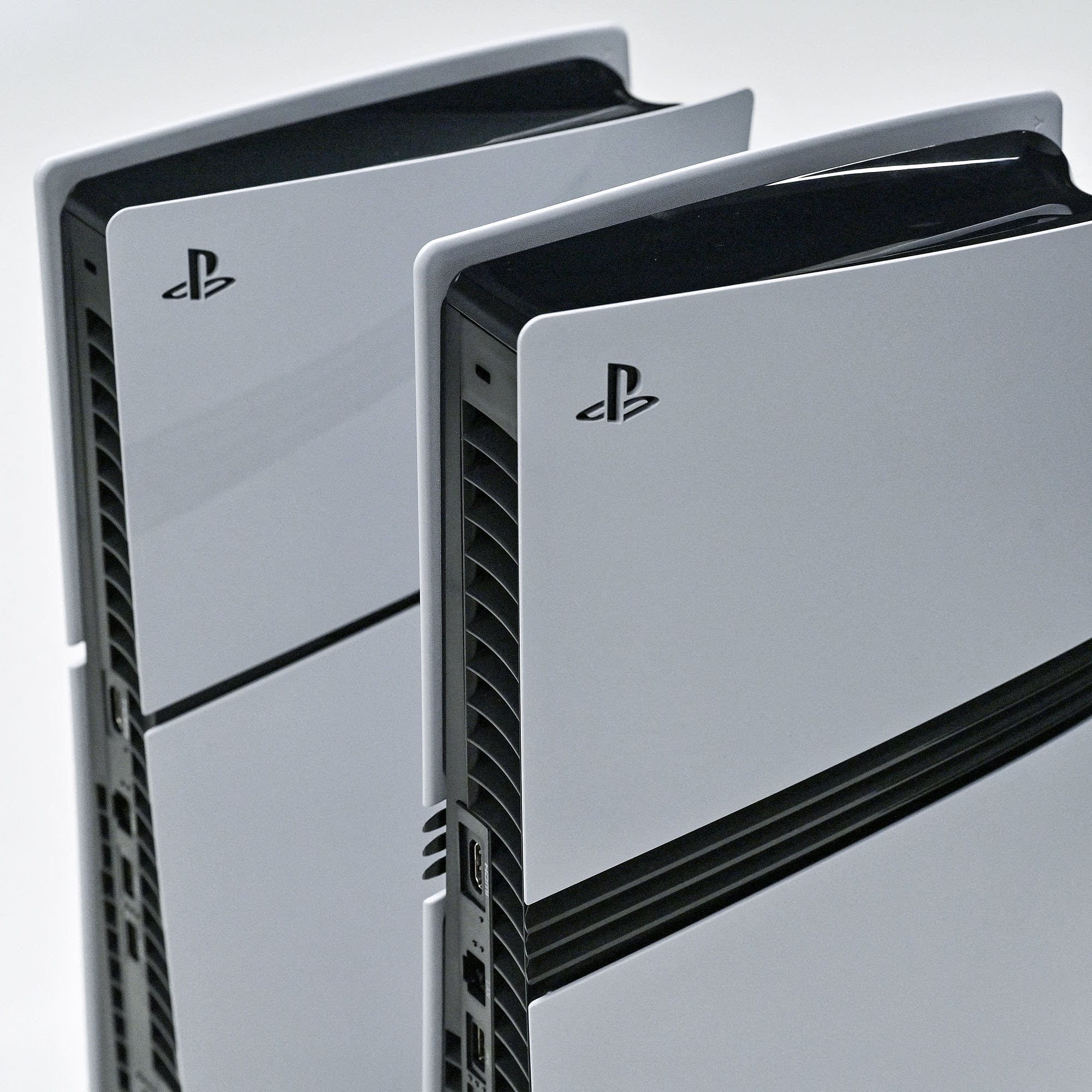
Loading summary
Transcript23 lines
- [00:00]
AT&T Business Narrator
And now a next level moment from ATT Business. Say you've sent out a gigantic shipment of pillows and they need to be there in time for International Sleep day. You've got AT and T5G so you're fully confident, but the vendor isn't responding. And International Sleep Day is tomorrow. Luckily, AT&T 5G lets you deal with any issues with ease, so the pillows will get delivered and everyone can sleep soundly, especially you. AT&T 5G requires a compatible plan and device coverage not available everywhere. Learn more@att.com 5G Network.
- [00:30]
MultiCare Representative / Maggie Smith
Our state has changed a lot in the last 140 years. We know because MultiCare has been here guided by a single making our communities healthier. That comes from making courageous decisions, partnering with local communities to grow programs and services, and expanding healthcare access to those who need it most. Together, we're building a healthier future. Learn more@mycare.org.
- [01:03]
Guy Kilty
Us gamers are the latest to feel the effects of President Trump's import tariffs. Live from the UK this is the Marketplace Morning Report from the BBC World Service. I'm Guy Kilty in for Liana Byrne. Good morning. The impact of US Tariffs are already starting to trickle down to consumers pockets. Imports from Japan to the US have been subject to a 15% tariff for three weeks. And now Japanese electronics company Sony is bumping up the price of its PlayStation 5 video games consoles by $50. But only in the United States. The BBC's Katie Silver has more.
- [01:37]
Marketplace Morning Report Analyst
Basically, they said that there's this challenging economic environment. That's their words for it means that, for example, now their most expensive, the pro version is going to cost about US$750. Now these hikes of course, come as many companies face these tariffs. We have also seen it from their rival Nintendo. They've just recently increased the price of the Nintendo Switch. And many major companies having to warn about the impact of tariffs. Those include Home Depot, Adidas and Nike, all in the last couple of months.
- [02:06]
Guy Kilty
The BBC's Katie Silver now the effects of artificial intelligence on jobs and productivity have been discussed at length. But what about the effect it's having on our minds? Mustafa Suleiman, the head of AI at Microsoft, says he's losing sleep over increasing reports of what he calls AI psychosis. The BBC's Zoe Kleiman joins me now on Marketplace. Hi, Zoe.
- [02:27]
Zoe Kleinmann
Hi there.
- [02:28]
Guy Kilty
Just run us through then exactly what Mustafa Suleiman has said.
- [02:31]
Zoe Kleinmann
He's talking about the rise of something he calls seemingly conscious AI. And what that means is AI that isn't actually conscious, but it appears to be and people believe that it is. We're already seeing a rise in what's being called AI psychosis. Now, this is not a clinical term, but it's being used to describe people who use chatbots and lose touch with realities. I'm getting a steady stream of messages from people who genuinely believe that, for example, they're the only person in the world that particular chatbot has fallen in love with or they've unlocked a secret human inside one. They're all very different, the stories that they tell, but the one thing they have in common is the genuine conviction that it's true, that it's happening.
- [03:14]
Guy Kilty
Does Mustafa Suleiman say anything about what should be done to prevent this?
- [03:17]
Zoe Kleinmann
Well, he's calling on tech companies to work together to put in guardrails to try to stop people, if you like, being fooled by their products into thinking that they're conscious. He really thinks that the, the tech industry has a duty to do that. However, we know the tech industry is very governed by quick progress, by profit and by beating the competition. They're very, very competitive. So I Are they all going to work together to put the brakes on? Well, the fact is it's just too powerful and lucrative for that to happen. This train is not going to slow down anytime soon.
- [03:55]
Guy Kilty
Zoe Kleinmann, many thanks for joining us.
- [03:57]
Zoe Kleinmann
Thank you.
- [03:58]
Guy Kilty
Let's do the numbers. Taiwan is to boost defense spending to more than 3% of GDP next year over worries of an attack from China. Officials say that's an increase of over 20%. Economic activity is up in the Eurozone with manufacturing doing the heavy lifting. According to a closely watched business survey, the Flash Composite Purchasing Managers index rose to 50.5, indicating a positive outlook. Let's head over to France now where its multi billion dollar mineral water industry, home to brands like Perrier and Evian, is facing intense scrutiny. A French media investigation found that at least a third of mineral water sold in the country had been illegally treated under EU law. Natural mineral water is supposed to be unaltered from source to bottle. The French government says it's seeking clarification on what's legally allowed. Here's the BBC's Hugh Schofield.
- [04:50]
Hugh Schofield
Many experts are saying changing weather patterns, successions of drought and flash flooding are having an impact not just on the regular water table, what people use for tap water, but also now on the deeper levels from how the companies pump the mineral water that they sell in bottles. Stephane Monda covers the story for Le Monde newspaper.
- [05:09]
Guy Kilty
A few years ago, you could protect the water. But with the climate crisis, there is less water, less reserve and there is no deletion of the contamination. So that would be more and more difficult to preserve the purity of the water without illegal system.
- [05:36]
Hugh Schofield
And illegal systems of treatment, it's now been established, were put in place. At a hearing before a Senate committee in Paris, the CEO of Nestle, Laurent Freck's admitted that just like many other companies did, Perrier had used ultra fine microfilters to screen its water. This was wrong because under EU law, natural mineral water is not meant to be treated at all. Nestle's CEO also revealed that a recent government hydrologist report into the site here at Verges gave a negative assessment point, putting at risk Perrier's right to call itself natural mineral water. This is being appealed against by Perrier, whose own hydrologist, Jeremy Pralong, insists the water the company extracts is pure and unchanged.
- [06:21]
Guy Kilty
The purity at source is there. I'm convinced that this water is mineral water.
- [06:27]
AT&T Business Narrator
Ah, La Terrace.
- [06:30]
Hugh Schofield
Bottled mineral waters have been a huge commercial success story for France. But increasingly there are voices saying that the existing model cannot be sustained. It's not just the depleting resource and the risk of contamination, it's also the 15 billion plastic bottles that are sold every year. Hydrologist Emma Aziza the only solution is.
- [06:50]
Zoe Kleinmann
To cut the volumes we consume. There is no way we can keep going on as we are.
- [06:56]
Hugh Schofield
Back in the ultra modern Perrier factory in Verges, the focus is now on a new brand, Maison Perrier Energy and flavored drinks. The big advantage is that these drinks do not need to qualify as natural mineral water. They can be treated and filtered.
- [07:14]
Guy Kilty
Hugh Schofield reporting. In the uk, I'm Guy Kilty with the Marketplace morning report from the BBC World Service.
- [07:25]
MultiCare Representative / Maggie Smith
Poetry has the power to connect our inner universe in the outer world. I'm Maggie Smith, poet and host of the Slowdown, a podcast from American Public Media. Each weekday find time to take a breather from your to do list or doom scrolling for that matter and take in a moment of reflection with a hand picked poem. Listen to the Slowdown wherever you get podcasts.