Loading summary
Transcript29 lines
- [00:00]
Marketplace Host
This Marketplace podcast is supported by Palo Alto Networks. Enterprises are deploying and experimenting with AI apps and agents, often without the right security in place. Leverage the power of a comprehensive AI platform to secure AI at every step from apps, agents, models and data. Deploy AI bravely with Prisma airs. More@paloaltonetworks.com this Marketplace podcast is supported by.
- [00:29]
Dell Advertiser
Dell Introducing the new Dell AI PC powered powered by Intel Core Ultra processor. It helps do your busy work for you so you can fast forward through editing images, designing presentations, generating code, debugging code, summarizing meeting notes, finding files, managing your schedule, responding to long emails, leaving all the time in the world for the things you actually want to do. Get a new Dell AI PC starting at $699.99 at Dell.com AI PC how those ahead Stay ahead.
- [01:00]
David Brancaccio
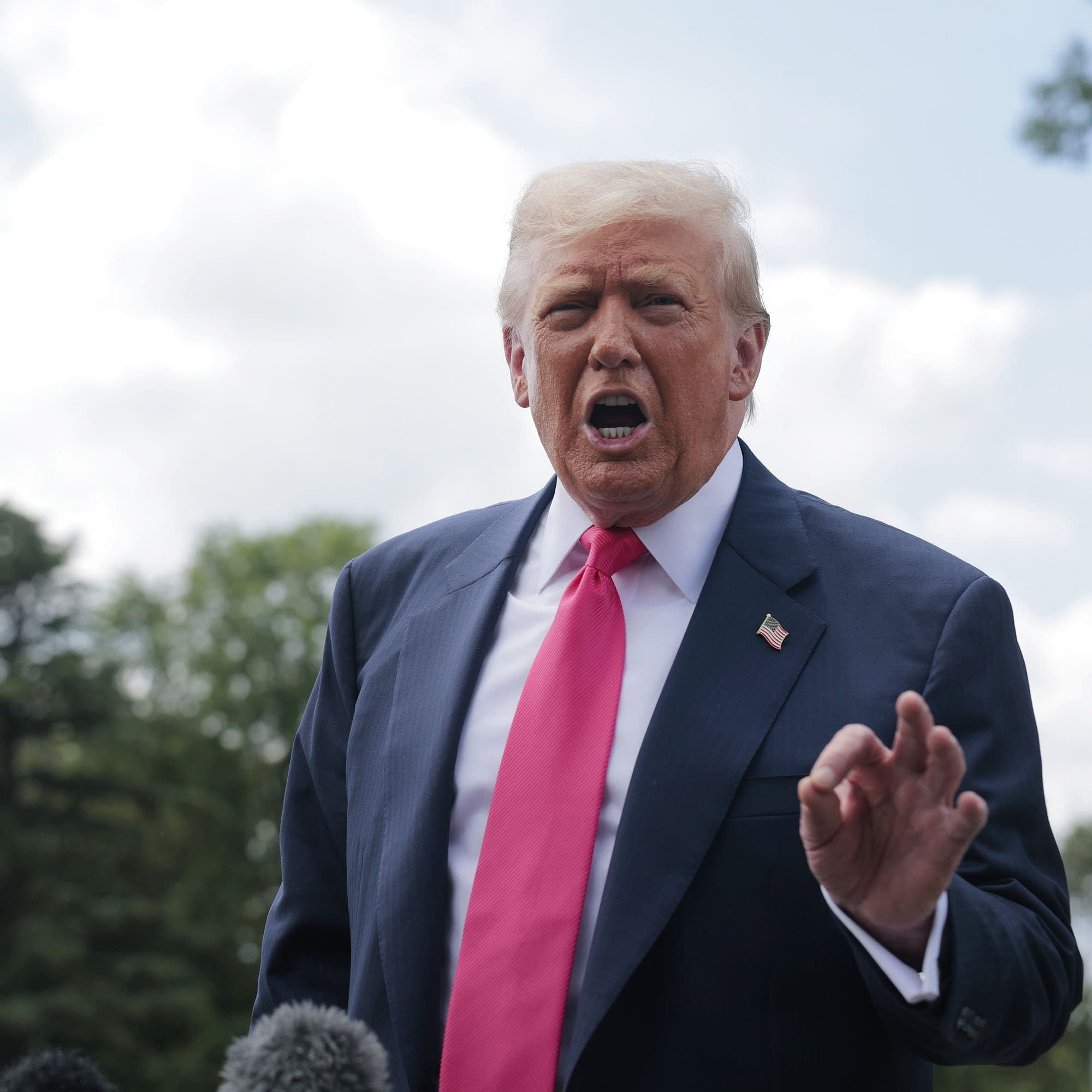
A few frameworks governing tariffs are coming together ahead of the Trump administration's August 1st deadline. I'm David Brancaccio in Los Angeles. Good morning to you. President Trump is posting that he has a trade deal with Japan. Instead of 25% import taxes, the charge will be 15% tax on goods imported from Japan to the U.S. japanese Prime Minister Shigeru Ishiba said the new trade deal will benefit both sides.
- [01:27]
Political Analyst
Japan is the most significant of the clutch of deals President Trump has struck so far. In a post on Truth Social, Mr. Trump said Tokyo has agreed to invest $550 billion into the US American cars, trucks, rice and certain agricultural products would also be sold more freely in Japan, according to the president. The announcement sent stocks in Japan and South Korea higher, led by automakers like Toyota, Honda, Nissan and Hyundai. The yen also strengthened against the dollar.
- [01:58]
David Brancaccio
Suranjana Tiwari is Asia Business Correspondent with our partners at the BBC. She's out of Singapore. Other trade deals coming together the US tax on goods from the Philippines will be 19% instead of 20%. Indonesia will get 19%, down from 32% as part of an emerging framework there, although goods with a lot of Chinese content routed through Indonesia will have a higher penalty. Indonesia is set to remove a set of non tariff barriers to US Imports in return at an artificial intelligence summit. But in Washington today, we'll learn more about the administration's plans for guardrails to keep a potentially dangerous technology in line. Although how will the federal government increasingly turn to AI is also part of the discussion. And who will pay for energy hungry data centers to run AI and what the administration plans to do about what it sees as anti conservative bias in that technology. Plus something else a couple weeks ago.
- [02:54]
Scott Babwa Brennan
They announced that they would allow Nvidia to sell the H20 chip to China.
- [02:59]
David Brancaccio
Scott Babwa Brennan, director of NYU's center on Technology Policy there this move, where the Trump administration relaxed some but not all of export controls on lower grade technology might signal a shift. He says it's part of a push to make American products essential to global AI adoption, even if that means giving competitors access to some of the technology.
- [03:22]
Scott Babwa Brennan
China's doing everything they can to pursue AI development. The question isn't will they have chips right? Like it's where are they going to get them and who's going to make them. And so I think the logic here is if you can a prevent China from building their own top of the line chips while supplying them with good enough chips, that maintains control of the situation.
- [03:51]
David Brancaccio
As for concerns about what rapidly evolving AI means for human versus environmental safety, Brennan believes embracing our digital future is not about choosing either or.
- [04:01]
Scott Babwa Brennan
It's very clear that AI does present significant risks to American consumers, to the world, to the environment, and we can't just ignore these risks. We have to address them not only because we want to prevent the harms to Americans, but also because it's going to get in the way of development.
- [04:22]
David Brancaccio
Scott Babwa Brennan at NYU's center on Technology Policy.
- [04:39]
Nephew
I'm gonna put you on Nephew. All right, Unc.
- [04:41]
McDonald's Employee
Welcome to McDonald's.
- [04:42]
Nephew
Can I take your order? Ms. I've been hitting up McDonald's for years. Now it's back. We need snack wraps. What's a snack wrap? It's the return of something great. Snack Wrap is back.
- [04:54]
Dell Advertiser
This Marketplace podcast is supported by Dell. Upgrade your learning experience during Dell Technologies Back to school event with AI PCs like the Dell 14 plus, featuring an Intel Core Ultra processor starting at $749.99. Supercharge your studies with features like real time notes, transcription, AI accelerated hardware to run multiple apps without slowing down and extended battery life and more. That's the power of new AI PCs with Intel inside. What's more, upgrade your school year setup with limited time deals on select monitors and more. Must have electronics and accessories. Don't wait. Discover a smarter way to learn@dell.com deals that's dell.com deals.
- [05:44]
David Brancaccio
It'S been a rough stretch of road for car companies so far this financial reporting season. General Motors said this week it lost more than a billion dollars in the second quarter because of U.S. tariffs. Stellantis, the Chrysler people lost more than double that in the first half of the year and blamed a sizable chunk of that on tariffs as well. Today, after the market closes, EV maker Tesla reports its results. And they're not expected to be pretty either. Here's Marketplace's Mitchell Hartman.
- [06:12]
Mitchell Hartman
Tesla's already released vehicle sales numbers for the second quarter and they weren't good deliveries, down more than 13% compared to last year, the worst quarterly decline the company's ever seen. Tesla is grouped with the so called Magnificent Seven tech stocks, including Nvidia, Apple and Microsoft. But right now, Tesla's not performing so magnificently, says Angelo Zeno at CFRA Research.
- [06:38]
David Brancaccio
Our analyst does have a hold recommendation. It's the only Mag7 name we are avoiding at this moment in time. The fundamentals have just not played itself out.
- [06:45]
Mitchell Hartman
Those fundamentals are a headwind for Tesla. EV sales growth in the US has slowed. Meanwhile, the Trump administration has canceled tax subsidies for EVs and revoked fuel economy regulations that Tesla profited from. And Tesla probably can't count on expanding its foreign sales, says Gernot Wagner at Columbia Business School. Because Musk is politically toxic and his cars are too expensive.
- [07:11]
David Brancaccio
Germans have basically stopped buying Teslas altogether. Chinese aren't buying Teslas in the first place. Tesla simply cannot compete with the likes of the $10,000, $12,000 BYD seagull. It costs a quarter of what a Tesla costs.
- [07:29]
Mitchell Hartman
Analysts will be listening closely for news of a cheaper Tesla coming to market as the company is promised, says Seth Goldstein at Morningstar.
- [07:37]
David Brancaccio
Tesla being able to offer a mid.
- [07:40]
Marketplace Host
$30,000 vehicle that still has a long.
- [07:43]
David Brancaccio
Range, I think that's going to be important for them if they want to continue to grow sales.
- [07:48]
Mitchell Hartman
Whether Tesla's actually doing well or poorly right now is largely in the eye of the beholder, says Dan Ives at Wedbush Securities.
- [07:56]
McDonald's Employee
If you're negative on Tesla, you'll just focus on the car business and the pressure they're seeing there. For bulls like myself, I view Tesla as a disruptive technology company when it comes to autonomous and robotics.
- [08:10]
Mitchell Hartman
Ives says the company's future ultimately depends less on making and selling EVs and more on developing whole new industries like robo taxis, autonomous vehicles and AI. I'm Mitchell Hartman for Marketplace, and when.
- [08:25]
David Brancaccio
Popular Internet buzz drives up moribund stocks, it's called the meme stock phenomenon. Playing out again this week with the department store Kohl's. That Stock is up 50% yesterday alone despite weak sales and a lot of management turnover. I'm David Brancaccio, Marketplace Morning Report from APM American Public Media. Well, there it is.
- [08:49]
Marketplace Fundraising Representative
Federal funding for public media was just eliminated that seriously affects over 800 local public radio stations that broadcast Marketplace and that in turn impacts our bottom line. Marketplace needs your help to plan for an uncertain future and to continue to bring you news, interviews and stor about the economy as it changes. Every donation right now has a profound impact. Please give what you can@marketplace.org donate and thank you.