Loading summary
Transcript31 lines
- [00:00]
A
It's tax season, and at Lifelock, we know you're tired of numbers, but here's a big one you need to hear. Billions. That's the amount of money and refunds the IRS has flagged for possible identity fraud. Now here's another big number. 100 million. That's how many data points Lifelock monitors every second. If your identity is stolen, we'll fix it. Guaranteed. One last big number. Save up to 40% your first year. Visit lifelock.com specialoffer for the threats you can't control. Terms apply.
- [00:30]
B
Running a business is hard enough, so why make it harder with a dozen different apps that don't talk to each other? Introducing Odoo, the only business software you'll ever need. It's an all in one fully integrated platform that makes your work easier from CRM, accounting, inventory, e commerce, and more. And the best part, Odoo replaces multiple expensive platforms for a fraction of the cost. This is why over thousands of businesses have made the switch. So. So why not you try Odoo for free@odoo.com that's o d o o.com
- [01:02]
C
an
- [01:02]
D
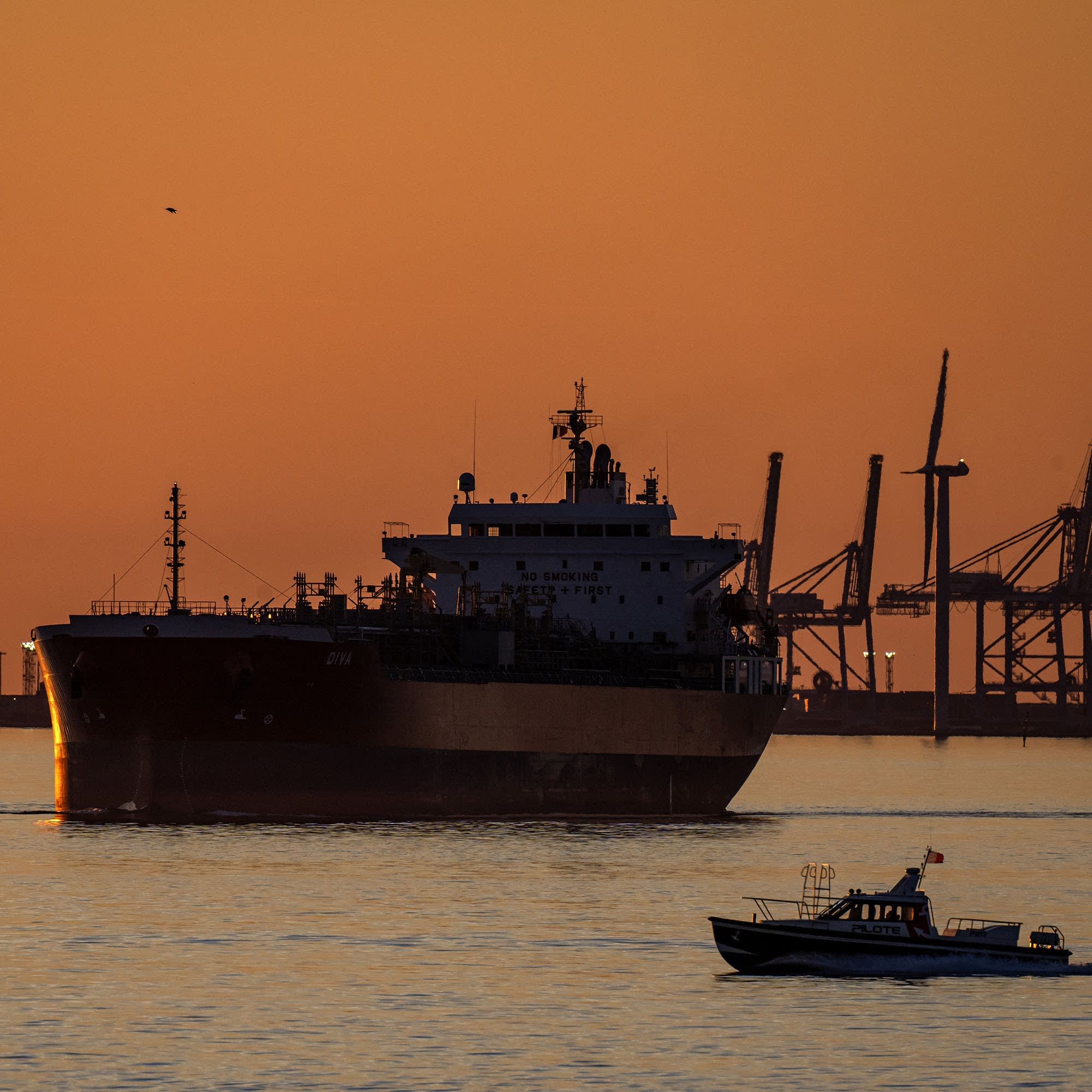
entirely new oil supply disruption from Marketplace. I'm Sabri Benishore in for David Brancaccio. The latest in the Iran war. Iran says U.S. demands are, quote, excessive and illogical. The fighting continues and oil prices continue their climb. Brent crude is up 15% in the week since President Trump claimed the US and Iran were talking something Iran continue to deny. Brent crude is now at $115 a barrel and some of that is down to new potential disruptions to oil supply marketplaces. Novasafo has that Yemen's Houthi rebel group,
- [01:38]
C
which is backed by Iran over the weekend, fired at Israel for the first time since the conflict started. This is significant in that the group has previously caused trouble through a different global shipping choke point called the Bab El Mandeb Strait, which essentially connects the Red Sea to the Indian Ocean. Saudi Arabia has been diverting some of its oil shipments to that route via an east west pipeline that now carries about four and a half to five million barrels of oil per day. If the Houthis once again fire at ships crossing the Red Sea Passage, those barrels would have to find another route out of Saudi Arabia, potentially further constraining the global oil supply that could lift prices even higher than they are now. Nova Safwa for Marketplace Buried in the
- [02:24]
D
ground along with natural gas are small amounts of helium. It is extracted and purified along with the natural gas and a third of the world's supply comes from Qatar and through the Strait of Hormuz. With that supply cut off, shortages are looming for the many industries that need helium. Marketplace's Kaylee Wells reports Nick Fitzke orders
- [02:45]
E
about $6,000 of liquid helium every three months. He he's the director of the magnetic resonance facility at Mississippi State University, and he needs the helium because it's extremely cold, as in 450 degrees below zero Fahrenheit.
- [02:59]
B
Helium is used basically to keep the superconducting coils at the temperature where they can be superconducting. And if they rise above that temperature, then your MRI no longer works.
- [03:11]
E
Semiconductor chip makers need helium too, and it's produced as a byproduct.
- [03:16]
B
It's usually associated with places where they can extract large amounts of natural gas.
- [03:20]
E
And because only a few places do
- [03:22]
B
that, that's why we have this bottleneck right now.
- [03:25]
E
And there's a reason we're only feeling the bottleneck now. About four weeks into the war, it
- [03:30]
F
takes about a month to get helium to its destination.
- [03:34]
E
Maura Garvey, who runs Intelligas Consulting, says restarting production is going to be difficult. Even if the Strait reopens today, it's going to take them a few months
- [03:43]
F
to get everything back up to speed. That's not going to happen until sometime
- [03:48]
E
between June and August, Garvey says. The helium in storage can hold us over until then. I'm Kaylee Wells for Marketplace.
- [04:13]
G
Dell PCs with Intel inside are built for the moments that matter. For the moments you plan and the ones you don't. Built for the busy days that turn into all night study sessions. The moment you're working from a cafe and realize every outlet's taken the times you're deep in your flow and the absolute last thing you need is an auto update throwing off your momentum. That's why Dell builds tech that adapts to the way you actually work. Built with long lasting battery so you're not scrambling for the closest outlet. And built in intelligence that makes updates around your schedule, not in the middle of it. They don't build tech for tech's sake, they build it for you. Find technology built for the way you work@dell.com DellPCS built for you. Expanding to the US market doesn't have to mean higher costs. Puerto RICO is a U.S. jurisdiction with federal regulatory alignment, strong IP protections and seamless access to the U.S. mainland. It's why companies like Amgen Honeywell and Lufthansa Technik operate high value manufacturing and aerospace services from the island. Add Competitive tax incentives in a highly skilled bilingual workforce. And the advantage is clear. It's not what's next, it's where. Puerto Rico. Learn more@investpr.org Every Monday, my colleague David
- [05:38]
D
Brancaccio has been speaking with experts focused on mitigating the existential threats that our world faces today. A conversation with Sonia Amade, a professor at Helsinki University and the director of the center for the Study of Existential Risk at the University of Cambridge. Here's David.
- [05:55]
H
I appreciate some of the challenges that the center studies. Nuclear climate, bioweapons, biomistakes, unbridled artificial intelligence. I mean, we have the means to destroy civilization, if not the human race. Now, how do you frame the work that you do at the Center?
- [06:16]
F
We've always had that idea that we analyze existential risks. Those are the ones that would threaten all of human civilization, where there might not be even a startover for the human species as well. Global catastrophic risk, which means, well, maybe something like 90% of people would be killed in some kind of a mass event. But what we really are trying to add to that now is to mitigate existential risk so that we're action oriented and not only publishing nice research papers, we're looking for ways to mitigate.
- [06:49]
H
Yeah. I was struck by a statement in some of the Center's materials that among the things you try to do is convene unexpected alliances to mitigate catastrophe. What is that about?
- [07:01]
F
So one unexpected alliance is looking at how we can do work to better understand the actual risks of nuclear energy versus the ongoing use of fossil fuels and carbon intensive fuels, especially now that energy sovereignty and energy security are really topical. So that means collaborating here at Cambridge with the center, that's for nuclear energy or the nuclear engineering group, so to speak. And then just to continue on that we're in arts and humanities, but many of our researchers cross into social science and even the natural sciences.
- [07:36]
H
I mean, you mentioned you want to keep it focused on solutions, options, approaches so that we don't retreat into our caves in despair. I mean, that's the key here, right? Reminding people that this is not inevitable. If we try to bear down on
- [07:51]
F
some of these issues, it does sometimes seem as though global outcomes are inevitable from an individual perspective because it's very hard for any of us to have that leverage to make that kind of a change we might like to make. In a way, I think it's simple, that if we could bring the world back to the idea of right before might, then at least we're building the basics for the kind of relationships that can, in a fractile pattern, from the micro to the macro, can try to regrow the type of civil society that can concretely and squarely address these existential risks we're now facing.
- [08:26]
H
Sonia Amadeh is the director of the center for the Study of Existential Risk at Cambridge University in Britain. Thank you so much.
- [08:33]
F
Yeah, pleasure talking to you.
- [08:36]
D
All of our existential threat interviews are available online@marketplace.org in New York. I'm Sabri Benishore with the Marketplace morning
- [08:44]
F
report
- [08:46]
D
from 8:00pm American public meeting.
- [08:50]
H
Hey, David Brancaccio here. I hope you're well and that your passport is up to date because I am hosting a trip to Italy this fall and you, you are invited stay at a world class Tuscan villa and step into the world of the Medici, the formidable family whose influence and power helped give rise to the Renaissance and the art we still celebrate today. And not to mention the banking system. We're going to visit the world's oldest bank, swim in the thermal spa waters in Montecatini and take in the art of the Uffizi. All of this, and then we'll try to put it all into context with great conversation over even better meals and wine tasting. Please join me and know this. Buying into this trip will provide essential support for public media. Discover more about this fall's tuscany adventure@marketplace.org travel to reserve your spot today, that's marketplace. Org Travel.